
Greg Thomas
This transcript was generated by AI and may contain errors. It is provided to assist those who may not be able to listen to the message.
The title today, Who is Your King? Who is your king? And the subtitle is, The Great Test. One of the greatest tests that people can be subjected to is to be placed in a situation where they have no human leader. And make no mistake about it, righteous, visionary leadership is always needed.
The world, a nation, a state, a city, a family, a person will eventually go in the direction of its moral and spiritual leadership. But sadly, the spiritual leader of this current evil age is Satan the Devil. And God has called out some into his marvelous light to be spiritual lights and to be spiritual leaders in whatever part of the world they find themselves in.
God should be the king, the ruler, the lord, and master of every person who's been called into his marvelous light. So is God your king? Is he your ruler? Is he your master? And what kind of tests are we really being subjected to and have been subjected to now for several decades? If we follow the spiritual leadership of God and Christ, we will stay on course.
We will stay on the straight way and enter in the narrow gate that leads to eternal life. From the Garden of Eden to the present day, God has always instructed humans to look to him for the knowledge of good and evil, to look to him for moral and spiritual leadership. God can and must always be our spiritual leader. God will never leave us. God will never forsake us. He's always there.
His path is always the right path. His way is always the right way. As one author writes, we must choose to be governed by God or by man. We must choose to be governed by God or by man. It seems that people become disoriented, confused, and scattered without human leadership. But should they be? After God told Moses that he would not allow him to enter the Promised Land because he struck the rock instead of speaking to the rock, when God told him what to do with regard to how he would provide water for the Israelites, he told Moses that he would not enter into the Promised Land because of his disobedience.
Now we go to Numbers 27. In the face of that fact that God told Moses he would not enter into the Promised Land, Moses went to God. Remember, Moses, a type of Christ in many ways, especially the many intercessions that he made for Israel on their journey from Egypt to the Promised Land. And after it was known that he would not enter into the Promised Land, Moses went to God and asked God to choose a leader to lead the people into the Promised Land. So let's note Numbers 27 in verse 12. The Lord said unto Moses, Get you up into the Mount of Baram and see the land which I have given unto the children of Israel.
And when you have seen it, you also should be gathered unto your people as Aaron, your brother, was gathered. For you rebelled against my commandment in the desert of Zinn, in the strife of the congregation, to sanctify me at the water before their eyes. That is the water of Meribah in Kaddish in the wilderness of Zinn. And Moses spoke unto the Lord, saying, Let the Lord, the God of the spirits of all flesh, set a man over the congregation. As I said, it seems that human beings always want a leader over them.
And if they don't have a leader, they are generally scattered. But once again, I ask the question, should that be the case? Verse 17, Which may go out before them, which may go in there before them, and which may lead them out, and which may bring them in, that the congregation of the Lord be not a sheep which have no shepherd.
And the Lord said unto Moses, Take you, Joshua, the Son of Nun, a man in whom is the Spirit, and lay hand upon him, set him before Eleazar the priest, and before all the congregation, and give him a charge in their sight.
You shall put some of your honor upon him, that all the congregation of the children of Israel may be obedient. And he shall stand before Eleazar the priest, who shall ask counsel for him after the judgment of Urim before the Lord. And at his word they shall go out, and at his word they shall come in, both in and all the children of Israel with him, even all the congregation. And Moses did as God commanded him, and he took Joshua and set him before Eleazar the priest before all the congregation.
He laid his hands upon him and gave him a charge as the Lord commanded by the hand of Moses. God not only gave Israel a great human leader in Moses, but he also led them on their sojourning personally. They had a cloud by day and a pillar of fire by night, and they moved as the cloud moved. Jesus Christ was that rock, the one who became Christ, that led them.
Let's go to 1 Corinthians. 1 Corinthians 10 and verse 1. We'll see clearly that not only did they have Jesus Christ leading them, the one who became Christ, the Word, but they also had two great human leaders, Moses and Joshua. We're going to find out after Joshua that there was a tremendous change that took place, and it may be where we are today. In 1 Corinthians 10.1, Moreover, brethren, I would not that you should be ignorant how that all our fathers were under the cloud and all passed through the sea. That's when they passed through the Red Sea, and that was counted as their baptism, as in verse 2.
We're all baptized unto Moses in the cloud and in the sea. Did all eat the same spiritual drink or meat, and did all drink the same spiritual drink? For they drank of that spiritual rock that followed them, and that rock was Christ.
So not only did they have great human leader, but they had great spiritual leader, Jesus Christ. With this kind of leadership, one might ask, how could Israel possibly fail? How could they? Great human leader and Jesus Christ leading them. But fail they did because of unbelief and the lack of faith. You know, human beings can help you on your journey to the Promised Land. We're not only on a journey to the Promised Land, a physical Promised Land, but we're on a journey to the Kingdom of God, the Eternal Kingdom, and in the Eternal Family that will live forever and rule and reign forever. But no one will stand before the judgment of Christ for you. After Joshua led Israel into the Promised Land, God did not choose anyone to sit in the seat of Moses. I don't know if you've ever really thought about that. Now, Joshua didn't go to God and say, I'm about to die. He knew he was about to die. He gave his farewell speech in the last chapter of Joshua. But he didn't go to God and say, you need to raise somebody else up to sit in my seat. There was no one selected by God to sit in the seat of Moses after the death of Joshua. Now, Israel is subjected to the Great Test. Remember the title, Who is Your King? Subtitle of the Great Test. Israel is subjected to the Great Test. They're expected now to live by faith. They're expected to live by every word that proceeds out of the mouth of God. They're expected to put their faith, their hope, their trust in God. So, let's notice now, Judges 1. Joshua is now dead, and here they are. What are they going to do? How will they be governed? Who will lead them? Now, after the death of Joshua, it came to pass that the children of Israel asked the Lord, saying, Who shall go up for us against the Canaanites first to fight against them? Because one of the things that God had said, when you go into the land, you are to totally conquer the land, and you are to drive out these tribes that do not believe in Me. Now, people get upset about that, and the various things are said, but it was because of their religion, and God knew that if they stayed in the land, and if they intermarried with them, and interfaced with them, they would go after their gods eventually. So, they told them to drive them out. Of course, God is not through with them. Every person who has ever lived will have an opportunity, as we know, to have their eyes open, the veil taken off, and for them to come to know the true God. Notice verse 2, and the Lord said, Judah shall go up. Behold, I have delivered the land into his hand.
So, really, the leadership was to be alternated among the tribes, starting off with Judah. Judah was, in a sense, in the seat of Moses, but it was the whole tribe. Judah will go up, and I'll give him the victory. Verse 3, And Judah said unto Simeon his brother, Come with me into my lot. I have been chosen to do this, and we may fight against the Canaanites. And I likewise will go up with you in your lot. So it was to be passed around in their lot to the various tribes. So Simeon went with him.
Judah went up, and the Lord delivered the Canaanites and the parasites into their hand, and they slew them in Bezakh, ten thousand men. So God gave them the victory.
Now we go to verse 19 in this chapter. Verse 19, continuing the story.
The Lord was with Judah. He drove out the inhabitants of the mountain, but could not drive out the inhabitants of the valley because they had chariots of fire.
And they gave Hebron, or Hebron, unto Caleb, as Moses said, and he expelled there the three sons of Anak. Do you remember Anak? They were giants. And the children of Benjamin did not drive out the Jebusites that inhabited Jerusalem. In fact, Israel did not really gain control of that area of Jerusalem until the days of David. David was the one who conquered the Jebusites and set up Jerusalem eventually as the headquarters. But the Jebusites dwelled with the children of Benjamin and Jerusalem unto this day. In the house of Joseph, they also went up against Bethel, and the Lord was with them. In the house of Joseph went to decry Bethel. Verse 24, And the spies saw a man come forth out of the city, and they said unto him, Show us, we pray you the entrance into the city, and we will show you mercy.
And when he had shown them the entrance into the city, they smote the city with the edge of the sword. But they let go the man and all his family. And the man went into the land of the Hittites and built a city, and called the name thereof, Luzz, which is the name thereof unto this day. Neither did Manasseh drive out the inhabitants. And I'm not going to read all of this. Verse 28, It came to pass when Israel was strong that they put the Canaanites to tribute, but they did not utterly drive them out. So they did not do what God had said to do.
They put them to tribute, they conquered them in a way, but they were still there.
Now we go to chapter 2. In chapter 2, verse 1, And the angel of the Lord came up from Gogal to Bochim, and said, I made you go up out of Egypt, and have brought you into the land, which I swore unto your fathers. And I said, I will never break my covenant with you, and you shall make no league with the inhabitants of the land. You shall throw down their altars, but you have not obeyed my voice. Why have you done this?
Wherefore, I also said, I will not drive them out before you, but they shall be as thorns on your sides, and their God shall be a snare unto you. And it came to pass when the angel of the Lord spoke these words unto all the children of Israel, that the people lifted up their voices and wept. And they called the name of that place Bochim, or Bochim, and they sacrificed there unto the Lord. Now there's a little inset about Joshua and the people who outlived Joshua remained faithful. We'll pick it up in verse 10. In all the generation were gathered under their fathers, and there arose another generation after them. In other words, Joshua died and those who outlived Joshua. Another generation arose after them which knew not the Lord, nor yet the works which he had done for Israel. And the children of Israel did evil in the sight of the Lord, and served Baal. They forsook the Lord and went back and worshiped the gods of Egypt and the surrounding nations. In verse 18, and when the Lord raised them up, judges, then the Lord was with the judge and delivered them out of the head of their enemies all the days of the judge, for it repented or made the Lord sorry, because of their groanings, by reason of them that oppressed them and vexed them. And it came to pass when the judge was dead that they returned and corrupted themselves more than their fathers, and following other gods that served them to bow down unto them, they ceased not from their own doings nor from their stubborn way.
And this cycle was repeated for 400 years. The period of the judges lasted about 400 years. The ups and downs, in and out of captivity, as God would raise up a judge, and they would repent and return. The judge would die. They would go back, serve the other gods. Another judge would be raised up, lead them out. And finally, we come down to the days of the last judge of Israel.
So all of this time, from the days of their sojourning in the wilderness, they would not believe God and do what He said. In short, they refused to live by faith.
We go to 1 Samuel now, the first judge. Judges. Then we go to Samuel after Ruth. 1 Samuel 8.
Samuel the last judge, about 400 years now, has passed. 2 And it came to pass, when Samuel was old, that he made his sons judges over Israel.
And the name of his firstborn was Joel, Abiah, and they were judges.
3 His sons walked not in his ways, but turned aside, took bribes, perverted judgment.
4 Then all the elders of Israel gathered them together, and came to Samuel unto Rama, and said unto him, Behold, you are old, your sons do not walk in your ways.
Now make us a king to judge us like all the nations.
Remember what the test was at the beginning? There was no one appointed, selected, anointed, whatever word you want to use by God to sit in the seat of Moses after the death of Joshua.
But God expected them to live by faith, to look to Him as their God, as their king, as their ruler, deliverer.
And the leadership would be passed through the tribes.
And we read about that, how Judah and Simeon went up, how Joseph went up, Manasseh went up, the different ones.
But they did not fully obey what God said to do in this cycle of up and down for 400 years.
And now we come to this point, and they just outright demand that we have a king. Verse 6, The thing displeased Simeon when they said, Give us a king to judge us, and Simeon prayed unto the Lord.
The Lord said unto Simeon, Listen to me, listen to the voice of the people, and that all they say unto you, For they have not rejected you, but they have rejected me, that I should not reign over them.
So, brethren, we need to be very circumspect when it comes to demanding that we have this leader, that leader, or another leader. Because always, God says, I am your king, I am your ruler, I am your deliverer, Jesus Christ is your Savior, He is your intercessor, He is your mediator, He is the one who will fight your battles for you. So, according to all the works which they have done since that day that I brought them out of Egypt, even to this day, wherewith they have forsaken me, I didn't say they forsaken men and served other gods, so do they unto you.
So, give them what they want. Give them what they want. Give them a king, but tell them what's going to happen. So, the next several verses outline what's going to happen to them when they have a king.
The Church of God has been on a journey to the Promised Land from 31 A.D. to the present day.
About 2,000 years, from 31 A.D. to 69, 70 A.D., which is a period roughly there of, say, 40 years, the Church was governed by the apostles as far as direct human government.
But there was not a single apostle pointed out to say, this is the chief apostle, and we'll talk a lot more about that in just a moment. But it seemed that the apostles, wherever they were, wherever they raised up churches, basically made the decision in that area.
Peter was a principal spokesman for the apostles during the early days of the Church, but there was no so-called chief apostle. It seemed that decisions were basically made by the apostle that had raised up churches in the various areas in which he ministered.
So Paul writes all these epistles to the various churches in the Gentile world, basically.
Peter writes his epistles. He says he's writing from Babylon. James was the resident pastor of Jerusalem. He writes to the 12 tribes scattered abroad. John wound up on the Isle of Patmos, and he writes the Gospel of John and three epistles and the Book of Revelation.
When a major decision was to be made that affected the whole church, it seems that the apostles would come together and consider the matter. And of course, in that 40-year span, from roughly 31 AD to 69, 70 AD, after the Romans came and destroyed the temple, they were scattered abroad. There was a scattering before then, which we'll talk about. But the first time that they really came together as a group to do anything as a whole, as a unit, was to select a person to replace Judas Iscariot.
So in Acts chapter 1, you find the account of how Matthias was selected to replace Judas Iscariot.
There were two apostles named Judas, so you need to add that Iscariot when you're referring to him, the one who betrayed Jesus. Now, the second they came together to select beacons, as in Acts 6, people were upset about the daily administration. They said that those Grecians were not receiving what they should in the daily administration. And so they said, go select men of good faith, good reputation, and appoint them to the service of being deacons.
The third was they came together in a greater conference, I guess you would say, in Acts 15, and the question had to do with circumcision. Paul and Barnabas came. Paul and Barnabas spoke. Peter spoke. And then James, the resident pastor, made the decision. On trumpets this year, many of you, most of you, I think, were here, I talked about raising up the tabernacle of David, which had to do with James quotes from Amos chapter 9 about raising up the tabernacle of David, which begins with the Church of God. Now, after the Acts 15 conference, the focus was mainly on Paul and his ministry to the Gentiles. However, you must not forget that on Paul's evangelistic tours, he would go first of all to the synagogue in whatever city he went to. He'd start at the synagogue. He would preach to the Jews. Oftentimes, the Jews would run him out, and he had to go to some other place in the city. And he would preach to the Gentiles. And finally, the last part of the book of Acts, he says, you know, I'm just going to go to the Gentiles. You people really won't listen. Paul is really the only apostle that focuses on the structure of church government. From the destruction of Jerusalem to the present day, the church to some degree has wandered in the wilderness. From the destruction of the temple in 6970 AD, when the church was scattered, you know the story. We have had booklets about the true church history that they fled to Pella, and eventually they were scattered throughout the Roman Empire, probably most of them migrating toward the west and eventually winding up in Europe, and eventually coming to this country. We know about that story. But for hundreds of years, the church of God was barely discernible in the course of human history. It was difficult to identify the church. And even now, as you go back and try to dig through those records, try to find out who, quote, the true Christians were, it's quite difficult to do.
So from the destruction of Jerusalem to the present day, the church has to some degree wandered in the wilderness, repeating the days of the judges, and occasionally demanding a king.
During this time, the nearest that we could say that the church came to a monolithic governmental structure was a system that evolved under Mr. Herbert Armstrong. You could go back in church history, you just don't find that kind of monolithic structure and, in fact, a work that went around the world. It happened roughly from 1930-1931 up until his death in 1986.
We basically circled the world and had at least a publication in virtually every nation on the face of the earth. Now there's, I guess you would say, an upside and a downside to this, and rather, I'm going to be talking about, I believe in being intellectually honest, and I am not an apologist for anything but this. Thy word is truth. Sanctify them through thy word. Your word is truth.
Mr. Armstrong's concept of church government evolved from virtually no organizational structure. If you read his paper that he wrote somewhere around 1938, to the Petron Doctrine of the Supremacy of Peter during the last few years of his life. In the early years of Mr. Armstrong's ministry, he heavily criticized centralized church government in all aspects from doctrinal committees to the collecting of tithes. This can be easily verified by reading his 1939 paper on church government and comparing it to the following quote from the November 20, 1978 issue of The Good News magazine. This was what appeared in The Good News magazine in November of 1978, and I just have the conclusion here, the column of the paper at that time. The big heading there is Jesus gave Peter primacy. In all three successive instances, I've shown you step by step that Peter was leader of the apostles and that the church received its teachings and doctrines from the apostles. But God has always worked primarily through one man at a time as Abraham, then Isaac, then Jacob, then Joseph, later Moses, then Joshua, later Samuel. Of course, that period of time from Joshua to the end of Samuel, as I've already said, is 400 years in which God would raise up a judge and he would die and they would wander away and raise up another one and so on. Then, David, in the New Testament church, Peter. But Peter was an apostle, one sent forth proclaiming the message, not a resident pope over a political hierarchy. Now notice how Jesus gave Peter primacy over apostles. Jesus had asked his apostles to be whom they said Jesus really was. And now he's quoting from Matthew 16 verses 15 through 18. Peter answered and said, You are the Christ, the Son of the living God, and Jesus sent unto him, unto Peter, blessed are you Simon Bar-Gionel, for flesh and blood, if not revealed unto you but my Father, who is in heaven. I say unto you, you are Peter, you are Petros, little rock upon this rock, big rock, I will build my church. And to go back and read it as it's written, it says, and I say unto you, unto Peter, and in parentheses and all caps unto Peter, you are Peter, and upon this rock, I will build my church, and the gates of hell shall not prevail against it. And I will give unto you, and in parentheses all caps Peter, not the church, the keys of the kingdom of heaven, and whatsoever you, parentheses all caps Peter, shall bind on earth, shall be bound in heaven. Now, if we really believe that what Mr. Armstrong wrote about apostles and especially about the chief apostle, there can be no revelation because there's no apostle on the scene today. Furthermore, the keys to the kingdom have been lost since they were only given to an apostle and not the church. Now, of course, we know that it's not the case.
I mean, why are we here if the keys of the kingdom have been lost?
God, through Christ, commissioned the church to go preach the gospel to every nation.
No, almost none of the ministry at that time believed the pectrine doctrine when Mr. Armstrong announced this to the church, yet no one really challenged him on it. I might add it would have been futile. I don't know of any minister who left the church at that time because of this.
They continued to go about their business and bear it patiently.
And from its inception, the United Church of God was faced with the dilemma of choosing to follow the form of church government that Mr. Armstrong said was revealed to him or to develop some other form of government. You have to remember now this evolving nature of the government of Mr. Armstrong from 1939 up to 1978. So in the founding of the United Church of God, the elders determined that the church would be governed by a constitution, a set of bylaws as administered by the Council of Elders who were selected by the General Conference of Elders. Now, I was on that Council of Elders that are original counsel and served two terms for six years. So I'm intimately familiar with the development of all of this and intimately no, I guess you could say, I know all of the parties involved quite well.
So what I have to say is it's not condemnation nor justification. I'm trying to tell you the fact so you can understand. I get calls like the one last night. I'm confused. I don't know what happened.
What did happen? I think we really have gotten to the core. I'll tell you what the core is. Don't let it go over your head. And it has to do with, in the ultimate sense, who will be your king?
And are you passing the Great Test? Do you understand what the Great Test is?
So the council would oversee the home office, the home office team, which would be appointed by the council to conduct the daily operation to the church. So the council selects the president, the treasurer, the secretary, and so on. And they, the council, would oversee the very nature of this structure, lends itself to some degree to politics. But that's a different subject. I mean, every system that you could possibly devise, that is governed by humankind, lends itself to politics.
If you were to go to the Bible and you start in 1 Kings 12 and the death of Solomon, and you read through 1 Kings to the end of 1 Kings, and you see all of the plans and plotting that took place during that time of how this person would plot against this person. Kings were assassinated and all kind of intrigue throughout that period of time. Of course, all of that stuff with regard to how human beings react. One of the great questions, of course, of all times, am I my neighbor's keeper? Am I my brother's keeper from Genesis' revelation? The Bible cries out, yes you are. And we know that jealousy, the green-eyed monster, is one of the great evils of all time and one of the greatest obstacles that human beings have to overcome.
So from its inception, the United Church of God departed drastically from the form of government that Mr. Armstrong stated on numerous occasions was God's form of government for the Church of God.
As I said, this statement is not one of condemnation or justification. It's just simply a fact. It is a fact. Now, some of the splinter groups claim that they are the true Church because they are governed by the same form of government that Mr. Armstrong taught.
And this brings us to one of the most crucial points when it comes to intellectual honesty and integrity. That is, what is the rule for choosing certain doctrines that were taught by Mr. Armstrong in rejecting other doctrines? Of course, when Mr. Armstrong died, the official teaching in the Church took makeup. Makeup was forebroken when Mr. Armstrong died.
Also, no emphasis on birthdays and that kind of thing. I remember I became president of both campuses in 1987. We moved to Pasadena in November of 1987. I had been there just a short while and I went up to the fourth floor of my office.
That time, I was on the fourth floor. Actually, I just walked down the hall to the pastor general's area and began to talk to his assistant. And he began to question whether or not this was the true Church. A few months later, the young ambassadors presented a big conference in the Pasadena City Auditorium. At that time, the church and the college had a great reputation. Of course, they had the Ambassador Auditorium, various dignitaries from Pasadena, the Southern California area. The Pasadena City Auditorium was packed. The young ambassadors gave a great performance, not a trace of makeup on their face. And the next day or two, I went into pastor general's office and I said, boy, wasn't that great? You know how our young people, their faces were just glowing and you could just see the energy and enthusiasm and they didn't have a bit of makeup on it. And I saw immediately by the expression of his face that didn't set very well.
So shortly after that, it was changed. Now, this, once again, I'm just telling you the facts. Do you want to hear the facts or do you want a fairy tale? I'm not telling you any fairy tales.
And I'm not saying all you women should go home and throw away your makeup.
I need to go home myself. She's not here. I'm telling you the fact.
So what is the rule? What are the rules for rightly dividing the Word of God?
None of the church organizations have consistent rules for interpreting many points of doctrine.
You have to be consistent in interpreting. I surely do not believe in the primacy of Peter or absolute rule, but you can't have it both ways. That is, you cannot claim on the one hand that someone was basically infallible and then on the other hand to accept, part, reject others, and so on it goes. In other words, we always have the responsibility. Mark this and mark it well. We always have the responsibility of searching the Scriptures daily to prove whether any of what is taught or said is true. The Acts 17, 10 through 12, the Bereans, more noble, and those in Thessalonica, they search the Scriptures daily whether these things be true.
The word revelation is an interesting word.
As far as I know, as far as revelation in the sense of the word of God, I know the revelation in the last chapter talks about no man, any man who adds to this or takes away to this, maybe we should turn there and read it. Let's go to Revelation in the last chapter 22. Read that verse. Revelation 22, 18.
I had been out of the Holy City and from the things which were written in this book. Now, when I had the young Mormon missionaries knock on my door and went out to greet them, I had seen them up and down the neighborhood there for several days. I knew what they were doing.
And I went to the door and we had a nice little chit-chat and I said, well, really test your Bible knowledge. Can you tell me the definition of sin? While I'm talking here, please be turning to 2 Peter 1. And they himawed around and they said this and they said that. I said, but what is the Bible definition? And they finally gave up and I said, well, 1 John 3, 4.
Sin is the transgression of the law. And they wanted to give me a book of Mormon. They said, I already have a book of Mormon. Right back there is filled with misspellings, contradictions. It is disjointed. It doesn't make sense. And of course, they were just like ready to fall over backwards. And I quoted this verse here in Revelation 22 I just read. They said, oh, that's just the book of Revelation.
It doesn't mean the whole Bible. But let's notice now in 2 Peter 1 beginning verse 19. We have also a more sure word of prophecy where you do well that you take heed unto a light that shines in a dark place until the day dawn and the day star rise in your heart.
Knowing this verse that no prophecy of the Scripture is of any private interpretation. Now, really more accurate translation here that the Scripture is not of any private giving. In other words, it was inspired and revealed by the Spirit of God as in verse 21. For the prophecy came not in old time by the will of man, but holy men of God spoke as they were moved by the Holy Spirit.
So we have the revelation of God. It is up to us to rightly divide the word of truth. If any church or God organization is going to grow in grace and knowledge, develop an identity, they must become intellectually honest in dividing the word of God. One could look at the scores of articles that were written on prophecy and point to the many claims and predictions that did not come to pass. Does that make everything false?
No, it doesn't make everything false. But admit what is wrong and cherish and defend that which is right. Prove all things. Hold fast that which is good. Never let it slip. Even one of the ones who claims that he follows exactly Mr. Armstrong's teachings, he makes statements like, well, Mr. Armstrong didn't really understand such and such.
Then he goes off on a tangent that anyone who is really versed in Scripture knows his fault. And almost all of these so-called new understandings center on exalting the importance of the speaker, the self-appointed leader. Some claim to be that prophet. Whereas the Bible makes it clear in Acts 3 that that prophet is Jesus Christ, quoting from Deuteronomy 18 verse 15. Some claim to be the Joshua of Zechariah chapter 3.
We've had a lot of candidates there over the years. But regardless of the evidence, we will pick and choose what we believe. But brethren, I'm hoping that we rise above that. Before Mr. Armstrong died, he appointed his successor. Most of the old-timers were quite surprised by his choice. Within a matter of months after he became pastor general, he and his staff began talking about doctrinal change, which I've already talked about. That was in December of 1987, when I first went down to the office, and his assistant began to talk about that. But people had become so programmed to accept the words of the pastor general that they continued to accept him and what he taught because he was in the office of pastor general.
But people who really knew their God never viewed either pastor general as their Lord and Master. When I came to the church, and if I came out of a very religious background, heavily founded in Protestantism, Baptist Church, my parents, especially my mother and relatives, thought I had been duped by a man. And that I was just following a man. But brethren from the get-go, I went to the Bible, and I proved these things from the Bible.
And people today, they want to talk about making their decisions based on, well, I heard this and I heard that, and why did they do that, and why did they do the other? I mean, those questions may be imported in a certain context, but when all is said and done, what does the Bible say about it? And can it be justified from the Scripture? That's the bottom line. Notice now 1 Peter, back in pages 1, verse 16.
Some people fail to get this point as well. The Apostle Peter instructs us to place our faith and trust in God. Now, Paul tells us in Ephesians 2, verse 20, that the church is built upon the foundation of the apostles, the prophets, and Jesus Christ being the chief cornerstone.
We know that Matthew 16, 18 says, And Christ said, I say unto you, that you are Peter, Petros, little rock. And upon this rock, Petra, I will build my church. Upon Christ, Paul writes in 1 Corinthians chapter 3, What other foundation can any man lay than that which is laid, and that foundation is Christ? It is not Peter.
It is not any other man. It is Jesus Christ. In 1 Peter 16, I mean, chapter 1, verse 16, Because it is written, Be you holy, for I am holy. Holy things have God's active presence within them. And if you call on the Father, who without respect to persons' judges, according to every man's work, pass the time of your sojourning here in fear. For as much as you know that you were not redeemed with corruptible things as silver and gold from your vain conversation or conduct received by tradition from your fathers, but with the precious blood of Christ as a Lamb without blemish, without spot, who verily was foreordained before the foundation of the world, but was made manifest in these last times for you, who by him do believe in God, that raised him up from the dead, and gave him glory, that your faith and hope might be in God, even Christ himself pointed us to the Father.
The Father is like obsolete in the preaching of so many churches today, that your faith and hope might be in God. And that's where Jesus Christ himself pointed us. Ministers are set in the congregations to help you put your faith, your trust, near hope in God, not men.
But the irony of this is the fact that the Council of Elders, the Administration of the United Church of God in the past five years especially, have drifted more and more toward the same operational structure of the Worldwide Church of God without a Herbert Armstrong.
How so? It was accomplished by creating policies, procedures, that have served to centralize all of the Church's operations. And the paradox of this is that the more centralized the structure becomes, the greater the divisions in the Church each side has focused on self-preservation, while true leadership languishes.
True leadership is Christ-centered servant leadership. You know, the apostles came to Jesus, and they got in a squabble about who's the greatest. And Christ said, you're not going to rule according to the Gentiles, or I'm telling you not to, because they talk about who's going to be the greatest. But I say unto you, whoever wants to be great, let him become your servant.
We had a program going. In fact, I chaired the meeting in the Council, in which Christ-centered servant leadership was, quote, adopted by the Council without resolution. Of course, that was a mistake, because oftentimes when it's adopted without resolution, there is no paper trail.
But some of the very ones who have led this current separation were against Christ-centered servant leadership from the get-go. And they did sink it.
That is a fact.
Brother, I've been there, and I know.
But Christ tells us that we're to lay down our lives, one for another.
In the early days of the United Church of God, local churches were excited about being directly involved in evangelism. The Northwest region, the center was Portland, Oregon. I went up there and did a couple of television programs. The Chicago area, I did programs there, one of which was on a feast video.
Mr. Morrison's home. I think his daughter's sitting here today. The Northwest region, the Chicago area, even produced television programs, but this was negatively, eventually it was negatively viewed by the administration, eventually the council. I made 278 radio broadcasts that aired on local, low-powered AM stations. Eventually, those areas were forced to cease producing their local programs. Home office would produce all media. Essentially, this meant there would be no local evangelism. Cost center for local evangelism was stricken from the budget. Local initiative and excitement have been thoroughly squelched. But, brethren, we are here to renew it.
So, oftentimes we find ourselves, without zeal, basically resigned to keeping the local congregation going, while hoping that some great work is going to emanate from somewhere out of the blue, as it were. And all we have to do is sit back and pay and pray. Now, some get offended when I've used the word pay and pray. Some say, well, that's what I heard from the former pastor general worldwide. You know, that term has been around for a long time.
It's easy to sit back and let somebody else do the work. And I know a lot of people, they patiently waited on the sidelines, hoping they will get into the game. But, alas, their names are never called.
The council and administration created policies for just about everything you want to name. And members of the former administration, who are now the leaders in the newly formed COGWA, led the way to a large degree in developing many of these policies.
One of the policies has to do with outside speaking.
Back, I don't know when this was, about two or three years ago, I was asked to come and present a seminar on the nature of God at this seminar that one of the groups puts on, called the One God Seminar Seminar. And I call the Home Office Administration to go and present the truth about the nature of God.
Well, that request was denied.
Now, this policy has been somewhat changed in recent times. Two of the most powerful preachers in the New Testament were deacons. Let's note now Acts 6, verse 5.
In Acts 6, verse 5.
We'll back up just a little bit. The first part of this chapter has to do with selecting deacons. And the apostles told the brethren to go out and look out among you for seven men. This is verse 3 of Anish report, full of the Holy Spirit and wisdom, whom we may appoint over this business.
But we will give ourselves continually to prayer and to the ministry of the Word. And the saying, please the whole multitude. And they chose Stephen, a man full of faith, the Holy Spirit, Philip and Prochorus, Nicanor, Timon, Paraminus, Nicholas, the proselyte of Antioch, whom they set before the apostles. And when they had prayed, they laid their hands on them. And the Word of God increased, and the number of the disciples multiplied in Jerusalem greatly. And a great company of the priests were obedient to the faith. And Stephen, Stephen, a deacon, full of faith and power, did great wonders and miracles among the people.
Then there arose certain of the synagogue, which is called the synagogue of the Libertines, and Serenians, Alexandrians, and of them of Cilicia and of Asia, disputing with Stephen. And they were not able to resist the wisdom and the spirit which he spoke. And they raised such a ruckus that eventually he was brought before the council in verse 15. They sat in the council, looking steadfastly on him, and saw his face as it has been the face of an angel. And they said to the high priests, Are these things so? And he said, Men and brethren and fathers harken, listen to me. Then Stephen begins this great inspired sermon, similar to the sermon that Peter gave on the day of Pentecost. Here's a Deacon. Then we come down to verse 50.
If you haven't read Stephen's inspired sermon, it would be good to do so.
Hath not my hand made all these things? You stiff-necked and uncircumcised and hardened, and in the years do always resist the Holy Spirit. As your fathers did, so do you. Which of the prophets have you not persecuted? And they have slain them, which showed before the coming of the just one, of whom you have now are the betrayers and murderers.
Verse 54, When they heard these things, they were cut to the heart, they gnashed on him with their teeth, and they killed him. And they laid down their clothes, the last verse, they laid down his clothes at the foot of one called Saul.
Verse 1 of chapter 8, Saul was consenting unto his death, and at that time there was a great persecution against the church, which it was at Jerusalem, and they were all scattered abroad throughout the regions of Judea and Samara, except the apostles.
And what did they do when they were scattered abroad? See, this scattering is because of persecution.
In verse 3, As for Saul, he made havoc of the church, entering into every house, and hailing men and women committed them to prison. Therefore, they were scattered abroad, and went everywhere preaching the Word. Philip went out preaching the Word.
And many people responded to the preaching of Philip.
And finally, Word reached Jerusalem that many of these people had repented and had been baptized, so the apostles went up and laid hands on for the receiving of the Holy Spirit.
So, in this case, the scattering was forced as they fled for their lives, and those who fled went out and preached the Word of God. And as we note here, Philip was among the most notable, along with Stephen. The scatterings and divisions of our day are usually done by men who set up a strong, hierarchical form of government with the leader trying to act like Mr. Armstrong. And the United Church of God was the exception of the splinter groups, but they have gradually set up a very centralized form of government. To a large degree, the great differences in the two sides of the recent crisis abides in this arena. That is, which form of government? And will the leadership be of the elite, the exclusive, the in-crowd, the good old boys' club? Or will it be inclusive, and will we try to mobilize everybody in the church and use everybody's talents and abilities to spread the truth of God?
To a large degree, the current crisis stems from the administration appointing people to various positions and agreed with their positions while ignoring input from people who were perhaps more qualified and experienced than those they appointed. About half of the elders viewed these appointments, along with certain perceived attitude of superiority, as a threat to the health of the church. Now we come to the very crux of things. So, when the administration brought forth the plan to relocate the home office, it served as a catalyst to rally the opposition against the administration that brought it forth. There was a regional conference held Houston North Hall in January, February of 2007. At that meeting, I went up and spoke privately to two of the principals and I said, the resistance you're getting from this is not necessarily just because of the relocation plan. It is what has been seething beneath the surface and this has served as a catalyst to bring this out. And I said, unless you change and become more inclusive. And I gave examples of what needed to be done. You will find that in the GCE meeting, it's coming up in May, that things will change.
And by that, I meant mainly on the council. Now the relocation plan did pass seven or eight votes, but there were changes in the council and some of the administration no longer on the council that had brought forth the plan. And that set in motion from that time to what happened December the 25th, 2010.
So then, those that were against this move, and then once again, this serving as a catalyst, came up with this resolution to rescind. It was on the ballot in 2008, and it passed by an era margin, maybe six or seven votes, and the move to Texas was off. So the plan was not the root of the opposition, but rather a reaction to the path that the administration was pursuing. And it's a combination of the two. The opposition of the administration in essence stated we will change things by voting a new council members and gain control of the decision-making process. And basically, that's what happened. And this will, they say, bring an end to what they are trying to do. You see, I'm not defending. I'm telling you the truth. I'm telling you what happened. The struggle between these two factions continues to the point that we are here today with a deep division in the body of Christ, and there are hundreds of innocent victims in the wake of this split. Please go to 1 Corinthians chapter 3. 1 Corinthians chapter 3. In 1 Corinthians chapter 3, in verse 16, Know you not that you are the temple of God, and that the Spirit of God dwells in you. If any man defile the temple of God, him shall God destroy, for the temple of God is holy, which temple you are.
Today, there are many dozens of organizations parading under the Banner Church of God. Many of the men who lead these organizations have appointed themselves to sit in the seat of Moses and behave like little dictators, whereas we should be looking to God and Christ. Basically, all of the organizations today claim superiority over the other organization based on their adherence to the teachings of Mr. Armstrong. If Mr. Armstrong were in office today, the people who were involved in the recent divisions of the church would have been disfellowshipped so quickly it would have made your head spin.
Yet, many will claim some type of allegiance. So, as we have seen all of these things, we have seen some very sad events. And as we have noted, the system of government evolved under Mr. Armstrong from loosely structured to absolute authority. In the present situation, there are people who you might say are innocent victims. They've been taken in by gossip and slander and became so emotionally upset that they left the church. That is, the United Church of God, they say, we're not leaving the church. We're not leaving our calling. We're just changing organizations. Let's go to Matthew 18.6. What I'm about to say here is very sobering, and I hope we grasp it, because it goes back to the title, Who is your King? And the Great Test.
In Matthew 18, in verse 6, But whoso shall offend one of these little ones, which believe in me, it were better for him that a millstone was hanged about his neck, and they were drowned in the sea, from the depth of the sea.
God, of course, is the ultimate judge, and we're warned as to what will happen to anyone who causes one of these little ones to stumble. Now, that's the warning to who causes the little ones to stumble. Now, here's my warning to the little ones. Tragically, the little one is standing before the judgment seat of Christ, and will give answer for their decisions.
Brother, that's why you need to be so deeply anchored in the Word of God, and know and know that you know. Are some standing before the judgment seat of Christ and saying, Well, I'm just a peon. That's what I hear people say, I'm just a peon. Well, that is really to degrade your calling and what you are in the church. You are a member of the body of Christ. We're all joined together, the common spirit. There are many, and I've said this many times, widows who pray like Anna almost day and night, who are now in their 80s and 90s, I'm convinced we'll have a very high reward, higher than I will have in the kingdom of God.
You'd say I am one of the little people, just a peon, but this doesn't seem right to me, but my family and friends are leaving, I guess I will as well. Some said they're not going to deprive their children the opportunity to play basketball, so much for spiritual depth and counting the costs.
Just because an elder, a deacon or deaconess, or Mr. and Mrs. so-and-so, I'm unloaded on you and cause you to react emotionally, does not do away with your responsibility to obey God, and regardless of who is trying to lead you the wrong way, to follow God. You know, before we were baptized, we were cautioned to count the cost. And the Word of God makes it clear that you cannot love God without loving your neighbor. I see very little love, care, and concern for the little ones in the current situation. The Good Shepherd gives his life for the sheep. We've read this at least twice in sermons recently.
The Good Shepherd, when he sees the wolf coming, stays with the flock. The hireling flees because he isn't hireling.
And, brethren, I know that many go around saying we're all brothers and sisters in Christ. We're just in different organizations. I don't buy that all together. Now, that's not to say that I don't believe that there are converted people in other organizations. I'm not the judge of that, but I would ask this. If we're all the same and we're all converted, why do we need two or a dozen different organizations?
Would we label one organization as righteous and the other very righteous?
Or should we label one as the self-righteous? Or whether you're faithful with God in Christ as the ultimate question that only Christ will judge. So, God has been testing all of us for decades just whether we will look to him as our God, our King, and our Father, or whether we will chase various organizations tossed to and fro by every wind of doctrine. Just as surely as Israel was tested in the period of the Judges, he is testing us now. And so far, we have failed to test miserably as a whole. We seem to be plagued by church surfing to find one that we believe that will best reinforce our views. By creating splits in new organizations, we're basically saying that our salvation resides in an organization. Whereas salvation resides in faith in God and Christ. The greatest purpose of the ministry is to ground the brethren in the truth so that they are completely anchored in the Word of God, so that they will not be tossed to and fro by every wind of doctrine. As Paul writes in Ephesians 4 verses 13 through 16, the ministry is to preach the Word of God.
Now let's go to Daniel chapter 12.
Daniel chapter 12.
And Daniel chapter 12. And at that time, the end of this age, and at that time, Michael shall stand up the great prince which stands for the children of your people. There shall be a time of trouble as was never since there was a nation even the same time. The great Trigulation is spoken of in Matthew chapter 24 verses 20, 21, 22. And at that time your people shall be delivered. Everyone that shall be found written in the book.
The book of life. That means those in the first resurrection. And many of them that sleep in the dust of the earth shall awake some to everlasting life and some to shame and everlasting contempt. And they that be wise shall shine as the brightness of the firmament, and they shall turn many to righteousness as the stars forever and ever. But you, O Daniel, shut up the words and seal the book, even to the time of the end.
Many shall run to and fro, knowledge shall be increased. Then I, Daniel, looked and behold there stood other two, the one on the side of the bank of the river, the other on the side of the bank of the river. And one said to the man clothed in linen, which was upon the waters of the river, how long shall it be to the end of these wonders? And I heard the man clothed in linen, which were upon the waters of the river, when he held up his right hand and his left hand unto heaven, and swore by him that lives forever, that it shall be for three and a half years. And when he shall have accomplished to scatter the power of the holy people, all these things shall be finished. Rather than the scattering, the divisions cannot help us. That's not to say that everyone that is scattered is lost, but those who are responsible for scattering and cannot be justified from the Bible will have to pay the price. Whatever that price is, it would be better for him that he had a millstone tied around his neck, cast into the sea, and drown. Satan hates the Church of God, he hates you and I, and he's doing everything that he can. Brother, we are here at this vital point in history.
Do we have the courage, the kind of courage, to really change, to really take hold at this crucial, critical time? We need to mobilize the energies and talents of the brethren. We need to get everybody involved. We need to get on the front line. We need to go out in the highways and the byways. We need people to go on Mars Hill, as Paul did, where the philosophers were gathered, not afraid of any of this. Jesus Christ went out. He said, I came to call sinners to repentance. The Pharisees wouldn't even eat with other people.
So we need to energize, be energized, and we need our talents to be utilized.
So we must not just sit back passively and wait for the return of Christ. He has given us a job to do. We can do it. We can do it. We can be so welded together. You know, in the first century, as John the Baptist prepared the way for the first coming of Christ, he was like a lone voice crying in the wilderness. There were very few disciples and a comparative number with John the Baptist. With God's help and God for us, who can be against us? So we have to have our feet shod with the preparation of the gospel of peace and move forward. Take the shield of faith, whereby we'll be able to quench all the fiery darts of Satan the devil. Greater than the force of mighty armies is an idea whose time has come, and time has come for real courage, for vision, for intellectual honesty. So we can move forward as Christian soldiers and look to the captain of our salvation. And we'll close with that scripture. Hebrews 12. Who do we look to? Who is our king? God and Jesus Christ. They're the ones who will deliver us through their spirit. That one spirit, that essence that is in God, is in Christ, is in us.
God be for us who can be against us. Hebrews 12, verse 1. Wherefore, seeing we all so are compassed about with so great a cloud of witnesses. So let us lay aside every weight and the sin which does so easily beset us. And let us run with patience the races set before us. Looking unto Jesus, the author and finisher of our faith, who for the joy that was set before him endured the cross, despising the shame, and is set down at the right hand of the throne of God. And as it says in Hebrews 7, verse 25, he ever lives to make intercession for us. Therefore, he is able to save us to the other most. So brethren, are we going to pass the test?
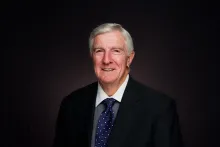
Before his retirement in 2021, Dr. Donald Ward pastored churches in Texas and Louisiana, and taught at Ambassador Bible College in Cincinnati, Ohio. He has also served as chairman of the Council of Elders of the United Church of God. He holds a BS degree; a BA in theology; a MS degree; a doctor’s degree in education from East Texas State University; and has completed 18 hours of graduate theology from SMU.
