
Paul Moody
This transcript was generated by AI and may contain errors. It is provided to assist those who may not be able to listen to the message.
Well, thank you again. Happy Sabbath, brethren! It's always great to be with you on God's Sabbath day. It has been such a long winter. It's almost hard to believe in just a few weeks we'll be observing the Passover this year, right here in Berea on Sunday night, April 13th. The Passover is a crucial festival that we continue to observe today as part of the New Covenant. I always like to emphasize that the Church of God is the New Covenant Church of God. We do not keep the Old Testament Holy Days. We keep the New Covenant Holy Days. We do not keep the Old Testament Passover. We observe the New Testament Passover. And it's always, I think, very important for us to emphasize. Recently, a good friend of mine gave me a book entitled, Seeking Him, Experiencing the Joy of Personal Revival. I didn't know if I liked that title. When I think of revival, this is just my wicked, sick mind. When I think of revival, I think of a tent on a hot summer day with bare light bulbs strung out under the tent and some minister screaming at the top of his lungs telling everyone that they're evil and wicked and going to hellfire. That's kind of what I imagine in my mind when I think of the word revival. So I'm not really easy with that. In the introduction of the book, like any book, like any book you read, you have to separate the wheat from the chaff. And in the introduction, the authors emphasize the importance of spiritual revival. They even point out times in modern history when revivals occurred that changed in nations like in November of 1904. You may or may not know, but there was supposedly a dramatic spiritual revival that occurred in November of 1904. It began in all places in Wales and then went to the United Kingdom and came here to the United States. And it is considered in the Protestant world as a time of great revival. They imply in the book here, in the introduction, that a revival is something that God does and that God does it rarely for the church. Well, the more I thought about this, pondered it, and the more I meditated on it and thought about it, I realized that God made provision for an annual personal revival. If you want to accept that word, okay, I'll buy that word. That's okay. But God made a provision for an annual personal revival. And you know what we call that annual provision? We call it the Passover and the Days of Unleavened Bread. If we honor these holy days, we don't need to pray for God to bring a revival to the church every hundred years. We can experience our own revival every year by examining ourselves and preparing to replay God's plan, that is, to participate in the Passover every year and to participate and observe the days of unleavened bread. And what makes all of that possible is the fact that Jesus Christ, as was mentioned in the sermon at today, and unfortunately my very own son-in-law, whom I trusted, stole so much of my material, I'd like to talk about Jesus Christ today as the Lamb of God. It just shows you can't trust anyone, even members of your own household. All kidding aside, let's turn to John 1 and verse 19, and see something that John the Baptist said. John 1 and verse 19.
John is under the gun here. The Jews are sending everybody that they have to quiz John to find out more about him, actually to try to criticize him. They send, first of all, priests and Levites to quiz him. Then we'll see in a little bit the Pharisees show up, and they ask him questions, and they are all trying to put John the Baptist on the spot.
John chapter 1 and verse 19. Now this is the testimony of John, when the Jews sent priests and Levites, so again, these are the priests and Levites, from Jerusalem to ask him, who are you? And he confessed and did not deny, but confessed, I am not the Christ. And they asked him, what then are you, Elijah? And he said, I am not.
Are you the prophet? He answered, no. Then they said to him, who are you, that we may give an answer to those who sent us? What do you say about yourself? And he said, I am the voice of one crying in the wilderness, make straight the way of the Lord, as the prophet Isaiah said. So he said, I'm the first one to be talking about the need for repentance and baptism, and I am paving the way for someone far greater than I to do a much greater work.
Verse 24, now those who were sent from the Pharisees, they show up, and they asked him, saying, well, if you're none of these things, you're obviously not a very important person, then why do you baptize if you are not the Christ, nor Elijah, nor the prophet?
What gives you the authority to baptize people? And John answered them, saying, I baptize with water, but there stands one among you whom you do not know. It is he who coming after me is preferred before me, whose sandal strap I am not worthy to loose. And these things were done in Bethabera beyond the Jordan when John was baptizing. And the next day John saw Jesus coming toward him and said, behold, the Lamb of God who takes away the sin of the world. That's a pretty powerful statement from John.
By the way, we tend to call him John the Baptist. You know what his name is in the original Greek that's kind of lost? His original name was Dipper. He was John the Dipper because he baptized by immersion. And that was, if you look in the original Greek, is what his name means. You know, when we think of Baptists today, we almost think of a religious denomination rather than someone who immerses you and dips you in water into a watery grave and brings you out again.
But John the Dipper here was God's prophet. He didn't say he was the prophet, but Jesus said in Luke, chapter 7 and verse 28, that John was the greatest prophet ever born of a woman. That's quite a compliment. That's what Jesus said about him in Luke, chapter 7 and verse 28. You see, John didn't accumulate titles to himself. He had humility. He didn't collect titles.
He didn't have to walk around and proclaim that he was an evangelist. That prophet, the 18th of the two witnesses, an apostle. He didn't need to do these things. He let others judge his works, like Jesus Christ, for example. He just let his fruits be obvious, and he let others judge his works.
He wasn't in the titles. But as soon as he saw Jesus, John knew that there was something special about the Christ. And everyone in the audience would have picked up on his analogy to Jesus Christ being the Lamb of God and what the Lamb meant. First of all, we are all very aware of the Passover. In fact, there was a Lamb in the Passover. But in their day, in their culture, they would have seen something additional to that. Let me give you an example. Every religious Jew connected with lambs understood that there was in the temple a daily need for a blood sacrifice. John was the son of Zacharias, who was a temple priest.
And lambs were sacrificed every day in the temple as part of the morning and evening sacrifice. Do you remember that? That's in Exodus, chapter 29. So lambs were sacrificed every day, one time to start out the day, one time to end the day, to represent the daily need for forgiveness and mercy and blood that had to be shed. On the Sabbath, the sacrifices were doubled. That's according to Numbers, chapter 28. And some holy days, there were even more sacrifices than on the Sabbath. And of course, as I said, we know that the lamb was also part of the annual Passover. So when John makes this statement, and he says, Behold, the Lamb of God who takes away the sin of the world, everyone in that audience absolutely got it.
They knew that he was talking about this man was ultimately the fulfillment of everything that goes on in this temple every day. In the morning, in the evening, twice as much on each Sabbath day, and even more than that in the number of lambs that were sacrificed on the holy days. Let's drop down now to verse 35. It says, And again, or again the next day, John stood with two of his disciples, and looking at Jesus, he walked and said, Behold, the Lamb of God. Second time he said this now. And the two disciples heard him speak, and they followed Jesus. That's a great way, by the way, that's a great way to diminish your church attendance is to point to someone else and say, you know, this is the Son of God.
John just lost two disciples over this experience. One of them happened to be Andrew. And the first thing, of course, Andrew did is he ran to his brother Peter, and he told Peter that the Messiah here, the Christ, is here. And obviously that's why Andrew and Peter were some of the first disciples. They understood what John the Dipper meant when he said, again, that Jesus Christ was the Lamb of God. But this is not the first time that the Scriptures pointed to the fact that Jesus Christ was the Lamb of God. Let's go back to an event 2,000 years before this time and see Genesis, chapter 22, verses 1 through 8. I mentioned this last week.
I'll focus on a different verse today. And I don't have time to go into the very rich and deep and beautiful theology of Abraham being told to sacrifice his son Isaac. There's a sermon on our website. If you would like to hear it, it's called, How Abraham Learned About the Sacrifice of Christ. It was given March 19, 2011. So if you'd like to explore the very deep and rich theology of everything that occurred in this event, you can find out more information there. That's not our purpose today. I want to particularly zero in and focus on verse 7, but let's lead up to it.
That's kind of interesting. It's a reflection of his faith, isn't it? He was told to sacrifice his son, but in faith he says, we will return. Both of us are coming back to you. Verse 6, And Abraham took the wood of the burnt offering and laid it on Isaac his son. And he took the fire in his hand and a knife, and the two of them went together. Here's what I wanted to focus on. But Isaac spoke to Abraham, his father. Now, tradition says he was like a 13 to 15 year old boy in this experience. I'm not sure we can prove that one way or another, but he was a young man. So he's walking with his father, and he notices that, let's see, there's wood, there's a knife, but I don't hear any bleeding going on here. So he says, my father, and he said, here I am, son. He said, look, the fire and the wood, but where is the lamb for a burnt offering? And Abraham said, my son, God will provide for himself the lamb for a burnt offering. So the two of them went together. First of all, Abraham was again demonstrating absolute faith, and this is the reason he was willing to obey God's instruction to sacrifice his son of promise, even though I'm sure to him it didn't make any sense. He was obedient. He was doing what God told him to do. But the comment here is also very prophetic. Abraham was looking 2,000 years into the future. Abraham lived about 2,000 B.C. So he's looking 2,000 years down the road into the future, and he knew that the Father would need to provide for himself a lamb to take away the sins of the world. It's God who would provide his own lamb. God himself, in the form of who later would become known as Jesus Christ, the Creator, would empty himself of his glory and come to earth as a humble servant and live a perfect life. And become the Lamb of God. And God would enforce this prophetic knowledge that Abraham was able to clearly see by what he instructed the Israelites to do as they prepared to leave Egypt. So let's read about it. Again, an account many of us are familiar with in Exodus 12 if you'll turn there with me. And we'll see the instruction that Israel was given regarding the Passover in the Old Testament.
Exodus 12, and we'll begin in verse 1. It says, Now the LORD spoke to Moses and Aaron in the land of Egypt, saying, This month shall be a beginning of months. It shall be the first month of the year to you. So unlike the Egyptian calendar, the first month of the year would be in the spring. Speak to the congregation of Israel, saying, On the tenth day of this month every man shall take for himself a lamb according to the house of his father, a lamb for a household.
I want you to notice the family inference here. Not a lamb for each individual, a lamb for a household. This was intended to be a family activity. Verse 4, And if the household is too small for the lamb, let him and his neighbor next to his house take it according to the number of persons according to each man's need, you shall make your count. Meaning, you're to share this lamb, and if you don't have a large family, rather than having all that waste of excess lamb, combine with another family and share the lamb with each other.
Verse 5, Your lamb shall be without blemish, a male of the first year, has to be rather young. You may take it from the sheep or from the goats. Now you shall keep it until the fourteenth day of the same month. Again, this was the first month of the year in the spring. The whole assembly of the congregation of Israel shall kill it at twilight, and they shall take some of the blood and put it on the two doorposts, on the lentil of the houses where they eat it, and they shall eat the flesh on that night, roasted in fire with unleavened bread, and with bitter herbs they shall eat it.
Do not eat it raw, nor boiled at all with water, but roasted in fire with its head, with its legs, and in trails. And of course, roasting it would ensure that no bones would be broken. God did not want bones to be broken, and He didn't want it so that when you pulled the lamb out, it all fell apart into a million pieces. And if you roast it, you're going to have a whole something to eat and share together, and the bones will not be broken in the process. Verse 9, you shall let none of it remain until morning, and what remains of it until morning you shall burn with fire, and thus you shall eat it, with a belt on your waist, with sandals on your feet, and with a staff in your hand you shall eat it in haste.
It is the Lord's Passover. A great analogy here, just like Israel, was to flee from the land of Egypt, which represented sin. When they recognized their need for God, they were to flee from sin in haste. Is that the way that we react when, while we're examining ourselves, we discover something in our lives that we're ashamed of, that we're not living up to, the standards and principles of God's law?
Are we doing this? Are we ready to leave that sin in haste? Are our sandals on our feet? Is our staff in our hand? Are we ready to move forward and flee that sin? Or are we compromising with it? Are we making deals with ourselves? Are we selling ourselves short?
Verse 12, For I will pass through the land of Egypt that night, and will strike all the firstborn in the land of Egypt, both man and beast, and against all the gods of Egypt I will execute judgment, I am the Lord. Now the blood shall be a sign for you on the houses where you are, and when I see the blood I will pass over you. And the plague shall not be on you to destroy you when I strike the land of Egypt. So this day shall be to you a memorial, and you shall keep it as a feast to the Lord throughout your generations.
You shall keep it as a feast by an everlasting ordinance. So we see here that ancient Israel observed this ceremony, and they received physical salvation from death in the land of Egypt. The choice was either this lamb or the firstborn would die. And because they did it with the blood, they put the blood on the lentil, they received physical salvation from death in the land of Egypt. And because of what Jesus Christ did on that stake, on that cross for you and I, those who accept Him as the ultimate Passover, His shed blood, received spiritual salvation and eternal life.
That's the analogy. That's where it connects. That's what it looked forward to. That's what the Passover lamb was always all about. And this feast was to continue forever. And though the symbols were changed by Jesus, and we no longer eat a lamb, we no longer consume the lamb, because He fulfilled what the lamb represented. The symbols have been changed by Him, but we observe the Passover today. I'd like to read a statement from the Believer's Study Bible.
Here's what it says. It says, quote, Each individual was to partake of the lamb, but it was not an individual ordinance. The feast was for families, and the entire family acted simultaneously to observe it. End of quote, again from the Believer's Study Bible. And that is why on that night, we will assemble together as the spiritual family of God. How are we spiritual family? Those of us who have received God's Spirit were put into His family. And we're not going to do it individually at home, and we're not going to prop a mirror up and wash our own feet.
We are going to come here with family, and we are going to experience and share the Passover together, just like the original instruction was. Well, we saw where 2,000 years before Christ came to earth, that it was referred to by Abraham. His life was referred to by Abraham in the event of sacrificing his son Isaac. And the fact that God would provide for Himself a Lamb.
We have seen already in the days of Jesus how John the Baptist, when he saw Jesus coming, he said, Behold the Lamb of God, who takes away the sins of the world. We've looked at the past. We've looked at just the time of Jesus. Now let's look into the future, into the book of Revelation. Let's fast forward now into the book of Revelation. Let's go to chapter 5. If you'll turn there with me. Chapter 5, beginning in verse 1.
This is pretty early in the book of Revelation. John's writing, and he says, And I saw in the right hand of him who sat in the throne, a scroll written inside and on the back sealed with seven seals. So seven seals as they are broken and unraveled are going to outline the rest of the events, the culmination of these end time events. So John is anxious to have these seals unraveled and opened one by one.
Verse 2, And I saw a strong angel proclaiming with a loud voice, Who is worthy to open the scroll into lucid seals? And no one in heaven or on the earth or under the earth was able to open the scroll or to look at it. John says, So I wept much, because no one was found worthy to open and read the scroll or to look at it.
Verse 5, But one of the elders said to me, Do not weep, behold, the lion of the tribe of Judah and the root of David, both very kingly titles, majestic kingly titles, Has prevailed to open the scroll and to loose its seven seals. And I looked, and behold, in the midst of the throne and of the four living creatures, and in the midst of the elder stood a lamb, as though it had been slain, having seven horns and seven eyes, which are the seven spirits of God sent throughout all the earth.
Then he came, and he took the scroll out of the right hand of him who sat on the throne. Now when he had taken the scroll, the four living creatures, and the twenty-four elders, fell down before the lamb, each having a harp, a golden bowl of incense, which are the prayers of the saints, and they sang a new song, You were worthy to take the scroll and to open its seals. You were slain and have redeemed us to God by your blood. So this is none other than Jesus Christ Himself, looking into the future, the Lamb of God.
I want you to notice how He was pictured here as a lamb. Out of every tribe and tongue and people and nation, verse 10, and have made us kings and priests to our God, and we shall reign on the earth. Then I looked, and I heard a voice of many angels around the throne, the living creatures and the elders, and the number of them was ten thousand times ten thousand, and thousands of thousands. I'm a product of the Cleveland school system, but I think ten thousand times ten thousand is one hundred million.
It says, and then there were more, and thousands of thousands. So if you want to know how many there are in the heavenly hosts that are unseen, that we don't even know is there, but yet permeates the world that we live in. There are millions, perhaps even billions, at least a hundred million plus.
That's what He sees. That's what He experiences. And let's continue here. He says, and the number of them was ten thousand times ten thousand, and thousands of thousands, saying with a loud voice, Worthy is the Lamb who was slain to receive power, and riches, and wisdom, and strength, and honor, and glory, and blessing. And every creature which is in heaven and on the earth and under the earth, as such as are in the sea, and all that are in them, I heard saying, blessing, and honor, and glory, and power be to Him who sits in the throne, and to the Lamb forever and ever.
Pretty powerful Scripture. And here's a point that I would like to bring out. Jesus Christ has many descriptions. He has many titles. We saw a couple here. Lion of the Tribe of Judah and the Root of David, which are kingly titles. But I want to point this out, that these indeed are kingly designations, but you know what title is used in the book of Revelation to describe Jesus Christ more than any other. You know what that title is? That title is the Lamb, not the ferocious lion, not the root of David.
It's the Lamb. John was expecting to behold a kingly and ferocious lion because the elder told him, behold, look, here's what I see. But when John turned, he beheld a lamb. And that's the Greek word arneion, which is used 29 times in the book of Revelation to describe Jesus Christ. Far more, there's not even a close number two that describes who and what Jesus Christ is.
Jesus is obviously alive, symbolically, but nevertheless he exhibits the marks of his earthly sacrifice. You can tell that he had been sacrificed, this lamb that John sees. He had been dead, but now he's alive. Of course, the seven horns are symbolic of absolute power and authority. The seven eyes represent total insight and watchfulness and comprehension of everything that goes on in the world.
Jesus Christ is omnipotent. He's omnipresent. And this is a very important understanding for us to have about Jesus Christ as the Lamb of God, because in the future, he will always be referred to as the Lamb of God. Let's go down to Revelation chapter 13.
In the latter part of the verse here, in verse 8, the latter part of verse 8 uses a phrase that tells us the time in prehistory when Jesus Christ was originally designated to be the Lamb of God. It was far more than 2,000 years before he was born during Abraham's time. It went back many millions, perhaps billions of years.
And here's what it says, Revelation chapter 13, and I'm going to read in verse 8, it's talking about a beast who came out of the sea. And it says, The point is that God is all-knowing, and the sin of Adam and Eve were not a surprise to God.
They were a disappointment to him, but they certainly weren't a surprise. The fact that they made a choice, and it was the wrong choice, did not shock God. After all, he allowed Satan to also reside in the garden. He allowed the serpent to be there inside of the garden. He knew what the devil would say and do, and how the devil would tempt them.
So the fact that they sinned was never a shock to God Almighty. The moment that God desired to expand his family by creating physical human beings, beginning with Adam and Eve, he had a provision already planned to provide for the forgiveness of sin. And that provision later became known as the Word, and ultimately, eventually, Jesus Christ when he walked on this earth.
Let's hear what the prophet Isaiah said about the Lamb of God. Let's go to Isaiah 53. Isaiah wrote about this prophecy, and this is what this is, from the perspective of a Jew living in the time of Jesus and recollecting what he witnessed. So let's go to Isaiah 53 and take a look at what the prophet Isaiah said about the Lamb of God. Parts of Isaiah 53, we also read during the Passover ceremony itself. Isaiah wrote, Who has believed our report, in other words, who would believe that this even happened?
And to whom has the arm of the Lord been revealed? For he shall grow up before him as a tender plant and as a root out of dry ground. Jesus Christ was born as a child, and he looked weak and sickly like any human child. In that, he would have been susceptible to the same diseases and the same kind of things as any other child would.
He was tender. He was a root out of dry ground. That part of the world was controlled by the Roman Empire. And Jesus Christ was born a babe, vulnerable. And that's one reason why his father had to take him to Egypt, because he was vulnerable. He was vulnerable to even being killed by enemies, profound enemies at the time of his birth.
Continuing, he has no form or comeliness, and when we see him, there is no beauty that we should desire him. Jesus Christ looked like a common Jew of his day. His charisma was in his speaking style, and it was in his teaching.
It wasn't in the way that he looked. He just looked like an average, everyday person of that time. Verse 3, he is despised and rejected by men. And of course, we know what the Pharisees often said about him and the accusations they made. A man of sorrows and acquainted with grief. It's not that within him he sorrowed or grieved for himself, but he sorrowed and grieved for all these lost sheep that he came in contact with everyday. So many people without hope, so many people struggling with diseases and with mental issues and other problems, it caused grief in his heart.
It sorrowed him to see all of that tragedy going on in the world. And we hid, as it were, our faces from him. He was despised. Think of all that he experienced before he was crucified. And we did not esteem him. Many people at that time said, he's getting what he deserves. He's guilty of blasphemy.
And he was not esteemed. Surely he has borne our griefs and carried our sorrows. Yet we esteemed him stricken, smitten by God and afflicted. Many people said he's getting exactly what's coming to him. After all, he's been a troublemaker. He's been talking about him as being as great as the temple. He's been saying all of these things, which are odd. Verse 5, and he was wounded for our transgressions. He was bruised for our iniquities. The chastisement of our peace was upon him. The fact that he was chastised so that we could have peace of mind.
He was beaten and chastised so that we could have peace with God. And there would no longer be a barrier there separating us. That all came upon his shoulders. And by his stripes, we are healed. We are healed physically. We are healed emotionally. We can be healed spiritually because of the terrible beating that he voluntarily accepted before he died. All we, like sheep, have gone astray. We have turned to everyone to his own way. And the Lord laid on him the iniquity of us all. And we know at the very moment, even for a brief second, the Father had to turn his back on Jesus.
And he said, my God, my God, why have you forsaken me? He was oppressed and he was afflicted, yet he opened not his mouth. Matthew, Chapter 27, when the Jews were accusing him, Pilate said, don't you have any response to all of these accusations from the Jews? Matthew 27, 14, and it says, and he opened not his mouth.
He answered not a single word to those accusations. It says, he was led as a lamb to the slaughter and as a sheep before its shears is silent, so he opened not his mouth. He was taken from prison and from judgment. And who will declare his generation, for he was cut off from the land of the living, for the transgressions of my people he was stricken. And they made his grave with the wicked.
He was buried in a cemetery, and who else was in that cemetery? Everyone else. Human beings, wicked people, people from all walks of life, he was buried in a common cemetery. It looks like he was an average man or a criminal of some type, not respected at all.
It says, but with the rich at his death. Matthew 27, Joseph of Arimathea, who was a wealthy man, said to Pilate, can I have the body? And he buried Jesus in the tomb that he had prepared for his own burial. So indeed he was with the rich at his death. Because he has done no violence, nor was any deceit in his mouth, yet it pleased the Lord to bruise him. He has put him to grief. When you make his soul an offering for sin, and think of the blood that came out as the sorns were jammed on his head, think of the blood that came out as those nails were nailed through his hands and his feet.
As that spear entered his side and more blood poured out, his soul became an offering for sin, as life ebbed from his very existence. He shall see his seed, he shall prolong his days, and the pleasure of the Lord shall prosper his hand. In other words, he's going to be resurrected again.
He's going to see everyone whom he did this for, his seed. Verse 11, he shall see the labor of his soul and be satisfied. You know who the labor of his soul is? You are! I am. That's the labor of his soul. And it says he would be satisfied. By his knowledge, my righteous servant shall justify many, for he shall bear their iniquities.
Therefore I will divide him a portion with the great, and he will divide the spoiled with the strong. And for those of us who endure into the end, we are the strong. We are the ones who keep the faith into the end. And he will divide in the world tomorrow, he will divide the spoils of all the kingdoms of this world that have collapsed, and are being disassembled so that God can build something beautiful and new. He will share the wealth and the glory of that kingdom with the strong, with his saints, with those who endure to the end.
Continuing, because he poured out his soul into death, and he was numbered with the transgressors, and he bore the sin of many, and made intercession for the transgressors. This is a prophecy that's often called Isaiah's prophecy of the suffering servant, and it talks about Jesus Christ being led, again, verse 7, a lamb to the slaughter, because he was, and he is, and he will always be the lamb of God.
Let's now go to Acts 8, verse 26, and see how this prophecy of the suffering servant has been changing lives for 2,000 years. This is a beautiful example of one such time, very early after the resurrection of Jesus Christ, when the earth was, the earth, the church, was still new and young, and the gospel was being preached in many areas, and this is an example of Philip. Acts 8, verse 26. It says, Now the angel of the Lord spoke to Philip, saying, Arise, and go towards the south along the road which goes down from Jerusalem to Gaza.
This is desert. And he arose and went, and behold a man of Ethiopia, a eunuch under great authority, under Candace, the queen of the Ethiopians, who had charge of all her treasury, he had come to Jerusalem to worship. So we see this man here. He's already what we would call a God-ferer. That was a term used for Gentiles who attended Jewish services and read the Bible, the Old Testament Scriptures, and he obviously was a religious man, had a religious inclination. He wanted to know about God, so he'd come to Jerusalem to worship, and now he was returning back towards Ethiopia.
And sitting in his chariot, he was reading Isaiah the prophet, some of the very verses we just read. Then the Spirit said to Philip, Go near and overtake his chariot, and that's how God's Spirit speaks to us. God's Spirit doesn't speak to us audibly. What God's Spirit does is within our minds, it says, You know what?
You need to go over there and do that. See that person with a need? Get over there and do that. Get over there and say hello. Get over there and say, Can I help? Get over there and become someone's miracle. That's how God's Spirit speaks to us. It says, So the Spirit said to Philip, Go near and overtake this chariot. So Philip ran to him and heard him reading the prophet Isaiah, and said, Do you understand what you're reading?
And he said, How can I unless someone guides me? And he asked Philip to come up and sit with him. He realized this man was incredibly wealthy. First of all, he was responsible for all of the wealth of Candace, the queen of the Ethiopians. He was in charge of her treasury. Another indication is the fact that he could own his own scriptures, yet have lots of bucks to be able to afford handwritten scrolls of the Old Testament in order to read the prophets.
So this was a man who had a lot of wealth. He had his own chariot. He's being personally taken back and forth between Jerusalem and Ethiopia, sitting in a chariot. So again, this was a man who was very well off. So he said to Philip, Come up and sit with him.
And the place in the scripture which he had read was this. And we read this as Isaiah chapter 53 verses 7 and 8. It says, So the eunuch answered Philip and said, I ask you, of whom does the prophet say this is? Of himself or some other man? I want you to notice the humility of this eunuch from Ethiopia. Then Philip opened his mouth, and beginning at this scripture, this was the starting point, he preached Jesus to him.
And he took the time to explain to a man who already had religious understanding, who already read the scriptures, who already went to Jerusalem to worship. He filled in the missing blanks. The prophets looked forward to a Messiah. The Messiah has come. The prophets looked forward to the Lamb of God, Abraham, and the sacrifice of his Son, the Passover command, the daily offerings in the temple, all pointed to this man, Jesus Christ, who has come and lived his life and shed his blood for us and died and was resurrected again.
So he preached Jesus to this man, who just needed to fill in the blanks to have an understanding of his calling. It says, now when they came down the road, they came to some water, and a eunuch said, see here is water, what hinders me from being baptized?
Then Philip said, if you believe with all your heart, you may. The only thing that Philip wanted to understand at this time was that the man had faith, that he understood the power and importance of faith. Because he had the other stuff. He read the scriptures.
He was a God-fearing man. And he answered and said, I believe that Jesus Christ is the Son of God. So he commanded the chariot to stand still, and both Philip and the eunuch went down into the water, and he baptized him. Now when they came up out of the water, the Spirit of the Lord caught Philip away, so that the eunuch saw him no more, and he went away rejoicing.
Because he was clean. He was free from sin. He had received salvation. And what more could confirm what a beautiful event this was than the man who taught you, manishes, and immediately is carried away, leaves the scene. Because he's no more. He's caught away. What a wonderful experience he had. A number of years ago, someone gave me a video of the book of Acts, and it got to the point of this scene. And in the video, it's time to baptize the eunuch. And so they go down to this little riverbank, and the guy who's portraying Philip pulls out of his pocket a little teacup and puts a little water in it, and it pours it under...
Pours it over the head of the eunuch, and goes, ahhhh! So I always think of that when I see what the truth is that had nothing about sprinkling with water, but obviously he was immersed into a watery grave pictured by baptism. So, brethren, as we approach the Passover season, I believe it is good for us to be reminded of what Jesus did for us, and ultimately, not just for us, but for all humanity. We will continue to observe the New Covenant Passover, but unlike the Jews, we will not be consuming a lamb because Jesus fulfilled that role.
However, we will follow his example. We will observe the Passover, Eve, with the new symbols of bread and wine to remind us of his shed blood for us, for all humanity, and his broken body, which he willingly gave. The bruising, the stripes that he accepted so that we can be healed spiritually, physically, and emotionally.
Let's see what the Apostle John said about Christ Jesus later on. Let's go to 1 John chapter 2 and verse 1. 1 John chapter 2 and verse 1. Now, if you're like me, it's been a long time since the Passover last year, and maybe you've said some things you're not proud of, maybe you've thought of some things that you're not proud of, and maybe we realize that we fall short of God's goodness and God's grace, and that we need to repent, and we need to approach this Passover season once again after examining ourselves humbly and asking for God's grace in his forgiveness.
And John reminds us of that. He says, My little children, these things I write to you so that you may not sin. That's good in theory. Then he gets into the reality. And if anyone sins, we have an advocate with the Father, Jesus Christ the righteous. Remember Isaiah chapter 53 referred to the Lamb of God as my righteous servant. He says, Jesus Christ the righteous.
And he himself is the propitiation. I just love these words. That comes from a Greek word, hilasmos, which means atonement, atoning blood. He is the atonement for our sins, and not for ours only, but also for the whole world. I'm going to read this in the translation God's Word for today. It says, My dear children, I am writing this to you so that you will not sin, yet if anyone does sin, we have Jesus Christ, who is God's full approval.
He speaks on our behalf when we come into the presence of the Father. He is the payment for our sins, and not only for our sins, but also for the sins of the whole world. So, brethren, Christ died only once for our sins, but his continuing righteousness allows us to go to the Father in humble repentance, requesting continued forgiveness of our sins. And God will do it, because the Spirit of Christ, the glory of Christ resides in us because we possess His Spirit. And God loves anything in which the Spirit of His Son dwells, the presence of His Son, in action.
Jesus Christ is our Advocate High Priest. His righteousness is the payment for our sins and allows us to remain close to God, even when we stumble. Part of God's plan also includes forgiveness to those who will yet be called in the future when their blindness is removed, and they too repent of their sins. Well, we have one final scripture today. We're going to have a short sermon. If you'll turn to my final scripture, 1 Peter, chapter 1 and verse 13. 1 Peter, chapter 1 and verse 13. Peter writes here, Therefore gird up the loins of your mind. What does he mean by that? Well, when you gird up your loins, you're getting ready to go to work.
To use modern vernacular, you're putting your tool belt on when you gird up your loins. When he says, gird up the loins of your mind, he's saying, get mentally ready for action. Get mentally ready to go to work on yourself. Be sober and rest your hope fully upon the grace that is to be brought to you at the revelation of Jesus Christ. As obedient children, not conforming yourselves to the former lust as in your ignorance. So we shouldn't be acting like we did before we were called. We certainly should not have a lifestyle of sin because that is crucifying Jesus Christ anew.
If we just habitually have this deeply embedded personal issue that we're denying, that we're not working on, that we're not overcoming. He says, not conforming yourselves to the former lust as in your ignorance. But as he who called you as holy, you also be holy in your conduct. Now, you know why he said, put on, gird up the loins of your mind, get ready for action.
Because it is written, be holy, for I am holy. And if you call on the Father, who without partiality judges according to each one's work, conduct yourselves throughout the time of your stay here in fear. So he says, there is a judgment day. So fearfully consider the things that you do before you fall into sin, before you go back to the world, before you start acting like an animal again. And the way that you acted before you were called, he says, have a little fear. Think about the consequences of doing that.
Verse 18, knowing that you were not redeemed with corruptible things like silver or gold from your aimless conduct received by tradition of your fathers. And all of us have baggage that we carry from our families. All of us come from backgrounds in which there's been generational dysfunctions going on and on.
And he says that we should not be receiving these traditions from our fathers. And again, what he calls aimless conduct. Verse 19, but with the precious blood of Christ as a lamb without blemish and without spot, he indeed was foreordained before the foundation of the world. Again, he was the provision that God knew from the beginning that Adam and Eve would sin. He let that serpent into the garden. He knew exactly what that serpent would do. He knew that they would stumble. And before the foundation of the world, he had already made a way for forgiveness to be possible for his creation.
As a lamb without blemish and spot, he indeed was foreordained before the foundation of the world, but was manifested in these last times for you, who through him believed in God, who raised him from the dead and gave him glory, so that your faith and hope are in God. Well, brethren, this scripture is what I call a genuine personal revival. Peter states it's time for mental action, time to remember the importance of holy conduct, time to remember the importance of our example to our spouses, to our families, to our co-workers, to our neighbors, the importance of our example of our conduct to everyone whom we meet and come in contact with.
It's time again to acknowledge the sacrifice of Jesus for our sins, past and present. Let each of us as individuals go to the Lamb of God as our advocate. Go to our high priest as our advocate to the Father. In preparation for the spring holy days this year, let's have a personal revival, an upgrade, a renewal, even though those words just don't seem to be strong enough to me. Let's take a look at our hearts and minds and let's take it up a notch and rededicate ourselves to follow Christ Jesus.
Let's move closer to the Father and allow our relationship to deepen with Him. And let's remember that our sins are forgiven, our salvation is promised, and our consciences can be pure all because Jesus Christ is the Lamb of God who was slain from the foundation of the world. Have a wonderful Sabbath.
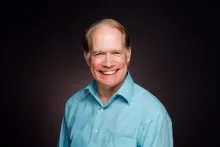
Greg Thomas is the former Pastor of the Cleveland, Ohio congregation. He retired as pastor in January 2025 and still attends there. Ordained in 1981, he has served in the ministry for 44-years. As a certified leadership consultant, Greg is the founder and president of weLEAD, Inc. Chartered in 2001, weLEAD is a 501(3)(c) non-profit organization and a major respected resource for free leadership development information reaching a worldwide audience. Greg also founded Leadership Excellence, Ltd in 2009 offering leadership training and coaching. He has an undergraduate degree from Ambassador College, and a master’s degree in leadership from Bellevue University. Greg has served on various Boards during his career. He is the author of two leadership development books, and is a certified life coach, and business coach.
Greg and his wife, B.J., live in Litchfield, Ohio. They first met in church as teenagers and were married in 1974. They enjoy spending time with family— especially their eight grandchildren.
