
Gary Petty
This transcript was generated by AI and may contain errors. It is provided to assist those who may not be able to listen to the message.
There are many relationships that we have with Jesus Christ and with God the Father. And I'm going to... and they really go together, of course, as you know. But there are... there are two who are God, and they have the potential for making other gods, because there's the Holy Spirit, and that's what they are. So we have some understanding of this and are always anxious to grow in it, but I'm talking about today the two relationships... pardon me... the many relationships we have with Jesus Christ and the fact that you can kind of put them together in two big categories. You can take one view of it where there are two categories. And this comes out in the spring Holy Days, so I wanted to speak about that in particular.
I should explain about the title, YA Bush, referring to Moses and the burning bush. And that was one of the two psalms I was going to use, was going to... what's the past something or the perfect tense or something? But we may get to that.
And the reason is I did cover some of this about Moses and the burning bush. But it turns out it's better to do that as the second part of this. So I want to start out with Psalm 23. Of the many relationships, the two categories that you can put them into, is first of all, Christ is our Savior. And growing up, some people don't at all, Hindu culture or something, but as Christians you do hear about Christ and you hear about the Savior, and the shepherd, and the king, and high priest, and depending on how much you've heard, you'd hear about all those things. But we first come to this personal relationship, understanding that He is the Savior. And you may be familiar with this, that in some cultures, if you save somebody's life, that person is just indebted to you. And there have been a couple of movies I've seen a long time ago where an American saved somebody and then had this personal servant tagging around for the rest of their life and made it a funny movie and so on. Especially if he was engaged to be married and the person he saved happened to be female. That was one movie I remember. But the idea comes back from the whole thing of if you save somebody, you own them. They would have died now. And that's absolutely true with God. So Christ owns us, having been our Creator. And He was the one... God the Father is responsible and they work together. But it says Jesus Christ did it specifically. No person, nothing that was made was made by anybody else. He is the Maker and Creator. So of the two, He was the Logos, the spokesman, the Word that took action and continues to, because He said, I do that which my Father tells me. So the first one then is that He is the Savior. He owns us. He therefore is our King, our Boss. And the title is Lord. That's the most common title for, at least in English, used in the Bible. And then the other one comes along later. It says the Lord is my Shepherd. The Lord is my High Priest also, and my King, and all those things. But those are the two categories. First of all, the owner, the Savior, owner, Lord, Boss, Director and King. All those things because He has authority over us. And the second one is brought up in chapter 23 of Psalms. This is one that I, you know, were very familiar with, and I did not memorize this until about two years ago. And I thought, you know, I never have memorized this, so I better do that. What I found is I already had memorized it almost. I had to make a couple of things, sure things were in order. So I imagine you also are very familiar with the 23rd Psalm. It turns out that rather than just a lovely Psalm and an ode to our Savior and our Boss, there's a second point brought up, and it makes a whole big difference. The Lord, verse 1 of Psalm 23, is My shepherd. We've heard that many times. It starts out with the fact that Jesus Christ, who's talking about, is our Lord, Savior, owner, Boss, director, all those things, with authority. He's our God. He's a King. In Malachi it says, I am a great King, and so where is my honor to Israel? It was rebellious. So He is a great King, and deigns to speak to each one of us. The Lord, and you can say for this purpose anyway, is also My shepherd. And that's a second relationship. That's different than with a Savior, King, owner, Lord, Boss.
The shepherd is your guide, your advocate, that is used of Jesus Christ, your teacher, protector, My high tower, My rock, My salvation. David said, he's our advocate, or paracletus, the one who goes along beside to help. That paracletus is a Greek name, and it says, it talks in, Jesus said in chapter 14 and following of the book of John, He talked about, I'll send another helper, or another assistant, or it's translated in different ways, comforters, King James. And it simply means, one who goes along beside to help. That's the official meaning of that Greek word. And so, this shepherd, tower, rock, protector, guide, teacher, advocate, paracletus, is a caretaker. He goes along to take care of us. We talk about being in God's hands, and we'll use that scripture in just a minute. You probably know that really lovely poem called, Footprints. He was walking along the beach. Anybody not know about it? Okay, I don't have to tell you. You know about it. Two sets, it was the Lord and Him. And there were times where there was only one set. He figured they were His own. And He said, why did you leave me? Why did you abandon me? In distress, and the Lord said, that was when I had to carry you. I didn't leave you. Very lovely poem. And it's a true fact if it's not a quoting of scripture. We're in God's hands in two ways. Number one, He's the boss, just the Almighty, and we should fear and respect Him. But secondly, we're in His hands as far as taking care of us. And we have a great deal of... just comfort flows from that. Now, I'm going to skip the, why a bush? Question moved to that. We may be able to get to that. I don't think we'll be able to get to that today. Besides, we have a social, so we won't get to it. But I did cover that a couple or three years ago, so I expect that everybody remembers every word I said, right? But really, in order, that's what we'll do. Cover that before Passover and several other things. Now, let's go ahead and continue with this. I mean, we just read the first verse, He makes me to lie down in green pastures. That's the sheep. You know, if you're lying down in a green pasture and you're a sheep, you know what that means? You have just eaten to your... and you're feeling good. So you sit down and take a nap and relax, like sheep are supposed to do, chew your cud and do all those sheep things. And then He says, He leads me besides still water as well. When you get up from your nap and chewing your cud and all that pleasant stuff, you don't want to have to go down to a rushing mountain stream and pick your way through the rocks. You know, you want a nice calm stream. And it's just a picture of tranquility, peace, that God is offering to us joy and peace. He restores my soul. So one thing that's very restored to you is having a nice meal.
With plenty of drink, and then take a nice nap. And that's what's just happened to you. So He restores my soul. But this is different than just your physical soul, physical life. God restores us when we eat out of His pasture, which is God teaching us. It always goes back to study and prayer. If we miss that, we're missing the food. That which brings restoration and comfort. He leads me in the paths of righteousness. For His name's sake, it's so important. It's hard not to say, you know, explain everything. But I think you know that already anyway. He leads me in the path of righteousness, but for His name's sake, He wants to be known. It's really important. He wants us to know Him.
Yea, though I walk through the valley of the shadow of death, in other words, yea, though I am a human, and that's what we humans do, there are periods of time when we're in the shadow of death, through that valley. And there's more to that, but this is normal stuff for humans. David, of course, had specific times when he was, you know, running from people with real swords and spears, who wished him harm.
And so, it's more dramatic, but we have our own dramas in fighting through the Christian calling. The valley of the shadow of death, I will fear no evil. At this point, this is the sheep has been talking, and just about how he or she is doing. But now, it switches, and he's talking to Jesus, to Jesus the shepherd. Thou art with me. I won't fear any evil, because you are with me, and your rod and staff, they comfort me. The rod and staff are two different things, two different functions, both of which protect and direct the sheep. You prepare a table before me, and the presence of my enemies. When I think of that, a picture comes to mind. It's all filled in. It's kind of woody. It's not deep woods, but he's been going through the shadow of death down into the ravine. He comes in to kind of a flat place, a meadow with light birch trees around it, birch naspin. That's because that's why I experienced it plenty of times.
Those were lovely places, because he had a nice little place for a picnic. He's going to a picnic that God has provided. There's one problem here, and it says, you have prepared me a table in front of me, in the presence of my enemies.
I made up this story to teach it to children, and help them with the picture of what they were doing. You go through it, and you just memorize it real quick, giving kids. What you do is, it's not just a meadow, but it's got light trees around it. There are wolves around, and they're after you, because you're a kid, or a person. But they don't dare come close to you. Then, on the other hand, there are human enemies, and you can see them sneaking between tree to tree.
So I made up this story. I see that. I just have it memorized that way. But these people and these wolves mean you harm, but they don't come near you. They try to, and they want to, but Christ has his... because you're close to Christ, he has his staff, a shorter, blunder object, that would knock a man or a wolf cuckoo. It's really hurt him. And the other is the shepherd's crook. If you start wandering out, and you're going towards an enemy, you'll reach over and put that hook around your neck and pull you right back in the way to go.
And so it's a wonderful picture here. But you prepared a table before me, a meal, in the presence of my enemies, and that's the problem. But he's protected, the sheep is, and now he's talking directly to Christ. And you anoint my head with oil that has to do with being chosen and showing that God has this personal relationship, and he will never let you go. Never forsake. Never walk away. As soon as we turn, he will turn to us if he isn't already.
And my cup runs over. And so, this is a cup of water, or a cup of wine, or in the story, it's chocolate milk. God, this is for kids. And it's so much that it's almost about, oops, it spilled over a little bit, you know. My cup runs over. Yum, yum. Surely, and his conclusion here is, I'm totally protected and totally secure and totally filled with what I need.
Not just food, but joy. As speaking of turning to the spiritual, as Mark mentioned. Surely, here's the conclusion, surely, goodness and mercy. We want goodness always, and we need mercy. They will follow me all the days of my life, and I will dwell in the house of the Lord forever, which means I will be in God's kingdom. That's his will. It's my will. It will happen. And he gives us that faith through obedience. Now, this brings us back to the spring holy days, where we have these two categories.
First of all, we have the boss principle, you know. The Savior, the owner, the King, the boss, who is the Lord. That Lord means boss. It's in the King James at that time. Lord is an English word, and it means the Lord of the manor, or the Lord of this parcel of ground that the King has granted to you.
It was not a land of freedom where you could just go out and do what you wanted to. The land was taken up, and there was a Lord over every part of it. So that's the context. He is the Lord. With God, He is the Lord over every part of it. And, you know, He just were owned, and had to pay attention to Him. So that's the one, and the other is the shepherd, the one who cares for the paracletus, the one who is our caretaker, and our personal server.
So let's go over to chapter 10 of John and look at that, because John adds that other side to it. We're getting into dangerous territory here, because I never can see that clock and be positive of what it says. Okay, I'm just going to have to keep this out here. Not too dangerous, though. We don't have that much to do today. Okay, let's go to John 10, I said, and this is the subtitle. Not in the Bible, but over to chapter 10 is, The Good Shepherd. So I call my own sheep by name, and so on. I'm going to go down here to verse 11.
Well, let's read verse 10, which is so important. The thief comes not to steal and kill and to destroy, but I am come that they might have life and that they might have it more abundantly. So 10b is what I was after. Christ came to give us abundant life. Jesus and the Father planned this out way before anything happened. Had it all planned.
And then he says, I am the Good Shepherd. The Good Shepherd gives his life for the sheep. And of course, that's just a direct fact of history that Jesus Christ gave his life for us. And so we have the other side of being owned and having a ruler above us, knowing that Christ is the Savior who owns us and is the King and so on.
But here's another side that Psalm 23 brings up. The Lord is my shepherd. And this is about the shepherd specifically. Christ followed up on this. And that has to do with our security and being the shepherd. So let's continue to read. I wanted to read verses 14 and 15. He speaks about the hireling, verse 12.
And the hireling will flee because he's not concerned about the sheep. He's in it for himself. So Christ had very bad words for people. And we hear about this on the news. There is another church scandal or something. And there are shepherds that don't care. And then he makes the comment here about other sheep and another pasture, another flock, or another fold. Verse 17 then. I want to go to verse 14. I am the good shepherd, and I know my sheep, and I am known of mine, as the Father knows me, even so I know the Father, and I lay down my life for the sheep.
So just reiterating that and making the point.
Therefore does my Father love me because I lay down my life that I might take it again. So this is something a shepherd might do. I've heard of this. We've heard of the captain going down with his ship and various other things. For the leader of, generally, a military or some organized band trying to protect the others is willing to give his own life to protect the others.
But for actual sheep, you wouldn't want a shepherd to do that.
So this part is mini-spiritual. Although a couple of examples of David and I have read of people saving the herd or saving the flock and just being so committed to it.
I know this one man was responsible for the herd. He was responsible to his boss, and he'd given his word that he would keep them safe to the best of his ability. And he actually gave his life as it were, but recovered. He was injured badly.
But most of the time you wouldn't do that for your animals. You would do everything. But sometimes you might even go that far. But when the flock is people, Christ gave his life and he calls on us to do the very same thing.
And this is really important. This is a huge verse, 18, that says a lot about the whole...this is the relationship between Jesus and the Father that tells us the most about.
Therefore does my Father love me because I lay down my life that I might take it again. And he said then, verse 18, no man takes it from me, but I lay it down of myself. I have power to lay it down. I have power to take it again. This commandment, however, received my Father. So there was a certain point at which one of the two, who were God in the beginning, you know, I mentioned Genesis 1.1 and John 1.1, had a conversation and we don't know why Jesus became the logos or the spokesman and took that role. And the Father took the role together if they were absolutely co-equal, but they seemed...it was presented that way. There were two. And then one became the Son and at a certain point God said, this day, this is Psalm 110 and also in the New Testament quoted in Luke, this day have I begotten thee. At a certain point Christ became the Son and wasn't before. I mean, had the baptism and there's a lot we don't know about, but that was a certain point in history. And this point shows something that's absolutely necessary. This would have to be voluntary. Christ did that because He wanted to have children in the family as much as the Father did. And so there...even Christ has called a Father in...oh, I can't remember what I was thinking about, but also in Matthew where it goes back to...it says, and says, whose son was Adam and Adam...pardon me...whose father was Adam and Adam, the Son of God. So Christ is also a Father in the sense of creation and then by sharing the Holy Spirit because they both do. So this is huge and it's something I can just point out how important it is, the total absolute devotion the Father has for the Son and the Son for the Father. Their whole arrangement that would change things that had been forever...you know, it's easy to think of forever in the future, just things don't end. How about forever in the past where things...you never get to the beginning because there is none. It's something we can't actually do. But it had always been that way and it was changed and it was forever. It was Christ volunteering to do that. And so He is, along with the Father, totally devoted to the plan which is us. So I read 17 and then let's skip over to 28. No, 27. My sheep hear my voice and I know them and they follow me and I give unto them eternal life and they shall never perish. Neither shall any man pluck them up out of my hand, which is a very interesting thing. My Father who gave them to me is greater than all and no man is able to pluck them out of my Father's hand. So in Psalm 23, we have a situation which is also referred to in Psalm 91, where we're in God's hands for care.
And specifically, we are in the hand, single, singular hand of Jesus Christ. And what does that mean? Well, Psalm 91 shows that it means total security. Nothing can get to us. But let's continue reading here. We have a situation being described here, which is one of the benefits we have from Christ's sacrifice. And that is total security. And that's what we're talking about here. Verse 27 to 30, My sheep hear my voice, I know them and they follow me. And you've probably heard... I've heard several sermons, read a couple of books, and given a couple of sermons myself. On Psalm 23, from the viewpoint of a shepherd. There are several books that are really good studies, but there's one. Psalm 23, in the eyes or through the eyes of a shepherd. And it points out that the sheep get to know your voice and they trust you. And you walk toward them, you know, they run away, but the more they know you, they don't... They just stand there, because you're the shepherd, and you're their boss, and they're mainly their caretaker.
And somebody else tries to call them, and they won't respond at all, except by running away or whatever. But the shepherd can come and calm them with his voice. I guess I've seen this, but not really that I could describe well. They look like pretty unruly creatures to me, running around. But a good shepherd who knows the sheep well and takes care of them, and doesn't mistreat him.
Especially with the help of a good Australian Shepherd, you know, a dog, that helps a lot. The sheep will just respond and cooperate with the shepherd. So it has to do a lot with the shepherd's concern and how he treats them. And you can get a sheep to move roughly or kindly, gently. So all those analogies apply.
So my father who gave them to me, verse 29, just a minute. I've skipped over verse 28. I know them and they follow me. And I give unto them one more point on that. You can have a big, large gathering of sheep, several herds together, and the shepherds don't worry about keeping them apart so they won't lose them. Because they get done with their drinking at the water, and then the shepherds calls them. And each shepherd calls a sheep and they will walk out to their own shepherd. Really pretty cool. It's such a good analogy that God gives to us in calling us sheep. So it talks about listening to him and responding to his voice. Verse 28, My sheep hear my voice. No, that's 27. 28. And I give unto them eternal life, and they shall never perish, neither shall any man pluck them out of my hand. So this plucking out of the hand comes up very quickly. Verse 29, My father who gave them to me is greater than all. And no man is able to pluck them out of my father's hand. So how can you be in two hands at once that belong to different people? And here is the answer in the next verse. I and my father are one. They work together in a spiritual way, in ways that we don't grasp. They are one. We have some idea of that with very, very close relationships. But this goes beyond what we as humans experience. So there is a multitude of scriptures that we go to, and I would like to turn to 1 Peter 1, verse 4. Maybe 4 verses.
Get there in a moment.
Here we are in 1 Peter 1, verse 2. Elect, according to the foreknowledge of God, the Father. He was talking about Himself. Through sanctification of the Spirit unto obedience, that's what Peter is saying he was called to, and the sprinkling of blood, the blood of Jesus Christ, grace unto you in peace. Be multiplied, verse 3. So he starts out showing that this Psalm 23, John 10 relationship. Blessed be the God and Father of our Lord Jesus Christ, and according to His abundant mercy, has begotten us again unto a living hope by the resurrection of Jesus Christ from the dead, bringing up several major doctrines in just one sentence. And then here's what so many people lean on and think of, including me, to an inheritance incorruptible and undefiled. It can't be corrupted. It can't be made sour. It can't be interrupted because of two things. It says, and that fades not away. We could let it fade away, but if we want it, it won't fade. We have a guaranteed incorruptible inheritance that fades not away and is reserved in heaven for you. So if you have a large amount of money or maybe a very expensive jewel or necklace or something, and you have it reserved in the Wells Fargo bank downstairs in the vaults, it's pretty safe for a time. But all empires have fallen, and the whole world is going to fall before Christ come. That's not really safe, but if you have it reserved in heaven, it's just there absolutely, never to go away. So that's pretty great Scripture, I think. There are others to go with it, but that makes the point.
And so John 10 then actually expands Psalm 23. And there are other scriptures that refer to that, the other Psalms that refer to that, too. But the idea of being a sheep in the flock of God. Psalm 23 is basically one sheep in his experience talking about the great comfort and the benefits that he gets and the things that we gain. This is what's in it for us. Now, John 10, actually they both do, but there's another side to it that's brought out by John. This is the shepherd's personal purpose, and it shows that he's in there to give us security, protect us, and he's the one, along with the Father, who has reserved this in heaven.
So it's, as one man put it, maximum security. And I read one commentary that said, Jesus Christ has already put you in his hand, and there you are, his hand under you, and then God comes over and protects the whole thing. So you absolutely, by two, the two most strong entities in the entire universe, co-creators, you're safe.
You're covered by the Father's hand, and you're cupped in Jesus' hand. He just put it that way. It doesn't say. It says we are in both of their hands. So here is a point that, getting back to the original thing I mentioned about, there being two basic relationships we have with Christ. It's actually one, but there are different aspects to it. And one is, the Lord is my shepherd. I just quoted that out of Psalm 23. And then this particular commentary caught my eye, because I don't think I've ever seen it in any of the commentary.
He says, but the Lord is my shepherd. It says that. He says, but also we should be able to say the shepherd is my Lord. So I read that, and I said, what's he talking about? The same person. But this commentary did bring out a good point. And that is that I just applied it to Passover and the Days of Unleavened Bread. So I'd like to then go to Luke chapter 2 and consider the overall purpose for these relationships that we have with Jesus Christ. And there are many, but in seemingly two categories. So let's go to Luke chapter 2. And...
Long chapter. It happens in this Bible. I've marked it so much sometimes I miss the chapter break. There it is. Okay, this is very famous scripture. I'll just read it to you. The angel, verse 10, said unto the shepherds, Fear not, don't be afraid. And that's repeated many times in the Bible. For behold, I bring you good tidings of... And here's what the whole purpose of the whole thing is for. Of great joy, which shall be to all people. This is the reason God created people.
He wanted to bring us great joy that is life more abundantly as we read in John 10. He says, so for unto you is born this day, in the city of David a Savior, who is Christ the Lord. So it is... it talks about the Savior and then Christ the Lord. And this shall be a sign unto you, you shall find the bay wrapped up in swaddling clothes and so on. So you have two more statements, the Savior and the Lord. And this time they are complementary there, whereas the other one was in Psalm 23.
And Dan mentioned the shepherd and the Lord. And there is quite a bit of overlapping, but these two basic functions remain. And that is that one is that Christ is our king and our boss, our owner and so on. And we should better obey Him. The other is He's our caretaker and paracletus. This is something I've thought a lot about. Many people say this, millions in fact, we can read this. And I've noticed in my own life, perhaps you have in your own life, that we'll read this and we believe it without, you know, without interruption. We always believe it.
Looking around, sometimes you say, well, I don't have very much joy, though. The Lord is my shepherd and my shepherd, my caretaker is my boss, my Lord, my king. And Luke 2 says the whole purpose of this deal was to bring us great joy. And so I won't ask for a show of hands, but I'm quite sure that I have everybody here, including me, saying there are times when I don't have very much joy.
Try to minimize that, and then I'll go along for a while and say, well, what's going wrong? I'm not as excited. I've gotten to thinking about the problems and so on. The stresses, the distress, fears, failure, that I come up with my shortcoming, my many shortcomings, focusing on that rather than the positive. And so an old lesson, very, very common, but that is the purpose of all this. Psalm 23 mainly talks about the things that we get, that we gain, the benefits that God provides us. But sometimes, and if you don't get both of these, that Christ is the Savior and a caretaker, but also the boss and the one we have to obey.
He's the one that has everything we want. If you don't have that in balance, then I know of people who have said essentially to me, I'm not having too much of a green pasture experience in my life.
Not very much restoration. I've kind of been pulling the load for a while here, maybe a long while. My cup hasn't run over in a long time. If you look at this, go back and analyze it, and something is wrong with how you are perceiving Christ. Because we have these two big categories, and as I say, there's a lot of overlapping and so on, but it's worth thinking about how important it is for us and how much He requires us to obey.
The fact that we mess up and He forgives us and helps us and encourages us, both of those are going on. Sometimes they're kind of together, but sometimes they're at different times. The situation is where they don't happen together. The key is to focus on both of those. Christ as our Lord and boss, and have a fear of God, of disobeying God, I would fear to do that. Probably people you would fear to cross, like your mate, or a co-worker, or a neighbor, or somebody in your family.
The thought of really getting into a row with somebody that you love and care for, or that's important, like your boss, or somebody, there's a fear there, and there's a proper fear or respect there. We should have that with Christ. Some people, and different religions, tend to focus on those two facts, whole religions. They're religions I've talked with people who are just so fearful of everything, and they want to make sure that they're repentant, and so they go into self-loathing and say, oh, right, a rotten bum I am, and how many... and that's mainly how they see themselves.
And so they're focusing on that negative. It doesn't help them to have joy, and then there are other people that don't seem to have that, and other churches that emphasize just the blessings. And a lot of times it involves money, if you might have noticed, the prosperity gospel it's called, and they're just saying, do this and God will prosper you. And you look at those messages, and they're looking at physical blessings like they were as important as spiritual blessings. So you have whole religions that emphasize one or the other, the two relationships with Christ.
That is, He's our great God and King and demands. We pay attention and obey. And the other one is that He's our great Savior and our caretaker, and He is extremely merciful. If you get those in balance, your joy quotient is going to go way up.
Because, in fact, when you are sloughing off and you know you are, and you're not living up to what you should, that creates guilt, and it causes you to forget, we try to remember, it causes you to forget the mercy of God. Why? Your conscience is bothering you. So you get those two in balance, look at both of them, study both of them, and just play and read the Bible. Then what you can come to is a balanced view of Jesus Christ, and that changes everything. It really does change everything. The outcome of the relationship, if it's balanced, is going to be right. I want to point out that these two... well, first of all, it's just consider why do people sometimes just concentrate on the one, because it's common enough, concentrate on how good God is to us, and along with that, slide away from the other, the requirement to be diligent. A few reasons you can think of. First of all, ignorance. People don't know. But if you are a study of the Bible, and you know, and you slack off, and you're not reading the Bible, we should read everything, but if you're reading the Living Word, God is going to be with you, and supporting a balanced attitude, and bringing you peace, which is the whole purpose for the Gospel in one view. But if you're sloughing off, you're going to be ill at ease, and your relationship with Christ isn't going to be strong in environment, and... what was that word I was going to say? Robust. It's just going to be strong. And you'll have both things in balance. There's going to be some results for this. You're going to bring glory to God. That's what it said in Luke. So there is this bringing light to Gentiles in Luke 2, and the... Let's just go back and read it. I'm right here. If you're not for I bring you good tidings of great joy, which shall be to all people. For unto you is born... I'm having trouble reading this. It's too far away. Unto you is born this day in the city of David a Savior, who is Christ Jesus the Lord. So I'll mention this both even in those verses. Great joy comes then from this. If we do have a balanced view of Christ as our Lord and boss, I'm going to say, and as our shepherd and caretaker, then there is going to bring... Joy is going to happen. That's what's going to be the result of it.
We will have peace. Joy and peace come together. In our own minds and hearts, we'll have peace. That's what he predicts here. That's the prophecy. Luke 2.10. There's going to be a third thing, and that is there's going to be a radiation of ourselves, what we're thinking, an outflow that affects other people. It's very positive, and we'll recognize the fact. We're doing God's work and benefiting others as God does, and we're on the right track. There are some impoverished Christians... I read this in a commentary too. There are impoverished Christians who know Jesus Christ as the Savior and owner and boss only, but don't really know Jesus Christ. The full relationship isn't there. There are some that don't know that as strongly and emphasize the other, and you just have to have the balance. This takes diligence. You think, why don't people further their relationship with Jesus? Or you think, why don't I? Better than I do. Ignorance, I don't really think that applies to us, except that we can know, and if you get away from it, you start to forget. You don't emphasize it and keep it new, then you'll forget it. But generally, it costs too much.
It's too lazy. Laziness works in there, and it's too hard to really push yourself over the next uncomfortable threshold. Easy to get distracted and to know Him as the Lord.
That is our boss and director. He's our guide and he's our protector and all that.
And our caretaker and all those things, but he's also the boss. Well, those are the two things. They roughly correspond to the Passover and Unleavened Bread.
So I'd like to close with that, because we're preparing for Passover now. Our attitude with Jesus Christ as our Savior and our boss, and the one who is merciful, and we go over that in Passover, our relationship is not due to our effort. It's due to the work of Jesus Christ and God the Father, who are bringing us along. And so that's the Passover. You get into the Days of Unleavened Bread and they immediately follow, and what do they show? That shows we have to obey Christ, and that has to be a main lesson in our mind that we are responsible to obey. We can slack off, and that's what's not allowable. 1 Corinthians 6 talks about this too. I think we won't cover that this time. We'll wait for the next. But it expounds even on Luke 2. And so it says, this should be joy, and we should give joy to others. I think maybe I will just wait to spend the time on that. Until next time. It's a two-parter. And so I'll just leave it at that. The two big relationships we have with Jesus Christ, the Savior, the owner, and our great King and our boss, on the one hand, and then the shepherd, the caretaker, whether we live up to it or not, he's there to take care of us. Those two together are just a complete description. And it's interesting that those two relationships with Christ are just expounded by, or, let's say, correspond to the Passover and in the living bread. So that's what God has called us to. One of absolute complete mercy, to the point of just total protection. And another word I can't think of. Won't quite come. But just complete safety. And that's Passover. We just have that. And the other is this important and vital part that we have to be obeying and actively moving along and growing with Christ. So if you have those two, you have the general idea and the basic idea of Passover and the days of the 11 bread. And we need to review that often. And that's why God causes us to review by keeping the holidays every year. Now, that's the end of part one. Part two is actually, why the bush? Why did God need a bush to make Himself known to Moses? And why couldn't He have just appeared as light? He did later. But first He started the light in the bush. The bush was important, too. And we'll bring that back together next time. Okay, let us have music. Maybe not dancing, but prayer, and then we'll have the meal.
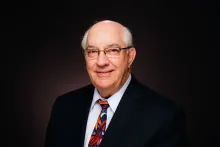
Mitchell Knapp is a graduate of Ambassador College with a BA in Theology. He has served congregations in California and several Midwestern states over the last 50 years and currently serves as the pastor of churches in Omaha, Nebraska, and Des Moines, Iowa. He and his wife, Linda, reside in Omaha, Nebraska.
