

Jorge de Campos
This transcript was generated by AI and may contain errors. It is provided to assist those who may not be able to listen to the message.
Well, hello, everybody! You know, once you know it, somebody takes three weeks off and they want preferential treatment. It is like that! It is good to be back with all of you again. You know, I really missed you during these last three weeks. Something came up that I just couldn't postpone, which was a trip to the emergency room and then an operation and so forth. But it is good to be back.
I certainly want to thank all of you for your concern and for your prayers. You know how it is, when you go through something, then you've got a lot of people who come up to you and they tell you about their experience or a relative's experience. And when I hear the various stories about other people who had an appendix burst, or as my surgeon put it, explode inside of me, so many people that I heard about had to stay in the hospital for a month, or when they came home they had to stay at home for six weeks. In some cases people almost died.
In some cases tremendous amounts of pain and so forth. Brethren, in my case, I had not that much pain in the hospital or since. And I chalk all of that up to the fact that you have been faithful people praying for me.
I've gotten so many cards, letters, e-mails. The cards have been so numerous. I don't know where to put them all in the house. They've been from all around the country, quite literally all around the world. From faraway places like Australia to other places. So I certainly want to thank all of you, especially for those prayers. They were so helpful. I certainly thank my wife Mary, who's been a great nurse, and she's been taking care of me real well. I do have some restrictions.
I do feel a little weak today, so I thought I'd better sit. I didn't want to speak, but I thought I'd better sit. Also, while I was in the hospital for a couple of days, they have a tube going down my nose, down my throat, into my stomach, pumping things out. That did some damage to the vocal cords. My voice is a little on the weak side. I did speak over in Ann Arbor, so I thought the best thing for me to do is just take it easy.
We probably will quit early today. I don't think anybody ever minds when the pastor says we're going to quit early. We will do that. Also, because they had to tap through my abdominal area in several locations, they're concerned about my abdomen healing. They don't want me lifting anything heavier than 10 pounds until February 1st. When you see poor Mary struggling to carry all my briefcase, I feel really bad.
I carry in her purse. I can carry her purse. I can carry her water bottle. She's got to carry my briefcase, and everything else is heavy. Unfortunately, that's just the way it's going to have to be. I just want to let you know about all of that. The reason for me sitting down and speaking like I'm speaking. Certainly happy to see the OS here. We enjoyed the OS there in Hawaii. I know a number of you enjoy listening to sermons on the Internet.
Mr. OS gave a very fine sermon in Hawaii about the various levels, three levels of teaching. I have kind of lobbied that he would give that at our General Conference of Elders this coming May. I would like to hear just a really good sermon on that subject. A subject that we all need to pay very close attention to. Please make it a point to go online and to listen to his very fine sermon.
As I may mention, while I was in hospital, I had discomfort and things of that nature. A little pain, not much. But when you have an operation, one of the first things the doctors want you to do is get up and start walking as soon as at all possible. As I was doing my laps, I'm sure I was quite the fashion plate of my hospital gown that's open in the back, my slippers, dragging along my ivy tree everywhere I went, I'm sure I was quite the sight.
But as I was making my laps on the fifth floor at the University of Michigan Med Center, I did see some real suffering. Looking into the various hospital rooms, there was one person in the room right next to me that was crying night and day. There were other people that were just in obvious horrible pain that their medication just as good as the U of M is, they were not able to stop the pain for some of these folks. In other cases, as I was making my laps, I would hear relatives on their cell phones in the hallway discussing things.
They were crying their eyes out about what was happening to their loved ones. Some of it had to do with physical pain, some of it has to do with mental pain, emotional pain. There's all kinds of pain in the world, all kinds of suffering. And that got me to thinking about the material I want to cover with you today. Mankind, in so many instances, wants to put God on trial. Mankind wants to say, if there is a loving God, why do we have all the suffering and pain in the world?
How can we have a loving God if this is the result of a loving God? How can we reconcile all the anguish, all the suffering in the world, if we have such a loving God who intervenes? You may recall back in the days, just after 9-11, I remember I recall very distinctly listening to and watching TV and seeing various interviews of various religious types, various pastors or rabbis or priests, and somebody, some reporter, would stick a microphone in their face and say, why did God allow this on 9-11?
Why are all these innocent people dying? And in so many cases, the response is, we simply don't know. We don't know why God does what he does. And there is some truth to that. And I'm not sitting here today to tell you I know all the answers for why mankind suffers and why God allows things to happen the way he does. We just simply don't know all the answers to that particular question. Why does God allow suffering? But we do know some very good answers. We may not know all the answers, but we do know some of the answers.
And I think it's good for us as Christians when people come to us and they want to put God on trial. And maybe in our own minds, after I gave the sermon today at Ann Arbor, there were a couple came up to me and said, well, I've on occasion put God on trial when I felt I've had kind of a raw deal or I felt I've been under some excruciating pain or suffering or some difficult circumstances, and it went on and on and on.
I had to question why God was doing X, Y, and Z in my life. So I think it's good for us to ask the question. And if you're taking notes that you might want to put this across the top of your page, why does God allow suffering? Why does God allow that? Richard Harry, as an author, wrote this. He said, and I quote, The most overwhelming objection to belief that there is a wise and loving power behind the universe is the existence of so much pain and anguish in the world.
And that's a true statement. There's a lot of people who will turn their back on the idea of a loving God because of what they see in the world. When we look at the spiritual condition of the world, we take a look at those who are agnostics, people who declare their skepticism of the existence of a supreme intelligent creator, who controls the universe. These agnostics control our education in so many cases, various scientific endeavors, government policies, and so on.
The existence of suffering in the world is one of the most common justifications for the agnostics' lack of belief and faith in God. British historian and author Paul Johnson observed, and I quote, I suspect that the problem of evil drives more thoughtful people away from religion than any other difficulty. If we go back into history and not too far back into history, and we look at World War I, World War I, even more so than World War II, World War I had a tremendous hit on Christianity, especially over in Europe.
British author David Edwards writes, and I quote, The experience in Europe in the age of science repeatedly shows that belief in God can be overwhelmed by suffering. The First World War was the great religious catastrophe. Notice what he said. The First World War was the great religious catastrophe. It did less physical damage than the Second World War, but far more damage to Christianity. Very little in the traditions of European churches had equipped them for the spiritual crisis.
And that's why, brethren, I think we need to have a good answer when people want to put God on trial. We as Christians, and maybe sometimes we want to put God on trial, we need to have a good response, a reasoned response, a biblical response to why God allows suffering. Dr. Edwards continues, they all encourage their members there in Europe, the various clergy there, that they all encourage their members to pray for victory and safety, only to find that a cloud of poison gas obscured all the doctrines that seemed so bright just in the days of peace. It was a war that did great damage to the old style the church was teaching, that God was in control, like the clergyman in his parish. Since then, most Europeans have come to believe that faith in God is hardly justifiable. That's why in so many ways Europe is so largely very neutral when it comes to religion. And of course we see that around the world as well. This opinion about God was only fortified by what took place with the Nazi death camps in World War II and what we've seen since. So there are some questions, I think, that we need to ask as Christians. We need to be able to answer as Christians. One question would be, how do we reconcile anguish and suffering with the Bible's portrayal of a loving God?
Another would be, why would He allow the horrendous miseries that afflict humanity?
Does the Bible explain suffering? Does the Bible reveal a God who can exercise control over the universe? Or do we have a Father in Heaven who is just so out of touch with things, He just simply, the universe is careening out of control and there's nothing He can do about it. Is that the case?
If God has the kind of power the Bible says, why doesn't He immediately put an end to misery?
Now those are good questions and frankly those are honest questions and we as Christians need to be able to answer those questions when people come to us and say, why does God allow suffering? You know, if there's some catastrophe here locally and you find yourself in a position where some reporter puts a microphone under your nose and asks you, why did God allow this? It is my hope that when we go through the material today, you will have a good, solved, reasoned response as to why God allows suffering. So let's go through it and ask and answer that question. Again, we don't know all the answers, but we know a number of them. Number one, why does God allow suffering? Because, number one, God gives mankind freedom of choice.
And when man has freedom of choice, he sometimes chooses things that cause suffering.
If we're putting God on trial, God's not guilty of that one. If mankind makes wrong choices, that's on that. And mankind needs to take responsibility for his own wrong choices.
If you and I are to clearly understand why God allows suffering, we must squarely face an important question. How can we have true freedom of choice and still gain freedom from suffering?
We desperately want both. We want our ability to choose, and we don't want suffering. But are both possible at the same time? Are both possible at the same time?
Let's take a look at Deuteronomy 30 for a moment.
Deuteronomy 30.
And verse 19.
Deuteronomy 30.19.
I call heaven and earth as witnesses today against you that I have set before you life and death, blessing and cursing. You know, two different ways of life. God sets two different ways of life before mankind. And notice what he says. Therefore, choose life. Choose life. God does give us free moral agency. God does give us the ability to choose. Choose life that both you and your descendants may live.
But if mankind makes a choice that is not the choice that is in our best interest, we will have suffering. We will have pain. We will have the kinds of things that bring the situations upon us that are very unpleasant.
We need to keep in mind that freedom of choice allows for both good and evil outcomes.
Freedom of choice allows for both good and evil outcomes. The cost can be enormous. Our choices can lead to disastrous consequences. And you know, brethren, think about this for a second. And I tried to make sure I made this point over in Ann Arbor. I want to make sure I make the point here. I don't want us to think that because you and I have suffering in our life, that in every instance is because we've made the wrong choice. Because that would not be true. That would not be accurate. There are times you and I suffer because of the sins of other people around us.
Sometimes you and I are very innocent along certain lines, but other people have made decisions that come crashing down upon us. Sometimes society makes decisions that come crashing down upon the innocent. As an example, we can have people, older men, in positions of power, who want to maintain their power. They may decide that they want to take their nation and go to war because they have great aspirations to be great world leaders or dictators or what have you. And so these older men will send young men, who are innocent of these kinds of desires, they will send young men off to battle. And hasn't that been the story of war for as long as there's been mankind on this earth? People who make decisions and send other people out to fight the wars. And those young men, those young women, their lives are destroyed because of decisions other people make. So it's not always the case that just because you are suffering or I'm suffering is because we've made a bad decision. Sometimes it's people around us who make a bad decision. And as innocents, we suffer the consequences. But, brethren, understand this, in all the chaos, the real question is not whether God is alive and listening to us. The real question is, are we listening to Him? Mankind wants to put all responsibility on God, and of course, mankind wants to walk away from all their own responsibility. And yet, we have a responsibility. Now, even if God is not calling all mankind now, that doesn't mean mankind is totally in the dark of values. In this country, as an example, we've got people who go to various churches. They understand there is a golden rule. They understand there are ten commandments. They may not want to keep one of them, but they understand the other nine. It's pretty well understood in all societies about you shouldn't kill, and so on and so forth. And yet, there are people who will turn their back on that. They'll make other choices.
They don't want to listen to God. And when they do that, then other things take place that bring suffering. Let's go to Romans 3.
Romans 3.
Romans 3, verse 15.
It says, Now, does God force that on anybody? Does God force people to be swift to shed blood? No. Verse 16, Well, is that a matter of God's ways? Is that what God wants us to choose? Of course not. And the way of peace, they have not known. Well, they've chosen, in many cases, not to know. They don't want to know. They have their own. You know, James talks about that. Why are there wars and fightings among us? Because of mankind's lusts.
Mankind's wrong choices are the cause of most of the suffering we see in the world.
So, if people are going to put God on the stand, let's you and I be God's... In this case, let us be His advocate. And let people know that they are not looking at the situation clearly. Let's go back to the very beginning here in Genesis 2. Let's go back to our parents in the Bible here, Adam and Eve. Genesis 2.
If God is guilty of something, God is guilty of creating a beautiful planet, of creating a man and a woman who were outstandingly beautiful and a wonderful creation, and God put them on this beautiful planet. Of course, there's a discussion about Satan. We can have that at another time. We can't bring everything in here. But notice what is said here in Genesis 2, verse 9.
So once again, God put a matter of choice before our original parents, Adam and Eve. We drop down to verse 15.
So here we see that God put these two trees in the garden. One representing the way to life and abundant blessings, the other representing a way to anguish and death and suffering. Adam and Eve were given a choice. God told them what would happen if they chose wrongly. This is not on God. God didn't force them to make a choice one way or another. He wanted them to choose properly, but He left it up then to choose which way they were going to go. Chapter 3 of Genesis, verse 6.
Mankind chose to go a certain way. Mankind chose to hide from God. We're not going to go through all those scriptures, but they're there. So once again, why does God allow suffering? Well, God wants us to have free moral choice. Because God is in the process of building family. And family must have free moral choice. We can't be robots. We can't be pre-programmed. We must understand what right is. We must choose to do the right and then actually do it. Those are choices that we have to make. But God doesn't force those choices on us. Let's take a look at some fruits of wrong choices over here in Proverbs, chapter 22. Proverbs, chapter 22. And verse 8. Look at the first part of verse 8. Proverbs 22, verse 8. He who sows iniquity will reap sorrow. He who sows iniquity will reap sorrow. There is a law of consequences. We make certain choices. We take certain actions. Certain things will follow. If we choose certain ways, then suffering will come our way. It says here, if we sow iniquity, we will reap sorrow. And in so many cases, this is the story of mankind. This is the story of mankind. Galatians, chapter 6. Galatians, chapter 6. In verse 7, Galatians 6.7. Do not be deceived, God is not mocked, for whatever a man sows, that will he also reap. It could be good things, or it could be negative things. Verse 8. For he who sows to his flesh will of the flesh reap corruption, but he who sows to the spirit will also reap everlasting life. Brethren, God's purpose is best served by giving mankind freedom of choice, letting mankind make their own decisions. Mankind can make their own selections. They can make their own choices. Otherwise, we would not be able to build, with God's help, holy, righteous character. So why does God allow suffering? Because that goes part and parcel with giving man freedom of choice. Freedom of choice. A second reason is closely related to the first. Why does God allow suffering? Suffering comes many times as a result of ignoring godly principles. Suffering comes as a result of ignoring godly principles. And this is not just for people of the world. This could be for any one of us in this room. I'm sure that every one of us in this room have ignored, from time to time, godly principles. We call it sin. Or sometimes it's not a matter of sin. Sometimes it could be something else, but it brings about consequences that are very hurtful to us. But again, it's a matter of choice. We can choose to follow God and the principles of God, or we can choose to ignore or be passive toward, or not look carefully at what God has for us in His Word. Let's turn to the book of Proverbs. We'll be here for a little bit. Proverbs chapter 1.
Notice what it says here. Proverbs chapter 1 verse 29. Because they hated knowledge and did not choose to fear and did not choose the fear of the Lord. I think, you know, God puts it very, very well right there, inspired, that they hated the knowledge. We, as human beings, can hate the knowledge of God. And we can choose not to fear the Lord. They would have none of my counsel. Even sometimes when people are told the right, they will choose to do the wrong. And again, even in the world, we could talk about, well, people just don't know any better. Oh, really? Just because somebody is not called... You know, before I was called, I knew there was a golden rule. I knew there were certain ways to live. Mankind still has responsibility. Just because they're not called doesn't mean there isn't responsibility. Mankind knows that there is a golden rule, and yet mankind can decide, well, I don't want to live by the golden rule. They would have none of my counsel and despised my every rebuke. Therefore they shall eat of the fruit of their own way, and be filled to the full with their own fancies. For the turning away of the simple will slay them, and the complacency of fools will destroy them. So in other words, we choose wrongly, we pay a price. We ignore the principles of God, we pay a price. But notice verse 33, But whoever listens to me, whoever doesn't ignore the principles, the eternal principles of God, whoever listens to me will dwell safely and will be secure without fear of evil. Now since we're here in Proverbs, let's go to chapter 19 of Proverbs. Proverbs 19. Now here's the principle in verse 15. Here's the principle in verse 15. Proverbs 19.15. It says, Laziness casts one into a deep sleep, and an idle person will suffer hunger. The Bible has as a principle, one of the great eternal principles, is God wants His people to be hardworking, industrious people. We see in the early chapters of Genesis how God is a creator, God is a worker, God is a provider. We see in the pages of the New Testament where Paul says, you know, people don't provide for their own family, they're worse than an infidel. And here we have a principle that if we are lazy, we are going to suffer. We're going to suffer hunger. You know, if we keep on putting things off, we don't work, we don't do things we should be doing. And I'm not talking about people who lose their job. You know, we've got a lot of that in our society today. People are losing their jobs, they're getting their pink slips. In many cases, it's not their fault. But when people have an opportunity and they simply refuse to work and to work hard, then there is a result of that. There is a result that will come from that. Chapter 11, Proverbs. Proverbs 11 and verse 15. He was a surety for a stranger who will suffer. He was a surety for a stranger who will suffer. Basically, what we're looking at there is the discussion is, are you going to cosign a loan for somebody you don't know real well?
Breton, I don't cosign loans for anybody. I don't know about you, but I don't think it's a very good principle to cosign loans. Especially if we're a stranger. That's going to bring about all sorts of difficulty. So we have some very good, godly principles here in the book of Proverbs. And if we ignore these principles, then hurt will come our way.
2 Corinthians chapter 7.
2 Corinthians chapter 7 and verse 10.
For godly sorrow produces repentance leading to salvation. Not to be regretted, but the sorrow of the world produces death.
Here we see where there is a godly principle that if we repent, God grants us repentance. And if we repent, then God will forgive us. And we see over in Hebrews, I'm not going to turn here, we see over in Hebrews, that in chapter 9 where we can move forward. We can be unshackled from our guilt. We can be unshackled from a guilty conscience. We can be unshackled from prolonged and excessive guilt.
But on the other hand, if we don't repent, if we just kind of are sorry but don't do anything about our situation, the very last part of verse 10 is true. But the sorrow of the world produces death.
The sorrow of the world produces death.
It is a godly principle to repent. It is a worldly principle to have penance.
A penance does not give peace of mind. Penance does not put you in a proper relationship with the great God. And there is suffering to be resulted from that. Let's go back to the book of Proverbs as we finish up this section. Proverbs chapter 1 again.
Proverbs chapter 1.
You know, the book of Proverbs, Lee was talking about how God was putting the Bible together. The book of Proverbs is a section of the Bible that's called wisdom literature.
It's a section of the Bible that was either written from kings or two kings. And the whole design of this section of the Bible is to give us the ability to understand wise conduct, wise decisions, and solid Christian living.
God realizes that common sense is not that common. And so he gives us a very basic primer here.
Proverbs chapter 1 verse 1. The Proverbs of Solomon, the son of David, king of Israel. And as we are aware, God gave Solomon tremendously enhanced and inspired wisdom. And he gave us the benefit of that wisdom in this book. To know wisdom, verse 2, to know wisdom and instruction, to receive the words of understanding.
These are all things that could come our way as we study the Proverbs. Wisdom, instruction, understanding, restraint. To receive the instruction of wisdom, justice, judgment, and equity. To give prudence to the simple, to the unmanned knowledge and discretion. A wise man will hear an increased learning, and a man of understanding will attain to wise counsel.
This is the benefit we have if we look at the practical instruction that is there before us in the Bible from God. And we can make sure that if we follow the instruction we see here in Proverbs, Ecclesiastes, and other places, we can avoid a lot of the world's suffering.
Let's move on to a third area.
Why God allows suffering. That is the fact that Satan has a role to play in all this suffering. That's why we observe the Day of Atonement. People want to put God on trial. Well, let's not put God on trial. Let's put Satan on trial. Let's take a look at what he has to do, his role to play in the suffering of mankind. We go over here to Mark 4.
And here's a parable over here in Mark 4. And I think sometimes we look at a certain portion of this parable and think it's just talking about the world.
I believe that this portion of the parables, I believe that every portion of the Bible talks to us as Christians. And there's tremendous amounts of ability for us to learn from every single word of the Scripture. And here in Mark 4, verse 15, it says, And these are the ones, by the wayside, where the word is sown. And when they hear, Satan comes immediately and takes away the word that was sown in their hearts. Now, we typically tend to think, well, this is people in the world. They get some of God's truth, and Satan comes immediately and takes that, rips that away from them. And I wouldn't disagree with that. But I think that there's another level of understanding here. And the other level of understanding is, when I look at verse 15, there are times I see myself there.
Have there been times where I've heard sermonettes or sermons or Bible studies? There have been times when I've listened to conversations with men and women in the Church of God. And they've helped me to see something more clearly.
And have there been times where I have not listened to that sermonette or that sermon or that Bible study or that conversation? Have there been times when I have allowed Satan to come and rip that truth away from me, and I've found myself going in a way I shouldn't go and making choices I shouldn't make?
Am I the only one who doesn't always learn the first time around?
I think verse 15 is true for all of us as Christians.
Satan, that's one of the reasons why we look at the Day of Atonement, and the fact that Satan has his role to play in our sins.
He walks into our life and he creates chaos. And there are times we sign off on that. There are times we sign off on that. 2 Timothy 2 2 Timothy 2 verse 25 2 Timothy 2.25 where it says, In humility, correcting those who are in opposition. One of the jobs we in the ministry have is to help those who are in opposition to what? Opposition to your best interest in mind.
There are times Satan wants us to go in opposition of God's away.
If God perhaps will grant them repentance so they may know the truth, not just the truth that we have in the Bible, but the truth about us, the truth about where we are coming from as individuals. All of that would be true. There are, again, a number of layers of understanding here. So they may know the truth, and they may come to their senses and escape the snare of the devil. There are times when we're not properly in our senses. There are times when we allow ourselves to become deceived, duped, and so forth.
They may come to their spiritual senses and escape the snare of the devil, having been taken captive by Satan to do Satan's will.
Again, that's not just for people in the world. That can happen to any one of us here.
Satan has a role to play as to why even those of us in the church suffer.
1 Peter 5. You know the Scripture of 1 Peter 5 and verse 8.
Be sober, be vigilant, because your adversary the devil walks about like a roaring lion, seeking whom... notice... notice... seeking whom he may devour.
There's a matter of choice there. Have I made a decision that weakens me? Have I made a decision where I am not praying as much as I should, or studying as much as I should, or fasting as much as I should? Those of you who get updates from the Home Office, you got email, you saw that Mr. Luecker, in some recent commentary, put down three goals he has for the coming year.
One of his goals, his spiritual goal, is to make sure he gets more Bible study, more prayer time. He wants the fast on a more regular basis. He understands his need. We should all understand that need there, because Satan is like that roaring lion.
He wants us to make bad choices, ill-conceived choices, and he wants us to suffer.
But once again, I want to simply say, because we're going to take this sermon now and go a little different direction.
I don't want anyone to think that because something happens to us, it's all our fault. Again, once again, I say to you, there are times we may be innocent, and because of what the Bible talks about, the sins of the fathers being visited on other generations, it could be somebody else near you. It could be a family member. It could be a next-door neighbor. It could be a boss. It could be any fellow employee who can do some things. It could put you in harm's way.
It could put you in harm's way. And many times, it's why we suffer.
And so, thinking about that, we're asking the question, why does God allow suffering? Let's go a little different direction. And that is, God allows suffering because suffering can be good for us.
Suffering can be good for us. Now, we don't choose to want to suffer. We're not masochists. We don't choose these horrendous trials that sometimes we go through, but they are necessary.
Jesus Christ never made a wrong choice. We talked about those first three points, making wrong choices. Jesus Christ never made a wrong choice in his life.
Every choice he made was a godly, righteous choice.
Jesus Christ, second point, was ignoring the principles of God. Jesus Christ never ignored the principles of God. Never. Not one time. Not even close.
The third point was about the role Satan has to play in suffering.
Jesus Christ did not knuckle under to Satan. We saw the example in Luke 4 and Matthew 4. Jesus Christ standing toe-to-toe with Satan, Satan trying to knock on the ground. Satan trying to knock Jesus Christ for a loop and to get him to sin. Didn't happen.
But, brother, remember something. Despite the fact that Jesus Christ never made a wrong choice, that Jesus Christ never ignored godly principles, that Satan was never able to get to him to cause him to sin, Jesus Christ himself suffered.
Jesus Christ himself suffered.
And the Bible says that he learned from what he suffered.
And, brethren, if Jesus Christ can learn from suffering, who are we to say we shouldn't suffer?
Who are we to say we can't follow in the footsteps of our Savior, Jesus Christ?
If he suffered, we can suffer. If he learned, certainly you and I can learn. So good things can come from suffering. Now, that flies in the face of what we hear every day on TV and radio, what we read in the newspapers, what we read in the various magazines. You know, our society believes that nothing good ever comes from suffering. And we must relieve suffering at every turn. There's a pill for this, and there's a pill for that.
We deserve a pill to take away every ache. There needs to be a solution for every problem.
We have in our society a victim mentality that if you're suffering, well, that's all negative, that's all bad, that's all awful. In our modern view, pain is sinister, an enemy that must be avoided.
But Jesus Christ came to suffer, to set us an example. He learned, and he wants us to learn. So with that in mind, let's take a look at some of the godly, ennoble purposes.
There I say it, godly, ennoble purposes in suffering.
Yeah, we don't choose this for ourselves. It's very unpleasant at the time.
But there are tremendous rewards.
Galatians 6. Galatians 6.
And in verse 2, Bear one another's burdens and so fulfill the law of Christ. Bear one another's burdens and so fulfill the law of Christ.
Brethren, let me put it very simply to you. When you look at the various things you've gone through in your life, and there's not a single person in this room who hasn't suffered, and we're not always just talking about physical pain. It could be emotional distress, it could be mental distress, it could be any number... There's any number of types of suffering. You can suffer by having vibrant health and watching a loved one suffer.
You can have vibrant health and watch someone you love tremendously wither away to nothing and die. That is suffering. You don't experience anything physical, but you are going through tremendous mental anguish as you watch that. Helpless. Every one of us in this room has suffered along many lines in our life. And I think every one of us will attest to the fact that that has made us... That has tenderized our hearts, that has helped us to be more compassionate, that has helped us to understand the human condition more, that we are not the same hard person we were before we experienced that difficulty, that challenge.
That we don't...we find it less easy to be critical of people and judgmental of people because we've been in a hospital bed. We know what it's like where, even though you are a strapping man and you should be able to move, it's all you can do to just rise up out of your bed. It's all you can do to get out of a bed. We understand, and then as we help one another, because our hearts have been tenderized, we grow in brotherly and sisterly love for one another.
That's good! If it costs us some suffering to learn to be more like Jesus Christ, that's good! So be it! So be it! So that's one area where there is a godly and a noble purpose to suffering. It brings us to have the same outlook as Jesus Christ. 1 Peter 4 1 Peter 4 Therefore, since Christ suffered for us in the flesh, notice, since Christ suffered for us in the flesh, there was no need for him to suffer in a sense he never sinned, he never made wrong choices, he never ignored the principles of God.
But Christ suffered in the flesh for us. Arm yourself also with the same mind. For he who has suffered in the flesh has ceased from sin. You know, brethren, as you and I have made some choices that were unfortunate, as you and I have made some choices that were not the best, and we go through life and we receive our bumps and our bruises because of those wrong choices, what does that do?
Those wrong choices serve as a schoolmaster to bring us back to where we need to be. And basically, the idea here is, as you and I learn from our mistakes, as we learn from our sufferings, that is a purification process. And once again, we become more like God the Father and Jesus Christ. We learn that certain ways produce suffering. We don't want that. And so, as we learn that, we become, we learn to make better decisions, Godly decisions. And again, that is a godly and unknowable purpose that drives us closer to God. Perhaps it's best said over here, let's get to Psalm 119.
Now, here we've got this beautiful, very lengthy psalm talking about the law of God, the beauty of the law of God. Go over to Psalm 119. And look at verse 67. Psalm 119 verse 67. Before I was afflicted, I went astray. Okay. Notice the essence here. Now, here we've got somebody who's going astray. But, going astray brought certain negative consequences. They made bad choices here. Affliction came as a result.
And now, notice the result, end of verse 67. But now, I keep your word. Affliction, suffering, again, brings us back to God. It brings us back to Jesus Christ. It brings us back to the kinds of thinking that is healthy for us. And sometimes it takes going through the suffering for us to learn. Hebrews chapter 12, and again, I know I'm not going through anything new here. I think sometimes we just need to have a refresher. But in Hebrews chapter 12, notice the sense of what we have here, the way God looks at you and I as His children.
And, you know, brethren, through all of this, God is not aloof. God is not unknowing of the fact that we are suffering. God appreciates our pain, just like God the Father appreciated Jesus Christ's pain. Hebrews chapter 12, verse 5. And you have forgotten the exhortation which speaks to you as to sons, My son, do not despise the chastening of the Lord, nor be discouraged when you are rebuked by Him, for whom the Lord loves, He chases, and scourges every son whom He receives. Here we see God the Father, Jesus Christ as an elder brother, working with us as family to bring us back to where we need to be.
There are times, there are times, when God looks upon you and I and says, you know, they haven't necessarily made a wrong choice, they've not necessarily made a wrong decision, but they really are weak in this area of their life. And because they are weak in this area of their life, they really need some help, they need some assistance. They seem to be blind. You know, Randy seems to be blind, or you can put your name in the blank.
You seem to be blind to certain things, and maybe God has put various other stimuli in our path, and we seem to be blind to that. We're just not getting the picture, because we're not getting the picture of God. He says, well, I've got to move in and do something else. I've got to actually walk in there and do some chastening. Verse 7, if you endure chastening, God deals with you as with sons.
For what son is there whom the Father does not chasten? But if you are without chastening, of which all have become partakers, then you are illegitimate and not sons.
So we see the process here of God working with His family. Furthermore, we have human fathers who corrected us, and we paid them respect, showing how much more readily to be in subjection to the Father of spirits and live.
We don't want to put God on trial. Verse 10, For they, our physical fathers, indeed for a few days, change into this. It seemed best to them as physical fathers, but God for our prophet, God for our spiritual prophet, that we may be partakers of His holiness. You talk about a godly and a noble purpose. That we go through suffering, that we may be partakers of His holiness. Again, we add some of the other scriptures that we talked about earlier. That as you and I, we make wrong choices, or we do things that aren't in our best interests. That God says, well, that's not the right way to go, and God brings us back to where we need to be. To be partakers of His holiness. Verse 11, Now no chasting seems to be joyful for the present, but painful. Nevertheless, afterwards it yields a peaceable fruit of righteousness to those who have been trained by it.
This life is a training camp. We are in training to be people in the very family of God.
Jesus Christ suffered. We also will suffer.
I didn't mark down the translation here. I should have. I neglected to do this. It's 1 Peter 5, 7. You can jot that down in your notes.
I forget what translation. I don't think this is the New King James that I have in front of me here. In 1 Peter 5, 7, one of the translations says, You can throw the whole weight of your anxieties upon Him. Talking about God. You can throw the whole weight of your anxieties upon Him, because you are His personal concern.
To me, brethren, that is a very encouraging scripture, that we are God's personal concern. He is not aloof from the suffering that you have gone through in the past, the suffering you may be going through right now, the suffering you'll be going through in the future. No more than He was aloof to the suffering of His Son, Jesus Christ.
But God is ultimately in control. Let's take a look at 2 Timothy 2.
2 Timothy 2.
2 Timothy 2 and verse 12, where it says, If we endure, we shall also reign with Him.
We will reign with Him. In other words, just as Christ suffered, yes, we will suffer, but just as Christ is reigning, we will reign. That's a part of the noble aspect of this suffering, that is creating in us something that is beautiful, holy, righteous, godly character. The negative is being burned off through the trials, through the tests, through the sufferings we go through. And what better way for God to find out where we stand than for us to say, despite the sufferings, we are going to go God's way.
Any dead fish can float downstream. But you know, God has called you and I to swim upstream. I didn't have the pleasure of being at the Winter Family Weekend. I was supposed to give a lecture down there. Again, other things sidetracked me, like a visit to the hospital. But I really appreciate the thought that Matt Fentchel had in his Bible study, that we are living in a world that doesn't honor God's way. We are living in a world that goes contrary to God's way, and yet we're told to swim upstream. And we will be blessed for doing so. We will be blessed for doing so.
Okay, I only have one more section to give you in this sermon. We will finish fairly early here today. Give my voice a little bit of a rest and get you on your way a little earlier.
In this life we face our share of trials. I've talked with Brethren here recently. We went through a sermon here where we looked at the life of Job. And we saw how God gave Job one trial after another, one wave after another. And God had to sign off on that. God had to sign off in allowing Job to go through the various trials that he went through. Satan came and said, let me do this, let me do this, do the other. God said, well, you know, here are the parameters. God signed off on those. Job was one of the most righteous people who ever lived. So again, it's not just a matter of our wrong choices. It's a matter of what God sees in us and he needs to build in us. But we need to have some strategies to help lessen the load. Let me give you some strategies that have helped a number of people over the years as they've gone through their share of suffering to help lighten the load.
One thing we can do is learn from the trials. That sounds so very simple. But you know something? How many times have I gone through the same trial over and over? Now, I know I'm the only person in this room who has ever gone through the same trial more than once. And God must put a big, big cone-shaped hat on my head and sit me in a corner with a big letter D. It doesn't stand for dillisandros, it stands for dunce. Because there have been times I have not learned from trials. And if you don't learn, you go to the back of the line and you've got to do it all over again. So I think one of the best things for us to do is, okay, if we're to go through all this suffering, all this pain, all this difficulty, let's at least learn why. Let's understand and let's build the skills, let's understand the things God wants us to appreciate and let's grow from this and let's move forward. A second thing we can do, another strategy, is to make sure we count our blessings. To count our blessings. If we only focus on the pain, that's all we're going to see, the pain. And I've probably been as guilty of this as anybody. You probably have done the same. There are times when you're going under just some hellacious set of circumstances that we are very myopic. All we tend to see is the thing that's in front of us. It obliterates everything else. And we focus on the pain. Can we focus on the fact that God has given us a wonderful spouse or beautiful children? Can we focus on the fact that we are in a tremendous country, that the poorest of us in this room live like kings compared to the rest of the world? Can we focus on the fact that maybe we've got some health issues in one area but we've got really good health in other areas? There are so many things for us to think about as opposed to always focusing on pain. Paul said in Philippians 4, I'm not going to turn there, but in Philippians 4 and 6, Paul said that we should always be thankful, be upbeat. That's difficult, I know. Once upon a time, somebody in the Ann Arbor Church said that we in the ministry are shielded from life. Oh, really? Oh, really? There are many different types of suffering in the world. I don't know that I've gone through a whole lot of physical, painful, into flesh-type sufferings. I've gone through my share of mental torment. I've gone through my share of emotional torment and other kinds of pain and sufferings. I've done it as I've been your pastor. You've seen some of it. None of us in this room have a free pass. None of us will get into the kingdom of God, scot-free from pain. It just won't happen. But every one of us could be thankful for all that God does give us. In that same chapter, Philippians 4, where Paul tells us to always be thankful, he says that if we take that mindset, then there's a peace which surpasses all understanding.
We need to focus on the positive things God's doing. A third area, and I think this is a very important strategy, and that is don't be a prisoner of your suffering. Don't be a prisoner of your suffering. Brethren, I've known people, and I hate to sound harsh, but over the years I've known people who it just appears that that's what they identify with.
I'm a sufferer. I go through life, and I suffer. That's who I am. And we need to be real careful about that. I mean, any one of us could find ourselves being victimized in that way. We don't want to be victims. We want to be overcomers. We want to be prisoners of our suffering. Dr.
Paul Brandt in Philippiansi wrote an interesting book, The Gift Nobody Wants. What gift do you think that was? The gift nobody wants. Dr. Paul Brandt said this, When I confront intense pain, I look for activities that will fully absorb me, either mentally or physically. I have found that conscious distraction and the discipline of activity can be helpful tools in combating pain.
He wrote a book on the gift nobody wants, pain. He said you can't give yourself over to it. You can't be a prisoner of your own suffering. Now again, brethren, I appreciate the fact. I'm not trying to be heartless. I understand there are people who are... I saw in the hospital when I was there people suffering excruciating pain. I'm not trying to be heartless.
There are people who are going through that kind of suffering. There are times when people... there's not a pill in the world. We'll take that away from them. And we certainly want to be compassionate in those circumstances. Here I'm talking about lesser kinds of suffering. I'm not talking about the kinds of suffering that will result in a death. People in death throes. We're not talking about that. We are talking about the kinds of suffering you and I have gone through in times past.
We've got to be careful that we just don't become a suffering to these lesser types... ...perlin to these lesser types of suffering. A fourth strategy, which is a very valuable strategy, is to find someone with whom you can share your load. Find someone with whom you can share your load. Don't be an island. Don't be John Wayne. I enjoy John Wayne Westerns. But, you know, we don't need to be like the Duke.
We need to have a lot of people to lean on. Don't be afraid of them. Many people undergo severe trials, and they make the mistake of trying to handle them all by themselves. They think that's a mark of strength. It could be a mark of pride. It could be a mark of vanity. You know, maybe that's the reason why we are going through the trial. Because God is working with our vanity. God is working with our pride.
God wants us to realize, you know, you need some humbling. You can't be standing on your own by yourself all the time. You can't be your own law. You aren't always to be a pillar. There are times you've got to lean on somebody else. And there's certainly nothing wrong with that. Nothing wrong with that whatsoever. The last strategy I want to mention, brethren, is take life one day at a time. Life can be overwhelming at times. You know, you've got the alcoholic, and they're told, take it, in some cases, one minute at a time. One hour at a time. One day at a time.
Don't be looking, you know, a week in advance, a month in advance, one day at a time. People battling depression, emotional struggles, and difficulties often share a self-defeating mindset. Their emotions will tell them their trials will never end. And again, that goes back to something we talked about earlier, where we become victimized by a kind of a mindset, where we become the prisoner of our pain, the prisoner of our suffering.
We don't want that. Psalm 118, verse 24, I'll just quote this for you. Psalm 118, verse 24 says, This is the day which the Lord has made. We will rejoice and be glad in it. There's an old saying, This too shall pass. And we should understand and appreciate that saying, This too shall pass. And then, looking at the whole context of life, there's always people saying, Yeah, but when a person is dying, that's not going to pass.
Well, I understand that. There's always going to be that one struggle at the very end of everybody's life. And the Bible says, It's appointed to all men who want to die. Everyone in this room will die. Everyone. I don't care if it's when Jesus Christ returns, we will be changed in a twinkly of an eye. And that twinkly of an eye, we will physically die. Everyone will die.
But, you know, what we're looking at here is the other instances of life. You know, trials come and they go. They wax and they wane. This too shall pass. Please keep that in mind. So, brethren, after my experience looking at the suffering that I saw there at the U of M Medical Center a couple of weeks ago, which has impressed me why it would be good for me to go through this subject. Again, it's not a new subject. I didn't give you any new truth today. There is no new truth on this.
But I thought it would be good for us to examine why does God allow suffering? We've gone through some answers to that. We've looked at some strategies. And I'm hoping that that will have been helpful for you.
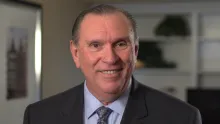
Randy D’Alessandro served as pastor for the United Church of God congregations in Chicago, Illinois, and Beloit, Wisconsin, from 2016-2021. Randy previously served in Raleigh, North Carolina (1984-1989); Cookeville, Tennessee (1989-1993); Parkersburg, West Virginia (1993-1997); Ann Arbor and Detroit, Michigan (1997-2016).
Randy first heard of the church when he was 15 years old and wanted to attend services immediately but was not allowed to by his parents. He quit the high school football and basketball teams in order to properly keep the Sabbath. From the time that Randy first learned of the Holy Days, he kept them at home until he was accepted to Ambassador College in Pasadena, California in 1970.
Randy and his wife, Mary, graduated from Ambassador College with BA degrees in Theology. Randy was ordained an elder in September 1979.
