

Greg Thomas
This transcript was generated by AI and may contain errors. It is provided to assist those who may not be able to listen to the message.
Have you ever asked God to supernaturally intervene in your life? Answer a prayer or a serious need?
Perhaps it was for health reasons, job problems, relationship issues, some financial needs that you have, or a serious problem with someone else that you know and love and you're praying for. If you've done this, God may have answered some of your prayers and he may not have answered other prayers. Why?
Well, I'd like to talk about prayer and I'd like to talk about faith and I'd like to talk about why God answers some prayers and doesn't answer other prayers, even though we may have the faith, we may have all the ingredients for God to intervene, God may choose not to hear our prayers and why that is so. What I'd like to do today is begin a multi-part sermon for us to examine the topics of faith and destiny and the will of God. And today I would like to begin with just part of that total message, an important spiritual characteristic that is often necessary for God's intervention. It is not in the Bible as faith. So today, to begin this multi-series of sermons in the time that I have a lot of the day to discuss this particular topic, I would like to talk about biblical faith. So let's examine the topic of faith and see what we can learn from the Scriptures. We'll begin by going to the Old Testament, the book of Habakkuk, chapter 2 and verse 1. Habakkuk, chapter 2 and verse 1. You know, the interesting thing about the word faith is in the Old Testament the word faith is only used two times, translated two times in English, the word faith in the entire Old Testament of the New King James Version of the Bible. Certainly, there are other Hebrew words that were similar to what we would call faith in the New Testament, Greek word pistis, but it's only translated in the entire Old Testament the word faith twice.
And this is one of those two times. It happens to be in this book, the book of the prophet Habakkuk. The prophet himself was going through a crisis of faith, and he asked God, he dared to ask God a very bold question. And here was his question, and he was struggling with this. He said, Lord, how can you use someone even more sinful than Judah like the Chaldeans to punish Judah? He says, you're a God of justice. I just don't get it. Yes, as Judah, we have our problems. Yes, as your people, we have broken your laws and commandments, but compared to the Babylonians, compared to the Chaldeans, we're angels. We're nice guys compared to those barbarians, those pagans. So how could a just God use these people more evil than we are to punish us?
That's the question that Habakkuk asks. And so he decided after he asked the question, to stand on top of a wall, a watchtower, and stand on top of a wall and just wait until he got God's answer. And in chapter 2, verse 1, he says, and I will stand in my watch and set myself on the rampart and watch to see what he will say to me. With bated breath, I would like to know what God's answer is to my bold question.
And I will answer when I am corrected. He says, so I'm going to speak back to God. I'm going to give God my opinion and how I feel, even when God responds to my bold question. Then the Lord answered me and said, write the vision and make it plain on tablets. And that's obviously what he did, because we still haven't preserved today. It's called the book of Habakkuk. That he may run who reads it, that is a messenger, for the vision is yet for an appointed time, but at the end it will speak and it will not lie, because everything that God says comes to pass.
Though it tarries, though things are slower than you wanted, though things take a lot longer than you anticipated, than you prayed for, than you hoped for, though it tarries, wait for it, because it will surely come, it will not tarry. Behold the proud, his soul is upright in him, in him himself. But the just shall live by his faith. Now, that answer goes a lot more explanation and a lot deeper, but it's not our goal today to go into the book of Habakkuk and outline the book. The point that I want to make here is that this is a very powerful statement.
God says the just shall live by his faith. Paul himself quotes a scripture in Romans chapter 1 and verse 17. What it means is that the justified in God's sight need to be patient and not judge things with our limited physical senses. We must believe that God is in control of the universe and that he has his reasons for allowing the things that he allows, even things that we don't like, even things that we don't understand, even things that we may not personally want or agree with.
God has his reasons. Now, let's go to the New Testament. That was one of only two places in the Old Testament the word faith is used. Now, let's literally look at a biblical definition, New Covenant definition of the word faith. Hebrews chapter 11, beginning in verse 1, if you'll turn there with me. Hebrews chapter 11 verse 1. The author of the book of Hebrews wrote this. Now faith, which is translated from the Greek word pistis, is the substance of things hoped for, the evidence of things not seen. For by it the elders obtained a good testimony, by faith.
We understand that the worlds were framed by the word of God so that the things which are seen were not made of things which are visible. So the author is saying that we see this beautiful world and the sun shining through the windows and the intricacy of nature and the laws of this world from gravity to thermodynamics to the beautiful plants.
We see God's wonderful creation. It was all made by something that is not visible, by God. It was made by a supernatural power that we cannot detect through any of our five senses. In the New Testament, the Greek word primarily used for faith in many places and also, often translated, believe or belief is that Greek word pistis. It means trust, having confidence. It means being fully persuaded of something, in spite of the way it looks. In spite of what the evidence may be telling us, it means to be confident, to be fully persuaded, to trust in God, in spite of what our senses may be telling us, is going on.
Paul tells us that faith is the possession of spiritual evidence that something is real even if we can't see it, even if we can't feel it or touch it or taste it or hear it or smell it. It's the assurance that God is in the ultimate control of all events and that everything that happens is for a purpose, even if we don't like it or understand it.
The core ingredient of faith is the belief that the guiding hand of the Creator is involved in the entire universe, and that includes on this earth, and that includes in your life and in my life. When he answers our prayers, and oftentimes God, I can give you many personal examples of my own life, and I know that all of you have your own experiences, when God answers our prayers, it's for a purpose. And you know what? When he chooses not to answer our prayers, it's also for a purpose. We may not like that purpose. We may not agree with that purpose.
We may not be happy about that purpose, but it's part of God's purpose for us. I'd like to read verses 1 through 4 from another translation, the New Century Version. It says, Faith means being sure of the things we hope for and knowing that something is real, even if we do not see it. Continuing this translation, verse 2, Faith is the reason we remember great people who lived in the past. It is by faith we understand that the whole world was made by God's command, so what we see was made by something that cannot be seen. Faith comes before we possess something. It precedes the actual receiving of whatever it is that we ask for. Spiritually, it's the evidence that we will receive something before it ever happens. Faith is a spiritual quality that has nothing to do with the five physical senses. As I have said before, if you can sense it, then you no longer need faith. You have proof. If you see it, you don't need to have faith. Your eyes tell you that it's for real. You have proof. Faith is no longer required. If you can hear it, if you can touch something, then you don't need faith anymore because your senses told you that it is for real. It's been proven. It's there. It exists. Faith goes beyond that because it's a spiritual quality. It's the positive expectation that God has heard our request and will choose to intervene through the power of the Holy Spirit when He knows the time is right. And what frustrates us as human beings is oftentimes God's timing is different than our timing, isn't it? We're physical.
We have limited life spans. For us, time is important. Time is essential. We want it now. God, where are you? God, please intervene now. Please do it now. And God has a different sense. God is eternal. Time doesn't mean anything to Him. He transcends the whole concept that we have of suns rising and setting and clocks ticking like on that back wall and one day being followed by another because He's lived eternally. So He has a different perspective on time and on the value of our lives and our destinies than we do. Let's take a look at verse 6. The author of Hebrews here continues, "...but without faith it is impossible to please Him. For he who comes to God must believe that he is..." That word, believe, is pissed us. It's that Greek word again. Same word oftentimes translated, faith. "...he must believe that he is and that he is a rewarder of those who diligently seek Him." So what the author could have been, Paul could have been a number of individuals, but what the author of Hebrews is telling us is faith is an essential part of our relationship with God. And there are different ways that faith is used in the New Testament as a verb or as a noun in Scripture. The important thing is if we want to please our Father and have a productive relationship with Him, we must learn to have faith. And faith means letting go of our own will, letting go of what we want, and giving it all to God. Saying, I trust you. I am fully persuaded in your divine providence, even if I'm uncomfortable, even if things aren't working out the way that I want them to. I have faith that you have my best interest in mine. You have my eternal interest in mine, not simply my physical interest in mine, which is what, as human beings, we tend to have, isn't it? If we want to please our Father and have a productive relationship with Him, we have to learn to let go of our will and to seek His will for all of our needs, to seek His will with faith and with confidence. Here are three different ways that the word faith is used in the New Testament. The word faith is typically used to describe an individual's spiritual characteristic that we possess as part of the confidence and assurance that God is involved in our life, and that's primarily what we'll be talking about today. There's another term, the faith, which I'm sure you've heard of. That's often used to describe our entire belief system, the faith, including the fact that Jesus Christ is the Son of God who died for our sins so that we could be forgiven.
And sometimes the Greek word is the noun, which is pistis, is also used in a verb form, pisteio, and it means, obviously, a plural version or a noun version, an action word, that leads us to the third term, which is faithful or faithfulness, two terms you'll find in the New Testament. And they are used to describe the continuing and ongoing demonstration of faith in our lives. You see, God wants us to demonstrate faithfulness. And by over 40 years in the Church of God, I've known many people who were faithful for a very short period of time. But then they had a faith buster. They had an episode in their lives that was a faith buster, and they disappeared, and they're gone. They didn't have faithfulness. They gave up, they quit. Their faith was destroyed.
Just how important is this whole idea of faith? Well, let's learn a lesson from none other than the Son of God, Jesus Christ Himself. If you'll go to John 5, verse 30, we'll see and learn something that Jesus Christ said about Himself and how He was able to do the things that He did. John 5, verse 30.
John 5, verse 30. Jesus said, I can do of myself, or I can of myself do nothing.
As I hear I judge, and my judgment is righteous, because I do not seek my own will, but the will of the Father who sent me. You know what Jesus Christ is saying as He is God in the flesh here? What He's saying is that everything He did was by His faith in the Father and a desire to do the Father's will. He says, of myself, I'm just a physical human, you know, blood going through my veins, and I'm subjected to the laws of gravity, and of myself, I can't do these things, I can't perform miracles, I can't preach powerfully. He says, of myself, I can't do anything, but I submit myself to the will of the Father, and that is what gives me the ability to do the things that I do. Let's take a look at this in more detail in the 14th chapter of John. If you'll turn back just a few chapters to John chapter 14 and verse 10. John chapter 14 and verse 10, he says, do you not believe that I am in the Father and the Father and me? The words that I speak to you I do not speak on my own authority, but the Father who dwells in me does the works. You see, Jesus Christ, as he said earlier, of Himself could do nothing. It was the Father who was dwelling in Him, by the way, through the power of the Holy Spirit, the same Holy Spirit that we receive when we're baptized, and we have hands laid on us. We know also from the book of John that Jesus Christ and the Father make their home in us through the gift of the Holy Spirit. He says, but the Father who dwells in me does the works. Believe me that I am in the Father and the Father in me, or else believe me for the sake of the works themselves. He's emphasizing it's important to believe that He is Jesus the Christ, the Son of the living God. He's saying, I really don't care how you do it, but it's important that you believe that I am who I say I am. Continuing, most assuredly I say unto you, he who believes in me, the works that I do, he will do also in greater works than these, will he do because I go to my Father. And whatever you ask in my name that I will do, that the Father may be glorified in the Son, if you ask anything in my name, I will do it. So what is Jesus Christ here saying regarding faith? He's saying, look at the example of how I live my life. He said, I of myself can do nothing. It's unsure faith that I can do the things that I do. Everything Christ did, every miracle He performed, was literally done by His faith. Physically speaking, Jesus looked like any man with the same limitations of any man. By all appearance, He was subject to the same physical laws of this world as you and I are. When He twisted His ankle, He said, ouch! When He was touched with sympathy, He cried. When nails were driven into His body, He felt the same pain that you and I would feel if nails were driven into our body, or if Frank hits his finger with a hammer. The same level of pain. Yet every day, He transcended those physical limitations of being a human being, walking on earth as a man, as a servant. He transcended those physical limitations because of the faith that He possessed, that He had. We could say He was perfectly centered in the will of the Father.
Let's go to Mark 1 and verse 14. See a scripture that we often read regarding the preaching of the gospel, and see that a very powerful word here is the verb form of pisteo that is oftentimes translated faith and here translated something else. Mark chapter 1 and verse 14. It says, now, after John was put in prison, Jesus came to Galilee, preaching the gospel of the kingdom of God and saying the time is fulfilled and the kingdom of God is at hand, repent and believe. That's that Greek word. The verb of pisteo is pisteo and believe in the gospel. Same word many times translated as faith. Have that level of confidence, of commitment, of assurance that God is involved in your life, that He's doing something wonderful in your life, and that you were being called to a purpose greater than the one that you have had previously. Often in the New Testament, the English words believe and believe are, again, that same Greek word, pisteos. Galatians chapter 5 and verse 22. Turn there with me if you would. Galatians chapter 5 and verse 22. And we'll see that it is God's desire that as we grow and eliminate from our lives the carnal works of the flesh, and as we use God's Spirit to coach us and help us to eliminate those carnal works, that they should be replaced with something positive.
Nature abhors a vacuum. When my daughters were teenagers, they abhorred a vacuum. Of course, I mean vacuuming the house. But when you displace something negative from your heart, from your mind, you need to replace it with something positive. And so you reject and you begin to push out through the power of God's Spirit those carnal thoughts, those carnal attitudes, those carnal actions. You just can't leave a void that has to be replaced with something positive. Or those negative characteristics will come back because they're a habit. They're a habit forming, so they have to be displaced. And here's what we displace them with. Galatians chapter 5 and verse 22, but the fruit of the Spirit is love, joy, peace, long suffering, kindness, goodness, faith, fullness. So that is one of the fruit that the Father would like to see each and every one of us developing in our lives, a deeper level of faith, an ongoing long-term commitment to God's way of life, faithfulness. The spiritual fruit of faithfulness is the long-term possession of faith. So here we see in the Scripture that faith is something that comes from God. It's a fruit of the Spirit, the gift of the Holy Spirit that God has given us. Paul said in Ephesians chapter 2 and verse 8, For by grace you have been saved through faith, and that not of yourselves, it is the gift of God. Like many spiritual qualities, faith has two sides to the same coin. The coin has two sides. God gives us the gift of possession and the knowledge of faith. That's one side of the coin. But the development and reflection of that faith, how we use it, whether we strengthen it, use it, or ignore it, is our own responsibility. Like any gift, we can choose to either use a gift that somebody gives us. Hey, thank you! I really appreciate that! And we can open it up and use it, or we can re-receive a gift, and as soon as they're not looking, we can put it on the shelf, put it up in the attic and hide it, because it would be the ugliest, kiddiest gift that we ever got in our lives. And maybe we'll re-gift it and give it back to them in a year and see if they notice. But you have that choice when you receive a gift. You can either open it and use it. Wow!
Or you can just shove it aside and ignore it.
God gives it, and He provides ways for it to grow in us, and we have to use our life experiences and all the things that we face in this lifetime, and all the trials that we face in this lifetime to develop that level of faith, faithfulness, and the degree of faith that God wants us to have. Let's go to 1 Corinthians 12 and verse 4, because not only can each of us develop faith as part of the fruit of the Spirit, God blesses congregations with individuals who have an extraordinary level of faith so that they can share it with all of us, so that we can all profit from a spiritual gift. 1 Corinthians 12 and verse 4, Paul was writing to a congregation here that was very blessed with spiritual gifts. He says, there are diversities of gifts, but the same Spirit, it all emanates through the gift of God's Spirit that we've been given. There are differences in ministries, but the same Lord. Some ministers might emphasize prophecy more than Christian living or emphasize parts of the gospel more than the writings of Paul. He says, there are different ministries, but the same Lord. There are diversities of activities, but the same God who works all in all. But the manifestation of the Spirit is given to each one for the profit of all.
Did you know that's why you have been given a spiritual gift? Whatever it may be, and we all have one. A lot of us try to hide them very well, but we all have one. So when Mr. Blakey gets up in the morning and he's singing to himself in the shower, he wasn't given that gift to sing as well as he does just for his own pleasure. He was given that for the profit of all of us, so he can come here and perform special music, and he can inspire us and motivate us. When Mr. Graham tickles the ivories in the piano or he writes a music piece, he doesn't play the piano just so that he can provide a romantic ballad for Thea, which would be wonderful if he does, and that would be good.
But Mr. Graham has been given that spiritual gift as a profit for all of us, so we all profit from his skills and we all benefit from it. And some of you, brethren, are encouragers, and you have the ability to encourage others. That's your spiritual gift. Share it.
Some of you have the ability to do things well with your hands, maintenance-wise, and that's a gift. Not everybody has that level of dexterity or knowledge to do things with their hands. That's a spiritual gift. Share it. Whatever it may be in your life, whether it's the desire to send out cards to people to encourage them, desire to pick up the telephone and call someone that you know is struggling or ill, or whatever it may be, we've all been given a spiritual gift, and we should use it. Verse 8, for to one is given the word of wisdom through the Spirit, to another the word of knowledge through the same Spirit, to another faith by the same Spirit, to another gifts of healings by the same Spirit, to another the working of miracles, to another prophecy, to another discerning of spirits, to another different kinds of tongues. I've known people in the church who could speak five to six languages and interpret those, and that's a gift, to another interpretation of tongues. Verse 11, for one and the same Spirit works in all these things, distributing to each one individually as he wills, for as the body is one and has many members, but all the members of that one body being many are one body, so is Christ.
So what Paul is saying here is that all of us are given different gifts to serve the church and to benefit each other. One of those spiritual gifts that some are blessed with in an extra ordinary measure is faith, given by the same Spirit as all the other gifts are.
It's powerful because we share our lives with one another. It doesn't take much when we're down for just someone else to come up and say a few words of faith, say a few words to lift up our hearts, to encourage us, to strengthen us when we're down, when we're struggling with particular problems or issues. That's a gift, a spiritual gift. Some people have just an attitude of faith that permeates everything that they do. Their thoughts, their actions, they're just very positive, can do faith-filled people. And that's a gift so that we can all profit from someone who demonstrates those capabilities. Did you know that faith can literally be present in anyone? Faith can even be exhibited by those who are outside of the church. Let's take a look at an example of this in Matthew 8 and verse 5 and see something that even astounded Jesus Christ. It said he was marveled, and it took a lot to marvel Jesus Christ, I might add. But he saw an example of faith from a person who, in the Jewish, who's who, would have been the least likely to succeed if there was such thing called a Jewish, who's who, because he wasn't Jewish. Not only wasn't he Jewish, he was a Roman. Not only was he a Roman, he was a despised Roman soldier, a centurion, probably ate pork, probably did a lot of things that would make most Jews cringe. Matthew 8 and verse 5. Now, when Jesus had entered Capernaum, by the way, there's a lot of evidence that Jesus either owned a home in Capernaum or had a friend who had a home and hung out at a particular home in Capernaum. It says, while he was there, a centurion came to him, pleading with him, saying, Lord, my servant is lying at home paralyzed, dreadfully tormented. And Jesus said to him, I will come and heal him. Jesus said, I hear you. I'll come personally, and I will heal your servant. And the centurion answered and said, Lord, I am not worthy that you should come under my roof, but only speak a word. You don't have to physically come. Just say it, and I know it'll be done. I'll just accept it at face value, and my servant will be healed. For I also am a man under authority, having soldiers under me, and I say to this one, Go, and he goes. And to another come, and he comes, and to my servant, do this, and he does it. When Jesus heard it, he marveled. This was nothing like the typical Jewish attitude of the people that he confronted day in and day out. He marveled, and he said to those who followed, assuredly, I say to you, I have not found such great faith even in Israel.
The people who should know better, the people of the covenant, the people who have the law of God, I haven't found this level of faith in them. And I say unto you, this is a prophecy, that many will come from the east, many Oriental, Asiatic, Pacific, and the east, Oriental, Asiatic peoples, and from the west, he could have been Western Europe, the Native American Indians when they're called, and later centuries, he says that many will come from the east and west and sit down with Abraham, Isaac, and Jacob in the kingdom of God, and they will share a meal with the patriarchs in the kingdom of God, even though they're Gentiles. But the sons of the kingdom will be cast out in the outer darkness, there will be weeping and gnashing of teeth. Pretty powerful scripture. As I said, even Jesus Christ himself marveled at the level of faith that he saw in this Roman centurion. There are a few powerful lessons in this scripture. A non-believer observed that Jesus was a special representative from heaven, and he asked for his prayer so that his loved one could be healed. And Jesus simply honored that request that was given to him by this man. And, brethren, so should we if a friend or person living next door or a co-worker acknowledges and realizes that we are a religious people, that we are people of faith, and asks us to pray for them, we most certainly should do so. This doesn't mean that every prayer request from a neighbor or co-worker should escalate to the need of an email blast to everyone, but as an individual, if someone asks us to pray for them, we most certainly should respect their request without judgment. Jesus honored the request of the man. He didn't need to know the person's name. He didn't need to know their age. He didn't ask if they ever smoked, how much they drank every day, if they took drugs. He didn't ask any of those questions. He respected the request without judgment. And he said, yes, I will hear what you have to say. The Gentile had a simple but powerful faith, and here's how simple it is. Jesus was the Lord. He had the ability to heal, and on His word alone anyone could be healed. The simple faith of the centurion was that a touch of God's favor can change everything in your life.
Now, we see that God intervened because of this man's personal faith, and this example shows us that faith is simple, and oftentimes we make it far more complicated than it was ever intended to be by Jesus Christ or Paul or any of the authors of Scripture. We begin doubting ourselves and we begin making judgments about things that we shouldn't make judgments about. And we'll cover more of that as we get into the sermon next week. Let's go to Matthew 9, just the next chapter, and see a few more examples of faith demonstrated. Matthew 9 and verse 18. If you'll turn there with me.
Some more incredible examples of faith. Now, while He spoke these things to them, behold, a ruler came and worshiped Him. Most likely it was a Jewish authority, civil or religious authority, a ruler came and worshiped Him, saying, My daughter has just died, but come and lay your hand on her and she will live. Wow! Now, that's incredible faith. She's already dead, but I know and I believe that if you lay your hand on her that she will live. So Jesus arose and He followed Him, and so did His disciples, and on their journey as they're going to this house where this girl was laying dead on her bed, suddenly a woman who had a flow of blood for twelve years came from behind and touched the hem of His garment. For she said to herself, If only I may touch His garment, I shall be made well. Another tremendous demonstration of faith. I believe that He is Jesus. I believe that He is a direct representative of God, that He can heal, and if I only can touch His garment, I will be healed. It says, But Jesus turned around, and when He saw her, He said, Be of good cheer, daughter. Your faith has made you well. And the woman was made well from that hour. When Jesus came into the ruler's house and he saw the flute players and a noisy crowd wailing, He said to them, Make room, for the girl is not dead, but sleeping. And they ridiculed Him. Can you imagine that? They're ridiculing Jesus Christ. Well, that is absurd! This girl is dead! D-E-A-D. She's ashen.
She's been this way for hours, and they mocked Him, and they ridiculed Him. What's wrong with you? They ridiculed Him, but when the crowd was put outside, He went in and took her by the hand, and the girl arose. And the report of this went out into all the land. Verse 27, miraculous in itself, again, an act of faith. When Jesus departed from there, two blind men followed Him, crying out and saying, Son of David, have mercy on us. And when He had come into the house, which, again, this may have been his own home that he owned, or just a place that he hung out with every time he was in Capernaum, perhaps a friend, perhaps one of the disciples. The blind man came to Him, and Jesus said to them, Do you believe that I am able to do this? And they said to Him, Yes, Lord. And He touched their eyes, saying, According to your faith, let it be to you.
And their eyes were opened, and Jesus sternly warned them, saying, See, that no one knows it.
So what have we seen here in these verses here in this book? Again, these examples show us the importance of having faith that God is in control of everything and that God truly loves us. He really wants the best for us. These healings were made possible because of the personal faith of those who asked Christ to perform a miracle either on their own behalf or the faith of someone else.
Let's take a look at another example that I think is so important for us as a congregation. Mark chapter 2 and verse 1. If you'll turn there with me, Mark chapter 2 and verse 1. And the reason this is important, and the reason as a congregation it's important, is sometimes we may ask for healing and we may lack the faith as a person or as an individual. But as we're going to see here, Jesus Christ honors and respects the prayers of your friends. He honors and respects the prayers of your brethren who are praying for you, even if you don't make that request, even though you may personally lack the faith. Let's take a look at this example. And again, this is another example in which Jesus Christ I think marveled at the tenacity, at the creativity of these individuals that have their friend heal. Chapter 2 and verse 1. And again, He entered Capernaum after some days, and it was heard that He was in the house. There's that phrase again. Immediately many gathered together so that there was no longer room to receive them, not even near the door. And He preached the Word to them. Then they came to Him, bringing a paralytic who was carried by four men. Probably one in each corner, probably some type of crude mat, and they're bringing their friend in.
And when they could not come near Him because of the crowd, they uncovered the roof where He was. So the four friends, I want you to just envision this for a second, the tenacity. They climb up on the roof, and they literally cut a hole, I mean, probably with palm branches or whatever, but they basically move stuff or cut stuff or do whatever it takes to make a big hole in the ceiling.
And then Jesus is preaching the Word, and suddenly you see this mat coming down with someone laying on it through the hole in this roof, starting to come down into the room. So it says here, when they had broken through, they let down the bed in which the paralytic was laying, and when Jesus saw their faith, not necessarily the faith of the man who was laying paralyzed on the cod, when He saw the tenacity, when He saw the faith of the four friends, He saw their faith, He said to the paralytic, son, your sins are forgiven you. I want you to notice that Jesus didn't heal the paralytic because of His own faith.
He healed the man because of the faith of His four friends. Christ was amazed at the effort they put forth in getting their bedridden friend to Jesus Christ. And I think that's a powerful lesson for us as a congregation, and another reason why we need to pray for one another.
As us as individuals go through trials and tests and difficulties in our lives.
I want to emphasize here that I think is an important part of faith, is that some individuals think that God heals by the numbers, that a hundred people praying for you is good, ten thousand people praying for you is better. And what Jesus Christ is saying here is that faith is simple. Just the faith of four individuals, His four friends, is all that it took. In most cases, it was the faith of one individual, the person who made the request, was all that was required for God to intervene in their lives. James wrote in James chapter 5 and verse 16, the effective fervent prayer of a righteous man avails much a righteous man. That's singular. That's one. Jesus said in Matthew 18, for where two or three are gathered together in my name, I am there in the midst of them. So, brethren, it's good to have many people praying for us.
But it isn't a numbers game with God. It isn't the more the merrier. It's that God wants to see people with a simple belief in Him, a profound commitment to Him praying for one another. And it's not about numbers. It's about what's in the heart. It's about our level of perseverance, our level of commitment, and our level of trust in God. Well, what happens when we have the faith and bad things still happen? Do you know that you can personally have faith and that God will not answer your prayers sometimes? You may have the faith, yet God will not answer your prayers. Why is that? Why sometimes when we have the faith and when many of our friends are praying for us, God may choose not to heal.
The answer to that question is that I'm out of time today.
And we will cover that in our sermon next Sabbath. Thank you so much. Have a wonderful Sabbath day, and we're looking forward to seeing you during the potluck and spending some time with each and every one of you.
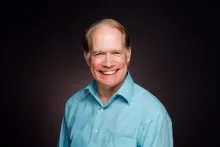
Greg Thomas is the former Pastor of the Cleveland, Ohio congregation. He retired as pastor in January 2025 and still attends there. Ordained in 1981, he has served in the ministry for 44-years. As a certified leadership consultant, Greg is the founder and president of weLEAD, Inc. Chartered in 2001, weLEAD is a 501(3)(c) non-profit organization and a major respected resource for free leadership development information reaching a worldwide audience. Greg also founded Leadership Excellence, Ltd in 2009 offering leadership training and coaching. He has an undergraduate degree from Ambassador College, and a master’s degree in leadership from Bellevue University. Greg has served on various Boards during his career. He is the author of two leadership development books, and is a certified life coach, and business coach.
Greg and his wife, B.J., live in Litchfield, Ohio. They first met in church as teenagers and were married in 1974. They enjoy spending time with family— especially their eight grandchildren.
