
Ken Loucks
This transcript was generated by AI and may contain errors. It is provided to assist those who may not be able to listen to the message.
Thank you, Mr. Hooper. Now to bring us the first of our split sermons today, an elder in our congregation with a beautiful flower on his lapel, Mr. Greg Thomas.
Well, thank you, Mr. Henderson, and happy anniversary, brethren! It's great to see all of you with us today. This is our fifteenth anniversary. I will never forget that day, April 29, 1995, as long as I live. 113 individuals assembled in Brunswick, Ohio, to do something that we thought we would never experience again, to worship God in peace and in good conscience. Since about January of that year, changes had been occurring that literally caused turmoil in virtually every congregation in the church. As they say proverbially, you could cut the tension with a knife.
It got to the point where it wasn't even a pleasure to go to Sabbath services anymore because of the amount of tension and turmoil that existed between brethren over the changes that had been brought about by our previous association. So we decided to have a service that day. It was an unusual mix of people from all backgrounds and geographic areas in Northeast Ohio. We didn't know how many people would show up for that Sabbath. We didn't even know what to call ourselves because there was no name yet, so we called it an alternative service.
It was named that because for months I had been giving alternative Bible studies on Friday evenings to counteract some of the teachings that had been introduced by our former association. Needless to say, I received a lot of criticism for those alternative Bible studies. So today, I'd like to give you a brief history just surrounding that day. And then for the rest of my split, we'll talk about why fellowship is so important for all of us. To me, a breaking point came as the changes began in January.
A watershed day was April 5, 1995. That may not mean much to most of us, but on that day for the third time, three regional pastors representing 10 of the original 14 regional pastors of the worldwide Church of God had a three-hour meeting with the executives at the Worldwide Church of God.
And they just had a simple request. They said, we obviously are on different paths here. All that we ask is that you allow us to continue to worship on the Sabbath day without repercussions, and we will remain within the Worldwide Church of God. And the answer came back, absolutely no. So we came to a point where we felt we had no other option but to do the most drastic thing that many of us had ever considered in our lives, and that was literally leave an organization that we had loved and found another one.
History shows that the WCG continued to change virtually all of its previous doctrines, including its very name a couple of years ago, the Worldwide Church of God no longer exist. It is completely, totally gone. Except for one major doctrine that hasn't changed, it's kind of interesting.
It's complete control of all the assets and the authority by one man appointed for life and unaccountable to anyone without any reaffirmation process. That's the only doctrine that has not changed in that organization. But we came to the point where the unthinkable that was starting the church became the only option that we could see, and we felt there was no other choice. One of the things that I struggled with at the time, where not only many brethren calling me up and saying something needs to be done, I observed that many people were already beginning to stay home and were not coming back.
That bothered me because they didn't feel like they had a home. Another thing that bothered me a lot was I saw people leaving our former association and going with an offshoot group who was controlled by a dictator who would manipulate and use those individuals for their own personal gain. I saw the wolves attracting people to use them, and that bothered me a lot as well.
At the time, there were about 30,000 people by April of 1995 who had stopped attending our former association. We're either staying home, which the majority of them were doing, or some were beginning to go to other organizations, which I felt personally were not healthy.
While all of this was going on, it was announced there was going to be a ministerial conference in Indianapolis. As it turned out, our first service, which was on that Sabbath, April 29th, the conference in Indianapolis, began the very next day. After services on that day, my wife and I got in our car. We drove to Indianapolis so we could participate in that ministerial conference.
Before we had our first service, the pastors in the Cleveland area, who obviously were not supportive of the changes, I gave them a call, and I told them what I was planning on doing. It's interesting that they didn't say no. They didn't necessarily say yes, and maybe that was tied into their final agreements with the previous association, but they didn't say no.
Our first service was literally a grassroots effort by believers who were determined to obey God rather than men. A decision was made to fellowship that day at the Brunswick Community Center, as Mr. Henderson mentioned. It was chosen, but on Friday afternoon, they figured out we were going to hold a religious service there, and they did not like that because they were concerned with some of the people in the community squawking about separation of church and state. So because of that, we decided that we would read the hymns on that Sabbath day rather than sing them in the community center, and the community center was okay with that.
Bob Rodzei gave the Friday night Bible study, and the next day he conducted services in Youngstown. Mr. Welty suggested that I give the sermon in Cleveland that day, which I did. That Friday night, while we were out, he left a message from Indianapolis and said, I wish you well on Cleveland's first service tomorrow.
So on that day, 113 attended the inaugural service. The basic messages were about our determination to maintain the beliefs that we had, the values and the doctrines of the Church of God. That was very, very important to us. And it was also important to us, again, that we could worship in peace and in good conscience, without a culture or an atmosphere in the congregations of tension or of anger or frustration or division. The sermon that day was on preaching the complete gospel, not a limited gospel, only about the birth of Jesus, which is a very important part of the gospel, or his life and what he did on earth. That's certainly an important part of the gospel, but the complete gospel focuses not just on what Christ did in the past, but what he's doing today as a great high priest and intermediary and what his role will be tomorrow when he comes and restores the kingdom of God in this earth. The complete gospel, not just a partial gospel message. Dan Weitzel gave the sermon at that day. Mr. Hooper led our hymns on that opening service, again, without music. After services that day, my wife and I attended the ministerial conference that was held beginning April 30th through May 2nd, and during the conference, one of the sessions encouraged congregations to incorporate locally. We did that until we dissolved the incorporation a few years later by an overwhelming congregational ballot. But I'm very proud to say that our board was a classy board and always worked well with Mr. Welty. Unlike some other boards, local boards, congregational boards of the period, we all worked together very, very well for the sake of the benefit of the brethren. One of the reasons we departed from our former association was because we wanted to fellowship and worship in an environment of peace. You see, brethren, Satan is the originator of the concept to divide and conquer.
When people are divided, they're easy to spin off, they're easy to split up, they're easy to conquer. We knew we needed to meet and worship together on the Sabbath, and we wanted to maintain our faith and our belief system. Turn with me, if you would, to Hebrews chapter 10 and verse 23. This was a scripture that we read quite often back then, because we knew that this was important. And if we were to survive and maintain the values and the beliefs that we held about God's truth and about the doctrine as revealed in the Bible, that this was of utmost importance. Hebrews chapter 10 and verse 23.
The author wrote, and I believe it's Paul, but we'll say that the author of the book of Hebrews wrote, Let us hold fast to the confession of our hope without wavering, for he who promised is faithful, and let us consider one another in order to stir up love and good works, not forsaking the assembling of ourselves together as the manner of some, but exhorting one another, and so much the more as you see the day approaching. I want you to notice, brethren, how Paul mentions that we should consider one another. It's hard for me to consider your needs if I'm at home all the time. He says here, continuing, that we need to stir up one another. It's hard for me to encourage you to motivate you if I'm not here. It's hard for you to encourage me and motivate me if you're not here. That's what fellowship is all about. That's why God created a family. It's hard to exhort one another if we are never or seldom together. A spiritual community is not built by convenience, but on the conviction that I need it for my own spiritual growth. I come to Sabbath services every week unless I'm extremely ill, because I need to be here for my own spiritual growth. You are my encouragers. You are my nurturers. You are my comforters. Sometimes you are my correctors. But we need one another. That's what family is all about. That's why we have been called together to be a family. So for the remainder of the sermon today, I'd like to encourage all of us to remember why regular and faithful Sabbath fellowship has always been so essential for the Church of God and why it continues to be for us. The first thing I'd like to mention is that fellowship moves us out of self-centered isolation. That's something that would be very easy for me to do, self-centered isolation. Because left alone, what I would prefer is what Thomas Jefferson once said. They asked him questions about being president and author of the Declaration and all these things. He said, that means nothing to me. Just leave me alone the garden on my farm. That's all he ever wanted to do was be left alone and garden on his farm. And if I had my brothers, all I would do all day is garden and play with the landscaping and watch things grow and enjoy the pond and enjoy the wonderful blessings that God has given me. But that wouldn't be good for me. That wouldn't be fulfilling the purpose that God has given me to do. It's easy for us to move into an attitude of self-centered isolation. Let's go to Ephesians chapter 2 and verse 19. And we'll see here that we have become part of a household.
We're part of God's family. When you enter a household, there are people in that house. Do you ever notice that when you were born, they just didn't put you out in the garden shed and tell you to feed yourself? No, you were part of a household. There were other members within that house who would nurture you, to care for you, if you had siblings to torment you.
I had siblings, so I understand that. Ephesians chapter 2 and verse 19, Now therefore you are no longer strangers and foreigners, but fellow citizens, with the saints and members of the household of God. I like the way this is translated in God's word for today. The same verse says, That is why you are no longer foreigners and outsiders, but citizens together with God's people and members of God's family.
You see, together, not separated, together we are the body of Christ. A local congregation is a classroom for learning how to get along in God's family. It's a laboratory for practicing unselfish, compassionate love. Only in regular contact with imperfect and ordinary believers can we experience real fellowship and the New Testament truth of being interdependent and connected with one another. You see, I've come to see that we were created for fellowship. We were formed for a family. First human-wise, when I was born, I was born into a family. I had a mother and a father, a brother, a sister. I had cousins, I had aunts, I had uncles. Humanly speaking, I was created for fellowship. They were all there to play with and talk to and spend time with. I was formed, humanly speaking, for a family, not to be isolated and out there all by myself. And spiritually speaking, it's the same thing. We were created for fellowship. We were formed for a family, and none of us can fulfill God's purposes simply by being by ourselves. Being without regular fellowship is like an organ, without a body. It's like a sheep, without a flock, a child, without a family. It's an unnatural state to be isolated and let alone. What did they do to prisoners to punish them in our society? They isolate them, don't they? Because it's an unnatural state to be isolated. We've been called love in perfect sinners, just like God does. God wants us to be in regular, close fellowship with other believers so we can develop the skill of loving each other. And that's not easy. That takes a lifetime. You can't learn to love someone in isolation. You have to be around flawed, imperfect, and sometimes frustrating people to learn what godly love is all about. And that's why we were called into family. I have some family members in my human family that I might say aren't the most compatible people with me, but I still love them because they're family. We come from the same DNA, we come from the same background. And I might also say that I have some spiritual brothers and sisters in Christ that I may not be 100% compatible with, but I love them and I hope they love me because we share the same DNA. We share the shed blood of Jesus Christ, spiritual DNA, and we're family. We're brothers and sisters.
Another area of fellowship that I think is important is in real fellowship, rather than learn the art of giving and receiving, we learn to depend on one another. Let's go to 1 Corinthians chapter 12 and verse 20. 1 Corinthians chapter 12 and verse 20. I'm going to read this from a different translation. This is a scripture that we've read so many times over so many years in the New King James. I'm going to read it in the New Century version, and please just follow along with me as you go. I think it just words things different enough to really have some punch to some of the writings here that Paul wanted the church to understand. 1 Corinthians chapter 12 verse 20. He says, Verse 21, The eye cannot say to the hand, I don't need you, and the head cannot say to the foot, I don't need you. No, those parts of the body that may seem to be weaker are really necessary, and the parts of the body we think are less are the parts to which we give the most honor. We have certain parts of our body that we may think are undignified, but yet we surround them in cotton or silk, and then we put a garment over that garment. We give those parts of the body that may seem unseemly to us very special attention, don't we? Continuing here, verse 23, and the parts of the body we think are less are the parts to which we give the most honor. We give special requests to the parts we want to have, special respect to the parts we want to hide. The more respectable parts of our body need no special care. And isn't that true of our own physical bodies? To me, one of the most important parts of my body is my hand. My hand does a lot of wonderful things to me, and it's probably the most abused part of my body. It has age spots, because I don't put sunscreen on it when I'm working in the yard. It has scars, because I've slipped while doing many things and cut it. The other day, I put a gash in my hand. I didn't even put a bandit on it. It'll stop bleeding. So the things sometimes that are most valuable to us, we just take for granted, and we hardly give them any honor at all. Continuing here, but God put the body together and gave more honor to the parts that need it, so our body would not be divided. God wanted the different parts to care the same for each other. If one part of the body suffers, all the other parts suffer with it. You see, we're dependent. We need each other. When we get a prayer request that someone's not doing well, we grieve. We pray for that individual. We feel a sense of sorrow. When someone receives a word, someone has received a promotion or something is good to happen to them. Hopefully, we rejoice for them. We feel wonderful. We're proud of them, and we feel honored that they have been able to achieve that. Continuing here, verse 27, together you are the body of Christ, and each one of you is a part of that body. You see, brethren, what Paul is telling us is we are not independent. We are interdependent. We need each other. Over 50 times in the New Testament, we are told to do things for each other. And here are some phrases that you may recognize. See if in your mind you can remember where some of these are. We are commanded to love each other, pray for each other, encourage each other, admonish each other, greet each other, serve each other, teach each other. Is there a pattern here?
Accept each other, honor each other, bear each other's burdens, forgive each other, submit to each other. Now, I can't do any of that if I'm at home. If I isolate myself and isolate my life, I can't do any of these together things if I'm not with family. If I'm not sharing the Sabbath day with people of like mind that he has called and brought together as my spiritual family. This is what spiritual membership is all about. On top of this, it's amazing how many together phrases there are in the New Testament. It's said that we are put together, joined together, built together, members together, heirs together, fitted together, held together, and someday it says we'll even be caught up together to meet the returning Christ in the clouds. To be a member of the church means being a vital organ of a living spiritual body, an indispensable, interconnected part of the body of Jesus Christ. The church is a body, a spiritual body. It's not a building, it's not an organism, it's not an organization, it is a spiritual body. Jesus Christ knows where his flock is everywhere around the world. He knows his flock, and they hear his call and his name. And you know what? If one of us are missing, then the body of Christ isn't quite the same. God gave you talents and abilities that I couldn't even dream of having. And when you're gone, I'm not able to experience those things. We all have something to contribute. We all have something that we can give others, and we all have needs that others can provide for us. So if you're missing, the body of Christ isn't quite the same. You have talents and love that you need to share with others, and we obviously can only do that if we fellowship with one another. Another principle is that cultivating fellowship requires humility. And it means when we come into worship God, we come into Sabbath services. We need to be ego-less and not concerned with title or prestige or prominence or anything else except to serve others. Philippians chapter 2, beginning in verse 3. Philippians chapter 2, beginning in verse 3, a scripture that many of us are aware of for many years. Philippians chapter 2 and verse 3.
Paul wrote here, Let nothing be done through selfish ambition or conceit, but in lowliness of mind let each esteem others better than himself. So we should all look upon each other better than ourselves to care for each other's needs, be willing to take a loss if necessary, but to put the interest of others in front of our own interest. Verse 4, Let each of you look out not only for his own interest, but also for the interest of others. Let this mind be in you, which was also in Christ Jesus, who being in the form of God did not consider robbery to be equal with God, but made himself of no reputation, taking the form of a bondservant in coming in the likeness of men. And being found in appearance as a man, he humbled himself and became obedient to the point of death, even the death of the cross. Now, certainly Jesus loved himself, but he loved others more than he loved himself. Can you imagine literally being God and emptying yourself of all of that glory and divinity and honor to come down the earth and dwell with mere men, sweaty, defiled, evil, self-seeking human beings? Can you imagine the amount of love that it took to empty yourself of your divinity of the Godhead and to come down to earth and walk as a human being? What love! What an incredible sacrifice! And he gave us that example of humility. Humility is not thinking less of yourself, but thinking of yourself less. You see, pride builds walls between people. Thinking that we know it all or that we need to fix everyone's perceived problems in the congregation only leads to resentment. It only leads to frustration. Authentic fellowship is when we listen to the trials and concerns of other people with genuine concern and empathy. And when others share a concern that they have with us, we need to let them know that we'll be praying for them, that we understand that it's hard. It's difficult to live this way. There are a lot of things going against us in this society, and considering this dark spiritual world that we're at war against, there's a lot against us. So we need to be for each other. We need to be encouraging each other. Another important aspect, I believe, of fellowship that sometimes has been lacking is that genuine fellowship requires courtesy towards others. Courtesy. Let's go to Titus chapter 3, beginning in verse 1. Titus chapter 3, beginning in verse 1.
I'm going to read this from the New International Version.
Paul wrote to the elder Titus, Remind the people to be subject to rulers and authorities, to be obedient, to be ready to do whatever is good, to slander no one. This is Titus chapter 3, verse 1, to be peaceable and considerate and to show true humility toward all men. Consideration.
As I said a little while ago, we are family, and we didn't get to choose the physical family members we have, and that we were just born, and there they were. We had to accept them as they are. They were family, brothers, sisters, cousins, uncles, aunts, crazy aunt Harriet, whoever it was.
We didn't get to choose our physical family, and we don't get to choose our spiritual family. The father gets to choose who's part of his spiritual family. And some people are not easy to love, and they test our sense of courtesy. Some of our brethren have irritating mannerisms or poor social skills. But you know God put these people within his family for a purpose. It's for their benefit and for our benefit. They are an opportunity for growth and a test of what real fellowship is all about. While they're learning better mannerisms over a period of time and better social skills, can we love them and treat them with courtesy and with dignity while they're changing? While they're trying to get off the old self and acquire new characteristics and positive Christ-like qualities, can we be courteous to them? Can we treat them with the dignity that the father wants us to have? In a family, acceptance isn't based on how smart or how beautiful you are. It's based on the fact that we all belong to each other, that we all have a common ancestor, whether it's mom or dad or, in a spiritual sense, our spiritual dad. And, as I said earlier, our spiritual DNA, that is the shed blood of Jesus Christ. We're all family. And, in truth, we all have some annoying quirks and traits about us, each and every one of us do. But genuine fellowship has nothing to do with compatibility. The basis for our fellowship is our relationship to the father, to dad. If dad says they're okay, then they're okay. If the father called them into the family and they're in the family and he has blessed them and he's given them his spirit, they're family. That's the perspective we need to have. Even though within the family, virtually everyone are at different levels, from babes in Christ to grizzled 40-50-year-old veterans who have been through every physical and human war you could, spiritual war, human war, you could possibly imagine, and everywhere in between, those are the people that God has called. But we're family. Another thing I'd like us to consider is that in authentic fellowship, people experience compassion and mercy. They experience compassion and mercy. Colossians 3, verse 12, and again I'll read this from the New Century version.
It says, God has chosen you and made you his holy people. He loves you. So always do these things. Show mercy to others. Be kind, humble, gentle, and patient. Get along with each other and forgive each other. If anyone does wrong to you, forgive that person because the Lord forgave you. Do all these things, but most important, love one another. Does that Scripture remind us of something? It reminds us of what Jesus said. By this they'll know that you were my disciples. Did he say, because you have every doctrine 100% correct? No, Jesus doesn't say that. He says, by this they'll know that you were my disciples if you love one for another. If you have love one for another. Let's continue it here now. Continuing, Paul says, love is what holds you all together in perfect unity. Verse 15, let the peace that Christ gives control your thinking because you were all called together in one body to have peace. Always be thankful. Brethren, authentic fellowship happens when mercy wins over justice. Let me explain that.
All of us are sinners, and we are all deserving only of death. That's justice.
But you see, the fellowship that the Father and Jesus Christ have with us is an experience of compassion and mercy. Mercy wins over justice, and that's the same attitude that we have to have towards one another. Because ultimately in time, we all stumble in one way or another. We all say something or do something that's offensive to someone else. Sometimes we make life decisions that are really bad, and sometimes we have brethren who drop out for a while because they made a life choice that wasn't a good one. When they return, if they come back three months later to check us out, how do they feel? Do they feel that mercy wins over justice? Or do they feel like they're being judged? Like they're stigmatized? Like there's still something wrong with them and they're not welcome. What kind of impression do we leave when people do those kinds of things?
You see, when mercy wins over justice, mistakes aren't rubbed in, they're rubbed out.
You'll never be asked to forgive someone else more than God has already forgiven you.
And sooner or later, we all stumble and we all make serious mistakes. And when we repent of that, when the dust is settled and even though the consequences of that decision may last a long, long time, when people return and they put forth an olive branch and they come to fellowship with us, we must always remember that mercy wins over justice. You feel compassion when you enter in and you share the pain of others. I think one thing that we've struggled with for many years as God's people is we've forgotten that God wants you to love real people, not ideal people. You know, ideal people are these folks that never have any problems. They've got a pep-sident smile. Their hair is never out of place. Their children are perfectly obedient. The loving wife never contradicts their husband. The husband never makes a bad decision. I've never met that person. I've never even come close to meeting that person. You see, those are ideal people. Those aren't real people. God doesn't call theory. He called us instead. He called the real folk. And we struggle and we grow and we change and we become more like God, but we make mistakes. Fellowship is more than just showing up at services. It's experiencing life together. And it includes honest sharing in our conversations and holding a confidentiality when someone tells us something. It means practical serving. If we see something needs to be done, we just go and offer to do it. And we do it. It means sacrificial giving in many ways, whether it's of our time or sometimes of our finances or whether it's just giving someone a lift emotionally by encouraging them or motivating them in some way. It means unselfish loving. That's what fellowship is all about. And that's why God has called us as family. One final scripture, Galatians 6 and verse 9. Galatians 6 and verse 9.
Paul wrote to this congregation, And let us not grow weary while doing good. For in due season we shall reap if we do not lose heart. Therefore, as we have opportunity, let us do good to all, especially to those who are of the household of faith. Why? Because we're family. Because that's what we've been called to do. We're not individualistic. We're not isolated. We're not me, mine, and that's all I care about. We're about each other. Thank you, my brothers and sisters in Christ. Thank you for the past 15 years. Your love and your commitment and your faithfulness is an inspiration to behold. I love you, and I hope you love me too. May God richly bless you for your dedication to Him and for your dedication to each other. Here's to the next 15 years.
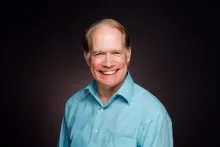
Greg Thomas is the former Pastor of the Cleveland, Ohio congregation. He retired as pastor in January 2025 and still attends there. Ordained in 1981, he has served in the ministry for 44-years. As a certified leadership consultant, Greg is the founder and president of weLEAD, Inc. Chartered in 2001, weLEAD is a 501(3)(c) non-profit organization and a major respected resource for free leadership development information reaching a worldwide audience. Greg also founded Leadership Excellence, Ltd in 2009 offering leadership training and coaching. He has an undergraduate degree from Ambassador College, and a master’s degree in leadership from Bellevue University. Greg has served on various Boards during his career. He is the author of two leadership development books, and is a certified life coach, and business coach.
Greg and his wife, B.J., live in Litchfield, Ohio. They first met in church as teenagers and were married in 1974. They enjoy spending time with family— especially their eight grandchildren.

