
Greg Thomas
This transcript was generated by AI and may contain errors. It is provided to assist those who may not be able to listen to the message.
Well, good afternoon once again. The awesome Creator God obviously has a lot of marvelous qualities and traits. And today, I would like to discuss one of the traits of God Almighty that is prominent throughout Scripture. It's a quality that sets Him apart, and one that mankind has inherited from Him. One could say that we humans are just like Dad. To use a human expression, we are a chip off the old block when it comes to this very positive quality that God has.
It's the essence of who and what God is, and it's the very purpose that motivates God to do the things that He does. The quality that I'm talking about today, that I'm referring to, is the fact that God is a builder. God is a builder. If you were to look at the American Heritage Dictionary, a builder is defined as one that builds, especially a person who contracts for and supervises the construction of a building.
Even if you look at the creation of the earth, we know that Jesus Christ was the Word, as we learn about in John's writings, but Jesus doesn't do anything without the will and direction of His Father. So it was the Father that wanted this beautiful creation, and He supervised and contracted the Word, Jesus Christ, and at Christ's word the entire world was created.
Let's see an example of God as a builder. Genesis 1 and verse 26. This is a scripture that we mentioned in last week's sermon, but it is just as applicable for our message today. So we'll read it again, Genesis 1 and verse 26. And we'll see here that God is a builder. And we'll see the gift that He gave us. It says, then God said, let us make man in our image.
Now, we could just limit that and say that God wanted us to have a head and a couple of eyes and nose and ears, but it's much deeper than that. You see, when God said, let us make man in our image, He said, let us make man distinct in that He has the qualities that we have, that Jesus Christ and God the Father have. And those qualities include the ability to reason, to think, to plan, to design, to build. This is how we are made in God's image.
So He said, let us make man in our image according to our likeness. Let them have dominion over the earth, over the fish of the sea, over the birds of the air, over the cattle, over all the earth and over every creeping thing that creeps on the earth. So God created man in His own image, and the image of God, He created him male and female, He created them. So both man and woman has wired within our DNA the desire to build, whether it's to build a nest or to build kingdoms or to build a business or whatever it is.
We are wired inside to have that need to build things. Verse 28, then God blessed them and said to them, be fruitful and multiply, fill the earth and subdue it, have dominion over the fish of the sea and the birds of the air and over every living thing that moves on the earth.
And then take a look at verse 1 from chapter 2. Thus, the heavens and the earth and all the host of them were finished. So God is not only a builder, God finishes what He begins. So God isn't a builder who leaves things half done, who leaves things undone, He finishes what He begins.
You see, God is a builder. He's a builder of worlds. He designed the universe and stars and galaxies that even with our most sophisticated computers and satellites we haven't even discovered or seen yet. He's a builder of world. He's a builder of people. He's building you right now through His Holy Spirit. He's a builder of families. He's creating a spiritual family. We were created in His image, and that means that we, too, are builders.
Just look at our civilizations, and you'll see that this is true. Since ancient times, open up a history book and you'll see that mankind continuously has built homes and temples and palaces and unique cultures around the world. Again, we have just wired into us that need to build things, and not like birds or reptiles that build the same basic thing over and over again for each generation.
No, we have that creativity that creates new things and designs and constructs brand new things that have never been designed or constructed before. Let's go to Genesis 11 and verse 1 and see an example of how quick man was to adopt this desire to build. Now, in this example, it wasn't done for a positive reason. It was done for a negative reason, and we'll discuss that in a minute. But let's read Genesis 11, beginning in verse 1.
Very early on in mankind's history, it says, The people are one, and they all have one language. And this is what they begin to do. Now nothing that they propose to do will be withheld from them. Come, let us go down there and confuse their language, that they may not understand one another's speech. So the Lord scattered them abroad from there over the face of all the earth, and they ceased building the city. Therefore, its name is called Babel, because they're the Lord confused to the language of all the earth.
And from there, the Lord scattered them abroad over the face of all the earth. Now, true to our heritage, man is a builder of cities, kingdoms, empires, governments, organizations. As I've said before, we are wired to have an uncontrollable need to create and to build. Look at small children at play. My grandson is here today. If I were to give him three or four small blocks, you know what he'll do in a short manner of time?
He'll put them on top of each other. It's instinctive. Again, it's wired into our DNA to build. My granddaughters will build a nest. They'll make a home, and they'll bring dolls together and put them in chairs and create a nest-like environment for their baby dolls to live in, because we are wired that way, because we are in the image of God. In this scriptural example that we just read, this building program was not intended for a good cause, but it was intended to confront God and his sovereignty. This symbolism behind the Tower of Babel was mankind was saying, God, we are unstoppable.
Our technologies will accelerate to an incredible degree. Pretty soon, we'll be able to replace you, God, with our science and our technology. And God looked at that and said, I have a plan. They are so far advanced because they're one people with one language that they will consume and destroy their civilizations before my plan is able to have the time it's needed to be completed. So God came down, and he confused them. He gave, scattered them, and gave them multiple languages. You know what they've discovered in ancient Egypt?
Ancient Egypt. They've discovered brain surgery. They've discovered that the ancient Egyptians were able to cut out perfect squares in the human skull and go in and do brain surgery. And they know the person lived many, many years later because it had healed over. The bone had actually begun to fuse, which takes a certain amount of time.
Many things that we think the Romans were the first to do, we have now found that the ancient Chinese did some incredibly architectural and other phenomena a thousand years before the Roman Empire ever did it. Mankind has an incredible ability to create. And in this situation, man had come together, and the potential of the technologies and the growth of human civilization was so vast and such a threat to God's plan that he needed to separate man and to divide their languages so that it would take them a longer period of time for man to be able to build the technologies to destroy himself. Like maybe in the 21st century, maybe? Let's go to John 5 and verse 1.
Mankind has always, much like our father, had the need to build. John 5 and verse 1. Have you ever thought about the fact that God works to build his people, that God is continually working on completing, finishing his plan, that you were one of God's building projects, that the church is one of God's building projects? John 5 and verse 1. It says, After this there was a feast of the Jews, and Jesus went up to Jerusalem.
Now there is in Jerusalem by the sheep gate of pool, which is called in Hebrew Bethesda, having five porches. In these lay a great multitude of sick people, blind, lame, paralyzed, waiting for the moving of the water. For an angel went down at a certain time into the pool and stirred up the water. Then whoever stepped in first after the stirring of the water was made well of whatever disease he had.
Now a certain man was there who had an infirmity thirty-eight years. My, what a long time to have a terrible infirmity. It says, verse 6, When Jesus saw him lying there and knew that he already had been there in that condition a long time, He said to him, Do you want to be made well? And the sick man answered, Sir, I have no man to put me into the pool when the water is stirred up, but while I am coming, another steps down before me. So he may have had some type of paralysis. He wasn't able to move very quickly, and he would wait there with bated breath.
But every time the water would stir, someone else would pass him and get into the water before him and be healed instead of him. And verse 8, And Jesus said to him, Rise, take up your bed, and walk. And immediately the man was made well, took up his bed, and walked. And that day was the Sabbath. And the Jews therefore said to him who was cured, It is the Sabbath.
It is not lawful for you to carry your bed. And he answered them, He who made me well said to me, Take up your bed and walk. So the man was saying, I just kind of figured that the individual who was so powerful enough that he healed me of a chronic disease that I had for 38 years, that when he told me to take up my bed and walk, it's probably okay. You know, it's probably something pretty special about this guy. He said, So that's why I did it.
Verse 12, And then they asked him, Who is the man who said, You take up your bed and walk? Verse 13, But the one who was healed did not know who it was, for Jesus had withdrawn a multitude being in that place.
So Jesus healed him, as Jesus would often do. He just withdrew and he quietly shrunk into the crowds. Jesus wasn't about making a big show of himself or situations. So let's pick it up here. It said in verse 14, Afterward, Jesus found him in the temple and said to him, See, you have been made well, sin no more, lest a worse thing come upon you.
So Jesus was saying something that we need to be aware of. And he said, I have blessed you. You've been given a gift. Realize that you are now accountable because of that gift. It's a gift. There's something you need to do in return. That is to honor God and stop sinning and turn around your way of life.
Verse 15, The man departed and told the Jews that it was Jesus who had made him well. For this reason, the Jews persecuted Jesus and sought to kill him because he had done these things on the Sabbath. But Jesus answered them, My Father has been working until now, and I have been working. What kind of work do you think the Father and Jesus Christ are doing? Well, among other things, they are builders.
They are building a people, and that includes you and I. They are building a family. They are building a spiritual kingdom. The Father has been working until now. Jesus Christ has been working until now because they are building you. And that's very important for us to understand. This man was healed because God wanted not only to work with him, but he wanted the example of that man having that infirmity of 38 years to affect other people around him.
Other people to say there must be something special about this Christ who had the ability to do this. There must be something special about this messenger who talks about this soon-coming kingdom because he has the gift of healing. So you see, through this one act, God was building a people and influencing many people. Now let's go to 1 Corinthians chapter 3 and verse 6. We know historically that this was a very strong letter that Paul wrote to the Corinthian congregation because they were allowing someone to continue to worship among them who literally, on a routine basis as part of their lifestyle, was allowing incestuous behavior within the church.
And Paul had to write a very strong letter. He said, in essence, that unfortunately you become so open-minded that if you tilt your head sideways, your brains would fall out of your head. Now what's wrong with you? You know better than that Paul says to him. And in this discussion, he talks about his own personal relationship with the congregation that I think is helpful for us.
And we consider the fact that God is a builder. 1 Corinthians chapter 3 beginning in verse 6. Paul's talking about the early history of the Corinthian church, that congregation. He says, I planted Apollo's water. Apollo's water was another elder. But God gave the increase. So then neither he who plants is anything, nor he who waters, but God who gives the increase. You see, elders are just here to serve you.
The elders aren't anything except that they are servants of God here to nurture you and encourage you and help you to grow. But we should never put elders, ministers, pastors, anyone on a pedestal. It should never be done. He says, nor he who waters, but God who gives the increase. Now he who plants and he who waters are one, and each will receive his own reward according to his own labor.
And if the labor is positive, that elder will receive a positive reward. And if that labor is negative, that particular pastor, elder, teacher, minister will receive a negative reward according to his own labor. He says, for we are God's fellow workers, you are God's field. You are God's building according to the grace of God which was given to me.
As a wise master builder, Paul is referring to himself, I've laid the foundation and another build in it, but let each one take heed how he builds on that foundation. The foundation, we're all familiar with buildings before, you can create the superstructure, which is the part that you see. You have to create a rock-solid foundation that can hold all the weight of that edifice, of that beautiful building that you see above ground. He says, so let each one take heed how he builds on it. For no foundation can anyone lay than that which is laid, which is Jesus Christ.
That has to be our foundation. Verse 12, now if anyone builds on this foundation with gold, that's a lot of quality, silver, precious stones, all great quality, then lesser quality, wood, hay, or finally straw, each one's work will become clear, for the day will declare it, because it will be revealed by fire, and the fire will test each one's work of what sort it is. So beyond that foundation, which is Jesus Christ, whether we build upon that with gold or straw, one hand or the other, it will be revealed when we go through the fire of testing.
When we go through something in our lives that shake us to the core, that's how we will know what kind of quality we had built upon that foundation. Verse 14, if anyone's work which he has built on endures, he will receive a reward. If anyone's work is burned, if we build on wood or hay or straw, if anyone's work is burned, he will suffer loss, but he himself will be saved, yet so as through fire.
Why? Because the foundation was right. Even though the superstructure was lost in a terrible fire of trial, the foundation is right. Now Paul tells the brethren that they're God's field and they're God's building. First, let's look at the foundation analogy. If that foundation is sound, the building will not be totally destroyed. Even if you go through a trial that is so incredible that it shakes your whole being and challenges your faith and makes you wonder what God is doing in your life. Even if you go through that kind of a situation, if your foundation is sound, the building will not be totally destroyed.
Only the superstructure will suffer loss. And this superstructure upon the foundation can be rebuilt on that solid foundation and it can be rebuilt newer and better than ever. You know, they do that to some buildings. Some buildings, they tear down to the foundation when they get a certain age. And they make sure the foundation is solid and then they create a whole new superstructure on that whole foundation, newer and better than ever. And Paul says the key is to have the right foundation in our lives because that superstructure can always be rebuilt. Now, he also uses the analogy of a farmer. Have you ever considered the fact that a farmer is just simply building underground?
He or she prepares the soil, puts a little bit of fertilizer in it, plants the seed, provides the right kind of nourishment, light, water, whatever it's required to make that seed sprout, and watches it break through the earth and grow skyward, grow upward just like a building. So a farmer is a builder. It's just that he's building underground and watching what he has done be able to break through the earth and grow skyward. God is indeed building us up into something useful and magnificent in his sight. However, the key is, is the foundation we need to have is not on people.
It's not on organizations or buildings or booklets or magazines or any of the things that people build their foundations on. It has to be a solid, intimate relationship with Jesus Christ. If our spiritual foundation is in him, we can face any personal trial or tragedy and still be standing. Yes, we may be dazed. Yes, we may shake our heads and wonder what happened, but we'll still be standing.
We may not understand why we face the things we do or why God allows them to happen to us, but if our foundation is right, we will endure. And that foundation will actually be reinforced because of our struggles. And I think that's important for us to realize. Let's go to Hebrews now, Chapter 11, beginning in verse 7. Hebrews, Chapter 11, beginning in verse 7. The author of Hebrews here, who I believe is Paul, talks about two tremendous examples in the Old Covenant, Noah and Abraham, and the kind of faith that they had.
Hebrews, Chapter 11, and verse 7. He wrote, by faith Noah, being divinely warned of things not yet seen, moved with godly fear, prepared an ark for the saving of his household, by which he condemned the world and became heir of the righteousness which is according to faith. So here was a man who God simply told him to do something. In the middle of nowhere, he built this ark for a long, long time, was mocked and ridiculed by others because he was building this seamlessly needless ark in the middle of nowhere. And why did he do it?
He did it by faith. God said it. Therefore, it's going to happen. I believe it, and I'm going to react because it's by faith. Now verse 8, by faith Abraham obeyed when he was called to go out to the place which he would receive an inheritance, and he went out not knowing where he was going. By faith he dwelt in the land of promise as in a foreign country, dwelling in tents with Isaac and Jacob, the heirs with him of the same promise.
For he waited for the city which has foundations whose builder and maker is God. You see, God is building you so that you, like Abraham and like Noah, can have the right kind of foundation which is Jesus Christ and can be prepared for a new city, a new kingdom, the servant as part of the family of God.
This is an example of someone who had the right foundation. He lived by faith. Remember, faith is believing and knowing something even though you can't prove it with your five senses. Faith is something hoped for in which there is no proof or evidence. If you could only see it or taste it or hear it or smell it or touch it, it's no longer faith because you now have proof or evidence of it. If you can sense it with one of your five senses, then it's no longer faith. You have evidence. You have proof that it's there. Abraham lived his life by faith because God promised it.
It required nothing else from Abraham. God promised it and his attitude was, if God promises it, then it's as good as done and I'm going to react the way that I need to react. Because of Abraham's faith and his foundation, he will dwell in the New Jerusalem someday to be built by God. That New Jerusalem, as the Book of Revelation tells us, is going to ultimately come down from heaven in the very center of the throne of the universe of God the Father and Jesus Christ will be in that New Jerusalem. Abraham, it says, will be there. I think that's very encouraging for us. Let's now go to Acts 20 and 28.
See part of Paul's message from Miletus to the elders and brethren before he left for Jerusalem. Miletus was the port city of Ephesus and he actually called the elders from Ephesus to come and listen to his address to them. This was a sad time because they all knew that he could be going to Jerusalem and they would never see him again. There was weeping, there was real concern for Paul's welfare. He said a few things to them that I think is encouraging for us as God's people to understand.
Acts 20, beginning in verse 28. Again, primarily speaking to the elders but certainly speaking to all the brethren there. He says, therefore take heed to yourselves and to all the flock among which the Holy Spirit has made you overseers to shepherd the church of God. Which he purchased with his own blood. For I know this, that after my departure savage wolves will come in among you not sparing the flock.
Also from among yourselves men will rise up speaking perverse things to draw away disciples after themselves. Therefore watch. And remember that for three years I did not cease to warn everyone night and day with tears. Verse 32, so now brethren I commend you to God and to the word of his grace which is able to build you up and give you an inheritance among all those who are sanctified. God gives us as a gift his grace. That's his favor, his pardon. And because of that gift, we, if our attitudes are right and if we are doing the things that we need to do, are able to be built up so we are preparing for that inheritance.
Paul reminds the elders of their responsibility toward the flock. And here are some of those responsibilities. Number one, the sheep don't belong to any people or any group. Never have, never will. They belong to Jesus Christ who purchased them with his own shed blood. He bought you, he purchased me, he owns us. He is the Good Shepherd. Elders are simply overseers who are expected to nurture and love and encourage the flock. Verse 28 in the New Century version says this, Something else that Paul reminds the elders of is that we need to take heed and examine ourselves and our own motives.
For any man to draw people towards himself or his own personal agenda, Paul calls a perverse thing. That's not my word. That's what Paul calls anyone who tries to draw people away to themselves. And it should never be done. The task of an elder is to build up. It's not to destroy or scatter or split. The role of an elder is to build up and develop and grow the flock of God.
The final thing Paul reminds us is that an elder should point the flock towards God and his word. And when this is done faithfully, God grants his favor and he's able to build up his people because they're in a healthy culture. They're in a healthy environment. An elder's job is to point you to Jesus Christ, to point you to his word, not to point you to himself or his own agenda or his own opinions or feelings. It's the point everyone to Christ. A healthy church culture is about building and growing the brethren, not controlling them.
Let's now go to Acts 9, verse 26. Acts 9, verse 26. We're now going to go forward in the book of Acts to a time when Saul was first called and became the Apostle Paul. He was converted from Saul to Paul. And you know the history. He wrecked havoc on the church of God. He persecuted the church of God. He put people in prison. He had people killed. He was consenting to the death of Stephen. He got letters from the Sanhedrin to allow him to go into other cities, to put the believers in Christ in prison. He was not a very good example. He wrecked havoc, as the Scriptures say, on the church of God. But here's what happened. It says, And when Saul had come to Jerusalem, this was after he was converted, he tried to join the disciples, but they were all afraid of him and did not believe that he was a disciple. They thought he was a plant. He's just faking Christianity so he can find out who all of our leaders are, so he can get names. And then he's going to come back at us with a vengeance. Verse 27, But Barnabas took him and brought him to the apostles, and he declared to them how he had seen the Lord on the road, and that he had spoken to him, and how he had preached boldly at Damascus in the name of Jesus. So he was with them at Jerusalem, coming in and going out. Verse 29, And in the fear of the Lord and in the comfort of the Holy Spirit, they were multiplied. I want you to focus in on that word, edified. That is actually from a Greek word. That is, oikomida. Oikomida. And it means literally to be a house builder. The original phrase that Luke is writing in the book of Acts is that the church was at peace, and they were being built like a house. Who is the builder? Jesus Christ is the builder. God is the builder. It means this Greek word to be a house builder, to construct. And figuratively, it means to confirm something, to edify it. And that's why the word edified is used. The churches had peace, and they were being built up through the Holy Spirit because the culture was right. And the end result was growth in their love towards each other and growth in numbers. Because they had peace, and because God's Spirit was now able to build them up. No longer was this man named Saul wreaking havoc upon the church of God. Let's see where this Greek word is used again in 1 Thessalonians 5 and 9. Paul uses this exact Greek word again. That means to be a house builder in 1 Thessalonians 5 and 9. And it's from this word edify that we use the word in English, and edifice, meaning a building.
1 Thessalonians 5 and 9. It says, This is for God did not appoint us to wrath, but to obtain salvation through our Lord Jesus Christ, who died for us, that whether we wake or sleep day or night, we should live together with Him, therefore comfort each other and edify one another, just as you also are doing. You see, my job and your job is that we build each other up, not condemn each other, not judge each other, but that we build each other. Instead of judging and competing, we should be comforting, we should be encouraging, we should be building one another. That is very important because God is a builder, and He wants us to follow His example, and He wants us to be builders of one another. Now, certainly, there is a time for correction. And my role as an elder when it's needed is certainly to correct, because that is a God-given role that elders occasionally need to do, and I might add, as a last resort. But the primary role of a minister, elder, pastor, anyone who is called by God, is to be a builder of people, not a controller of people, but a builder, an encourager, a comforter, a nurturer. But, brethren, I must tell you that there is another spirit in the world. There is another spirit that exists, and this spirit is contrary to what God the Father, Jesus Christ, the Master Builders are doing. It is very contrary to building up. We'll read about this in Revelation 9 and verse 6. I don't want to spend a lot of time on this today, but we do have to understand that there is competition in this world. God is a builder of people, but on the other hand, there is something else that's trying to do something to people, to organizations, to families, to societies, to cultures. And this scripture makes it very clear that this is prophetically what's known as part of the first woe. And I won't get into all the imagery. This could very well be people controlling armaments, very sophisticated weapons to destroy the earth. But here's what it says in Revelation 9 and verse 6. Again, it isn't my intention today to get deep into the prophecy, but to bring out a point. So we'll begin. It says, And here's what's driving all this.
So what do you think these names mean? Well, you're probably one step ahead of me. If God is a builder, these names mean, respectively, destroyer. Destruction. That's what these names mean. I'd like to read you a statement from the Believer's Study Bible regarding this verse. It says, The point that I want to bring out here is that the name, the very name of this king, of this angel, is not builder, it's destroyer. It's contrary to what God is trying to do. God is a builder. He's trying to build up people. Satan and his spirits aren't builders, they're destroyers, and their goal is destruction of the family, destruction of humankind, destruction of churches, destruction of relationships. They seek to cause alienation and frustration and brokenness in human lives, in complete opposition to what God is trying to do in our lives and in our world. So what are some of the ways that we can be a builder? A builder of each other, a builder of people, like God is? Well, the first thing we can do, and I have three things here in the conclusion of this sermon, the first thing that we can do is to encourage and comfort one another. If you'll turn to 2 Corinthians chapter 1 and verse 21. 2 Corinthians chapter 1 and verse 21. Again, point number one is to encourage and comfort one another. This is another scripture in which Paul weaves in something that he wants elders, ministers, pastors to know and realize. 2 Corinthians chapter 1 and verse 21. And he's grieving a little bit about how strong he was in the first letter of Corinthians. Remember I mentioned how strong he was, and he was very strong and corrected them. And now he's kind of had a little bit of remorse about that. And he says here in 2 Corinthians chapter 1 verse 21, That he's working with us, that he's building us, that he loves us, that his intent to save us. And much like we saw in Genesis chapter 2 and verse 1, he will finish the work that he began in us, just like he finished creation. It's a guarantee, God's Spirit in us. Verse 23, So he said, It probably wasn't good that I visit you at that time because I was kind of strong, I was kind of upset, I was kind of fiery after what I heard was going on. Your congregation, when I wrote that first letter, and he says something here very interesting in verse 24.
Do you notice the encouragement there? Do you notice the comfort? Fellow workers, that is the role of the ministry, to be fellow workers in your joy, to help you to be more, to encourage you to grow, to give you sound biblical doctrine and comfort and strength so that you can be all that God intended you to be. And he says, You don't stand because of men, you don't stand because of organizations, you stand because of the faith that you have in Jesus Christ and having the right foundation. In context, Paul wrote a strong and corrective letter to Corinth in his previous letter, as I mentioned. But Paul knew in his heart that his major calling was to encourage the congregations, that helped them to receive more spiritual fulfillment that leads to happiness and joy in life.
He knew that, and he understood that. And one of the reasons of his second letter to the Corinthians was to let them know how much he loved them. I'd like to read verse 24 in the New Century version. He says, You see, brethren, we are all fellow workers together. Every one of us in this room, every one of us in the Church of God, are fellow workers together, working on that building. And on a construction site, all the tradesmen work together, who have different skills.
You have plumbers, electricians, carpenters, people putting up drywall, putting down carpets. I mean, you have all these trades working together to coordinate their skills to get the building completed. And we know the blueprint, or the drawings. You see, it's revealed in God's plan through his annual Holy Days. So we know the blueprint that we should be working off of. We know the drawing to complete this building that we're all working on, that our lives are part of.
Because it's reminded and revealed to us every year, over and over again, through the message and meaning of his Holy Days. So number one was to encourage and comfort one another. Number two is to pray and fast for one another. Let's go to James 5 and verse 16. James 5 and verse 16. James chapter 5 and verse 16. James wrote, Confess your trespasses to one another and pray for one another that you may be healed.
Now, we don't need to know the intimate details when someone comes up and tells us they're struggling with a problem. And unless they volunteer it, we shouldn't ask. But as people are struggling, as people come up and tell us that they're struggling with something, we need to pray for them. I had a gentleman tell me in a congregation a few weeks ago that Satan has shredded him. Now, he was confessing to me that he's made some mistakes in his life. That he's had some challenges and difficulties, and he hasn't done everything right that he should have done. And I have prayed for him, as I'm sure anyone would pray for him.
Because when someone humbles themself to come up and say, Hey, I've got a problem, whether it's substance abuse, or I've got challenges with my marriage, or child-rearing, or whatever. We don't need intimate details, but when we know that that is happening, we can pray for our brothers and sisters in Christ. And we can fast for them if we know that it's something very serious. Let's continue. The effective fervent prayer of a righteous man avails much. Elijah was a man with a nature like ours. What does that mean?
Elijah had human nature, like I do and like you do. And sometimes he had a bad attitude. Sometimes he didn't do the things that he should do. He had a nature like ours, yet. And he prayed earnestly that it would not rain, and it did not rain on the land for three years and six months. And he prayed again, and the heaven gave rain, and the earth produced its fruit.
Verse 19, Brethren, if anyone among you wanders from the truth, and someone turns him back, let him know that he who turns a sinner from the air of his way will save a soul from death and cover a multitude of sins. You know, prayer is powerful and can literally change the course of history. I read about a man named Jesus Christ, who on the eve of his death, was having doubts about whether he could go through what he was going to go through.
He was struggling with it, and he went to a garden, and all the people he needed to be there for him, what were they doing? They're falling asleep. And he would pray, and it said the sweat coming out of his forehead was like large drops of blood. But he prayed. He still doubted that concern. He prayed again, and he doubted and had concerns. But you know what? You know that his prayer changed the course of history because he had the strength to be the Lamb of God, the Jesus Christ who died for the sins of the world, and shed his blood so that you and I would have our sins forgiven and could be part of the family of God.
Many times, prayers have literally changed the course of history. And we need to pray for one another so that we can be healed. Some of us need healing spiritually. Some of us need physical healing. Some of us, emotionally, have been through so much and so hurt and have so many scars for so many years that we need our emotions to be healed as well. And we need to pray for one another.
Now, how about fasting? Let's go to Psalm 35, verse 11. And see an example of David. I'm going to tell you, very candid with you, that I'm not this righteous yet. I fall far, far, far, can I throw one more in? Far short of the righteousness that David demonstrates here.
Psalm 35, verse 11. He says, Fierce witnesses rise up. They ask me things that I do not know. David says it's like an inquisition. They're like prosecutors. They're grilling me to make me look bad. They're judging me. They're challenging me. They're ridiculing me. Just like a prosecutor in a courtroom. Like a district attorney. They are grilling me with questions. They reward me evil for good. I gave them good. They gave me evil to the sorrow of my soul. But as for me, he said, when they were sick, my clothing was sackcloth.
I, David said, humbled myself with fasting, and my prayer would return to my own heart, meaning it was heartfelt. I would utter a prayer, and it would sadden my heart. I felt it deeply what I was praying. It wasn't some superficial ritual. He said, when I prayed, it came from the very core of my being. And my prayer would return to my own heart. I paced about as though it were my friend or brother. I bowed down heavily as one who mourns for his mother. This is what he did for people who despised him, for people who hated him, who persecuted him.
An incredible example of love by King David. When his enemies were sick, he fasted and prayed that they would be healed as if they were his own physical brothers, as if they were his own mom who was sick. Now, if he was willing to do this for people who despised him and hated him, how much more should we pray and fast for our brethren when we know that someone is going through a life-threatening trial, someone's going through a very difficult situation?
David sets an incredible example here, and I'll be the first to admit that that's not exactly the attitude that I have towards people who despise me. I'm working on it, but I'm not there yet. Point number three is to offer to help one another and care for one another. To offer to help one another and care for one another. Let's go back to the book of James, chapter 2, verse 14. We were just in James a few minutes ago. He writes here in chapter 2, What does it profit, my brethren, if someone says he has faith but does not have works? Can faith save him? If a brother or sister is naked in destitute of daily food, and one of you says to them, Depart in peace, be warmed and filled.
God bless you, my son. Someone's cold. They're shivering out on the sidewalk. They're hungry. They haven't eaten in a week. Well, may God bless you. May God be with you real good. But you do not give them the things of which are needed for the body.
That is an immediate need. People shouldn't freeze to death. People shouldn't be starving to death. People shouldn't be wracked with pain if we can help them. He says, What does it profit? Thus also faith by itself, if it does not have works, is dead. But someone will say, You have faith and I have works. He says, Show me your faith without your works, and I will show you my faith by my works. You believe there is one God and you do well. Even the demons believe and tremble. But do you not know, O foolish man, that faith without works is dead?
Was not Abraham our father justified by works when he offered Isaac his son on the altar? Do you see that faith was working together with his works? And by works faith was made perfect? The scripture was fulfilled which says, Abraham believed God and it was accounted to him for righteousness and he was called the friend of God. Do you see then that a man is justified by works and not by faith only?
Faith and works are not in contrast, they're not in opposition, they're not in competition with each other. They work together to achieve great things and that includes helping others who have something needed for the body, an immediate need. And again hunger is an immediate need. Being cold is an immediate need. Needing shelter is an immediate need. Especially when we see others who have physical needs, if we are financially able, if God has blessed them in that way, we need to help people physically along with our encouragement and our prayers and our fasting and the other points that we've already covered.
When we see someone has a physical need for the body that is causing discomfort or suffering, we need to have the compassion to help one another and to care for one another as much as we're able. Even sometimes that investment is finances, sometimes that investment is simply our time. And I'm not saying pick up a stranger from the street and bring them to your house.
I mean even the Good Samaritan didn't do that. When he saw someone who had been beaten up and was laying by the side of the road, he took him to an end. He didn't bring him home to risk him harming his own family. He didn't know him that well, but he cared enough that he took him to a shelter and he took him someplace where he could have shelter and receive some care.
So brethren, we need to help one another and care for one another physically as well as offering our encouragement and our prayers and our fasting. Well, in conclusion, our God is a master builder. He designed and built the physical world we live in. He made mankind in his own image with the desire to construct and to build. And my, we've been doing that for thousands of years, haven't we? God is building character in us. He's building us. He's building a family. He's building a spiritual kingdom. In contrast, the adversary is a destroyer.
The name of his chief king and spirit is destruction, is destroyer. He is the master divider, the control freak. Satan desires to destroy families and nations and relationships and churches. And ultimately, he wants to destroy all mankind. The enemy desires chaos and confusion, not comfort, not encouragement, not building up but tearing down. He wants us to have contempt for each other and to have contempt towards God. Well, whose example should we follow? I think that's kind of self-evident. I encourage you to be a people builder. Become the answer to someone's prayer. Become someone else's miracle.
Make it your life mission to build up everything and everyone around you. Will it always be appreciated or respected? I know. As a matter of fact, the majority of times, you'll do good things for people and it won't be appreciated or respected. But you know what? God continues to love and build us up, even though usually we take it for granted.
And we don't give him the appreciation or the respect that he deserves, but he keeps on doing it because he is a builder of people. I've been to hundreds of construction sites in my career, and I have observed that just a few weeks before the grand opening of a magnificent building, just a few weeks before that building opens, there is usually trash and scattered construction pieces everywhere.
Well, you may feel like your life is a mess right now, but I want to encourage you, don't get discouraged. Don't question the wisdom of the master builder. Have faith that he will bring it all together before your grand opening that's scheduled to occur at the second coming of Jesus Christ. Be patient with yourself. Let's be patient with one another. And don't ever forget that you are very precious to God. You are God's building. He's building you up. Let's make sure that we work hard to build up and grow one another. Have a wonderful Sabbath.
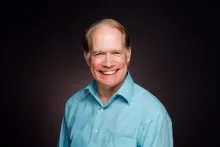
Greg Thomas is the former Pastor of the Cleveland, Ohio congregation. He retired as pastor in January 2025 and still attends there. Ordained in 1981, he has served in the ministry for 44-years. As a certified leadership consultant, Greg is the founder and president of weLEAD, Inc. Chartered in 2001, weLEAD is a 501(3)(c) non-profit organization and a major respected resource for free leadership development information reaching a worldwide audience. Greg also founded Leadership Excellence, Ltd in 2009 offering leadership training and coaching. He has an undergraduate degree from Ambassador College, and a master’s degree in leadership from Bellevue University. Greg has served on various Boards during his career. He is the author of two leadership development books, and is a certified life coach, and business coach.
Greg and his wife, B.J., live in Litchfield, Ohio. They first met in church as teenagers and were married in 1974. They enjoy spending time with family— especially their eight grandchildren.
