
Greg Thomas
This transcript was generated by AI and may contain errors. It is provided to assist those who may not be able to listen to the message.
Well, thanks everyone once again for special music. That was a sermon in itself. We could have ended services on that today because it was so powerful. And they worked on that a long time. I have to tell you, it was like two Pentecosts that they were working on. I think that was originally hoped to be performed for Mr. Cubic's visit back when we dedicated this building last November. And just things happened, you know how that goes? And we weren't able to do it then, so we were able to do it today. And it was very beautiful. Again, thank you for that very inspiring special music.
Well, once again, welcome to our celebration of the Feast of Weeks, otherwise known as the Day of Pentecost in 2015. Today, I would like to emphasize why this festival needs to be observed, and how you and I fit into this very encouraging festival. The Feast of Weeks has a wonderful and inspiring meaning for us. Thank you very much. It has a very wonderful and inspiring meaning for us, and I want to explore that meaning today in the sermon. So let's begin by going to Acts chapter 20, because I like to emphasize over and over again the importance of the fact that we keep these as new covenant holy days. There are many, many, many, many things in the Old Covenant that were abolished that were done away that we no longer observe, including animal sacrifices, just to name a few.
And I always like to emphasize so importantly why we observe these days, because we follow the examples of Jesus Christ, we follow the examples of Luke, we follow the examples of the Apostle Paul, many, many years after the death and resurrection of Jesus Christ. Acts chapter 20, verse 13, a statement made here by Paul's traveling companion, who was the physician Luke, who thankfully was an early historian for us, and we're going to pick it up here in verse 13. They've just left Troas. It says, then we went ahead into the ship and sailed to Essos, and they're intending to take Paul on board, for he had so given orders, meaning that they were going to travel somewhere else. And it says, intending himself to go on foot. And when he met us at Essos, we took him on board and came to Metallen. Now, just so we understand, it was a peninsula. They chose to sail around the peninsula. Paul chose to walk across the peninsula. So they all met together once again. And let's pick it up here now in verse 15. We sailed from there, and the next day we came opposite of Chios. The following day we arrived at Samos and stayed at Trigilium. The next day we came to Miletus, for Paul had decided to sail past Ephesus so that he would not have to spend time in Asia, for he was hurrying to be at Jerusalem, if possible, on the day of Pentecost. Now, brethren, this is written in 56, 57, 80, 25 years after the death and resurrection of Jesus Christ. Paul is so eager to observe the day of Pentecost in Jerusalem that he is suspending his missionary journey. That's what his job was to be a missionary. That is what his first and foremost role was as an apostle. But it is so important for him to travel to Jerusalem to be there, if at all possible, on the day of Pentecost that he suspended his missionary journey. Why was the day of Pentecost so important to Paul, as recorded here by his traveling companion, Luke? It was very important to Paul. For the same reasons, it should be important to you and important to me. Now, let's go to 1 Corinthians 16 and see where Paul himself refers to the day of Pentecost. This is just one or two years earlier than what we just read in Acts 20. Paul is in Ephesus writing this letter to the Corinthians, and this is an interesting statement that he makes buried in his letter in chapter 16. 1 Corinthians 16. And again, we will pick it up here beginning in verse 5.
Now I will come to you when I pass through Macedonia, for I am passing through Macedonia. That's an affirmative statement. He's in the process of doing that. And it may be that I will remain or even spend the winter with you, that you may send me on my journey whenever I go, for I do not wish to see you on the way, but I hope to stay for a while with you if the Lord permits. So Paul is saying, I just don't want to stop by Corinth and say hello and spend a day with you. If I'm going to make all the effort to come and see you, I'm going to spend some time with you. I want to spend some weeks with you. That's what he's saying. And then he makes an interesting statement in verse 8. He says, but I will tarry or wait in Ephesus until Pentecost, for a great and effective door is open to me, and there are many adversaries. I'd like to read this from the new international version, verses 7 and 8. I do not want to see you now and make only a passing visit. I hope to spend some time with you if the Lord permits, but I will stay on at Ephesus until Pentecost. So why would he refer to the day of Pentecost? It's because it was a holy day that had very powerful and significant meaning for the Apostle Paul. This shouldn't surprise us that he would be acknowledging the day of Pentecost. It shouldn't surprise us because in chapter 5, which we won't turn to today, but we turn during the spring holy days, he encouraged the Gentile believers to do what? In chapter 5, regarding the days of Unleavened Bread, do you remember? He said, let us keep the feast. So the point that I want to bring out here is that Paul didn't pick and choose which holy days should be observed like so many smorgasbord Christians do today. You know what a smorgasbord Christian is? They walk up and they say, oh, I like Pentecost. You get to wear white. It's all about harvest. It's about eating. Oh, the day of atonement?
I don't like the fast. I'm not going to observe that one. I'm not going to observe the days of Unleavened Bread because you can't eat white bread. But Pentecost, that sounds like fun. Yeah, let's keep that one. Though you can't pick and choose which of God's holy days you want to keep because they are a package. And together, that package reveals it outlines the plan of God. Paul understood that. He knew that. He recognized and respected them all, including the days of Unleavened Bread that he discusses back in chapter 5. So we see once again that Pentecost was important to the Apostle Paul. It's very important to us, too, for the same reasons. So now let's go to Acts chapter 2 and verse 1 and take a look and find what happened on that day of Pentecost in 31 AD.
See what Peter says and ask a very important question regarding someone he quotes. Acts chapter 2 beginning in verse 1, when the day of Pentecost had fully come they were all with one accord and one place. You know what? Thankfully, these disciples did not believe that observing the holy days was now obsolete or nailed to the cross. If they would have believed, like so many today believe, that God's holy days are obsolete or nailed to the cross, they might have been somewhere else.
And if they were somewhere else, they would not have received God's holy spirit. They were with one accord and in one place to celebrate a holy day called the Feast of Weeks or the Day of Pentecost together as disciples. And they did that and their faithfulness was rewarded because an astounding miracle occurred that attracted a large number of the hundreds of thousands of ethnic and converted Jews who had traveled there from the Roman Empire to celebrate the Day of Pentecost in Jerusalem. Let's see what happened that got everyone's attention. Verse 2, then suddenly there came a sound from heaven as of a rushing mighty wind and it filled the whole house where they were sitting. Then there appeared to them divided tongues as a fire and one sat upon each of them and they were all filled with the Holy Spirit and began to speak with other tongues and languages as the Spirit gave them utterance. It says there was a mighty rushing wind. Oh, like a hurricane wind! That would get anyone's attention, wouldn't it? If we were here and we heard what sounded like hurricane winds out here, I can assure you that I would postpone services. We would all run to the windows and peek outside and you know what we would see? We would see everyone who lives around here peeking through their windows looking outside saying, what is the source of these hurricane sounding winds? And then something else happened. In context, a huge fireball appeared but that fireball, which started out as one, became individual tongues of fire and each tongue came upon each one of those disciples who were sitting there and they were all filled with the Holy Spirit and they began to speak in known languages and tongues as the Spirit gave them utterance. And they were dwelling in Jerusalem, Jews devout men from every nation under heaven, and when the sound occurred the multitude, that means a crowd, again a large number of these hundreds of thousands of visitors who were in Jerusalem at this time, came together and were confused because everyone heard them speak in his own language. Then they were all amazed and marveled saying to one another, look, are not all these men Galileans? You see, that was not a compliment, by the way. That would be like someone saying, aren't all of these people from Cleveland?
That was not a compliment. It meant these are backward Galileans. Where could they have possibly learned these languages from all over the world? How could these uneducated fishermen, these yokels from the rural areas of Judea, know such things? That's what they were implying.
And how is it that we hear each in our own language in which we were born? I'll read verses seven and eight from the New Century version. They were completely amazed at this. They said, look, aren't all these people that we hear speaking from Galilee? Then how is it possible that we each hear them in our own languages we are from different places? So an absolute, incredible miracle occurs. But it's a twofold miracle. Number one, the disciples are speaking in known languages that they were not skilled to speak. I weren't trained to speak in any of these languages. They weren't fluent in any of these languages. They probably didn't know a single word in any of these languages. Suddenly, fluently, they can speak these languages they never had any training for. Secondly, the second part of this twofold miracle is the audience is hearing the speakers in their own native language. It's very possible, even though it doesn't say it in detail, it's very possible that one person was speaking and three people were hearing that one person speak each in their own language. Think about what a miracle that would be if that was the case.
This marks the coming of the Holy Spirit on the disciples and their transformation from frightened and confused people. Remember what it's recorded on the very day that after Jesus Christ had ascended to the Father, been accepted as the ultimate wave sheep offering, he came back and he went to see the disciples and it said that they were behind closed doors because they were afraid of the Jews. So this was a transformation from confused and frightened people to bold men who would face martyrdom for what they believed. Verse 9, Parthians and Medes and Elamites, those dwelling in Mesopotamia, Judea and Cappalicia, Pontus and Asia, Pergia, Pamphylia, Egypt, and parts of Libya, joining Cyrene, visitors from Rome, both Jews and proselytes, Cretans and Arabs, we hear them speaking in our own tongues the wonderful works of God.
The miracle of speaking in languages, what does it do? It breaks down barriers between people.
This story and what occurred here in Acts chapter 2 links one of the earliest of the New Testament stories back from Genesis chapter 11. In Genesis chapter 11, the people began to build a huge tower called the Tower of Babel and God confused their languages so they could no longer understand each other. On the day of Pentecost, God reversed the curse he had put on mankind where they couldn't understand each other because of language. He performed a miracle where they could speak in each other's language and understand the good news of the coming kingdom of God. He reversed the Babylon confusion that had occurred beginning in Genesis chapter 11 among the faithful. Here's what the Believer's Study Bible says about these verses we've read here from verses 9 through 11.
These three verses at first seem like an inconsequent geographical list. However, a line drawn from one of these names to another on a map in the order recorded will crisscross the Roman Empire and practically encircle it. Representatives from these areas could have returned to their homes abroad within about three months after Pentecost.
After hearing the Gospel that day via the miracle of languages, they could have penetrated the entire Roman Empire with the Gospel within months of Pentecost. Thus, they likely laid the foundation for evangelism among Gentiles in many areas of the Empire and in some instances even beyond.
Because of what God did on that day. Think about this, brethren. It's very possible that when Paul would travel to Greece, when he would travel to Asia Minor many years later after this event, after he was converted, that he would oftentimes go into a synagogue and speak to the Jews.
Why is it that some of the Jews immediately seemed to respond to the good news of the Gospel message? It could very well be that some of those Jews in the synagogues may have been influenced by what happened on that day in Jerusalem in 31 A.D. And when a messenger of Jesus Christ came to their town and once again reminded them of who and what Jesus Christ was fulfilling the role of the Messiah, that they said, I believe. I accept this truth. I accept this understanding. Verse 12.
So they were all amazed and perplexed, saying to one another, whatever could this mean?
Others mocking said, they are full of new wine. But Peter, standing up with the eleven, raised his voice and said to them, men of Judea and all who dwell in Jerusalem, let this be known to you and heed my words, for these are not drunk, as you suppose, since it is only the third hour of the day. That equates to the way that we count time is about nine a.m. in the morning, which was tad too early to be nipping on the wine. So he says they're certainly not drunk. Verse 16. But this is what was spoken by the prophet Joel. Quote, And it shall come to pass in these last days, says God, that I will pour out my spirit in all flesh. Your sons and your daughters shall prophesy, your young men shall see visions, your old men shall dream dreams, and on my maidservants and on my manservants I will pour out my spirit in those days, and they shall prophesy. I will show wonders in heaven above and signs in the earth beneath, blood and fire and vapor of smoke. The sun will be turned into darkness and the moon in the blood before the great before the coming of the great and awesome day of the Lord. And it shall come to pass that whoever calls on the name of the Lord shall be saved. So let me ask a question. Of all the prophets, of all the people that Paul could have quoted from an entire Old Testament of tremendous wisdom in people like Isaiah and Jeremiah and Moses and everyone he could have quoted from, why does he quote from what most people would consider to be an insignificant minor prophet called Joel? All the minor prophets were in one scroll. They were called minor prophets for a reason because of their length, not necessarily because of their content, but they were all considered as part of one book in the Hebrew Bible, the Hebrew version of the Scriptures. So why would what the prophet Joel envisioned be on Peter's mind of all the people he could have quoted, of all the things he could have said?
Why Joel? Well, we don't have time for it, but he begins to give a sermon to those whose attention has been frozen on these mighty winds and these tongues of fire and these individuals to speak their language. So now God's got their attention and Peter gives them a very powerful sermon. And here's how they concluded after they hear what he has to say, dropping down to verse 37. Now, when they had heard this, they were cut to the heart and said to Peter and the rest of the apostles, men and brethren, what shall we do? Then Peter said to them, repent and let every one of you be baptized in the name of Jesus Christ for the remission of sins and you shall receive the gift of the Holy Spirit for the promise is to you and to your children and to all who are afar off as many as the Lord God will call. The promise that day was for that audience and it was for their children and the promise of that day was for a handful of people living in northern Ohio in the 21st century called 2015 by their reckoning who gathered together to honor God on this holy day called Pentecost or the Feast of Weeks. So again, why would the prophet Joel, of all the prophets that Peter could have quoted, why would prophet Joel be the one whom Peter would have quoted from and thought from? Well, Joel used an event that occurred in ancient Judah in his writings to proclaim a very terrible future event that fall on this earth and it's yet in the future. We know it as the day of the Lord and it's going to be a terrible time in which much of the resources, the environment, the governments of this world, the infrastructure that we have is literally going to be destroyed by some very terrible plagues. And Joel starts out his book expressing the things that are going to occur on the earth using an analogy from something that had occurred in ancient Judah. So let's take there, let's turn there and take a look at it. We're going to go to Joel chapter 1 beginning in verse 1. While you're turning there again, I want to mention that Joel used an event that occurred in ancient Judah to proclaim terrible devastation of the earth during the future day of the Lord shortly before the return of Jesus Christ. The prophecy of Joel was written about 830 BC and it contains only 70 verses and we're not going to read anywhere near them today. We don't have the time. It is one of the shortest books in the Old Testament comprising of only three chapters in our English translations. The book begins in gloominess, but it ends in brightness. It has two natural themes. One describes a terrible locust plague. It ends with a fervent plea for the confession of sins, for the nation, for people as individuals to repent. The latter theme of the book is written as the first person response from God to that repentance because they repent. So the latter theme is God's first person response to their repentance. This latter theme proclaims hope for the repentant people coupled with judgment upon their adversaries. Before we take a look at Joel chapter 1, I'd like to remind you what the book of Leviticus teaches us regarding the Feast of Weeks.
During the days of Unleavened Bread, there was a ceremony on the day after the Sabbath. It was known as the Wave Sheaf Offering. And from that particular offering, which was a wave sheaf, a thanksgiving to God, to begin the barley harvest, they counted 50 days. 50 days was the Feast of Weeks, what we call the Day of Pentecost. And there was another offering, another offering of firstfruits. This time it was two loaves of bread, and those those loaves of bread were made out of wheat, not barley.
It was the end of the wheat harvest that was celebrated on the Feast of Weeks. So again, the Feast of Weeks occurred seven full weeks in a day after the wave offering associated during the days of Unleavened Bread. And the Feast of Weeks or Pentecost celebrated the end of the wheat harvest like the earlier Wave Sheaf Offering. It took place on the day after the Sabbath. It was a celebration of thanksgiving. Everyone thanked God for the conclusion of a successful harvest season. So now let's go to the book of Joel. In contrast, the joy that's associated with the Feast of Weeks with what Joel sees.
He says, in the word of the Lord came the Joel, the son of Bethneiel. Hear this, you elders, and give ear all you inhabitants of the land. Has anything like this happened in your days or even in the days of your fathers? Tell your children about it. Let your children tell their children and their children another generation. What the chewing locust left, the swarming locust has eaten.
What the swarming locust left, the crawling locust has eaten. What the crawling locust left, the consuming locust was eaten. Now scholars believe this is talking about four literal stages of the life cycle of a locust. You have a little grub, and that grub consumes, burrows into the ground, and it consumes part of the crop, and then it has a stage where it can fly, and it has a stage before it develops wings where it just walks around and it consumes. So scholars believe this is talking about the four stages of the lifestyle of a locust. I want to keep saying locust for some reason.
Verse 5, Awake you drunkards, and weep, and wail all you drinkers of wine because of the new wine, for it has been cut off from your mouth. There aren't even enough grapes to make wine. Verse 6, For a nation, and it is believed that God, as we'll see later on, that this nation God is referring to, his army is actually of this locust plague, for a nation has come up against my land, strong and without number. His teeth are the teeth of a lion, and he has the fangs of a fierce lion.
And what do these locusts do? They eat and eat and eat. They strip everything bare, what was green before them. By the time they fly away, they're stubble. Nothing, even the bark, is eaten off of things. Verse 7, He has laid waste, my vine, and ruined my fig tree.
He has stripped it bare and thrown it away. Its branches are made white, lament like a virgin girded with sackcloth for the husband of her youth. He says, lament like you were engaged to be married, and your fiance suddenly dies. Unexpectedly suddenly dies. This is what that level of mourning is life in the nation. The grain offering and the drink offering has been cut off from the house of the Lord. The priests mourn. Why do they mourn?
There's not even enough to make an offering to God. There's not even enough to celebrate the Feast of First Fruits. There's not even enough to celebrate the wave sheep offering. Everything is gone! And again, this is representative of the Day of the Lord and what this world will have experience throughout the earth in the near future. The priests mourn who ministered to the Lord. The field is wasted. The land mourns. The grain is ruined. The new wine is dried up. The oil fails. Be ashamed, you farmers. Why? Because you have nothing to produce. Wail, you vine dressers.
Because there are no grapes. There aren't even any leaves growing on your grape vines. For the wheat and the barley, because the harvest of the field has perished.
The vine has dried up and the fig tree has withered. The palm granite tree. The palm tree also and the apple tree. All the trees of the field are withered. Surely joy has withered away from the sons of men. Gird yourselves and lament, you priests. Wail, you who minister before the altar. Come lie all night in sackcloth. And the lie in sackcloth was a ritual of mourning, of complete utter sadness. You who minister to my God for the grain offering and the drink offering are withheld from the house of your God. Sounds pretty bleak, doesn't it? What a contrast to what the original Feast of Weeks pictured in the Old Testament. Again, why would Peter, of all the prophets he could have quoted from, why would he have quoted from the prophet Joel? Here's what the Holman's Bible dictionary says about these verses we just read. Quote, An unprecedented locust plague was symbolic of the coming day of the Lord. The insects, depicted in their four stages of development, moved through the land in successive swarms, utterly destroying everything in their path. Farmers were denied a harvest. Animals desperately roamed the wasteland, groaning and perishing for lack of food. Drunkards cried out for a little taste of wine because priests could not find enough offerings for sacrifice. Altars were empty. Drought and famine followed the locust infiltration. Vegetation was stripped. The weather was hot. Water was scarce. All God's creations suffered because of the sinfulness of his people. Pretty powerful message. Pretty sober message. But then, in contrast to the usual message of thanksgiving for the completion of a harvest on the Feast of Weeks, what we know of as Pentecost. Let's drop down now to verse 19. Joel 1, O Lord, to you I cry out, for fire has devoured the open pastures, and a flame has burned all the trees of the field. The beast of the field also cry out to you, for the water brooks are dried up. The fire has devoured the open pastures.
Again, pretty bleak. The severity of the catastrophe was compounded by a drought.
This was a time when there was no celebration of a harvest. The land, the grains, the animals are devastated. But the prophet Joel offers a solution. He doesn't leave his world without hope, just like God's firstfruits don't want to leave the world, the earth, without hope.
Joel 2, verse 12, Therefore, says the Lord, turn to me with all your heart, with fasting, with weeping, and with mourning. So rend your heart, not your garments. Don't make it something cheap and artificial. Don't make it some ritual where you just tear your shirt, but not your heart.
Where you just proclaim, I believe in Jesus, as if it's some kind of Disney term.
He says, rend your heart, not your garments. Return to the Lord your God, for he is gracious and merciful, slow to anger and of great kindness, and he relents from doing harm.
Very powerful verses. And now we understand why Peter ended his sermon when they asked, What shall we do now? He said, Repent, and let every one of you be baptized in the name of Jesus Christ, for the remission of sins, and you shall receive the gift of the Holy Spirit.
What Peter was doing is he was echoing what Joel just said here in chapter 2, in verse 17.
Let's take a look now at verse 14. Who knows, this is Joel continuing to speak regarding God, Who knows if he will turn and relent and leave a blessing behind him? A grain offering and a drink offering for the Lord your God? Maybe God will change his mind. Maybe there will be a grain offering. Maybe there will be some crops. Blow the trumpeted Zion, consecrate it fast, call a sacred assembly, just like a holy day. Gather the people, sanctify the congregation, assemble the elders. Gather the children and the nursing babes. Let the bridegroom go out of his chamber and let the bride from her dressing room cancel all weddings. From this point on, all weddings are canceled. Let the prophet says, Let the priest who ministered to the Lord weep between the porch and the altar. Let them say, Spare your people, O Lord, and do not give your heritage to reproach, that the nation should rule over them. Why should they say among the peoples, Where is their God? To put it in 21st century phraseology, why should they say, What God? There is no God. God who?
The prophet says, Don't allow that to happen, Lord.
We see here that priests are urged to call for fasting and prayer. Only God's grace could avert annihilation. And what happens? Well, Joel holds out the prospect of healing if the people will come together in repentance. And if in a sacred assembly, they will repent, and then something happens. It's like a switch has thrown, because the God that we worship, that we know, that we believe in, is a kind God, a merciful God, a loving God, dropping down to verse 21. Fear not, O land, be glad and rejoice, for the Lord has done marvelous things. Do not be afraid, you beast of the field, for the open pastures are springing up, and the tree bears its fruit, and the fig tree and the vine tree yield their strength. Be glad then, you children of Zion, and rejoice in the Lord your God, for he has given the former rain faithfully, and he will cause the rain to come down for you, the former rain and the latter rain in the first month. The threshing floor shall be full of wheat, and the vats and overflow with new wine and oil.
So I will restore to you the years that this warming locust has eaten, the crawling locust, the consuming locust, and the chewing locust. My great army, God referring to the locust, my great army, which I sent among you, and you shall eat in plenty and be satisfied, and praise the name of the Lord your God, who has dwelt wondrously with you, and my people shall never be put to shame. Then you will know that I am in the midst of Israel, I am the Lord your God, and there is no other people, there is no other, my people shall never be put to shame.
What a contrast! What a turnaround from the condemnation of devastation, of a failed environment, of a people in a nation who are ruined, to one that will receive tremendous blessing. The prophet is inspired to promise an agricultural restoration after a time of punishment that we know of as the day of the Lord in the future. Then, having promised agricultural healing, he abruptly does something else. Let's see what he says. Joel 2, verse 28.
This is what Peter quoted on that day of Pentecost in 31 A.D. And it shall come to pass afterward that I will pour out my spirit in all flesh. Your sons and your daughters shall prophesy, and your old men shall dream dreams, and your young men shall see visions. And also on my men servants and my maid servants I will pour out my spirit in those days, and I will show wonders in the heavens and in the earth, blood and fire and pillars of smoke. The sun shall be turned into darkness and the moon and the blood before the coming of the great and awesome day of the Lord. And it shall come to pass that whoever calls upon the name of the Lord, that means whoever repents, whoever rents their hearts, not just their garments, whoever calls in the name of the Lord shall be saved. For in Mount Zion and in Jerusalem, there shall be deliverance as the Lord has said among the remnant whom the Lord calls.
And an interesting analogy here from Joel chapter 2 is when he uses that Hebrew word and he says, I will pour, the Hebrew word for pour, pour out my spirit. It's the same word used when God pours out a healing rain upon a drought-ridden land. Same Hebrew word. So what happened on the day of Pentecost in 31 A.D.? Known originally as the Feast of Weeks. And why do we continue to worship God by observing this day? Well, first of all, the very small harvest of the Old Covenant was ending. Remember that the Feast of Weeks was a celebration of the conclusion of the harvest. Something happened that day. The old harvest ended and the new harvest was just beginning.
The Old Covenant harvest wasn't the outpouring of the Holy Spirit. Instead, it only influenced a few patriarchs and kings and a few prophets and a few priests. In contrast, the Father would begin to call men and women from all walks of life, from all nations, from all races, to be the firstfruits of His New Covenant. So the Old Covenant harvest was ended and a new harvest was to begin. And it wasn't just to be a limited harvest of a few people, like we find as we read the Old Testament. It was to be a harvest that included many people, not just kings, but made servants, women who were servants, what one might consider not to be of a kingly class.
It would include people of all genders, all ages, all races, because the Father would call and pour out His Spirit upon many over a certain period of time. As the outpouring of rain healed the dry land and resulted in a bountiful harvest in Old Testament times, the outpouring of the Holy Spirit would result in an abundant harvest of God's spiritual firstfruits. You are part of God's rich harvest.
That's why we're called firstfruits, because God began to harvest human souls through the outpouring of His Holy Spirit beginning on that day of Pentecost. In the New Testament, church was born on that day. And I might also add that since that time, God has had a continual harvest of firstfruits. It's no longer seasonal. It's no longer something that just occurs during a few weeks of each year. It's now a continuous harvest of firstfruits that would occur for thousands of years until Jesus Christ returns. This harvest would be of those whom the Father called to be kings and priests, as is mentioned in Revelation chapter 1 and verse 6. The harvest of firstfruits to be kings and priests in the kingdom of God. Something else that we should understand from this day.
And that is during the future day of the Lord, that's outlined in Revelation chapter 9, if you'd like to read some more about it. The entire world could and should be destroyed because of the depravity of human sin. Here's what Jesus said in Matthew chapter 24 and verse 22. He said, unless those days were shortened, no flesh would be saved, but for the elect's sake those days will be shortened. Brethren, you who responded to the Father's calling, you who repented of your sins and accepted Jesus Christ as your personal Lord and Savior, you are that elect. For your sake, God will not allow the day of the Lord to do what it probably should do, and that is to destroy all life off of this earth. Because a small group of people, his firstfruits, did what Joel said needed to be done, that is, repent and rend to their hearts. Because a small group of people were willing to do what Peter said needed to be done, repent and accept Jesus Christ as your Savior.
Because of those firstfruits, because of the elect, God will not allow this entire world to be devastated. He will absolutely, positively intervene, because you are the elect spoken of here.
Even Joel himself said in chapter 2, verse 14, referring to God, he said, who knows if he will turn and relent and leave a blessing behind him, a grain offering and a drink offering for the Lord your God. End of quote. Brethren, because you responded to the Father's calling, because you are his firstfruits, your life, who and what you are as an ambassador for Jesus Christ is a blessing God has left behind here to help humanity. What I'm trying to say is that we are the hope of the world. And the reason that Peter was so excited to quote from the prophet Joel on that day of Pentecost is what he witnessed through that miracle proved to him that God was going to save the world. And the first thing he thought of was in spite of all of the depravity in this world, in spite of human sin and suffering, in spite of the fact that there would be a day of the Lord as Jesus prophesied himself in which there would be terror and destruction and pain that for the sake of a few God would intervene and he would save this world. That few in 31 A.D. were those who were witnessing the events in that house. Those few in the year 2015 are those who have assembled in God's Holy Day known as the Feast of Pentecost and who have given their lives to Jesus Christ and who are walking as living disciples for his way of life, who have repented of their sins, and who are his firstfruits, the people who are a grain offering and a drink offering that God has left behind to leave as a blessing for this world.
Pentecost reminds us of the awesome power of the Holy Spirit. It's a tremendous gift from God. In 31 A.D., a small group of believers who were previously very timid in talking about and preaching the gospel of the kingdom were literally transformed into new beings who boldly proclaimed the good news of God's kingdom all over the then known world. The same intensity of that spirit resides in each and every one of us if we are willing to yield to God's will. Because God hasn't given up on this world. For the sake of his firstfruits, for the sake of his elect, he will come back and he will be merciful and he will establish a world without end, a kingdom that will last forever, that will benefit all of humanity. For our final scripture today, Amos chapter 9 and verse 13. If you'll turn there with me, Amos chapter 9 and verse 13.
On the spay of Pentecost in 31 A.D., Peter was excited because the miracle that he saw convinced him that God will save the world because of his firstfruits. And here's the world that we can all look forward to. Firstfruits of Jesus Christ, abundant harvest of God Almighty. Amos chapter 9 and verse 13. Behold the days are coming, says the Lord, when the plowman shall overtake the reaper.
There will be the crops will be so abundant they'll be rushing the person planting seeds in the other end for next year's crop. The treader of grapes, him who sow seed. The mountains shall drip with sweet wine and all the hills shall flow with it. I will bring back the captives of my people Israel. They shall build the waste cities and inhabit them. They shall plant vineyards and drink wine from them. They shall also make gardens and eat the fruit from them. I will plant them in their land and no longer shall they be pulled up from the land that I have given them, says the Lord your God. So my brothers and sisters in Jesus Christ, this is a very important holy day because it should remind us that God wants to harvest human souls. He doesn't want anyone to be lost. And he begins his plan by calling a few out of each generation of human beings who live to open their minds, to strip away the blinders from their eyes, to repent of their sins, to accept Jesus Christ as their personal Lord and Savior, to receive his Holy Spirit and begin a lifetime of growth, of development, of change, of fulfilling the potential of being a new creature in Jesus Christ.
That's our mission, and we are the hope of the world. The fact that we accepted the Father's calling and are here and doing what God wants us to do is a comment on the love and the grace that our Father has for each and every one of us. So thank you for your faithfulness.
Remember what the Day of Pentecost means because you are his choice harvest. He loves all of you and he wants to see all of us be ripened fully and developed and develop each and every one of those fruits of his Holy Spirit. Have a wonderful Pentecost.
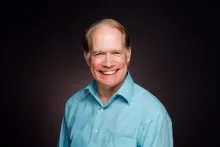
Greg Thomas is the former Pastor of the Cleveland, Ohio congregation. He retired as pastor in January 2025 and still attends there. Ordained in 1981, he has served in the ministry for 44-years. As a certified leadership consultant, Greg is the founder and president of weLEAD, Inc. Chartered in 2001, weLEAD is a 501(3)(c) non-profit organization and a major respected resource for free leadership development information reaching a worldwide audience. Greg also founded Leadership Excellence, Ltd in 2009 offering leadership training and coaching. He has an undergraduate degree from Ambassador College, and a master’s degree in leadership from Bellevue University. Greg has served on various Boards during his career. He is the author of two leadership development books, and is a certified life coach, and business coach.
Greg and his wife, B.J., live in Litchfield, Ohio. They first met in church as teenagers and were married in 1974. They enjoy spending time with family— especially their eight grandchildren.
