

Gary Petty
This transcript was generated by AI and may contain errors. It is provided to assist those who may not be able to listen to the message.
Why should you study Bible prophecy? Now, for some of you, it's like, oh, I know! Because you love studying prophecy. You love making little charts and graphs and figuring out when this takes place and when that takes place. And some people, they look at the Scripture, and that's their major study is prophecy. Now, others of you think, I'm not that interested in prophecy. You know, when I go into the Bible, I want God to speak to me on my everyday life.
I'm going to know how to have a better marriage. I want to know how to be a better Christian. I want to know how to fix my problems. And so you look at prophecy and say, well, that's sort of the boring part of the Bible. And so there are different viewpoints, and there are different, of course, the Bible is filled with different subjects, and we're supposed to study all of them. What I'm going to talk about today, and this is in conjunction with the Holy Days, because we're about to enter the Holy Days season, where we're going to be celebrating days that have a lot of importance for the future.
There's a prophetic meaning to the days we're about to keep. So why should we study prophecy? I mean, to study prophecy just because you want knowledge is rather useless. I know lots of people that have lots of prophetic knowledge and are not very good Christians. And Paul said, if I have all prophetic knowledge and I don't have agape, he says it means nothing. It is possible to have a large amount of prophetic knowledge, and it doesn't mean anything.
So I want to talk about today six ways that prophetic knowledge should affect your life. How studying prophecy should have an impact on our Christianity. So how does studying the prophecy have an impact on our Christianity? What does it make us do? How does it motivate us every day and living our lives? The first point is that prophecy reveals to us the fact that God is active in human history. God is active in what's going on.
Now, you think, well, yeah, I know that. And, you know, everything we're going to go through today, nothing's going to be a surprise. But we need to be reminded of how important that piece of understanding is. I can't imagine getting out of bed every morning and thinking that this was all by chance, that God wasn't involved in anything. And there's lots of people who believe in God, but when they look at the world around them, they see the mess that it's in.
They see the suffering. They see the hopelessness of their own lives. And their conclusion is God really doesn't care and God's really not involved. And, you know, what prophecy tells us is God is involved, that there is a plan and He is involved in what goes on. And He even says that about Himself.
Let's go to Isaiah 46. Isaiah 46. And just a simple statement that Isaiah was inspired to write. This is a statement that's made by God about Himself. Isaiah 46 verse 9. Remember, this is God speaking about Himself. He says, Remember the former things of old, for I am God. There is no other. I am God, and there is none like Me, declaring the end for the beginning and from ancient times things that are not yet done.
God says, I'm going to tell you what's going to happen in the future before it ever happens. Because He is involved. He's involved in the human condition. In fact, one thing that we learn from the Holy Days, the Fall Holy Days, of the many things that we learn is that Satan is allowed to have this world for a certain amount of time and that God takes it back. That's one of the things we learn.
That Satan has a time, and you and I live during that time. We live during the time of Satan's rule. And the reason Satan's rules is because our first mother and father got kicked out of Eden. That's why. They rebelled against God and Satan became the God of this world. And that's what we live in. Now, that simple understanding helps us weather an awful lot of stress and suffering. We don't live in a world designed by God, and yet God's going to fix it. He has a plan to fix it. And He declares that. And as we keep these Holy Days, we will experience that declaration from God when this trumpet sounds and Christ returns.
And He sets up that Kingdom on this earth. You and I live in a very special time. And this is why we can understand the Holy Days in a way that nobody else has really understood. We have an understanding of the Holy Days more complete than anyone that's ever lived, because you and I live between the two comings of Christ.
And we live very close to the Second Coming. Because we live between those two, we can look back and see what God did to the First Coming, and we can look forward to see what God's doing to the Second Coming. Read the writings of Paul, and you'll see a man who doesn't completely understand the Second Coming yet. In fact, he thought it was going to happen in his lifetime.
But then you have to remember, he didn't have the book of Revelation. Paul died before the book of Revelation was ever written. He didn't have that information. You and I live in this unique time period where God has given us an understanding, an understanding that the ancient prophets wanted so much to understand. Remember in the book of Daniel? Daniel becomes physically ill because of what God's revealing to him. And he says, I don't understand this. And he says, seal it, for it is for the time of the end. Daniel, you're never going to understand this in your lifetime. Can you imagine receiving a vision from God?
You know it's from God. Talking to angels. You think, wow, wouldn't that be great? Can you imagine being told? Now, write down everything you've been told and you're physically ill because you're saying, but I don't understand. And your response, the response from God is, of course you don't and you would ever will in this lifetime. But write it down for others so that they will understand. Look at what Peter says in 1 Peter 1. 1 Peter chapter 1. And this is why prophecy is important. It isn't so that you and I can guess when every prophetic event is going to happen or have some kind of secret knowledge that makes us better than other people.
As I stated, you can have all understanding of prophecy. And Paul says it can mean nothing. But the study of prophecy does do something. It's supposed to produce something in our lives so we should have an understanding. 1 Peter 1 verse 10. He says, of this salvation, he's talking about the salvation that is revealed through the coming of Jesus Christ.
That's what the first part of this chapter is about. Of this salvation, the prophets have inquired and searched carefully who prophesied of the grace that would come to you, what God has given you, the pouring out of God's Spirit, the whole formation of the church, all kinds of things that you and I take for granted. The prophets looked and said, how is that going to happen?
He says to them, I'm sorry, verse 11, searching what or what manner of time the Spirit of Christ who was in them was indicating what He testified beforehand, the sufferings of Christ and the glories that would follow. Okay, Isaiah was told about the suffering Messiah at Isaiah 52 and 53. And he said, well, what is this going to be and who is this? And explain this to me. And he didn't get an explanation. He was just told to write it down.
You know, when you and I pick up Isaiah 52 and 53 and almost every Passover it's read, right? We read that. It makes perfect sense to us. You know, it didn't make any sense to Isaiah. How does he explain that? He's looking ahead, trying to figure out this future event that we already can look back and see that has already happened. Isaiah 12 says, to them it was revealed not to themselves, but to us.
They were ministering the things which now have been reported to you. So those who have preached the gospel to you by the Holy Spirit said from heaven, things which angels desire to look into, which angels want to know. I can't imagine when the angels understood that the Word was going to become flesh and die for humanity. I can't imagine what went through their minds. What? Yet you and I understand that. You and I understand it. He gives all these things, therefore, now this is what it produces, therefore in Greek means, with a Greek word that's translated therefore.
Okay, this is the summation. This is where we're going with this argument. Here's where we end up, and this is why we need to study into these things. Therefore, gird up the loins of your mind, be sober, and rest your hope fully upon the grace that is to be brought to you at the revelation of Jesus Christ.
We're about to go celebrate the time of the revelation of Jesus Christ. As obedient children, not conforming yourselves to the former lust, as in your ignorance, but as He who called you as holy, you also be holy in all your conduct.
So understanding this information of itself is meaningless unless it motivates us to become obedient children to God. So that's our first point. Prophecy is to reveal that God is active in human history. Now, it's easy to say, okay, I can see God involved in all these big things.
Daniel gets this message, and it's about all these great empires. We look in Revelation, and we see the beast. But what's that mean to me every day? How does that affect my life every day? Well, the second point for why God gives prophecy and why it's important is that prophecy encourages people to repent and turn to God. Prophecy encourages people to repent and turn to God because it tells them that there is a time of judgment. And when you go through all of the Old Testament prophets, the messages that they brought to Israel and Judah and Assyria and Babylon, the Arab world around, they brought messages to all the countries throughout the Middle East. There was always something in the message of judgment, and it was, if you'll just turn to God, this doesn't have to happen. Even Jonah's message to Nineveh was what? If you repent, this doesn't have to happen. He didn't want to say that. He didn't want that to be part of his message. We have in the book of Samuel, 1 Samuel. 1 Samuel, as a little boy, is given to by his mother and his father. He's given to the high priest, Eli. And he's given to him to be his servant. And God speaks to Samuel as a child. And Samuel goes and tells Eli, and Eli says, well, listen to what God is telling you. So Samuel has to go to Eli and tell him, God said, He's going to punish you. When you look at Eli, he was letting his sons do whatever they wanted. His sons were corrupting the worship of God so much, it was turning the people against God.
The people of Israel were turning against God because of its leaders, the sons of the high priest. And Eli didn't know anything about it.
And the whole nation was becoming corrupt. And he said, because of that, everybody's going to be punished. And so here is a prophecy about punishment. But if you search through all the prophecies, and this one's interesting because it was fulfilled. That's how I'm going to give this one. This one was fulfilled, and we will see God's message, even in the fulfilling of the prophecy. Years later, when Samuel was older, Israel was attacked by an enemy, and Eli's sons are killed in battle.
The Ark of the Covenant is taken by the Philistines.
Eli is so overcome with grief, he has a tragic accident and dies. The whole family's wiped out, and Israel is now under the subjection of this cruel enemy.
Now God had given a prophecy, and the prophecy had happened.
So the people come to Samuel. Let's go to 1 Samuel 7.
1 Samuel 7 If you study all the prophecies of the Scripture, you always see God saying, 1 Samuel 7 But if you change, I will accept you. 2 Samuel 7 If you repent, I will take you. 1 Samuel 7 Though your sins be read, I will make you white.
He keeps telling people, whether on the grander scale, on national scale, or in the New Testament, so much of the New Testament is about the person, the individual that God calls to be part of the church. On the individual scale, the message is always the same. You need to repent. Study prophecy to figure out what happens if you don't, and be encouraged to repent.
So this prophecy now has been fulfilled. Verse 3 of 1 Samuel 7 And this is right after the battle, and Eli's sons have been killed, and Eli has died. That Samuel spoke to all the house of Israel, saying, If you return to the Lord with all your hearts, and put away the foreign gods, and the asterisks from among you, and prepare your hearts for the Lord, and serve him only, he will deliver you from the hand of the Philistines. So it has now been complete. The prophecy has happened. And what is God's message? 2. I've thrown you away. I've punished you. You're gone forever. No. The message is always, turn to me. Turn back to me. And I will change things.
Verse 4 So the children of Israel put away the bales and the asterisks, and served the Lord only. And Samuel said, Gather all of Israel to Mitzvah, and I will pray to the Lord your God. So they gathered together at Mitzvah, drew water, poured it out before the Lord, and they fasted that day, and said there, We have sinned against the Lord.
And Samuel judged the children of Israel at Mitzvah. Number 7 Now when the Philistines heard that the children of Israel had gathered together at Mitzvah, the lords of the Philistines went up against Israel. And when the children of Israel heard of it, they were afraid of the Philistines. Verse 8 says they just kept crying out, God, we're repenting. We're here now. We are helpless before our enemies.
We have turned to you. Will you save us? And if you read the rest of the story, he did.
There's an interesting little side point here, is that whenever you turn back to God, you're struggling with a personal sin, or you've just drifted away from God, and you turn back to God, and you overcome the sin, or you get your priorities right. And now prayer and fasting and worshiping God, obeying God as we come center to your life again, there will be enemies rise up against you.
There will be someone that will come into your life to try to discourage you from doing what you're doing. You'll find that over and over again through the Scripture, too. It's one of the themes.
Turn to God, and He will save you. Turn to God, and someone will come along and try to keep God from doing what He says He'll do. So remember that. Next time you seem to be doing real well, and someone comes along, or a situation comes along that seems to be dragging you back, yeah, that's going to happen. You just have to keep turning to God, because it soothes God's power that these things happen.
So we have our second point. Prophecy encourages people to repent and turn to God.
You say, well, okay. You know, I turned to God. I repented. I live a life of repentance, so prophecy wouldn't affect me that way. Well, there's other reasons we should study prophecy in terms of how it affects our life. So that brings us to our third point.
Prophecy is to strengthen the faith and courage of those who have already turned to God.
Prophecy is to strengthen the faith and courage of those who have turned to God. So you say, okay, well, I repented and I'm headed in the right direction. I'm following God.
But then you look at the world around you, and it's a mess.
I mean, even if right now you don't have any real serious personal issues in your life, which not, you know, if you do, if you're at a stage in life right now, a period where you have no real great personal issues or problems or trials, enjoy it because this too shall pass, but then you look at the world around you and you say, look, this world's falling apart.
Then you start looking at prophecy. So you start saying, oh, it's just going to fall apart.
One thing I've noticed over the last probably 10 years that is I see in the church of God, wherever I go, and that is a great anxiety over prophecy.
Now, anxiety over what's going on in the world should happen.
Prophecy is to give us courage and faith in what's happening. Let me show you a perfect example. I'm going to go through another fulfilled prophecy. I'm pulling a few situations in the Bible where the point I want to make is made, just like with Samuel. The prophecy was told, it was fulfilled, and then afterwards, what was still the same message? Repent.
Look at Acts 21. Acts 21.
We can't be overwhelmed as we watch the nation deteriorate, as we watch the world deteriorate, because God told us this would happen.
God told us the world can't survive under Satan's rule. God told us human beings can't ever create a government that will survive. Human beings can never create a society that will survive.
We can't. We're not capable of that.
That's why we wait for another kingdom. We wait for another king. We wait for something. Remember I talked about that last time. We are waiting for something. We're anticipating. We wait for that because we know this won't work. They said, oh, then I'm just depressed. It won't work. Now we should be strengthened and have courage and faith because that's right. It won't work, but God will. God's way will work. Christ will fix it. And you and I have had this remarkable privilege. Not because we were better than anybody else. So by the grace of God, you and I know this. We see this. We wait for this. Acts 21 verse 10.
Talk about Paul here. As we stayed many days, a certain prophet named Agabus came down from Judea. So Agabus was a prophet. He spoke with inspiration from God, and they knew it. The church knew it. When he had come down to us, he took Paul's belt, bowed his own hands and feet, and said, that says the Holy Spirit. Now that's got to be a little disconcerting. A man walks up to you and takes off your belt. Now it wouldn't have been like a leather belt we have through on our pants. They would have had a toga. The belt comes around to hold it tight, and he untied his belt and took it off. They had tied his own feet and hands together.
Must have had to do that. He had to sit down on the ground. I don't know how you stand up and do that. They had to sit down on the ground. Paul's standing there, Luke's with him because he says, us. So here's Paul and Luke. They're watching him tie himself up. Then he says, this is what the Holy Spirit has told me. So shall the Jews of Jerusalem bind the man who owns this belt and deliver him to the hands of the Gentiles?
Now, because Agabus is a prophet, everybody believes what he says, including Paul.
Now, what do you think the reaction of everybody would be? It's the normal reaction we all have. Verse 12, now, when we heard these things, both we and those from that place pleaded with him not to go to Jerusalem. Let's not do this. There's anxiety. There's worry. Oh, well, this is a prophecy. Let's avoid the prophecy and pretend like nothing bad will happen.
Let's avoid the prophecy. We're filled with anxiety. Paul, don't go. You'll be tied up and handed over to the Romans. They knew what it meant. But notice Paul's reaction. Then Paul answered, What do you mean by weeping and breaking my heart?
He said, You don't think this is hard enough as it is? I've just been told by God, I'm going to go to Jerusalem and be bound up and turned over to the Romans. And I have no idea what will happen after that. Remember, he had no idea. He would actually leave for many years later doing the work of God before finally being killed by the Romans. But at this point, he doesn't know they might kill him on the spot. He has no idea how this turns out. He only knows that God says, if you go there, this will happen. But God had wanted him to go there. So what does he do? Run from the prophecy? He says, You're breaking my heart. You're making this so hard.
For I am ready. Little part of verse 13. For I am ready not only to be bound, but also to die in Jerusalem for the name of the Lord Jesus. So when he would not be persuaded, we see saying, the will of the Lord be done. And so here we have these people that finally realize, you know what? This prophecy has been given. He's supposed to do that. We must accept the will of God. They were strengthened. They had more courage. They had more faith because Paul exhibited courage and faith in face of a prophecy. It was frightening. The prophecy has been given to us so that we can have courage and strength.
Because God tells us it's going to happen. He also tells us how things are going to work out. But we don't know in the short run. Paul didn't know how long he would go.
As far as he knew, he was going to die in Jerusalem.
Hey, if that's what God wants, I'm going.
The study of prophecy should help us get to the place where the world's falling apart and this is happening and that's happening.
I'm going where God wants. I go.
It's not to leave us in fear, interpretation.
We're just worried all the time about how this prophecy is going to play out and all the terrible things. I get emails from people all the time that watch Beyond Today.
They're distraught. There was this program on the beast or whatever and it's like, how is this going to happen? I read this on the internet and do you think that there's going to be a Yellowstone that's going to blow up? There's a giant volcano, by the way, under Yellowstone.
Is it going to blow up and wipe out the United States? What's going to happen to us?
Well, all we have to do is back off and say, wait a minute, God is telling us what's going to happen.
So we have to find courage and faith and if God knows what's going to happen, He will take care of us. Now Paul thought that being taken care of may be being killed, but why was he going to be killed?
For the name of Jesus Christ. That is acceptable to him. Now I'm not quite there yet. I'm just going to admit to you, you know, I'm like, okay, God, let me die for your name. I'm not there yet.
Paul was. Paul was. Fourth point.
Prophecy, then, is to motivate us right now to live righteous lives. If prophecy just makes us fearful, or we just study it because we're engrossed with prophecy and we're ignoring how we live, then we're not getting the benefit of why God gave us prophecy. Prophecy is a gift from God. It is to motivate how we live. Look at Matthew 24, part of the Olivet prophecy.
Matthew 24.
So here is the most important prophecy given by Jesus in terms of the end time. Matthew 24.
What's interesting here is He's talking about the church.
Now we think of Matthew 24 as a nation rising up against nation and pestilences and all. Yeah, He talked about those things in the world, you know, as far as the world, the context of the world. But actually, most of the Olivet prophecy, most of Matthew 24 and 25 is about the church.
The overwhelming majority of the Olivet prophecy isn't about the world, it's about the people who we would call. And so He says here in verse 43, But know this, if the master of the house had known what hour the thief would come, he would have watched and not allowed his house to be broken into. Therefore, you also be ready, for the Son of Man is coming at an hour when you do not expect, no matter what charts would matter what we put together, you and I can't figure out the exact day Christ is coming back. There's going to come a time when we can sort of guess.
When certain things happen, there are certain things that haven't happened yet. The tribulation can't start tomorrow. It can't. There are certain things that are predicted in the book of Revelation that have to happen before the tribulation is starting to happen. Now they can happen real fast, but they haven't happened yet. So we need to be watching these things.
And so what he says here is there's a reason to point where, you know, we can just get so complacent and have no prophetic impact of what we do that we miss what God is doing.
Who then is the faithful and wise servant, verse 45, who has masturbated ruler over his household to give him food in due season? Blessed is that servant whom his master, when he comes, will find so doing. Surely I say to you that he will make him ruler over all his goods.
Now we know that the point of this is that the master hears Christ. When he finds them doing, motivated to live the way we're supposed to live, motivated to obedience to God, he says that person will be accepted by the master when he comes.
Verse 48, but if that evil servant, now these are servants, these aren't unconverted people, these are servants, that's the important thing here. These are Christians in the context of what the parable means. If that servant says in his heart, my master is delaying his coming, and begins to beat his fellow servants, in other words, he just treats his fellow Christians, just treats them poorly, constant conflict, puts others down, eat and drink with the drunkard, so there was a lifestyle of sin, the master of that servant will come on a day when he's not looking for him, and in an hour that he is not aware of. It is going to be possible to be caught unawares when Christ returns. Now when you figure all the things that have to happen before Christ comes back, how could someone miss that?
But according to this, there'll be some people unprepared. Of course, as I've said before, you'll hear me say it a lot, on the way home if you get hit by a car and die, Christ came for you today. We have to be prepared all the time. We have to be prepared all the time. But the next statement is what frightens me in this parable, because remember, he's talking to a servant. He's not talking to the world. Verse 51, this evil servant, he says, and he will cut him in two and appoint him his portion with the hypocrites. Well, there'll be weeping and gnashing of teeth. When you see that weeping and gnashing of teeth sentence, it's almost always in context of the lake of fire.
This is a salvation issue he brings out here, that there'll be people not prepared for Christ's return who have been called to be prepared for Christ's return. So what motivates us in this? The concept that Christ is returning. The prophecies concerning Christ's return.
And that we are to be prepared for that.
Second Peter 3, this is a rather long passage here. I'm just going to read one verse of this passage. Second Peter 3. So prophecy is to motivate those who have turned to God to live righteous lives. Second Peter 3 verse 11. Now he's talking here about the day of the Lord. And he's also talking about the time when God renews the whole face of the earth. New Jerusalem comes down, according to Revelation. He's talking about the time when the whole earth is renewed. And he says, knowing those prophecies, verse 11, therefore, says, all these things will be dissolved what manner of persons ought you to be in holy conduct and godliness, looking for and hastening the coming of the day of God.
We look forward to and we hasten that. We live for it. We move towards it. Our lives are moving towards a point.
Now your lives are moving towards a point. You're getting ready for the feast, right?
Some of you have already bought some things. Some of you know exactly when you're going to be leaving. You're working it all out. You get a schedule. You're working towards a point. You do that every day. You do things where you work towards a point in time. Now if you have to be to work at eight o'clock in the morning, you know how long it takes to get there. You don't have to how long it takes you get up, take a shower. You're working towards a point in time. He says, we are looking towards and working towards a point. And what must we do to prepare for that point?
And that's what we are to do every day, is to be preparation for that point. Our fifth lesson we have is that prophecy is to help those who turn to God discern the times in which they live. It helps us to discern the times in which we live. And it's changing very, very quickly. But as the changes happen, I see more and more ideas of how prophecy is going to play out.
And I mean, I've got my ideas. That two bucks will get you a cup of coffee at Starbucks.
Because we don't know exactly how everything's going to work out. But we are to be discerning what happens. Matthew 21. There's an interesting passage here about a prophecy and how it's fulfilled. And then I'm going to go to Luke's account and add something that Matthew doesn't have.
Matthew 21.
This is towards the end here when Jesus is coming into Jerusalem at the Passover time.
Now when they drew near Jerusalem, he came to the Faji at the Mount of Olives, that Jesus sent two disciples saying to them, go into the village opposite you, and immediately you will find a donkey tied in a colt with her. Loose them and bring them to me. And if anyone says anything to you, you shall say, the Lord has need of them. And immediately he will send them.
He says, now when you go in here, untie these animals. And someone's going to walk and say, what are you taking my animals for? And you're just to say to them, the master needs them.
And the person's going to say, okay, you take them.
He didn't tell them to go steal. He said, this person's going to have them. He's going to understand what you're saying. All this was done that it might be fulfilled, which was spoken of by the prophet. Now this goes back to an Old Testament prophecy in Zechariah. Tell the daughter of Zion, behold, your king is coming to you, lowly and sitting on a donkey, a colt the foal of a donkey.
Now the Jews, at this time of year, nobody rode in to Jerusalem on a donkey. You walked, you took a wagon, but why didn't they do that? They would do it normally because the Messiah, the king, was supposed to come riding a donkey.
I don't know what it must have been an interesting conversation. Hey, what are you taking my donkeys for? The Lord needs them. Oh, okay. Did he run home and say, the Messiah has come.
But all this is done to fulfill a prophecy.
So by the way, Matthew now understands it. He probably didn't understand it at the time.
He says, ah, this was to fulfill Zechariah, which tells us something, by the way, about prophecy. It isn't so you could always predict something before it happens. The prophecy is so you'll know what's happening when it's happening.
You don't always get to predict what's going to happen.
Matthew later says, I got it. I understand what he was doing.
So the disciples went and did as Jesus commanded them, and they brought the donkey and the colt, laid their clothes on them, and set him on them. And a great multitude spread their clothes on the road. Others cut down branches from trees and spread them on the road. Now, here is Jesus the carpenter writing these animals into Jerusalem, and thousands of people come out, and they are honoring Him. They're putting their clothes down for these animals to walk on, cutting branches off trees so the animals can walk. I mean, this is a huge thing.
Of course, the Romans noticed it, so did the Jewish leaders. I mean, this is a big thing. Thousands of people.
Then the bald dudes who went before, and those who followed, cried out, saying, and this is based on another prophecy in the Old Testament, Hosea to the Son of David, blessed is he who comes in the name of the Lord, Hosea in the highest. And here he comes in, fulfilling these prophecies. But notice what Luke adds in Luke 19.
Because he has a few points here that Matthew did not include.
Verse 38, basically, it talks about how the people are crying out and blessing Him.
Verse 39 says of Luke 19, and some of the Pharisees called to him from the crowd, Teacher, rebuke your disciples. Rabbi, they're claiming you to be the Messiah.
You see, why would you rebuke them? The people are excited to see Jesus. They all know. They're discerning the times. This is the Messiah.
So the Pharisees who didn't believe He was the Messiah say, Rabbi, stop this. These people think you're the Messiah.
But he answered and said to them, I tell you that if things should keep silent, the stones would immediately cry out. He says, you don't understand. You can't stop this. This is what the prophecy is.
If they don't do it, God will just have the rocks do it because it says this will happen.
He can't stop this.
Now, as he drew near, he saw the city and wept over it. Now, this is very interesting because he knew very few people would actually understand how the prophecy was going to be played out. And because of that, as a whole, the people would not repent. Repentance is always part of the message, part of the prophetic message. Sometimes we're like, oh good, let's give the prophetic message. You're going to die. I can't wait to be there when Jesus and fire comes out and burns up all those people to be great.
Now, it's supposed to be, please repent.
So, these prophecies are being fulfilled. And he says in verse 42, if you had known even you, especially if this your day, why did the people of Israel, and here specifically the people of Judah, exist? Because the promises made to Abraham.
Why were promises made to Abraham? So the Messiah would come. I'll give that sermon sometime too.
He said, this is it, folks. These were all the promises we're about. This is your day, because I'm here. He says, you don't get it. Especially in this your day, the things that make for your peace. But now they're hidden from your eyes. For days will come upon you and your enemies will build an abatement around you, surround you, and close you in on every side, and level you and your children within you to the ground, and they will not leave in you one stone upon another, because you did not know the time of your visitation.
Less than four decades later, the Romans surrounded Jerusalem, and they destroyed it, killing hundreds and hundreds of thousands of people.
He said, because you're not discerning the times in which you live, I'm going to give you another prophecy, that you won't repent now. What's going to happen to you is going to be horrible.
They did not discern the times. Prophecy is given to us to discern the times in which we live. Remember, not always to predict, but to know when it happens.
To know when it happens. And then our last reason, prophecy is to comfort those who turn to God with knowledge of history's final outcome.
You know, you and I cannot save this country. I don't care how much you love this country. You can't save it. You never could. Nobody ever could.
It was doomed for misconception. Like all human activities.
It was doomed for misconception.
Well, if we could just go back and do what the founding fathers did.
If you went back and we all did it just like the founding fathers, it would fail, too. They never led anybody to conversion.
Think about that. They might have had more biblical principles, but they never led anybody to conversion.
The founding fathers couldn't create a government that would not be corrupted because they themselves were corrupted. Only a theocracy works where everybody obeys God. Nothing else works.
It's that simple.
So, everyone would have worked. And I don't care how much we love it. We can't make it work, and we can't make it survive.
Well, there's no comfort in that.
Habakkuk is an interesting prophet.
Habakkuk was prophesying at the very end of the time of Jerusalem and of Judah.
And he was overwhelmed with the state of his nation. He was overwhelmed with how rotten it had become.
So, he praised God. Let's go to Habakkuk chapter 1.
One of the minor prophets we don't turn to very often, but Habakkuk is a fascinating prophet.
So, let's start here where he talks about how he loved Judah.
What's interesting is God had told him from the very beginning, I'm giving you my law, but without my spirit, you can't do it. Someday, I'll pour out my spirit.
He tells him, clear back in Deuteronomy.
Someday, it just won't work. I'm going to give you everything, and it won't work.
Human beings, given everything by God, still won't work. Until our nature has changed, we'll mess it up.
I mean, if anybody should have been able to make it work, it was Judah, right? And they watched Israel be destroyed.
And now, Habakkuk is saying, we've done the same thing.
So he cries out to God. Look at verse 1.
The burden which the prophet Habakkuk saw, O Lord, how long shall I cry? And you will not hear, even cry out to you, violence! And you will not say. He said, the violence in this country is horrible. Why do you show me iniquity that caused me to see trouble for plundering in violence or before me? There is strife and contention arises. Therefore, the law is powerless. He says, our system of laws don't work anymore. You ever feel like that?
And justice never goes forth. For the wicked surround the righteous, therefore perverse judgments proceed.
He says, your way doesn't even work here.
So here he is, crying out to God in agony because his country has turned against God and doesn't work. It's collapsing from within. It's still violence and crime and perverse judicial system.
They didn't have a legislature and a king and elders. So it's not quite the same. They weren't making up new laws all the time. They couldn't do the 613 that God gave them.
Now listen to God's answer. Look! Look! Okay, so now I'm going to tell you to watch. Now we just read Jesus said, watch. Okay, so now I want you to watch what I'm going to do here.
What Habakkuk hears isn't what he expects.
Look among the nations and watch. Be utterly astounded. For I will work on work in your days, which you would not believe, though you were told.
For indeed I am raising up the Chaldeans.
This is the beginning of the Babylonian Empire. There were two peoples that come together, the Babylonians and the Chaldeans. That's why many times it's called in history the Babylonian Chaldean Empire.
These two peoples come together. He says, I'm raising them up. They're going to come together.
A bitter and hasty nation, which marches through the breadth of the earth to possess dwelling places that are not theirs. They are terrible and dreadful. Their judgment and their dignity proceed from themselves. Their horses are also swifter than leopards and more fierce than evening wolves. Their chargers charge ahead. Their calvary comes from afar. They fly as the eagle that hastens to eat. They all come from violence. Now he's shocked. He just poured out his heart to God saying, how do we change Judah? And God's answer is, watch. What I'm going to do is going to astound you. You know the Chaldeans who live on the other side of the world? I mean, it was a long ways from Israel to Babylon.
They're coming and they're going to destroy you. They all come from violence. Their faces are set like the east wind. They gather captives like sand. They scoff at kings and princes are scored by them. They deride every stronghold, for they heap off earthen mounds and seize it.
He says, there's not even a city they can't take. They just build siege engines. They build big ramps and they take even the cities with the big walls.
There's some letters very interesting. Then his mind changes and he transgresses. He commits offense, describing this power to his God. He says, but you know, their biggest problem is they don't recognize me either.
But I'm going to let these people come and I'm going to let them punish you, even though they don't recognize me either.
Abacach is appalled.
Verse 12, he says, Are you not from everlasting, O Lord my God, my Holy One? We shall not die, O Lord. You have appointed them for judgment. O Rock, you have marked them for correction.
You're going to correct my people, your people. These are your people.
This, O Lord my God, the Holy One. He's the Holy One of what? He's the Holy One of Israel. He's saying, these are your people. You are purer eyes than to behold evil. You cannot look at wickedness.
Why do you... Now, this is very interesting.
You're pure, God.
So why can you do this? Why do you look at those who deal treacherously and hold your tongue with a wicked device, a person more righteous than he?
He said, wait a minute. Wait a minute. How can you do this? How can these people are a whole lot worse than we are?
How can you shut your eyes when the evil destroy people that are a whole lot more righteous than they are? How can you do this?
How can you allow this to happen?
The rest of chapter 1 and all of chapter 2 is God explaining to Habakkuk, Habakkuk, they're going to be destroyed. But I will bring salvation.
I will, in the end, work this out. And that's why I say prophecy is to comfort those who turn to God about history's final outcome. You can't save the United States any more than Habakkuk can save Judah.
But God can save humanity.
God can save humanity.
The comfort comes in knowing what God is going to do.
What's so interesting about Habakkuk is he's wrestling with God.
How can you do this? How can you take a man—using the man here's the analogy— it's interesting. He says Israel's like a little fish, if you read the rest. They're just running all over the place, like a school of fish. They don't even know what's going on. And you're going to allow them to be destroyed by these horrible people.
And God keeps saying, yes.
And then I'm going to punish the Chaldeans, because they're horrible people, too, until everybody recognizes who I am.
And so chapter 3, Habakkuk writes a song.
Chapter 3 of Habakkuk is a song that he sang. He had instruments put together, and he would sing this song. And basically, I'll go through it. It basically says I won't read all of it, but, okay, God's going to come, and he's going to punish Judah, and then God's going to punish all the nations, and God's going to punish the Chaldeans, because God is good, and we're not. And because nobody will turn to God.
You think, well, this is discouraging. How do you find comfort in this?
Let's go to the very end of the song.
It was a long song. This song would have gone on a long time, okay?
Verse 16.
When I heard...
Because part of this is about how God says, my armies are going to come through, and it's going to be devastation. And yet, at the same time, he talks about salvation throughout this. He says, when I heard my body trembled, my lips quivered at the voice. Rottenness entered my bones, and I trembled in myself that I might rest in the day of trouble. He says, I just wish I could die before all this trouble happens.
When he comes up to the people, he will evade them with his troops.
Verse 17 then, it just seems like the depths of despair. Though the fig tree may not blossom, nor fruit be in the vines, though the labor of the olive may fail, and the fields yield no food, though the flock may be cut off from the fold, and there be no herd in the stalls. He says, I just got sick. I just wish I could die when I think about what things are going to be like.
Nothing to eat, our land destroyed, no animals left.
Then the next statement is amazing.
Verse 18, Yet I will rejoice in the Lord.
At the end, he said, Habakkuk realized, I will trust in God. I will find courage in God. God will come into my life. God will direct me. He found comfort. He found more than comfort. He found joy.
Joy in this prophecy.
Joy in a message you didn't want to give.
But joy because he found it in God. When prophetic events unfold, into the terrible times that the Bible prophesies, our joy will have to be in God. Our comfort will have to be in God. Where else are you going to get it from?
Your 401k?
Where are we going to get it from?
It's going to be in God. He says, Yet I will rejoice in the Lord. I will joy in the God of my salvation.
The Lord is my strength. He will make my feet like deer's feet. He will make me walk on my high hills. In other words, he's going to raise me up. He's going to take care of me.
And this is where I find joy, in the midst of all this. This is where I find strength. This is where I find comfort. I find it in God, because the prophecy tells me what God's going to do, so I can trust Him.
Studying prophecy becomes important if we understand what it's supposed to do.
If you only study prophecy because, oh good, I'll get to escape all the bad things, it's probably a bad motivation.
Habakkuk didn't get to escape all the bad things.
Judah was destroyed in his lifetime.
But he found joy, and comfort, and strength, and courage because of his relationship with God.
So there are important personal messages in prophecy. So I know sometimes it's like we have the two extremes.
People just love prophecy for all its intellectual stimulation, and people who never study prophecy because it doesn't affect my life. Well, though the truth is, prophecy must affect our lives.
It must affect our lives, and it must affect our lives in drawing us closer to God. And so we can see, just from what we've covered in our six points today, study prophecy to see God's hand in human history, to be encouraged to repent and turn to God, to have your faith and courage strengthened, to find motivation to live righteously before God, to be able to discern the times in which we live, and to be comforted in knowing the goodness of God's final outcome, that God is going to solve this human condition in His plan and His time.
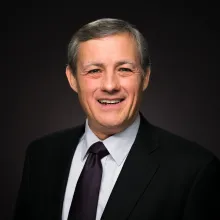
Gary Petty is a 1978 graduate of Ambassador College with a BS in mass communications. He worked for six years in radio in Pennsylvania and Texas. He was ordained a minister in 1984 and has served congregations in Longview and Houston Texas; Rockford, Illinois; Janesville and Beloit, Wisconsin; and San Antonio, Austin and Waco, Texas. He presently pastors United Church of God congregations in Nashville, Murfreesboro and Jackson, Tennessee.
Gary says he's "excited to be a part of preaching the good news of God's Kingdom over the airwaves," and "trusts the material presented will make a helpful difference in people's lives, bringing them closer to a relationship with their heavenly Father."
