
Greg Thomas
This sermon was given at the Ocean City, Maryland 2013 Feast site.
This transcript was generated by AI and may contain errors. It is provided to assist those who may not be able to listen to the message.
The United Church of God presents Greg Thomas with a sermon titled, Why We Observe the New Covenant Feast of Tabernacles. It was recorded in Ocean City, Maryland. It is exciting this year to see so many individuals who are celebrating their first holy days. I think the Church of God is having a renaissance, because people of that I talked to are telling me that the Church is growing in pockets throughout the world. For example, last night after the Bible study, I met some individuals from Buffalo. One individual, it was his very first Feast of Tabernacles. Another couple, it was their second Feast of Tabernacles that they are observing. I know the congregations in New England have been growing. In my own Cleveland congregation, we've had ten baptisms in the last two years. That's more baptisms than we had had in the previous decade. Half of those baptisms are brand new people with no Church of God background or history at all. The Father is calling new people to his family. On top of that, a number of good things are happening. We have those who are celebrating the Feast only a few times that are kind of new among us. We also have a number of teenagers who are coming of age.
You know what it was like sitting in a church as a teenager? You go through so many years where you just pray that the man standing up there, droning on and on for hours and hours, will please sit down. But then, one day, when you get a certain age, you make a connection. And you actually begin to listen. And spiritually speaking, you begin to come of age. So the Father is adding to his family. And if your congregation isn't growing, don't get discouraged. Don't you dare get discouraged because it's coming. The best is yet to come for the Church of God. And because there are new among us, because there are those who are celebrating their first Holy Days, their second Holy Days, because we have teens that are coming of age, what I would like to do today is talk about a basic review of why we keep the New Covenant Holy Days. They are important to God, and they should be valuable for us today. And I would like to discuss that. We'll be talking a little bit about prehistory. We'll be talking a little bit about history. And we'll be talking a little bit about theology. But especially for you young people who are coming of age and understanding this, that you are going to be asked why you observe those days. And we're going to answer that question today, because it's important for us to know their history and importance. And I believe that for us to fully appreciate the meaning and value of God's Holy Days, including the Feast of Tabernacles, that we need to understand that it even predates a time when God gave His Holy Days to ancient Israel in Leviticus 23. Let's go to Genesis 1 and 14. Take a look at that. So we're going to celebrate the Feast together, and we're going to do that by looking at the first time that God reveals in Scripture that His original intent was to have days, festival days, to worship and honor Him. And it's kind of hidden in many translations, including the New King James Version. Genesis 1 and 14, it says, Now, if you have a New King James translation, that word, seasons, is actually a very poor translation. The Hebrew word translated, seasons, here is moed. That's the same word. That may sound familiar to you, because Mr. Martin mentioned on the opening night that moed was the word used in Leviticus 23 for the word feast. Here's an alternative translation. This is called God's word for today, and I want you to notice how it's translated. Then God said, So from the very beginning of creation, it was God's intention before there was a Jew or a Gentile or anyone who walked in this earth, that He would establish a way for humankind to honor Him, to worship Him, to praise Him. That's how far back the Holy Days go. The Scriptures reveal that one of the original purposes of the sun, moon, and stars is to mark time in order to observe God's religious festivals. So whose religious festivals do you think He would have done this for? Do you think God did this with the intent that man could create his own festivals to worship Him? Perhaps God said to himself, Well, man will want to observe the feast of the Immaculate Conception of Mary on December 9th. So I will create the sun, the moon, and the stars and these firmaments so mankind can create his own Holy Days, his own festivals, his own religious days. Well, obviously, I think not.
I think as you think, and that is that the same orderly God who created the world was creating all of these things with His own festivals in mind. And again, remember, at this point, there are no men. There's no mankind. There's no male or female, Jew or Gentile, so the original intent is for all of His creation to worship Him in religious days.
Now let's go to Leviticus 23 and verse 1 and see when the Old Covenant festivals were revealed to ancient Israel. Leviticus chapter 23, we're just going to take a look at the first few verses, since the actual verses that apply to this feast have already been read during the feast. Leviticus chapter 23 verse 1. It says, And the Lord spoke to Moses, saying, Speak to the children of Israel, and say to them, The feasts of the Lord. They're not my feast. They're not your feast. They're not the feast of any religious organization. They are the feast of the Lord, which you shall proclaim to be holy convocations. In other words, it's a holy convention, and that's what we do at the Feast of Tabernacles. We have a holy convention. For eight days, we gather together and we worship our great and wonderful God. These are my feasts, God says. Six days shall work be done, but the seventh day is a Sabbath of solemn rest, a holy convocation. So the first of the feasts that He mentions is a weekly feast. The others are annual, but this one is weekly. And every Sabbath day reminds us of the kingdom of God, a very similar parallel to the Feast of Tabernacles. To look forward to that kingdom, that time of peace and restoration, when what God originally intended in the Garden of Eden that was lost will be restored throughout the whole world. But the seventh day is a Sabbath of solemn rest, a holy convocation. You shall do no work on it. It is the Sabbath of the Lord in all your dwellings. These are the feasts of the Lord, holy convocations, which you shall proclaim at their appointed times. So these are, again, God's feasts. They're not mine. They're not yours. They're not any churches that are important to God. So much so that He reveals the slices of time that He chooses, that He desires to be worshipped and honored. The first feast mentioned is the weekly Sabbath, followed by annual observances eventually leading to the Feast of Tabernacles. Now, sadly, in spite of this instruction, Israel never consistently observed the Holy Days, and they didn't understand the New Covenant perception that revealed God's Holy Day plan for all of humankind. They related the Holy Days to the Exodus out of Egypt. They only related the Holy Days to the annual harvest seasons, and they didn't quite get the fact that they revealed God's plan for all of humanity. So now let's go to the New Testament. Take a look at a few Scriptures here. Matthew 17, verse 1.
See the example of Jesus Christ and the Transfiguration with three of His disciples. Matthew 17, beginning in verse 1. Now, after six days, Jesus took Peter, James, and John, His brother, and led them up to a high mountain by themselves, and He was transfigured before them. This is a vision. This is a shared vision. Transfigured before them, His face shone like the sun, and His clothes became as white as the light. In Mark's account, His clothes became whiter than white. It almost sounds like a detergent commercial. This is known as the Transfiguration. The three disciples have this shared vision of the glory of the kingdom of God. Jesus's face and His garments shine like the sun. He's in full radiance as King of Kings and as the Lamb of God in the kingdom of God. Verse 3.
We'll see in a minute even what the commentators admit these tabernacles are all about. Verse 5.
Now, as they came down from the mountain, Jesus commanded them, saying, television to no one until the Son of Man is risen from the dead. I'd like to read what the Holman's Bible dictionary says about this Transfiguration. And here's what they admit.
They say, quote, Moses and Elijah themselves were heralds of the Messiah. The three booths suggest the Feast of Tabernacles, which symbolizes a new situation and a new age. Clouds represent divine presence. The close connection of the Transfiguration with the confession and passion prediction is significant. The Messiah must suffer, but glorification and enthronement, not suffering, is his ultimate fate. I want you to notice how quickly Peter connected the vision of the kingdom of God with the Feast of Tabernacles. Instinctively, he associated the glory of Jesus Christ in his face, in his garments, in full glory. He immediately associated that with the Feast of Tabernacles. Why? Because he was taught that by Jesus Christ, by the Son of God. Now, this is something yet in the future. How can someone tell me that a feast that represents the full glory of God, represents the first resurrection, represents a time when there will be the full glory of God revealed with the King of Kings and the Lamb of God, that somehow that has been done away in an event that has not occurred yet. Yet that is what some people would have us to believe. Let's go to John 7 and verse 2. John 7 and verse 2. We'll see an example where Jesus Christ, even though his life was threatened and it would have been convenient for him not to go to the Feast of Tabernacles, he chose to go. He chose to set the right example, as he did throughout his whole life. He was baptized not because he needed to be, but he wanted to set an example for you and me.
He lived a life of perfection, of loving God and loving God's law to set an example for you and I. And in this account we will see here he's going to, against the odds and the risk of having himself killed, he's going to observe the Feast of Tabernacles. John 7 and verse 2, it says, Now the Jews' Feast of Tabernacles was at hand. Ah-ha! Many will say, look at that! The Feast of Tabernacles is only limited for the Jews. That's what they'll say. Well, here's what I'm going to reply to that. And bear with me, because John is making a statement here from the perspective of someone who wrote this Gospel about 100 AD.
The time he writes this, the Gospel is being preached, but the Temple has been destroyed by the Romans and no longer exists. The Levites are gone, the sacrifices are gone. So from the perspective of John writing this at 100 AD and looking back at the time that Jesus lived, he makes this statement about the Jews' Feast of Tabernacles being at hand. We're going to come back to that. I'm going to ask you to keep the phrase, The Jews' Feast of Tabernacles, because I want to get on to another point here in verse 3. We're going to see that Jesus' brothers chide him, and they mock him because they're not yet called and converted. And they tell him, you just need to be more open. You shouldn't do things in secret. If you are the Son of God, if you are the Messiah, you just need to make yourself available. And Jesus Christ didn't want to be assassinated before his time, so let's read this story.
So they're chiding him a little bit. You need to be more open. You need to go out right there to the feast and say, Here I am. I'm Jesus Christ, and here I am.
In this story, our Savior knew that his life was in jeopardy. And he was not fully come. When he had said these things to them, he remained in Galilee. But when his brothers had gone up, then he also went up to the feast, not openly, but as it were in secret. Then the Jews sought him at the feast and said, Where is he? Because it was their intent to assassinate him.
In this story, our Savior knew that his life was in jeopardy. And he desired to be careful while attending the feast. He needed to complete his mission and live until he could be the fulfillment of the Passover lamb many months in the future.
Yet even in spite of the risk of being taken by the Jews, he observed the feast. And he set a very beautiful and powerful example. Dropping down to verse 37, something he says here at this feast, it says, On the last day, that great day of the feast, that happened to be the seventh day, not to what we traditionally had called the last great day, but this was the seventh day of the feast of tabernacles, Jesus stood and cried out, saying, If anyone thirst, let him come to me and drink.
And he who believes in me, as the Scriptures, has said, Out of his heart will flow rivers of living water. But this he spoke concerning the Spirit, whom those believing in him would receive, for the Holy Spirit was not yet given, because Jesus was not yet glorified. So Jesus knew that the Holy Spirit would be made available to everyone in the kingdom of God. And it happened to be on the seventh day of the feast, a water ceremony.
They went from the pool of Siloam, and they would carry water and make a big deal out of the water ceremony, as it was poured on the altar of sacrifice. And Jesus used this ceremony that the Jews had to teach a lesson about living water, that he, as the Savior Jesus Christ, could make available living water for those who would accept his message. Yet in spite of God's instructions in Leviticus 23, in spite of the fact that we see that transfiguration itself represented something in the future, represented the Feast of Tabernacles, the disciple wanted to build three tabernacles, if he saw those individuals in his vision, in spite of the fact that Jesus Christ here, at his own risk of his own life, went and observed the Feast of Tabernacles, the truth is that many people amazingly say that these festival Holy Days have been done away.
In spite of the fact that God says they are holy, in spite of the fact that God says they are his, they want to say that they are completely fulfilled or done away. Some say Holy Day observance was done away at the death of Christ or nailed to the cross. Have you ever heard that? In my lifetime, if I added up all the things that were nailed to the cross, it would have had to be the size of the Empire State Building.
But some say that it was nailed to the cross. Others go to the Book of Acts and proclaim at the Ministerial Conference that we read about in Acts 15, that happened to 49 A.D. They say, well, these, the decision at the Ministerial Conference that was frankly about circumcision, whether it was required to be saved, that this said that all of these Holy Day observances are done away. And that's what some will tell you. Furthermore, some will go to Paul's letters, especially Romans and Galatians, and they'll say that Paul is condemning these kinds of observances because they were part of the Law of Moses.
Well, is this true? Is it true that the Holy Days were done away? Well, the only way that we can find out for sure is not listen to what people tell us, not listen to what scholars tell us, but listen to what Paul tells us. To listen to what his traveling companion, Luke, tells us he did.
That's the only way that we can understand and perceive the importance of the Holy Days as part of the New Covenant. So let's go to 1 Corinthians 12 and verse 2. I'd like to begin by going to this letter that Paul wrote a Gentile congregation five years after the conference, the ministerial conference in 49 A.D. Paul reveals something important about the New Covenant. Now, he wrote 1 Corinthians from Ephesus, and the earliest date that some believe he wrote it was 53.
Some say as late as 57 A.D. The Church has traditionally said about 55 A.D. But here's what I want you to understand. Every scholar I have investigated and there have been dozens, Protestant or Catholic, agree that 1 Corinthians was written after the ministerial conference in Acts 15. Without exception, they all admit and agree that 1 Corinthians was written after that conference in Acts 15, where the real discussion was whether circumcision was required for salvation. 1 Corinthians 12. One of the things they teach you when you want to become a speaker is know your audience.
Right? So let's find out who the audience is that Paul is talking to. 1 Corinthians 12, verse 2, You know you were Gentiles carried away by these dumb idols, however you were led. So who's he writing to? He's writing to a church that is a Gentile congregation. Now, does it have some Jewish converts in it? It may very well. Paul's standard method of preaching the Gospel was to go into a city and go into a synagogue and begin trying to convert some of the Jewish believers. But no one can doubt from this verse that his audience in this book are Gentile believers.
Paul says so right here. So understanding that, now let's go back to 1 Corinthians chapter 5. Now, even though in context in chapter 5, Paul's talking about the days of unleavened bread, what I want to focus on is the principle and application of what Paul tells these Gentiles about Holy Day observance. Remember, this is after the ministerial conference of 49 A.D. This is after everything that's ever going to be nailed to a cross has been long nailed to a cross.
He says, speaking to these Gentile believers in Corinth, it is actually reported that there is sexual immorality among you and such sexual immorality as is not even named among the Gentiles. Even the Gentiles blush at what was going on. He says that a man has his father's wife, that incest was being committed with his stepmother. Verse 2, And you are puffed up, and have not rather mourned that he who has done this deed should be taken away from among you. For indeed, as absent in body but present in spirit, I have already judged as though I were present him who has done this deed, in the name of our Lord Jesus Christ, when you were gathered together along with my spirit and with the power of our Lord Jesus Christ, deliver such a one to Satan for the destruction of the flesh that his spirit may be saved in the day of the Lord Jesus. He's saying you need to put him out of the church, and hopefully God will put him through some experiences. He'll come to his senses. He will repent of his perversion, and he can come back. He can be saved, ultimately. Then in verse 6, Paul continues here to this Gentile church, Your glorying is not good. Do you not know that a little leaven leavens the whole lump? So Paul tells this congregation an analogy of leaven, as if leaven represents sin. How would they know it represents sin unless someone taught them?
How would Gentile peoples know about the history of ancient Israel, and how they came out without leaven out of Egypt, and the whole analogy of unleavening unless somebody explained it to them? Therefore, purge out the old leaven that you may be a new lump since you are unleavened, for indeed Christ our Passover was sacrificed for us. Let us keep the feast. So regarding this Holy Day, Paul doesn't say, I'll keep the feast because I'm Jewish.
He says, let us! That's inclusive. Paul, a convert from being a Pharisee, he went from being a carnal Pharisee and was converted to Christianity. Paul and people who had Gentile backgrounds. Let us keep the feast, not with old leaven, but with the leaven, not with the leaven of malice and wickedness, but with the unleavened bread of sincerity and truth.
He said, we're going to keep these new covenant Holy Days in a new way. I'm going to read this from verse 8 from the translation God's Word. So we must not celebrate our festivals with the old yeast of sin or with the yeast of vice and wickedness. Indeed, we must celebrate it with the bread of purity and truth that has no yeast. So what is Paul doing here? He is encouraging the Gentiles and Corinth to observe the festival. He's teaching this Gentile church to celebrate the feast from a new covenant perspective. Some critics of the Holy Days will say, well, you can't keep the feast as observed, because in Leviticus 23 you had to travel to Jerusalem.
There were three pilgrimages. You need to travel to Jerusalem. You must have a tabernacle or a temple. You have to have Levites. You have to have animal sacrifices to keep those feasts, as outlined in Leviticus 23. And you know what? I couldn't agree more, because Christians don't observe old covenant feasts. We observe the new covenant feasts in a different way. There was no temple in Corinth.
There were no Levites in Corinth when Paul wrote this. What we do understand and see is that he encouraged these believers, after everything was nailed to the cross many, many, many years earlier, after the ministerial conference of years earlier had concluded, he tells these believers, let us keep the feast. Now, it's also interesting to know and appreciate the fact that Paul himself, as we'll see in the book of Acts, often desired to go to Jerusalem during the Holy Days. He had friends in Jerusalem. I'm sure some of them he wanted to tie together with church visits, as he would go there for the Holy Days to celebrate.
So he himself oftentimes would interrupt his own travels to go to Jerusalem to keep the feast. But let us not forget the understanding that what Paul is telling the Corinthian believers to do is with their own communities in a new way to keep the new covenant feast days. The timing of the days are the same. But we have God's spiritual law written in our hearts, and the physical observances and rituals have been replaced with sincerity and truth. And Paul doesn't care when a new moon is spotted over Jerusalem. Jerusalem's 800 miles away. By the time someone spots a new moon in Jerusalem, hops on a fast donkey and travels the Corinth, it was a week ago.
Two weeks ago, we missed it again! This is no longer the Bronze Age. This is the first century. People can look up into the sky, where they live, and they can calculate the Holy Days. By the first century, people had discovered math, mathematical principles, and the Holy Days can be calculated years in advance, because our solar system was created so precise by the master mathematician that you no longer need observance to determine when a Holy Day is. You can figure it out for the next 10,000 years, because like clockwork, the solar system is so precise. Paul knew that, and he understood that, and that's why he didn't get wrapped up in those kinds of things.
He didn't allow his congregation to get wrapped up in those kinds of issues or problems. Well, so much for what Paul said here. Let's see what he did. Because maybe, maybe Paul was like an American politician. Maybe Paul felt, well, don't do what I say, just do what I do. Maybe he took daily tracking polls, and that day, if the polls said, were for the law, he said, the law is royal. It's holy. It's good. And if the daily tracking poll said people didn't want to keep the law, then suddenly they were under a curse for desiring to keep the law.
Is that the way Paul was? Well, I don't think so. I don't think Paul was a hypocrite. I think people with their own agendas are reading into the book of Romans and Galatians what they want to see. Because what we're going to see by his example is that he continued to love and respect God's holy days.
Turn to Acts 18, if you would, with me. Obviously, the author of the book of Acts is a man known as Luke. I'd like to read what the Holman's Bible dictionary says about Luke, the author of the book of Acts. It says, quote, Luke. Paul identified Luke as a physician, Colossians 4.14, and distinguished Luke from those of the circumcision, Colossians 4.11. In other words, he was saying that Luke was not circumcised. Early sources indicate that Luke was a Gentile. Tradition holds that he was a Greek. End of quote. The name Luke is Gentile. It comes from the Latin word Lucas, meaning man from Leucania, which was a region in Italy.
Luke is reported and reputed to be the author of both the Gospel of Luke and Acts. So what we want to do is we want to take a look at Paul's traveling companion, his physician, his personal physician, and a man who also happened to be a historian and see what he writes. So let's take a look at Acts 18 and verse 12.
Now, I don't want to sound sarcastic before I read this, but even though I am a product of the Cleveland public school system, I still know that if you begin counting from zero, that 55 comes after 49. Right? This here, what we're going to read, occurred in 52 AD, and 52 is later than 49 when a ministerial conference was held. So let's pick it up here again in verse 12.
When Galleo was proconsul of Achaia, the Jews with one accord rose up against Paul and brought him to the judgment seat, saying, this fellow persuades men to worship God contrary to the law. Verse 14. And when Paul was about to open his mouth, Galleo said to the Jews, If it were a matter of wrongdoing or wicked crimes, O Jews, there would be reason that I should bear with you. But if this is a question of words and names about your own law, look to it yourselves, for I do not want to be a judge of such matters. And he drove them from the judgment seat. So this Roman proconsul basically said, I'm not interested in your petty religious affairs. Don't even bring people here to discuss these issues with me. Settle it yourselves. Verse 17. Then all the Greeks took Sosthenes, the ruler of the synagogue, and beat him before the judgment seat. But Galleo took no notice of these things, so Paul still remained a good while. Then he took leave of the brethren and sailed for Syria, and Priscilla and Aquila were with him. He had cut off his hair at Sentria, for he had taken a vow. And he came to Ephesus and left them there, but he entered the synagogue and reasoned with the Jews. Let's pick it up here in verse 20. When they asked him to stay longer, a longer time with them, he did not consent. But he took leave of them, saying, I must by all means keep this coming feast in Jerusalem, but I will return to you again, God willing, and he sailed from Ephesus. Now, what's so important to Paul that he's halting his missionary journey? Does he want to keep the feasts here? Does he say, I want to keep the feast if it's convenient? Does he say, I want to keep the feast if I can fit it in my busy schedule? No, he doesn't say that. He says, I must by all means keep this feast coming feast in Jerusalem. He stops what he's doing. He stops what he loves most, which is preaching the Gospel, and he inconveniently travels to Jerusalem to keep the feast. That's what he does, by his example. And we traditionally have stated this was the Feast of Tabernacles, just by looking at the chronology around 52 A.D. And that is confirmed by another statement from the Holman Bible Dictionary. Here's what it says about Galleo. Quote, The deputy or proconsul of Achaia, headquartered in Corinth, where his judgment seat has been discovered. Certain Jews brought Paul before Galleo seeking to get Roman punishment of him. They charged that Paul advocated an unlawful religion. Galleo refused to involve himself in Jewish affairs, even ignoring the crowd's beating of sosthenes and the ruler of the synagogue. He was proconsul, apparently proconsul, from May 1, 51 to May 1, 52 A.D. And again, that is from the Holman Bible Dictionary. And 52 is later than 49. And Paul says, I must by all means keep the feast, the coming feast in Jerusalem. Now some of you are looking at me with blank stares, perhaps for a number of good reasons. But one of them may be you may have a translation where that has conveniently been left out. How many? I'm just interested. How many of you have a translation where that is not in your translation of the Bible? There are a number. A number of modern translations have conveniently left this verse out. But that's okay, because there are others. They can run, but they can't hide. Let's go to Acts 20. Acts 20, verse 13. This occurred approximately 56 A.D. 56 is after 49.
So they taught me in the Cleveland public school system many, many years ago, back when we had blackboards and white chalk. Acts 20, verse 13. Then we went ahead again, this is Luke writing, then we went ahead to the ship and sailed to Esos there, intending to take Paul on board, for he had given orders, intending himself to go on foot. And when he met us at Esos, we took him on board and came to Mylin. We traveled from there, and the next day came opposite Chios. The following day we traveled to Samos and stayed at Trigilium. The next day we came to Miletus. Verse 16. For Paul had decided to sail past Ephesus so that he would not have to spend time in Asia, for he was hurrying to be at Jerusalem, if possible, on the day of Pentecost. Now, as Paul may be setting an example to others, you know, there are Gentile believers all around him as he's doing this preaching. And instead of going to Asia, and by the way, he was a missionary, instead of going to Asia, he says, Nope, sorry, if at all possible, I want to keep the feast. Nice talking to you. I hope you accept the faith. I hope you become disciples. But I have to interrupt what I'm doing, because it's important for me, if at all possible, to be in Jerusalem to keep the feast. I want you to notice his strong desire, his enthusiasm, to be observing God's feast. What kind of an example is he leaving for these Gentile believers he's preaching to and leading to the faith? If on one hand these were supposedly done away at the cross or ministerial conferences, and he continues to keep them, what kind of an example would that be for them? The translation God's word says this about verse 16. Paul had decided to sail past Ephesus to avoid spending time in the province of Asia. He was in a hurry to get to Jerusalem for the day of Pentecost, if that was possible. And again, this occurred about 56 A.D. Now let's go to Acts 27, approximately 61 A.D. 61 is later than 49. See how quickly I catch on to these things? Acts 27, verse 5.
Acts 27, and when we had sailed over the sea, so obviously Luke is here, he's present, over the sea, which is off Cilicia and Pamphylia, we came to Myra, a city of Lycia. There the centurion found an Alexandrian ship sailing towards Italy, and he put us on board. Paul is being sent to Rome to be put on trial. Continuing verse 7, when we had sailed slowly many days and arrived with difficulty, off Snitus, the wind not permitting us to proceed, we sailed under the shelter of Crete, off Salone, passing it with difficulty. We came to a place called Fair Havens near the city of Lycia. Now, when much time had been spent and sailing was now dangerous because the fast was already over, Paul advised them, saying, men, I perceive that this voyage will end in disaster and much loss, not only of the cargo and ship, but also of our lives. It was fall. Why is it the fall? Because you may have a translation in which the word fast has a capital F. Even the scholars acknowledge this is the Day of Atonement. It's the fast, the annual holy day of God. How would a Gentile like Luke know about the Day of Atonement? Why would it matter to him? So much so that he would record it in Scripture. It's because he was observing the fast. Because he had been taught that these holy days reveal the plan of God for all mankind. How would he even know or care about them? Why wouldn't he use Greek days? The Ides of March. It was six months after the Ides of March. Why wouldn't he use some Greek designation of time? He doesn't. He refers to the fast. Most likely he was taught about the holy days from Paul himself. Now, earlier in the sermon, we talked about the Gospel of John, written about 100 AD. Do you remember that? And John referred to the Jews, Feast of Tabernacles.
Again, by 100 AD, when he's writing that Gospel, the Temple's gone, the Levites were dispersed, the sacrifices had long ended 30 years ago. And along with that, we've seen where Paul encouraged the Gentiles and Corinth to observe the Feast of Unleavened Bread from a new covenant perspective. We saw that.
So let me ask this question. Did Jesus Christ himself ever speak about the worship of God in a new covenant perspective? Did he ever speak about a time when the rituals and observances and all these things that individuals get wrapped up with would be set aside but from the new covenant that we would honor those holy days that are outlined in Leviticus 23, those precious slices of time, to honor our great God, but with sincerity and truth, with a different attitude, with a different mindset, not a mindset of exclusiveness, not a mindset of superiority, but a mindset of understanding that these are for the benefit of all humankind. Well, the answer to that question is Jesus actually did have that kind of a conversation. And it was a conversation with a Samaritan woman. So let's turn to John 4, verse 16. By the way, this is the same John who used that phrase, the Jews' Feast of Tabernacles, referring to the fact that the Feast, the way the Jews had kept it, was over.
There was no more temple in 70 AD. It was destroyed. There were no more sacrifices taking place. There were no more Levites. And John recalls this discussion with Jesus Christ and a Samaritan woman. Interestingly, a Gentile woman. Now, first they had a brief conversation about living water, and it went right over her head. She didn't get it. But so he moved the topic on to worship, and we're going to pick it up here in verse 16.
And the one that you have now isn't your husband. You're just shacking up with him. And she said, I perceive you are a prophet. You know, you're different than the others. You might be a Jew, but you're different than the others, she says. So he got her attention, and he got her attention really fast. The woman said to him, Sir, I perceive that you are a prophet. So she begins to discuss her perception of worship. She says, our Father is worshipped on this mountain, and you Jews say that in Jerusalem is the place where one ought to worship. And Jesus said in her, Woman, believe me, the hour is coming when you will neither on this mountain nor in Jerusalem, because the temple was destroyed in 70 A.D., worship the Father. He said, you worship what you do not know. We know what we worship, for salvation is of the Jews. It was the Jews that were given the Old Testament, the Jews that were given the Bible, and God's moral law, and so much that is the foundation of what we know and believe. He says, but the hour is coming, and now is, when the true worshippers will worship the Father in spirit and in truth. For the Father is seeking such to worship Him. God is spirit, and those who worship Him must worship Him. God is spirit, and those who worship Him must worship in spirit and in truth. That's the New Covenant Holy Days. We're not about rituals. We're not about telling everyone else in the world that we are an exclusive people, that we are superior to other people. We're inclusive. We look forward to the Kingdom of God being established on all of the earth. We look forward of everyone, of every skin color, of every language being called and understanding that Jesus Christ died for their sins so that they can be saved and become part of the family of God. We choose to worship God in spirit and in truth because that is the whole concept behind the New Covenant Holy Days. He's telling the woman that under the New Covenant it's not about locations or calendar obsessions, rituals, ceremonies or observations. In the New Covenant we worship God in His Holy Days with a right, loving attitude, an attitude of joy, an attitude of understanding that Jesus Christ, our Savior, is the heart of each and every holy day. They all reflect what He has done, what He is presently doing, and what He will yet do. The Holy Days are all about Christ. That's the New Covenant perspective.
We should have a deep appreciation of the fact that God has invited us to this feast, that we have been given a personal invitation from the Father Himself to come and worship Him and celebrate Him on the days that He is designated as His.
Because God's Holy Days are important, and indeed the Feast of Tabernacles is so important when we look at the future of this world and the only true hope that mankind has. Our final scripture, Revelation 21. If you'll turn there with me, Revelation 21.
Because we are all looking forward to the time when the Kingdom of God will be established on this earth, when all nations will have an opportunity to learn the law of God, learn the ways of God, when God's Spirit will be made available to everyone so that they can become part of His very family, so that they can reach the foolish potential that God always planned for each and every human being who has ever lived in their own order, in their right order. And we look forward to this time, this fulfillment of Revelation 21, that again is an oblique reference to the Feast of Tabernacles itself.
This is the time that the Feast of Tabernacles represents when God the Father will be with mankind. And humankind will have a deep relationship with its Creator, once again restoring God's original intent at the Garden of Eden, that the world would be at peace, that the world would be at harmony with its Creator, and that all human beings could reach their fullest God-given potential and the talents and abilities that God had put within them. So what the Holy Days revealed to us is an annual reminder of the plan of God for mankind. To recap, we observe them for the following reasons. This is why we observe the New Covenant Holy Days. First of all, God proclaimed them in Leviticus 23. They are His Feast. Men, councils, conferences, churches do not have the right to stop what God has ordained. They are His Feast.
We keep the Holy Days because Jesus Christ observed them. We saw even at His own peril He was insistent on going to the Feast of Tabernacles, even though some wanted to assassinate Him there.
We also saw the example of the Transfiguration, where in a shared vision, the disciples, three of the disciples, were able to see Jesus Christ in His full glory.
And their instinct was the glory of God, the shining face, the white garments of Jesus Christ, symbolic of the Feast of Tabernacles, a time of peace and plenty for all of humankind.
We observe the Holy Days because the early disciples observed them. If they hadn't been there on the day of Pentecost in 31 A.D., they might not have received the Holy Spirit.
Someone forgot to tell them it was done away. And because of that, they were gathered together on that day of Pentecost, and they received the Holy Spirit.
We keep God's Holy Days because the Apostle Paul observed them. We saw his personal example in the book of Acts.
Long after everything was nailed to a cross that was ever going to be nailed to it, long after the Ministerial Conference of 49 A.D., by example, Paul continued to say, I must, if at all possible, keep these feast days. They are that important to me, Paul said.
We keep the Holy Days because the Apostle Paul taught the New Covenant observance to the Holy Days to Gentile converts.
We saw in the book of Corinthians how a Gentile people were told not to worry about making a pilgrimage to Jerusalem. Don't worry about animal sacrifices, temples. Don't worry about these things, these physical observances, rituals, ceremonies, because we are keeping the feast. Let us do it, but in a new way, in a better way.
We keep these Holy Days because they reveal what Jesus Christ has done, what He's presently doing, and what He will do.
Each and every feast is centered on Jesus Christ as our Savior, our High Priest, our King, our Judge, and Jesus Christ, the Resurrection.
So, brethren, as we go through the Feast of Tabernacles, there is no reason to allow people to put you on the defensive regarding the observance of these days.
I encourage you to worship proudly and with a joyful heart knowing that your obedience to the Father pleases Him.
And it sets us apart as His people because we accepted His invitation, and we want to be obedient.
So, let us rejoice in the Feast of Tabernacles this year and in the revealed plan of God. Choose to worship in sincerity.
Choose to worship in spirit and make the choice to worship God in truth. Have a wonderful day.
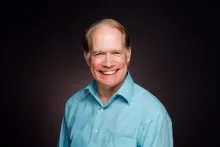
Greg Thomas is the former Pastor of the Cleveland, Ohio congregation. He retired as pastor in January 2025 and still attends there. Ordained in 1981, he has served in the ministry for 44-years. As a certified leadership consultant, Greg is the founder and president of weLEAD, Inc. Chartered in 2001, weLEAD is a 501(3)(c) non-profit organization and a major respected resource for free leadership development information reaching a worldwide audience. Greg also founded Leadership Excellence, Ltd in 2009 offering leadership training and coaching. He has an undergraduate degree from Ambassador College, and a master’s degree in leadership from Bellevue University. Greg has served on various Boards during his career. He is the author of two leadership development books, and is a certified life coach, and business coach.
Greg and his wife, B.J., live in Litchfield, Ohio. They first met in church as teenagers and were married in 1974. They enjoy spending time with family— especially their eight grandchildren.
