

David Schreiber
This transcript was generated by AI and may contain errors. It is provided to assist those who may not be able to listen to the message.
As I mentioned, we're less than two weeks away from this coming Passover, just once a year, when we celebrate the anniversary when Christ got together with His disciples and said to do the same thing from year to year. Such an important thing. To me, it was so meaningful. At first Passover, I was just 17 years old, recently baptized, when I attended my first Passover services. And it is a reminder of our commitment we made with God the Father and Jesus Christ at the time of our baptism. It is our commitment with God and His commitment with us. And we are to specifically prepare for it. Of all the different feasts that we have through the year, and in the Bible, and all the feasts that God carefully gives us instructions, this is the one that we are to prepare for. It's the beginning of the feasts, as it mentions in 1 Corinthians 11, verse 26 through 28. Paul says, For as often as you eat this bread and drink this cup, you proclaim the Lord's death till He comes. So when our Lord comes, we won't have to have Passover services reminding us and doing this type of rehearsal. He's going to be presiding over that first Passover service. Can you imagine how meaningful that will be? But in the meantime, we announce the Lord's coming. Then he says, Therefore whosoever eats this bread or drinks this cup of the Lord in an unworthy manner will be guilty of the body and blood of the Lord. But let a man, which means a person, examine himself, and so let him eat of the bread and drink of the cup. So examining ourselves, of course, primarily means spiritually evaluating our lives, in particular in this past year. As Paul goes on to say in verses 29 through 34, For he who eats and drinks in an unworthy manner eats and drinks judgment to himself, not discerning the Lord's body, not fully appreciating, is what it's talking about here. For this reason many are weak and sick among you, and many sleep. So some weren't very spiritually strong in Corinth, as it has been through the ages. It says, For if we would judge ourselves, and here the term is evaluate ourselves, we would not be judged or condemned. But when we are judged, we are chastened by the Lord, that we may not be condemned with the world. Therefore, my brethren, when you come together to eat, wait for another. But if anyone is hungry, let them eat at home, lest you come together for judgment. Because some were eating, and the other ones were hungry, and they weren't even being offered to eat together. So you can imagine there were people that were saying, What kind of church is this that does this? Because we are all humans, and we all have failings, as they did at that time. And so Paul had to say, Brethren, show your love, your concern, especially for those that are in need.
Now, one of the ways that we can truly make positive changes in our lives is to fully appreciate what God has done for us. That tremendous sacrifice of God the Father and Jesus Christ, God the Father willing to send His Son to give His body to be beaten and His blood to be spilled for our sins, and giving us an opportunity to one day receive eternal life. This is the second part, because I've just been covering John chapter 1, verses 1 through 18. And I will confess, I've studied that before, but I've never seen how profound it is. This is some of the greatest pieces of literature of all time. I mean, this is so beyond any other author, because it reveals things that you cannot normally understand unless God brings it out. And this is a message to all of us, a message from God up in heaven to each one of us. It's one of the greatest revelations that we could ever receive in this life. So in this second part, let's continue with those first verses of John chapter 1 to realize the greatness of Christ's sacrifice for us and our sins, and what it opens up for us. I hope this opens up the Bible much further. Every time you see some of these key words, you'll say, Oh, now I understand. That has happened with me.
We are looking at the Passover through John's eyes. God inspired him, used him, and the Apostle John was the person who knew Jesus best as that Passover lamb. He was the disciple that the Bible says whom Jesus loved the most.
As it says in John chapter 1, verse 29, this is talking about John the Baptist that John the Apostle records. It says, the next day John saw Jesus coming toward him and said, Behold, the Lamb of God who takes away the sin of the world. John is recording this because he has a main theme that he wants to get across. That is that that person that walked around that area of Israel came from Bethlehem, was born there. That person was actually the God who created everything in the universe. And nothing that has been created was not created through him. And we're going to see there's a difference because it uses the term through and not by him. There's a subtle difference. Each one of these words is so filled with meaning. And we have covered John chapter 1, verses 1 and 2. It says, In the beginning was the Word, and the Word was with God, and the Word was God. He was in the beginning with God. Right then and there, he's telling us what happened before things were created. When it's talking here, the term was means he was already in existence. In the beginning, the Word was already in existence. And the Word was with God, talking about who would be God the Father, and he was with God, as it says here, in the beginning with God. So, this is a message that is God's revelation from heaven.
You will never study a religion that will explain this better. You will never understand because nobody was there. And if he hadn't revealed it, nobody would really know.
It reveals God the Father, and God the Son, or the Word, and their purpose for mankind. It shows us who God is, what God consists of, when did it happen, and where God existed. So, here's what we have learned from John 1, verses 1 and 2, by carefully examining each word, as we did last week. First, we learn that this is, quote, the Word. That term, the, means it is a person, it is something specific. It is not a thought or an idea that emanates from God the Father. This is the Word. He is a being equal to God the Father in essence, but has assumed a different role for our sake. So, they were together, they have existed together, and the term here, with, that he was with God, means they were toward each other, and they had this relationship, very close, intimate, loving relationship. It's an active word that means that they fellowship together. They've been fellowshiping for eternity. There's never been any differences. They've always cared for the other more than oneself, and they wanted to develop that relationship with others that they would create in the future. Secondly, we learned that this word, it says there in verse 2, He was with God, not in a passive, but an active role, expressing love and outgoing concern, as I brought out. And now we continue with verse 3. It says, all things were made through Him, and without Him nothing was made that was made. So, after God tells us who they are, God the Father, and the Word, the Logos, who became Jesus Christ, and their intimate and loving relationship toward each other, they reveal what the Father did through the Logos. So, it's through Jesus Christ, but it wasn't leaving God the Father out of it. He used Jesus Christ as the executive agent who actually fulfilled the will.
So, this idea that you leave God the Father out of picture, it's not true. But, John is focusing primarily on that word that came down and did these things. Without leaving, of course, the one overall who is God the Father. Remember 1 Corinthians 11? It says that God is above Christ as then Christ is above us. So, there is this role that Jesus Christ carries out. And so, it says here in verse 3, All things were made through him, and without him nothing was made that was made. That means no exceptions to the rule. They created angels. Here God the Father instructing the Word to do it, and the Word carried it out. They created the universe. In other words, everything that is spiritual and physical, there's no exceptions. In Colossians 1, verse 16 and 17, it even gives us more details about John chapter 1, verse 3. It says, talking about Jesus Christ, the Word that we've been talking about, For by him all things were created that are in heaven and that are on earth. Now, here it's separating because it's not talking about God the Father as in John, but of course, Christ is the active agent. He is the one that is executing, just like the chief executive carries it out.
He says, All things were created that are in heaven and that are on earth. That includes angels, everything in heaven, everything in the universe, visible and invisible. So physical and spiritual. All was created by the Word who became Jesus Christ, whether thrones or dominions or principalities or powers. Angels have their power because it is the Word who created them. All things were created through him. Now we see that same word through. Doesn't mean he did it on his own. And for him. That's a fantastic concept. Actually, everything has a role that Jesus Christ has carried it out. And it's for his glory, for everything. It says it's going to be exalted because of what he did. And he is before all things. The same thing that John says, in other words, before the beginning, he existed. And in him, all things consist. They're sustained. So even Christ now, his power sustains the universe. I don't want to get into too much astronomy, but you know that from all the detectors in astronomy, only about 5% of the known universe, all of the stars and galaxies, billions that we have, it only has 5% of the energy and power to maintain the forces of gravity. 95% is what they call dark energy and matter, which means we don't know. That's an astronomical way of saying, well, I could call it something else, but we'll call it that. But we cannot detect it in any physical means.
Well, Christ is still very active in this universe.
And it says, in...
So then we go into verse 4. In him, the word was life, and the life was the light of men. So here, John introduces two key words, life and light, and he'll use it time and time again in his gospel. We don't have time to go into light, but we will go into life. So when he says, okay, here's the word, the word was with God, he was in the beginning with God, and then he goes and created all of these things. And then he says, in him was life. So notice the sequence of the terms. It goes from God, the word, and it introduces God the Father. It mentions their loving relationship. And then what they made, which is the spirit world, the physical world, all things. And then it goes to life being introduced into the created universe, specifically on this earth. Because you could, you created, first of all, this vast universe. It's all made of light, matter, energy, but it's still a lifeless universe. It's only the furnishings. There's no life. There's nothing in the universe that has it. And who brings it? The word. And in him was life. He is the source of how we exist today. Again, through the Father. But it says this word became, in him was life, and the life was the light of men.
So this is an empty, lifeless universe. But now one with life. And this earth is teeming with life. Again, biologists that study this says that every square inch here on this earth has some type of life. And they have examined it, and they say everything is to its maximum potential of life. In the sense that every creature has a role. And that everything has been filled. The oceans, the continents, you know, we have even birds that fly. All of this in this earth.
So when it says in him was life, it means he was the source of life. Again, not leaving out the Father.
So all was created through the word. And it says in the life was the light of men. In the context, it means, of course, mankind. So the word created life as we read in Genesis 1.1. Where it says in the beginning God created the heavens and the earth. And then in Genesis, the rest of the chapter, he starts introducing all of these forms of life. But the most important thing is that that word, Jesus Christ, came to make a special type of life available to mankind.
Not physical. We already have that. We have physical bodies. We have a physical existence that's going to last decades. But he's talking about the life that the word made possible to one day have. This is later explained in verses 12 through 14 in John 1. Let me read it. It says, But as many as received him, that's one of the key words, to receive him, not reject him. You have to be willing to accept him. To them he gave the right, which means the opportunity, the legal right to become children of God.
That's not something a human being is born with. You have to be offered that right, that privilege, to those, then the next key word, who believe in his name. So you receive, but you have to put your life in his hands. You put your life in what he is. That's what the term name means, the person. Who were born, not of blood, nor of the will of the flesh, nor of the will of man, but of God. Now, we are not born that way physically. We have a father and mother, but here's a way that we can begin to receive eternal life.
Some moment in our lives, we have to receive him. We have to accept him because you can reject him. Secondly, you have to believe in his name, which has to do with obedience, trust in him. And then it goes on to say, not of the will of the flesh. So this isn't something that a person just decides without God's intervention, nor of the will of man. It's not something that a person just decides on, on their own. It has to be something that you receive a calling from God.
Your mind is open. This is what you want to do. Nobody is forcing you. It is voluntary, but it's also a lifelong commitment. That's why we don't baptize people until they get to about 18 years old. Because before you're older than 18, you don't have rights to go and be drafted or illegally become an adult at 18. And that's because even in man's law, they feel the person is mature enough to make these very important decisions.
Because it's not something that you can do lightly. This isn't some emotional or some sentimental type of urge. So it goes on to say, it is of God. And then it goes on to say, And the word became flesh, and dwelt among us. So here it says that that word always existed. And now he was willing to come down here to be with mankind, but not just because we're living people.
No, he came down because he says they'll never have eternal life unless somebody pays for their sins. And I, being greater than anything that's created, will offer my life for each person that receives me, that believes in me, that follows and obeys me. And that's why we do the Passover. You could do many things. There are all kinds of attractions out there. But what is the greatest commitment that we have?
It's with God. We don't want to give up that opportunity that he has offered us. This is why the word came down and walked among men, knowing that he was that lamb that was going to be sacrificed for us. He was willing to do that. So you see, we're not talking about physical things here, life that, oh, he just wants to extend our lives and just make us prosper and have a good time, because that's flesh and blood. No, he's thinking about eternity.
He had to come down. Can you imagine how low he had to humble and humiliate himself and what kind of death he went through? And he was willing to do that. So this God came down and was willing to be born into a household and walk among men and love and show them how God is like. It's so different from any other religion, where sometimes they have these stern gods, serious gods, and they're willing to go out there and punish you. You're always going to be subservient to them, and you're going to be sort of like a slave.
The Greeks had that idea. The Romans had that idea that these gods, they lived in Mount Olympus. They really didn't care what happened to human beings. Sometimes they just destroyed them, and they did all kinds of human things, selfish things. They take women and ravaged them and all of this. It's all filled with all of this. And of course, the Hindu gods are even worse. They have Shiva, which is the goddess of torture and death and cruelty.
But this God came. He didn't have to. He didn't need us. We didn't owe him anything. But because he wants to share what he is, he was willing to come down. And that's what it tells us here. It goes on to say, So when did they behold that glory? Do you remember in the Bible when they beheld that glory? Anybody want to volunteer?
In the Transfiguration, Matthew 17, where he took him up to the mountain and he transfigured himself, he said he was shined like the sun. He just showed him just one instant. And he says, John, we beheld his glory. So the key to understanding this whole concept of these that do accept, that do follow, they go through two stages. The first is baptism through conversion, a lifetime stage of growing spiritually, yielding to God, letting him act more and more in us.
But that's just the first one. The second stage is being born into the kingdom of God, being born into a spirit being, which is the next stage. And that's the eternal one. And that's the one that they really care about. They're not so concerned about the 80, 90, 100 years that we'll live here. Oh yes, they want us to enjoy this life. And Christ says in John 10, 10, in the same, I've come that they might have life and that they might have it abundantly.
But it's still physical. It's still limited. He didn't come here to just give us, have us have a good time. He came because he wants to give us eternal life. And so in 1 John chapter 3, verses 1 through 3, this is what John is talking about. He says, John chapter 3 verse 1, Behold what manner of love the Father has bestowed on us that we should be called children of God. Therefore the world does not know us because it did not know him. So if you become a child of God, you're going to be keeping the Passover.
That's one of the commands that Christ said, do this in my name. He didn't say do it every other week or whenever you want. See, we obey Christ's commands. And so he says here, Therefore the world does not know us because it did not know him. Beloved, now we are children of God. Why? Because of the conversion process. Yes, we begin, we receive the Holy Spirit. We become like a babe in Christ.
We grow in maturity. But it says, it has not yet been revealed what we shall be. But we know that when he is revealed, when Christ returns, and that first resurrection takes place, we shall be like him, for we shall see him as he is. So, spirit to spirit. He talked to Nicodemus about that. That which is flesh produces flesh.
That spirit produces spirit. God transforms us into spirit beings. And then he says, which is appropriate for Passover, and everyone who has this hope of receiving that eternal life in him purifies himself just as he is pure. It's a process of cleaning ourselves. That's why we're buying on leavened bread for those seven days. We have to de-leaven our homes. We have to remove the leavening because we want to show God we're serious about this.
It's not a nice thought. It takes effort. It takes sacrifice to de-leaven your house and the car or whatever you own. Because we are in earnest about this. We're going to obey God before men. We are not going to let men break our covenant with God. So notice a very important scripture that relates to the Passover, which we will be able to better understand, keeping John 1, verses 1-5, in mind with the key words, He was life and He was the light of men. What the word came to do.
Let's go to John 6, verse 22. I have to do this a bit quick because of time, but this is so important. This is a quizzical, this is a little puzzling section of scripture. I myself couldn't grasp it very well. Starting John 6, verse 22, it says, Jesus answered them and said, Do not labor for the food which perishes. In other words, food just lasts a couple hours, right? But for the food which endures for everlasting life.
There's a key, which He came to offer, which the Son of Man will give you because God the Father has set His seal on Him. Then they said to Him, What shall we do that we may work the works of God? Jesus answered and said to them, This is the work of God that you believe in Him whom He sent.
The Word that's among you. That's not a physical person like everybody else. He's God's Spirit came down to show His love. He said that you believe that and you start following and obeying Him and changing your lives according to His commandments. Therefore, they said to Him, What sign will you perform, then, that we may see it and believe you?
What work will you do? Again, collective amnesia, right? He just multiplied the breads. Thousands of people were fed by just a couple of loaves and they're saying, Please bring some more signs. We love these signs. It's like a big entertainer. Show us all of these wonderful things. Our fathers ate manna in the desert. He said, that's a great sign. This manna just showed up every day as it is written.
He gave them bread from heaven to eat. They're thinking, hint, hint, you know. Yeah, we're kind of hungry right now. Be nice to have some more manna. And Jesus said to them, Most assuredly I say to you, Moses did not give you the bread from heaven, but my father gives you the true bread from heaven.
Me, the sacrifice, following me, being in my kingdom one day. For the bread of God is he who comes down from heaven and gives life to the world. Again, he's not talking about physical life. He's talking about eternal life. Then they said to him, Lord, give us this bread always. Oh yeah, everybody's willing to take, not willing to follow, submit sacrifice. And Jesus said to them, I am the bread of life. He who comes to me shall never hunger, and he who believes in me shall never thirst.
He said, look, follow me. This is the result. You will be a spirit being. You won't need food. But it only comes from me, through me, that the father is doing this. But I say to you that you have seen me and yet do not believe. You're not following me. I'm just a big attraction to you. All that the father gives me will come to me, and the one who comes to me I will by no means cast out. So God does a calling. Christ is never going to abandon a person, but a person can abandon God. It's not this binding and inexorable thing.
You know, a person can walk away. He goes on to say, this is the will of the father who sent me, that of all he has given me I should lose nothing, but should raise it up at the last day. So again, he's revealing.
It's not going to happen right after death. But in the last day when he returns, that's the reward. That's what we are all looking forward to. What we are all struggling and doing our best to be worthy of it. And this is the will of him who sent me, that everyone who sees the Son and believes in him may have everlasting life, and I will raise him up at the last day.
The Jews then complained about him because he said, I am the bread which came down from heaven. And they said, it's not this Jesus, the son of Joseph, whose father and mother we know. How is it then that he says, I have come down from heaven? Jesus therefore answered and said to them, do not murmur among yourselves. No one can come to me unless the Father who sent me draws him, and I will raise him up at the last day.
It is written in the prophets, and they shall all be taught by God. This is the Word of God who came down and is teaching them right there. They didn't have faith. They just couldn't break that prejudice, that barrier of how they viewed religion. And here was a word walking among them, doing miracles that would have flabbergasted anyone. And yet they failed to follow him. It goes on to say, not that anyone has seen the Father except He who is from God, He has seen the Father.
Again, we see time and time again, Christ is the one who's interacting with human beings. The Father is still not ready to come down until everything has been carried out. All sin has been purged and purified. It goes on to say, most assuredly I say to you, He who believes in me has everlasting life.
I am the bread of life. Your fathers ate the manna in the wilderness and are dead. That was just physical bread. It was miraculous, but it didn't last very long. This is the bread which comes down from heaven, hearking to John 1-1, that one day one may eat of it and not die. I am the living bread which came down from heaven. If anyone eats of this bread, he will live forever.
And the bread that I shall give is my flesh, which I shall give for the life of the world. He knows where he is headed. And all of these ungrateful people, nobody wants to take up the offer. Nobody wants to follow him. And again, yes, God does a calling, but you have to be available to him. You have to do your part, too. He goes on to say, the Jews therefore quarreled among themselves, saying, how can this man give us his flesh to eat?
Then Jesus said to him, most assuredly I say to you, unless you eat the flesh of the Son of Man and drink his blood, you have no life in you. Talk about the Passover. See, that's where you become a disciple, a commitment through baptism, receiving God's Spirit. You're sealed. That's when you begin preparing your life for eternal life. He says, whoever eats my flesh and drinks my blood, of course it's all in a symbol of the bread and wine, has eternal life, and I will raise him up at the last day.
So if we persevere, if we continue to overcome, that is the ultimate reward. For my flesh is food indeed, and my blood is drink indeed. He who eats my flesh and drinks my blood abides in me and I in him. Because it's a symbol of commitment. Yes, I want to be forgiven of sin. I want that blood to be applied so I can be purified, so I can be clean. And the bread, which symbolizes Christ's beating and all he did for our healing, says, As the living Father sent me, and I live because of the Father, so he who feeds on me will live because of me.
This is the bread which came down from heaven, not as your fathers ate the manna and are dead. He who eats his bread will live forever. So again, he's just talking about what the purpose was of coming down, of suffering as he did, so people could partake of that eternal life which he is offering to all of us. So what lessons have we learned to prepare for the Passover? First, in verse 4, from revealing, this is what we've learned, from revealing who God is and the relationship between the two, we go to what they did.
Creating the spiritual and physical universe, and God the Father through God the Word, do all of this. And secondly, in verse 5, from the physical universe, now the focus is on not creating life on the earth, since the Logos, yes, he does create life, but what he wants to is to provide eternal life. To all of those who receive and believe on him, which means obeying him. So again, all of this in just such a few verses. You go from before time, the purpose of these two spirit beings, with all the power and love, and then the creating of the physical universe, and then creating on this earth life, physical life, especially humans made in God's image, and then coming down to sacrifice to offer them eternal life.
That's why we are born. That's why this earth exists and everything else. So we are seeing why it's so important to keep the Passover and the foot washing ceremony. I'd like to end with this scripture in Luke 6, verses 46-49. Because, yes, faith and belief means obedience and submission and overcoming. Luke 6, 46-49, Jesus says, So this is part of our walk. And just remember, that word that came down and did all this for us should not we be so grateful and realize how little are our problems and difficulties in comparison to what God the Father and Jesus Christ are carrying on today.
So let's be grateful to understand these wonderful things as we prepare for the Passover.
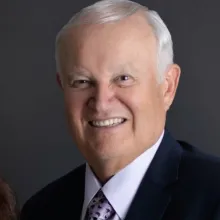
Mr. Seiglie was born in Havana, Cuba, and came to the United States when he was a child. He found out about the Church when he was 17 from a Church member in high school. He went to Ambassador College in Big Sandy, Texas, and in Pasadena, California, graduating with degrees in theology and Spanish. He serves as the pastor of the Garden Grove, CA UCG congregation and serves in the Spanish speaking areas of South America. He also writes for the Beyond Today magazine and currently serves on the UCG Council of Elders. He and his wife, Caty, have four grown daughters, and grandchildren.
