

Don Ward
This transcript was generated by AI and may contain errors. It is provided to assist those who may not be able to listen to the message.
The title of the sermon today, The Work of God. Now, does that sound exciting? The work of God? What is the work of God, and who is going to do the work? You hear comments like, why aren't we doing the work? And who is going to do the work? And you hear people say, somebody has to do the work, and why aren't we doing the work? And someone else says, well, I know the work is going to be done even if God has to raise up stones to Abraham. The question is, are we going to do the work?
Now we go back to the first question. What is the work? What is the work of God? Are we willing to accept the biblical definition of what is the work? We accept the biblical definition of sin. Practically everyone in this room can give us the scripture that says sin is a transgression of the law, 1 John 3 and verse 4. Practically everyone in this room could give us the biblical definition of love, 1 John 5.3. For this is the love of God, that we should keep His commandments, and His commandments are not grievous.
Probably everybody in this room could quote Hebrews 11.1. Faith is the substance of things hoped for and the evidence of things not seen. And perhaps some could quote the biblical definition of the kingdom of God. This one is a little bit more difficult. But here's the biblical definition of the kingdom of God. For the kingdom of God is not meat and drink, but righteousness and peace and joy in the Holy Spirit.
That's Romans 14 verse 17. But I would venture to say hardly a person in this room could quote the scripture that gives the Bible definition of the work of God. I won't ask for a show of hands, but let's turn to John 6 and verse 28. John 6 and verse 28. In John 6 and verse 28, the first part of John 6, Christ performed the miracle with the fishes and the loaves and the multitudes were fed. Then He took a ship and got away from them for a while, but they found out where He was and they went there.
And in verse 27 of John 6, labor not for the meat which perishes, but for that meat or food which endures unto everlasting life, which the Son of Man shall give unto you. For Him hath God the Father sealed. Then said they unto Him, What shall we do that we might work the works of God? So they asked the question, what is the work of God? What do we have to do to do the work of God?
And Jesus answered and said unto them, This is the work of God, that you believe on Him whom He hath sent. And some might say, well, what a downer! I was expecting a lot more than that. That you might believe on Him whom He hath sent. And of course, believe has to do with everything that He taught and everything that He stands for.
And they said therefore unto Him, What sign do you show that we may see and believe you? What do you work? And they talk about how Moses gave their forefathers manna in the wilderness. Verse 32, Then Jesus said unto them, Verily I say unto you, Moses gave you not that bread from heaven, but my father gives you the true bread from heaven. For the bread of God is he which comes down from heaven and gives life unto the world.
Then said they unto him, Lord, evermore give us this bread. And Jesus said unto them, I am the bread of life. He that comes to me shall never hunger, and he that believes on me shall never thirst. Of course, Jesus was speaking spiritually, and when He came right down to it, at the end of this chapter, they went away from Him, most of them, and He turned to the disciples and said, Well, you go away also. And they said, Well, where shall we go? There's no other place to go. And the scripture I quote so often is in this chapter of John 6.63, where Christ said, The Spirit, the flesh, prophets nothing.
It is the Spirit that quickens, the words I speak, their spirit and their life. Now we notice John 6.44.
The Jews rejected, of course, Jesus Christ as a whole. Some of them were converted.
But as a nation, they rejected Him. And in the mock trial that was held before Pilate, they cried out, Away with Him, Crucify Him, Release unto us Barabbas, who was a murderer.
In John 6.44, No man can come to me except the Father who has sent me, draw him, and I will raise him up at the last day. Now we talk about faith. We talk about a work of faith. So what is the first article of faith? Let's go to Hebrews 11 and verse 6. Hebrews 11 verse 6.
If we're going to do the work of God, it all begins right here. This is the first article of faith in Hebrews 11 verse 6. But without faith, it is impossible to please Him, for He that comes to God must believe that He is. So to believe that God exists, that is the first article of faith, that's where the work of God begins, to believe that God exists. And if God exists, then what should we do? What should be our... If we really believe that He exists, what should be our response to that? To believe that He is, and that He is a rewarder of them that diligently seek Him.
The Jews never understood John 644. No man can come to me except the Father draw Him.
The work of God begins with believing that God exists and believing on the one that He sent.
They say, tell us what is the work of God? What work shall we do? And Christ said, to believe on Him whom He has sent. Israel, the Jews, God's people through the ages, have gotten off track when it comes to understanding what God really expects of them.
I submit to you that we are and have been somewhat off track understanding what the work of God really is and what the gospel really is. We currently hear the mantra, repeated, preaching the gospel to the world. And we have discussions on what is the gospel.
You would turn to Mark 1. Jesus Christ preached the gospel of the kingdom of God.
And what was the content of His message? In Mark 1 and verse 14.
Now, after that John was put in prison, Jesus came into Galilee preaching the gospel of the kingdom of God and saying the content. In summary, the time is fulfilled. The kingdom of God is at hand. Repent you and believe the gospel.
Now, the Greek word that is translated gospel here, it's the word from which we get evangelism or evangelist, is uangelion, uangelion, or sometimes pronounced uangelion, from which we get, as I said, evangelism or evangelist, means good tidings, good news. Hence, we have a publication dating back to the World Wide Church of God, the Good News, the Good News magazine.
And we still have that publication today, and we were able to continue that name because various copyright laws allowed us to have it. We couldn't have plain truth, but we still have that which is called, the magazine called, the Good News.
And two or three of the people that have shown up here in recent times, I asked them, well, how did you hear about us? And they said, through the Good News magazine, which I think that they came in contact with over the internet. There are so many different ways today, of course, that you can put the Good News out there. Strong says, the glad tidings of the kingdom of God soon to be set up, and subsequently also of Jesus the Messiah, the founder of the kingdom. Another definition from Strong is, the glad tidings of salvation through Christ.
The proclamation of the grace of God manifest and pledged in Christ. In short, the gospel has to do with how to be in the kingdom of God and what the kingdom of God is. It is the family of God.
It is the kingdom of God, the government of God, restored over the earth. And for that matter, of course, the whole universe. You know, many of our people believe the gospel is preaching a warning message about the beast and the false prophet. To them, that's the gospel. That is not the gospel. That is something that you generally use as a tool to get people's attention, because people are interested in, well, what's going to happen? Because, as you heard in the sermonette, the people of this world are filled with anxious care, fear, doubt, and human reasoning, wondering where the next shoe is going to drop. And therefore, they are filled with anxious care, and they wonder. And you see all of the things that are happening in this world at the present time. And some people say, well, these people have a lot of knowledge about current events and how it fits into the schematic of Bible prophecy. And they get interested.
And some of them began to attend church, and they somehow don't get the connection of what it's all about. What it's all about is the gospel of the kingdom of God. It's not the gospel of the beast, not the gospel of the false prophet. Those things are generally about the Gentile kingdoms and about Satan using the nations of the world to try to bring about his insatiable quest to be worshipped. As I've said many times during the past year and four months that I've been here, the gospel has almost nothing to do with Satan's wrath at the end of the age.
Now, what Satan is going to do, of course, is to deceive the nations into accepting a false Messiah and a false prophet and deceiving the world into thinking that really this is the promised Messiah. You know that the Jews are still looking for a Messiah. They rejected Jesus Christ. They're not looking for the Son of God to come from heaven. They're not looking for God in the flesh. God incarnate. They're looking for a human being. And I'm sure they have various candidates for their Messiah. One of the very interesting news items, and I would encourage you to look at this news item, had to do with a big announcement this past, I think it came out first in the United Kingdom Britain's newspapers on Sunday of this past week, where Queen Elizabeth has now delegated many of her duties and public appearance responsibilities to William, Prince William, as opposed to Prince Charles, because I think she is not very happy with the way Charles does things. The most eloquent summary of reality about the Gospel, perhaps, is one that we've read several times as well, but let's read it again. 1 Corinthians 13. 1 Corinthians 13. Remember the essence of what we are talking about, the work of God. What is it? How will it be done? Who will do it? In 1 Corinthians 13. 1, is it the Gospel of these false prophecies, that kind of thing?
Though I speak with the tongues of men and of angels have not charity, agape, spiritual love, God is love, becoming as God is, I am become a sounding brass or tinkling cymbal.
Though I have the gift of prophecy, I could tell you to the last jot and tittle who the beast is, the nations that will comprise the beast's power, and everything associated with that.
You know, back in the early 70s, and this was just about in the time and the transition in which I think most people had come to realize that this booklet that was the church published in the 60s, titled 1975 in Prophecy, that that was not going to come to pass in 1975.
Sometime in the school year of, I'm thinking it's 1970, 71, I don't know if Susan Smith was still there at that time, but anyhow, we came to believe there was a powerful political figure that arose in Bavaria in the Catholic part of Germany, and that this man named Franz Joseph Strauss would perhaps be the beast. Somehow we developed a relationship with him, and he visited the Big Sandy campus, and we had a sing-along with the beast in the cafeteria.
This is a big, quite jovial guy. Of course, we realize that Franz Joseph Strauss is not the beast a little bit later.
Paul continues, though I have the gift of prophecy, understand all mysteries and all knowledge, and though I have all faith, so that I could remove mountains and have not charity, I am nothing.
And though I bestow all my goods to feed the poor, though I give my body to be burned, and have not charity, it profits me nothing. So there is a bottom line to this, and that makes it pretty clear. So many of the people who have come into the church place more emphasis on the hook line, that is, about world events and prophecy and that kind of thing, than they did the gospel of the kingdom of God. They were on a knowledge trip, not on a conversion trip. And we still, our people, still debate what should be the content of our message. And we have had, during the past several months, several discussions at the home office, even hiring outside consultants, on branding. And branding has to do with the principal words and the principal content of what your message is. And so this outside firm identifies the 25 most often used words that, looking through your publications, here the 25 most often used words in your publications. Way down on the list were things like faith, grace, and Jesus Christ.
So we have those who believe that in preaching the gospel, it's hellfire and brimstone, as some might say, powerful warning. And then others who think, well, you got a soft pedal, the gospel, and, as I said, others you have to give a dire warning. So I would rather see what the Bible says.
What does the Bible say about preaching? Let's go to Isaiah 58.1. We'll notice four or five scriptures here of what the Bible says. We've already read what Jesus said after John was put in prison. Jesus Christ came preaching the gospel of the kingdom of God and saying, Repent, for the kingdom of God is near. That's a loose, or fairly close, paraphrase, Mark 1, 14, 15, which we've already read. In Isaiah 58.1, cry aloud, Spare not, lift up your voice like a trumpet, show my people their transgression, and the house of Jacob their sins. So we have here a warning, a commandment that says, cry aloud, Spare not, lift up your voice. Don't hold anything back is what it seems to be saying to me. And as I've already mentioned what Christ said, Repent, for the kingdom of God is at hand. Now we go to 1 Corinthians 2, verse 1. What did Paul say about the content of his message? 1 Corinthians 2, verse 1. 1 Corinthians 2, verse 1.
You know, in the first part of 1 Corinthians, and once again the great rhetorical question of 1 Corinthians is, is Christ divided? And in Corinth, they were divided on several issues, and some saying they were of Paul, some of Cephas, some saying, well, I'm of Christ.
And Paul said, well, the Jews looked for a sign, and the Greeks seek after wisdom, but he came preaching the Word. And he talked about how many and not many might, not many noble or called. We come down to chapter 2, verse 1. And I, brethren, when I came to you, came not with excellency of speech or of wisdom, declaring unto you the testimony of God.
For I determined not to know anything among you, save Jesus Christ, and him crucified.
Christ said, for this is the work of God, that you believe on him whom he hath sent.
And I was with you in weakness and fear, much trembling. My speech and my preaching was not with enticing words of man's wisdom, but in demonstration of the Spirit and of power, that your faith should not stand in the wisdom of men, but in the power of God.
Howbeit we speak wisdom among them that are perfect, yet not the wisdom of this world, nor the princes of this world that come to nothing. But we speak the wisdom of God in a mystery.
We'll turn to the Scripture in just a moment and show what this mystery is. In a mystery, even the hidden wisdom which God ordained before the world, unto our glory, which none of the princes of this world knew, for had they known it, they would not have crucified the Lord of glory. So, what is this mystery? Let's go to Colossians 1 that Paul is talking about.
Colossians 1, starting in verse 25. Colossians 1, 25.
Wherefore I made a minister according to the dispensation, the oleconomian, the various periods of time in which God has dealt with people in different ways, we're now in what is called the dispensation of grace or the dispensation of the church age, the dispensation of God which is given to me for you to fulfill the Word of God, even the mystery.
Paul said he came revealing that mystery, even the mystery which had been hid from ages and from generations but is now made manifest to his saints, to whom God would make known what is the riches of the glory of this mystery among the Gentiles, which is what is a mystery Christ in you, the hope of glory. That's the mystery.
That Jesus Christ in you, that through the Spirit of God, the Spirit of the Father and the Son, and there is one Spirit, they share a common essence of the same Spirit that's in God and Christ is in us, that that Spirit of God is in us showing that Spirit can be joined in that sense with flesh, whom we preach, warning every man and teaching every man in all wisdom that we may present every man perfect in Christ Jesus, whereunto I also labor, striving according to his working, which works in me mightily. Paul said that God was working in him. The substance of the message must be the Word of God. It is the Word of God and the Spirit of God that convicts a person of their sins. Now, you may get their attention in various ways, and of course there are hook lines that go out to try to get people's attention. Now, seven laws of success. How can you be successful? How to have a happy marriage? And there are many kinds of titles that can be used and many things like that, but that is not in and of itself the end. Now, let's go to 2 Timothy 3, 16, the very substance of the message in 2 Timothy chapter 3 and verse 16.
All scripture is given by inspiration of God and is profitable for doctrine or teaching, for reproof, for correction, for instruction in righteousness, that the man of God may be perfect, thoroughly furnished unto all good works. I charge you therefore before God and the Lord Jesus Christ, who shall judge the living and the dead at His appearing in His kingdom, preach the Word.
What do you preach? According to the Bible, it says, preach the Word.
Be instant in season, out of season, reprove, rebuke, exhort with all long-suffering and teaching, for the time will come when they will not endure sound doctrine. Would that time ever come in the church? Surely it has come in the world! There are people and places that claim to be Christian churches who don't believe in the virgin birth. Some really don't even believe in Jesus at all. But after their own lush shall they heap to themselves teachers, having itching ears, they shall turn away their ears from the truth, and shall be turned unto fables.
So the content, Paul says, preach the Word. Now, people tend to want to see immediate, tangible results in their efforts. They come to think that doing certain physical things or producing physical products is the most important aspect of doing the work. Israel came to the point that they were more concerned about offering sacrifices for their sins than in repenting of their sins. Let's go to Amos chapter 4. Remember this sermon where I talked about that God desires mercy and not sacrifice and what that really means? That in order to have mercy extended in the ultimate sense, that one must repent of their sins for God to forgive them. Otherwise, God would be the minister of sin. In Amos 4 verse 1, hear this word, you kind of beishan that are in the mountain of Samaria which oppressed the poor. Of course, the northern tribe made their capital, the northern tribes, the ten tribes to the north, under first of all, Jeroboah made their capital at Samaria.
Mountain of Samaria which oppressed the poor, which crushed the needy, which say to their masters, bring and let us drink, the Lord God has sworn by his holiness that lo, the day will come unto you that he will take you away with hooks and your posterity with fish hooks. And you shall go out at the breeches every cow, kind as cow, at that which is before her. It's a metaphor for the people. And you shall cast them into the palace, says the Lord. Here's the key verse. Come to Bethel, that's where an altar was set up, and transgress at Gilgal, another place where an altar was set up. Multiply transgression, and bring your sacrifices every morning and your tithes after three years. And offer a sacrifice of thanksgiving with leaven, in other words, with sin. So they came to the point that they were more interested in doing the sacrifice, doing the physical form, than the actual spiritual part of repentance.
And proclaim and publish the free offerings for this likes you. O you children of Israel, says the Lord God, you really like to have the form and make to do about that, and you offer your offerings with leaven.
The Pharisees were no different. They were very careful to do the physical things, but they fell short when it came to doing the things that really mattered.
You know in the story of the Pharisee and the publican, where the Pharisee thanked God that he was not like other men, that he paid tithes, that he fasted twice during the week. Not like that poor publican there, the old tax collector. Whereas the publican, the tax collector, not so much as lifting up his eyes, his head said, have mercy on me, a sinner.
And Christ in this parable asks the question, who do you think went away justified?
And of course, it was the publican.
The bottom line in the Pharisaical thinking is that because they do certain things, they're more righteous than others. The Jews came to the point to view the law as more important than the one that God sent them to give eternal life. Notice John 5, verse 36.
John 5, verse 36. This is an astounding set of scriptures here, verses.
It also has great prophetic implications.
And once again, I just say, he that hath an ear, let him hear.
And John 5, verse 36. But I have greater witness than that of John.
John the Baptist, he's talking about. For the works which the father has given me to finish, the same works that I do bear witness of me that the father has sent me.
Now back to what it is say in John 6, 29. What is the work of God that you believe on him whom he had sent? And the father himself, verse 37, the father himself which has sent me, had borne witness of me. You have neither heard his voice at any time nor seen his shape. And you have not his word abiding in you for whom he has sent him you believe not.
So there's no way that you can do the work of God if you don't believe in God, and the one that he sent. Search the scriptures, for in them you think you have eternal life, thinking that the scriptures could give them eternal life in and of themselves. You know, you could start obeying the law of God perfectly after you convicted. That wouldn't pay for sins that are passed. The wages of sin is death, and the only way the sin can be paid for is through the sacrifice of Christ and faith in the sacrifice of Christ for sins that are passed.
Search the scriptures for you think in them you have eternal life, and they are they which testify of me, and you will not come to me that you might have life. I receive not honor from men, but I know you that you have not the love of God in you. I am come in my Father's name, and you receive me not. If another shall come in his own name, him you will receive. And the Jews are looking for that Messiah. There have been various candidates through the past two thousand years, and eventually there will be one that they accept. How can you believe?
How can you believe which receive honor one of another and seek not the honor that comes from God only? Do not think that I will accuse you to the Father. There is one that accuses you, even Moses, in whom you trust. For had you believed Moses, you would have believed me, for he wrote of me. Now Moses prophesied that God would send a prophet like unto him, and that they should hear that prophet. Let's notice that in Acts 3 17. In Acts 3 17, in Acts 3 and verse 17, Peter is giving this sermon, which is one of the great summary sermons in the Bible. Acts 3 17, And now brethren, I know that through ignorance you did it, that is, put Christ to death, as did your rulers. But those things which God before had showed by the mouth of his prophets, that Christ should suffer, he is fulfilled. Repent you therefore. Once again, you go back to the basic content. The basic content. Repent you therefore, and be converted, that your sins may be blotted out when the times are refreshing shall come from the presence of the Lord. And he shall send Jesus Christ, which before was preached unto you, whom the heavens must receive until the time of restitution of all things, which is God has spoken by the mouth of all the holy prophets since the world began. For Moses truly said unto the fathers, and so they had the testimony of Moses. And like Christ said in John 5, if you had believed Moses, you would have believed me. So not only do you have the testimony that I'm giving, even Moses said, I'm going to raise up a prophet. A prophet shall the Lord your God raise up unto you of your brethren like unto me, him shall you hear in all things whatsoever he shall say unto you, and it shall come to pass that every soul which will not hear that prophet shall be destroyed from among the people. Yes, and all the prophets from Samuel and those that follow after as many as have spoken have likewise foretold of these days. You know, the Corinthians were a people that were hung up, as we've already said, on spiritual gifts and signs, especially speaking in tongues. So we come to the question once again, so what is the real work of God? I'm not talking so much about the work that we think we must do, but the work that God is doing. The title of the sermon is the work of God.
The Jews asked what must we do to do the work, and all of us need instruction on how to help God do his work. Oftentimes we say, well, this has always been a work of faith. When one says that, he or she is generally implying that we don't have the visible means at the moment to do this or that, but if we please God, step out, quote on faith, then he'll provide the means. And there's testimony to that effect through the ages. Now, this is oftentimes used in reference to building a new building, launching a new program, publication, and so on. Some think that the sum total of the work of God is to preach the gospel to the world as a witness. By that, they mean warn the world, and unless they repent, they're going to perish. And surely that is a dimension of the commission that Christ gave the Church. The Church has been commissioned also, as we read last week, Matthew 28, 19, 20, the Great Commission, go you therefore and all the world, disciple all nations, teach them to observe all things whatsoever I've commanded you, and lo, I am with you even until the end of the age.
Now, if you are astute, you will notice that nearly all the talk that people do about doing the work centers on doing something outside themselves. When are they going to do the work? When are they going to get their act together? When are they going to do whatever it is? It's outside of me.
It's out there, and I'm waiting on them to do something.
The work, it seems, for some is always out there somewhere, and people say we have to get the work done as if there is an end to the work of God. And some think that the Church can literally preach down the kingdom of God and their principal, proof Texas, Matthew 24.14. Let's go to Matthew 24.14.
You know, when we had half of you were at the camp out at Livingston, Lake Livingston, I gave the sermon on the book of Habakkuk, where Habakkuk talked about, and there's a scripture in there that says that the end will come and he will not tarry. Matthew 24.14, The gospel of the kingdom shall be preached in all the world for a witness unto all nations, and then shall the end come.
The word here, O you may, that of the world, the portion of the earth inhabited by the Greeks, the Roman Empire, all the subjects of the empire, one definition, the whole inhabited earth, the world, inhabitants of the earth, men. And then this word to preach, which in some cases is translated publish or proclaim, means to act as a herald, to officiate as a herald, to proclaim after the manner of a herald.
And it has to do with preaching the word with gravity, indicating that you expect some kind of response. The great word for preach here is choruso.
But is God just holding up the kingdom until he gets enough people together that can preach the gospel to the world? And that'll be it. And some say, well, it'll be left up to the two witnesses. And some talk about, if you go to Revelation 14 and the Seventh-day Adventists talk a lot about this, Revelation 14.
Verse 6, verse 8, Saying with a loud voice, Fear God, give glory to him, for the hour of his judgment has come, and worship him, that made heaven and earth and the sea and the fountains of water.
And of course, one of the great tests in the book of Revelation is who are you going to worship?
Are you going to worship the beast and the false prophet and receive the mark of the beast?
Or are you going to worship God?
So we even have a spirit messenger, a heavenly messenger, preaching the everlasting gospel.
Verse 8, And there followed another angel, saying, Babylon has fallen, has fallen, that great city, because she made all nations drink the wine of the wrath of her fornication.
The third angel followed, saying, with a loud voice, If any man worship the beast in his image, and receive his mark in his forehead, or in his hand, the same shall drink of the wine of the wrath of God, which is poured out without mixture in the cup of his indignation, and he shall be tormented with fire and brimstone, in the presence of the holy angels, and in the presence of the Lamb. And the smoke of their torment ascends up, for ever and ever, and they have no rest day or night, who worship the beast in his image, and whosoever receives the mark of his name. Here is the patience of the saints. Here are they that keep the commandments of God, and the faith of Jesus. So we have not only come on the scene, and sometime the two witnesses, and here are these three angels that have something to proclaim as well. But I go back to the question of what is God most interested in accomplishing right now?
Let's ask it another way. What is God's greatest work? I would submit that his greatest work and his heart's desire is that everyone should come to repentance, not willing that any should perish, but all should come to repentance and be in his family, to be in his kingdom.
So his work centers to a large degree on the work that he's doing in us, to bringing us to that point to where we can be resurrected and born into the family of God. He desires to do a work in you and me. And I believe two of the greatest things we need to overcome are coming to understand that God is more interested in what we're becoming than what we are doing with regard to outward signs of righteousness. What are we individually becoming? And even if the home office, the administration, the council, and everybody had all of their acts perfectly in place the way you wanted, and you could praise them to high heaven, what would that do with the work that God is doing in you? Well, you might say that might relieve some of my stress, some of my concern, and so it might.
But does that in and of itself make you become what God wants you to become? Or I can obviously apply it to myself. And did we get the cart before the horse when we talk about doing the work? That is, we must be converted before we can convert the world. We must surrender and submit unto God so that He can perform His spiritual work in us. So let's look at Matthew 18 verse 1. Matthew 18 verse 1, we read this when we have the blessing of the little children, the second Sabbath after the Feast of Tabernacles.
And it's following the example that Jesus said. Notice what He says.
Matthew 18.1, in December to what Paul writes in 1 Corinthians 13 verses 1 through 3 of what is the bottom line, unless you're becoming as God is, converted, all this other doesn't mount to what we used to say, a hill of beans.
Matthew 18.1, at the same time the disciples came to Jesus saying, Who is the greatest in the kingdom of heaven?
And Jesus called a little child unto him, and said him in the midst of them, and said, Verily I say unto you, except you be converted, and become as little children, you shall not enter in the kingdom of heaven. Whosoever therefore shall humble himself as this little child, the same is greatest in the kingdom of heaven. So we begin to see the bottom line.
As we discussed earlier, Israel, Judah, and the people of God have historically tried to establish their own righteousness. Let's go now to Romans chapter 10.
Remember in the branding discussions that even the name of Jesus Christ was not as prominent as you would hope it would have been in our publications, or the words faith and grace.
We go to Romans chapter 10.
Where Paul talks about his countrymen, the Jews, and their great zeal, but not according to knowledge. Romans 10.1.
Brethren, my heart's desire and prayer to God for Israel is that they might be saved.
For I bear them record that they have a zeal of God, but not according to knowledge. For they, being ignorant of God's righteousness, and going about to establish their own righteousness, have not submitted themselves under the righteousness of God.
Can you be righteous apart from Jesus Christ? Of course not, because the only way that your sins can be remitted is through faith in the sacrifice of Christ. So it's not possible. It is not possible.
And as I've mentioned at other times, the only religion really in this world of any significance that takes care of the sin problem is true Christianity.
For Christ is the Talos, bad translation in old King James, is the result or outcome of the law for righteousness to everyone that believes. Cannot do it apart from Christ.
The church in the 20th century went through so many things in which people tried to show that they were righteous by doing all kinds of things.
For many, the hallmark of their righteousness is that they were more faithful to the past.
Right now, this is the hallmark of some's righteousness. I'm more faithful to the past, to what was taught in the past than you are. Well, look at the United Church of God.
They believe that the sacrifice of Christ was a whole sacrifice, whereas we believe that it was divided into two parts. Things like that. Therefore, we are more righteous than you.
I wonder when we're coming to the point, what about we are righteous because we believe God in Christ and striving to do what they say. What about we are committed to growing in the grace and knowledge of our Lord and Savior Jesus Christ?
In the past, every move of the ministry was monitored from headquarters, and every move of the membership was monitored regarding physical things. We had ministers examining cabinets searching for white flour and sugar, giving hellfire and brimstone sermons on healing, whereas they themselves took their children to the doctor. And I know firsthand one of the ones who preached most vehemently about this took his children. We had a lady there in Big Sandy, a widow who had cataracts and going blind. And finally, we encouraged her to the point she had these cataracts removed. She's on the internet today at the age of 96, sending out encouraging messages to me and everybody around the world.
If she had gone blind, where would she have been? Blind.
And a lot about prophecy, saying such things as, if Mr. Armstrong doesn't live to the end of the age, the Bible is not true.
And speaking dogmatically about events that they knew little about.
So you go through all of these things. Is that worse than what happened in the first century church as you read Paul's epistles? No. There were some in Corinth who didn't even believe in the resurrection. How on earth could you be attending the Church of God and say, there is no resurrection from the dead? Or in Thessalonians or Thessalonica, where some were writing that the day of the Lord was at hand or already passed?
Let's notice a clearer prophecy for the end times.
I think this prophecy is more important than those on the beast.
We cannot control who the beast is. And even if we knew clearly who the beast is, would it change our hearts and minds? Would it lead to conversion?
Let's notice 2 Timothy chapter 3 and verse 1.
2 Timothy chapter 3 and verse 1.
This know also that in the last days perilous times shall come.
Men shall be lovers of their own selves, covetous, boasters, proud, blasphemers, disobedient to parents, unthankful and holy. Without natural affection, trucebreakers, false accusers, incontinent, fierce, despisers as those that are good.
Traders, heady, high-minded, lovers of pleasure, more than lovers of God.
Having a form of godliness but denying the power thereof from such, turn away.
You see, that's the bottom line.
Even before Mr. Armstrong died, over half of the people who had been baptized left the fellowship of the church. Intellectual assent to the truth is not the same as conversion.
Let's notice in Philippians chapter 1 and verse 6 what God is doing.
God wants to glorious work in each one of us. Philippians chapter 1 and verse 6. Philippians chapter 1 verse 6, being confident of this very thing, that He which has begun a good work in you. That's part of the work of God. A good work in you will perform it until the day of Jesus Christ, and He'll perform it unless you do something to prevent it. Unless you quit. Unless you turn back.
So generally, when people talk about the work of God, they talk about what the organization that they are in is doing with regard to public proclamation, generally.
And when God speaks of the work of God, He is generally referring to the work He is doing.
So God wants to do a great work in each one of you, in each one of us, in you and I, and every person who has been called into His marvelous light. So brethren, now is the time for us to surrender, submit, and serve God, the three S's, as never before, with our whole hearts and minds, becoming living sacrifices so He can perform that work in us, that He is committed to doing. He's promised that He would do it, and He will do it, until the end of the age, or until in the individual age, till we die, or we're caught up to meet Christ in the air.
So brethren, let us rejoice in the work of God, the work that God is Lord in each one of us, bringing us to that point to where we can be born in the family of God as glorious, radiant spirit beings.
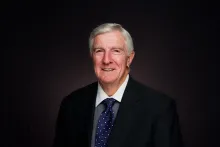
Before his retirement in 2021, Dr. Donald Ward pastored churches in Texas and Louisiana, and taught at Ambassador Bible College in Cincinnati, Ohio. He has also served as chairman of the Council of Elders of the United Church of God. He holds a BS degree; a BA in theology; a MS degree; a doctor’s degree in education from East Texas State University; and has completed 18 hours of graduate theology from SMU.
