

Paul Moody
This transcript was generated by AI and may contain errors. It is provided to assist those who may not be able to listen to the message.
Title for my sermon today is, Work Out Your Own Salvation Together. Work out your own salvation together. And you know that might actually sound like two opposing concepts sort of pushed together into one, but maybe if you can follow my train of thought today, that's sort of what I'm doing, and we'll see they're not so opposing after all. Work out your own salvation together. I'll start out by maybe giving a little bit of an update on the leadership conference in West Africa. As most of you know, it was one that took place over the course of four days, where we brought both the English and the French-speaking West African countries together.
So we had Nigeria and Benin and Togo and Ghana and Ivory Coast. And these are all kind of staggered between each other. Some were French colonies once upon a time, some were British colonies once upon a time, and actually as they carved them up into colonies, they really didn't pay much attention to where the tribal territories were.
So they actually drew borders and lines right down the middle of tribes. So interestingly, I can go from Ghana to Togo, which Togo is French-speaking, but I can take a native speaker of Ghana over with me, and we can communicate through the native tribal tongue quite often.
And a number of years when I was in Togo, I gave a sermon in English. It was translated to the native tongue, then translated into French. And if you can imagine maybe what that does with your sermon notes, you just start crossing off just about every illustration and story and forget about sarcasm or the punchline coming through. But God's blessed us in ways to be able to cross those borders and to communicate.
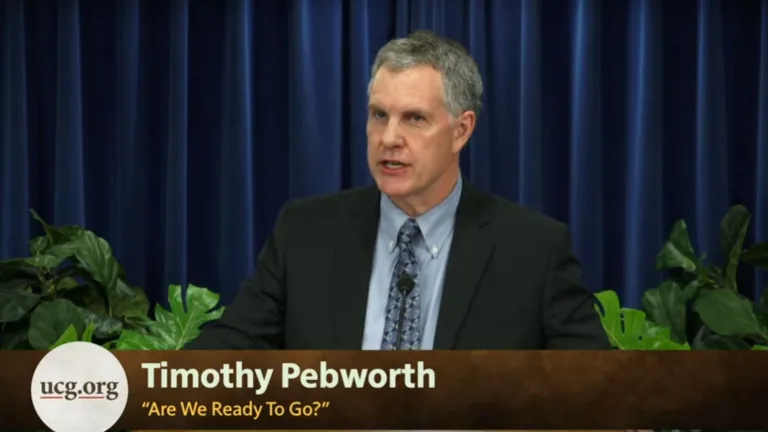
But Tim Pebworth is the senior pastor for the French-speaking West African countries, and I am for the English. So this was a combined effort, and we had, I think, around 52 men and wives, leadership of those countries that we brought together. And four days of instruction, Ray and Rhonda Clore came over as well. Ray is a pastor here in the United States. Also a member, Jim Chance, came and helped with some of the presentations. And we had some international people that traveled over from France to help with interpreting as well.
So, you know, this was sort of high-tech. You had the headphones, you had the interpreters, the English could hear the French presentations, and the French could hear the English presentations. And really do feel it was a great success, and a lot was accomplished. And it's a time of transition, as a lot of younger leadership are coming up in those countries. We have a few older individuals who are able to help mentor and pass on, but in many ways it's a time of transition, much like even in the United States.
But we were all in this together. That was a little bit of my focus as I was there. I gave instruction, among other things, on Christlike servant leadership. And I said, look, we are all in this together as God's people. And being leaders of God's people doesn't raise you up above your brethren, and it doesn't mean you carry a stick that now you're beating the sheep.
It is a position of service as Christ served. And we all need service, and we all need attention. And the fact is, we are sheep, too. That was part of the message. And we're in this together, and we need each other. And I would just say, as I look around the room today, everybody that's come together for the activity, I think we recognize the importance of relationships in the body of Jesus Christ, and the strength that we add to one another. We do very much need each other, and we'll need each other so much the more as we see the day approaching.
So these are important times and important concepts to consider. We need each other. We are a team. God has brought us together to support one another. Now, right alongside that, there is a particular phrase that can be found in the book of Philippians, which the Apostle Paul expressed to the congregation in Philippi, and by extension it comes down to us today as well.
And it's the other main focus that I'm going to merge here in my sermon today. And it's Philippians 2 and verse 12, if you'll follow me there, please. Philippians 2 verse 12. We'll find this phrase. Here again, the Apostle Paul writing, and he said, Therefore, my beloved, as you have always obeyed, not as in my presence only, but now much more in my absence, work out your own salvation with fear and trembling. Work out your own salvation with fear and trembling. You know, what does that mean exactly? Because I've heard this phrase repeated oftentimes in the church, not always according to the biblical example of how it's used.
What does it mean exactly to work out your own salvation with fear and trembling? What's the admonition Paul wants us to embrace? Well, Philippians chapter 2, I think we understand. If you were to go back to the beginning, it's a very familiar passage to us. It expresses the mind that we must have towards one another. Right? It's a mind of love, a mind of humility.
It was the mind of Jesus Christ as He gave Himself for us in sacrifice. And as you open the book on Philippians chapter 2, Paul says, let this mind be in you. That was also in Christ Jesus. Again, one that lived His life in service for others, and looked out for not only His own interests, but for the interests of others.
And so it's outgoing love and concern for one another. That's actually the context of Philippians chapter 2, and leads up then to Paul's therefore statement in verse 12, in which he says to work out your own salvation with fear and trembling. So I want to explore this concept a little bit and help us to understand that. In one way, this is a solo event, but in another way, it's not a solo event. We're not alone in this, even if before God we stand alone. I want us to consider how this works in the body. Let's define working out here for a moment, though. The Greek word rendered work out, as in work out your own salvation, indicates a command that has a continuing emphasis, as in you work and keep on working.
It's a continual effort that's being described until you bring it to fruition or completion, an ongoing process. And so to work out your own salvation is not a short-term, one-time event in our life where we say, okay, I've done it, and now put that book on the shelf. It is something that we are called to wrestle with and to work with, with God's help all the days of our life as we seek first His kingdom. And our efforts pertain to salvation.
Work out your own salvation. It pertains to the salvation and, frankly, our eternal life. So this is for the long haul. It's like if I told you, work out your own finances for retirement. That doesn't happen with one paycheck, does it? And that is actually a goal with a lifelong plan along the way of incrementally working towards that goal.
So working out your finances for retirement, that's very simplistic compared to work out your own salvation. But I think we understand the concept. We start it as soon as we have understanding, and the pursuit of that never ceases. Verse 13, Paul says, For it is God who works in you both to will and to do for his good pleasure. And so the point is, it is God who's called us into this personal and direct relationship with Him.
And it is God who is working not just with us, but in us by the indwelling of His Holy Spirit for His good purpose and His good pleasure, you know, expressed through our response to Him. But we have our part to play in this as well. And so through that process, there are things that you and I must work out.
Right? God says, I've called you into a relationship with Me unto salvation. There are things, though, that you and I individually and collectively, we would say, must work out. Verse 14, Do all things without complaining and disputing, that you may become blameless and harmless children of God, without fault in the midst of a crooked and perverse generation, among whom you shine as lights in the world. Mr. Neff spoke last Sabbath about the darkness and the light. And I thought a very eloquent message about the fact that the light is shining, and it must shine forth from us into this dark world today. Verse 16, Holding fast the word of life, so that I may rejoice in the day of Christ. Paul says, I want to rejoice in that day, that I have not run in vain or labored in vain.
So the inconclusion of what we've been called to do is unto eternal salvation. So unto eternal life is being glorified in the Spirit, along with God the Father and Jesus Christ, in the same glorified likeness as are they, but also one another. To be glorified together, you know, at the return of Christ, we'll look to that on the Feast of Trumpets, but we look to rise and shine. Right? We use that when we tell our kids to wake up. And so reference to the resurrection, and we look to do that together by God's grace in our lives. And Paul says, if you're there when that time comes to the Philippian church, he says, I'm going to rejoice, knowing that my efforts weren't spent in vain. And if you look at the other writings about actually what is the joy of the ministry, the joy of the ministry is to see you there at the return of Jesus Christ. The fact that that effort that God has allowed the ministry to put forth had a blessing in people's lives that they were faithful and they are there at the return of Jesus Christ. And Paul says, I'll rejoice in that day, but you have to work out your salvation until that time. He admonished them to take responsibility for their calling before God to take it seriously, to respond in faith and obedience. And it's the admonition that's directed to all of us in the body of Jesus Christ. Work out your own salvation.
And I've been dancing all around the word. Whose salvation does it say? It says, your own. Right? So this is a very direct, personal, intimate instruction. We are called to not work out the salvation of our wife, per se, of our neighbor, of our friend. It says, work out your own salvation with fear and trembling. It's a process that's personal and individual to each of us.
Now, I've spoken many times as well about the fact that God has placed us into the body of Jesus Christ for the benefit of all. And if that benefit's going to be realized, there's instructions that say, you know, you supply to the whole that which God has given you the gift to supply. There's instructions such as, don't forsake the assembling of yourselves together. There's instructions that tell us where to come together regularly, break bread together, you know, do what you're doing tonight together. These are things that strengthen the bond of relationship between God's people, whereby iron sharpens iron, and we can lift one another up.
You see, you can't work out my salvation for me, but you can lend me a certain level of strength and insight and inspiration to help me in my process. And hopefully I can do so for you as well. And God has given us each other to help one another in that process.
You know, I'm not going to go through all those scriptures. We've read so many of them over the years, but there's ones that say, the strong ought to bear with the scruples of the weak, okay? And to fulfill the law of Christ, which is the law of love. So we carry one another's burdens, and we lift each other up. And the point is, we are helping each other along towards a common goal. But at the end of the day, we're each individually and solely responsible for our relationship with God. And before God, we stand on our own. In the light of His countenance, as we heard about, in the mercy of His judgment, in that assessment, at the judgment seat of Christ, we stand very much on our own.
And there are things we work out individually, but God has given us each other for help in the process. In West Africa, I have three congregations in Nigeria that I help to oversee, and ten in Ghana.
So I have 13 West African congregations and three on the circuit here. So 16 congregations that I have oversight for. And there is no way that I can pastor each congregation, especially in West Africa, such as I would pastor here. So I depend over there on people on the ground, and that was part of this leadership conference, was to build and to strengthen and to equip the leadership to uphold God's people there in service. And I can't do it myself. I can only help the helpers and equip them for what it is that they can do.
And when I'm gone over there, I can't run the show here. You all run the show here, and you do it well. And everybody has their part that they play, from the soundboard to the webcast to those that get up and speak. It is a blessing that each part does its share, and it provides to the growth of all. It provides to what it is we need for the working out of our salvation.
So again, we're in this together. When I was in Ghana, the conference had just finished. The day after the conference finished, I got news from Darla that her mom had landed in the hospital. And the original diagnosis was she had 48 hours. And it was her condition, actually, that is now secondary to her stroke. But I got the news, and I said, okay, I need to get home. Darla and Selena were around the clock with her in the hospital.
And, you know, you're exhausted after caring for someone that's been ill for so long. And I said, I need to go home today. And I picked up the phone, and I called Delta, and I said, what's my option for getting out of Ghana tonight? And they said, well, we have one seat on one flight in its first class.
And, you know, for like a split second, you go, ooh, you know. But, you know, this is church budget, and I was like, well, what else? Have you got? Can you take me Air France through Paris and over? Hang on, we'll get back to you. That's booked. I was on the phone with them for like an hour. Can you get me to KLM to Amsterdam and over? That's booked.
One seat, first class, across the ocean, you know, 10 and a half hour flight, and, you know, the seat lays out perfectly flat into a bed, and you're eating salmon and not beef jerky. So I'm like, all right, you know, I have to go tonight. And so I booked it, and as I'm at the airport actually exiting, I emailed Steve Myers, and I said, Steve, I'm on my way out. Here's what's happening at home. I had to purchase this ticket.
Here's the expense. And he said, no problem. He says, family's important, and you have to take care of that. We're praying for you. So, you know, there's...we rely on each other, and we rely on the strength each other provides. I got home and pulled three all-nighters with my mother-in-law in the hospital this week and relieved Darla, and we had family that sat through the night last night, and Darla and Selina today, and I'm going to take the night shift.
Family stands together, and it's for the benefit of the family moving forward in good times and in difficult times. But we're all in this together. And, you know, even the minister needs a minister from time to time. I think it was Thursday evening. Days are running together, but we were in the hospital. Darla and I, with her mom and Mike Eimes, walked in the door and sat down and, you know, spent some time with us, brought a fruit smoothie that Joyce had made.
And, you know, it was just the comfort. And when he left, I just said, thank you, my friend. That's helpful. You know, even as the pastor, I need ministered to as well. So God's brought us together as a joy to lift each other up and to help each other to the goal.
But nobody can push me across the goal line. I have to work out my own salvation, but I very much depend on the strength and the support that is offered by those around. And so I hope we see this is both individual and direct, but collective as well.
Working out your own salvation means that your salvation is specific to you, and my salvation is specific to me. God called us individually. He gave us His Holy Spirit individually, and He works with us in very unique and individual ways as well. And our salvation is the same in type, but the things we have to work out in this Christian life is going to be somewhat different for each of us. There's challenges to my race. Okay, I'm just be frank and open with you, and I don't think I'm different than anybody else in this room. There are challenges to my race. There are struggles I seek to overcome, and I know what the goal is. I know what the standard is. The standard is Jesus Christ, and if I'm not looking in the mirror and seeing Jesus Christ, which I'm not, it means there's challenges to my race. And I must keep working things out. But what I need to work out may be different than what you need to work out in your life. And so in that way, we are unique. And I can't do it for you, and you can't do it for me, but we can support each other in the process. And we can pick up the phone, and we can call our friend, and we can say, can you stay on the line with me? I'm going through a crisis right now. And we can do that for each other in a way that helps our brother and sister work out the things that God has called them to work out individually, but together. At the end of our days, we'll each give an account for what we've done or not done with the calling of God. Let's go to Hebrews 2 now in verse 1.
Hebrews chapter 2 in verse 1. Again, the author of Hebrews, likely the Apostle Paul. Saying, therefore, we must give the most earnest heed to the things we have heard, lest we drift away. You know, there's actually a risk associated with committing to this way of life, and that is if you drift away out of negligence of your calling. Verse 2, for if the word spoken through angels proved steadfast, and every transgression and disobedience received a just reward, how should we escape if we neglect so great a salvation, which at first began to be spoken by the Lord and was confirmed to us by those who heard Him?
Paul's saying this is a very precious calling, and you and I must pay the most earnest heed not to neglect what God is doing in our lives directly. Because salvation is a precious thing. Salvation is a most precious thing. The fact is, once we've come under the sacrifice of Jesus Christ, we are saved. We are saved through baptism. Our sins are forgiven. We're saved from the death penalty. But salvation is an ongoing process, and that's why working out our salvation is an ongoing process as well, whereby we're even being saved today.
And it plays out until the ultimate expression of our salvation comes through our change at the return of Jesus Christ, at which time we indeed will be saved in the ultimate sense by the glorification and our change into the likeness of God.
Most of us, most of mankind, who have been faithful to God, will be saved, frankly, out of the grave through that salvation. So we have been saved. We are being saved as we continue in this process, and we will be saved. Salvation is an ongoing process. We must work out our own salvation in the long term, yielding to God's work in us all along the way.
Salvation is nothing we can generate on our own. It's going to muster up a little salvation today. It is what comes from God solely. As Stuart was saying, the grace and peace that comes from God. Being saved and salvation and that blessing comes from God. He is the originator of our salvation through Jesus Christ and is God the Father who extends that salvation upon repentance and baptism. So God does His part, and He does it faithfully. But as we understand, this is a covenant, and we must do our part faithfully as well.
Romans 2 and verse 4. We're going to spend most of the day in Paul's writings today. This was a huge part of his focus. Romans 2 and verse 4 says, Do you despise the riches of His goodness, forbearance, and longsuffering, not knowing that the goodness of God leads you to repentance? He says, but in accordance with your hardness and your impendent heart, you are treasuring up for yourself wrath in the day of wrath and revelation of the righteous judgment of God, who will render to each one according to His deeds.
Deeds is an interesting word. Deeds, we could say, is works. Right? The works of our hands, the actions of our life. He will render to each one according to His deeds. And so we must be doing something. We can just sit back and let grace fall upon us, so to speak, and just consider that enough.
We must respond to God in obedience. And indeed, that is the fruit of our faith. People would say, oh, you're saying you're saved by works. I'm not saying that. But those who have responded to God in faith and obedience will be working out certain things in their life in response to that relationship. Verse number six, again, who will render to each one according to His deeds or His works?
Eternal life to those who by patient continuance, ongoing work, and doing good, seek for glory, honor, and immortality. But to those who are self-seeking and do not obey the truth but obey unrighteousness, indignation, and wrath. That will be their reward. Tribulation and anguish on every soul of man who does evil of the Jew first, also of the Greek.
But glory, honor, and peace to everyone who works what is good to the Jew first, also to the Greek, for there is no partiality with God. So again, the Bible does not teach anywhere that we are saved by works, because no amount of works can earn salvation. You can't do anything good enough or well enough or perfect enough to earn salvation. It's the sacrifice of Jesus Christ that justifies us in the sight of God. However, we must respond to God in obedience.
And indeed, our works demonstrate our faith, whether it is sincere or not. The fact is, God is not going to extend eternal life to anyone who is not living in accordance with His laws, who has not become conformed to the image of His Son by His Spirit.
So to work out our own salvation with fear and trembling means we are doing our part to uphold the covenant we made with God at baptism. We're responding to His work in us, and by faith we are walking in newness of life. And all this takes continual effort, day by day by day.
Working out, long term. I did it yesterday. I'm doing it today. It doesn't mean I can take a vacation tomorrow, until the day of Jesus Christ. Or as long as we have breath, we work out our own salvation with fear and trembling. Ephesians 4, verse 1.
Ephesians 4, verse 1. I therefore, the prisoner of the Lord, beseech you to walk worthy of the calling with which you were called. You say you're a Christian? Do you look like it? Do people see that by your walk? Walk worthy of the calling with which you were called, with all lowliness and gentleness, with long suffering, bearing with one another in love. Again, it's not a lonely journey, and there's times we have to bear with each other in love. It leads to a positive resolve. Verse 3. Endeavoring to keep the unity of the Spirit in the bond of peace. So there is a response. There is a way of life that is appropriate from each of us, in light of what God is doing in our lives. And we must walk the walk. And it's hard work. It's day by day. It's on our knees before God in prayer. It's in His Word, learning and growing, and guided by His Spirit. And I can't do that for you. And you cannot do that for me. And so that work is individual, and that is direct. But you know what? We can encourage each other. We can strengthen each other. We can lift one another up and pray for each other, and give each other the motivation by the Spirit God has given you to share your insight with me. We do this individually and personally, but we do it as well, together. If we're going to simply sit back and take our leisure thinking that I'm in the right church group, or I have the right friends, or I've married the right person in order to receive salvation in the kingdom of God, then we've grossly misunderstood the grace and the salvation and the work that we must each be doing ourselves. Salvation is God's gift. We cannot earn it. But God gives the gift to those who respond to Him in obedience and faith, and diligence, and indeed we must all do our part together. Take all the other scriptures in the Bible that said God has taken many parts and made them one. We're to do this together. We're to be the bride of Christ together. And we are to stand in that day together, having done the hard work individually, but now coming forth in our change to the glory of God together.
It is indeed the emphasis of our calling. During His ministry, the Apostle Paul understood he had not yet obtained the fullness of the salvation that God was offering Him, as in there is no stopping point of rest along the way where you say, good enough. And he knew that, and he ran the race with diligence. And in fact, he understood clearly the need to stay focused in his response to the very end. Philippians chapter 3 and verse 12.
Philippians 3 verse 12. Paul uses the analogy of a race and a prize. I think it's something we can all associate with, but you're not going to get the t-shirt, you're not going to get the medal or the prize until you cross the line.
Philippians chapter 3 and verse 12. Not that they have already attained, he says, haven't gotten there yet, or am I already perfected, but I press on, that I may lay hold of that, for which Christ Jesus has also laid hold of me. Brother and I do not count myself to have apprehended, but one thing I do, forgetting those things which are behind and reaching forward to those things which are ahead, I press toward the goal for the prize of the upward call of God in Christ Jesus. He says, I press. It's an effort, ongoing, one foot in front of the other, leaning into the hill and doing the hard work. Verse 15. Therefore, let as many as are mature, and looking around the room, I would say, I would pray, many of us are there. Okay, so this is to us, as many as are mature, have this mind. And if anything, you think otherwise, God will reveal even this to you. And so Paul's saying there's a continual effort in a part to obtain the prize. And it didn't just start and end with baptism. Actually, baptism is where the real work begins. And frankly, our change, or the grave, is where the work ends. And it is our day of salvation. Judgment is now upon the Church of God. And so God is watching for how we respond to Him in these things. It shouldn't be a fearful thing or something that gives us great anxiety, but it should be a motivator. To know that our just and perfect God has set a standard. And He's given us His Spirit that allows us to hit the mark. But we must do our part. And we must work out the things we must work out as well.
Apostle Paul understood that he could preach the gospel. He could bring, in that sense, the message of salvation to people. And people could be responding and be converted. And those people could be in the Kingdom of God. But Paul himself actually said, lest I miss out myself, I must carry on. And that is something that he realized as a reality. You know, lest he preach this and become disqualified himself. 1 Corinthians 9, verse 22. If you consider that this apostle did a tremendous work by the guidance of God, said, you know what? It's not good enough today. I must continue to press. Lest I stumble, lest I falter. 1 Corinthians 9, verse 22. Paul says, To the week I became as weak that I might win the weak. I have become all things to all men, that I might by all means save some. Now this I do for the gospel's sake, that I may be partaker of it with you. He's saying, I'm doing this, not just for me. It's me and you, Lord. Nobody else. It is very much you and me, Lord. Direct personal relationship with God, okay? Nobody can stand in that place for us, but we go there together, that I might be, verse 23, partaker of it with you. Verse 24. Do you not know that those who run in a race all run, but one receives the prize? Run in such a way that you may obtain it. And every one who competes for the prize is temperate in all things, that they do it to obtain a perishable crown, but we for an imperishable crown. Therefore I run thus, not with uncertainty. Thus I fight, not as one who beats the air, but I discipline my body and bring it into subjection, lest when I have preached to others, I myself should become disqualified. It's a sobering lesson, brethren. You can actually teach others to respond to God's calling, unto salvation, and then become disqualified yourself. Because you've turned aside, because you've drawn back, because you've forsaken that relationship with God, or fallen away to one degree or another. It's an amazing concept to consider, really. Nobody is above working out your own salvation with fear and trembling. Again, the Bible does not teach once saved, always saved, and it teaches we can actually lose out on salvation if we turn aside from this calling, and we fail to work it out as a lifelong effort. Hebrews chapter 10 and verse 26.
Hebrews 10 verse 26. For if we sin willfully, after we have received the knowledge of the truth, there no longer remains a sacrifice for sins. You know, our own willful behavior could actually break the salvation process. Our own willful behavior. Verse 27.
Again, this is a willful rejection of the sacrifice of Jesus Christ, of the Spirit of God, saying, I am fine on my own, I will do it myself, thank you very much. It is a willful, deliberate refusal to repent and submit to God and work out the things He has given us to work out. Let's carry on then in verse 37. For yet a little while, and he who is coming will come, and will not tarry. Now the just shall live by faith, but if anyone draws back, my soul has no pleasure in him. But we are not of those who draw back unto perdition or destruction, but of those who believe to the saving of the soul. So again, salvation is not a one-time event. It is not once saved, always saved. It is not the work was done yesterday, and now I can take my leisure until Christ returns. It is a working out of continuance, day by day, until the day of His coming. Matthew chapter 25 gives us a stark contrast to consider between a group of people who took their salvation seriously, and a group who didn't seem to be so willing to work it out along the way. Matthew chapter 25 and verse 1. This needs to be a sobering warning indeed for us all.
But it should inspire us and encourage us as well, because you have five unfavorable examples, but, you know, let's follow the five positives. Matthew chapter 25 and verse 1. It says, Now the kingdom of heaven shall be likened to ten virgins who took their lamps and went out to meet the bridegroom. Now five of them were wise, and five were foolish. Those who were foolish took their lamps and took no oil with them, but the wise took oil in their vessels with their lamps. They had that extra spiritual reserve with them. And so they're all virgins. All go out to meet the bridegroom. All had oil to a degree, which is a type of God's Holy Spirit, but five of them don't seem to put forth the level of spiritual preparedness necessary to be prepared when the bridegroom came. Verse 5. But while the bridegroom delayed, they all slumbered and slept, and at midnight a cry was heard. Behold, the bridegroom is coming. Go out to meet him. Then all those virgins arose, trimmed their lamps, and the foolish said to the wise, Give us some of your oil, for our lamps are going out. But the wise answered, saying, No, lest there should not be enough for us and you, but go rather to those who sell and buy for yourselves. It's an important point here, brethren, to recognize that the degree to which each of these ten virgins were prepared to meet the bridegroom was dependent upon their efforts personally. What preparation efforts personally did each of the ten take? Those who had brought enough oil had been working to store it up in advance of this moment so that when the time came they had sufficient supply. They were working it out all along the way, and they had that spiritual reserve, but the five foolish had not. So when the time came to go out and meet the bridegroom, each one had to stand individually on their own merits of preparedness. No one could give a portion of their oil to someone else. No one could say, I take my work and my relationship with God, and I'll give a portion of it to you so you can keep your lamp burning. You cannot work out what I must work out for me, and I cannot work out what you must work out for you. And we can't build that spiritual reserve for each other. The best that we can do is what God has given us to do. Encourage each other. Strengthen each other. Motivate each other. Call one another out if you see an open sin. Be your brother's keeper. Lift one another up to hopefully motivate the working out that must be done in the life of each and every one of us. But again, before God's presence, before His judgment, we stand on our own.
But He's given us each other as a wonderful gift to help us grow along the way. Verse 10, can't give you, sorry, our oil. Verse 10, while they went to buy, the bridegroom came, and those who were ready went in with Him to the wedding, and the door was shut. And afterward the other virgins came, saying, Lord, Lord, open to us. But He answered, and He said assuredly, I do not know you. Watch therefore, for you know neither the day nor the hour in which the Son of Man is coming. Jesus Christ says, watch. Watch yourself. Watch your spiritual condition. Watch your relationship with God. Watch that you're stirring up the Spirit of God within you. Watch that you're prepared to meet the bridegroom when He comes. Because these ten virgins appear to be in type, the end-time church. Five were wise, and five were foolish. And the question for all of us would be, which are we? Which am I? I'm not going to point at anybody and ask which you are. I can only point at me and ask myself, which am I? And no matter what the answer is, wise virgin or foolish virgin, I still have things to work out along the way because all ten slept.
All ten slept. The question is, which are we going to be? The answer can only be worked out in your personal relationship with God with fear and trembling. Working out our own salvation means we aren't daydreaming away the time God has given us, but we are using it wisely in our preparations to meet His Son at His coming. Let's conclude in Romans chapter 13. Again, the admonition of the Apostle Paul. I think Paul carried the weight all through his apostleship of what he had done to the church. I'm sure he understood clearly the forgiveness of God, and he lived in the blessing of that. But you don't ever forget certain things. I have no doubt he carried the weight of these things, and they motivated him forward in his calling, in his work, in his admonition to the brethren to never to be or never turn back to that which you once were. But enter into the joy of your Lord. Romans chapter 13 and verse 11. And do this knowing the time. Work out the work that you need to work today. Knowing the time. Knowing the season. That now it is high time to wake out of sleep. For now our salvation is nearer than when we first believed. The night is far spent, the day is at hand. Therefore let us cast off the works of darkness, let us put on the armor of light. Let us walk properly as in the day, not in revelry and drunkenness, not in lewdness and lust, not in strife and envy. But put on the Lord Jesus Christ and make no provision for the flesh to fulfill its lust. That's our calling today, brethren. And that's our calling tomorrow. And that's our calling until the return of Jesus Christ. We're called to work out our own salvation with fear and trembling today because our salvation is nearer than when we first believed. And indeed it is right around the corner. The night is far spent and the day is at hand. And there is work to be done. And it is to be done by you and I individually, but together as well. I can't do your work of salvation for you nor can you do mine for me. Because at the end of the day, we must all stand before the judgment seat of Christ. We must give account not for our neighbor, not for our spouse, not for our corporate church group or non-corporate church group, but for our spiritual condition alone before God. We must work out that relationship all along the way.
God's given us His Spirit. He's given us the blessing of His Word. And as a wonderful, incredible gift, He's given us one another. So, brethren, let's utilize the tools that we have. Let's grow the relationships. Let's use evenings and activities such as we have today to mix together, to strengthen our bonds, to encourage one another as we go forward to our common calling so that we will be there together. And our joy will be to see one another there at the coming of Jesus Christ.

Paul serves as Pastor for the United Church of God congregations in Spokane, Kennewick and Kettle Falls, Washington, and Lewiston, Idaho.
Paul grew up in the Church of God from a young age. He attended Ambassador College in Big Sandy, Texas from 1991-93. He and his wife, Darla, were married in 1994 and have two children, all residing in Spokane.
After college, Paul started a landscape maintenance business, which he and Darla ran for 22 years. He served as the Assistant Pastor of his current congregations for six years before becoming the Pastor in January of 2018.
Paul’s hobbies include backpacking, camping and social events with his family and friends. He assists Darla in her business of raising and training Icelandic horses at their ranch. Mowing the field on his tractor is a favorite pastime.
Paul also serves as Senior Pastor for the English-speaking congregations in West Africa, making 3-4 trips a year to visit brethren in Nigeria and Ghana.
