

Roy Holladay
This transcript was generated by AI and may contain errors. It is provided to assist those who may not be able to listen to the message.
Well, thank you very much, Sherry. That was a beautiful song. I think that's a very inspiring song and a great message. Also, I'd like to draw your attention if you haven't noticed the new floral arrangements we've had here, I think, the last couple of weeks. And I'd like to thank Sherry Bennett again for all the work and effort that she puts into these and changing them out periodically for us. A few weeks ago, Norm and I were in Rome, Georgia, and spoke. And I gave a sermon there. And we had a lot of our young people and parents and all who were there at the time. And I thought, well, great! They're going to be gone this weekend to Louisville. And so, therefore, I can give the sermon here and everybody else can hear it. Well, I noticed we have a few people who heard it before. But it's like something that occurred several years ago. I remember I gave a sermon on prayer one week. And this has only happened to me once in my ministry. And I was still young at that time. I don't know what this means, but I gave the same sermon the next week. I got my notes mixed up. And I had more compliments the second time around. What a wonderful sermon that was. Never heard anything like it.
And I thought, well, where were you? Or where was I the other week before?
So that's how it occurs sometimes. Norm and I came to Ambassador College back in 1959. And at that time, we had a great tradition. It was called morning exercises. And Mr. Lichtenstein is laughing.
It was a wonderful time because we had to be up at six o'clock and out on the track performing morning exercises. 6 a.m. We did calisthenics. We would run. And it was supposed to keep everybody in the student body healthy. How difficult the exercise session was depended upon who your squad leader was. I found out the real short guys were really machinistic somehow. I mean, they pushed and pulled and exercised. I was in the over-six-foot squad. And it just so happened that our squad leader was a very tired, innervated, run-down senior.
And he liked to run. Actually, there were times we'd just lie on the court for five minutes. And every once in a while, he'd say, well, raise your legs, or you sit up or do something.
Floyd Lochner at the time recognized that there were certain deficiencies in our group, and he would occasionally take our squad running. I remember on one occasion, he said that we were going to run eight laps around the track. Okay, I could do that. In fact, I had to run 20. But I was all geared up for eight laps. I mean, he said eight, and that's what we were going to do. He came to eight, and I stopped. But he didn't. He kept running. And I remember I wasn't prepared to go that distance. I tried to get myself back together and catch up with the squad, but I was just geared up for eight laps, and that was it. When Mr. Lochner led the squad running, we never knew how long the race was going to be. Sometimes it was long, sometimes it wasn't. My senior year at Ambassador College, I was asked to organize a senior track team. Now, we only had 35 members in our class, in the senior class, and we were short, especially on women runners. I remember I had to ask Norma to run two races and do three field events. She was quite an athlete back in those days, and she was the female track team. I mean, that was about it. I got one or two other ladies to do something, but that was about it. Now, the men did quite well. We won the mile, won the half mile, won the 440, ran the mile relay, and won that. Came in second, the 220, and the 100-yard dash.
Now, I ended up running a race that I absolutely detested. Here, I'm the coach. You think the coach is no better, but I had to run a race that I detested. It was called the 440. There wasn't any other race I could qualify for, and I didn't really qualify for that. I wasn't fast enough to run the 100 or the 220. I didn't have the endurance to run the mile, so it was 440. That's a race where you just run almost flat out a quarter of a mile. Now, the reason why I did that is because we needed bodies in the race. In a race, you can win all the races and still not win the track meet because others can come in second and third, and they get all the points for second place and third place. They pile enough of those up, they win the track meet. Well, we had to have people running, you know, at least three in each one of these events. So, I ran, and you discover sometimes when you're on a track team or you're playing sports that you can't always pick the race you'd like to run. Sometimes you're told you run this race or you do this, and you have to do it. Sometimes the coach knows you'd be better at a certain race, you'd benefit the team more, and you've got to sacrifice for the glory of the team, and you can do that. I played football in high school here, played for Bradley County, until I understood about the Sabbath day. When I understood the Sabbath, I went into the coach and gave him my shoes back. He loaned me my shoes during the summer to practice with, and said, I'm not playing. Why? Well, I can't. I've got to keep the Sabbath. But while I was playing, I wanted to be a running back. I mean, running backs get all the glory. You know, they score touchdowns, and their names called on all the time. However, at this point, I was third string running back on the B team, and it didn't look too good for me. The fellow ahead of me made all state. He was second string. The fellow in front of him was so much better than him, it was pitiful, but he had to drop out of school, which was a shame. He was a terrific athlete.
Well, I injured my hand one day. It was on defense. I was playing linebacker, and somebody stomped on my hand, didn't have clean on the bottom of his shoe, and so it split it wide open. Now I could look at my hand. I could see all my ligaments in there. You know, you could go like this and, you know, look at them. My coach almost fainted. He called off practice that day, and it took me about two weeks for that to heal up, and I came back. The coach said, I'm going to change your position, and so he had me play end. Now that was my natural position. I immediately was moved up to the junior varsity, got to travel the varsity, and the coach knew that I was playing out of position. The coach selected the responsibility or the position that I should be playing, because he could see I had no future as a running back. Maybe as an end, you know, I might be able to do something. Well, brethren, God has laid out a race for all of us to run. You and I are running a race. Do you know why God has laid out a race for us to run? What is the purpose of the race that you personally are running? Can you change the race?
What is God trying to teach us by putting us in a certain race? Well, let's notice here in Hebrews chapter 12 verse 1. Hebrews chapter 12 and verse 1. What God says about the race that has been set before us. Verse 1, Therefore we also, since we are surrounded by so great a cloud of witnesses, that's chapter 11, that he just recited all the cloud of witnesses of men and women who were men and women of faith. Let us lay aside every weight and the sin which so easily ensnares us, and let us run with endurance. If you're going to run a race, you've got to have endurance. Let's run with endurance the race that is set before us. So, brethren, you and I have to run. God selects the race for you, and you have to run with endurance. Now, the thing about the race that you and I have to run is that we don't know how long this race is going to be. We don't know how tough the race is going to be. I guarantee you, running a hundred-yard dash versus running a mile or two miles, there's a big difference. You can hold your breath, run a hundred-yard dash. Don't try to run a mile and hold your breath. It doesn't work. In fact, I've seen runners before hold their breath and run the 440 and almost pass out when they come to the end of the race. Notice what the NIV, how it translates, verse 1, says, Therefore, since we are surrounded by such a great cloud of witnesses, let us throw off everything that hinders and the sin that so easily ensnares us, and let us run with perseverance the race marked out for us. So, brethren, there's a race marked out for us or set before us.
The word in the Greek means exactly that, to lie or place before a person in front of, to set before, to appoint. God has appointed a race for each one of us to run. You don't know if that race is short, long, medium, or exactly how long it's going to be. What is the purpose of the race that you're running, that I'm running? Why does one person's race differ from another? Why does it look like sometimes some people just go through constant trials, constant problems, constant difficulties, and others aren't going through as much? You would think, well, if God's fair, when He put us all through the exact same sequence of events, we'd all have to do the same thing. But God has selected and prepared a race for us. Let me give you some example of races that others have run, and I'll clarify what I'm talking about. What about Jesus Christ? In Isaiah 53, verse 1, the book of Isaiah, chapter 53, and verse 1, we find that Jesus Christ's race was prophesied before His birth, the type of race that He was going to run, what He was going to be faced with, the challenges that He was going to have in His way. Verse 1, Who's believed our report, and to whom has the arm of the Lord been revealed? For He shall grow up before Him as a tender plant, and as a root out of the dry ground. He has no form nor comeliness, and we see Him. There is no beauty that we should desire Him. He is despised and rejected by men.
Now, the Bible prophesied ahead of time that Christ was not going to be just loved by everybody. He would be despised and rejected. Man of sorrows or pains, and acquainted with grief or sickness. And we hid, as it were, our faces from Him, and He was despised. We did not esteem Him. Surely He has borne our griefs, and He carried our sorrows or our pains. Yet we have seen Him smitten by God and afflicted, but He was wounded for our transgressions. He was bruised for our iniquities, and the chastisement of our peace was upon Him. And by His stripes, we are healed.
So, the Bible predicted ahead of time that Christ would suffer, that He would die for us. As verse 10 goes on to say, that you would make His soul an offering for sin, that Jesus Christ poured out His blood so that our sins could be forgiven. Christ had a unique race that only He could run. Nobody else could do what He did to die for the sins of mankind, because the rest of us have sinned. Christ had not. Now, Christ called twelve apostles. The apostles were called to preach the gospel. They were hand-chosen, and yet most of them died as martyrs. That is what they ended up with. Let's notice Acts 12. We have an example here of James, the brother of John. Acts 12, verse 1, says, Now about this time Herod the king stretched forth his hand to harass some from the church.
Many killed James, the brother of John, with sword, and because he saw that it pleased the Jews, he proceeded further to seize Peter. Now it was during the days of unleavened bread, so when he had arrested him, put him in prison and delivered him to the squads of soldiers, or four squads of soldiers, to be kept, intending to bring him before the people after Passover. Now James the apostle was martyred somewhere around 42 A.D. He had a short race. His race was not long, approximately 11 years after the church started. Yet Peter was arrested and he was spared. Why? James dies, Peter doesn't. What about Stephen? Stephen was stoned very shortly after the church started. His race was short. You can say his race was shortened. He ran a hundred-yard dash full out, so to speak. Not everyone who's called into the church is called into the church to be stoned and martyred.
I hope there's not a one of us sitting here, or standing here, who's going to be martyred or stoned. You know, we would all like to avoid that. But let's go back to Acts 7. You'll turn back to Acts 6, actually. Acts 6, verse 5. We find where it describes Stephen. Stephen was not stoned because he was an evil man, a rebellious man, a stubborn man. No, this is what the Bible says about him.
Verse 5, the saying pleased a whole multitude and they chose Stephen, a man full of faith and of the Holy Spirit. So here's a man who was full of faith. He's got God's Spirit in verse 8. And Stephen, full of faith and power, did great wonders and signs among the people. And yet, we come on over to the next chapter, and you find that he gives a testimony and a witness, and bang!
He's martyred right out of the chute. In Acts 9, Acts 9.15, notice the race that Paul had laid out before him. In verse 15, Acts 9, Ananias was asked to come lay hands on Paul so that he might receive his sight, receive the Holy Spirit. And Ananias was a little afraid because he had heard what this Paul had done to the church. In verse 14, he says, and you know, he was here, he has authority from the chief priest to bind all who call on your name. But the Lord said to him, Go, for he is a chosen vessel of mine, to bear my name before the Gentiles, kings, and the children of Israel.
For I will show him how many things he must suffer for my name's sake. So you'll notice he had a race laid out before him. He was given a threefold commission. Go to Israel, go to the Gentiles, and God was going to use him to appear before kings. And it says here that he would suffer a lot. Now, Paul knew ahead of time that he was going to suffer.
And you read Paul's life all the times that he was stoned. He was left for dead. He was shipped, wrecked. He was thrown in prison. He was beaten with 39 stripes. He was had to go without food and clothing. He was naked at times, didn't have anything to eat. And you'll find that he went through a great thing. And God told him ahead of time, up front, that this is what you're going to have to go through. What if God revealed to every one of us what you were going to have to go through and how you would die before it all happened? You might say, well, I think I'll wait to be called. But you find the Apostle Paul was a man who was on fire.
And he realized, you know, he was a man of humility also because he never thought that he was anybody great. He realized what he had done. He had killed people who were Christians. He had thrown them in jail. And so, consequently, he was willing to go through whatever God put him through.
Now, the Apostle John lived to an old age and probably died a natural death. In John 21, John 21, verse 18, John 21, 18, let's notice the exchange here. Christ had been talking to Peter, and he told Peter, look, Peter, feed my sheep. And do you love me? Well, you know, he asked Peter the question, do you love me? He asked, well, feed my sheep. He did this three times. Well, Peter was getting a little perturbed.
But verse 18, Christ told Peter, most assuredly I say to you that when you were young, you guarded yourself, you walked where you wished, but when you are old, you will stretch out your hands and another will guard you and carry you where you do not wish. This he spoke signifying by what death he would glorify God, that he would finally end up dying and there wasn't anything to do about it. And when he had spoken this, he said to him, follow me. Then Peter turned and saw the disciple whom Jesus loved following him. Now, of course, this was John, verse 21.
Peter, seen him, said to Jesus, but Lord, what about this man? What's going to happen to him? And Jesus said to him, if I will that he remain till I come, what is that to you? Follow me. Then the same went out among the brethren that the disciple would not die, yet Jesus did not say to him that he would not die, but if I will that he remain till I come, what is that to you? And of course, then he goes on to show that this was John. So Peter was prophesied, would be martyred, but the indication was, possibly, that John would not. And John, from everything that we can know, was the only one of the original 12 apostles who did not die a life of martyrdom.
So the races were selected ahead of time. Now, in 1 Corinthians 12, 1 Corinthians 12, verse 18, I want you to notice what it says about us. But now God has set the members, each one of them, in the body, just as he pleased.
So God is the one who puts us in the body as he wants, as he pleads, as he desires. Now, verse 28, 1 Corinthians 12, verse 28, And God appointed these in the church. First apostles, second prophets, third teachers, after that miracles and gifts of healing helps administration, varieties of tongues. Are all apostles? Are all prophets? Are all teachers?
No, you find that God himself calls and selects and puts different ones into the body and gives them different responsibilities. It doesn't matter how much you'd like to be, you and I are not going to be an apostle. You know, we have been called to be apostles. We've been called to be where we are until God wants to use us, perhaps, in a greater way.
Now, God puts us in the bodies that pleases him. Why? Well, there's a reason. You and I don't select the race. He does. But we can influence our personal race.
You can have some influence over the race. Now, what do I mean by influencing the race? Well, Isaiah 66, verse 2, helps to explain. Isaiah, chapter 66, and verse 2, you'll find that God looks upon certain attitudes, certain approaches.
And here in verse 2, all those things my hands is made, and all those things exist, says the Lord. But on this one will I look. So who does God look to? On him who is of a poor and contrite spirit, and who trembles at my word? So God is looking for people who are humble, who have humility, and who are not all vain, arrogant, walking around in the pride and the vanity of their own minds, and who, when they read God's word, tremble at his word. You see, God is developing his character in us. The easier we are to work with God, the fewer trials we may have to go through. I'm not saying we won't go through them, but we may not have to go through them. I think Paul was certainly an exception to this. He had the proper approach, proper attitude, because the Bible indicates that. But God had called him to fulfill certain jobs, certain responsibilities, and he already told him that he was going to suffer a lot ahead of time. Now, in 1 Peter 1.6, we find a principle that we need to think about and reflect on. 1 Peter 1 verse 6. It says, In this you greatly rejoice, though now for a little while, if need be, if need be, you have been grieved by various trials. Not every difficult trial is necessary if we only learn the lessons and change.
We don't necessarily have to always go through some horrendous thing. Only God knows what is yet lacking in our character. There's one thing about our character development that we recognize, and that is, we see some of the things we need to work on. Maybe we need more love, more patience, more understanding, more diligence, more endurance, whatever it might be. But yet God sees the whole picture. He sees the overall landscape, so to speak. And he knows everything that we need in our character. And there are things in our character that we need that we don't even recognize. So therefore, God is busily working with us to bring about that. He has the overview of our life and what is best for his kingdom. Notice what the new American Standard Bible says. It translates this verse, In this you greatly rejoice, even though now for a little while, if necessary you have been distressed by various trials. It says, if necessary, if you and I keep making the same mistake over and over and over again, then God may have to over and over and over again bring certain trials to try to teach us lessons. And that's exactly again what the Greek word means. It means necessary. That is needed. So it's not always needed. It's not always necessary. 1 Corinthians 11. We normally read around the Passover time, but certainly applies to what we're talking about here. 1 Corinthians 11. And verse 30.
Let us notice. For this reason, he says, many are weak and sickly among you, and many sleep. So in the church in Corinth, there were those who had died, and there were those who had not been healed. Now why? He goes on to say, for if we would judge ourselves, we would not be judged.
But when we are judged, we are chastened by the Lord that we may not be condemned with the world. Now, you and I need to judge ourselves. We need to correct ourselves. When you open the Bible up and study it, or you hear a sermon, and you hear something you need to be doing, and you do it, then you're a wise person. Because a wise person will look into the Bible, see what God wants him to do, and do it, and that way he won't have to learn the hard way. Don't always have to learn the hard way. How many times have we wishfully said, as we get older, you know, I had to learn life's lessons the hard way. By that, we mean by going through trials and tests and learning the hard way. The easier way is to look at it, see what we're supposed to do, do it, and make sure it becomes a part of our character. The hard way is having to have God deal with us. Because, again, here in verse 32, when we are judged, in other words, when we have to be judged or corrected by God, we're chastened by the Lord. That we may not be condemned with the world. God doesn't want us to go down with the world. He wants us to be in his kingdom. So if we can't learn by just simple Bible study, or by hearing, or talking to others, then God may have to intervene. That's why, say, we can influence the race. If we do what we know we should, then maybe God doesn't have to always bring certain trials. There are things that God will bring upon us because what's the purpose of a trial? It is to test our mettle, to see what we're made out of, and to prove us so that God will know. Why do we have different races to run? Different lengths of races. There are two basic reasons.
One, God knows what it takes for each one of us to develop his character and his nature in us. He knows what's yet lacking. So he works with us to overcome that. And secondarily, because he is preparing us for various positions in the kingdom of God. You and I are being shaped up, formed, prepared, getting ready for certain responsibilities, duties, and positions in the kingdom of God. Let me give you some examples of those who've been prepared already. What about David? David has been prepared to be king over Israel. I'm sorry, but you don't have that chance. You will never be king over Israel. It's already promised to David.
Now, how was David prepared? Well, the experiences that David had of looking after sheep and being king over Israel, over the physical nation, prepared him so that he one day can be king over, again, all Israel and the millennium. Now, however, because of some of David's faults in the States, he had to go through certain trials that he could have avoided. If he hadn't committed adultery with Bathsheba and had Uriah killed, would he have lost his son? He may not have had the son, but would God had to have taken his son? If he hadn't counted Israel, would all of the plagues that came upon the Israelites have occurred if he had simply avoided some of those problems?
The apostles had been told that each one will be a king or ruler over each tribe of Israel. Guess what, folks? That's out. You'll never be a king over all of Manasseh or Ephraim or Benjamin. That's already promised to somebody else, to the apostles. They each have been prepared for that position, that responsibility. They were handpicked by God and trained for those positions. Now, guess what? You and I have been handpicked by God, too, and we are being trained for positions for responsibilities, duties. In Luke 19, verse 15, Luke chapter 19, verse 15, we find this parable given, parable of the pounds or the minas or whatever we want to say here. Verse 15, so it was when he returned, having received the kingdom, this is again talking about the young rich man who went off into a far kingdom, or nobleman. That's talking about Christ. He comes back. He commanded these servants, to whom he had given the money to be called to him, that he might know how much each man had gained by trading. So he's talking here about the gifts, the talents, that each one of us has, and so God wants to know how much we gain. Now, I want you to notice how absolutely fair God is. Each one of these individuals started with the same thing, and God judges us by what we do with what he's given to us. Then came the first, saying, Master, your mina has earned ten minas. He said to him, well done, good servant, because you were faithful and very little have authority over ten cities. And the second king, saying, Master, your mina has earned five. In other words, he overcame five times. And likewise, he said, you shall be over five cities. So he who overcame ten times is over ten. He who overcomes five is over five. Now, the next one came and said, well, I know you're a wrathful man, and I hid the talent you gave me. And it's there, and you gave it back to him. You didn't do anything with it. Brethren, you and I are being prepared for positions of rulership to be teachers, to be priests and kings. And maybe God is preparing you to rule over a certain nation. I don't know why you go through the trials and tests that you do. There are certain people that I look at, and I think, boy, God must be preparing them for a big position, big responsibility. Look at what they're going through and the tests and the trials that they've been faced with. But what if you and I are being prepared for X number of cities to rule over, and you double or triple or quadruple what God thought maybe you might do? And all at once, instead of ruling over five, you can now influence him to rule over ten or fifteen. How many cities we rule over depends upon us, on how much we overcome. It depends on how much we grow and change.
It's estimated that in the United States there are 30,000 incorporated cities. Now, how many unincorporated cities and villages and small towns and hamlets are there? Well, there are plenty of cities to go around, and you and I in the future are going to have the opportunity to rule, and we will be rewarded according to our works, to what we do. Now, in Matthew chapter 20, in verse 20, we find a principle here about being prepared. Matthew 20 verse 20.
Remember the mother of Zebedee's sons came and said, Let my two sons, one sit on your right hand and one on your left. That's quite a request in your kingdom. They'll be right up there next to you, Lord.
He asked, Well, do you think they can drink the cup that I'm about to drink? And they said, Yes, Nisudiel, actually you will have to do this. But let's notice verse 23.
He said to them, You will indeed drink my cup and be baptized with the baptism that I am baptized with. But to sit on my right hand and on my left is not mine to give, but it is for those for whom it is prepared of my Father. So the Father was preparing two individuals to do that. Now, who were they? Doesn't say. Maybe they were James and John. But Christ said, Look, I can't give you that position. It's the Father's duty and responsibility to prepare us for key positions in His kingdom. So, brethren, that's where the Father is coming in. He's given to Christ the responsibility of working with us on a daily basis over the church. But yet, the Father calls and handpicks and chooses different ones for different responsibilities. Now, we can all bomb out and not make it. Or we can prepare for those positions. In 1 Corinthians 2 and verse 9, you might remember, I won't turn there, but 1 Corinthians 2 verse 9 says, Eyes not seen, ears not heard, neither is entered into the hearts of men, the things that God has prepared for us. But God has revealed them to us by His Spirit. So, God is preparing things for us, brethren, positions, duties, responsibilities.
Now, let's take this one step further. Why do we go through the trials and the tests and the sufferings that we do? Is there an overriding purpose that each one of us is developing or goes through? In Colossians chapter 1 and verse 24, the Apostle Paul touches on this. Colossians chapter 1 and verse 24, where he mentions this, I now rejoice in my sufferings for you. So, the Apostle Paul suffered a lot because of the church in preaching the gospel, wherever he went. There were times that they took him out of the city and stoned him, or they threw him in jail, whatever. But he said, look, I've suffered for you, and I fill up in my flesh, in his human body, what is lacking in the afflictions of Christ.
Now, we know that Christ was afflicted. He was beaten. He suffered. But here he said, my suffering helps to fill up what is lacking in the afflictions of Christ for the sake of his body. Or, in other words, for the sake of his church, he says, which is the church. Paul suffered for preaching the gospel. What was lacking in the afflictions of Christ? And is it possible for us to fill up what is lacking in the afflictions of Christ? Well, in 2 Corinthians chapter 1 and verse 3, we read that you and I do. Let's notice. 2 Corinthians chapter 1 verse 3.
Blessed be the God and Father of our Lord Jesus Christ, the Father of mercies and the God of all comfort. So God extends mercy, and He comforts us. Who comforts us in all of our tribulation. So no matter what we go through, what trials, what we're faced with, God gives us comfort and encouragement. Now, why does He do this? That we may be able to comfort those who are in any trouble, so that we can turn right around and help others. We comfort them. We encourage them with the comfort by which we ourselves are comforted by God. For as the sufferings of Christ abound in us, so our consolation also abounds through Christ. Now, if we are afflicted, it's for your consolation or your encouragement and salvation. And so we find that the same thing is true about all of us. We suffer now, brethren, in order to have compassion on others who go through similar trials. I've used the example before of childbirth. I've observed all of my sons being born, but I've never given birth to a child. I think I understand what it's all about, but guess what? I never did give birth to a child. But all women who've given birth to a baby can have compassion on other women who are going through childbirth because you've experienced it. You know what they're going through, and so it is with us. We go through different trials and tests so that we might be able to empathize and sympathize with others. Philippians 3.10 talks about the fellowship of his suffering. There is a fellowship of the sufferings of Christ that we go through. So why do we go through trials in this life? Well, two basic reasons. One, we learn to have compassion on others in God's church and the world around us and the difficulties that they're going through. Brethren, the Bible says we pray, thy kingdom come. We should be able to look at the world, some of the problems and difficulties that people are faced with, and pray for them. Secondarily, as the bride of Christ in the future, we're being made comparable to our husband. Christ is not going to marry someone who's not like him. We are to become like him. We're being prepared to be helpers, assistants to be able to help our husband, Jesus Christ, in the future. Now, why did Christ suffer? He never sinned. He didn't suffer because he did anything wrong. Let's notice in Hebrews 4.14. Hebrews 4.14.
Seeing then that we have a great high priest who has passed through the heavens, Jesus the Son of God, let us hold fast our confession. For we do not have a high priest who could not sympathize with our weaknesses. See, he sympathizes with our weaknesses. But was in all points tempted as we are, yet without sin. Let us therefore come boldly to the throne of grace that we may obtain mercy and grace to help in the time of need. And so, brethren, we find that Christ was tempted in all points. And he can have mercy and compassion because he knows what we're going through. He lived in the flesh. He knows what it's like to get hungry, to be weary. He knows what it's like to resist. He knows what it's like to have to pray and study. So he sent us an example. Jesus had a race laid out before him. His race involved him being our Savior, setting an example for us, dying for our sins. His race could not be altered or changed. He came in the flesh. He suffered. He can have compassion as a high priest. He knows what we're going through. You and I are being prepared not just to be kings and priests, but to be compassionate kings and priests, loving kings and priests, to be those who can have sympathy for others. Because there will always be somebody in the bride of Christ who will go through the trials, the problems, the difficulties that all humanity has experienced. And when the world tomorrow begins, we will be able to relate to people. We will know what they've gone through and we'll be able to deal with them. Let's notice how Christ is going to deal with mankind at the beginning of the millennium.
In Psalm 147, Psalm 147, and reading here in verse 2, Psalm 147, verse 2, the Lord builds up Jerusalem. He gathers together the outcast of Israel. He heals the brokenhearted and He binds up their wounds. He counts the numbers of stars. So what we find here is that God is going to gather the outcast of Israel. He's going to heal those who are brokenhearted. You'll find that people at the beginning of the millennium will have gone through the tribulation. They will have gone through all kinds of suffering, pain, and they're going to need a lot of tender, loving care and help. Ezekiel 34 describes Christ's approach. Ezekiel 34 and verse 11. Ezekiel chapter 34 and verse 11. Let's notice.
For thus says the Lord God, Indeed, I myself will search for my sheep. So He's not just going to leave it up to others, but He Himself will go out there, searching for His sheep, and seek them out. And as a shepherd seeks out his flock on the day that is among his scattered sheep, so I will seek out my sheep and deliver them from all the places where they were scattered on a cloud and dark day. And I'll bring them out from the peoples and gather them from the countries, and I'll bring them to their own land, and I will feed them on the mountains of Israel. And verse 14. I will feed them in good pastures. In verse 16. I will seek what was lost and bring back what was driven away and bind up the broken and strengthen what was sick. And I will destroy the fat and the strong and feed them in judgment. So you find that God will bind up and strengthen those who are in need. One of our first duties will be to gather Israel, and we will be there to teach them, guide them, lead them, help them, have pity, mercy, compassion upon them. Isaiah 40, you might remember, verses 10 and 11, it describes Christ as carrying His lambs in His arms. And just like a newborn lamb that's weak, and He picks that lamb up, you know, the shepherd does, and He carries it. Well, so we will gently lead and carry the peoples of Israel back to the Promised Land. And so will we deal with all nations who submit and come under God's government. So, brethren, what you find is that God is preparing us. And you and I are in the process of developing His very nature, His very outlook.
So what we've discovered here today are several things that God has prepared individual races for all of us to run. They differ from one another. They can differ in length. They can differ in toughness. However, they all have the same objective, to help us develop the character of God and to help us prepare for positions of rulership in the kingdom of God. You and I go through tests and trials now, and we fill up the afflictions or sufferings of Christ at this time. We complete those sufferings. We do this for two purposes, to have compassion on people now and to help those in the world tomorrow in the white throne judgment. Only God knows what is yet lacking in our character. And you and I can influence the race that we have set before us. Now, brethren, there's a prophecy about us in the Bible. And just as there were prophecies about Christ, about Peter, about Paul, so there's a prophecy about us. And we will influence what direction we can go in the future. There's a possibility that we can influence that. What am I referring to? Revelation chapter 3 and verse 7. Let's notice the scripture, Revelation 3, verse 7. Talking about the end time, there's a group of people in the end time who are referred to as being faithful to God. Verse 7, to the angel the church of Philadelphia write, These things as he who is holy, he who is true, he who has the key of David, he who opens, and no one shuts and shuts and no one opens. Verse 10, it says, Because you have kept my commandment to persevere, I also will keep you from the hour of trial, which shall come upon the whole world to test those who dwell on the earth. So, brethren, we are going to be protected. As long as we remain faithful, we keep God's commandments. And you find that this is a church that has remained faithful to God. And so God says, look, when the hour of trial, this is talking about the tribulation, it's going to come on the whole earth here in the future, that I will keep you from that. But in verse 14, we come to another group of people. These coexist at the end time.
These are individuals who are going to have to go through the tribulation. And notice why, to the angel of the church of the Laodiceans, write, these things says the Amen, the faithful, the true witness, the beginning, the creation of God. I know your works, that you are neither cold nor hot. And I would wish that you were cold or hot, but because you are lukewarm, neither cold nor hot, I'll vomit you out of my mouth. Because you say, well, I'm rich, have become wealthy, have need of nothing, do not know that you're wretched, miserable, poor, blind and naked. They think spiritually they're okay. They're self-righteous about their spiritual condition and they don't see themselves as God sees them. I mean, when you think that you're rich, wealthy, have need of nothing, and God comes along and says, you're wretched and you're miserable and you're poor, naked and blind. Hey, something's wrong. There's a disconnect here between the two. They're not looking at themselves in the way that they should be looking at themselves. So he says, look, I counsel you to buy from me gold refined in the fire that you may be rich and white garments that you may be clothed and that the shame of your nakedness may not be revealed and anoint your eyes with eyes that you may see as many as I love. I rebuke and chasten therefore be zealous and repent. Here's a group of people who are lukewarm who are not aware of their true spiritual condition, and they have to go into the tribulation.
So with that understanding that there's a group of people who are faithful, who are zealous, who are on fire, who have not compromised with God's way, and another group who is lukewarm and who do not realize what their spiritual condition is, and they go into the tribulation. If you had to choose which way you wanted to go as far as an end result, non-tribulation, tribulation, which way would you choose? Well, if we're going to choose the way of avoiding, guess what? We've got to be zealous, we've got to be on fire, we've got to be faithful, we've got to remain true to the calling, the work of God that God has called us. We can influence the direction of the race in front of us, the direction of our lives, by the way that we choose. Now, the future may be difficult for all of us. We don't know, but we don't want to complicate it any more than it's going to be, do we?
It all depends on our attitude and our approach before God. God has chosen the course for us to run. You and I have a part in determining how tough that course is going to be.
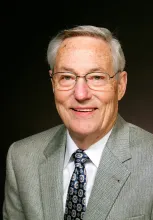
At the time of his retirement in 2016, Roy Holladay was serving the Operation Manager for Ministerial and Member Services of the United Church of God. Mr. and Mrs. Holladay have served in Pittsburgh, Akron, Toledo, Wheeling, Charleston, Uniontown, San Antonio, Austin, Corpus Christi, Uvalde, the Rio Grand Valley, Richmond, Norfolk, Arlington, Hinsdale, Chicago North, St. Petersburg, New Port Richey, Fort Myers, Miami, West Palm Beach, Big Sandy, Texarkana, Chattanooga and Rome congregations.
Roy Holladay was instrumental in the founding of the United Church of God, serving on the transitional board and later on the Council of Elders for nine years (acting as chairman for four-plus years). Mr. Holladay was the United Church of God president for three years (May 2002-July 2005). Over the years he was an instructor at Ambassador Bible College and was a festival coordinator for nine years.
