

Rick Shabi
This transcript was generated by AI and may contain errors. It is provided to assist those who may not be able to listen to the message.
Very beautiful, nicely done. Thank you, ladies. We appreciate that. One other thing I wanted to bring to your attention is that Camp Koutubik, the summer camp system—I don't really like that name. I always want to call it Camp Koutubik. But Camp Koutubik, up north of Dayton area, is going to be starting tomorrow. So tonight, they're having staff information and staff orientation. Mr. and Mrs. Finchel have gone up to oversee that program, and it should be a really nice time. I would have 119 campers, I believe, coming for that. So they would appreciate your prayers for safety and for everything to go well. We have some of the campers still here going up to it, and so certainly please remember them as the summer camp season kicks off. One of the most oft-asked questions that Christians pose is, why was I called? I mean, when you think about the Feast of Pentecost, picturing that only a small harvest—it's a first-fruit harvest— and I don't care whether it's wheat or barley, I don't care if it's tomatoes, I don't care if it's olives— first-fruits are always small. And so what we discern from Pentecost is that God is not calling everybody now. But why were you called? Why can you see things that other people don't see? Why are your eyes blessed to be able to see when other people can't?
I remember coming in after reading the booklet, Why Were You Born?, I came in so excited to my dad, and I was a teenager, and I said, Dad, look, we can actually be part of the family of God. Look what it says here, 1 John 3, verses 1 and 2. And my dad, he heard me out. He was very kind and very gentle. Okay, son. And he went back to watching TV. To me, this was such a monumental discovery. And for him, it was like, okay, son, thank you for interrupting my program, and I'll go back to your reading or reading or whatever.
Why were you called? Sometimes people say, well, I know lots of people that are better than I am. I know lots of people from my school. I know lots of people from my work. I know lots of people from my neighborhood who aren't called. What about your calling? Why did God call you? Sometimes people say, I think God made a mistake when he called me. I'm a mistake. Let me assure you, you're no mistake.
Let me answer a number of questions that people have about your calling and also understand the difference between being called and being chosen. We sometimes, as a church, interchange them. We say, well, he's been called. We many times mean he's been chosen. But there is a difference between being called and being chosen. So we want to understand the difference there as well. 2 Peter 3, verse 9. We know that God wants to give everybody a chance. We find it here in this writing by the Apostle Peter.
2 Peter 3, 9. The Lord is not slack concerning his promise as some men count slackness, but is long suffering toward us, not willing that any should perish, but that all should come to repentance.
God doesn't want anybody to miss out. So that tells you everybody has to have a chance to be called. But when will they have that chance? is the question. 1 Timothy 2.4. We also read this. That God is desirous that all people have a chance. 1 Timothy 2.4. Who will have all men to be saved and to come to the knowledge of the truth. That necessitates a calling by God for them to have that opportunity.
Remember Matthew 13. And I'm not going to go there, but just a parables that Jesus Christ was asked. Why do you speak to them in parables? He said because I don't want them to see right now. I don't want them to understand. Really? I thought Jesus Christ came to save the world. Not yet. He did, but not yet. But some people are called now. Why is that? Romans 11 verse 29. Did God make a mistake? Romans 11 and verse 29. I'm reading mostly out of Old King James, but I modernize it as I go along so it doesn't sound like I'm speaking King James English.
But it is the Old King James version. Romans 11 verse 29, we read this, For the gifts and calling of God are without repentance. Now let me read this out of amplified version. I had a number of different translations, and many of them will say, God's calling is irrevocable. God did not make a mistake. Listen how amplified version of the Bible puts it. For God's gifts and His call are irrevocable. He never withdraws them when once they are given. He does not change His mind about those to whom He gives His grace, or to whom He sent His call.
He never changes His mind about it. He decided to call. It wasn't a mistake that you were called. God's calling is without repentance. So God did not make a mistake. Now the main word used for call is kaleo. It's 2864 in Strong's Concordance. Kaleo. It means to call forth. Sometimes it means to just call something that. But oftentimes it means a calling. So if three newspaper boys are walking down the street, one's carrying the Wall Street Journal, one's carrying the Christian Science Monitor, and the other's carrying the New York Times, God forbid.
But anyway, they are. The three of them walking down the street, and you say, newspaper boy or newspaper! Now maybe all three of them heard you. Maybe the New York Times says, I don't need to go back. Maybe the Wall Street Journal says, well, maybe.
And maybe the Christian Science Monitor says, yeah, I think I will. I'll turn back. And they respond. All three heard you. Now maybe only one of them heard a certain sound. Maybe they all heard sounds. But maybe only one responded. It's a calling. But the calling does not necessarily mean the choosing, because that's a different matter, as we will see later on.
How does a person get to be called anyway? How are you called? John 6, verse 44. John 6, verse 44. God had direct involvement in your calling. John 6, verse 44. No man can come to me, except the Father which has sent me, draw him. Jesus Christ said, you can't just choose to be a Christian today. I have to call you. God the Father has to be involved. Except the Father which has sent me, draw him, and I will raise him up at the last day. So people don't just sigh. That's why the Bible says none can seek after God. There's no one that seeks. Because God has to call you and draw you now.
And when he draws you, then you seek after him. But without that calling, it's like trying to understand Russian. Which most of you don't, and I don't either. It's trying to understand a different language which we can't understand. Verse 65 says the same thing. John 6, 65. And he said, therefore I said to you that no man can come to me, except it were given to him of my Father.
God has to do the drawing and the calling. The calling comes from him. Acts 2, verse 39. Amplifies this. Acts 2, verse 39. After he talks about repent and be baptized in Acts 2, 38. Verse 39, he says, For the promise is to you, the promise of what? The Holy Spirit, the promise of what? Eternal life. The promise is to you and to your children, and to all that are afar off, even as many as the Lord our God shall call. God has to call you. So how does it begin? God has to call you. He has to draw you. It's interesting, in Luke chapter 14, verse 16. Luke 14, verse 16. Luke 14 is the chapter of count the cost. But prior to counting the cost, we have something, a section here. Luke 14, verse 16. This parable, the Great Supper. That some people are called, but they don't respond. Some people are called, they've got excuses. Look at the excuses that are offered here. Luke 14, 16. He said to me, A certain man made a great supper, and invited many, bade many. So this invitation goes out, and you can actually find the word, bidden to come, is the same word, stems from kaleo. It means to call. It means to draw, to invite. He sent his servant at supper time to say to them that were bidden, that were invited, that were called, come, for all things are now ready. So, we're getting ready for this gigantic supper, some liken it to the wedding supper at the end, the marriage supper of the Lamb. But anyway, they're invited to this supper, and the parable, I don't always assume, it's going to be the wedding supper. But nonetheless, there's a great supper. Verse 18, And they all, with one consent, began to make excuse. They began to excuse themselves. The first said to him, I have bought a piece of ground, and I must needs go and see it. Now tell me, how many times do you buy some property that you've never seen?
I bought this property, and I've got to go look at it. Oh, come on. You haven't looked at it before you buy it? What are you buying, Swampland? What are you buying, the Brooklyn Bridge? What are you buying that you haven't even looked at yet? See, it's an excuse. That's what he's giving. I must needs go and see it. Have me excuse. I can't come. I'm not going to respond to this call. Verse 19, And another said, I've bought five yoke of oxen, and I go to prove them. Who buys oxen that are supposed to be pulling your cart, helping you plow the fields, and you don't even know what they're like? They may be wild. They may be old nags. They may be ready to kick the bucket, or kick themselves, or whatever. They might be ready to die. Who buys oxen that doesn't even go check them out first? Look at their teeth. Do their teeth look good? Yeah, okay. I don't have to call the dentist for them in the next few weeks or months. But the point is, I bought five yokes of oxen. I have to go prove them. Please have me excused. So lots of excuses for being called when they're being called. Verse 20, and another said, I have married a wife, and therefore I can't come. I got married. Well, bring her along. See, it's an excuse. God says, I called you, and you didn't respond.
So the servant came, and he showed his Lord these things. Look at all these people. They're flaking out on you. Then the master of the house, being angry, said to his servants, Go out quickly into the streets and the lanes of the city, and bring in here the poor, the maimed, the halt, and the blind. When can God reach most people when they have a need?
When they're down, when they're hurting, when they're in trouble, when they're about as low as they can get, in many instances, when nothing seems to be working out for them, when they have a tragedy, when they're sorrowful, when they're hurt, God seems to be able to reach them. Or when they've discovered some things and have some turmoil in their lives over what they're going to do. God seems to be able to reach them. So he says, Go, go, go, reach out to these people. And the servant said, It's done, and there's still more room.
We haven't filled the banquet hall. And verse 23, And the Lord said to the servants, Go out into the highways and hedges, and compel them to come in, that my house may be filled. Go out and draw other people in. And I take it that his own people would not come. They made excuses. But when they went out to the highways and byways, they reached the Gentiles. Till the full compliment, God is calling enough people now to do his work. For I say to you that none of those men which were bidden shall ever taste of my supper.
And add to this a parallel account, which goes into more detail in some areas. But in Matthew 22 and verse 14, here's how this parallel account ends up. I think it's instructive to read this. Matthew 22 and verse 14. Same account. You can read the full account of the Jews from Matthew 22 verse 1.
And it's a parallel account, but he gives more details there. But notice at the end, verse 14. For many are called, but few are chosen. Many are called, but few are chosen. Isn't that interesting? The calling goes out to a lot of people, and that's a calling. But your response to that calling is being chosen. And we oftentimes say, have you been called? And we really mean, have you been called and chosen?
Not have you been called. Now we'll come to see how people are called, but take a look at Romans 8 verse 28, one of our favorite scriptures. Romans 8 verse 28 and 30. Romans 8 verses 28 and 30. We're seeing how does a person get to be called, and then we're going to see the type of people that God calls. Romans 8, 28. And we know that all things work together for good to them that love God, to them who are the called according to His purpose. Now in this case, it means the called and chosen, really.
All things work together for good to those that are the called. Notice verse 30. Moreover, whom He did predestinate. And predestinate does not mean your fate is decided when you start is decided. It means to set out on the path ahead of time. It does not say, here's the end of the path.
Prorizo means to set out on the path ahead of time. So you get to run in the first heat, not the sixth heat of the 100-meter dash. You get to start out first. But it doesn't mean others not are not, but you put you out first. And so he says, Moreover, whom He did predestinate, them He also called. Those are the ones He called ahead of time. And those whom He called, He also justified. Called and chosen, then they become justified.
That means forgiven. And when He justified them, then He also glorified. If they keep on going, make it at the end, they will be glorified as well. So again, chosen. Chosen what? Before the foundation of the world. God had a plan to call out a certain number of people individually. I doubt that. Could God do it? God could do anything He wants. We don't tell God, You can't do that. God can do anything He wants.
But we generally say that predestination has to do with the group. God is calling out a certain number of people to do His work now, as we will see. All right, let's take a look at 2 Thessalonians 2, verses 13 and 14. This is very crucial on why and how people are called. I have it marked as a key scripture. 2 Thessalonians 2, verses 13 and 14, on how are we called? 2 Thessalonians 2, verses 13 and 14. But we are bound to give thanks always to God for you, brethren, beloved of the Lord, because God has from the beginning chosen you to salvation through sanctification of the Spirit and belief of the truth, whereunto He called you. How are we called? Here it is. He called you by our gospel to the obtaining of the glory of our Lord Jesus Christ. How are people called by God through the gospel, through the message going out, through letting them know there's a better world in store for this world, which is decaying and dying and rotting and fumbling and stumbling and bouncing around. God has a better world in store, and that's what the gospel's about. It gives people hope. That's what the gospel's about. It's about people saying, you know what? There is a reason to hang in there. There is a reason to keep going. There is a reason to change, because there's hope. And so He's called us by His gospel. That's why it's so important for this message to go out. That's why it's so important to get that message out. God calls them. He calls them. Newspaper, boy! But I don't want to go back. I've already sold enough newspapers. That guy's far away. I'll go up this other direction. It doesn't come back. But at least the message goes out to try to reach as many as possible with the good news. We are called by God through the gospel. Now, you see, the normal carnal mind cannot understand is enmity against God, Romans 8-7. The carnal mind is enmity against God. It's not subject to the law of God. Neither indeed can be. So those people aren't going to hear. The message goes out. They aren't going to hear. And they certainly are not going to respond. All they hear is a sound. It takes God's Spirit to open their minds and make them aware of truth. These things are only spiritually discerned by having the Spirit of God.
So it takes God's calling and God's choosing for people to even understand. God has to work with them. He has to open their mind. His Spirit has to work with them to soften their hearts, to bring them to real repentance.
Children are special.
Do you realize that children of converted parents, or one converted parent, are already in the stage of being called?
They don't have to wait for an Apostle Paul situation. They don't have to wait to be struck down. They don't even have to wait to go through a lot of trouble. They're already in a called condition. It does not mean they're in a chosen condition. They still have to make up their minds.
The Apostle Paul mentioned this in 1 Corinthians 7.14. Your children are wholly set apart if just one member of the family is converted.
Just one member means the kids can have a chance. They still have to respond, but they don't have to wait for a special call. They're already in a called condition.
Now the types of people God calls. Matthew 9, verses 10-13. Matthew 9, verses 10-13. Is it clear so far? Matthew 9 and verse 15. I'm trying to go through this a little more rapidly than I would.
It came to pass as Jesus sat at meat for dinner in the house. Matthew's house. Behold, many publicans and sinners came and sat down with him and his disciples. And when Pharisees, the Pharisees, saw it, they said to his disciples, Why does your master eat with publicans and sinners?
Why is he eating with those people? Those people have trouble. See, you can be a critical, condemning person. You can be a person who is judgmental. All you do is look to criticize. That's a horrible life. Nothing ever satisfies. The most beautiful music in the world, one of the most beautiful movies, sound of music. And you pick at having nuns in there.
Because you're critical. Those nuns are singing. So, nuns can produce beautiful music, too. Even though you may not be for the Catholic Church. That doesn't make it wrong. Catholics are good people, too. They can sing, too. Now, we're not talking about our view of spirituality and Christianity, for sure. We understand. We are not Catholic. But because they're in there, does that make the movie horrible? Well, if you're judgmental, yeah. Because you're looking to criticize. You look to criticize. You look to judge. It's not a matter you're judging between right and wrong.
You look to judge. God hasn't called us to be judges. He's called us to follow the law, not judge with the law. Verse 12, And when Jesus heard that, He said to them, They that behold need not a physician, but they that are sick. And when you're sick, you need a doctor.
But, hey, you know what? You guys don't need a doctor. You think you're so good. But notice verse 13, But go and learn what that means. I will have mercy and not sacrifice, For I am not come to call the righteous, Call the righteous, And notice, those who think they're righteous, But sinners to repentance. So whom is Jesus Christ calling people Who will recognize the sin in their lives? Not people who don't recognize it, Because all of sin comes short of the glory of God.
Notice 1 Corinthians chapter 1. 1 Corinthians chapter 1, we'll start with verse 24, And we'll read on through to verse 31, Because this talks about whom God is calling. 1 Corinthians 1 verse 24, He says, But unto them which are called, Both Jews and Greeks, Christ the power of God, And the wisdom of God, Those who are called, Verse 25, Because the foolishness of God is wiser than men, And the weakness of God is stronger than men. God does what He wants. God calls whom He will. God calls those who will respond.
God does call the downtrodden. And remember, in the world, there were 60, 6-0, million slaves in the Roman Empire during that time that the Gospel was going forth in that first century church. 60 million slaves who were told they're nothing, worth nothing, worthless, had no hope. And the Gospel says, oh yeah, you can have hope. Oh yeah, you could be in God's kingdom. In fact, one day you might even be over your master.
And when masters came to church, some of their slaves who were allowed to go to church could have been deacons, and they would tell the master where he could sit. When they went back, the master would tell them what to do. So it was an interesting time, but he says in verse 26, For you see your calling, and this is kleitos or klesis, same root word, You see your calling, brethren, how that not many wise men, it doesn't say there aren't any wise men, are after the flesh, not many mighty, not many noble, we could have, we've had men who've been generals or colonels in the military, we've had men who've been high up in various positions, we've had men who've owned, you know, million-dollar businesses coming to the church.
I would call them, you know, mighty. Not many, though, not many. Most are not that way. Not many noble are called. We don't have very many earls and knights and sers and so on in the church. We don't. We might have a few. Not many. But God has chosen the foolish things or ones of the world to confound the wise. God has chosen the weak ones of the world to confound the ones that are mighty. And I might add, God calls us as weak, but God does not expect us to stay that way.
God wants us to become the best we can be. He wants us to grow and overcome, and that's why we have unleavened bread to picture putting out sin and putting on righteousness and putting out our flaws and putting on goodness and good character. That's why we have spokesman clubs, and that's why we have young men's Christians club and so on to try to help people knock the edge off of us and help us to be better than we once were.
So God doesn't go, okay, I'm just out here, and God's called me, I'm a slob, I remain a slob, I stay a slob, and God's going to save me as a slob. No. God wants you to quit being a slob. But He may have called you when you were a slob, because you had nothing else to look up to, nothing else to look forward to.
So He says He's called the weak ones of the world to confound the ones which are mighty, and the base ones of the world, and ones which are despised, as God chosen. Yes, and things are ones which are nothing to bring to nothing, the ones that are, that no flesh should glory in His presence.
Yeah, I got to be called because I was so good. You didn't get to be called because you were so good, you got to be called because God was gracious, that no flesh should glory in His sight, but of Him that are, but of Him are you in Christ Jesus, who of God is made to us wisdom, righteousness, sanctification, and redemption.
How do you put on all these? By having Christ in you. That according as it is written, He that glories, let Him glory in the Lord. So the types God calls are those who are willing, and those who are willing are usually those who are down and out. Now, why were you called? Why were you called? Just a few scriptures. There are a number of scriptures that I could give to you.
1 Timothy 6 and verse 12. Some of them are similar, so I'll skip over some. Notice what He says in 1 Timothy 6 verse 12. Paul writes this. Fight the good fight of faith. Lay hold on eternal life, whereunto you are also called. You and I have been called to eternal life. Called to eternal life to have a part in God's kingdom for all eternity, and have professed a good confession before many witnesses. So we're called to eternal life.
1 Thessalonians 2 and verse 12. 1 Thessalonians 2 and verse 12. He says that you should walk worthy of God, who has called you to His kingdom and glory. So God has called us. He wants us to have a part in His kingdom and His glory. 2 Thessalonians 1 verses 10 to 12.
2 Thessalonians 1 verses 10 to 12. God wants us also. He's called us to do a work. 2 Thessalonians 1. So a lot of people say, why does God call me now? Won't it be easier for people in the millennium? Probably. They won't have the world, and they won't have Satan against them. They will still have themselves to fight and resist and overcome. You're right. Two out of them. Why has God called us now? Because God wants a work to be done now. He wants a warning work. He wants a witness to be shown to the world that there were people there on that earth who did follow my ways, who made it through, who found a way around obstacles, who were able to keep my way in the midst of a crooked and perverse world.
2 Thessalonians 1.10. When he shall come to be glorified in his saints and to be admired in all of them that believe, because our testimony among you was believed in that day, wherefore also we pray always for you that our God would count you worthy of this calling and fulfill all the good pleasure of his goodness and the work of faith with power. God has called us so that we might help and join in that work of faith, that the name of our Lord Jesus Christ may be glorified in you and you in him, according to the grace of our God and the Lord Jesus Christ. So God has called us. Jesus Christ himself said, My food, my meat, is to do the work. He said, You must work the works while you're still there. John 4.34. He talked about doing the work. Look at John 4 and verse 34. This does not have call in it. But John 4 and verse 34, we read this. Yeah, this is the one. Jesus Christ said, My meat is to do the will of him that sent me and to finish his work.
And if we're doing what Jesus Christ did, we've got to finish the work. That's what we've been called to do.
Take a look at Colossians 3 and verse 15. We're called to be in one body. Colossians 3 and verse 15. And let the peace of God rule in your heart, to which also you are called, you're called to be peaceful, in one body. And be thankful. God does not want separation. He does not want division. He does not want splitting up. You're called to peace in one body. God wants to see unity. That's his wish and that's his desire.
1 Thessalonians 4 and verse 7. We're also called to be holy. We're called to live a life that's godly and holy. 1 Thessalonians 4 and verse 7. For God has not called us to uncleanness, but to holiness. God has called out a people to live his way of life. God has called out a people to be an example to the rest of the world.
1 Thessalonians 4 and verses 1-4. So easy to look at some of the other areas here and miss the word calling.
2 Therefore the prisoner of the Lord, I therefore the prisoner of the Lord, beseech you that you walk worthy of your vocation, or your calling. 3 Walk worthy of your vocation wherein you are called. We are called to be Christians. That's your vocation. 4 Your avocation is your job, your family, your community. Your job is being a Christian.
5 With all lowliness and meekness, with long suffering and forbearing one another in love, endeavoring to keep the unity of the Spirit in the bond of peace. 6 There is one body, one Spirit, even as you are called, in one hope of your calling, one Lord, one faith, one baptism, one God and Father of all, who is above all, through all, and in you all. So, again, our calling, God has called us to be in one body. God has called us to be His representatives. God has called us to walk in lowliness and meekness. God has called us and made it important enough that we strive to have that unity and that peace.
2 Timothy 1 and verse 9. We are called according to God's purpose. 2 Timothy 1 and verse 9. Now you have a holy calling. He saved us and called us with a holy calling, not according to our works, but according to His own purpose.
Does God have a purpose for you and me? Does God have a reason for having called us? Is there something He wants us to do with this calling, rather than just say, I'm called? And remember, we often use the word called as Christians among ourselves to really mean called and chosen.
But you've got to be called and chosen, not just called, but called and chosen. But He says here, according to His own purpose and grace, which was given us in Christ Jesus before the world began. So God purposed to have a people here, a people who would walk with Him, a people who would walk for Him, a people who would walk in Him so that He might do the job for Him.
So we've seen why we're called. Why are we called? We're called to eternal life. Why are we called? We're called to the Kingdom. Why are we called? We're called to be holy. Why are we called? There's even a scripture in Galatians 5, 13. It talks about you being called to liberty. Called to liberty. Called in one body. Called to serve others. To not serve others in a right way. Called to be unified. Called for His purpose. What is His purpose, then? How do we fulfill our calling? And I can answer that very easily by doing the work and by growing in godliness. Doing the work and growing in godliness. Matthew 28, verses 18-20.
Before He left this earth, Jesus Christ gave His disciples a commission. And I believe here's the commission. And if we are His disciples today, then this message, which was written for them, applies to us as well. Matthew 28, 18. Jesus came and He spoke to them, saying, All power is given to Me in heaven and in earth. Now here's an order from your boss who called you for His purpose. What is His purpose? He says, Go therefore, teach all nations, baptizing them, actually make disciples of all nations, baptizing them into, better word, the name of the Father, the Son, and the Holy Spirit. We know we always do it in the name of Christ. Verse 20. Teaching them to observe all things.
We have a job to do whatsoever I have commanded you. And lo, I am with you always, even to the end of the world. Amen. In Mark's account, he says, preach the gospel to every person. Preach the gospel to every person. That's the purpose for being called. God called us now to do a job. If God wanted to call us when there was an easier time, He could have waited till the millennium for us.
He could have waited till the second resurrection for us. But instead, He called now to do a job, to do a work. 2 Corinthians 6 and verse 1 says we need to work together. 2 Corinthians 6 and verse 1 talks about being workers together with Him, God's purpose for us to do the job. And by the way, the Pentecost offering was wonderful. While the attendance was down from last year, the offering was percentage-wise up. So it was very good. As opposed to last year. So we continue in these economically difficult times. We continue to be blessed. We continue to reach out and give those blessings to others too. 2 Corinthians 6 and verse 1. We then, as workers together with Him, God has called us to do a work. Beseech you also that you receive not the grace of God in vain. That you don't receive God's graciousness toward you in vain for nothing. But that you receive that graciousness that you may pass it on to others by doing the work. 2 Peter chapter 1. 2 Peter chapter 1. We are also called to grow. Because if all I do is do the work, if all I do is spend my time doing the work, and do not spend my time with my family, do not spend my time with my personal growth in growing in godliness, then I am going to be left out. I may do a lot. Lord, didn't we do this for you? God says, who are you? I don't know you. When did you pray last? When did you study last? When did you draw growing character? Oh yeah, you did a lot of physical things, but I don't know who you are. That's personal growth in character. 2 Peter chapter 1 verses 3 to 10. I'm going to read this out of Amplified. You can follow me. He adds a little more of the meaning of the Greek words as we go through. 2 Peter chapter 1 and verse 3.
3 So that through them you may escape by flight from the moral decay, that's the rottenness and corruption that is in the world because of covetousness, that's lust and greed, and become sharers, partakers of the divine nature. 4 For this reason adding your diligence to the divine promises employ every effort in exercising your faith to develop virtue. So he's adding this ladder of needs. Excellence, resolution, Christian energy.
5 And in exercising virtue, develop knowledge or intelligence. And usually it's practical knowledge. 6 And in exercising knowledge, develop self-control. 7 And in exercising self-control, develop steadfastness. That's patience and endurance.
8 And in exercising steadfastness, develop godliness or piety. 9 And in exercising godliness, develop brotherly affection. 10 And in exercising brotherly affection, develop Christian love. These things are added. This is working on you.
If more people worked on themselves and less on others, they would be happy puppies.
If they worked on themselves instead of on others, they would be happy puppies. Because they would have this ladder of virtues that would enable them and characteristics to deal with the problems of life.
8 For as these qualities are yours and increasingly abound in you, they will keep you from being idle and unfruitful to the full personal knowledge of our Lord Jesus Christ, the Messiah, the Anointed One.
9 For whoever lacks these qualities is blind, spiritually short-sighted, seeing only what is near to him, and has become oblivious of the fact that he was cleansed from his old sins. He's forgotten. He repented of those things that he needs to keep them out of his life.
10 Because of this, brethren, be all the more solicitous and eager to make sure that is to ratify, to strengthen, to make steadfast your calling and election.
Make sure your calling and your election you're choosing. For if you do this, you will never stumble or fall. 11 Thus there will be richly and abundantly provided for you an entry into the eternal kingdom of our Lord and Savior, Jesus Christ.
12 If you do these things, you will never fall. I call it God's eternal life insurance plan. I may give you a whole sermon on that one of these weeks on God's eternal life insurance plan. If I could give you a plan that would help keep you from ever falling away, how much would it be worth to you? Would you buy it? Would you know you have guaranteed eternal life?
He says if you do these things, you'll never fail. Old King James puts it this way. Wherefore the rather, verse 10, brethren, give diligence to make your calling and election sure. For if you do these things, you shall never fall. You'll never fall away because you're doing the right things.
Now finally, in conclusion, we've seen our calling. We've seen that God's not calling everybody now. We've seen how a person gets called by God through the Gospel, through the message. That it's God's calling that counts. That he says, go to the highways and byways of need be and bring people in. That God calls us through the Gospel, through that message going forth, and that you cannot understand it without God's Spirit working with you or his. That you cannot understand it without God's Spirit working with you or in you. That children are called special because they're children of people who are already called and elected. We've seen the types God's calls, the people who are willing to look up, not the willing people who look down. It's a difference. I read a comment that you only look down on people when you want to help them up.
Not look down on them because you're better than them. I put my head back like this when I talk to you. How does that make you feel? Okay, brethren, what am I looking at? I'm looking at the ceiling. I don't even see you. I'm talking down my nose at you. They say, talking down your nose. You would call that a snob.
Looking down is a nose at you instead of looking at you, with you. Big difference. Make your calling and election sure. Type God calls, people who are willing to look up. Why are you called? You're called to eternal life. You're called to hope. You're called to His kingdom. You're called to holiness. You're called to do a work. And how do you fulfill your calling? By being engaged in doing the work. By praying for the work. By contributing to the work. By your wonderful example, personally, to all the people you come in contact with. You're reaching them with the gospel. By helping the church move forward. Some actually get involved doing the work. Come here and help count the offerings, help stuff envelopes, and do different things like that as well. And you also want to fulfill your calling by working on yourself. By adding that ladder of virtues into your life, which says, I'm working on me. Not just working on others. Not just working for others, I'm working on me too, because I want to be in the kingdom. I don't want to just help others be there and be cast out. God said, I don't even know who you are. Philippians 3, verse 14. Last scripture. Philippians 3, verse 14. You know where I'm going with it, if you know what this scripture means. It says, Philippians 3, 14. It says, I press toward the mark for the prize of the high calling of God in Christ Jesus.
Press toward that mark, because truly you and I have been given a high calling. I hope that helps you understand why God has called you now.
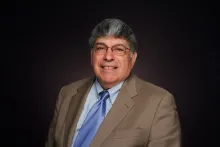
Gary Antion is a long-time minister, having served as a pastor in both the United States and Canada. He is also a certified counselor. Before his retirement in 2015, he was an instructor at Ambassador Bible College, where he had most recently also served as Coordinator.
