
Don Ward
This transcript was generated by AI and may contain errors. It is provided to assist those who may not be able to listen to the message.
A title that I would like for you to have would be, My Philosophy of Life. My philosophy of life. And you in first person would say, My Philosophy of Life. Do you have a burning desire to be in the kingdom of God? Everybody here would probably say, Yes! Do you have an intense desire to succeed? Do you know what you believe and why you believe it? Sometimes I wonder if the second, third, fourth generation Christians are sort of swept along by the culture of, This is what we've always done.
And if they think a sort of a better-looking opportunity comes along, maybe we'll jump on that train and ride it a while. Are you drifting on the sea of life? Do you have a clear, vivid picture of why humans were created? Do you have an intense burning desire, burning in your heart to fight for what you believe in and to live by your convictions? These are some of the questions that each one of us needs to ask ourselves very personally and seriously think about it.
To discuss it with our wives, with our children. Do you have a plan for your life or do you just play it by ear and react according to the emotion of the moment? You may have great talent and great potential, but you lack a philosophy of life, a roadmap for life. We have a roadmap for life.
Here it is. We all have access to it. The Word of God. Do you know what is of value and what isn't? Can you distinguish between friend and enemy? That has been one of the great weaknesses of the people of God throughout the ages to distinguish between friend and enemy. Eve could not distinguish between friend and enemy in the Garden of Eden.
So she was deceived. Most people, and this includes people of all ages and backgrounds, do not know what they are fighting for. Do not really understand why they're here. They're just going with the crowd, floating along. And we could ask ourselves, am I one of these? Or am I solidly planted in the truth of God and know and know that I know? So today I want to help all of us begin to seriously think about developing a complete philosophy of life.
Complete philosophy of life. All dimensions. I want to talk with all ages, young and old, because regardless of your age, you probably have not developed a complete philosophy of life. Now, if you were asked a specific question about X, Y, or Z, most could probably give a pretty good answer, but have you ever just sat down and systematically written it out? I think you'll find it being quite a challenge. At the end here, I'm going to read my philosophy of life and education.
Of course, it's a shortened version. Give an idea of what you might include, and it's something that's like what they call dynamic. That would be not just stale, because hopefully we would grow. It would change to some degree, but the core would remain the same. So what do I mean by complete philosophy of life? It is what you believe in, what you are convicted of, what you're committed to, what you would have the courage to die for, the three C's, conviction, commitment, courage, and can you give a coherent answer to the great questions of life?
So I've given you a handout there, and I want you to look at that handout, please. 15 of the great questions of life. Of course, this is not an all-inclusive list, but it is some of the greatest questions that people have grappled with through the ages for thousands of years. Does God exist? What is truth? Apart from revelation, what do you believe is the greatest proof of the existence of God? Who is God? What is God? What is His purpose? Who is man? What is man? And what is His purpose? Every person in this audience that can read needs this handout in their hand.
They need to be following along. I don't care how old you are. This is a time for us to really get with it. Who is man? What is man? What is His purpose? Does man have an immortal soul? Of course, that damnable doctrine of the immortality of the soul is at the heart and core of virtually all false religion.
What is the path to eternal life? So many assume they already have eternal life. What is good? What is evil? Who decides? What is the nature of the universe? Is there purpose? Are we free to choose? Fate versus free will? Which is supreme? Man or the state? What should be the purpose of education? Which is greater? Mind or matter? Where do we get our ideas? Who will rule in your life?
I mean, to sit down and systematically answer each one of these questions, and if you do it and spend time with it, it would be very difficult for you to be thrown off track. These questions are relevant to the life of every person here today. In fact, these are the core questions. It's what the whole purpose of human existence revolves around. There have been four basic systems that have attempted to answer the great questions of life.
True religion, or the truth of God, would be a better way to say it than true religion. The truth of God, what God has revealed to human beings from the Garden of Eden to the present time. Another system that has tried to answer the great questions of life is philosophy. The chief methodology is human reasoning apart from God. Another great system that has tried to answer the great questions of life, of course, is false religion. Its methodology is subtlety and deceit to appeal to the emotion, to appeal to vanity. Another system is science, which has become the ostensible God of the Western world, that science is going to solve all the problems.
The great minds through the ages have grappled with these questions that you hold in your hand. Those 15 questions, which are not, as I said, all-inclusive. The beauty of being called into God's marvelous light is that regardless of your age or educational background, and I know that two-year-olds and maybe six-year-olds or eight-years-olds can't completely understand it, but they can begin to have an idea of who made the earth, who made the sun, who made the moon, and so on and so on.
The beauty of being called into God's marvelous light is that regardless of your age or educational background, you can know the answer to all of these questions based on the Word of God. The great minds of the ages have grappled with these questions. Volumes and volumes of books have been written. They're still being written today, and man continues to search for it and cannot find it. Ever learning what Paul wrote to Timothy in 2 Timothy 3, ever learning and never able to come to the knowledge of the truth. In a philosophy of life, you not only state what you believe, but just as importantly, why do you believe it? That's why I ask the question about our second, third, fourth generation. We've always gone to church on the Sabbath. Why do we go to the church on the Sabbath? What is the purpose? What is the Sabbath all about? What is it symbolized? Everything that surrounds the Sabbath.
Oh, we always go to the feast. Why? And we could go on and on with the various questions. Of course, the questions in the generic greater core sense are in this right here. I don't know if the word greater is proper, but it's not sufficient just to say because God said such and such and expect everybody to accept your belief or even be convinced yourself. If you've just sort of gone along with the family, the culture, the way it is, it's what we've always done. And then something or somebody comes along and you give it all up, sometimes for the flimsiest of reasons you can imagine. So let's understand a few important points up front. God's law is perfect. It is holy. It is spiritual. For anybody to even enter into a debate of whether or not the law of God is done away with, that is insanity of the first degree. Because the whole structure of humanity's relationship to God and to others is based on whether or not there is some foundation for it.
They even talk about Jesus Christ coming and saving you from your sins without having some kind of basis for saying, well, what is sin? I mean, what is that?
So let's look at what the internal evidence says here. Psalm 19. Psalm 19 verse 7. And Psalm 19 and verse 7. Psalm 19 verse 7, the law of the eternal is perfect. It is perfect. It is God's law. If God is who he says he is, he says he's perfect and he exhorts us to become perfect as he is perfect. Matthew 5.48. The law of God is perfect. Now, people claim that they worship God. Of course, more and more God the Father is left out of the equation as if, sort of in the background, and it's all about Jesus. Of course, Jesus is necessary. But why did God send Jesus to the earth? Why was the Word made flesh and dwelt among us? And Jesus became the first begotten of God. Because humans were created subject to sin and death, and if the penalty for sin had not been paid, they would die the second death from which there is no resurrection. So to talk about worshiping God and Jesus Christ, if there's not a basis for it, it makes no sense.
So there has to be some standard whereby you go. You base things on. This says the law of God is perfect. The law of God is perfect, converting the soul, the life essence. The testimony of the eternally sure, making wise the simple. The statues of the eternal are right, rejoicing the heart. The commandment of the Lord is pure, enlightening the eyes. Now we go to Psalm 100. Psalm 100 in verse 7.
Psalm 100 verse 7.
I have the wrong song written down here. Let's go on to the next reference I have here. I hope it's right. Well, I know this one's right.
Romans 7 in verse 14. Romans 7 in verse 14. The law of God is perfect, converting the soul. Now to Romans chapter 7. Let's start in verse 10 and read up through 14. In Romans 7 and verse 10.
The law was ordained to life. It was ordained to life. But Adam and Eve were told that in the day that you disobey, you're going to begin to die. It was ordained for life to sustain life. It doesn't give life, says it clearly in Galatians.
Why? For sin, taking occasion by the commandment, deceived me, and by it slew me. Why did it slay him? Because the wages of sin is death, but the gift of God is eternal life through Jesus Christ our Lord.
Romans 6.23. Wherefore, the law is holy. It has God's active presence within it. And the commandment holy and just and good. Was then that which was good made death unto me? Was it the law itself that did it? No, it wasn't the law. It was ordained for life. God forbid. But sin, because I disobeyed, because I broke the law, that it might appear sin working death in me by that which is good. That sin by the commandment might become exceedingly sinful. So you know through the law of God, you know what it is that is what is right, what is wrong.
See, one of the great questions of life. What is right, what is wrong? Do you know the difference between what is right, what is wrong? So many people today, they struggle with what is right, what is wrong. I mean, if you're still struggling with what is right, what is wrong, you are indeed obeyed. Because we should have our senses exercised, as it talks about in Hebrews, our senses exercised to discern good and evil. Continue in Romans 14, for we know that the law is spiritual.
The law is spiritual. It is not material. It is perfect. It will not, cannot, never will be, done away with, but I am carnal and sold under sin. In John 6, 63, the flesh profits nothing, it is the spirit that quickens. The words I speak, they are spirit and they are life. So, I mean, do you have that core that God has communicated to us through His perfect mind, through His perfect law, through His perfect wisdom, His perfect love, His perfect concern, and we could go on and on with His perfection as the perfect teacher about His law.
How can so-called, brilliant in the intellectual sense, high IQs, degrees from the so-called great theological institutions of the world, not understand the very basics about God and His law? God's immutable spiritual law sustains life. God is perfect. God is light. God is righteous. God is love. Why? Because He lives by. He is His law in that sense. He is a perfect example of it. We are supposed to be a reflection of it.
And of course, in resurrection, we will be as He is in resurrection. I guess you could say that God would still have eternal life if He broke His spiritual law, but He would no longer be a source of light and life. He would become darkness as Satan. Satan would be cast into outer darkness to wander forever and ever, according to Jude, verses 6 and other verses, and 2 Peter as well, verse 2.
So the wages of sin is death, as we've already mentioned, but the gift of God is eternal life through Jesus Christ our Lord. Now the wages of sin is death, and that means eternal death, the second death, from which there is no resurrection unless we repent and receive the Spirit of God and have God's immutable spiritual law written on our inward parts, which He will do through His Spirit.
So God says that He is the eternal, I change not. Maybe we should turn there. People often quote this scripture. Look at that Malachi 3 and verse 6. People misquote this and quote it out of context and apply it to the way God deals with human beings as if the way God has dealt with human beings through the ages is always the same. God dealt with Adam and Eve in the Garden of Eden in a certain way.
He dealt with the pre-flood world in a certain way. There was a patriarchal age, Abraham, Isaac, and Jacob. He dealt with them. There was the time of the Old Covenant in which God dealt with Israel and the proselytes in a certain way.
Now we are in the Age of Grace, the Church Age, and He is dealing with us in a different way. Some of the things all of us have sinned. Maybe we have sinned. There were at least ten things mentioned in the Old Testament, whereby if you committed that act, you'd be put to death. I mean, you would be put to death. But today, the woman caught in the Act of Adultery in John 8, the law says she should be stoned, but what do you say?
And then Christ writes on the ground twice, they all leave, then He turns to the woman and says, Where are you, thine accusers? She said, you know, in essence they've left. And Christ said, neither do I condemn you. Go and sin no more. So the way God has dealt with humankind through the ages has varied. But it was sequential steps in eventually bringing to fruition His great plan of salvation, whereby humans created in His image could become sons and daughters on the spiritual plane, the plane that God and Christ are on. Heirs of God join heirs with Christ.
Malachi 3, 6, For I am the Eternal, I change not. The character of God and Christ do not change. He is the Eternal. In effect, it says, I am what I am. I obey my spiritual law, and my character will never change. And you could begin to list the various qualities and characteristics of His character. He is righteous. He is love. He is all-knowing. And we could go on and on. He is gentle. He is kind. He is long-suffering. And on and on you could go. Those don't change. He has changed the way He has dealt with humankind through the ages.
But now that we're in the church age, the dispensation of grace, as Paul calls it, that's how He's dealing with us. And some people quote that scripture in Hebrews. Hebrews 13, I think it's verse 5. Jesus Christ the same yesterday, today, and forever. And so He is.
But there are things that Jesus Christ did in dealing with people. It might be a little different today than it was, but His character has not changed. He knows what He is. For I am the Eternal, I change not. Therefore, you sons of Jacob are not consumed. I am the Eternal. I am God. I am long-suffering. I am merciful.
Now, if I was just strictly the God of judgment and the wages of sin is death, one sin, one death, you're blotted out. But since He is long-suffering and merciful, therefore, you sons of Jacob are not consumed.
God wants each one of us to receive His Holy Spirit, live by the law of the Spirit, so we won't have to suffer the second death.
You know, as I go to some funerals, or if I, sometimes I think about the lives of certain people, and certain events, catastrophic events might happen in their lives, and you're sad.
But it's even sadder to contemplate what might be their eternal sentence.
Eternal death, the second death, we mourn, we weep over the first death.
But how much do we sigh and cry and mourn about potentially the second death?
Another one of the big questions is, of course, what is man? Man made in the image of God, made of the dust of the ground, subject to sin and death. But the great purpose is to be in the family of God.
So what is his role and destiny in the universe? What about man? Our purpose for being born was to have an opportunity to become a son of God, or literally to become God on the God plane. Of course, we're not. We use the expression, God is God is God. Well, we obviously don't take the place of God, and we won't have the same power and all of that and authority as God himself, the Father, even Jesus Christ, we're joint heirs with Christ, is under the Father.
We cannot begin to fully realize what God has in store for us. As Paul writes, "'Ere hath not heard, I have not seen, neither has it entered into the hearts of men.' I mean, this is it. This is the greatest that can be achieved by humankind. You might become the leader of this or that or the other, or the president of this or that or the other. You may be the greatest inventor of all times. You may be able to discern all kinds of things. Maybe you're the one that discovered Adam and so on and so on. Our purpose of being born was to be in the family of God, and we have that knowledge to become heirs of God to rule the universe with Christ.
How awesome is that? Once again, do you have a clear-cut picture of what you're fighting for? Do you have a burning desire to stick with it? Do you really understand what the purpose of human existence is? If you do understand it, I cannot understand how anyone would depart from it. Just think how sobering it is to know and to know that we know that we can answer these great questions of life. I mean, if you're able to read, there have been a lot of devout people who were not able to read but basically memorized the Bible. One wrote this great hymn, Sweet Hour Prayer, supposedly it was illiterate.
Not to say that he was a, quote, true Christian. So our number one goal is to seek the kingdom of God, as it says in Matthew 6.33. Seek you first the kingdom of God, but then it continues, and his righteousness. But right now we are physical beings living in a physical world, and we must set intermediate goals along the way so we can grow in the experience and ability to handle rulership with Christ. God expects us to make the most of our life at the present time as we live in the flesh as physical human beings in a physical, material world. He expects us to have an intense desire to succeed in this life. In other words, God expects us to be successful. He expects us to make the most of our talents right here and now. Let's look at Matthew 25, if you're in Malachi, forward a few pages there. In Malachi 25, we have those various parables with regard to what we are to do with our lives. This ties in with the question that the disciples asked, what will be the sign of your coming the end of the age? Blessed is that servant whom he shall find so doing. Matthew 24, 46, the parable of the ten virgins, which we hear over and over. Verse 14 in chapter 25, the kingdom of heaven is a man traveling into a far country who called his own servants, delivered unto them his goods. And unto one he gave five talents, to another two and another one, to every man according to his several ability. And straightway they took their journey. Then he that had received the five talents went and traded with the same and made other five. And likewise he that had received two gained another two, but he that had received one digged in the earth and buried it. And a long time after a long time, the Lord of those servants came and reckoned with them. So what have you done with it? And you know the story. And the other parables that are given here in this chapter, that we're expected to make the most out of what is given in us. It may be, in the material sense like this is, it may be in the sense of what we're able to do in helping others. It might be in teaching, preaching. It might be in any number of things. Some people have the talent and ability to comfort, to serve, and do those kind of things far more than others. So what are we going to do with our talents? Look at 3 John. Probably haven't turned to 3 John all day. And probably not all month either.
In 3 John, The elder unto the well, beloved, gayest, whom I love in the truth, beloved, I wish above all things that you may prosper and be in health even, even as your soul prospers. In other words, your spiritual life essence.
And it is a joy to see people grow. We have some young men and women in this church area. I believe they're coming along. They're growing. And when those of us of this generation that we're a part of pass off the scene, that they will be able to step in and they will be able to stand in the gap. So once again, how many of us have a clear-cut plan for success? How many of you 10-year-olds know what you want to become in life?
Back in the 70s, I gave a sermon down in Tyler along these lines. And as one individual was leaving, he said sarcastically, he said that he had to go home and explain to his children why they were born. As if they could remotely understand anything about it, and it was ridiculous for me to even mention it. That was really what he was saying.
Of course, you would know his name if I called it. He's no longer in the church. I would say that it is never too early to start helping children develop a relationship with God. So what about the rest of us? Teenagers, young adults, newly married, older adults? What do you plan to do tomorrow, next week, next month, next year, five years, ten years? Visualize it. What are you going to be? Where are you going to be? What are you going to do? Do you have a philosophy of success? Most of you are probably familiar with the booklet, The Seven Laws of Success.
There are many booklets along those lines, some foundational fundamental knowledge in there. God gives us a basic framework in the Bible. We've already read what the first priority is supposed to be of seeking the kingdom of God. This seeking involves many things. Of course, you have to take care of basic needs, food, clothing, shelter. But if you seek God, God says, I'll add those things to you. So we have to decide what we're seeking. A major goal is a kingdom of God, and this should be taught to children from birth.
Then there are several other intermediate goals that must be formulated and achieved in the physical realm, or we will never make it into God's kingdom, as we've already noted, the parable of the talents. The first goal of any person should set the goal of the kingdom of God, of course, as first.
To strive to develop a good name, a reputation which is reflective of the character of God. Very young children should be taught these goals since they're not old enough to choose and develop their own. They're supposed to teach them. So we look at Proverbs 22.6. It's still in the Bible. And I wonder, even with children in the church, are they being taught these things? You'll have to answer, I don't know. I don't know. Proverbs 22 and verse 6. So here's the admonition to parents.
Parents are God's representatives to family. We could use the analogy of the world tomorrow. In the world tomorrow, it says in Isaiah chapter 30 and verse 21, And you shall hear a voice behind you which says, This is the way, walk you in it. So, I mean, we already, if we know the truth, have this opportunity to say, This is the way, walk you in it. Proverbs 22.6, Train up a child in the way that he should go, and when he is old, He will not depart from it. Now, there are many admonitions. This is sort of a summary verse in the book of Proverbs about the responsibility of parents.
Now, do the youth have a responsibility? Are there admonitions given to youth? So, you turn forward there to Ecclesiastes chapter 11, long about verse 9. Ecclesiastes chapter 11. Rejoice, O young man, in your youth. Let your heart cheer you in the days of your youth, walk in the ways of your heart, and in the light or sight of your eyes.
But know you that, and this is one of the main things that is not taught, that is responsibility and accountability. There is responsibility and there is accountability. You know, I watched... I watched...we had 564 people here for this memorial back a week or two ago. And all of these families were in here. We had all these crying babies and kids running up and down the aisles and all kinds of things. And I watched the parents, and these kids were doing all kinds of things. And it was like the parents were on a different planet, it was like they were oblivious that they had children sitting beside them that needed instruction, that needed direction.
And it was like no attention paid to them. But know you for all these things, God will bring you into judgment. Therefore remove sorrow from your heart, put away evil from the flesh, for childhood and youth are vanity. Remember now, your Creator, in the days of your youth, why the evil days come not, nor the years draw nigh when you shall say, I have no pleasure in them. And growing old is not all that much fun. I've heard a lot of people say something similar. Isn't this growing old for the whatever word they use?
I don't guess they use the birds, but anyhow, it's not that much fun in a lot of cases. And the way it is today, to a large degree, we are living longer and enjoying it less. If you have a good name, then you are more successful than the rich and famous of the world. We look here at Proverbs, I mean Ecclesiastes chapter 7.
Ecclesiastes chapter 7, a good name is better than precious ointment. In the day of death, then the day of one's birth. A good name is rather to be chosen, than great riches. Many things are involved in having a good name. Some people in today's world, it seems they just love to wallow in filth. And then with all of these news magazines, you see in the checkout stands, so-and-so's having a fair, the $100 million, not a $100 million, but a million dollar lawsuit, and so-and-so's about to get a divorce, and so-and-so's gained a lot of weight, and she needs to lose it, and this, and that, and that, and the other.
And these people are presented as the celebrities, and we want to know all the stuff behind it, similar to what you heard in the outstanding sermonette. So, for some reason, human beings want to wallow in that kind of thing, blinded to their great potential, and they go the way of flesh. Here are some of the more important aspects of having a good name. Honesty, loyalty, dependability, promptness. Be there when you're supposed to be there. Responsibility, hard work, positive, sincere, attitude of service and humility, courteous. Having a good name means that you will have to develop firm commitments to moral and ethical principles, which will not compromise regardless of the pressure from others.
A good name is more valuable than immediate satisfaction. Today we live in a so-called age of toleration and compromise. But there are basic values that you must never compromise if you hope to develop and maintain a good name. And who do we want to honor our name? Who wants to say that you have a good name? Of course, you want your fellow man to say it. But above all, we want God to say, Here's a man in whom I am well pleased, who fears and trembles at my word.
It takes a lifetime, as they say, to develop a good reputation and one minute to destroy it. Especially in this world, with Facebook, with Twitter, with all of the social media that is out there. And oftentimes what they say is not true, but it goes out, and there you are, and you have to deal with it. After a person has decided what type of person he or she wants to be, then they should begin to decide on a vocation or profession where their skills and their talents can be utilized.
So as we grow up, we say from time to time, what do you want to be when you grow up? What do you want to be? As we grow up, oftentimes it changes what we want to be. I can remember as a little kid, eight, ten years old, saying, this is what I want to be. And probably most of you can remember the same thing. I don't believe that a youngster should be placed in a rigid mold too early in life, as is done especially in China. Of course, that's changing in China. They had a special on yesterday, and they called it the Little Emperors, because in China they have a one-child rule, and they want boys instead of girls.
And so many of the girls, if they find out that it is a girl, or oftentimes after the girl is aborted, after the girl is born, even if not aborted, they do away with it. And so they have all these young teenagers in China, and what are they doing? They are developing the ways of the West, the video games and all of that. They live in these megalopolis places. And so now they are developing tough love programs and sort of a military kind of experience.
And those that can afford it are sending their children off in the summer to those camps to try to help them develop some sense of what life is all about. You can create goals for young people and old by voicing positive feedback. You can program them for success. There's a good story, anecdotal story, about Jerry Lucas, who made it big in the NBA for a number of years when he was in junior high. He was just a clumsy, tall kid. But his junior high coach said, one of these days, Jerry Lucas is going to be a great basketball player. And from that day forward, basically, all through the summer, the neighbors would watch him trudge to the playground court where he had a systematic routine of so many shots at each position and various variety of shots of layups and all that kind of thing. And he made it big. There are many people who have helped program and chart a path for success for young people and for older people as well.
Through the years, young people, especially young men in the congregation, young women who might have the talent or whatever, or maybe they're older. Have you ever thought about giving special music? Have you ever thought about giving a sermonette? Based on what I've observed, I think you can do it. And there are many who are doing so.
Desire to excel, desire to work, desire to learn to think, to set goals, desire to develop strategies to reach these goals. But so many people just wish their lives away. They live vicariously. That means through the lives of others.
They just play it by ear and depend on fate, whatever comes, reacting to it.
After you decide what you want to do in life, you need to develop a plan for achieving your goals. The great motivators and the great essentials of character are to love, to believe, to respect.
You must believe you can reach your goal. You're willing to pay the price, kingdom of God, first. As a man, think it so is he. If you don't believe you can do it, you can't.
This leads to the downfall of many people. If you're doing everything within your power physically and relying on God, then you will succeed.
There's no question about it. But you have to be willing to pay the price, education, training. Read the stories of those who were successful. What price did they pay? How did they do it?
Most spend their time developing their wishbone instead of their backbone.
How many couch potatoes are there in the nation today?
This thing of obesity will continue to plague the United States of America to the point that it's probably now the number one health problem.
This may not be identified as such.
I read a report this week that says that a lot of these children, like eight, nine, ten years old, when told that they are obese, deny. They don't think that they're overweight. I don't see how they could miss it. So, once again, are you developing a complete philosophy of life? We have discussed the core issues of life today.
You must determine what you're going to do with the keys to the kingdom and the keys to success. We all know what to do.
We are really without excuse. You need to know the what and why of your faith. You need to know what you believe and why you believe it.
So you won't make the same mistakes that so many are making who were once enlightened, but have now returned to their own vomit and wallowing in the mire.
They think that they are doing great things. They may have six-figure incomes. They may get man of the year in their community or town or whatever.
They may receive all kinds of accolades and rewards. But where do they stand in the eternal sense where it really counts?
In some cases, they are real servants of humanity. But you can serve until you wear yourself out. You can give all you have. You can give your body to be burned.
But if you're not directing your life according to God's great roadmap, He is a great roadmap for life. It is all in vain.
And you will wind up in the lake of fire, the second death from which there is no resurrection.
So let me emphasize once again, you need to know the what and why of your faith. You need to know why you believe what you believe.
You need to be able to answer in a coherent manner the great questions of life. Give some thought to it. Spend some time with it.
Ground yourself in the things that are important. Develop a master plan for your life. Develop the strategies that will enable you to achieve your goals in life.
God wants us to know where we stand. Prove all things. Hold fast to that which is good.
Let's go now to Ephesians chapter 4. You know the story in Matthew 7 where it says, Many will come to me in that day and say, Lord, Lord, have we not cast out devils and done many mighty works in your name?
And he will depart from me, I never knew you. In Ephesians chapter 4 and verse 10, we want to become like a pillar, like the tree that's planted by the riverside that you sing about in Psalm 1. In Ephesians chapter 4 and verse 10, He that ascended is the same also that ascended up far above all heavens, that is Jesus Christ, that He might fill all things.
He gave some apostles, some prophets, some evangelists, some pastors, some teachers, for the perfecting of the saints, for the work of the ministry, for the building up of the body of Christ.
Brethren, that's what all of the people that stand before you on the Sabbath hope to do. Sometimes it may cut to the quick.
But the goal is, for those who stand before you on the Sabbath, or at any other time, professing to be a teacher sent from God, to a large degree, they will be judged by, this is inherent within 1 Corinthians 3, by how will you succeed.
Our heart's desire, our goal, is that we all succeed. You know, Paul even writes in Romans 9, said, I could wish myself a curse from Christ that my kinsmen, my brethren, according to the flesh, might be saved.
When we come to that desire within our being, then we shall have come to a long way on the road of maturity.
Till we all come in the unity of the faith and of the knowledge of the Son of God unto a perfect man, unto the measure and the stature of the fullness of Christ.
That we henceforth be no more children tossed to and fro and carried about with every wind of doctrine, by the slight of men and cunning craftiness, whereby they lie in wait to deceive.
But speaking the truth in love may grow up unto him in all things, which is the head, even Christ, from whom the whole body fitly joined together and compacted, by that which every joint supplies, according to the effectual working, in the measure of every part, makes increase of the body unto the edifying of itself in love.
See, that is the goal that we have.
Sincere desire. God is not willing that any should perish, but that all should come to repentance.
Those who stand before you, as it says here in verse 10, verse 12 is the one, perfecting of the saints for the work of the ministry, for the building up of the body of Christ.
I have written my philosophy of education and life. I think I've got that with me. This will give you an idea of what you could do.
A lot of it ties in with answering these questions.
Another one that I've written is titled, My Theological Center.
What is at the very core of what I believe?
That would be a good exercise as well. Mine is based on the Hebrews 11 and 6.
Those who would come to God must first of all believe that He is, and that He is a reward of those who diligently seek Him.
From a child, I was taught the values of education.
My mother was valedictorian of her high school class, so I was encouraged and challenged to do well in school.
I believe that her emphasis on the values of education was largely responsible for me being valedictorian of my high school class, and for many of the elements that make up my philosophy of life and education.
I remember the first school book I ever held in my hand.
I loved to learn, but yet I did not really begin to develop a coherent philosophy of life and education until I arrived on the campus of Delta State University as a student.
Shortly after arriving on campus, I saw a quote engraved in stone above the door of the Hall of Administration that I have never forgotten.
The quote reads, The State has decreed that only free men shall be educated, but God hath decreed that only educated men shall be free.
The quote harkened back to ancient Greece, where only free men were considered worthy of an education.
The last part of the quote is in perfect harmony with the words of Christ in John 8.32, You shall know the truth, and the truth shall make you free.
God has decreed that only educated men are free.
And regardless of your station in life, you can be set free through the truth of God.
I believe that in order for a person to be truly free, he-she must know the answers, the great questions of life, the greatest questions of the ages are, does God exist, who is God, what is God, what is his purpose?
And the corollary to those questions is, who is man, what is man, what is his purpose?
And most importantly, what must I do to inherit eternal life?
Other questions center on what is good and what is evil.
Where do we get our ideas, which is greater, the state or the individual?
What is the purpose of education, what is truth?
What is the origin and purpose of the universe?
There have been four systems that have attempted to answer the great questions of the ages.
True religion, false religion, philosophy, and science.
Some insight into those questions might be attained through philosophy and science, but as the Apostle Paul states in 2 Timothy 3.7, the people of this world are caught in a trap.
The trap of ever learning and ever able to come to the knowledge of the truth.
Only one system answers the spiritual intent of these questions, and that system is true religion, the truth of God.
Jesus states that the words of God is truth, that the word of God is truth, and that the words that he speaks are spirit and life.
Indeed, the Bible is the foundation of all spiritual knowledge.
Freedom and a true liberal arts education go hand in hand.
As noted earlier, the term liberal arts comes from the Greek's concept of education having to do with the free man.
It means to liberate, to set free.
Some people have the notion that a liberal arts education means a liberal offering of courses and exposure to the great books.
And a degree in liberal arts would include such offerings.
Some think that a liberal arts education is associated with liberal politics or morality.
But that idea is not true.
Neither of these ideas explains the purpose of a true liberal arts education.
As I noted earlier, a true liberal arts education sets one free from ignorance, fear, superstition, and the dogmas of man.
Thus, I believe education has intrinsic value that cannot be measured in monetary terms.
Freedom of mind and spirit are the most important of all freedoms to me.
Man can enslave you, lock you in the darkest dungeon, but he cannot enslave your mind and spirit unless you permit him to do so.
In keeping with this, I believe that education should teach a person how to think and analyze what is being taught in any venue or by any person.
This belief is in keeping with the mindset of the Bereans, who receive the truth with all readiness of mind, but at the same time search the scripture to determine whether these things be true.
I believe education should teach people how to think, analyze, internalize, and synthesize the material, and to think critically to be able to compare line upon line, precept upon precept.
One of the reasons why the deceivers have been so successful in scattering God's people is because they were not taught how to think and analyze what was being taught.
Effective teachers must teach for mastery. Great teachers produce great teachers. How successful have we been in producing great teachers? Let's say we can and must do better.
Education should provide students with anchors that they can hold on to.
Anchors that will help them to hold on and overcome in the strongest storm and the darkest days of their lives.
Some of the anchors I have used are, keep the big picture burning brightly in your minds and hearts.
The four enemies of faith, anxious care, fear, doubt, and human reasoning.
The three C's, conviction, commitment, and courage, hold to the end of the row the great questions of life.
I continue to get emails and letters from students from the past who are expressing appreciation for some of the anchors that I taught them.
I was recently reading about the major concerns of college-age youth today, and it centers on the answers to the big questions of life.
What is man? Who is man? What is his purpose? In other words, why was I born?
Was it just to live a few miserable, pain-filled years in this hunk of clay?
College-age people are committing suicide at a greater rate than other segments of society, except psychiatrists.
Now you would add veterans. Veterans of the recent wars, a dozen or more every day commit suicide.
Teenagers and college-age people are desperately groping for the answers to the big questions of life.
When answers are not available, they turn to the various escape mechanisms of Satan the Devil.
Our young people don't understand, and I think it is tragically paradoxical and ironic, that the very thing that turns many of our young people off is the very thing that the youngsters of the world are searching for.
Who am I? Why was I born? Is there any purpose for human existence above this vain and transitory life?
They are miserable because they don't know the truth. They are enslaved by Satan's world.
They don't have the precious knowledge that liberates man and makes him truly free.
Many of our youngsters are miserable because they have this knowledge.
They think they would love to enjoy the pleasures of this world's society for a season, and then jump back over the fence when the time is right.
The problem with that is that those who are doing and living by God's word, who are not doing and living by God's word, will not know when the time is right.
Scientists and many other people believe that there may be life on other planets. Scientists are desperately groping in an attempt to explain the creation of various physical, mental, and psychological and spiritual laws.
They regulate the creation. All kinds of theories and speculations are proffered, but they are always left with a question of origins.
There is no power, no force, no organism that God does not know about.
So I can say with the Apostle Paul, Know in all these things we are more than conquers through him that loved us, for I am persuaded that neither death, nor life, nor angels, nor principalities, nor powers, nor things present, nor things to come, nor height, nor depth, nor any other creature shall be able to separate us from the love of God, which is in Christ Jesus our Lord.
I would challenge you to write something like that about your life, of course with your life experience and what you believe, and see how it turns out.
It will be one of the most challenging experiences of your life, and I believe it will be one of the most profitable, because in it you might come to know yourself better, and of course be able to understand a lot more things in a deeper way, perhaps, about the great questions of life.
Thank you.
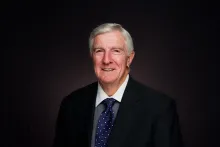
Before his retirement in 2021, Dr. Donald Ward pastored churches in Texas and Louisiana, and taught at Ambassador Bible College in Cincinnati, Ohio. He has also served as chairman of the Council of Elders of the United Church of God. He holds a BS degree; a BA in theology; a MS degree; a doctor’s degree in education from East Texas State University; and has completed 18 hours of graduate theology from SMU.
