

Chuck Smith
Should accusations of steroid use keep a retired player from Baseball's Hall of Fame?
[Darris McNeely] This week the annual vote for baseball's Hall of Fame was held. The Baseball Hall of Fame is in Cooperstown, NY, and every year sports writers vote to see who will be the next class to enter into the Hall of Fame. This year there were several people again, former baseball players on the ballot, but no one was selected. And what's unusual about this, it's not the first time it's happened Gary. But there were at least two players on the ballot for the first time, who because of their records would have been shoo-ins for first ballot entry into the Hall of Fame, but because there was the allegations that they used performance enhancing drugs, steroids to enhance and to juice up their performance on the field, there is a very strong feeling amongst sports writers who cover baseball that they should not be in the Hall of Fame. And they did not make the first ballot. I wonder what that says about our society, about sports, and American culture as a whole.
[Gary Petty] You know it's interesting because if you look at the NBA or the NFL, those same standards aren't always held to. And I think it's because in the NBA, they let the rules slide so much even during a game. The rules are not enforced. In the NFL, you know in those pile ups people are biting each other, poking each other in the eye. There's all kinds of things going on. But somehow baseball was seen as the last of the pure sports I think by a lot of people, the last sport that held to a certain high standard.
[Darris McNeely] Well, it has always been called America's pastime. And of course that has been eclipsed perhaps by NFL football and people can debate that back and forth. But there has been a mystique about American baseball that I think it still has a hold on at least among a group of sports writers who make these decisions. And one wonders as time goes on, some of these sports writers perhaps will no longer be voting, if attitudes would change. Maybe these issues will not be issues for future votes. But I'm just thinking as to what it says about right and wrong and standards and a sense, at least a fairness in a society and what we're seeing in this tension here in the debate about that.
[Gary Petty] Well, when you look at the beginning of college sports, the reason the college sports was started - the basketball, especially football - was because they thought it would teach young men character. And so they used the game to teach character, sportsmanship, teamwork. That's not why it's played always today. It's played especially at the professional level for money. And so what we look at, baseball is also played for high contracts, lots of money, you know and television contracts. What we're looking at is a deterioration of the concept of standards.
[Darris McNeely] Yep, and I do think that in, among many circles it did cease to be just a game a long time ago. But it does - I think it's important that we take note of what has happened and draw some lessons from it in terms of fairness, purity, right and wrong, and godly values when it comes to even how we conduct ourselves in matters of games, sport, and the whole of life.
[Gary Petty] Yes. Character.
[Darris McNeely] Character. That's BT Daily. Join us next time.

Darris McNeely is a retired elder in the United Church of God. He and his wife, Debbie, have served in the ministry for more than 53 years. They have two sons, who are both married, and four grandchildren. Darris continues teaching at Ambassador Bible Center and is a member of the Council of Elders. Darris and Debbie continue to travel and keep up with the many friends and relationships around the world.
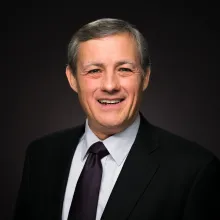
Gary Petty is a 1978 graduate of Ambassador College with a BS in mass communications. He worked for six years in radio in Pennsylvania and Texas. He was ordained a minister in 1984 and has served congregations in Longview and Houston Texas; Rockford, Illinois; Janesville and Beloit, Wisconsin; and San Antonio, Austin and Waco, Texas. He presently pastors United Church of God congregations in Nashville, Murfreesboro and Jackson, Tennessee.
Gary says he's "excited to be a part of preaching the good news of God's Kingdom over the airwaves," and "trusts the material presented will make a helpful difference in people's lives, bringing them closer to a relationship with their heavenly Father."
