In Brief... World News Review: Ongoing Troubles in Iraq
How does the United States wisely extract itself from Iraq without "cutting and running"?
How does the United States wisely extract itself from Iraq without "cutting and running"? And is it possible to democratize a people so used to dictators and demagogues?
In October 1993 the United States left a lingering legacy in Mogadishu, Somalia, when they sent elite American soldiers into the heart of the city to abduct top lieutenants of the warlord Mohamed Farrah Aidid. America lost 18 servicemen, and more than 500 Somalis died. That event has had a cautionary influence on American foreign policy. Indeed, recent uprisings in Iraq appear to be a throwback to what happened in Somalia: Fiercely resist the infidel intruders and they will leave the country.
President Bush has repeatedly said the U.S.-led coalition will not "cut and run" but will finish the job. Perhaps that's the only thing that can be done. Can a people so acculturated to demagoguery be democratized? Possibly. But at what price? There aren't that many options available.
The capture of Saddam Hussein has helped remove the fear of the return of his despotic rule. A contained Saddam helps the majority of Iraqis entertain a form of democracy. They want freedom like all peoples; and democracy, despite all its warts and bumps, allows for such freedom.
Time is of the essence, as are the successes of a new Iraqi democratic form of government. Early democratic successes would mean faster acceptance. But the nagging factors of time and American casualties play a dominant role on the American psyche. Are Americans willing to sacrifice their youth for the possible peaceful returns from an Iraqi democratic government? And will Europe get involved in the Iraqi process?
Ongoing troubles can be expected in Iraq and from its neighbors. The Bible says that Middle Eastern troubles will continue and only God will bring lasting peace to the Middle East.—WNP

An Article from:
World News and Prophecy: May 2004
Course Content

John Ross Schroeder
John died on March 8, 2014, in Oxford, England, four days after suffering cardiac arrest while returning home from a press event in London. John was 77 and still going strong.
Some of John's work for The Good News appeared under his byline, but much didn't. He wrote more than a thousand articles over the years, but also wrote the Questions and Answers section of the magazine, compiled our Letters From Our Readers, and wrote many of the items in the Current Events and Trends section. He also contributed greatly to a number of our study guides and Bible Study Course lessons. His writing has touched the lives of literally millions of people over the years.
John traveled widely over the years as an accredited journalist, especially in Europe. His knowledge of European and Middle East history added a great deal to his articles on history and Bible prophecy.
In his later years he also pastored congregations in Northern Ireland and East Sussex, and that experience added another dimension to his writing. He and his wife Jan were an effective team in our British Isles office near their home.
John was a humble servant who dedicated his life to sharing the gospel—the good news—of Jesus Christ and the Kingdom of God to all the world, and his work was known to readers in nearly every country of the world.
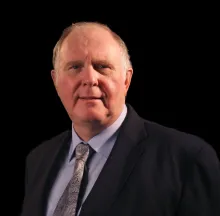
Melvin Rhodes
Melvin Rhodes is a member of the United Church of God congregation in Lansing, Michigan.

Jerold Aust
Jerold Aust has served in the ministry for 52 years, as a public speaker for 58 years, a published writer for 38 years, and is employed by UCG’s Media and Communications Services. He is a Senior Writer, interviewer, and editor for Beyond Today Magazine and has taught Speech Communication for UCG’s ministerial online program and the Book of Revelation for ABC.
Jerold holds a BA in theology from Ambassador College, Pasadena (1968), an MA in Communication from California State University, Fullerton (1995), a distance-learning Ph.D (2006), and a Famous Writers School diploma in non-fiction writing (1973). Additionally, he studied post-grad communication at University of Southern California (1995), radio, TV, voice-overs, and Public Relations at Fullerton College (1995-1996), and graduate communication at Wichita State University (1978). Jerold has taught communication at the University of South Alabama (7 years) and ABC (17 years). His published works include, Ronald Reagan’s Rhetoric: Metaphor as Persuasion and EZSpeakers: Public Speaking Made Easy in 7 Steps. Jerold's overarching goal is to share with humankind its incredible destiny!

