World News and Trends: Back to the Cold War?
While Americans focused their attention on two men's struggle for the presidency, an old problem resurfaced.
The same day Gov. George W. Bush of Texas became U.S. president-elect, Russian President Vladimir Putin arrived in Havana, capital of communist Cuba. For more than 30 years Cuba and the former Soviet Union nurtured a close relationship that almost led to a nuclear holocaust in the '60s. President John Kennedy faced down Soviet Communist Party chairman Nikita Khrushchev while the world held its breath. Moscow blinked and withdrew its nuclear weapons from Cuban soil.
After the Soviet Union collapsed in 1991, it seemed the old alliance was over. But Russia's new president is busy rebuilding traditional ties with Havana. Elsewhere, too, Russia is rekindling old Soviet alliances. Less than a year after succeeding Russian president Boris Yeltsin in March, Mr. Putin has quietly challenged America's claim to be the world's only remaining superpower.
Said a British newspaper: "[Putin] has intervened directly in the US-led Middle East peace process, given succor to Iraq, and resumed arms sales to Iran and Libya. He visited North Korea, that most roguish of US-designated 'rogue states,' and cheekily claimed to have curbed its menacing missiles. He went to India, bidding to revive Soviet-era ties in direct competition with Bill Clinton's efforts to woo Delhi last spring; and has increased military and political cooperation with China-identified by Mr Bush as a potential 21st century antagonist. Mr Putin regularly stresses Russia's national interests in the Balkans, its opposition to NATO expansion and its deep dislike of Mr Bush's plans for a treaty-busting national missile defense system. Now here he is in Havana, getting chummy with America's chief bogeyman, Fidel Castro."
Not only in foreign policy is Russia returning to the bad old days. At President Putin's suggestion the Duma voted overwhelmingly to restore the Soviet national anthem, though the words are to be rewritten to reflect Russia's new democratic age. The government postponed a decision on finally burying Soviet founder Vladimir Lenin's embalmed body after opposition from the Communist Party. Anti-Western sentiment remains. Months after the sinking of the Russian submarine Kursk, officials still blame the incident on a collision with a NATO vessel rather than admit to a failure of Russian technology.
Perhaps the explanation for these developments lies in Russia's complex internal problems. As a Russian newspaper observed: "Apparently some of Putin's close advisers believe that a certain degree of tension with the West is a good thing since it helps the Kremlin maintain a broad base of support in the country and within the elite." Putin "publicly praised the virtues of the growing political consensus in Russia when the 'left' forces increasingly support 'market reform,' while 'rightist' forces support a strong state."
One year after taking office President Putin has succeeded in strengthening central control and apparently has a clear vision of where he wants Russia to go. (Sources: The Guardian [London], The Moscow Times.)

An Article from:
Good News Magazine: January - February 2001
Course Content

John Ross Schroeder
John died on March 8, 2014, in Oxford, England, four days after suffering cardiac arrest while returning home from a press event in London. John was 77 and still going strong.
Some of John's work for The Good News appeared under his byline, but much didn't. He wrote more than a thousand articles over the years, but also wrote the Questions and Answers section of the magazine, compiled our Letters From Our Readers, and wrote many of the items in the Current Events and Trends section. He also contributed greatly to a number of our study guides and Bible Study Course lessons. His writing has touched the lives of literally millions of people over the years.
John traveled widely over the years as an accredited journalist, especially in Europe. His knowledge of European and Middle East history added a great deal to his articles on history and Bible prophecy.
In his later years he also pastored congregations in Northern Ireland and East Sussex, and that experience added another dimension to his writing. He and his wife Jan were an effective team in our British Isles office near their home.
John was a humble servant who dedicated his life to sharing the gospel—the good news—of Jesus Christ and the Kingdom of God to all the world, and his work was known to readers in nearly every country of the world.
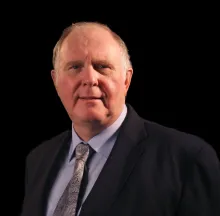
Melvin Rhodes
Melvin Rhodes is a member of the United Church of God congregation in Lansing, Michigan.