World News and Trends: The Iranian threat to the Middle East
Understand the historical and prophetic significance of the current dilemmas in regard to Iran.
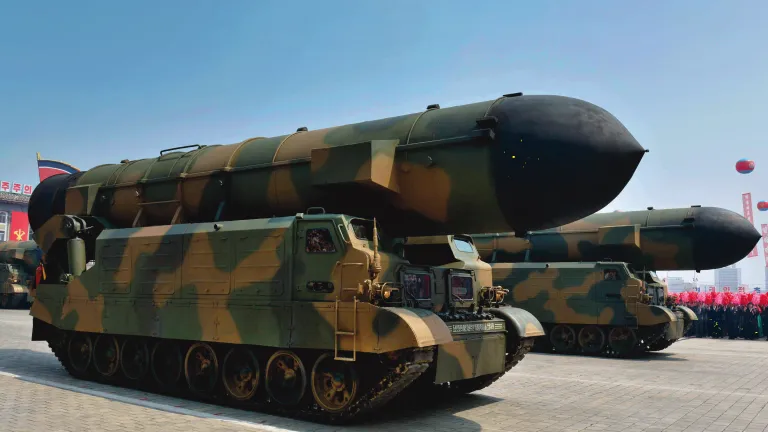
To Daniel Mariaschin, influential lobbyist for the Jewish service organization B'nai B'rith International, Iran remains Israel's most pressing concern: "Iran is issue number one, issue number two and issue number three in importance . . . We have been saying for years that Iran is not just Israel's problem, and fortunately the democracies seem to be waking up to this now. We hope it's not too late . . . We are watching as Iran builds a complex deployment system for their warheads. We are not talking about crude devices but sophisticated weaponry. Their idea is to create intercontinental ballistic missiles" (interview with Simon Round, "The Man Warning the West on Iran," The Jewish Chronicle, Nov. 26, 2010).
Saudi Arabia has also become increasingly concerned about the possible fulfillment of Iran's nuclear ambitions. In 2006 the crown prince of Saudi Arabia stated, "They have to be dealt with before they do something tragic." Then in 2008, the Saudis conferred with U.S. Gen. David Petraeus, during which a leading Saudi official "recalled the king's 'frequent exhortations to the U.S. to attack Iran'" (David Sanger, James Glanz and Jo Becker, "Widespread Distress Over Iran," International Herald Tribune, Nov. 29, 2010).
Said a London Times article regarding the WikiLeaks releases: "They also provide the first published evidence of an alleged shipment to Iran of missiles capable of reaching western European capitals, including Moscow. They depict the leaders of Bahrain, Jordan, Saudi Arabia and the United Arab Emirates as united in their pleas for the US to take the lead in crafting a military solution to the Iranian problem, but refusing to condemn Tehran publicly for fear of enraging their own Shia minorities" (Giles Whittell, "Israel's Warning to Obama: If You Don't Sort Out Tehran We Will," Nov. 30, 2010).
Finally Philip Stephens commented: "Yet if Tehran does succeed in its ambition, it will probably start a nuclear race in one of the world's most volatile regions. The pressures on Arab states to follow suit—Saudi Arabia and Egypt spring first to mind—would be intense. Turkey would have to consider whether to cross the nuclear threshold. Proliferation in the Middle East would signal in turn the end of the nuclear non-proliferation treaty. John F. Kennedy's nightmare of a world held in terror by the threat of nuclear conflagration would come a big step closer" ("Caught Between Bombing Iran and an Iranian Bomb," Financial Times, Oct. 8, 2010).
To understand the historical and prophetic significance of the current dilemmas in regard to Iran, download or request our free booklet The Middle East in Bible Prophecy. (Sources: The Times [London], Financial Times, International Herald Tribune.)

An Article from:
Good News Magazine: January - February 2011
Course Content
Jerold Aust
Jerold Aust has served in the ministry for 52 years, as a public speaker for 58 years, a published writer for 38 years, and is employed by UCG’s Media and Communications Services. He is a Senior Writer, interviewer, and editor for Beyond Today Magazine and has taught Speech Communication for UCG’s ministerial online program and the Book of Revelation for ABC.
Jerold holds a BA in theology from Ambassador College, Pasadena (1968), an MA in Communication from California State University, Fullerton (1995), a distance-learning Ph.D (2006), and a Famous Writers School diploma in non-fiction writing (1973). Additionally, he studied post-grad communication at University of Southern California (1995), radio, TV, voice-overs, and Public Relations at Fullerton College (1995-1996), and graduate communication at Wichita State University (1978). Jerold has taught communication at the University of South Alabama (7 years) and ABC (17 years). His published works include, Ronald Reagan’s Rhetoric: Metaphor as Persuasion and EZSpeakers: Public Speaking Made Easy in 7 Steps. Jerold's overarching goal is to share with humankind its incredible destiny!

John Ross Schroeder
John died on March 8, 2014, in Oxford, England, four days after suffering cardiac arrest while returning home from a press event in London. John was 77 and still going strong.
Some of John's work for The Good News appeared under his byline, but much didn't. He wrote more than a thousand articles over the years, but also wrote the Questions and Answers section of the magazine, compiled our Letters From Our Readers, and wrote many of the items in the Current Events and Trends section. He also contributed greatly to a number of our study guides and Bible Study Course lessons. His writing has touched the lives of literally millions of people over the years.
John traveled widely over the years as an accredited journalist, especially in Europe. His knowledge of European and Middle East history added a great deal to his articles on history and Bible prophecy.
In his later years he also pastored congregations in Northern Ireland and East Sussex, and that experience added another dimension to his writing. He and his wife Jan were an effective team in our British Isles office near their home.
John was a humble servant who dedicated his life to sharing the gospel—the good news—of Jesus Christ and the Kingdom of God to all the world, and his work was known to readers in nearly every country of the world.