World News and Trends: California court approves gay marriage—what does it mean?
On May 15, 2008, four justices of the California Supreme Court dealt a huge blow against marriage and family by approving same-sex marriage, overturning the expressed desire of millions of state voters. Beginning June 16, thousands of homosexual couples across the state began obtaining marriage licenses on which the words "Party A" and "Party B" replaced "bride" and "groom."
On May 15, 2008, four justices of the California Supreme Court dealt a huge blow against marriage and family by approving same-sex marriage, overturning the expressed desire of millions of state voters. Beginning June 16, thousands of homosexual couples across the state began obtaining marriage licenses on which the words "Party A" and "Party B" replaced "bride" and "groom."
The court decision overruled a 2000 state ballot initiative, approved by Californians by a 61-39 percent majority, defining marriage as only between a man and a woman. To their credit, clerks in some counties protested the ruling by refusing to perform marriage ceremonies altogether rather than officiate for homosexual couples.
Writing for the minority that opposed the court's ruling, one justice stated that the court "simply does not have the right to erase, then recast, the age-old definition of marriage, as virtually all societies have understood it, in order to satisfy its own contemporary notions of equality and justice" (emphasis added throughout).
Another justice wrote in a dissenting opinion that the court's decision "does that which it acknowledges it should not do: it redefines marriage because it believes marriage should be redefined."
What's really behind the push for gay marriage?
Advocates admit that it's really to further a homosexual agenda to transform society.
As one homosexual same-sex marriage proponent wrote: "A middle ground might be to fight for samesex marriage and its benefits and then, once granted, redefine the institution of marriage completely, to demand the right to marry not as a way of adhering to society's moral codes but rather to debunk a myth and radically alter an archaic institution."
"Being queer is more than setting up house, sleeping with a person of the same gender and seeking state approval to do so," wrote another. "Being queer means pushing the parameters of sex, sexuality and family, and in the process, transforming the very fabric of society . . . We must keep our eyes on the goals of providing true alternatives to marriage and radically reordering society's view of reality."
After the court decision was announced, an American Civil Liberties Union (ACLU) Web site gloated: "We won the marriage case in California.
No need for hyperbole here; this is big. . . [Gay] marriage in California will transform the discussion of marriage nationwide . . . The fact that California is marrying same-sex couples will put considerable pressure on the rest of the country to recognize those marriages . . . Cultural change in California is usually a preview of what is to come in the rest of the United States . . . This was a prize of inestimable value."
Clearly the California court decision has major implications for the rest of the country. As one gay activist wrote: "The sheer number of [homosexual] couples who will marry (and divorce, it is California, after all), will forever change this debate. It will cause a legal mess, as many of these married couples—often with children—migrate to [other] states."
Underlying this reality is the fact that California has no residency requirement for a marriage license.
Georgetown University government professor Clyde Wilcox noted that many homosexual couples will come to California to marry, then return to their home states and sue to have their marriages recognized.
Thus the legal and moral chaos is likely to quickly spread throughout the nation. (Sources: Associated Press, Cybercast News Service, WorldNetDaily, ACLU Web site.)

An Article from:
Good News Magazine: July - August 2008
Course Content
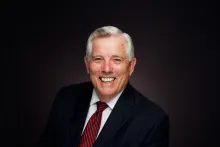
Jerold Aust
Jerold Aust has served in the ministry for 52 years, as a public speaker for 58 years, a published writer for 38 years, and is employed by UCG’s Media and Communications Services. He is a Senior Writer, interviewer, and editor for Beyond Today Magazine and has taught Speech Communication for UCG’s ministerial online program and the Book of Revelation for ABC.
Jerold holds a BA in theology from Ambassador College, Pasadena (1968), an MA in Communication from California State University, Fullerton (1995), a distance-learning Ph.D (2006), and a Famous Writers School diploma in non-fiction writing (1973). Additionally, he studied post-grad communication at University of Southern California (1995), radio, TV, voice-overs, and Public Relations at Fullerton College (1995-1996), and graduate communication at Wichita State University (1978). Jerold has taught communication at the University of South Alabama (7 years) and ABC (17 years). His published works include, Ronald Reagan’s Rhetoric: Metaphor as Persuasion and EZSpeakers: Public Speaking Made Easy in 7 Steps. Jerold's overarching goal is to share with humankind its incredible destiny!

John Ross Schroeder
John died on March 8, 2014, in Oxford, England, four days after suffering cardiac arrest while returning home from a press event in London. John was 77 and still going strong.
Some of John's work for The Good News appeared under his byline, but much didn't. He wrote more than a thousand articles over the years, but also wrote the Questions and Answers section of the magazine, compiled our Letters From Our Readers, and wrote many of the items in the Current Events and Trends section. He also contributed greatly to a number of our study guides and Bible Study Course lessons. His writing has touched the lives of literally millions of people over the years.
John traveled widely over the years as an accredited journalist, especially in Europe. His knowledge of European and Middle East history added a great deal to his articles on history and Bible prophecy.
In his later years he also pastored congregations in Northern Ireland and East Sussex, and that experience added another dimension to his writing. He and his wife Jan were an effective team in our British Isles office near their home.
John was a humble servant who dedicated his life to sharing the gospel—the good news—of Jesus Christ and the Kingdom of God to all the world, and his work was known to readers in nearly every country of the world.