World News and Trends: Major American policy shifts pressure Israel
Ethan Bronner, reporting in Jerusalem for the International Herald Tribune, raises an important question in regard to U.S.-Israeli relations: "Iran seems to be hurtling toward nuclear weapons capacity, Hezbollah could win Sunday's election in Lebanon [thankfully, it did not] and Hamas is smuggling long-range rockets into Gaza again. So why is President Barack Obama focusing such attention on the building of homes by Israeli Jews in the West Bank?" ("Obama Puts Israelis to Test," June 6-7, 2009, emphasis added throughout).
Ethan Bronner, reporting in Jerusalem for the International Herald Tribune, raises an important question in regard to U.S.-Israeli relations: "Iran seems to be hurtling toward nuclear weapons capacity, Hezbollah could win Sunday's election in Lebanon [thankfully, it did not] and Hamas is smuggling long-range rockets into Gaza again. So why is President Barack Obama focusing such attention on the building of homes by Israeli Jews in the West Bank?" ("Obama Puts Israelis to Test," June 6-7, 2009, emphasis added throughout).
This latest move on the diplomatic chessboard has put enormous pressure on Israeli Prime Minister Benjamin Netanyahu. "[It] underscores one of the biggest shifts in American policy toward the Israeli-Palestinian conflict in three decades. While every administration has objected to Israeli settlement building in occupied lands, the Obama administration has selected it as the opening issue that could begin to untie the conflict" (ibid.).
The American administration hopes that halting and then removing these Israeli settlements will encourage Saudi Arabia and other Arab states to offer Israel concessions in trade, tourism and direct diplomatic ties. However, this controversy over settlement policy isn't the only Israeli concern with shifts in American policy.
According to Leonard Doyle, writing in Washington, D.C., for The Sunday Telegraph, "Israel is also rattled by Mr. Obama's willingness to attempt dialogue with Iran, seen by Mr. Netanyahu and Mr. [Avigdor] Lieberman [Israel's foreign minister and deputy prime minister] as the biggest threat to the Jewish state" ("Obama Will Lay Down the Law to Israel," May 17, 2009).
The International Herald Tribune article went on to say that "Israelis have turned rightward and most analyses suggest that the reason is a growing fear of regional threats, notably Iranian-backed parties like Hezbollah and Hamas, on Israel's borders." Earlier in April Netanyahu stated: "We will not allow the Holocaust deniers to carry out another Holocaust against the Jewish people. This is the supreme duty of the state of Israel" ("Ahmadinejad Calls Israel 'Racist,'" The Wall Street Journal, April 21, 2009).
Yet as Doyle reports in his Telegraph article, "the Obama administration has also broken a long-standing taboo against discussing Israel's nuclear weapons, by calling for Israel to declare and give up its weapons arsenal, said to number around 50 warheads. A senior State Department official said that the US wanted Israel to sign the Nuclear Non Proliferation Treaty and commit to disarmament."
But will Iran convincingly commit to not constructing nuclear weapons? On a recent trip to Israel, CIA Director Leon Panetta's "message to the Israeli prime minister was that Iran will not be a serious threat even if it develops a nuclear weapon" (ibid.).
So the noose continues to tighten around the state of Israel. This important question emerges: Will American foreign policy put Israel in an untenable position with its enemies—greatly increasing its security concerns and placing its population potentially in mortal danger?
For help in discerning the direction these disturbing trends are headed, read our free booklets The Middle East in Bible Prophecy and You Can Understand Bible Prophecy. (Sources: The Daily Telegraph [London], International Herald Tribune, The Wall Street Journal.)

An Article from:
Good News Magazine: July - August 2009
Course Content
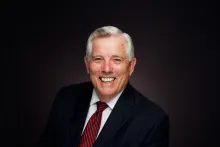
Jerold Aust
Jerold Aust has served in the ministry for 52 years, as a public speaker for 58 years, a published writer for 38 years, and is employed by UCG’s Media and Communications Services. He is a Senior Writer, interviewer, and editor for Beyond Today Magazine and has taught Speech Communication for UCG’s ministerial online program and the Book of Revelation for ABC.
Jerold holds a BA in theology from Ambassador College, Pasadena (1968), an MA in Communication from California State University, Fullerton (1995), a distance-learning Ph.D (2006), and a Famous Writers School diploma in non-fiction writing (1973). Additionally, he studied post-grad communication at University of Southern California (1995), radio, TV, voice-overs, and Public Relations at Fullerton College (1995-1996), and graduate communication at Wichita State University (1978). Jerold has taught communication at the University of South Alabama (7 years) and ABC (17 years). His published works include, Ronald Reagan’s Rhetoric: Metaphor as Persuasion and EZSpeakers: Public Speaking Made Easy in 7 Steps. Jerold's overarching goal is to share with humankind its incredible destiny!

John Ross Schroeder
John died on March 8, 2014, in Oxford, England, four days after suffering cardiac arrest while returning home from a press event in London. John was 77 and still going strong.
Some of John's work for The Good News appeared under his byline, but much didn't. He wrote more than a thousand articles over the years, but also wrote the Questions and Answers section of the magazine, compiled our Letters From Our Readers, and wrote many of the items in the Current Events and Trends section. He also contributed greatly to a number of our study guides and Bible Study Course lessons. His writing has touched the lives of literally millions of people over the years.
John traveled widely over the years as an accredited journalist, especially in Europe. His knowledge of European and Middle East history added a great deal to his articles on history and Bible prophecy.
In his later years he also pastored congregations in Northern Ireland and East Sussex, and that experience added another dimension to his writing. He and his wife Jan were an effective team in our British Isles office near their home.
John was a humble servant who dedicated his life to sharing the gospel—the good news—of Jesus Christ and the Kingdom of God to all the world, and his work was known to readers in nearly every country of the world.

