The Middle East: What Now?

The Middle East's long era of strongmen may be reaching its end. If so, what will replace it?
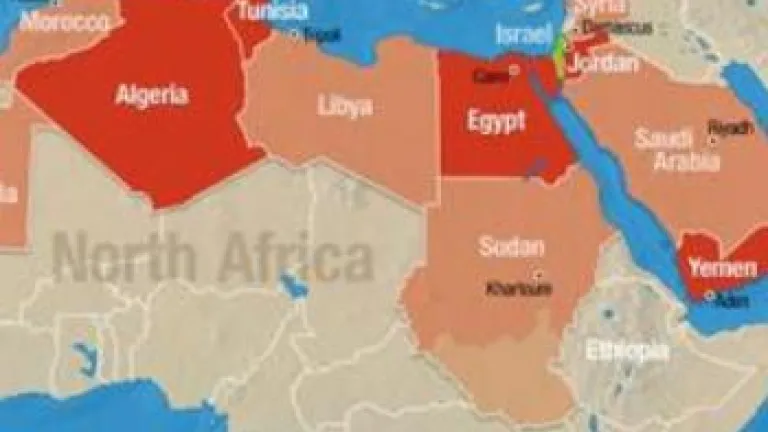
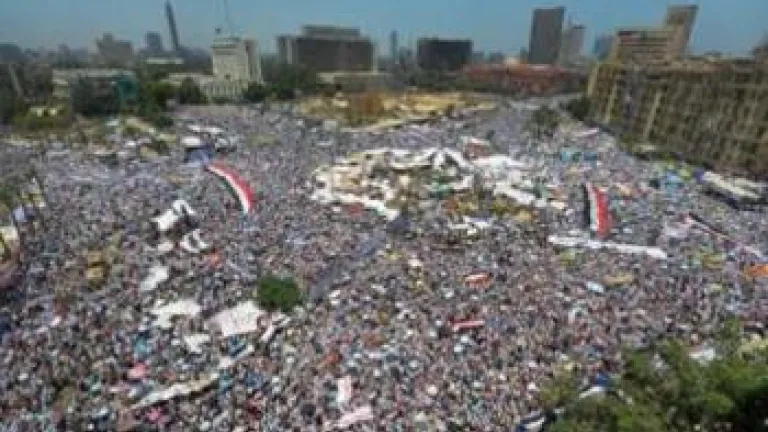
Are we on the verge of a fundamental transformation of the Middle East? Time will tell, but the forced ouster of the leaders of Egypt and Tunisia, civil war in Libya, and a growing tide of unrest sweeping across other nations tell us that the region's long era of dictatorial strongmen may be reaching its end. If so, the big question is: What will replace it?
As America and its allies learned when they toppled Iraq's Saddam Hussein in 2003, it's not easy to predict the outcome when a despot is forced from power—particularly in a nation long divided along religious, cultural and tribal lines and with no tradition of Western-style democracy. Eight years later, we're still sorting out the mess.
And as we saw when elections were held in the Palestinian Authority-controlled Gaza Strip in 2006, sometimes the election winners are far from stalwarts of freedom and democracy. The winner in that case, Hamas, is classified as a terrorist organization by most Western nations and has repeatedly fired missiles and mortars into neighboring Israel.
What might we see if or when democratic elections follow the removal of some of these long-entrenched autocrats?
In Egypt, the group poised to gain the most is the Muslim Brotherhood. Long suppressed by Egyptian leaders who considered it a threat to the nation's stability, this organization has ties to various Mideast terror groups, including Hamas. The former head of Britain's Secret Intelligence Service has even bluntly called it a terrorist organization. Ayman al-Zawahiri (Osama bin Laden's right-hand man) and 9/11 mastermind Khalid Sheikh Mohammed were members of the Muslim Brotherhood.
Of course, this could spell deep trouble for the whole Middle East, but particularly Israel. Muslim Brotherhood spokesmen have already renounced the three-decades-old Egypt-Israel peace treaty, and Mohamed ElBaradei, a leading contender for the office of president of Egypt, has said he would declare war against Israel if it again attacks Gaza in response to missile and mortar fire.
Meanwhile, in Libya, we've learned that some of the same fighters trying to overthrow Muammar Gaddafi had previously traveled to Iraq to wage jihad against American and coalition forces there. This means NATO forces are in the curious position of providing air and naval support for some of the same jihadists who were trying to kill them in Iraq!
And as might be expected, we don't need to look far to see Iranian fingerprints on some of the current troubles. Not content with actively stirring up trouble in Saudi Arabia and Bahrain, Iran recently produced an official video apparently intended to foment unrest throughout the Muslim Middle East. Titled "The Coming Is Upon Us," the video makes the case that the appearance of an Islamic messiah expected by many Muslims is now at hand. It states that recent developments in the Middle East were foretold long ago by various Muslim authorities and are signs that Islamic rule over the whole world is near.
Among other things, it contends that Iranian leader Mahmoud Ahmadinejad will conquer Jerusalem—which is certainly in line with the Iranian president's long history of threats to exterminate the Jewish state. It closes with the words, "Victory is near, good tidings to the believers."
These events remind us that the Middle East is ground zero of Bible prophecy. This issue focuses on prophecies of this region at the time of the end and how today's headlines may be showing how events are shaping up for those events to be fulfilled. How closely will you be paying attention?

An Article from:
Good News Magazine: May - June 2011
Course Content

Scott Ashley
Scott Ashley was managing editor of Beyond Today magazine, United Church of God booklets and its printed Bible Study Course until his retirement in 2023. He also pastored three congregations in Colorado for 10 years from 2011-2021. He and his wife, Connie, live near Denver, Colorado.
Mr. Ashley attended Ambassador College in Big Sandy, Texas, graduating in 1976 with a theology major and minors in journalism and speech. It was there that he first became interested in publishing, an industry in which he worked for 50 years.
During his career, he has worked for several publishing companies in various capacities. He was employed by the United Church of God from 1995-2023, overseeing the planning, writing, editing, reviewing and production of Beyond Today magazine, several dozen booklets/study guides and a Bible study course covering major biblical teachings. His special interests are the Bible, archaeology, biblical culture, history and the Middle East.