World News and Trends: The human role in creating famine
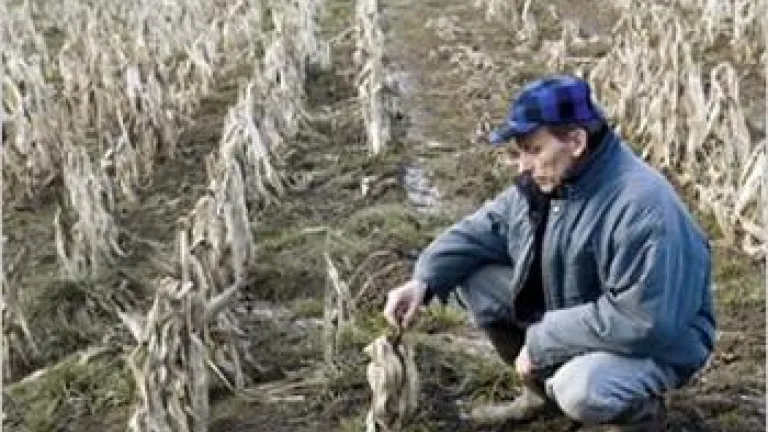
Although drought is officially blamed for the famine expected to take millions of lives across Southern Africa in the coming months, many Africans realize there is far more to it than that.
Former Zambian president Kenneth Kaunda, in a BBC interview, blamed the famine on governmental corruption, a perennial African problem. He quite bluntly said that African leaders do not care about their own people. In spite of numerous warnings over recent months of impending famine, nobody did anything to prepare. Even now the former president, affectionately referred to as "K.K." by Zambians, warned that leaders would not distribute foreign aid unless they could see something in it for themselves.
An additional cause of the famine is the forcible seizure of land owned by white farmers whose ancestors settled the region in colonial times. Whatever wrongs may or may not have been committed during the colonial period, the fact remains that these farmers are highly productive, as are their American and European counterparts. Most indigenous African farmers remain subsistence farmers, which means they grow only enough food to feed themselves. The descendants of the original settlers are commercial farmers who grow vast amounts of food for sale, ensuring that the entire population has enough to eat and leaving enough left over for export to pay for essential imports like oil.
The compulsory seizure of farmland has not been just an African problem. The communists took control of all private land in Russia after they came to power. Famine was the immediate result. Only this year have Russians finally been able to own land again. After 70 years of communism and a decade of postcommunist confusion, Russian agricultural production is nowhere near what it was in the last years of czarist Russia before World War I, in spite of the technological innovations that have boosted production elsewhere.
In America and other Western nations, family farms are going out of business at an alarming rate. They are not the victims of compulsory governmental seizures of land, but faulty economic policies that encourage big agribusinesses at the expense of family farms.
The Bible speaks of a time when families will once again be able to settle their land and farm without the fear of government stealing their land or introducing policies that make life more difficult. It will also be a time when there will be no more war, another major factor in declining agricultural production in Africa.
In Micah 4:3-4 we read of the coming Kingdom of God, which Jesus Christ will rule: "They shall beat their swords into plowshares, and their spears into pruning hooks; nation shall not lift up sword against nation, neither shall they learn war any more. But everyone shall sit under his vine and under his fig tree, and no one shall make them afraid ..." (Source: BBC.)

An Article from:
Good News Magazine: September - October 2002
Course Content

John Ross Schroeder
John died on March 8, 2014, in Oxford, England, four days after suffering cardiac arrest while returning home from a press event in London. John was 77 and still going strong.
Some of John's work for The Good News appeared under his byline, but much didn't. He wrote more than a thousand articles over the years, but also wrote the Questions and Answers section of the magazine, compiled our Letters From Our Readers, and wrote many of the items in the Current Events and Trends section. He also contributed greatly to a number of our study guides and Bible Study Course lessons. His writing has touched the lives of literally millions of people over the years.
John traveled widely over the years as an accredited journalist, especially in Europe. His knowledge of European and Middle East history added a great deal to his articles on history and Bible prophecy.
In his later years he also pastored congregations in Northern Ireland and East Sussex, and that experience added another dimension to his writing. He and his wife Jan were an effective team in our British Isles office near their home.
John was a humble servant who dedicated his life to sharing the gospel—the good news—of Jesus Christ and the Kingdom of God to all the world, and his work was known to readers in nearly every country of the world.
Melvin Rhodes
Melvin Rhodes is a member of the United Church of God congregation in Lansing, Michigan.

Tom Robinson
Tom is an elder in the United Church of God who works from his home near St. Louis, Missouri as managing editor and senior writer for Beyond Today magazine, church study guides and the UCG Bible Commentary. He is a visiting instructor at Ambassador Bible College. And he serves as chairman of the church's Prophecy Advisory Committee and a member of the Fundamental Beliefs Amendment Committee.
Tom began attending God's Church at the age of 16 in 1985 and was baptized a year later. He attended Ambassador College in both Texas and California and served for a year as a history teacher at the college's overseas project in Sri Lanka. He graduated from the Texas campus in 1992 with a Bachelor of Arts in theology along with minors in English and mass communications. Since 1994, he has been employed as an editor and writer for church publications and has served in local congregations through regular preaching of sermons.
Tom was ordained to the ministry in 2012 and attends the Columbia-Fulton, Missouri congregation with his wife Donna and their two teen children.