The Amazing Lesson of God's Feast of Firstfruits

If Jesus Christ came to save mankind, why is the world in such sad shape? The answer is found in a little-understood festival God revealed in the Bible.
Has Jesus Christ really succeeded in His mission? Consider that He said He “did not come to judge the world but to save the world”—and that He also said, “God did not send His Son into the world to condemn the world, but that the world through Him might be saved” (John 12:47; 3:17).
Yet we live in a world in which hundreds die every day from violence, starvation, disease and natural disasters, in which injustice, immorality and every godless act abound, in which thousands die daily without having ever heard the name of
Jesus Christ or even seen a Bible. So can we truly say that Christ’s mission was successful? Has the world been saved?
These questions have always posed an enigma to those willing to face the facts. If the Christian Church had as its mission to take the message of Christ to the world so the world could be saved, why is the world in such religious disarray? Further, if the gospel Christ brought holds the answers to man’s problems, why is the world in such terrible shape?
Did Jesus fail to gain the cooperation of His own Church in carrying out this mission? Is He not able to inspire faith among His followers to do greater works than He, as He promised? (See John 14:12.) Or are the opposing forces simply too powerful for faithless mankind?
The answer is none of the above.
However, there are answers to these questions—and they are illustrated in a biblical festival called the Day of the Firstfruits (Numbers 28:26) and the Feast of Harvest of the Firstfruits (Exodus 23:16), shortened to the Feast of Firstfruits. This observance, along with the rest of God’s annual Holy Days, is commanded by God in Leviticus 23 (see verses 15-21).
In describing these sacred observances, God said, “Speak to the children of Israel, and say to them: ‘The feasts of the Lord, which you shall proclaim to be holy convocations, these are My feasts’” (verse 2, emphasis added throughout).
Later, we find that the Church Jesus founded continued to celebrate this particular festival, known by Jesus’ followers as the Feast of Pentecost. In fact, the New Testament Church began on this very day, accompanied by miraculous events (Acts 2:1-41). The festival has great relevance and importance for Christians today.
God had a reason for Israel to remember and celebrate His festivals and for His Church to do the same. Through these observances, God reveals the stages of His plan of salvation for humanity. In particular, this feast that celebrated the firstfruits of the wheat harvest in ancient Israel (Exodus 34:22) has a meaning that reveals one of the major phases of God’s plan for salvation.
Common but erroneous assumptions
Most churches assume that God intended for everyone alive to hear the message of salvation, starting immediately after Jesus Christ’s resurrection. Most also believe that every person hearing that message would then have the opportunity for salvation now, in this life. The mission of Christ’s followers was thus understood to involve bringing this message to every living person, giving all the opportunity to accept Christ before it was too late.
Thus, many churches believe they must bring as many people as possible to accept Christ as Savior immediately, regardless of the depth of their interest or commitment.
But how many people have never accepted Christ—or never truly accepted Him? And how many millions over the centuries have never even heard of Him?
If salvation is only a matter of accepting Christ during this physical lifetime, what is the fate of the countless people who lived and died before He was born and for whom it was impossible to accept Him as Savior?
Faced with these questions, must we conclude that the power Jesus promised His disciples simply never translated into the saving work He envisioned? No—we should not doubt the saving power of Jesus Christ. Instead, perhaps we should examine our understanding of the plan. Perhaps God has had something else in mind all along.
How this feast fits in God’s plan
What does the Feast of Firstfruits have to do with these all-important questions?
God’s bringing of people into His spiritual family is described metaphorically in Scripture as a harvest (Matthew 9:37-38; John 4:35).
There is great significance in the name Feast of Harvest of the Firstfruits. It indicates some harvesting would come first, before a later period of harvesting. As we will see, this festival foreshadows God’s intention to reap first a small harvest of people for salvation (called “firstfruits” in the Scriptures), and to later call a vastly greater number of people to salvation.
Let’s notice this amazing truth as demonstrated by the divinely revealed festivals of God. God timed His feasts to coincide with the agricultural cycle of the two major harvest periods in the Holy Land—one in spring and the other at the end of summer—to teach His people an important lesson.
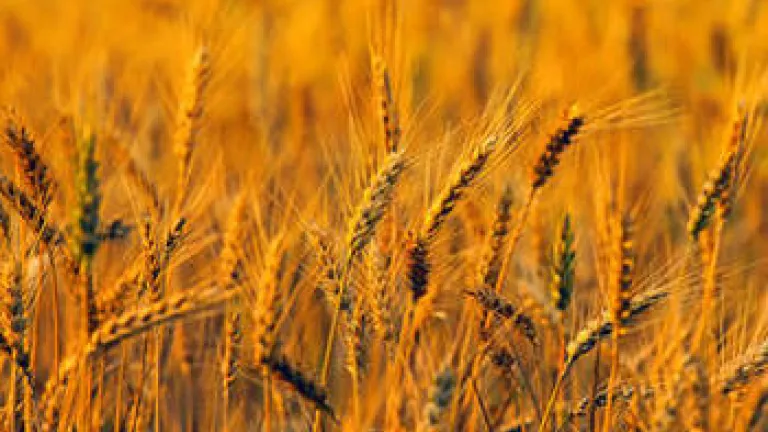
The Feast of Firstfruits coincided with the spring wheat harvest in that area (Exodus 34:22). The Greek name for this feast is Pentecost, meaning “fiftieth,” in this case implying “fiftieth day,” so named because it was celebrated 50 days from the offering of the first sheaf of barley each year, called the wave sheaf or omer. This period of seven weeks gives the festival yet another name—the Feast of Weeks (Deuteronomy 16:9-10).
On the 50th day, the Israelites offered two loaves of bread made from flour taken from the new grain of the harvest. These loaves were called “the firstfruits to the Lord” (Leviticus 23:16-17). The people were to “do no customary work” on this day and to gather for a sacred religious assembly (Leviticus 23:21). This was a very significant occasion.
A festival that came later in the year, the seven-day Feast of Tabernacles or Ingathering (Exodus 34:22) followed by a special Eighth Day (Leviticus 23:36, 39), coincided with the conclusion of the later harvest when other types of produce, including cucumbers, melons, lentils, chickpeas, nuts and especially dates, figs, olives and grapes had all been gathered in. This, too, was an event of great significance marked by sacred religious assemblies and cessation from work.
These two feast periods both represent major stages in the spiritual harvest of mankind for salvation. The Feast of Firstfruits symbolizes the calling and preparing of the Church in this age. This is the early phase of the spiritual harvest.
The firstfruits of God’s plan for salvation are those called to be in God’s Church in this age. The Church, also spoken of as “the body of Christ” (1 Corinthians 12:27), is made up of individuals in whom the Holy Spirit dwells. Also known as saints, those sanctified or set apart, they have repented of their sins and turned to Jesus Christ as their personal Savior. They have committed themselves to obedience to His holy and righteous laws. They are willing to give up everything to remain faithful to Him (Luke 14:33).
Through the Holy Spirit, which God gives to those who are part of His Church, members are empowered to overcome the world. It is through God’s Holy Spirit that the Church can preach the gospel to the world and make disciples of all nations (Mark 16:15; Matthew 28:19-20). It is this Spirit that enables a person to belong to Jesus Christ and be part of the Church (Romans 8:9). For the New Testament Church to exist, it was necessary for God to send His Holy Spirit.
Order to salvation shown in the physical harvest periods
So, then, what about those who are not being called now? That is where the meaning of the later part of the spiritual harvest comes into play. It will take place in the age to come and is the point where those who are not a part of the firstfruits will have an opportunity to know and accept Jesus Christ. God’s initial harvest of people occurs in preparation for that coming age when Jesus Christ will bring His Kingdom to the earth.
The spiritual significance of the first harvest period, celebrated by the Feast of Firstfruits, is made clear in the Scriptures. The apostle Paul wrote in 1 Corinthians 15:20-23: “Now Christ is risen from the dead, and has become the firstfruits of those who have fallen asleep . . . For as in Adam all die, even so in Christ all shall be made alive. But each one in his own order: Christ the firstfruits, afterward those who are Christ’s at His coming.”
The previously mentioned wave sheaf offering of barley 50 days prior to Pentecost pictured Jesus Christ being presented to His Father after His resurrection as the first of the firstfruits. The later offering of the firstfruits of the wheat harvest on Pentecost (Leviticus 23:17) was then symbolic of the other firstfruits that would follow in God’s harvest of humankind for salvation. And these would be followed later by still other people.
Did you notice that Paul in 1 Corinthians 15 clearly states that God will resurrect the dead in a specific order? First was Jesus Christ, who was resurrected as “the firstfruits of those who have fallen asleep,” to be followed by others at His return.
Paul states that the resurrection of Christ’s followers at His coming, when they will receive immortal, spirit bodies (verses 44, 53), will take place “at the last trumpet” (verse 52)—the mighty, supernatural call that will announce the return of Jesus Christ to rule the earth (see also Revelation 11:15; 1 Thessalonians 4:16-17).
This miraculous event is described as “the first resurrection” in Revelation 20:6: “Blessed and holy is he who has part in the first resurrection. Over such the second death has no power, but they shall be priests of God and of Christ, and shall reign with Him a thousand years.”
Under Christ’s rule, the opportunity for salvation will expand to all
During this reign of Jesus Christ and the resurrected saints on earth (Revelation 5:10), the later harvesting of humanity for salvation will begin. God’s knowledge will at last be widely available: “For the earth will be filled with the knowledge of the glory of the Lord, as the waters cover the sea” (Habakkuk 2:14). All people will experience firsthand the wonderful Kingdom of God, which Jesus Christ proclaimed during His earthly ministry (Matthew 4:17; Mark 1:14; Luke 4:43).
Beginning with Israel and spreading out to all humanity, everyone will then have the opportunity to learn and live according to God’s ways: “No more shall every man teach his neighbor, and every man his brother, saying, ‘Know the Lord,’ for they all shall know Me, from the least of them to the greatest of them, says the Lord. For I will forgive their iniquity, and their sin I will remember no more” (Jeremiah 31:34; see also Isaiah 2:2-3).
But what about those who have lived and died in the past, having never known anything of God the Father and Jesus Christ? Revelation 20:6, quoted above, shows that God’s faithful saints are in “the first resurrection.” But, if there is a first resurrection, there must be another!
And indeed there is. The book of Revelation makes it clear that there will be another resurrection of the dead after the 1,000-year reign of Jesus Christ and His resurrected followers from this age: “the rest of the dead did not live again until the thousand years were finished” (Revelation 20:5).
This will continue God’s great second harvest of humanity for salvation. At that time, all who have ever lived but did not have the opportunity to learn of God’s ways or hear of Jesus Christ’s atoning sacrifice will receive their opportunity for salvation.
This resurrection of countless millions of people to a physical, perishable life is described in multiple passages (see Ezekiel 37:1-11; Matthew 12:41-42; Revelation 20:5, 13). These people will then be given the opportunity—for the first time—to repent and be converted through God’s Holy Spirit (Acts 2:38; 3:19). Then they, too, will inherit eternal life.
We see in this wonderful plan the fulfillment of God’s desire for “all men to be saved and to come to the knowledge of the truth” (1 Timothy 2:4).
God is “not willing that any should perish but that all should come to repentance” (2 Peter 3:9), and through His plan all who have never had the real opportunity for salvation in this age can at last be saved!
We now live in the age of the firstfruits, the time during which God is preparing a special, chosen people to reign and teach with Christ in His Kingdom (1 Peter 2:9). In preparation, those who are God’s firstfruits today should be observing the very day that pictures the calling and harvest of the firstfruits of God’s plan and the granting of His Holy Spirit to empower them, the Day of Pentecost.
Are you part of that group? If God is opening your mind to His truth and drawing you to greater understanding and a relationship with Him, it is vital that you respond to His calling!
Dive Deeper
More and more people are discovering that the biblical Holy Days, far from being obsolete or just for the Jews, are God’s teaching tools for revealing His plan for the salvation of humanity! For help in learning what they’re all about, request or download our free study guide God’s Holy Day Plan: The Promise of Hope for All Mankind.

An Article from:
Beyond Today Magazine: May–June 2026
Course Content

Bill Bradford
Bill Bradford is a contributor to United Church of God publications in addition to being the pastor for several United Church of God congregations in Queensland, Australia.
Stay up to date
Get new articles every week in your inbox and quarterly print issues in the mail.
Subscribe for freeor log in