The Depths of Sin and the Lifeline Out

War, injustice, broken families and human suffering all trace back to a single root cause the modern world rarely wants to confront—sin. Yet the Bible reveals not only the depth of humanity’s problem but God’s remarkable rescue line to ultimate freedom.
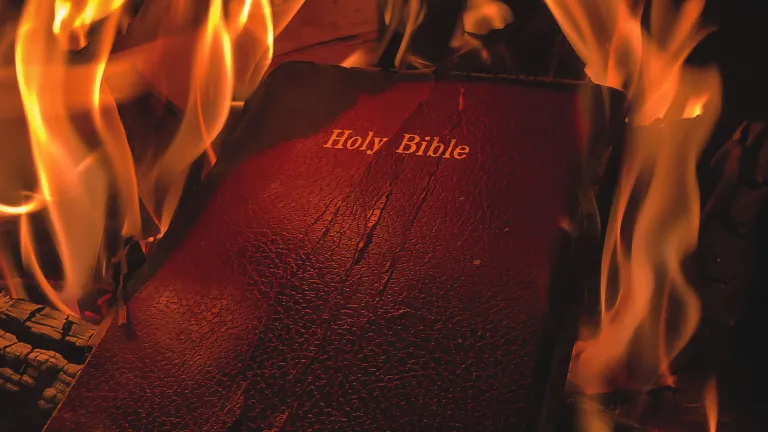
Sin is not a popular topic today. Modern culture increasingly encourages people to live according to their own “truth,” guided by personal preference or shifting social expectations. Standards that once seemed firm are now fluid, and what one generation condemned another may celebrate.
In public conversation today, the language of sin is rarely used. Behavior once described as morally wrong is now explained as “personal struggle,” “emotional difficulty” or “social pressure” and the like. Rather than speaking of transgression, society often speaks of “mistakes” or “lifestyle choices.” Moral authority is increasingly defined by the individual rather than by the Creator.
Yet beneath this changing moral landscape lies an uncomfortable reality—much of what is wrong in our world ultimately traces back to sin.
Consider the conditions of the world around us. Wars devastate nations and leave millions displaced. Corruption undermines governments and erodes public trust. Families fracture under conflict and betrayal. Violence, exploitation and injustice appear across every society. Anxiety and instability increase where moral certainty declines.
One can see the effects everywhere—in broken homes, dishonesty at all levels of society, rising distrust among neighbors and cycles of violence that repeat generation after generation.
Despite remarkable advances in science, medicine and technology, humanity has not solved its deepest problems. Education and policy reforms may address symptoms, but the root cause remains.
These troubles are not merely political, economic or psychological. They are fundamentally spiritual.
The Bible identifies the root cause plainly. Scripture defines sin as “the transgression of the law” (1 John 3:4, King James Version). It also explains that “all unrighteousness is sin” (1 John 5:17). This begins in the mind (see Matthew 5:21-22, 27-28; Romans 7:14; James 1:14-15). In other words, sin is anything that violates the ways God commands us to live and even think.
God’s law expresses His character—what is right, just and good. When human beings disregard that standard, disorder follows. Sin violates divine authority and disrupts the order established by the Creator.
This is not a modern problem. It is an ancient human condition stretching back to the beginning of the world.
The misery humanity experiences today—conflict, oppression, corruption and death itself—can ultimately be traced to mankind’s departure from the ways of the Creator. To understand the depth of humanity’s predicament—and the hope for its resolution—we must consider the full scope of the problem of sin and the remarkable way God is solving it.
All the world guilty before God
When God created intelligent beings, He gave them something extraordinary—free will. Obedience and love only have meaning when they are chosen freely. Yet free will also meant that created beings could choose to act contrary to God’s will.
The Bible reveals that sin first appeared among the angels. One of the highest-ranking angels became filled with pride and rebellion. Rather than serving under God’s authority, he sought to exalt himself above it.
Isaiah records his ambition: “I will ascend into heaven, I will exalt my throne above the stars of God” (Isaiah 14:13). That rebellion transformed him into Satan—the adversary of God.
Jesus later described him as one who “does not stand in the truth” and has sought the destruction of others from the beginning (John 8:44). His rebellion introduced opposition to God’s rule within creation.
Humanity soon encountered this rebellion. In the Garden of Eden, Satan tempted Eve to distrust God’s command. Rather than relying on God’s wisdom, she chose her own judgment. Adam followed her example (see Genesis 3).
Their decision brought profound consequences. The apostle Paul explains the result: “Through one man sin entered the world, and death through sin, and thus death spread to all men, because all sinned” (Romans 5:12).
This does not mean that humanity inherits the guilt of Adam’s sin, as some think. Rather, with mankind separated from God and living in a world influenced by Satan, every person eventually follows the same pattern of disobedience. Notice again: “because all sinned.”
History confirms this pattern. Generation after generation repeats the same cycle of pride, selfishness and rebellion against God’s ways. Paul summarized the human condition bluntly: “There is none righteous, no, not one” (Romans 3:10). And again: “All have sinned and fall short of the glory of God” (verse 23).
The problem lies not only in external behavior but within the human heart itself. The prophet Jeremiah wrote, “The heart is deceitful above all things, and desperately wicked; who can know it?” (Jeremiah 17:9). Human beings often deceive themselves about their own motives and actions. What appears justified in our own minds may in fact contradict God’s ways.
The results are visible everywhere. Pride fuels conflict. Greed produces exploitation. Envy and anger lead to violence. Deception destroys trust. Broken relationships, corruption in leadership and injustice within societies reflect a deeper moral disorder.
These tendencies produce the wars, injustices and suffering that have marked human history. Yet the Bible reveals an even deeper problem. Sin does not merely damage relationships or societies—it carries a defined penalty. “The wages of sin is death” (Romans 6:23).
Death is not symbolic language. It is the earned result of disobedience to God’s law. Mortality itself stands as the final consequence of rebellion against the Creator.
God’s law reveals the failure of people to live up to God’s requirements, showing “that the entire world is guilty before God” (Romans 3:19, New Living Translation). Indeed, the problem of sin is universal. It includes nations, societies and each one of us personally.
If that were the end of the story, humanity would have no hope. But from the beginning, God had a plan to rescue mankind from the consequences of sin.
The cost of redemption
God did not abandon humanity to its fate. In His love and mercy, He established a plan to save mankind from the consequences of sin.
Yet God’s solution could not simply overlook wrongdoing. God is perfectly just, and His law reflects His own righteous character.
Scripture says, “The Lord is a God of justice” (Isaiah 30:18). In fact, “all His ways are justice, a God of truth and without injustice” (Deuteronomy 32:4). And justice requires that wrongdoing carries consequences. Law without consequence would lose its authority.
From the beginning God declared the principle plainly. Adam was told that disobedience would result in death (Genesis 2:17). This principle remains unchanged: “The wages of sin is death.”
This created a profound dilemma. Since every human being has sinned, every human being stands under the sentence of death. No one could pay the penalty for others because all are already guilty.
Only one life possessed sufficient worth to redeem humanity. The Bible explains that God the Father created all things through the One called “the Word” (John 1:1–3). This divine Being later came to earth as a human being—Jesus Christ: “And the Word became flesh and dwelt among us” (John 1:14).
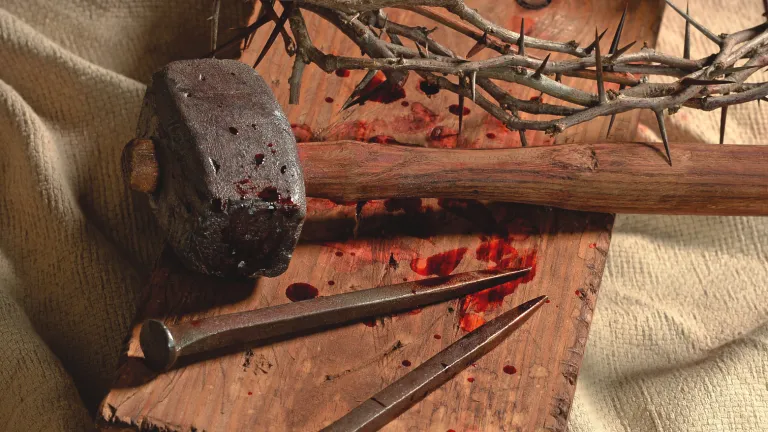
Jesus lived a completely sinless life. The apostle Peter wrote that He “committed no sin, nor was deceit found in His mouth” (1 Peter 2:22). Because He never sinned, Christ did not deserve death. Yet He willingly gave His life as a sacrifice for humanity. This demonstrated God’s perfect justice and extraordinary love.
There is also a profound sense in which God accepted responsibility for the consequences of creating free moral beings. Sin was not God’s fault—He is perfectly righteous—but the possibility of sin existed because He granted His creation freedom of choice.
In Christ’s sacrifice, God Himself bore the cost of that freedom.
The suffering and death of Jesus Christ reveal the true gravity of sin. It took nothing less than the sacrifice of the Creator to atone for humanity’s disobedience. Yet the same sacrifice also reveals the depth of God’s love. Both the Father and Christ were willing to endure unimaginable suffering so that humanity could be redeemed.
Isaiah foretold this act centuries earlier: “He was wounded for our transgressions, He was bruised for our iniquities” (Isaiah 53:5). Forgiveness through Christ’s sacrifice is therefore a gift no one could ever earn. But receiving that gift involves important conditions.
On the day of Pentecost, the apostle Peter explained what God requires: “Repent, and let every one of you be baptized in the name of Jesus Christ for the remission of sins” (Acts 2:38).
Repentance means more than regret. It involves a genuine turning—a decision to stop disobeying God and begin living according to His ways.
When a person repents and is baptized, God forgives that person completely. Past sins are no longer counted against them. They are reconciled to God and regarded as righteous through Christ’s sacrifice. But what does that mean for the life that follows?
The remaining dilemma
Once we are cleared, forgiven, regarded as righteous and sinless, does that give us license to continue in sin? Paul asks and answers: “Shall we continue in sin that grace may abound? Certainly not!” (Romans 6:1-2).
Repentance is not merely a one-time confession of sin or a momentary emotional reaction. Again, it’s about a change of life—turning around, ceasing to disobey God and surrendering your life to Him in ongoing obedience.
Also understand that Jesus did not die so we could continue to live as we were. Rather, our old self is to die with Him, as baptism pictures (as Romans 6 further explains). We are to be in a sense “crucified with Christ” (Galatians 2:20)—putting to death our wrong fleshly wants and actions (Colossians 3:1-10; Romans 8:13).
Beyond that, we are to be figuratively raised with Him to walk in newness of life, no longer slaves of sin but effectively slaves of righteousness in a positive way (again, Romans 6). For we are bought with a price through Christ’s death (1 Corinthians 6:20).
But God does not compel and control us. He still gives us free will.
That fact leaves us still facing a problem, as our old nature is not yet eradicated from our fleshly minds and lives. And the carnal, unconverted mind is hostile to the law of God and not subject to it (Romans 8:7). Christians still sin (1 John 1:8, 10).
If that is true, how can the change of life God requires actually take place?
Power to overcome through the Holy Spirit
Thankfully, God’s work does not end with forgiveness. If Christ died because of our violations of God’s law, it would make little sense for God to forgive us only so we could continue living in disobedience. God’s purpose is not merely to declare people righteous in theory. His purpose is to transform them so they actually become righteous.
Paul explains that believers are “reconciled to God through the death of His Son,” but “saved by His life” (Romans 5:10). Christ not only died for humanity, He lives again—to intercede for us, live in us and lead us to ultimate salvation.
Before His death, Jesus promised that He and the Father would send the Holy Spirit to His followers (John 15:26; 14:26). Through this Spirit, both the Father and Christ dwell within believers (verse 23).
The Holy Spirit is the power, mind and life of God working in human lives. (Be sure to request or download our free study guide The Power of the Holy Spirit to learn more.)
Through the Spirit, believers receive the ability to truly change. Paul wrote that “the love of God has been poured out in our hearts by the Holy Spirit” (Romans 5:5). And the apostle John explains what that love produces: “This is the love of God, that we keep His commandments” (1 John 5:3). The Holy Spirit thus empowers us to obey God—to live according to His commandments.
Interestingly, God gave His commandments to ancient Israel around the time of the late spring festival later called Pentecost. Centuries later, it was on that same festival that God first poured out the Holy Spirit on a large scale, beginning the New Testament Church. (For more on this annual observance, read “The Amazing Lesson of God’s Feast of Firstfruits”.)
The ancient Israelites did not have a heart to continue in God’s laws and understand His ways (Deuteronomy 5:29; 29:4). But the needed “spirit of power and of love and of a sound mind” (2 Timothy 1:7) is now given to the spiritual people of God.
Yet transformation does not happen overnight.
Even the apostle Paul described his ongoing struggle with sin many years after his conversion, as laid out in Romans 7. Though he loved God’s law, he sometimes found himself falling short.
But Paul also understood the solution, writing: “O wretched man that I am! Who will deliver me from this body of death? I thank God—[deliverance would come] through Jesus Christ our Lord!” (verses 24-25). He further explained that it is through the Spirit that believers gradually defeat the wrong ways of the flesh, overcoming sin (Romans 8:4-5, 15).
Over time those led by God’s Spirit grow and mature in His ways—repenting when they fall short and continuing forward in obedience.
The way to freedom from sin for all people
God’s solution to sin extends far beyond individual forgiveness today. Under the Old Covenant with ancient Israel, the people promised to obey God’s law. But they lacked the inner transformation—called “conversion” in the Bible—necessary to keep that promise consistently.
Through the New Covenant, which Christ initiated with His disciples on the Passover evening before His death (Matthew 26:28), God promises something greater. As He had foretold, He will write His laws on the hearts and minds of His people (Jeremiah 31:31-34; Hebrews 8:8-12), giving them both the desire and the power to live according to His ways (see Philippians 2:13).
Yet the biblical prophecy of the New Covenant specifically speaks of a future relationship with the house of Israel and the house of Judah. The Church today serves as a forerunner in this covenant relationship. Those who follow Christ now are learning to live by God’s ways in preparation for a much greater future.
When Jesus Christ returns to rule the earth, He will lead all nations to learn God’s ways (see Isaiah 2:1-4). People around the world will have the opportunity to repent of sin, accept Christ’s sacrifice and receive the power of the Holy Spirit. The world will finally experience the peace and justice that have eluded human civilization for thousands of years.
Some will still refuse to turn from sin. Scripture warns that those who persist in rebellion will ultimately face final destruction. But those who remain committed to overcoming sin through Christ will experience an extraordinary future. They will live forever as members of the family of God.
The Bible promises a time when suffering, injustice and death itself will disappear. Humanity will finally be freed from the destructive power of sin.
God’s solution to the problem of sin is complete. Through Christ’s sacrifice, forgiveness is possible. Through the Holy Spirit, transformation begins. And through God’s Kingdom, the opportunity for redemption will extend to all humanity.
For now, the invitation still stands open.
Each of us must decide whether to continue in the way that leads to sin and death—or to receive and follow the way that leads to life, to ultimate freedom in the ways of God forever!
Diver Deeper
Are you suffering from guilt over past wrongs? Do you keep falling into the same destructive thinking and bad habits you’ve wrestled with before? For help in finding the way to needed change, request or download our free study guide Transforming Your Life: The Process of Conversion.

An Article from:
Beyond Today Magazine: May–June 2026
Course Content

Ken Loucks
Ken Loucks was ordained an elder in September 2021 and now serves as the Pastor of the Tacoma and Olympia Washington congregations. Ken and his wife Becca were baptized together in 1987 and married in 1988. They have three children and four grandchildren.

Tom Robinson
Tom is an elder in the United Church of God who works from his home near St. Louis, Missouri as managing editor and senior writer for Beyond Today magazine, church study guides and the UCG Bible Commentary. He is a visiting instructor at Ambassador Bible College. And he serves as chairman of the church's Prophecy Advisory Committee and a member of the Fundamental Beliefs Amendment Committee.
Tom began attending God's Church at the age of 16 in 1985 and was baptized a year later. He attended Ambassador College in both Texas and California and served for a year as a history teacher at the college's overseas project in Sri Lanka. He graduated from the Texas campus in 1992 with a Bachelor of Arts in theology along with minors in English and mass communications. Since 1994, he has been employed as an editor and writer for church publications and has served in local congregations through regular preaching of sermons.
Tom was ordained to the ministry in 2012 and attends the Columbia-Fulton, Missouri congregation with his wife Donna and their two teen children.
Stay up to date
Get new articles every week in your inbox and quarterly print issues in the mail.
Subscribe for freeor log in