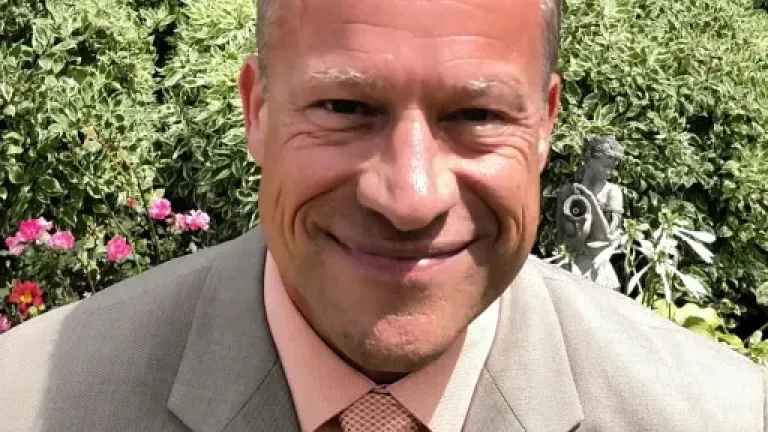



Daniel Apartian
What you do matters. What you decide to do, today and every day, has a consequence. The Bible is relentlessly clear about this: cause and effect, decisions and rewards. From Revelation to Proverbs, from Ruth to the Epistles, Scripture repeats the same theme — sometimes gently, sometimes urgently — that we reap what we sow. But this isn't about earning salvation. It's about understanding that grace saves us, but our works determine our reward. A grandfather's small mistake in 1920s Minnesota cost his family everything. A decision to keep the Sabbath cost a job but opened doors to blessings no paycheck could buy. A little girl picking peas instead of rocks on a Minnesota farm learned what so many adults never grasp: your choices have consequences, and those consequences can be either the bitter fruit or the sweet harvest. This message walks through the entire Bible — Old Testament to New — showing how God measures our lives not by our intentions or our beliefs alone, but by what we do with what we've been given. You get what you pay for. The question is: what are you planting?
Scriptures referenced: Revelation 22: 12; Ruth 2: 10–11; 2 Samuel 22: 21; Psalm 19: 7–11; Psalm 28: 4; Psalm 33: 14–15; Psalm 62: 12; Proverbs 11: 18; Proverbs 13: 13, 21; Proverbs 24: 12; Ezekiel 16: 43; Isaiah 59: 18; Jeremiah 25: 14; Jeremiah 31: 16; Ezekiel 9: 10; Hosea 4: 9; Jonah 3: 10; Micah 3: 4; Micah 7: 13; Zechariah 1: 6; Matthew 5: 12; Matthew 6: 4, 6; Matthew 10: 41–42; Matthew 16: 27; Luke 6: 23; Romans 2: 6; 1 Corinthians 3: 8, 14; 1 Corinthians 9: 17, 24; 2 Corinthians 5: 10; 2 Corinthians 11: 14–15; Galatians 6: 7; Philippians 3: 14; Colossians 3: 24; 2 Timothy 4: 14; Hebrews 11: 6, 24–27; James 1: 12; James 2: 18; 2 John 1: 8; Revelation 18: 6; Revelation 2–3
The title of today's message is "Decisions Bring Rewards." Decisions bring rewards. And we'll have an opportunity to explore as we go through the Bible about what the Bible teaches about cause and effect and how that places us with regard to God's plan for salvation.
I'd like to start with Revelation 22, verse 12. In the book of Revelation, chapter 22, verse 12, I'm reading from the New King James Version: "And behold, I'm coming quickly, and my reward is with me, to give everyone according to his work." Other translations will say, "according to what one does." In other words, our actions make a difference. So what actions we make, the decisions, make a difference — decisions about rewards.
And if we take a look at this verse, when it says "according to his work," the word "work" in Strong's is a Greek word, G2041, *ergon*. And the biblical usage is business, employment, or that which one is occupied. And we're certainly all occupied in what God has called us to do. It's also used for that which one undertakes to do, an enterprise or an undertaking — again, fits for us. Third, any product or whatever, anything accomplished by hand or art or industry or mind — again, what we're engaged and involved in. And fourth, an act, deed, or thing that is done; the idea of working is emphasized as compared to that which is less than work. So we're all involved in some way in the work of God. And what we're reading in Revelation here is that there is a reward according to what we do.
Now, the consequence or reward for what we do in this life occurs when Jesus returns to earth, and he will be well aware of our work because he will be making decisions about the product of what we accomplish. And the term "reward" is used to describe the consequence of people's actions, either good or bad. Personally, I like good rewards instead of the bad ones.
The word "reward" in Strong's is G3406, *misthos*. And the reward is dues paid for one's work, or wages, or hire, or reward such as the fruit resulting from one's toils or endeavors, or in both senses, rewards and punishment. So when people make decisions, they get rewards one way or the other.
We live in a world where many people feel entitled. They want something for nothing. They want a positive reward without putting in any effort. The same people have likely never gone through really hard times. They've not gone without electricity or running water. They don't know a time when the use of the automobile wasn't readily available. The people today haven't rarely — very few have ever gone through the Great Depression, or they haven't gone through World War II. Most have not had the Korean War or Vietnam War experience. Many of them, of the people today who feel entitled, have never known a time when there haven't been computers or cell phones for that matter.
And as a result, many people, young people — and when I say young people, those under 70, just so we're clear — they haven't been exposed to the direct relationship in that physical sense between cause and effect. For every effect or cause, there has to be a consequence that's brought about because of a particular — or each decision brings about a consequence and has a particular result.
Now, a hundred years ago, it was different. We didn't have all of these modern conveniences, and decisions, little decisions, could have big differences. My paternal grandfather was born in 1895, and he was a farmer in the south central Minnesota prairie, a pioneer farmer. And his life turned on a small decision that he made. He made a mistake, a bad decision, and he paid a dear price.
He was putting equipment away in early September, and he suffered a very slight head wound — creased the skin, put the machinery away and bumped his head on a piece of equipment, and creased the skin, caused the blood to flow a little bit. And he put that horse-drawn machinery back into the building. Now this was in the days before electricity, before telephones; they didn't have automobiles and tractors; they farmed with horses. But my grandfather's slight head wound got infected. Antibiotics were not yet widely available in the 1920s.
My grandfather's wife — my grandmother — had two little children: a three-year-old girl and a little boy who was my father, who was just ten months old. My grandmother couldn't be readily expected to harness a horse, hook up a buggy, load up her feverish, delirious husband, pack up the two little children, and drive the horse and buggy for eight miles to the nearest town to visit a doctor, not to mention keeping up with any farm chores.
After three days of feverish misery, my grandfather died, and he left a 23-year-old widow with two little children. Again, it was the family that paid a dear price for my grandfather's very small mistake.
Now, it was at ten months of age that my father took his very first steps on the day of the funeral of his own father. The choices the family made — they were faced with hard choices — but they had to step up to the challenges. And it was only a few years later, the start of the Great Depression. That was a time when many people simply did without many things. Most people grew much of their own food, they sewed their own clothes, made do with what they had. They relied on cooperation from friends and family and neighbors for mutual survival.
My grandmother's five younger brothers rotated to come to the farm and live on the farm, as it were, as a hired hand to keep the operation going. A little over a decade after the Great Depression started, the country entered World War II, and people experienced rationing — in other words, the allocation of food, gas, rubber tires, and other commodities.
Just five years after the end of World War II, here we go again: the country entered the Korean War. My father was then drafted into the army. Through all these experiences, people learned the hard way about the basics of the laws of economics, and that is the concept of scarcity. There simply isn't enough of everything to satisfy everyone at a free price. Now, therefore, people had to make decisions as to how to allocate their time and resources to survive and thrive.
Now, I've taught economics for over 20 years. I have a degree in it. And the simple definition we use for economics is this: Economics is the study about how people make decisions in a world of limited resources. We learn to make trade-offs, to do or to do without.
Now, many of us learned the laws of the universe early in life. As a baby, first they learned to roll over, and then after a while they figured out how to get their knees under them and they get into a crawling position. And then they learned to crawl, and after a while they get adventurous and they try to stand up. Might be a bit wobbly at first, but they see adults walking around, so intellectually they know it must work, so they give it a try. And that's when they learn gravity, about a misstep and down they go. I'm sure all of us have had those same experiences, skinning the knee, bruising the forehead, whatever.
Now, I was one of four boys raised on a farm, no sisters. And so when I was five years old, off I went to the country school for first grade. And that's when I learned what girls were. And there they were, jumping rope, saying a poem, swinging a rope. And I didn't know the big words such as inertia, centrifugal force. Nobody had to; nobody spelled out gravity for me. But it was all there. All of the things that they were moving and doing, the activities that they were engaged or involved in, were learning the laws of the universe.
That country school was the same one that my grandfather went to, the one that my great-grandfather helped build. And watching and learning, the children learned about the physical laws of the universe. Also learned what you shouldn't say at school. My brother brought a new word home one day from school; he was in second grade. And then I learned that's a word you never say, because my dad had him over the sink with a bar of soap going in his mouth. And he was just experimenting with that new word he learned. So a lot of things you can learn in first or second grade.
Then it was not long after that, the school sold out. They merged with the nearby town district, and we had to ride a bus to the elementary school at the local city. And elementary school had a playground, which was different from the country. You just had space, grass, and trees. But in the city, they had a playground with playground equipment that included a slide. And if you climb up the ladder to this tall metal slide, you could slide down it. And whee, it would be a lot of fun, right?
Nobody said if the slide is in the hot sun, and when you slide down it, you are going to experience what hot metal does to bare skin. And so you learn more of the laws of nature, cause and effect — it comes about right away.
And so, then at some point, most kids learn swimming. They go to a pool, or a lake, or a pond, and the moment that their feet no longer touch the bottom, that little bit of anxiety kicks in, or maybe a lot. And they realize they are on their own to swim to safety and do their best to survive.
So today I want to pose this question: Since we all had to learn the physical laws of the universe through personal experimentation, then why is it that so many people do not understand the principles of cause and effect regarding the spiritual laws of the universe?
I'd like a follow-up question that we'll deal with: Why do so many people not realize their decisions have consequences, both positive and negative?
Now we're all fortunate to have an owner's manual for our human experience. The owner's manual is simply the Word of God. It's printed for our benefit. We're fortunate to be able to have one, each have one, in this modern era. It's called the Bible, the Word of God. It provides a history of the universe and a history of humanity, and it's a book that lays out principles for successful living. It's a book that provides insight into the very reason for mankind's existence, and it's a book that outlines prophetic events to forecast our future.
And the Bible is a book that uses repetition to teach and remind us of the powerful relationship between cause and effect. Now things don't just happen for no reason. They happen for a reason. For every consequence, there is an effect, or there is a cause. Therefore, it seems entirely reasonable to use the Bible as a resource to teach about the consequences of our decisions. Another word for consequences is the word "reward."
Now, almost 50 years ago, I was building a small business and I was taking seminars. And I ran across a book entitled "The Greatest Salesman in the World" by Og Mandino. And I went to the seminars, and I really got caught with this particular quote from that book. And here's his quote, which I never forgot: "If you throw enough spaghetti against the wall, some of it has got to stick."
Well, today we're going to throw a lot of spaghetti against the wall. And we're going to start by going early in the Bible, and we're going to work our way through the Bible. And it's not spaghetti in that case — that's just a rhetorical sense — but we're going to take a look at rewards for righteous behavior.
Let's start with the book of Ruth, chapter 2, starting in verse 10. In the book of Ruth, chapter 2, verse 10, now of course Ruth was not an Israelite; she was a Moabitess. She had married an Israelite who had migrated to Moab. Her husband died, her father-in-law died, and so she was left with a mother-in-law, and she went with her mother-in-law back to Israel. It was only 30-40 miles, but when you're walking by foot, how many of you have walked 30-40 miles in one go? Took a while, right? It wasn't always the safest world to do that in.
But she went with her mother-in-law back to Bethlehem in Israel, and she took care of her mother-in-law because she dearly loved her. And what was the Israeli custom at that time in Israel was that the farmers left the corners of their field for the widows to be able to harvest. And so there was Ruth helping her older mother-in-law by going out and gathering grain. And what Boaz did, who was the farmer — he told his workers, "See that gal over there? Drop a little extra for her."
Well, because, and so she said in verse 10, "She fell on her face, bowed to the ground, and said to him, 'Why have I found favor in your eyes that you should take notice of me since I am a foreigner?'" which was highly unusual to be so welcoming to a stranger.
Verse 11: "And Boaz answered and said to her, 'It has been fully reported to me that all you have done for your mother-in-law since the death of your husband, and how you've left your father and your mother and the land of your birth, and have come to a people whom you did not know before.'" Now this is interesting because Boaz says, "May the Lord reward your work, your wages, be full from the Lord, the God of Israel, under whose wings you have come to seek refuge." He's asking God to give her reward.
But you know, Boaz was doing his part too. First of all, leaving the corners of the field, and then dropping a little extra. You might say there was an ulterior motive there, and you probably would be right. So the concept of reward is not a new concept.
In 2 Samuel 22, verse 21, we read this verse: "The Lord has rewarded me according to my righteousness, according to the cleanness of my hands he has recompensed me." What does it mean, cleanness? That's your work, what you've done. Cleanness — the righteousness of your hands.
In Psalm 19, starting in verse 7, the psalmist writes: "The law of the Lord is perfect, converting the soul. The testimony of the Lord is sure, making wise the simple. The statutes of the Lord are right, rejoicing the heart. The commandment of the Lord is pure, enlightening the eyes. The fear of the Lord is clean, enduring forever. The judgments of the Lord are true and righteous altogether. Moreover, by them your servant is warned. In keeping them there is great reward."
In other words, it lays it out what God expects — the law of the Lord — and he starts it with "the law of the Lord is perfect" and ends with "keeping them is a great reward." In other words, there is a positive consequence for keeping the law of God.
We're in the book of Psalms. Let's turn to chapter 28, verse 4. You might say this was an imprecatory prayer. Psalm 28, verse 4: "Give them" — it's referring to workers of iniquity — "give them according to their deeds, that according to the wickedness of their endeavors, give them according to the work of their hands, render unto them what they deserve." The psalmist was having a hard go of it, and he understood the concept of cause and effect, rewards and punishment. Well, if that's what they want, give it to them.
In Psalm 33, verses 14 and 15: "From the place of his dwelling, he looks on all the inhabitants of the earth. He fashions their hearts individually and considers all their works." Isn't that what we started out when we read Revelation 22:12? When we read, "He considers all their works" — in other words, what they have done or what are they doing.
And we hear that repeated in Psalm 62, verse 12: "And loving kindness is yours, O Lord, for you recompense a man according to his work." In other words, you get what you pay for. You do good things, you can get a good result. You do ungood things, you get a bad result.
We jump to the book of Proverbs. Proverbs 11, verse 18: "The wicked earn deceptive wages, but he who sows righteousness gets a true reward." What are deceptive wages? They think they're getting away with it for now, the wicked, but ultimately, do they? No. It's the righteous who ultimately get the true reward.
Proverbs 13, verse 13: "The one who despises the word will be in debt to it, but the one who fears the commandments will be rewarded." Here again, we see good decisions versus bad decisions.
We're in the book of Proverbs, chapter 13. Let's jump to verse 21: "Adversity pursues sinners, but the righteous will be rewarded with prosperity." We're talking in the spiritual sense here. It doesn't mean that we will all be billionaires, but prosperity.
Proverbs 24, verse 12, again, it mirrors Revelation 22: "And will he not render to each man according to his deeds?" In other words, there's cause and effect. There is what people do, and then there's what people get for what they do, for better or worse.
In Ezekiel 16, verse 43: "Because you did not remember the days of your youth, but agitated me with all these things, surely I will recompense your deeds on your own head, says the Lord God." In other words, once again, you get what you pay for. It's sort of like, play stupid games, win stupid prizes. And a lot of people do exactly that.
Isaiah 59, verse 18: It's said in a different way: "According to their deeds, accordingly he will repay." And you know, it's not just individually; it happens nationally as well.
The book of Jeremiah — the wailing prophet — Jeremiah 25, verse 14: "For many nations and great kings shall be served by them" — meaning talking to Israel — "and also I will repay them according to their deeds and according to the works of their own hands. Some countries that are helpful to God's people will do well, and some won't."
In Jeremiah 31, verse 16: "Thus says the Lord, 'Restrain your voice from weeping and your eyes from tears, for your work will be rewarded,' declares the Lord, 'and they will return from the land of the enemy.'" This was projecting to a time when they would be taken captive, and they indeed did return. That's happened several times in history.
The book of Ezekiel repeats the theme. Ezekiel 9, verse 10: "But as for me also, my eye will neither spare nor will I have pity, but I will recompense their deeds on their own heads." In other words, individually, people will get what they pay for. They take actions; they make decisions; they will get rewarded for those decisions, whether it's to their benefit or not. And this is repeated in Ezekiel 11:24 and Ezekiel 22:31.
You get this whole idea of repetition, and the repetition is absolutely necessary. Because if we didn't have a Sabbath every week, how many people would remember it? But it comes around how often? Every seven days. We've got it figured out by now. How often are the annual holy days that are listed in the Bible? They're called annual holy days because they come every year at a consistent, predictable time that's laid out in Scripture. So there are things that are routine. The sun rises in the morning, sets in the evening. The moon, every 29 days or so, will become full. And so there is repetition that allows predictability.
We go to Hosea, chapter 4, verse 9: "And it shall be like people, like priests, so I will punish them for their ways and reward them for their deeds." In other words, it doesn't matter who you are. You can think you are somebody, or you can not. But everybody will be rewarded by what they do.
Then we read in the book of Jonah, chapter 3, verse 10. In the book of Jonah, if you're familiar with the routine, Jonah was told to prophesy to an enemy nation — to the city of Nineveh, a big city. And he said, "Oh no," and he tried to flee. And it didn't work out well for Jonah.
I don't know about you, but it can't become comfortable to be swallowed by a large fish. I've never been swallowed. I've not gone three days sloshing around in stomach acid, bleaching me from head to toe, with nothing to eat, nothing to drink, and no sleep. Can't very well sleep. And I've never been regurgitated either. That has to have also been very uncomfortable.
But you know, when Jonah was spit out on a beach, it was recorded. Somebody must have seen it. Now, can you imagine seeing the guy who is bleached from head to toe — a ghastly white, including his eyelashes? I mean, everything was acid bleached. Would that bring people's attention to this guy?
So he decided it's probably a good plan to do what God asked me to do and go prophesy to Nineveh. And he marched around the city and prophesied. And here was this unusual creature called Jonah, marching, prophesying. And what did Nineveh do?
We read in the book of Jonah 3:10: "Then God saw their works, and they turned from their evil ways. And God relented from the disaster He had said that He would bring upon them, and He did not do it." Nineveh was not destroyed at that time.
Now, like I say, how many of us want to go through what Jonah had to go through? He made a decision and he ran away. Then he had some bad experiences and decided he would make a better decision and went and followed through with what God told him to do. I still have a hard time imagining getting bleached from head to toe, keeping your eyes shut for three days, and no sleep.
But Nineveh became believers in Jonah's prophecy. But not everybody will turn from their ways like Nineveh did.
In Micah 3, verse 4: "They will cry to the Lord, but He will not hear them. He will even hide His face from them at that time, because they have been evil in their deeds." It was their deeds, their actions, that have separated them from God. It's a little too late to now claim, "God, will you save me now from my repeated stupid decisions that I have continually made and rejected you all the way along?" God says, "Well, you get what you pay for."
Micah 7, verse 13: "Yet the land shall be desolate because of those who dwell in it and for the fruit of their deeds." Ouch. So if you make bad decisions, you get bad fruit. Ever bite into a bad piece of fruit? I think everybody's had that experience somewhere along the way. Oh my, you can't wait to spit that out. Bad fruit or rotted fruit that you never got to.
We're still in the minor prophets. Down to Zechariah, chapter 1, verse 6: "According to our ways and according to our deeds, so he has dealt with us." It could be to the positive reward or to the negative, to the punishment. In other words, people got what they paid for.
We start now in the New Testament, in the book of Matthew, chapter 5, verse 12. Matthew 5:12. We read: "Rejoice and be glad, for your reward in heaven is great. For in the same way they persecuted the prophets who were before you." He was speaking to believers and said, "Be glad for the reward." There's something to be very joyful about because there's a special prize waiting for you as a result of your choices, your behavior, your decisions.
We're in the book of Matthew. Matthew 6, verse 4: "So that your giving will be in secret, and your father who sees what is done in secret will reward you." If you're doing stuff, do you have to get your trumpet out, blow the horn, and announce to the whole world, "Look at me, look at me, I wear a halo, and look at all the good stuff I've done"? It's not necessary because what does God say? He knows what we're doing for better or for worse, and we will be rewarded accordingly — hopefully for the better — and we need to put the worse away.
Two verses later, Matthew 6, verse 6: "When you go into your inner room, close your door and pray to your father who's in secret, and your father who sees what is done in secret will reward you." So nobody's getting away with anything. We have an all-knowing, all-seeing God who knows what the good decisions we make and can reward us accordingly, and how much we don't want to make the bad decisions.
Matthew 10, verse 41: "He who receives a prophet in the name of a prophet shall receive a prophet's reward, and he who receives a righteous man in the name of a righteous man shall receive a righteous man's reward." In other words, there is a righteous reward. So the effort is — the Bible does say no one's righteous — but a righteous man is somebody who's going in the right direction, making the right decisions to do the right thing.
Matthew 10, verse 42: "And whoever in the name of a disciple gives to one of these little ones even a cup of cold water to drink, I say to you, he shall not lose his reward." In other words, we can lose our reward, but it's up to us to keep it, to make the decisions that are helpful to keep what God has in store for us.
We're in the book of Matthew. Matthew 16, verse 27: "For the Son of Man will come to the glory of his Father with his angels, and he will reward such according to his works." Are we getting that there's a theme so far through the Bible — that decisions bring rewards? And that's really a theme that's consistent through the Bible.
Then we read this in Mark. We read the repeats of the verse in Matthew. In Luke 6, verse 23: "Be glad in that day and leap for joy, for behold, your reward is great in heaven, for in the same way their fathers used to treat the prophets." In other words, the believers were not being well treated. Did you ever get not well treated because of your belief system, because of your keeping the Sabbath or what you wouldn't eat?
I work for a very large company that will not now be named. I worked for them for one month. They called me into the office and said, "We understand that you refuse to work from Friday night to Saturday night." And I said, "Yes, that's true. I've told people that up front." And he goes, "Well, we can't use people like that. We're revoking your employment, and off you go."
You know, that was devastating at the time. But the result, decision from that — what somebody else made — it looked like a punishment. But that reward turned out to have a bunch of zeros with two commas in it because of the things that came later. And I have to look back. It didn't feel like it at the time, but it was very, very instrumental in life. If you make the right decisions, you can get the reward.
If we now go to Romans 2, verse 6, Paul is writing through the Romans, and I'm going to pull this right out of context because it's repetitive from what we've been reading: "Who will render to each person according to his deeds." Now, hopefully, there are good deeds and you get good rewards. If there are ungood deeds, then you get ungood rewards.
The Apostle Paul is writing to the Corinthian church. In 1 Corinthians 3: "Now he who plants and he who waters are one, but each will receive his own reward according to his own labor." So we're all involved in some way, however little, in the church of God. Whatever we strive to participate in, whatever we do — even if it's to show up, okay? — and encourage others with our presence, with our fellowship, there's a reward for that.
Paul writes in 1 Corinthians 3:14: "If any man's work which he's built on it remains, he will receive a reward." Remains means made a difference.
1 Corinthians 9, verse 17, the Apostle Paul is on a roll: "For if I do this voluntarily, I have a reward." Guess what? Our decisions are our choices. They're voluntary.
We're in 1 Corinthians 9. Let's go ahead a few verses to verse 24: "Do you not know that those who run in a race, all run, but only one receives the prize. Run in such a way that you may win." But when we apply that to our lives, guess what we're talking about? Guess who we are racing against? Ourselves. We're not racing against anybody else. We're racing against ourselves so that we might be the one that receives the prize because God is looking for us to run the race in that way — so that we might be the winner.
Paul writes in his second letter to the Corinthians. 2 Corinthians 5:10: "For we must all appear before the judgment seat of Christ. Oh, that's probably a good message down the road because you know what? Who's going to appear before the judgment seat? You and your buddies and 17 other people all at once? No. It's you all alone. You're going to be there, and the decision will be about you — that each one of you, that each one may receive the things done in the body according to that which he's done, whether good or bad."
We'll all have to make account for those decisions, comfortable or uncomfortable. So we should keep this in mind when we're making those kinds of decisions — any decision of impact.
Paul continues to write in 2 Corinthians 11, verses 14 and 15: "Therefore it's no great thing if his ministers also transform themselves into ministers of righteousness, whose end will be according to their works." Ever watch the Sunday morning program on TV? They proclaim that their ministers of good works, or good things. They're going to call themselves ministers of righteousness. And Paul writes and says, "Their end will be according to their works."
And there's so many false ministers to say that works or what you do don't matter. We only need grace. After all, Christ did everything for us in our place. Nothing is required of us because of Christ's sacrifice. And they say that you're diminishing Christ's sacrifice when you keep his commandments.
A relative said that I shouldn't keep the seventh-day Sabbath because I was denigrating the sacrifice of Christ. They try to accuse us of being saved by our works. But in the end, God says in 2 Corinthians 11, verse 15, that these false ministers will be judged according to their works, which I thought was rather ironic. But they say, "You are trying to get your way into heaven by your works," and yet they will be condemned by their own. So according to Scripture, the Christians are indeed saved by grace, but they're rewarded by what? According to what they do — according to their works.
Paul wrote to the church in Galatia. In Galatians 6, verse 7: "Do not be deceived. God is not mocked, for whatever a man sows, that will he reap." You know, I've grown a garden, and I put rows of plants in, and then I put the little package on the end as to what I'm growing in that garden. And I've seen other people grow, and they have beautiful gardens. And it's amazing. It's the same seed that they planted was what grew in the row of carrots, the row of peas, the row of cucumbers, whatever it was — that's what grew.
What if? Would you expect any different? But it's the same way in our lives when we reap what we sow. Now, can you imagine sowing seed and you didn't know what it was, and you were greatly surprised when it came up? That would be a shocker.
And of course we have on the farm when we're harvesting grain on a combine harvester. And what it does is it brings the grain in, it threshes the grain, and then it has shakers. And the light straw goes out the back. The grain goes down through sieves and goes over to one side and goes up to a grain bin. But way down below, the sieves get finer and finer, and the finest seeds are the weed seeds that go to the very bottom. And they get augered over to another much smaller bin. Weed seeds are very tiny, very tiny little weed seeds. And the combine harvester is designed that way so you're not threshing the weeds and the crop and spreading the weed seeds back on the ground. It's to separate them out.
And then we didn't just dump the weed seed anywhere, okay? You kept that so that they couldn't pollute the field. You wouldn't be planting them again because that would reduce next year's crop with more weeds. And the more often you grew the crops and harvested that way, the weed pressure would go way down.
So whatever we sow, that's what we reap. So what should we sow? Good stuff.
Remember, I brought my little girls out to the farm in Minnesota to teach them what farm life was like — from being city kids. And I said, "What we do on the farm is we pick rocks." And the corn was just a few inches high — it's in June, hadn't gotten knee-high yet. And we go half a mile down, half a mile back, half a mile down. And the kids are spread out, each having a couple of rows to watch. Anything bigger than a chicken egg gets picked up, put on the flat rack, and we haul the rocks off the field.
And we get to the end of the field — a half a mile down — and where's... I'm missing a daughter. Where could she be? And we look way back on the other end of the field. She went a few feet over. We also grew green peas. And she's sitting on the ground shucking the peas and eating the peas instead of picking the rocks.
Someday I'll tell our kids about this. They're 13 and 16. I think they're big enough to handle it now. But the fields were different. Each crop had its own, and we would harvest the appropriate harvest for what we planted.
In Philippians 3, verse 14, the Apostle Paul again is on a roll. He knows the theme. Philippians 3:14: "I press on toward the goal of the prize of the upward call of God in Christ Jesus." He knows it's upward.
Have you ever climbed a mountain? It's harder to climb up sometimes than it is to come down. Now, I've gone up the mountain, but you know, the view is so much better at the top of the mountain than it is down below. And once you're up there, it's hard to come down the mountain. Well, first of all, you're all worn out. And then if you're not careful, you can stumble pretty hard — it's a crash. But it's an upward goal for the prize of the upward call of God in Christ Jesus.
Again, we read then in Colossians 3, verse 24. Are we getting the pattern here as we go through the entire Bible? Colossians 3:24: "Knowing that from the Lord you will receive the reward of the inheritance, it is the Lord Christ whom we serve." There's an inheritance. Whoa, that's a nice idea. And what do we inherit? The earth and all things. But that's not the subject of today's message. But there is a huge reward of an inheritance. Some people won't get the positive inheritance.
Now, Paul wrote to his ward Timothy. 2 Timothy 4:14. In 2 Timothy 4:14, Paul writes: "Alexander the coppersmith did me much harm. May the Lord repay him according to his works." He's not making the decision, but he said, God has already said repeatedly: you get what you pay for. Let Alexander the coppersmith suffer his own fate according to his works.
Hebrews, in Hebrews 11, known as the faith chapter — I want you to notice what it says about rewards. In Hebrews 11: "But without faith, it's impossible to please him. For he who comes to God must believe that he is, and that he is a rewarder of those who diligently seek him." That's Hebrews 11:6. "Who a rewarder of those who diligently seek him." There's that word "diligent" — means you have to actively be doing it. Does it say, "Oh, once in a while when you happen to remember it"? It's diligence, sort of like brushing your teeth. If you don't brush your teeth diligently, what happens? That's a decision we make. I know people that didn't brush their teeth, and now they're what we call gummers. Don't have any teeth. In other words, they rotted out.
So here, the diligence is critical.
In Hebrews 11, Moses is mentioned. When it says that he forsook the treasures of Egypt — now he could have enjoyed life as the son of Pharaoh's daughter, and indeed did for his first 40 years — but he left it. For what, it says in Hebrews 11, verses 24 through 27, I'm not going to read it all, but refer to it: Moses esteemed the reproach of Christ, greater riches. In other words, he gave up one to have hope and opportunity for the other. He didn't stick with Pharaoh's court. He decided to go with the truth.
We go now, later in the Bible, to the book of James 1, verse 12. James 1:12: "Blessed is the one who perseveres under trial, because having stood the test, that person will receive the crown of life that the Lord has promised to those who love him." Ever seen a crown? A real crown? I've seen them in a castle, visiting castles, and you see them in the glass cases — actual crowns that royalty wore. They're bejeweled. They're valuable. They're expensive. They're not common. But there is what they call a crown of life that is promised to us.
We're in James 1, verse 12. Let's jump to chapter 2, verse 18. James 2:18: "I will show you my faith by my works." It isn't just what we say. Anybody can say anything. It's what we do that makes a difference. So if you say you're faithful, what does that mean? That's gone as soon as the words are gone. It's what you do that matters.
In 2 John 1, verse 8. 2 John 1:8: "Watch yourselves that you do not lose what we have accomplished, but that you may receive a full reward." So we've done a lot of the right things. It's telling us here, don't goof this up. Hang on to it because you want to get your full reward.
Now, we're getting back to where we started — in the book of Revelation. In the book of Revelation, let's go back to chapter 18, verse 6: "Render unto her" — and this is talking about Babylon the Great — "just as she rendered to you, and repay her" — meaning Babylon the Great — "double according to her works in the cup which she has mixed." "Mixed double" for her — in other words, make it an ample reward because of what Babylon the Great did, which was so heinous, so despising, so despicable, that those works were highly negative.
To each of the seven churches in Revelation 2 and 3, each one of those churches, what did Christ say? "I know your works." It doesn't say, "I know your good feelings. I know that you said you preached the right doctrine." It says what? It's what you did with what you had. "I know your works."
Now, Christ didn't say, "I know your teaching," but rather, "I know your works," which flows forth from the word "doctrine" — means teaching. In other words, he's saying, "I know what you do or what you did. I know that your actions are deeds" — and let's hopefully they flow from an upright heart and an upright intent.
Well, our focus today is on "Decisions Bring Rewards." We explored the Bible, what the Bible teaches about the principles of cause and effect, and how that figures into our reward in God's plan for salvation. Let's all seek God's righteousness and reap the benefits that God has provided for our future.

Tim Martens is the pastor of the Northwest Arkansas and Springfield Missouri congregations. Prior to becoming a pastor, he has had successful careers in business and education as well as being a newspaper columnist.
