

Frank Fish Jr.
The Day of Atonement pictures Christ as our High Priest, who entered heaven to appear before God for us and now intercedes while His people are being sanctified. As we fast, we humbly recognize our dependence upon His sacrifice and continuing ministry, awaiting His return and drawing confidently near to God.
Good afternoon, everyone! Good afternoon, everyone! That's better. Nice to see you all. I know our numbers are quite reduced. The number of people have already gone to the feast. But we do have some guests here. I want to welcome those that are traveling by, going to the feast. It's nice to have you with us. I really appreciate the song we just sang. Very meaningful. And in fact, the song we just sang summarizes my message today. So thank you, Jonathan. But today, I want to look at Leviticus 16, and I also want to look at Hebrews. And so, to make your life easier today, put a marker on Leviticus 16, and put a marker on Hebrews, because we're going to switch from one to the other. But in Leviticus 16, we see Israel approaching God in a special Atonement ceremony. And let's look at that in Leviticus 16. And we're going to see that starting in verse 30, because I want to show you that the context of Leviticus 16 is indeed the Day of Atonement. And on verse 29 and 30, it said, this is a statute for you in the seventh month, on the tenth day of the month. You shall afflict your souls. And we know very well what afflicting our souls is. We're all going through it. And you can see that this statue of Leviticus 16 is on the Day of Atonement. Because then, on verse 30, it says, for on that day the priest shall make Atonement for you to cleanse you, and that you may be clean from all your sins before the Lord. And so this ceremony involves, primarily in my mind, activities of the priest. Think about it. It's activities of the priest. He is the mediator who represented the people before God. There is obviously a sanctuary, the place representing the dwelling and the presence of God. There is a sacrifice of a sin offering for the high priest, because as a human being, the high priest, could not enter into God's presence on his own merits. And then, there's the two goats that you probably heard a lot of. One representing Satan, and the other one for Christ. And then we see the sacrificial blood of the goat representing Christ, carried into the Holy of Holies, where the ark and the mercy seat is.
And then we get to what I believe is the crucial part of this Leviticus 16. It's when the high priest enters the Holy of Holies and fulfills atoning work. So think about that, because we're going to spend quite a bit of time talking about that today. After the completion of that atoning work, the high priest leaves, in other words, leaves the Holy of Holies, and then he goes and imprisons the goat which represents Satan. And in parallel to all this, there's a required response by the people which are waiting outside. They're not seeing what the high priest is doing inside the Holy of Holies. They're just waiting. And the response or the action that the people outside have, it's the same action that you and I have, is we wait. That's a very interesting one day, because we're going to talk more about that. And we need to be humble and afflicting our souls before God. And all these come together in this ceremony of Leviticus 16, about the day of atonement, which was done once a year on this day. But it does not end there, brethren, because the book of Hebrews shows our Christ for full the role of the high priest, which is described in Leviticus 16. Now, there is a scripture in Matthew 5.17 that you and I have read many a time, Matthew 5.17, which says, Do not think that I come to destroy the law of the prophets. I do not come to destroy but to fulfill. And quite often and quite correctly, we interpret that as meaning that Christ came to obey. Correct. But when he says he came to fulfill the law and the prophets, that means he came to fulfill the different prophetic statements in the law. And today, we're going to look at prophetic statements in Leviticus 16, which Christ fulfilled as our true high priest. And so, brethren, today, I want to cover the role of our high priest and our access to God. And so, in Hebrews 4, verse 15, we see, and let's just read it and then I'll explain what we see, for we do not have a high priest that cannot sympathize with our weaknesses, but was in all points tempted as we are yet without sin. The high priest, the physical high priest, could not do that. The physical priest, for one, was he himself a sinner. And therefore, for the physical high priest to represent Christ, he had to first cleanse himself because he was a sinner. But Christ never sinned. He says he was pointed in all ways, in all points, he was tempted in all points as we are, yet without sin. So let's go back to Leviticus 16 in verse 6.
In Leviticus 16, verse 6, we see, an Aaron, he was the high priest at that time, shall offer the bull as a sin offering which is for himself. You see, the high priest at that time was Aaron, but throughout the years afterwards, obviously, there would have been other high priests, physical human high priests, they could not fulfill that role that we're going to represent, symbolizing Christ as our high priest. They could not fulfill that role unless they first had to be cleansed. And that's why it says he had to offer the bull as a sin offering for himself. And look also in verse 11, Leviticus 16, verse 11, he says, an Aaron shall bring the bull of the sin offering which is for himself, and make atonement for himself and for his house. You see, so Aaron had to first cleanse himself to be able to symbolically represent Christ. And note that this could only be done by the high priest. The actions that we're going to see now can only could only be done by the high priest, not by any other priest or any other person. Now, what was the action that the high priest had to do once he was representing Christ? And that is in verse 15 and 16. And it says, the high priest, now representing Christ, shall kill the goat, that's the goat that symbolized or represented the Lamb of God, of the sin offering which is for the people, which is for us. Christ died for us. And bring its blood inside the veil, and do with the blood as he did with the blood of the bull. And what did he do with the blood of the bull? If you read the last part of verse 14, you see that he sprinkled the mercy seat with the blood with his finger seven times. Seven times, which means complete, right? Complete. So he says, and he shall do with that blood as he did with the blood of the bull, and sprinkle it on the mercy seat, in other words, seven times, and before the mercy seat. And so he shall make atonement for the holy place, not the word places in italics, we'll go into that as well, because of the uncleanness of the children of Israel, because of their transgressions for all their sins. And so he shall do for the tabernacle of meeting, which remains among them in the midst of their uncleanliness. And so the high priest, now representing Christ, took the blood of the goat, which represented the Lamb of God, into the Holy of Holies. For what purpose? To atone the people, to atone Israel. And verse 17 then says, there shall be no man in the tabernacle of meeting, when he goes in to make atonement in the holy place, again, places in italics, until he comes out, that he may make atonement for himself, for his household, and for all the assembly of Israel. We're going to drill down on these few verses here, because there's a lot of media. We're going to unpack this, because there's a lot of valuable content here, because this, brethren, provides a remarkable picture of Jesus Christ's work as our high priest. The physical high priest entered the physical sanctuary. Jesus Christ has entered the heavenly sanctuary, and is now at the very presence of the Father.
In Hebrews 9, Hebrews 9 verse 24, so if you're keeping those markers there, you'll be able to switch back and forth quickly. Hebrews 9 verse 24, we read, for Christ has not entered the holy places made with hands, which are copies of the true. You see, that was only a copy. That was only a replica, like a short, small, little photocopy of the reality. But Christ entered into heaven itself, now to appear before the presence of God for us.
For us. So Christ's note is in heaven. But the point that I want to emphasize today is that He is not just in heaven. He is there working for us. He is functioning as our high priest. He represents you and I. He represents us, because it says He is appearing in the presence of God for us. He represents you and I, God's people before the Father. He intercedes for us. He at towns for us. In Hebrews 7 verse 25, we read in Hebrews 7 verse 25, therefore He is also able to save to the utmost those who come to God through Him, since He always lives to make intercession for them. Christ is living to make intercession for us, for the people, for those who come to God through Him. That's us. Those who come to God through Him. He is always making intercession for us. He is intervening for us. He is our high priest. And so, let's look back at Leviticus 16 verse 17, because we want to look at the significance there. Leviticus 16 verse 17 says, there shall be no man in the tabernacle of meeting.
While the high priest is performing his work, there shall be no man in that area, and not obviously not in the Holy of Holies. The anti-type is that Christ alone entered the heavenly sanctuary as the resurrected and glorified high priest. And you and I, as the faithful saints, or we are alive on earth, or those that have died before us as faithful saints, are dead. They are asleep. They are in their graves. They have not received, or they have not yet resurrected and received the glory. They are dead. They are not in heaven. They are dead waiting for Christ's resurrection, which we read in 1 Corinthians 15, 22, 23, 51, 52, 1 Thessalonians 4, 16, 17. But anyway, they are dead. They're not in heaven. And that's why it says, there shall be no man in the tabernacle meeting when he goes in to make a tolement for the holy. And so, brethren, the picture is very striking and very powerful. The high priest, which is Christ, is presently within God's presence in heaven. And the saints whom he represents are outside. We're not in heaven. We are waiting for his return. Look at the word, wait. We are waiting for his return. And so, we read in verse 17 again of Leviticus 16, that it says that the high priest not only did he go in to the Holy of Holies, but in verse 17 he says that he goes in to make a tolement in the holy place until he comes out. Until he comes out. And so, it establishes there's a period of time for him to be there before he comes out. And in verse 20 it says, in verse 20 it says, and when he has made an end of atoning the holy, the holy place, the tabernacle of meeting and altar, he then shall bring the life goat. When he has made an end of atoning. And so, he goes in and he's there making an atonement until he's made an end of that. Then he comes out and we can see he then shall bring the life goat. Can you see that clear sequence? The high priest enters. He performs the work of atonement. No other man is there with him. He completes the phase of his work. Then he comes out. And then he handles the fight of the life goat. And in verse 21 we can see. And then he'll take Aaron representing the high priest, will lay both his hands on the head of this life goat, confess on him the iniquities of the children of Israel concerning all their sins, and he shall send it away into the wilderness by the hand of a suitable man. And you know that, that parallels Revelation 20 verse 1 through 3. Revelation 20 verse 1 through 3. When it says, then I saw an angel coming down from heaven having the key of the bottomless pit and the great chain in his hand, and he laid all of the dragon that was represented in Leviticus 16 as that life goat, Azazel, the goat for Azazel, and he shall lay all down the dragon, the serpent of old, which is a devil in Satan, and bound him for a thousand years and cast him into the bottomless pit and shut him up and set the seal on him so that he could deceive the nations no more till the thousand years were finished. And so, this is important, brethren. Yah is a typology. This provides a very compelling picture of Christ's present, current, high priestly ministry, and then his eventual return from heaven back to earth at his second coming.
So, in Hebrews chapter 9 verse 24, we read Hebrews chapter 9 verse 24, and I know I'm reading a few scriptures a few times to bring out a few little points here and there. He said that Christ entered heaven to appear in the presence of God for us. So, he currently, Christ, serves as our high priest and intercessor, but he will not remain there indefinitely. Look at in verse 28 of Hebrews chapter 9. Hebrews chapter 9 verse 28. He says, so Christ was offered once to bear the sins of many to those who eagerly wait. Again, the word wait. You see, they wait for him. He will appear a second time. That's when he comes back, a second coming, apart from sin, for salvation. You will come at his coming. There will be a resurrection of the saints, and that is actually salvation day. The song we sang early on, it showed how Christ is redeemed us, but we are saved by his life. His life in heaven now, acting as our high priest and interceding for us.
You see, so again, let's just emphasize very simply the movements of the high priest. He goes in, he performs the appointed work of atoning, and then he comes out. And this is a type, or foreshadows, the larger movements of Christ. Christ entered the heavenly sanctuary after his resurrection. He is currently in heaven as performing his ministering as a howler-eye priest before the Father, and ultimately he will return from heaven at his second coming. Now, this does not mean that Christ's sacrifice itself is incomplete. No, Christ's sacrifice is complete. In Hebrews 9, Hebrews 9 verse 27 through 28, it says that 27 and 28, and he's appointed for man to die once, and in verse 28, he was offered once to be the sins of many. So the sacrifice is complete. Look in Hebrews 10 verse 10 and through 14, he says, by that, Hebrews 10 verse 10, by that will we have been sanctified through the offering of the body of Jesus Christ once for all. His sacrifice is complete. And then he continues in verse 11, and every priest stands ministering daily and offering repeatedly the same sacrifices, which can never take away sins. So those priests were doing their offerings daily and weekly and monthly and on the day of atonement, but can never really take away sins because they pointed to Christ. Christ came to fulfill the law. What law? That's ceremonial law. But this man, verse 12, Christ, after he offered one sacrifice that's complete for sins forever, has sat down at the right hand of God, and from that time, waiting till his enemies are made his footstool, for by one offering, one complete offering, by one offering, he has perfected forever those who are being sanctified.
You see, what continues, what Christ is doing in heaven, is not an ongoing sacrifice of Christ. No. But it is his high, high priest ministry that is now being based upon the completed sacrifice. He's making atonement for the holy, the holy people, God's saints. Now, let's go back to Leviticus 16, verse 16 and 17, because I mentioned that before. And in verse 16, he talks about, he'll make atonement for the holy place. And in verse 17, he talks about to make atonement in the holy place. And I mentioned the word place is in italics. In most English translations, the noun place of the holy has been inserted. So it is usually translated holy place, or sometimes it's translated a sanctuary. Now, correct. Yes, the Hebrew expression indeed refers in the context to the holy sanctuary, to the holy place. The context at that time, as a physical context, it was the holy place, that place, that sanctuary. But the word place is added in English, it's not in Hebrew. Therefore, in the immediate Levitical context, yes, the reference is to the sanctuary. And note, the sanctuary had not sinned. Rather, it requires ceremonial cleaning, because it stood in the midst of a sinful and unclean people. But when we start understanding the move from the physical type to the spiritual anti-type, or the spiritual reality, which is explained in Hebrews, an important connection emerges of this holy symbolizing in this anti-type God's holy people. He's making an atonement for God's holy people. And when we go back to Hebrews 10, verse 14, Hebrews 10, verse 14, it says, And you know sanctified means set apart, set apart from the world. That means we are being made at one with God in another way. And so, notice that in this verse, we've got a combination of something already accomplished. Right? Verse 14, By one offering he has performed forever, he has perfected forever, by one offering he has perfected forever. So it's one thing already accomplished. But we have a combination with something still taking place. And what is taking place? It says here in verse 14, those who are being sanctified. That is still taking place.
And so, Christ has offered the sacrifice once. Yet, his people, God's people, the holy people, are still being sanctified, are still being made holy. Thus, Christ's high priestly ministry is intimately connected with the people who God is presently sanctified. You see, and that possibly explains why God inspired that word not to be in Hebrew, in Leviticus 16 and 17, because it opens the door for a dual meaning, a duality. Yes, there was the physical, it was a physical place. But in a spiritual, it is the holy, but not the place, it's the people. That opens that door for that duality. Look at also Hebrews chapter 13 verse 12. Hebrews 13 verse 12. Therefore, Jesus also, that he might sanctify the people with his own blood, suffered outside the gate. And so we have here. Jesus is sanctifying the people with his own blood.
This is very important, you see. So the Day of Atonement, the actual intent, therefore points beyond the cleansing of the physical sanctuary, if we look at the spiritual intent, because it points toward a much greater spiritual anti-tot, spiritual reality of a people being cleansed and sanctified through the blood of Jesus Christ. And so it is important that I distinguish that the direct meaning of Leviticus, yes, the context, is talking about a physical place, the sanctuary. But there is also a spiritual application. Leviticus 16 describes atonement for the sanctuary. But Hebrews reveals the greater reality of Christ sanctifying his people. So we have two critical actions, brethren. A sacrifice for sins and an atoning of the holy people. The relationship between these two provides a wonderful and a powerful typology, which is what? A completed sacrifice and a continuing high priesthood that is sanctifying the people. This distinction is important because when Christ said at the cross it's finished, John 19 verse 30, that means his sacrificial death did not need to be repeated. By one offering he has perfected forever, Hebrews 10.14 as we read. But Christ's work as our high priest did not end with his death. He was resurrected. He ascended to heaven. He entered the presence of the Father and he now serves there on the behalf of his people for us. He is interceding for us. That's why we read in Hebrews 9 verse 24, he appears in the presence of God for us. And we also read in Hebrews 7 verse 25, but let's just go there again in the last part there, Hebrews 7 verse 25. Why he is in the presence of God for us? Because he says he lives, he always lives, to make intercession for them. You know, it was those who come to God through Christ. So Christ's always doing intercession for us. And in Hebrews 10 verse 19 through 21, Hebrews 10 verse 19 through 21 says, therefore brethren, having boldness to enter the holiest by the blood of Jesus. This verse in the next few verses gives us the beautiful benefit to us not that we now can have boldness to enter the holiest by the blood of Jesus by a new and living way, which he consecrated for us through the veil that is his flesh and having a high priest over the house of God. You see, brethren, the sacrifice has been completed. The high priest is alive and well and active. He's presently before us. He's present in the house of God. He's presently before the Father. He represents you and I. He's interceding for us. And we, you and I, are presently being sanctified. In the Old Testament, the high priest entered and was in the Holy of Holies. And the Israelites, the people, waited for the high priest to come out of the Holy of Holies. This also makes a very significant spiritual meaning. Just like Israel, they saw the high priest going behind the veil, and they waited for him to come out. The parallel to us is that we see Christ in heaven and in faith. We know where he is, and we're waiting for him to come back. We know he's passed through the heavens as our great high priest. We know and we read that he's in heaven itself. And so we are waiting for him, as in Hebrews 9.28 says, those who eagerly wait for him, he will appear the second time, apart from sin, for salvation.
And in Leviticus 16-17 says, until he comes out. And that also carries a significant prophetic value in the book of Hebrews, because he comes out, and he comes out. And that is when he has completed the work of sanctifying us. And that means we now are sanctified before God, and we can be changed because the work for us has been completed. But where does fasting come into this picture, then? You see, fasting was done, and we know that the high priest was entering with the blood into the Holy of Holies, and the people were fasting. Now, remember, the people could not perform the high priest's work. They could not enter the Holy of Holies. They could not carry the blood behind the veil. They could not make atonement for themselves. But they could do what? They could, and were commanded to, to humble themselves before God, while the mediator, the high priest, acted on their behalf. This is also very significant to us, brethren, because fasting did not did not atone the Israelites, did not pay for their sins, but God wanted them to fast because their attitude mattered. Their attitude mattered. Fasting expresses an attitude of humility, of repentance, of dependence and recognition on our need for God to supply everything for us. We can't do it by ourselves. Therefore, while we meditate upon Christ's present high priest's role, we need to meditate that His role now in heaven is atoning us. We cannot atone ourselves, but we can return that gracious favor that He has done for us by dying for us, by dying for us, and the gracious favor that He's atoning for us. He is there working to forgive you when you and I slip up during these days of our lives.
And so, He is there doing that. And so, we humble ourselves, fasting on this day, giving us a wonderful opportunity to meditate about God's grace and our high priests atoning work for us, because we don't deserve it. We don't deserve it. So, we don't fast to make Christ's sacrifice effective. We don't fast to earn atonement. We don't fast to add something to His blood or anything like that. We fast because we recognize our complete dependence upon our high priest Jesus Christ, what He has done and what He is doing for us and our need to change. And you and I can go into Isaiah 58 verses 6 through 13 about what is the sort of fast that God wants. And I'm not going to go into there, but those are good points for you to meditate about. But fast helps us to acknowledge physically and spiritually what we cannot do. We cannot save ourselves. We cannot remove our sins. We cannot enter God's presence by ourselves. But we need a sacrifice. We need a mediator. We need a high priest, and Christ is that mediator and high priest for us. And so today, during the Day of Atonement, you and I voluntarily submit and surrender something absolutely fundamental for our physical existence. Food and drink. As our bodies weaken, we are reminded that you and I cannot sustain our own physical lives. You and I cannot self-sustain our lives without what God provides. God provides food from the garden, from everywhere God provides it. How much more are we dependent upon God for eternal life?
And we recognize the need for us to change. And so with fasting, we see that we have to respond to God in a godly way. And so the progression now is the high priest goes to alone to the Holy of Holies, which means Christ enters heaven. There shall be no man there in the Holy of Holies. Christ alone is in heaven as the glorified high priest. We as the saints are not in heaven. We await a resurrection. The high priest makes atonement by sprinkling the blood seven times, as you and I showed you, verse 15 of Leviticus 16, seven times. And Christ's sacrifice provides the basis for a complete cleansing, forgiveness, and reconciliation. The people afflict themselves as we afflict ourselves while the high priest is doing his work, while Christ is in heaven. How? By coming to a point that we are malleable and teachable and we want to repent. And the high priest makes atonement of the Holy. In other words, God's people are sanctified through the work that God has accomplished in us through him and by him sending God's Holy Spirit to give us the power and the help to do that. And so the people wait outside. God's people today are not in heaven, but we're waiting for Christ's return. So the day of atonement is not merely about Christ, our high priest, and what he did, but it's about what he is doing now. What Christ is doing now for you and I. So it's not pointing just to his death and sacrifice, that we look at it on the Passover, but it's pointing to his role as our high priest, what he's doing now. He lives. We are saved by his life. In the song we sang just before the sermon, which basically was Romans 5 verse 10, which says, for if we were, when we were enemies, we were reconciled to God through the death of his son, much more having been reconciled, we shall be saved by his life as our high priest, interceding and intervening for us before the Father.
And so we can see this great meaning in Hebrews 10 verse 19, that we have, as it says here, therefore brethren, having boldness to enter the holiest by the blood of Jesus by a new and living way, which he consecrated for us through the veil. So Christ's sacrifice provides for us forgiveness of our persons and reconciliation, but Christ's present high priest's role provides intercession and sanctification and access to the Father. You see, our sanctification is actually a two-fold process as well. Look at 1 Peter chapter 1 verse 2. 1 Peter chapter 1 verse 2. 1 Peter chapter 1 verse 2. It says, elect according to the foreknowledge of God the Father in sanctification of the Spirit for obedience and sprinkling of the blood of Jesus Christ. Can you see the sanctification is two-fold. One is of the Spirit and the other one is of the sprinkling of the blood of Christ. Christ is in heaven as our high priest. And in this life, he sends us. The Holy Spirit proceeds from the Father, but it's Christ that sends us as our high priest, sends us the Holy Spirit. The Holy Spirit helps you, gives you the power to overcome for obedience, for changing to be obedient. And in the meantime, we need the sprinkling, seven times complete, sprinkling of the blood of Christ on the mercy seat. Which is the work of the high priest, because you and I, now and again, unfortunately, we all do, I do, we all do, we still need a little bit of extra cleansing. And so, we eagerly wait for our high priest to come out when Christ appears a second time. And note that the outcome of this is that the veil, and you see there when you read Hebrews chapter 10 verse 20, it says, through the veil. That veil was torn. You know that veil was torn from the top to the bottom, from God, the top to the bottom. That veil represented, that sun separates us from God. That veil separated the people from the Holy of Olives.
And the ordinary Israelite could not go in, and ordinary priests could not go in. Only thy priest could, and once a year. And look at Hebrews 9 verse 8. Hebrews 9 verse 8. Hebrews 9 verse 8 we read, and the Holy Spirit indicating this, that the way into the holiest of all was not yet made manifest while the first tabernacle was still standing. The entire ceremony of Leviticus 16 taught both excess and restricted excess to approach God. Taught how we could excess, but only restricted only through the high priest. As Christ says, I'm the way. There's no other door. I'm the door. So there's no other way to approach God, but only through the mediator that God appointed through the sacrificial blood.
And therefore, as we were reading in Hebrews 10 verse 19 through 22, it says, through the veil, no man could enter, but it says in Leviticus 16, no man could enter while the high priest was making atonement. That's the Old Testament. Leviticus 16. Hebrews 10 says, through the blood of Christ, you now can enter, have boldness to enter. Can you see the change? Under the Levitical system, the message was simply, stay outside. Your high priest will enter for you.
Through Christ, the message becomes, your high priest has entered, and through him you may now get close to God and draw near to him, and enter with boldness. Now, we are fasting. Isn't fasting and boldness kind of contradictory?
Yes, at first it might appear so. On the day of atonement, we humble ourselves through fasting, yet Hebrews tells us to have boldness to enter the holiest. How can we be humbled and yet bold at the same time?
Because the boldness of Hebrews is not confidence in ourselves. It's confidence in Christ Jesus. We approach God humbly concerning ourselves, but confidently concerning our high priest. Our attitude is essentially, I have nothing in myself that gives me the right to stand before God. But I have complete confidence in the sacrifice and high priest that God has provided for me. That's why we read in Hebrews, verse 21 and 22 of chapter 10, then having a high priest over the house of God, let us draw near with a true heart in full assurance of faith, having our hearts sprinkled again. That's sprinkling the job of the high priest seven times, remember? From an evil conscience and our bodies washed with pure water, which obviously symbolizes God's only spirit. But we need to draw with a true heart in full assurance of faith. Christ dies for us what we cannot do for ourselves. Therefore, fasting on the Day of Atonement beautifully complements the work of our priests. While we contemplate what our priest has done and continues to do for us, we humble ourselves before God and acknowledge our complete dependence on God. And we humbly submit to God's desire and willingness to forgive us and to help us to change with the help of his spirit.
I know it was a long exposition of Levitic 16 and Hebrews, but in summary, on the Day of Atonement, as we learn from Hebrews about Christ's fulfillment of Levitic 16, we see that ancient Israel humbled themselves while the high priest entered the Holy of Holies on their behalf. But today, we fast, we humble ourselves before God. We understand that Christ fulfilled the law of Levitic 16. Remember, I read at the beginning, he came to fulfill the law. He fulfilled that law, that meaning, that interpretation. And we contemplate a far greater anti-type, a far greater reality than that of Levitic 16. We need to be bold, brethren, to enter God's throne in our prayers.
Because we know we don't deserve it, but we need to be bold by the blood of Jesus. By a new and living way, through the veil, which is Christ's flesh, we have him as our high priest and he's working on us. Therefore, brethren, let us draw close to God in full assurance of faith. I want to wish you all a happy feast, but also, above all, a spiritually, a very profitable feast. Be safe, stay healthy, and we love you. Look forward to see you back after the feast.
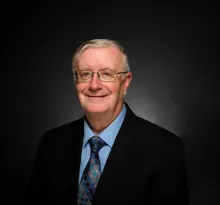
Jorge and his wife Kathy serve the Dallas (TX) and Lawton (OK) congregations. Jorge was born in Portuguese East Africa, now Mozambique, and also lived and served the Church in South Africa. He is also responsible for God’s Work in the Portuguese language, and has been visiting Portugal, Brazil and Angola at least once a year. Kathy was born in Pennsylvania and also served for a number of years in South Africa. They are the proud parents of five children, with 12 grandchildren and live in Allen, north of Dallas (TX).
