
Don Ward
This transcript was generated by AI and may contain errors. It is provided to assist those who may not be able to listen to the message.
Okay, we are in 1 Peter 2. We did the first three verses last time in our last Cybercast. The Apostle Peter draws heavily from the Book of Isaiah, from the Psalms in his epistle to the people there in Babylon. It was written from Babylon. So we'll read into verse 4, because we covered the first three verses. We'll have some comments here. Last time, what we focus on mainly is some people try to use verse 2 here to try to say that we are born again now in the ultimate sense. And of course, we spent quite a bit of time last time showing that we become spirit beings at the resurrection, and that is when we are ultimately born again. At the present time, we do have new life from above. We have the very essence of God dwelling within us. Wherefore, laying aside all malice. Now, laying aside, similar to defeating the flesh. Keeping the old man under the watery grave of baptism. Laying aside everything that has to do with carnality, because as we have received this new life from above, and if anyone is in Christ, he is a new creation, as Paul writes in 2 Peter, chapter 5 and verse 17. Wherefore, laying aside all malice and all guile. Guile, there's have no ulterior motives. It is with untheigned love for the brotherhood, as in chapter 1 here, in verse 21, I think it is. And hypocrisies and envies and all evil speaking. Put all of that aside. It's sort of a summary of the flesh and what flesh is about. So, as, put all of that aside, and as newborn, as newborn babes desire the sincere milk of the word. Now, we talked a little bit last time about, as, and here this is an analogy, it's not saying you are born again in the ultimate sense of what people think about with regard to being born again. It's as, just like a newborn baby desires the sincere milk. And we talked briefly about the rooting reflex that is in a newborn. It is throughout the mammal kingdom, the animal world and the human world, that a newborn babe has what's called a rooting reflex that they root toward the breast to receive the nourishment. So, just like a baby who is determined to get there, it's a matter of survival. Am I going to survive, to root, to get to the breast? So, just like that, desire the sincere milk of the word that you may grow thereby. If so be, you have tasted that the Lord is gracious. So, if you ever see the essence of God, the Holy Spirit, if you've been called into God's marvelous light, the term he uses later in this chapter, then if you've tasted that, desire that sincere milk of the word, just as a newborn babe does.
To whom coming unto a living stone, disallowed indeed of men, but chosen of God and precious. And so, Jesus Christ here is likened unto that living stone. Jesus Christ is the living stone. He is the rock upon which the church is built, and he is likened unto a living stone. Disallowed indeed of men, because, as you recall, he came to his own, his own received him not, but to them who believed on him, he gave them the power to become the sons of God. That is a paraphrase of John 1.12. To whom coming unto a living stone, disallowed indeed of men, but chosen of God and precious. Now, this part about the stone occurs in the prophecies, so we want to go now to Isaiah 28 and verse 16. Isaiah 28 and verse 16.
Here's, and this is the prophecy that he is quoting from here. That's not coming up. So I'll get my Bible here and turn there, since it's not coming up on the screen, to Isaiah 28.16. There is material here. Of course, all scriptures Peter writes and 2 Peter's given of inspiration of God as holy men were moved by the Spirit of God. So in Isaiah 28 and verse 16, Peter is playing off this verse in a sense, this prophecy here that we're going to read. Isaiah 28 and verse 16. Therefore, thus says the Lord God, Behold, I lay in Zion, and many times we have talked about Zion, a geographical place in the environments of Jerusalem. Sometimes Jerusalem and Zion are used synonymously. Behold, I lay in Zion for a foundation, a stone, a tried stone, a precious cornerstone, a sure foundation. He that believes shall not make haste. And remember the Matthew. Now, let's tie verses in together that have to do with this stone. Matthew 16 verse 18, where Jesus Christ came to the apostles and asked them, whom do men say that I am? And some say that you're Jeremiah, one of the prophets. And then he said, but who do you say that I am? And Peter said that you are the Christ, the living Son of God. I'm loosely paraphrasing. You might want to turn Matthew 16 verse 18. And then he says, I say unto you, looking at Peter, that flesh and blood hath not revealed this to you but my Father who is in heaven. Then he says, and upon this rock I will build my church and the gates of Hades, the gray will not prevail against it. Now the whole verse, I say unto you that you are Peter, Petros, little rock, and upon this rock, Petra, big rock, I will build my church and the gates of hell shall not prevail against it. So Jesus Christ is used metaphorically to refer to metaphorically as a stone, as we shall see here. Now let's turn to John 1.12, where it talks about here, disallowed indeed of men, but precious in the sight of God. This word precious has to do with it's of great value. There's nothing more important. It is of such great value. We look at this word of precious and value, dear, more honorable, precious in reputation. So that is Jesus Christ, and in the view of God, of course, his son is precious, and the saints are precious as well, even as it talks about precious in the sight of the Lord is the death of his saints. And in John 1.12, but as many as received him, to them gave he power to become the sons of God, even to them that believed on his name. So he came to his own. Some of them accepted him, but for the most part, the nation rejected him, and the nation turned him over to the Romans to be crucified. Now we go to Zechariah chapter 3, and this vision that is given in Zechariah with regard to a stone here. A bit of an obscure prophecy, but I'm quite convinced that it is referring to Jesus Christ. I won't go into all of the detail of Zechariah chapter 3. Zechariah chapter 3 basically deals with Joshua the high priest. The setting for Zechariah and Haggai is that Judah had been in captivity, and they had now been brought back from captivity under the hand of Zerubbabel and Joshua. Some almost 20 years had gone by, and very little progress had been made on building the temple, the Restoration Temple. So God raised up these two prophets, Haggai and Zechariah, to help them get the temple built. Cyrus issued the decree to rebuild the temple in 538 BC, and in 520, God raised up these two prophets, and they began to stir up the spirit of the people to get the temple built.
Much of the language in Haggai and Zechariah is figuratively picturing that which is to come, which is fulfilled through Christ and the Church. Joshua was the high priest, and Zerubbabel was the governor. Chapter 3 deals mainly with Joshua, and chapter 4 deals mainly with Zerubbabel. In Zechariah chapter 3 verse 7, thus says the Eternal of Hosts, if you will walk in my ways, and if you will keep my charge, then you shall also judge my house, and shall also keep my courts, and I will give you places to walk among these that stand by.
Of course, that promise is given to the saints, that if we are faithful, we will be made kings and priests. In 1 Corinthians 6 it even says, no, you're not, that you shall judge angels. Here now, O Joshua, the high priest, you and your fellows that sit before you, for they are, and the correct translation here is, men of sign, or symbolic of. Old King James says, men wondered at, but the correct translation is, and probably the new King James has it.
I know the RSV does, though I wouldn't recommend the RSV for even a cat person, but for they are men of sign, or symbolic of, for behold I will bring forth my servant, the branch. Who is the branch? Jesus Christ is the branch. Isaiah 11.1 and Isaiah 11.10. Let's turn there and read those verses. Isaiah 11.1. Isaiah 11 is a messianic and millennial prophecy. In Isaiah 11.1, and there shall come forth a rod out of the stem of Jesse.
And of course, Jesse is the father of David, and David was a type of Christ, and Jesus Christ, the prophecy says clearly in Luke, that Jesus Christ will be given the throne of his father, David. And there shall come forth a rod out of the stem of Jesse, and a branch shall grow out of his roots. And the Spirit of the Lord shall rest upon him the Spirit of wisdom and of understanding. And it goes on talking about characteristics of Messiah Jesus Christ. You look at verse 10, and in that day there shall be a root of Jesse, which shall stand for an ensign of the people, to it shall the nations seek, and his rest shall be glorious.
You look at Romans chapter 5 and verse 8. I mean Romans 15 and verse 8. That reminds me that I'm slated to begin teaching the epistles of Paul to the ministerial class this coming week, but I'll be, I don't know how we're going to work that out. Probably have to delay that a week since it'll be council meetings. This is that which is done by Webex. In Romans chapter 15, verse 11, and again, praise the Lord all you nations, and laud him you people.
And again, Isaiah said, therefore shall I root of Jesse, and he that shall rise to reign over the nations, in him shall the nations trust. And of course, that is speaking of Jesus Christ. There's no doubt that the branch is Jesus Christ. So we go back to Zechariah chapter 3, verse 8. I will bring forth my servant the branch. Now, what is my servant the branch going to do? For behold the stone that I've laid before Joshua, upon one stone shall be seven eyes. Behold, I will engrave the graving thereof, says the Lord of hosts, and I will remove the iniquity of that land in one day.
Now, one day removing of the iniquity of the land in one day could, perhaps, this is speculation. You can't say, let's say it's the Lord. But what great day is it that we celebrate in a feast day in which the one responsible for iniquity is put away the day of atonement.
I will remove the iniquity of that land in one day. In that day, says the Lord of hosts, shall you call every man, his neighbor, under the fig, under the vine, and the fig tree. So, you see here that it does have a millennial type setting. It merges right into the millennium. Now, we go back to the first part of verse 9. For behold, the stone that I've laid before Joshua upon one stone shall be seven eyes. Behold, I will engrave the graving thereof, says the Lord of hosts, and I will remove the iniquity of that land in one day. Now, you look at Revelation. So, let's go there to Revelation chapter 4.
And verse 5, And out of the throne proceeded lightnings, and thunderings, and voices. And there were seven lamps of fire burning before the throne, which are the seven spirits of God. And then you go to Revelation chapter 5 and verse 6. And I beheld, and lo, in the midst of the throne, and of the four beasts, and in the midst of the elder stood a lamb, as it had been slain, having seven horns, seven eyes, which are the seven spirits of God sent forth into all the earth.
So, you see here the lamps and the spirits are equated in the eyes. We look at back now to Revelation chapter 1 and verse 4. John, to the seven churches, which are in Asia, grace be unto you, and peace from him, which is, which was, and which is to come, and from the seven spirits which are before his throne. The seven spirits which are before his throne. Now, let's read those verses once again.
Revelation 4.5. Revelation 4.5, And out of the throne proceeded lightnings, and thunderings, and voices. And there were seven lamps of fire burning before the throne, which are the seven spirits of God. And we go on to Revelation 5.6. And I beheld, and lo, in the midst of the throne, and of the four beasts, and in the midst of the elders, stood a lamb, as it had been slain, having seven horns, seven eyes, which are the seven spirits of God sent forth into all the earth.
So, lamps, spirits, eyes are equated. Now, in this Zechariah 3, verse 9, upon one stone shall be seven eyes. And God says he will engrave the engraving thereof. We've read Matthew 16, 18, that says, where Jesus Christ says that upon this rock, Peter, a big rock, big stone, I will build my church. We also read from Isaiah 28, 16, that says, Behold, I lay in Zion, Zion, a geographical area. But Zion symbolizes the church, Hebrews 11, 22.
And then we read this in 1 Peter chapter 2, verse 4, to whom coming unto a living stone, disallowed indeed of men, but chosen and precious. So we'll look at this a moment in a diagram form. Now, verse 5 says that we are living stones built up. If we were to try to diagram the church in this stone, a pyramidal shape, shape of a pyramid, and upon this stone are seven eyes.
And we read that seven spirit, seven lamps, seven eyes are equated, and they go running forth through all of the earth. And we are told in Matthew 5 that you are the light of the world. So I believe that in all probability, this represents seven churches of Revelation chapter 2 and 3. And Jesus Christ said that He would build His church. Then we follow up with 1 Peter chapter 2 and verse 5 says that you also... So this is depicting the Zachariah 3.9.
Then Peter says in verse 5 that you also are living stones built up. And so every person who, metaphorically, once again, that has God's Spirit, the living stone, built up to the head to Jesus Christ. And then we'll read that Jesus Christ has become head of the corner. Now, you oftentimes think of a foundation stone, and He also would be here as well. The cornerstone is part of the foundation. He is the chief, the head of the church, and He's also the foundation. In Ephesians chapter 2 verse 20, it says that the church is built upon the prophets, the apostles, and Jesus Christ, the chief cornerstone. So, then the apostle Paul talks about in 1 Corinthians chapter 3 verse...
somewhere along 10 or 12, that what other foundation can be laid than that which is laid Jesus Christ. I don't think there's any doubt, obviously, here in 1 Peter chapter 2, speaking of Jesus Christ in Isaiah 28, 16, it is speaking of Jesus Christ. In 1 Peter 2, it is speaking of Jesus Christ, and Christ is the head of the church.
That's in several places, especially in Ephesians. He's the head of the church. So, as we read through this, you'll see those elements in it. So, let's continue here. We'll read verse 5.
You also, as living stones, are built up a spiritual house and holy priesthood to offer up spiritual sacrifices acceptable to God by Jesus Christ. Now, this one phrase here, and holy priesthood, that a lot of people have become involved in this. One man who used to be, he was a student here at Ambassador, later worked in the computer department in Pasadena, so on, got involved in this. A lot of people have that we are all to become kings and priests in the kingdom of God. Does that mean that you are a priest in the sense that you have been called to be a minister at this particular time? We're a part of a royal priesthood, but we are not all involved in being ministers in the sense of being called and ordained to the office of ministry. And there's been a great debate in the church. I know that Mr. Holiday gave a sermon regarding the royal priesthood and painstakingly went through several scriptures and showing that we are not all called to the office of ministry, that is, in the ordained sense at the present time. Now, if you go to 1 Timothy chapter 3, we talked a little bit about this back when we first started the leadership club with the men with regard to most people say, oh, I don't want to be a minister. I never want to be a minister. And a lot of people talk about, well, if you want to be a minister, you'll never be a minister. That's the wrong attitude to begin with. Well, is that what Paul says? I wonder. Let's see what he says. This is a true saying, if a man desire the office of a bishop, he desires the good work. Then he goes on to give the qualifications. We're all going to be ministers of God in the world tomorrow, but in the present realm, we have not been all called to an office in the ordained sense. It says very clearly, if a man desire the office of a bishop, he desires the good work. We go to Hebrews now, chapter 5. In Hebrews chapter 5, for every high priest is taken from among men, is ordained for men in things pertaining to God, that he may offer gifts and sacrifices for sins. It talks about us offering up spiritual sacrifices now. Everybody is to offer up spiritual sacrifices, even though they may not be an ordained minister in the church. The high priest at that time, he officiated over the priesthood in offering up the sacrifices. With regard to the priesthood, basically the priesthood was an inherited job, that it was passed down through Aaron.
Verse 2, who can have compassion on the ignorant, and then they're out of the way, for that he himself also is compassed with infirmity. And by reason, hereof, he ought as for the people, so also for himself to offer for sins. That's the priesthood of the Levitical priesthood. And no man takes his honor unto himself, but he that is called of God, as was Aaron. So also Christ glorified not himself to be made in high priests, but he that said unto him, you are at my son today, have I begotten you. As he said also in another place, you are to preach forever after the order of Melchizedek. So I think we understand pretty well that there are offices in the church that are specified. We're not all quote ordained elders. We're not all ordained deacons or deaconesses at the present time, but we are a part of the priesthood in the general sense. And you might liken it to the Levites in the Old Testament, in that all priests were Levites, but not all Levites were priests. So today, we're all a part of the spiritual Levites, but not all are ordained ministers or deacons or deaconesses.
But we are all called to offer up spiritual sacrifices. And one of the main sacrifices has to do with the fruit of our lips, which is done through Thanksgiving and prayer. We're here in Hebrews. Look at Hebrews chapter 13. Hebrews chapter 13. In Hebrews chapter 13, verse 15, By him therefore let us offer the sacrifice of praise to God continually. That is, the fruit of our lips, giving thanks to his name. But to do good and to communicate, forget not, for with such sacrifices God is well pleased. So one of the main spiritual sacrifices we can offer up is the fruit of our lips, which it involves many things. Thanksgiving to God, praise of God, and on it goes. We're familiar with the model prayer. Now you look at Revelation chapter 8. In Revelation chapter 8, you will note that it is the prayers of the saints that are poured out. And there are other references to these. I mean, if we turn to every last reference, to every last thing, we would never get there. In Revelation chapter 8, before the trumpet plagues are poured out, the prayers of the saints are poured out, and it's likened unto sweet incense, wafting up before the nostrils of God, in a figurative sense as were the sacrifices that were offered under the Old Covenant. In Revelation 8.3, another angel came and stood at the altar, having a golden censer. There was given unto him much incense that he should offer it with the prayers of all saints upon the golden altar, which was before the throne, and the smoke of the incense, which came with the prayers of the saints, ascended up before God out of the angel's hand, and the angel took the censer, filled it with the fire of the altar, cast it into the earth. There were voices, thunderings, and lightnings, and an earthquake. So it's after the pouring out of these prayers, these spiritual sacrifices, that this begins to take place. Verse 6, 1 Peter 2.6, Wherefore also it is contained in the Scripture, which we've already read. Here Peter is quoting Isaiah 28.16, which we've read and talked about. Behold, I lay in Zion a chief cornerstone. And we talk about it in two different senses, one in the corner. I'm going to turn quickly to Ephesians chapter 2, and I'm going to read verse 20. And are built upon the foundation of the apostles and prophets, and Jesus Christ being the chief cornerstone. So we have that, the foundational part, where they're on the right, prophets, apostles, Jesus Christ. Now Peter's taking this also to the chief cornerstone to the head. Behold, I lay in Zion a chief cornerstone, elect, precious, and he that believes on him shall not be confounded. Unto you therefore, which believe, he is precious. But unto them which be disobedient, the stone which the builders disallowed, the same is made the head of the corner. There, the capstone, the head of the corner, Jesus Christ, is the head of the church. And a stone of stumbling and a rock of offense, to them which stumble at the word, being disobedient, or unto also they were appointed.
So we have captured most of this and a lot more with this little diagram right here. Now the focus is right on each of us, but you are a chosen generation, a royal priesthood, and holy nation. Royal priesthood means kingly, and holy nation. God's active presence is in holy things. Remember that. Take off your shoes, Moses. The ground on which you stand is holy. Why? Because God's presence was there. The saints are called holy. Why? Because God's presence, His active presence is within them. And holy nation, a purchased people, that you should show forth the praises of Him who has called you out of darkness into His marvelous light. So time after time, we get in the writings of both Paul and Peter, this thing of, in view of everything that's before you. I mean, what are you going to do? It looks like to me you would just throw off the old and put on the new and praise God for it, give Him thanks. That's sort of which is reoccurring.
Which in times past were not a people, but are now the people of God, which had not obtained mercy, but now have obtained mercy. And we want to talk about this because this goes back to the prophecy that is given in Hosea. It is a wonderful prophecy, and it ties in with Amos chapter 9 and so many other things that there is a statement that has been made through the years of the church. The church of God is the kingdom of God in embryo. That the rebuilding of the tabernacle of David, which had fallen down, which is symbolic of where God dwells, has now been reared up, raised up in the church, the church of God. So we go to Hosea chapter 1. In Hosea chapter 1, there are two main verses here, main words we want to focus on, and represented by these two children that Hosea fathered.
Those two children, in Hebrew the Elo means not. This is the English translation of the Hebrew word that means not. Lo Ruhamah, and that is mercy. So one child was named Lo Ruhamah, not having obtained mercy. Another child was named Lo Ami, which means not my people. So here, not mercy.
Here, not my people. So Peter, in a sense, plays off this prophecy here, and showing that we have now come to this point, and that the rearing up of the true tabernacle, the church of God, begins with the new covenant church. And it also ties in with Amos chapter 9, and it starts about verse 8 or 9, maybe 10. We'll look at that in just a moment. So let's look now at Hosea chapter 1.
At the prophecy, Hosea chapter 1, Hosea is told to go marry a harlot, depicting what Israel had become, because Israel had broken the covenant, gone after strange God, committed spiritual harlotry. And God is now saying, in view of this, I'm going to put her away, and this is what's going to happen.
So verse 3, So he went and took Gomer, the daughter of Diblium, which conceived and bear him a son, and the Eternal said unto him, Call his name Jezreel. Jezreel literally means God's souls. Any word in Hebrew that ending in El is one of the primary names of God. Three primary names of God, El meaning the strong one, Yave, the ever-living one, and Adonai, Lord, master. And then these words are used in compound with several other words, maybe up to 15 to 20.
So calling Jezreel meaning God's souls, for yet a little while I will avenge the blood of Jezreel upon the house of Jehu, and will cause to cease the kingdom of the house of Israel. And it shall come to pass that that day that I will break the bow. Bow symbolizes military strength power of Israel in the valley of Jezreel. Once again, Jezreel means God's souls. God can sow destruction or he can sow restoration. First of all, he sows destruction in this case. Then he promises restoration. And she could conceive again and bear a daughter. And God said, call her name, Lo, Ruhama, not having obtained mercy.
For I will no more have mercy upon the house of Israel, but I will utterly take them away. But I will have mercy upon the house of Judah. Judah continued for about another 120 years. And will save them. There's a long exegesis here on this. I'm not going to get into that about this verse. Then verse 8. Now when she had weaned Lo, Ruhama, she conceived and bear a son. Then said God, call his name Lo Ami, for you are not my people, and I will not be your God. So he puts Israel away, gives him a bill of divorcement. Then in chapter 2, he pleads with them to return and promises restoration. Now you look at Amos chapter 9. Hosea, Joel, Amos. In Amos chapter 9, beginning in, let's read into it, verse 8. Behold, the eyes of the eternal are upon the sinful kingdom. I really misread it. You notice here that it's capital L-O-R-D, that's Adonai. And all caps, G-O-D, is L, that Adonai God, the eyes of Adonai God, are upon the sinful kingdom, and I will destroy it from the face of the earth, saying that I will not utterly destroy the house of Jacob, says the Lord. The kingdom is going to cease, but the people are not going to cease. For Lo, I will command and I will sift the house of Israel among all nations, like its corn is sifted in sieve, yet shall not the least grain fall unto the earth. And as you read in Revelation chapter 6, before the trumpet plagues report out, the ceiling of 12,000 from each of the tribes of Israel, all the centers of my people shall die by the sword, which say, the evil shall not overtake nor prevent us. In that day, will I raise up the tabernacle of David that has fallen, so he puts away this kingdom. So what's going to take its place? And close up the breaches thereof, and I will raise up the ruins, and I will build it as in the days of old, that they may possess the remnant of Edom, and of all the nations which are called by my name, says the eternal that does this. Now, this very prophecy is a prophecy that James quotes when they had the the Acts conference, the settling of the matter. James quotes these two verses, and he applies it to the raising up of the church, in which all nations will be included. Paul gives his testimony, Peter gives his testimony, how that he went to the house of Cornelius, and the Holy Spirit fell upon them. So we go to Acts chapter 15.
What is referred to so often as the Jerusalem conference, where Paul and Barnabas, and some others had gone with Paul from time to time, had gone through a lot of Asia Minor, a lot of people had been converted at their preaching, and there was always this question hanging out there, well, what do you have to do to be in the congregation of Israel? Do you have to be circumcised, or do you not have to be circumcised? So I'm not going to read through all of the back and two, but verse 13, Acts 15-13. And after they had held their peace, James answered, saying, Men and brethren, listen to me. Simon hath declared how God at the first did visit the nations, the Gentiles, the ethnos, to take out of them a people for his name. And to this agree the words of the prophets, as it is written. Now, guess what? He quotes those two verses from Amos. After this I will return, I will build again the tabernacle of David, which is fallen down, and I will raise, and I will build again the ruins thereof, and I will set it up. Now, some people think of the fundamentalists today that when and if Israel builds a third temple, and of course they say they're ready and many are calling for the building of a third temple, that that's what's going to fulfill this. No, these verses began to be fulfilled when the Holy Spirit fell on the church.
In 31 A.D. and the New Covenant Church began, and 3,000 souls were added. I'll return, we'll build again the tabernacle of David, which is fallen, and I will build again the ruins thereof, and we'll set it up that the residue of men might seek after the Eternal in all the nations upon whom my name is called says Eternal, who does all these things. So that spiritual temple, the spiritual tabernacle, begins to be raised up, and of course there's a lot more about that in Haggai and Zechariah. Now we go back there to 1 Peter chapter 2, which in times past were not a people, but now the people of God, which had not obtained mercy, but now have obtained mercy. So it was prophesied that Israel would be put away, not having obtained mercy, but now through Jesus Christ they can once again have mercy and be called my people. And that's who we are. That's who we are.
I mean, does the gravity of that, does that grab you? Does the gravity of that grab you? Which in times past were not a people, but are now the people of God, which had not obtained mercy, they were low, but now have obtained mercy, they are now, so in view of that, Dearly beloved, I beseech you as strangers and pilgrims, abstain from fleshly lusts which war against the soul, having your conduct honest among the nations, that whereas they speak against you as evildoers, they may by your good works, which they shall behold, glorify God in the day of visitation. One of the most criticized things, I think, that and some criticized and some didn't, the projects that were sponsored by the church, we had a big project in Thailand, which I visited, a big project in Sri Lanka, which I visited, a big project in Israel and Jordan, not so much in Israel by the time I visited, of course we even had the Jerusalem dig, you remember, in the 60s and into the 70s. And into the 70s.
In Sri Lanka, especially, the interior minister, Jaminai Disanayaka, was a big friend, Mr. Armstrong, in the church. And I went there, we had a school there that essentially gave a first year of Ambassador College to those students. They took the speech, the Bible class, most of them by birth were Buddhist, or some other religion, mainly Buddhist. A few were Catholics, basically made inroads to every nation on the face of the earth through the centuries. But anyhow, they didn't really understand much of what we were doing and what we were about. They liked it. In fact, after we left, after the church withdrew its funds, I received a letter from a young man from Sri Lanka who attended college right out here. He says, you know, when you were there and you gave that commencement address, you said that you can build an ambassador college from the frozen tundra of the north to the green lush islands of Sri Lanka. And he said, well, people here are still clinging to that dream, and people are selling their inheritances to send their child for one year to go to this school.
Well, of course, we even had people who, they were just, they criticized the ambassador at one side and down the other.
And I rode on a helicopter with Gemini, Disinaka, his wife, and some little fuzzy-faced soldiers with AK-47s from Colombo up to New Orallium to do the commencement. And we, it was a time of presidential elections, and virtually all of the candidates who had run for president had been assassinated. And Disinaka was, of course, appointed. He was, had his cabinet post appointed by the current president. So it was announced we were going to land at X place, but in reality we landed at Y. And then as soon as we finally got to the place, all these young soldiers ran around and took up their stations with their AK-47s.
Later, Gemini, Disinaka, did become a president, a candidate for president, and was killed. He was assassinated. But what he told me was, he said, really, what we need from you more than your money, though we do appreciate that, is your leadership, your example. And right here, here is a picture of this. They may by your good works with they shall be whole glorify God in the day of visitation. And there are all kind of peoples. There are, yay, I would, and there's surely in the thousands upon thousands around the world who have come in contact through the years, in the past 80 to 90 years with the Church of God. And they know that there is something different. No, they didn't convert from being Buddhists to being Christians, but a powerful witness was given. In Jordan, they were of the Islamic faith. Did they convert? No. But they have had a powerful witness. And that's what Peter talks about here. There are two main things here. You go back to that verse 11.
Dearly beloved, I beseech you as strangers and pilgrims abstain from fleshly lusts which war against the soul. So once again, this putting away of the flesh and laying aside all malice and all that. Having your conduct honest among the nations, that whereas they speak evil against you as evil doers, they may by your good works, which they shall behold, glorify God in the day of visitation. And all nations will be visited. And in the millennium, that's one of the things that you're going to do as a king and priest, be sent out as an emissary to the nations. As in the last chapter of Isaiah, where it talks about those who have never heard of my fame, that ministers will be sent out. Verse 13, submit yourselves to every ordinance of man for the Lord's sake. It is for God's glory and honor. Whether it be to the king as supreme or unto governors, and the word governor is a subjective translation, it means that those who are in positions of leadership, as unto them that are sent by him for the punishment of evil doers, and for the praise of them that do well. Of course, we have the example of the apostles in the first few chapters of Acts, that you do not obey those who try to get you to go against the will and word of God. And the early apostles were beaten and all kind of things thrown in prison, some killed, but yet they remain faithful. So this command to obey those that have rule over you, the exception is always that you do not compromise your belief. For so is the will of God that with well-doing you may put to silence the ignorance of foolish men. Of course, in today's world, people have become so corrupt, and Satan has such a grip on them, that you can be good to them. You can send them millions of dollars, yea, even billions, as the U.S. is sent to Egypt and to other nations you could name in the Middle East and other places. That doesn't change now. That doesn't change in one way. They just want more. So there's always, you have to use wisdom when applying the word of God. As free and not using your liberty for a cloak of maliciousness, but as the servants of God, honor all, love the brotherhood, fear God, honor the king. Servants be subjects to your masters with all fear, not only to the good and gentle, but also to the froward. For this is think worthy. We talked about this once a little bit. How do you grow in grace and knowledge? Peter closes 2 Peter with this command, 2 Peter 3, 18, grow in grace and knowledge of our Lord and Savior Jesus Christ. How do you do it? Well, here is one of the main ways whereby you do it. You follow the example of Jesus Christ. You look to God for Him to vindicate you for the wrongs that have been perpetrated against you. Vengeance is mine, says the Lord. I will repay. Now, remember, one of the things that is often overlooked in this, we go back up here to this verse. So submit yourselves to every ordinance of man for the Lord's sake. Because when you do that, which is right as God wants you to, it glorifies Him.
I mean, we would not know what to do if the commandment had not said you can fill in the blank whatever the commandment says to do. Now, we come to this once again. For this is think worthy. Look at that word. The word is carous. In so many places, carous is translated grace. And that's what it is. It's grace. For this is grace. What is grace? Right now, if you go to ucg.org, front page of the website, there's my picture and the sermon that I gave on grace. Grace is divine favor. Divine favor in the sight of God. Now, divine favor has many aspects, and we often just parrot, grace of God is free, unmerited part. Grace of God free, unmerited part. Well, that's part of it. And even forgiveness is predicated on repentance. Some people confuse long suffering with forgiveness. For this is think worthy. This is grace. This is divine favor with God. You want favor? Divine favor with God. There are countless situations. Sure, they can be counted. That's an expression. That's an awardism. It's not really an awardism, but somebody-ism. That where I know that through God's grace, I was delivered or been given this opportunity or that opportunity or whatever it is. For this is grace, divine favor, if a man foreconscience toward God. In other words, you know within your heart of your being that this is the right thing to do. Not because you'll look good or not because it's going to get you anywhere, but because it is the right thing for conscience toward God in doer, grief, suffering wrongfully. For what glory is it when you are buffeted for your faults, you shall take it patiently. But if when you do well and suffer for it, if you take it patiently, this is what's that word? Charis. This is grace. This is divine favor with God.
So that's one of the main ways you grow in grace and knowledge with God. Grace here particularly. For even here unto were you called.
Because Christ also suffered for us, leaving us an example, that we should follow in his steps, who did no sin, neither was guile found in his mouth. See all the good that Jesus Christ did. It did not sway the masses.
When given the choice between a thief and a robber, and I guess he was a murderer, Barabbas, whom shall I release unto you? And they cry out, Barabbas, Barabbas, release unto us Barabbas. And they turned over the Prince of Life to be crucified. Who when he was revile, revile not again, when he suffered, he threatened not, but committed himself to him that judges righteously. Who his own self, there are sins, the hamartia, hamartia, offense, sin, transgression, in his own body, his soma, on the tree. We have an article that's coming out in the ministerial journal, this coming issue. Was it a cross, or was it an upright pale? It seems it was an upright pale, and not the cross. The cross goes way back to the time of Nimrod, and was universally used by the pagans for various rituals. And so that article is coming out. I think we have been correct through the ages. And of course, the Christian world took this up, and confusion over translation from Greek to Latin, to various languages, of what it means. That we being dead to sin should live under righteousness, by whose stripes we were healed. This word healed here, iamihi. Iamihi means to be made whole in every sense of the word. You see here, it says heal to make whole. And first and foremost, what is being talked of here is our sins. And I'm not going to... we've talked about the physical sin, spiritual sin, controversy. That through Jesus Christ, we can have our sins forgiven, and removed as far as the east is from the west upon repentance. And through Jesus Christ, we have access to the Father, the great healer. If I were to tell you, you would probably not believe the prayers that God has answered for me in the past year and a half with regard to healing in various aspects. Have there been any great miraculous healings that you could say that people would beat a path to your doorway? No. But I know what I know. And hopefully you have had the same thing to take place in your life as well. That we do have a merciful high priest who sits at the right hand of the Father making intercession for us. There is one mediator between God and man, and that is Jesus Christ, whoever lives to make intercession for us. For you were a sheep. See, the main topic here has to do with the spiritual aspect of being saved out of your sins. If we were healed every time that we were sick, we would never die. For you were a sheep going astray, but are now returned under the shepherd and bishop of your Sukei, your life essence. And God has the power of your life essence. Fear not him which is able to kill the body, but fear him who is able to kill both Soma and Sukei, body and soul, in Gehenna Fire. God is the only one who has the prerogany of taking away your life potential, your life ethics. And when you are in his hands, you are safe and you are secure.
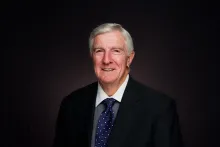
Before his retirement in 2021, Dr. Donald Ward pastored churches in Texas and Louisiana, and taught at Ambassador Bible College in Cincinnati, Ohio. He has also served as chairman of the Council of Elders of the United Church of God. He holds a BS degree; a BA in theology; a MS degree; a doctor’s degree in education from East Texas State University; and has completed 18 hours of graduate theology from SMU.
