
Don Ward
This transcript was generated by AI and may contain errors. It is provided to assist those who may not be able to listen to the message.
In a recent sermon, we discuss keys for seeking the truth and interpreting Scripture. We emphasize Scripture, interpreting Scripture, line upon line, precept upon precept, here a little, there a little. We emphasize context, translation, the necessity of practicing what you know, and you must be drawn from the breast and weaned from the milk. That's the people that God is going to reveal His truth to. Those who apply principles like that. There are many other principles that need to be applied. So with some of the correct principles of exegesis in mind, remembering first and foremost that the Bible interprets the Bible, we're going to analyze later in the sermon today chapters 3 and 4 of Zechariah. These two chapters were perhaps the most discussed chapters in the entire Bible during the early 1980s in the Church of God, and on the other hand, I feel the least understood. In the academic year of 1982-83, there was a faculty exchange enacted by Mr. Armstrong, in which Dick Ames was transferred to Big Sandy and I was transferred to Pasadena. During that academic year, I taught fundamentals of theology, homiletics, or speech, and minor prophets. The explanations, material that I give here today are essentially the same as I gave in the spring of 1983 with Mr. Armstrong just a couple of hundred yards down the street. In fact, right here, I looked in my notebooks. I have notebooks that you wouldn't believe stacked up. Hundreds of pages of notes and sermons and all of that. April the 21st, 1983.
April the 21st, 1983. Another significant date in my life. April the 21st, 1951.
A deadly tornado swept out of the southwestern skies and killed my grandparents on my mother's side that day, well that night. So I have those notes and essentially the same in the course. Of course, over the course of 35 years, you are able to fine-tune and refine and hopefully learn more.
Beginning in the late 1970s and continuing into the 1980s, until Mr. Armstrong's death, January the 16th, 1986, there was a great speculation on who were the two witnesses. And there was so much speculation on who would succeed Mr. Armstrong should he die before the end of the age. I think we have grown quite a bit in a lot of ways since that time. There were two or three, mainly two, main candidates. Of course, Mr. Armstrong was given. He'd be one of the two witnesses. And then who would the other one be? During that time period, some people insisted that Joshua represented Mr. X because the two main characters in Zechariah 3 and 4 are Joshua the high priest and Zareba Bell, the civil governor. So some people insisted that Joshua as we'll read later in Zechariah chapter 3 that Joshua was clothed in filthy garments. Actually, at one time we were all clothed in filthy garments. We were all in our sins. And there were at least two Mr. X's during that time period. And of course, they said that Zareba Bell represented Mr. Armstrong and he would be definitely one of the two witnesses. One evangelist went out to the churches and gave sermons stating that if Mr. Armstrong didn't live until the end of the age, the Bible was not true.
You know him well. When the great schism of 1995 occurred, he remained with the Worldwide Church of God and he died several years ago. One great lesson that we can learn today, and all of us can learn, we must be careful not to write in the Bible where God has not written.
So with that backdrop, let's examine some passages of Scripture regarding Haggai and Zechariah. Later, we'll focus mainly just on Zechariah. That people have often misinterpreted. One of the great overriding points of Haggai and Zechariah, in fact, all of the minor prophets. I taught minor prophets for years at the college and in addition to that gave refreshers in Pasadena to the ministry around the world. One of the great overriding points of Haggai and Zechariah is that the physical restoration of Judah, Jerusalem, Zion, and the temple were to serve as signs or types of the true spiritual restoration of Israel. In other words, the restoration temple, the second temple, the first temple was destroyed by Nebuchadnezzar and his armies in Circa 587-586 and Judah went into captivity. Israel had already gone into captivity under the hands of the Assyrians 721-718 BC and BC you're counting down.
So after 70 years in captivity, the God had permitted and a decree was given by a Gentile King Cyrus of Persia that the Jews could return to Israel or Palestine as they call it today and rebuild the temple. I have given you a timeline. If you look at your handouts, you'll see a timeline, a reconstruction of that period of time.
So in 538, you'll notice on your left hand column of your handout, 539-538, that Cyrus gave a decree that Israel could return and build a temple. And so you look at this handout, you can see the significant dates there with regard to that. They were able to build the foundation of the temple rather quickly and keep the Feast of Tabernacles. But there was so much confusion in the Persian Empire. Some of the Jews themselves were saying it's not time to build the temple. The Samaritans were against it. Some in the civil government of Persia were against it. And so some 18 years passed before they began to really build the temple in earnest. Both Ezra and Nehemiah, especially Ezra, deal with the building of the Restoration Temple. So this provides you with a timeline and the various dates. And so in 520, God raised up two prophets, Haggai and Zachariah. They were filled with God's Spirit and zeal, and they stirred up the spirit of the people, one of the few times that God's people really responded to the prophets that he sent them, and they began to they being, Judah, began to build this Restoration Temple. So let's look at Ezra chapter 1 and Ezra chapter 1.
I should have marked this, I guess. The Bible has torn the page hard to manipulate the pages. In Ezra chapter 1, in verse 1, we shall read, Now in the first year of Cyrus, King of Persia, that the word of the eternal by the mouth of Jeremiah might be fulfilled, the Lord stirred up the spirit of Cyrus, King of Persia, that he made a proclamation throughout all the kingdom, and put it also in writing, saying, thus says Cyrus, King of Persia, the Lord God of heaven has given me all the kingdoms of the earth, and has charged me to build him in house in Jerusalem, which is in Judah. Of course, the pagan nations of that day, many of them were polytheists in the sense that they honored all gods and tried to please all gods. And so this decree was made, and several of from the house of Judah went back to build the house of the eternity. Look at verse 8. Now this is verse 5, sorry, verse 5. Then rose up the chief of the fathers of Judah and Benjamin, and the priests and the Levites, with all them whose spirit God had raised, to go to build the house of the Eternal, which is in Jerusalem. Verse 8, Even these that Cyrus king of Persia bring forth by the hand of Mithridath, the treasurer, and numbered them unto Shaspazar, the prince of Judah. Now if you look at this reconstruction handout, and there you see that Zerubbabel had two names. Zerubbabel was the literally means foundation of renewal or foundation of the temple, basically renewal, and that was his name, the Jewish name, and his name given to him by the Babylonians was Shaspazar. So some people try to make them two different people, but I'm quite sure that they are one in the same. Shaspazar and Zerubbabel. Now you look at chapter 3 and verse 1, Ezra 3 and verse 1.
Ezra 3 and verse 1, And when the seventh month was come, and the children of Israel were in the cities, the people gathered themselves together in the Sorry with my glasses, gathered themselves together as the men of Jerusalem. Then stood up Joshua the son of Joseph and his brethren, and the priests and Zerubbabel the son of Sheol and the brethren, and built the altar of the God of Israel to offer burnt offerings to their appointments, as it is written in the law of Moses, the man of God. So they quickly built an altar and kept the Feast of Trumpets. I mean the Feast of Tabernacles. Trumpets, of course, is a part of that festival season. Another significant point about the minor prophets is that the meaning of the name of the prophet, to a large degree, provides the basic thesis or central thread of the prophecy. For example, Haggai. Haggai literally means my feast or my festival. So in anticipation of return from exile, the feasts were kept in the temple at Jerusalem, of course, before the temple was roused and burnt to the ground by the Babylonians. Now they have the opportunity to go back and to build the temple again. As we read from chapter 3 of Ezra, they quickly built an altar and they kept the Feast of Tabernacles. So one of the events emphasized, of course, in Haggai and Zachariah is keeping the Feast of Tabernacles. Remember there, the last few verses of Zachariah 14, that if the nations don't go up to Jerusalem to keep the Feast, then they'll get no rain. Then Zachariah, the meaning of the name Zachariah literally means remembered of God. God will not forget nor forsake his people. Not forget, not forsake his people. The prophecies of Zachariah and its symbolism points very dramatically to the spiritual temple, the church. So both Haggai and Zerubbabel, much of the prophecy of the Restoration Temple was a type of what was to come, that is, the spiritual temple. We'll note that now in Haggai chapter 2. The book of Haggai especially deals with the building of the Restoration Temple. So Haggai, just before Zachariah, let's go to Haggai. In Haggai chapter 2, you remember that Solomon's temple was so splendiferous that it was almost like one of the wonders of the world, where David was able to gather the material, the cedars of Lebanon. It was so richly and lavishly furnished with the cedars of Lebanon, gold, from different parts of the world. And so that temple was a magnificent structure. This Restoration Temple, by comparison, was nothing. So we'll pick it up here in Haggai chapter 2 and verse 4.
Yet now be strong, O Zerubbabel, says the eternal and be strong, O Joshua.
Son of Joseph the High Priest, be strong, all you people of the land, says the eternal, and work, for I am with you, says the eternal of hosts. According to the word that I covenanted with you when you came out of Egypt, so my spirit remains among you, fear you not. Of course, God's spirit of Begettle was not in them, but his spirit was among them, and his spirit was in many of the prophets as they brought the Word of God to the people. For thus says the eternal of hosts, yet a little while, and I will shake the heavens and the earth and the sea in the dry land. Now when the Jews read this prophecy, they heard the words of Haggai, they thought perhaps that the end was near, the coming of the end of the age. If you'll notice here at the top of this handout, there was great confusion in the Persian Empire, and wars were raging back in two. But of course, that is a prophecy, prophecies duel, and it has to do with the end of the age as well. Yet a little while, and I will shake the heavens and the earth and the sea in the dry land, and I will shake all nations, and the desire of all nations shall come. The desire of all nations, of course, they don't know it, but eventually it will be Jesus Christ because it is only through Jesus Christ that our sins can be remitted, and then we can receive the earnest of the Spirit, the down payment on eternal life, and become begotten sons and daughters of God. And I will fill this house with glory, says the eternal hosts. Now when this physical temple was dedicated, that glory, which the Jews call the Shekinah glory, did not fill the house.
It was one of the five elements that was missing in the restoration temple, that is the Shekinah glory, the presence of God. But it says the glory of this latter house shall be greater than the former house. Yet as a physical structure, this temple did not remotely compare to Solomon's temple. Thus the prophecy is for the time of the new covenant church, which is the temple of God. You'll look at Ezra again, chapter 6. Ezra chapter 6 covers this period of time when the restoration temple was completed and the dedication. The dedication of the restoration temple is described by Ezra in Ezra chapter 6, and verse 15. And this house was finished on the third day of the month, Adar, which was in the sixth year of the reign of Darius the king. The children of Israel, the priests, and the Levites, and the rest of the children of the captivity, kept the dedication of this house of God with joy. And so it describes all of the things that they sacrificed, but there is no record, and according to the Jewish history, the Shekinah glory did not fill the restoration temple. Yet now we go back to Haggai. The glory of this latter house shall be greater than that of the former.
Now, verse 8. The silver is mine, the gold is mine, says the eternal of hosts. The glory of this latter house shall be greater than the former, says the eternal of hosts, and in this place will I give peace, says the eternal of hosts. In this place, Jesus Christ is the Prince of Peace, and it is through Jesus Christ and the restoration of God's government over all of the earth, in which the time beginning with the millennium and extending forward, that God and Christ will bring peace to the whole world. So we see that this restoration temple pictured the temple that was to come. You look at Hebrews chapter 8, Hebrews chapter 8, we've already quoted from 1 Corinthians 3 16, or I'm about to quote it, 1 Corinthians 3 16, that you are the temple of God. In Hebrews chapter 8 and verse 1, Now the things which we have spoken, this is the sum, we have such an high priest who is set at the right hand of the throne of the majesty in the heavens, that's Christ, of course, minister of the sanctuary, and of the true tabernacle, which the Lord pitched and not man. We'll have more about the Lord pitching the spiritual temple as we go along. So the prophecies of Haggai and Zechariah to a large degree point toward building the spiritual temple, the Church of God.
Now we come to the visions of Zechariah 3 and 4. So we want to turn to Zechariah chapter 3. Zechariah chapter 3.
Zechariah means remembered of God, God will not forget nor forsake His people. Zechariah has given several visions, and these visions, to a large degree, have to do with the spiritual temple and the work of the spiritual temple. Zechariah chapter 3, verse 1, one to her that is I'm in Zephaniah.
Zechariah chapter 3, and he showed me Joshua with a high priest, standing before the angel of the Lord, and Satan standing at his right hand to resist him. Now Satan is always going to be trying to resist the people of God, trying to resist the building of this restoration temple. He's there resisting you. He walks about as a roaring lion, seeking whom he may devour. He's always on the job. He seeks to destroy you. So Satan is there standing at his right hand to resist him. The eternal said unto Satan, The Lord rebuke you, O Satan, even the Lord that is chosen Jerusalem, rebuke you. And of course, we can call upon God to rebuke Satan the devil now. Remember, Michael, when contending for the book for the body of Moses, only said, The Lord rebuke you, Satan.
God buried, evidently, Michael played a part in it. One of the archangels secretly buried the body of Moses in a valley up in the mountains where he had gone. God gave him an opportunity to view the Promised Land from Pisgah and Mount Nebo, and when he died, God had him buried. And evidently, Michael took care of the job because Jude talks about when Michael was disputing for the body of Moses, Satan wanted the body of Moses. They wanted to build some kind of shrine. They wind up worshiping Moses instead of God. So the eternal said, Rebuke you, Satan. Even the eternal that had chosen Jerusalem, Rebuke you, is not this a brand plucked out of the fire. So, the whole nation was a brand plucked out of the fire, and we, too, are plucked out of the fire, because the death penalty is upon our head. You look at Amos 4 and verse 11. Amos 4 and verse 11 back a few pages. Hosea, Joel, Amos.
In Amos 4 and verse 11, we see this terminology of a brand plucked out of the fire. The whole nation was a brand plucked out of the fire, and so are we. I have overthrown some of you as God overthrew Sodom and Gomorrah, and you were as a firebrand plucked out of the burning.
Yet you have not returned in me, says the eternal. If God had not spared some of them a remnant, there would none be saved to carry out the prophecies that began way back in the book of Genesis. So, Joshua and Zerubbabel, especially, were brands plucked out of the fire to carry out this mission of building the temple. Verse 3, now, Joshua was clothed with filthy garments and stood before the angel. Now, in the symbolic sense, we're all clothed with filthy garments before we repent, exercise faith in the sacrifice of Christ for remissions of sins that are passed.
And when that takes place, we're viewed as sinless. God removes our sins as far as the east is from the west. And then we are reconciled to God, and He begets us with His Spirit. Verse 4, and He answered and spoke unto those that stood before Him, saying, Take away the filthy garments from Him. And unto Him, He said, Behold, I have caused your iniquity to pass from you, and I will clothe you with a change of raiment. What change of raiment? We want that change of raiment that is spoken of in Revelation, first of all, three 16.
We'll be coming back there if you hold your place. I'm holding my place. In Revelation 3 and verse 16, in the message to the Laodiceans, God tells them that they should put on the proper garment. Revelation 3 16, So then because you're lukewarm, and neither cold or hot, I will spew you out of my mouth. Because you say I am rich and increased with goods, have need of nothing, and know not that you are wretched and miserable and poor and blind and naked.
I counsel you to buy me gold trine in the fire that you may be rich and white raiment that you may be clothed. See the white raiment. The fine linen is symbolic of the righteousness of the saints. You look at Revelation 19 and verse 8. Revelation 19 and verse 8. So, Joshua is given a change of raiment. Once our sins have been removed from us, as far as east is from the west, we're to put on this wedding garment, the white raiment.
Revelation 19.8. And to her, that is, the bride. And to her was granted that she should be arrayed in fine linen, clean and white, for the fine linen is the righteousness of the saints. Then you look at verse 14. Those that are with Christ, as he comes again on the great white horse, Revelation 19 verse 14. And the armies which were in heaven followed him upon white horses, clothed in fine linen, white and clean.
And so, Joshua, the high priest, was cleaned up. Verse 5, Zechariah 3.5. Back there. And I said, let them set a fair miter upon his head. So they set a fair miter upon his head, and clothed him with garments, and the angel of the Eternal stood by. So first of all, Joshua is cleaned up. He's given the the white linen symbolic of the righteousness of the saints.
It doesn't say white linen here, but it says that he was given clothing, a change of raiment, and a fair miter was set on his head. Now verse 6, and the angel of the Eternal protested, and this word protest of the old King James means confirmed, and the angel of the Eternal confirmed under Joshua's saying, Thus says the Eternal Host, if you will walk in my ways, if you will keep my charge, then you shall judge my house, and you shall keep my courts, and I will give you places to walk among those that stand by.
And so that promises before us that if we remain faithful to God, we're even going to judge angels is what it says in 1 Corinthians chapter 6. Here now, O Joshua the high priest, you and your fellows, that all are before you, for you are men of sign. That's the proper translation. You are men of sign.
In fact, in some translations it says exactly that. The Hebrew word here is mothath, m-o-p-h-e-t-h, mothath, and it means symbolic of that which is to come. The men that are before you, Joshua, they are symbolic. Of that which is to come. What is to come? They are symbolic of that which is to come. For behold, I will bring forth my servant the branch. Who is the branch? What will the branch do?
A lot of people talked about in the 80s that a man was building the temple and he would finish the work. We'll read Zechariah 4.10 later and comment on it. Well, we can turn right here right now to Zechariah 6 verse 12, and we will see what is meant here by this scripture. I will bring forth my servant the branch. What will my servant the branch do? Zechariah 6.12. And speak unto him, saying, Thus speaks the eternal of hosts, saying, Behold, the man whose name is the branch. He shall grow up out of his place and he shall build the temple of the Lord. You can put in your margin Matthew 16 verse 18, where Jesus Christ said to Peter, and I say unto you that you are Peter, Petros, little rock, and upon this rock, Peter, a big rock, I will build my church. My spiritual temple and the gates of hell should not prevail against it. And we've already read Hebrews chapter 8 verses 1 and 2. The tabernacle let the Lord pitched and not man. Behold, I will bring forth my servant the branch. And what will my servant the branch do? My servant the branch will build the temple of the eternal. Even he shall build the temple of the eternal, and he shall bear the glory and shall sit and rule upon his throne. And he shall be a priest upon his throne. See, historically the priests, they were not kings.
He shall be a priest upon his throne, and he shall be, and the counsel of peace shall be between them both, king and priest. And you know the verse Revelation 5, 10, and he had made us kings and priests. In Revelation 20 verse 4, thrones were cast and they sat upon them. You see the beauty of the Word of God. With regard to branch as well, hold your place. You can always hold your place. Look at Isaiah chapter 11. Isaiah chapter 11 further identifies this one called the branch.
In almost all of these things, you could stop and just build a sermon, Bible study, off any one of these main words. In Isaiah 11 verse 1, and there shall come forth a rod out of the stem of Jesse, and a branch shall grow up out of his roots.
See, David was the son of David. I mean, David was the son of Jesse, and Jesus Christ was the son of David, or he was descended from Jesse and David. And the Spirit of the Eternals shall rest upon him the Spirit of wisdom and understanding, the Spirit of counsel and might, the Spirit of knowledge, and the fear of the Eternal. And he shall make him a quick understanding in the fear of the Lord. And he shall not judge after the sight of his eyes, neither reprove after the hearing of his ears, but with righteousness shall he judge the poor and reprove with equity for the meek of the earth. And he shall smite the earth with the rod of his mouth and with his breath of his lips shall he slay the wicked. Very similar to Revelation 19 and the picture of Jesus Christ coming with the saints. So continuing now in Zachariah. So I'll bring forth my servant the branch. We read what he will do.
And now we go to verse 9. For behold for behold the stone that I've laid before Joshua upon one stone shall be seven eyes. Behold, I will engrave the engraving thereof says the eternal host and I will remove the iniquity of that land in one day. And that great day, that one day is probably referring to the day of atonement and of course Satan will be bound and put away. Now let's look at our diagram here of first of all upon one stone let's identify who the stone is in Scripture.
I'll be turning to these scriptures beginning with the stone Isaiah 28 16. In Isaiah 28 16 we'll read who the stone is in verse 28. Therefore says the Lord God, behold I lay in Zion for a foundation a stone a tried stone a precious cornerstone a sure foundation he that believes shall not make haste. So even here of course the stone is identified as we go now to 1 Corinthians 13.
In 1 Corinthians 13 I'm sorry it's 1 Corinthians 3.
In 1 Corinthians chapter 3 3 We'll start in verse 9. For we are labors together with God. You are God's husbandry. You are God's building and it is a spiritual building a spiritual temple. Many men and women have labored in this temple through the years through the centuries, in fact.
Of course the rub-a-bell was the one heading this back there building a physical temple picturing what was to come. That is the spiritual temple as we read in Haggai chapter 2 verses 8 and 9.
For you are labors together with God. You are God's husbandry. You are God's building. According to the grace of God, which is given unto me as a wise master builder, I have laid the foundation. See, there are people who have laid the foundation through the years. And of course, going back to the early 80s, people were talking about Mr. Armstrong laying the foundation and he would finish the work because there's a scripture that says he would finish the work, but not understanding who would finish the work. Well, we read from Zacharias 6, 12, and 13, who would build the temple in the completed form, Jesus Christ. I have laid the foundation and other builds thereupon, so many have come over the past 2,000 years or so building, but let every man take heed how he builds thereupon. For other foundation can know manly than that is laid, which is Jesus Christ. Now, quickly to Ephesians 2, verse 20. We identified the stone in Isaiah 28, 16. Now, continuing with this about the stone and building thereupon in Ephesians 2, verse 20, and are built upon the foundation of the apostles and prophets, Jesus Christ himself being the chief cornerstone, just as it says in Isaiah 28, 16, in whom all the building, fitly framed together, grows up into a holy temple under the Lord. Now, quickly to 1 Peter 2. 1 Peter 2.
In fact, here Peter quotes from Isaiah 28, 16. In 1 Peter 2.
Hopefully you begin to see this line upon line, precept upon precept, here a little, there a little, and then when it's all put together, it's just a beautiful tapestry in the Word of God. 1 Peter 2. We'll start in verse 3.
In which the builders disallowed, the same is made head of the corner. And of course, to the Jews, he became a stumbling stone. He came to his own, his own received him, but to those who did receive him, he gave them power to become the sons of God. That's John 1.12. So continuing here with our diagram, we have quoted all of those scriptures there regarding the stone. Now we go to the seven eyes. Upon this one stone are seven eyes. And we look at this. You'll also look at, first of all, Zachariah chapter 4 and verse 10 refers to seven eyes as well.
We'll read that, and then we'll follow up with these scriptures and comment on them. In Zachariah 4.10, for who hath despised the day of small things?
See, this restoration temple was so small by comparison to Solomon's temple. When the Church of God first began in 31 AD, of course they began with obeying, as you might say, 3,000 souls were added that day. But down through the ages, at times the Church of God was barely discernible. And it is quite small today, even with all of the various splinter groups that are scattered abroad. Very small. It reminds you of the scripture concerning the mustard seed, the tiniest of seeds, and then it grows up a big plant. And so it's likened unto the kingdom of God in the parable that Jesus gave in Matthew 13. For they shall rejoice, and shall see the plummet in the hand of Zerubbabel. When Zerubbabel begins to lay out the altar of the temple, and of course Jesus Christ being the ultimate fulfillment of Zerubbabel, he's building his church. The plummet in the hands of Zerubbabel, with those seven, these are the eyes of the Eternal which run to and fro through the whole earth. Now we go to Revelation 1. In Revelation 1 and verse 4, you can see these scriptures are written there at the top of that diagram. In Revelation 1.4, John to the seven churches which are in Asia, grace be on you, and peace from him which is, which was, which is to come, and from the seven spirits which are before his throne. Now it's interesting the progression that we're going to see with regard to the interpretation of the spirits as the Bible interprets this the Bible. In Revelation 4 and verse 5. In Revelation 4 and verse 5.
Of course, Revelation 4 gives us a description of God's throne. In verse 4 here says, we're going to Revelation 4 and 5. And out of the throne proceeded lightnings and thunderings and voices, and there were seven lamps of fire burning before the throne, which are the seven spirits of God.
Then in Revelation 5 verse 6, Revelation 5 verse 6, And I beheld and lo in the midst of the throne, and of the four beasts, and the midst of the elder stood a lamb as it had been slain, having seven horns, seven eyes, which are the seven spirits of God, sent forth into all the earth. Seven eyes, seven spirits, seven lamps, seven lights, lamp is a light, sent forth into all the earth.
And fulfilling the Great Commission, of course, the Church of God is commissioned, and we'll turn and read that, though we should be very familiar with it. Matthew 28.
In Matthew 28, see, these prophecies not only deal with the actual building of it, but who is doing the building and what is going on, who should, what this has to do, I believe, with what we should be doing, as Jesus commissioned the Church at the end of his earthly ministry here, Matthew 28.19. Go you therefore and teach all nations, baptizing them into the name of the Father, the Son, and the Holy Spirit, teaching them to observe all things whatsoever I have commanded you, and lo, I am with you always, even unto the end of the age. Now, about the Church.
Let's notice what it says in Matthew 6, verse 22. Where to go into all the world. And as it says here, the eye is the light of the body. We will read that from Matthew 6, verse 22.
Matthew 6, verse 22. But if your eye be eaten, no, 22, the light of the body is the eye. If therefore your eye be single, your whole body shall be full of light.
Jesus Christ is the light of the world, he says in John 1, and we are to be lights to the world.
You look now at Matthew chapter 5, and we'll see this about being the light of the world. Verse 14.
In verse 14, you are the light of the world. A city that is set on a hill cannot be hid. Neither do men light a candle and put it under a bushel, but on a candlestick it gives light unto all them that are in the house. Let your light so shine before men that they may see your works, your good works, and glorify your Father who is in heaven.
So, this seven eyes, seven lamps, seven eyes, seven spirits sent forth into all the earth, we are to go forth into all the earth, and let our light so shine so that men may see our good works and glorify our Father who is in heaven. We are wherever... Look at 2 Peter 1 verse 19. Wherever there is a person who has God's Spirit, he is, she is, a light. And so, if you were to look at the globe, and you'll see little lights, like you were flying over an area at night, and you see those little specks of light along. So, you think of God's saints around the earth. There are little specks of light here and there in different places. Some places you'll see sort of a cluster, but for the most part it's widely scattered around the earth. And in 2 Peter chapter 1 verse 19, we have also a more sure word of prophecy, whereon too we do well to take heed, that you take heed as unto a light that shines in a dark place. So, we are that light that shines in a dark place around the earth. It shines in a dark place until the day dawn, and the day star arrives in your hearts to the time in which Jesus Christ comes, and the whole world begins to receive the light. A knowledge of God filling the world as sand fills the seashores, and everyone will have an opportunity to be brought to the light. Now we go back to Zachariah. Oh, it cannot be that, but it is. In Zachariah chapter 4, Zachariah chapter 4, and the angel talketh me again, and wake me as a man that is waking out of his sleep. So imagine you're asleep, deep sleep, and someone comes and shakes you, and you wake up, and what does he say? He said unto me, What do you see?
And I said, I have looked, and behold, a candlestick, all of gold, with a bowl up on the top of it. This candlestick is that middle diagram you see on your hand out there. They call it a menorah. It has seven lamps. It has seven candlesticks and seven pipes to the seven lamps, which are upon the top thereof. I want to read two again. What do you see? And I said, I have looked, and behold, a candlestick, all of gold, that's a menorah, the big bowl, and a bowl on the top of it, and his seven lamps there upon, and seven pipes to the seven lamps, which are upon the top thereof, and two olive trees by it. One upon the right side. This is imported. One upon the right side, one upon the left. They're not adjacent to each other. They're on either side of the bowl, either side of the seven pipes, either side of the lamps. Then the angel, verse 4, so answered and spoke the angel that talked of me, saying, What are these, my Lord? Then the angel that talked of me answered and said unto me, Don't you know what these are? You ought to know what these are. Don't you know what these are? And I said, No, my Lord. Then he answered and spoke unto me, saying, This is the word of the Eternal, and there's a rubber veil saying, Not by might, nor by power, but by my Spirit, says Eternal Host. Now, for years, and for some reason, I think we have it straight now in the church with regard to the Holy Spirit. The Holy Spirit is the essence of God. If Spirit has composition, corporality, then that's what he is. He is Spirit. Through his Spirit, he does works of power.
Some people want to quote Max 1, where it says, Wait here in Jerusalem, and you will receive power from on high. Yes, they receive, but what did they receive? The Holy Spirit came upon them, and through the Holy Spirit, you can do works of power. Not by might, not by power, but how? Through my Spirit, says the Eternal Host. It says in Genesis 1, and darkness was upon the face of the deep. He sends forth his Spirit, and his Spirit does the work.
God is Spirit, and those who worship him must worship him in Spirit and in truth. That's a very important verse with regard to understanding the Holy Spirit and what it does. John 15, 26, says that the Holy Spirit proceeds from the Father. It says it very clearly, the Holy Spirit proceeds from the Father. In Titus 3, verses 5 and 6, it talks about the Holy Spirit being shed abroad on us through Christ. In Acts 2, it talks about sending forth the Holy Spirit. So Christ plays a role in it.
But the Holy Spirit proceeds from the Father. God and Christ are Spirit. There is one essence, the Holy Spirit. It is the Eternal Spirit of God and Christ. That Spirit has existed in eternity. No beginning, no end. We are recipients of that Eternal Spirit, the Spirit of God. And if we have the Spirit of God, what is the Spirit? It is eternal. We are that Eternal Spirit upon resurrection and birth into the family of God. Thus, we then are not created beings. In the flesh, you could say you are created beings.
But you are born of the Spirit, and you are sons and daughters by birth into the family of God. I mean, let's turn to read that. John, I've already quoted it, but let's read it. John 1, 12, makes this same point. John 1, 12.
But as many as received him to them, he gave power to become his sons, the sons of God, even to them that believed on his name. Verse 13, which were born not of blood. See, you could be born physically, which were born not of blood. The first two human beings were created beings, and they gave birth offspring to children that could be called sons of God after the flesh. But we are to be sons and daughters of God after the Spirit. And the word was made flesh and dwelt among us, and we be, now I'm reading it wrong, which were born not of blood, nor of the will of flesh, nor of the will of man, but of God. Revelation 1.5 says that Jesus Christ is first born among many brethren. Now continuing in Zechariah chapter 4, verse 7. Who are you, O great mountain, before is the rebel bell? You have become a plain mountain, symbolizes nations. We read in chapter 3 also that Satan was standing there also to resist. And he shall bring forth the headstone thereof, who brings forth the headstone. We've already read who the headstone is. Jesus Christ, he is made head of the corner.
From 1 Peter chapter 2 verses 6, 7, and 8. No, from 1 Peter chapter 2 verses 3 through 7. And he shall bring forth the headstone thereof, with shouting, saying, Grace, grace unto you.
That is divine favor. And a large part of that divine favor is free, unmerited pardon of sin. Through the sacrifice of Christ upon our repentance and faith, we can have our sins remitted. Moreover, the word of the Eternal came into me, saying, the hands of his rebel bell have laid the foundation of this house. So, see, that's where this evangelist got this notion, perhaps, that Mr. Armstrong had laid a foundation for the Church of God, the worldwide Church of God. So he was going to live until that was finished, and of course, Christ would come.
Well, Paul said that he laid the foundation. We read the verse. But another man builds thereupon, and other men have built thereupon, and other men.
And now, Mr. Armstrong has been dead 32 years, and we continue. But what foundation can anyone lay that which is laid, and that foundation is Christ?
The hands of the rebel bell have laid the foundation of this house, and he did lay the foundation of that house. His hand shall finish it, and he did. And Jesus Christ is a type of, you shall know that the Lord of hosts has sent me unto you. For who hath despised the day of small things? For they shall rejoice, and shall see the plummet in the hand of the rebel bell. We've already read it and commented on it. With these seven eyes, they are the eyes of the Lord which run to and fro through the whole earth, and we are to fulfill the great commission. Then answered, and said unto him, after that's explained, What are these two olive trees on the right side and upon either side of the bowl? And I answered again, and said unto him, What be the two olive trees which through the two golden pipes empty the golden oil out of themselves? They're not the source of the Holy Spirit, but they are filled with God's Spirit, and they preach the Word of God, the spiritual message of the Word of God. The words I speak Christ said, They are spirit, and they are truth. And he answered and said, No, you know what these are? And I said, No, my Lord. Then he said, These are the two anointed ones that stand before the eternal of the whole earth. Now quickly to Revelation 11.
Revelation 11, verse 2, verse 3. Revelation 11.3, I will give power unto my two witnesses. They shall prophesy a thousand two hundred and twelve hundred and sixty days. They are clothed in sackcloth. These are the two olive trees. They're identified. These are the two olive trees and the two candlesticks standing before the God of the earth. And so they empty the oil out of themselves into the bowl. Oil symbolizing the Holy Spirit. And that energizes the lamps, causes them to burn. And of course, today we are commissioned and commanded to preach the word. Preach the word. Be incident, in season, out of season. Rebuke, exhort with all long-suffering and doctrine. For the time will come when they shall not endure sound doctrine. But shall with itching ears turn to themselves unto fables. And we must not let that happen to us. So hopefully we have seen here today how that the Bible interprets the Bible line upon line, precept upon precept, here a little, there a little. So this study should encourage each one of us to dig deeply into the word of God and see the wonderful proofs thereof. You have these two handouts here, these two diagrams. You ought to look up each one of these scriptures. Think upon this, get it settled in your mind. That vision at the bottom we didn't talk about today, but it's similar to it. Revelation 1 of Jesus Christ walking among the seven golden candlesticks which parallels the bowl above it. So there are many things to be excited about in studying the word of God. We see God's spirit and mind in the great words of life and light. God inspired the prophets through the ages. We see the visions Christ gave John in Revelation. We see that they are in agreement with the visions of Zachariah, given 600 years earlier. So you and I have been called to be the light of the world. So let's be more determined than ever to be that light of the world and live by every word that proceeds out of the mouth of God.
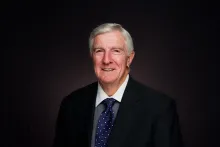
Before his retirement in 2021, Dr. Donald Ward pastored churches in Texas and Louisiana, and taught at Ambassador Bible College in Cincinnati, Ohio. He has also served as chairman of the Council of Elders of the United Church of God. He holds a BS degree; a BA in theology; a MS degree; a doctor’s degree in education from East Texas State University; and has completed 18 hours of graduate theology from SMU.
