
Don Ward
This transcript was generated by AI and may contain errors. It is provided to assist those who may not be able to listen to the message.
Bible study, we're in 1 Peter chapter 1. In 1 Peter chapter 1, I want to pick up with verse 22. In 1 Peter chapter 1 and verse 22, seeing you have purified your souls and obeying through the Spirit unto unfeigned love of the brotherhood or the brethren, this unfeigned love of the brethren, as the word unfean has the connotation of it's without dissimulation, there's no jealousy, there is no ulterior motive, you're doing it because you are that way. Of unfeigned love of the brotherhood, see that you love one another with a pure heart fervently. And then verse 23 will be our, well, you might want to call it that, our problem verse of the day, which we will come back to and spend considerable time on one of the aspects of this verse, and it's the first phrase here, being born again. Being born again, and we're going to look at this in some detail, the word born again here is the Greek word, and I meant to tell the ushers, see we've got three rows here with three people on them. This born again, A-N-A.
Maybe we get this thing writing a little thicker. If you want to come up here to the front row, you're welcome to do it. A-N-A-G-N-O. A-N-A-G-N-O. I just say A-N-A-G-N-O, but it's A-N-A-G-E-E-O. A-N-A-G-N-O, and it means it can mean to beget, and it can mean to bring forth, and the question here is often in the Protestant world, are you born again now? Now, this is a compound word.
A compound word, and this first one has to do with to do over, to do it again, and G-N-O-O. G-N-O-O is the word that is often associated with born again. When use action of the father, it is to beget to engender, and when use of the action of the mother, it is to bring forth or to give birth.
And people have talked about from time immemorial, the beginning of the church, are you born again now? Or what does that mean? So we're going to come back and explain this in greater detail, and it also ties in with another verse there in chapter two that we'll read in just a moment. So what it's saying here, being born again, not of corruptible seed. Now, what is the seed that we're talking about here? Not of corruptible seed. In this case, the seed basically has to do with the Word of God and the Spirit of God, but of incorruptible by the Word of God, which lives and abides forever. So the Word of God will always be there. It will always live. It cannot be destroyed, and neither can God himself. And then the comparison with flesh, for all flesh is as grass and all the glory of men as the flower of grass. The grass withers and the flower thereof falls away. But then it comes back to what you're begotten of here, but the Word of the Eternal enters forever. And this is the Word which by the Gospel is preached unto you. Wherefore should be no chapter break? Of course, chapter breaks are done by men, and it's a subjective thing where you should put the chapter break. Wherefore, in view of this, what's just gone before, laying aside all malice, all guile, hypocrisy, envies, and all evil speakings, as newborn babes, desire the sincere milk of the Word that you may grow thereby. If so be, you have tasted that the Lord is gracious. So what we're going to do today is the process and progressing of receiving this new life from above. And we're going to talk about this, the aspect of born again. When are you born again and what does it mean with regard to born again? I gave a sermon, it's probably been a year or so, maybe more, concerning this. So let's go to John chapter 3.
Well, before we go to John chapter 3, I want to go to a couple of other verses. Let's go to 1 Peter chapter 1 verse 2. Where does this process begin of this journey to receive new life from above? In 1 Peter chapter 1 and verse 2, you'll see that it says, elect according to the foreknowledge of God. So somewhere in eternity, God elected you with the foreknowledge of God, that God elected you to be called at this present time into his marvelous light. So let's read that verse of 1 Peter 1 and verse 2. Elect according to the foreknowledge of God, that means to know beforehand, through sanctification of the Spirit unto obedience and sprinkling of the blood of Jesus Christ, grace unto you, and peace be multiplied. So before knowledge of God, he elected you and he knew you before you were born, and he called you. Now, the next thing is the calling. In John chapter 6 and verse 44, it says, no man can come to me except the Father, draw him. No man can come to me except the Father, draw him, and I will raise him up at the last day. The hymn here, of course, is Jesus Christ. No one can come to Jesus Christ except the Father, draw him. Then in Luke chapter 10 and verses 20-22, long in there, it says that the Son reveals the Father. Now, how is this calling, how does the calling take place? So how does God call us? How does God call us into his marvelous light? What is necessary? Look at this progression. Elect according to the foreknowledge of God. God the Father is the one who calls. No man can come to me except the Father, call him or draw him. How does this calling take place? Now we want to go to John chapter 16, and we want to read verses 7 through 12. So at this time, we want to do that in the Gospel of John chapter 16 and verse 7. Nevertheless, I tell you the truth is expedient for you that I go away, for if I go not away, the comforter, the paracletos, which is masculine in the Greek, therefore referent pronouns are masculine. It does not make it into a person. The comforter will not come unto you, but if I depart, I will send him unto you. For when he is come, the comforter, he will reprove the world of sin. Now the word, therefore, reprove is elancho, and the Greek word, we'll write it up here, e-l-e-n-c-h-o, it means to convict. What does convict mean? Convict means to lay a weight upon the heart and upon the mind. Convict the world. Convict.
So what are the convicting agents? It is the Holy Spirit. He will reprove the world of sin and of righteousness and of judgment. The paracletos is equated with the Holy Spirit. Of sin because they believe not on me, of righteousness because I go to my father, and you see me no more, of judgment because the prince of this world is judge. I have yet many things to say unto you, but you cannot bear them now. How be it when the Spirit of truth is come? So what is truth? John 17, 17 sanctify them through your word. Your word is truth. So one of the elements involved in this is the word. So the two convicting agents are the Spirit of God and the Word of God. And we'll see that more clearly in just a moment. Here are the two convicting agents, the Spirit of God and the Word of God. Now, we're going to go through this, how do we receive new life from above, and what does it mean to be born again, and what does it mean when begotten again by the Word? We're going to go through all of that, and hopefully you'll be able to do almost baptismal counseling when we get through with this.
So God calls us by the Spirit and Word of God. We continue here, read a couple more verses. How be it then, He the Spirit of Truth, and there that should be it, because Spirit of Truth is Talmuma, and that is neuter, and it should be it. He will guide you, or it will guide you into all truth. So the Spirit serves as a guide. The Spirit is the enabler. The Spirit opens the mind, for it shall not speak of itself. The Holy Spirit doesn't go around whispering into your ear, contrary to what some of the TV evangelists might say. Now, you may have things laid on your heart in the spiritual sense, but the germinal part of the thought process for this would come from the Word of God, hearing it preached, or reading it, or it can come in a number of ways. It usually either comes through sight or sound, either reading it or hearing it. And notice what it says, it shall not speak of itself, but whatsoever it shall hear, that shall it speak. So what would the Spirit of Truth hear? Well, the Spirit of Truth, it's like it defines itself. It hears the truth. It hears the Word of God. Sanctify them through your Word. Your Word is truth.
It will show you things to come. Whatever it hears, that shall it speak, and it will show you things to come. It shall glorify me, for it shall receive of mine and show it unto you. Now, let's go to Romans chapter 10 to illustrate how this takes place. Romans chapter 10.
In Romans chapter 10 and beginning in verse 14, How then shall they call on him, of whom they have not believed? So the people in outer Mongolia or Tibet or any other far-flung place, New Guinea, on the face of the earth today, I think they still have active head hunters in New Guinea. I know they do in some parts of Africa. How are they going to believe in God and Jesus Christ? They have never heard of God and Jesus Christ. So one of the reasons why God raised up the church through Christ and the apostles was to take this word to the uttermost parts of the earth. Remember, just before Jesus Christ ascended back to heaven, this is recorded in Acts chapter 1, verses 5, 6, 7 along there, and it says, and this gospel, first of all, the disciples said, are you going to restore the kingdom to Israel at this time? See, they still didn't really get what the whole gospel was about. They thought it was still mainly an Israel thing. But of course, the plan of salvation is for everybody. And Christ said, among other things, but the main thing we're focusing on now, and this gospel of the kingdom shall be preached beginning at Judea, then in Samaria, and to the uttermost parts of the world. And so the church is to take the gospel to the whole world. So we're reading here from Romans 10, 14, how then shall they call on him in whom they have not believed? How shall they believe in him of whom they've not heard? The people in any country on earth you want to name. And how shall they hear without a preacher?
And how shall they preach except they be sent? As it is written, how beautiful are the feet of them that preach the gospel of peace and bring glad tidings of good things. But they have not all obeyed the gospel, for Isaiah said, Lord, who has believed our report. So then faith comes by hearing, and hearing by the word of God. So the spirit, the enabler, that which opens the mind and heart to receive it, but faith comes by hearing and hearing by the word of God. So you have these two, the Spirit of God and the word of God, working in concert to convict a person. Now once again, what does it mean to convict? If you're a convicted of something, it's like you really come to believe it to the depth of your being. So that it's like something in your mind that's urging you, like, I've got to act on this. I've got to I've got to do something with it. Now we look at 1 Corinthians 18, forward a few pages. 1 Corinthians 1, I said 18. 1 Corinthians 1, verse 18. 1 Corinthians 1, verse 18. 1 Corinthians 1, verse 18.
For the preaching of the cross is to them that perish foolishness. And a lot of people will, just as soon as they hear it's religion, soon as it's anything about the Bible, they're going to turn away from it, especially in today's world. And so one of the great challenges of the church is how do you get their attention? How do you preach this gospel? And it seems that eventually things will get so bad on the world's scene that eventually people seeking, searching, wondering, maybe they will listen. But God has his plan, and I don't know exactly how he's going to do it. The preaching of the cross is to them that perish foolishness, but unto us which are saved, being saved, it is the power of God. Now let's just talk about this word, save, for just a moment. If you die at this moment, are you going to live in resurrection? Well, if you have God's Spirit and die in the faith, yes. So are you saved at this moment?
I don't hear a lot of yeas. Well, if you aren't saved at this moment, what if you drop dead right there on the front row, Paul Carmichael, with a heart attack? Are you going to live in resurrection? If you are, if you do, then you must be saved right now, right? But it's not once saved, always saved. You can, and we'll talk about this later, you can quench the Spirit, sear the conscience, and commit the unpardonable sin so that you would not live in resurrection, even though, at this point in your life, you die, you're in the faith. Can you fall away? Yeah, you can fall away. Many people have.
For it is written, I will destroy the wisdom of the wise, and will bring to nothing the understanding of the prudent. Where is the wise? Where is the scribe? Where is the disputor of this world? Have not God made foolish the wisdom of this world? For after that, in the wisdom of God, the world by wisdom knew not God. In other words, all of the wise people of the past, all of the philosophers and anyone else you want to name, they haven't come up with how one can be transferred. I'm transferred is not a good word, but how one can be changed from mortality into immortality. So there have been four principal systems that have tried to answer the great questions of life. One, and first and foremost, is the only one, true religion. Number two, false religion, which leads you down the path to destruction. Three, philosophy, asks more questions than it can answer, and science, which basically denies the supernatural. Of course, there are some scientists who believe in God, but as a methodology, they basically say, if you can't replicate it, then it must not be true. But things in the spiritual realm cannot be observed by the naked eye, cannot be measured, and oftentimes not replicated. So, God asks the questions. You see, the Jews look for a sign, and the Greeks sought for wisdom. To this day in Western education, Aristotle, Plato, Socrates, and all of them are quoted a lot. Oh, they were so wise!
For the Jews require a sign, and the Greeks seek after wisdom. Verse 21 again, For after that, in the wisdom of God, the world by wisdom, knew not God, it pleased God by the foolishness of preaching to save them that believe. What did they preach? Well, they preached the truth of God. And you look at chapter 2, verse 1, And brethren, when I came to you came not with excellency of speech or wisdom, declaring unto you the testimony of God. For I determined not to know anything among you saved Jesus Christ and him crucified. Verse 4, My speech and my preaching was not with enticing words of man's wisdom, but in demonstration of the Spirit and of power.
Now let's go to John chapter 3. In John chapter 3, the Gospel of John, Jesus tells Nicodemus that he must be born again. Now in this case, we're going to focus on these two words. Born, and that word born is ganao, g-e-n-n-a-o, it's ganao. And once again, how is it used? When used as a father, it means to beget. When it used as a mother, it means birth, to bring forth either one. And then, here's this word again.
And that Greek word is unopened.
And this word, it literally means from above.
So let's read what Jesus says here. We'll start in verse 1 of chapter 3 of John. There was a man of the Pharisees named Nicodemus, a ruler of the Jews. The same came to Jesus by night and said to him, Rabbi, we know that you are a teacher come from God, for no man can do these miracles that you do except God be with him. Jesus answered and said unto him, Verily, verily, I say unto you, accept a man be born again. Right here it is. And if he says, Shout to man be born again, he cannot see the kingdom of God. Now, immediately Nicodemus thinks of physical birth. Can you go back into your mother's womb and be born again in that sense, physically? Nicodemus said unto him, How can a man be born when he's old? Can he enter the second time into his mother's womb and be born? Jesus answered verily, verily, I say unto you, accept a man be born of water. So now there's controversy over this, that some theologians use this expression born of water.
And the argument goes, it's like, well, does this mean when a woman gives birth and there's water, you hear the expression, the water breaks and you're born of water, there's water that comes forth preceding birth.
And some say, well, it has to do with baptism. Well, baptism in and of itself does not give you a new birth. And Christ is not talking about baptism here. He's talking about the natural birth. Verily, verily, say unto you, accept a man be born of water and of spirit, the physical birth and the spiritual birth. But before a person can be born in the natural sense, they have to be begotten by the Father. The mother brings forth. In the spiritual sense, God the Father begets us through Christ. Christ plays a role, as we shall see. And Christ is the one who brings us forth. It was God the Father, not Christ, sorry, it's the Father who brings us forth. The Father resurrected Jesus from the dead. Except a man be born of water and of the spirit, he cannot enter into the kingdom of God. That which is born of the flesh is flesh, and that which is born of the spirit is spirit. Marvel not that I said unto you, you must be born again, canow and often from above. The wind blows where it will, and you hear the sound, but cannot tell where it's coming from, so is everyone that is born of the spirit. Now that is in the ultimate sense at resurrection.
Now he continues here, in verse 13, and no man has ascended up to heaven. See, there's none of the Old Testament people in heaven, but he that came down from heaven. You know, it says in Acts 2, David has not ascended into the heavens, even the Son of Man, which is in heaven. And as Moses lifted up the serpent in the wilderness, even so must the Son of Man be lifted up. Israel was afflicted. They said, he lifted up the serpent. You look on this, you'll be healed. And of course, the remedy for spiritual healing is through Christ, that whosoever believes in him should not perish, but have eternal life. For God so loved the world that he gave his only begotten Son, that whosoever believes in him should not perish, but have everlasting life. For God sent not his Son into the world to condemn the world. The world's already condemned because of wages of sin as death. But the world through him might be saved. So how does the new life from above come unto us? Well, first of all, one must first of all have the word preached to him, as we have shown. If a person is convicted by the Spirit and the Word, they must repent and exercise faith in the sacrifice of Christ for their mission of sins that are passed. Christ preached repentance. Look at Mark chapter 1. Mark chapter 1. We're talking about the process and progression of born from above and born in the ultimate sense into the kingdom of God. In Mark chapter 1, what did Jesus Christ preach?
Now, after that John was put in prison, this is Mark 1.14. Now, after that John was put in prison, Jesus came into Galilee preaching the gospel of the kingdom of God and saying, the time is fulfilled. The kingdom of God is at hand. Repent you and believe the gospel. Now we go to Acts chapter 2. Acts chapter 2 records here what we might call the birth of the New Covenant, New Testament Church. When the Holy Spirit was sent and the spirit of Begetl was made available to men, even here, the Jews thought it was to them in the proselytes only. It was not until Acts 10 that it was made manifest that it was for all the nations. In Acts chapter 2 verse 37, after Peter had preached his sermon, now when they had heard this, they were pricked in their heart. It's similar to this word, convict. This weight was on their mind. I mean, this is so weighty. This is so important. What are we going to do? When they heard this, they were pricked in their heart and they sent it to Peter, the rest of the apostles, men and brethren, what shall we do? In view of all of this, what? I mean, it was a sense of urgency. Then Peter said unto them, Repent and be baptized, every one of you, in the name of Jesus Christ for their mission of sins, and you shall receive the gift of the Holy Spirit. Now, the total progression of this, Peter gave a brief summary, but there's one element he had preached Christ here in this.
First of all, you get the calling, the conviction. You get the repentance. Once you are convicted and you begin, repentance is inextricably linked to faith in Christ for the remission of sins that are passed. You see, you can't have those sins remitted faith in them. I better turn faith into the sacrifice of Christ.
So look at Romans chapter 3, verse 23. Romans 3 and verse 23. In Romans 3 and verse 23, the first two chapters of Romans do what? Chapter 1 takes the Gentiles to task. Chapter 2 takes the Jews, the Israelites to task. Paul closes too with, a Jew is really one who has been circumcised in heart, not in flesh. Chapter 3 begins to summarize, and he comes down to the great summary statement of Romans 3.23. All of sin comes short of the glory of God. So what are you going to do? The death penalty is on your head. Being justified freely. In other words, if you're justified, something comes along and pays the debt, so you don't have to pay it. Freely by His grace, divine favor, through the redemption, buying back power, that is in Christ Jesus, whom God has sent forth to be a propituation to go between. Instead of you having to die, He died for us. Through faith in His blood, life is in the blood He gave His life, to declare His righteousness for the remission of sins that are passed through the forbearance of God. To declare, I say at this time, His righteousness, that is, He is faithful, He kept His promise that He might be just and the justifier of Him who believes in Jesus. So you have to repent, believe, have faith in the sacrifice of Christ, be baptized, and then you can have the laying on of hands and receive the Holy Spirit. These four steps are absolutely essential to this born from above. Now, what does this born from above in practical terms mean for each one of us right now? Now, that having received the down payment on eternal life, we do have new life in us. Are we yet born again as spirit beings? Well, no. We're not born again as spirit beings in this sense, but we do have new life within us. We have been begotten by the very essence, that is, the Holy Spirit of God and of Christ.
Now, let's go back to Acts chapter 2, when the Holy Spirit came. Notice what Peter says.
In Acts chapter 2 and verse 27. Now, in recent weeks, I've gone through this thing of, and I'll briefly say it right now, but while you're turning to Acts 2, 27, you really can't have repentance apart from obedience. Because if you did, if you just said, or if God just said, all you have to do is believe, which some say, all you have to do is to believe, and yet you remain in your sins, then you have to believe that you're not in your sins. And yet you remain in your sins, then Christ would be the minister of sin, and all this thing would be farcical in the first place. Why would you even have a Savior? If you could just say, well, I believe in God, I'm saved. Well, why would Jesus have to come and die for the sins in the first place? So, as Paul concludes Romans 3, through faith, we establish the law, because if the law were not in effect, we wouldn't have the death penalty on our heads, and we wouldn't need a Savior. And we're talking about this. When we go through this process, repentance, faith, baptism, receive the Holy Spirit, we do have this new life from above. We have God's Spirit, His assets within us. It is a living power. It's not dead. It is the very essence of God in Christ. Now, look at Acts 2.
Let's start in chapter 25. For David speaks concerning him, I foresaw the Lord always before my face, for he is on my right hand, that I should not be moved. Therefore, did my heart rejoice, my tongue was glad. Moreover, also was my flesh a rest and hope, because you have not left my sukay, my life potential, my soul in Hades in the grave. Neither will you suffer your holy one to see corruption. He was there three days, three nights. After that, you really began to corrupt. You have made known me the ways of life. You shall make me full of joy with your countenance, men and brethren. So that's what David said. Let me talk about that. Let me freely speak unto you of the patriarch David, that he is both dead and buried. His sepulcher is with us to this day. Therefore, being a prophet and knowing that God had sworn with an oath to him that of the fruit of his loins, what is the fruit of his loins? According to the flesh, he would raise up Christ, sit on his throne. We can't... We really don't get that. One of these days, maybe we will. But we... I mean the whole generic... You may get it, but I just said the whole generic. He's seen this before, spoke of the resurrection of Christ, that his suque, his life essence was not left in the grave, neither his flesh did see corruption. This Jesus, have God raised whereof, we're all witnesses. He didn't raise himself. Therefore, being by the right hand of God exalted, and having received of God the promise of the Holy Spirit, he has shed forth this, which you now see in here. He being by the right hand of God, that's Jesus Christ, has shed forth, it comes from the Father, shed on us through Christ. He has shed forth this, which you now see in here. For David is not ascended into the heaven, but he said himself, the Lord said unto my Lord, sit you in my right hand, until I make your enemies your footstool. Therefore, let all the house of Israel know, assuredly that God has made that same Jesus whom you crucified, both Lord and Christ. And we've already read 37 and 38. So the Father is the source of the Holy Spirit. In John 15, we see clearly here that the Holy Spirit proceeds from the Father and is shed on us through Jesus Christ. And as we shall see, the Holy Spirit could be personified in the name of God the Father or Jesus Christ. In John 15 and verse 26, But when the comforter is come, and the comforter is the Holy Spirit, whom I will send unto you, see, Christ plays a role, from the Father, even the Spirit of truth, which proceeds from the Father, it shall testify of me. So the Holy Spirit proceeds from the Father.
Christ said that He would send it, and it comes to individuals out here. Father Christ the individual. John 14, 26.
John 14, 26. But the comforter, which is the Holy Spirit. So there's no doubt what the comforter, paracletos, is. Or you might pronounce it paracletos. Doesn't matter how you pronounce it, as long as you know what it is, it is the Holy Spirit. And now we go to Titus chapter 3. What are we talking about? We're talking about this new life that comes into us, and we have this new life from above. But this new life that comes from above is not the, we're not yet spirit beings. But to understand that, so that we could be able to deal with it, is what we're trying to do. So, Titus chapter 3. Titus chapter 3, beginning about verse 5.
Not by works of righteousness, which you have done, but according to his mercy, he saved us by the washing of regeneration and renewing of the Holy Spirit, which he shed on us, he being God the Father abundantly, through Jesus Christ our Savior. So that's what we have exactly right here. John 15.26 says, I will send it to you, the Holy Spirit, which proceeds from the Father. It is shed on us through Christ to the individual, to you right here. So we have that essence of God, that new life within us.
Now continuing. The Holy Spirit is personified by God the Father and Jesus Christ. You can say, you have the Spirit of God. You can say, you have the Spirit of Christ. You can say, I have the Holy Spirit, in essence you're talking about the same thing. Go to John, once again, in this case, 14.23, and John 14.23, and John 14 and verse 23.
Jesus answered and said unto him, If a man love me, he will keep my words, and my Father will love him, and we, we, the Father and Jesus Christ, and we will come unto him and make our abode with him. So we have God the Father in us, we have Jesus Christ in us, the essence of both is a Holy Spirit. Now you look at 1 John 2.23. 1 John 2.23. John is the main one who focuses on the nature of God and Christ and how that they have to be in you through the Holy Spirit. In 1 John chapter 2 and verse 23.
Whosoever denies the Son the same hath not the Father, but he that acknowledged the Son has the Father also.
Now go to 2 John chapter 2 and verse 9. 2 John 2 and 9. And 2 John is 1-9. In 2 John chapter 1 verse 9, just one chapter, Whosoever transgresses and abides not in the doctrine of Christ hath not God. He that abides in the doctrine of Christ, he hath both the Father and the Son. Now let's go back a page to 1 John 5. 1 John 5 and verse 10. So what am I saying here? This new life from above, you can call it, I have the Holy Spirit in me. I have God the Father in me. I have Christ in me. We read John 14.23, which says that we have... Christ says, we both will make our abode in Him. So you can personify it, the Holy Spirit in the name of the Father or in the name of Jesus Christ. In John 5.10, He that believes on the Son of God hath the witness in Himself. He that believes not God has made Him a liar because He believes not the record that God gave of His Son. And this is the record that God has given to us eternal life, and this life is in His Son. He that hath the Son hath life, and he that hath not the Son of God hath not life. These things have a written unto you that believe on the name of the Son of God, that you may know that you have eternal life, and that you may believe on the name of the Son of God. We are partakers of the divine nature through the Spirit of God. So the very nature, the very conscience, the very knowing of right from wrong can be within us. See, we have partaken in the metaphoric sense of the tree of life that was in the Garden of Eden, that which helps you discern right and wrong. Now we look at 2 Peter, 2 Peter chapter 1. Back a few pages, 2 Peter chapter 1.
Verse 2, Grace and peace be multiplied unto you through the knowledge of God and of Jesus our Lord, according as His divine power has given unto us all things that pertain unto life and godliness through the knowledge of Him that has called us a glory and virtue, whereby given unto us exceeding great and precious promises that by these we might be partakers of the divine nature, having escaped the corruption that is in the world through us. The very mind, so we talk about the mind of God and of Christ. Let this mind be in you, as in Philippians 2.5, let this mind be in you, which was also in Christ Jesus. The context of that in Philippians 2.5 is a mind that so humbled itself that took on the form of a man and suffered the ignominious death of the stake. Being crucified. See, we now have the earnest, the down payment of eternal life abiding in us. Let's go to 2 Corinthians. Hopefully after we go through all of this, 2 Corinthians chapter 1 and verse 13. 2 Corinthians 1.13. I have a typo there. It's verse 22. 2 Corinthians 1.22, who has also sealed us and given the earnest of the Spirit. This word earnest is like down payment, earnest money that you put up. So God has given us this new life, this earnest of the Spirit, this new life from above, the earnest of the Spirit in our hearts. Now, quickly to Ephesians chapter 1 verse 13. It is through this earnest of the Spirit, through having received this new life, we are like sealed and we're accounted as a child of God. It says in Romans chapter 8 and verse 14 that those who are led by the Spirit of God, they are the sons of God. So in Ephesians chapter 1 verse 13, in whom we trusted after that you heard the word of truth, the gospel of your salvation, in whom also that you believed you were sealed with the Holy Spirit of promise, which is the earnest of our inheritance until the redemption of the purchased possession unto the praise of His glory. That ultimate redemption is when we become spirit beings in the kingdom of God. So we have new life abiding in us right now. We have life from above. I will send you the Holy Spirit, which proceeds from the Father, and that Holy Spirit is in us. We are not yet spirit beings, will not be spirit beings until the resurrection. Now we look at 1 John 3 verse 1. 1 John 3 verse 1.
I think when we tie all of this together, I hope you will have a much clearer picture of all that is involved in this. And so if you read like 1 Peter 1 verse 23, being born again, you know what that means. We haven't yet really explained that in the context of 1 Peter 1.23. 1 John 3.1, Behold, what manner of love the Father has bestowed upon us that we should be called the sons of God. To be a son of God in the spiritual sense, we have to receive this new life from above. We have to be begotten of the Spirit of God. Now Adam and Eve were sons of God by creation. In the physical sense, we are sons of God in that continuum, because the reproductive process was set in motion. But to be a son of God, we have to have this Spirit, the Son of God in the spiritual sense. Hold your place, look quickly at John 1.14. Hold your place, John 1.14. And the Word was made flesh and dwelt among us, and we beheld His glory, the glory of the only begotten of the Father, full of grace and truth. Verse 12. Here's one we really want to focus right now. Verse 12, John 1.12. But as many as believed in Him, to them gave He power to become the sons of God, even to them that believe on His name, which were born not of blood, nor of the will of flesh, nor of the will of man, but of God. So there is this spiritual begetto. We continue now in 1 John 3.
Verse 1. Behold what men are of love, the Father has bestowed upon us, that we should be called the sons of God. Therefore the world knows us not, because it knew Him not. Beloved, now are we the sons of God. It does not yet appear what we shall be. I mean, we're not yet spirit beings. We're not yet invisible. We haven't gone through the resurrection. We have not been born into the family of God. In that sense, we have received the down payment on eternal life. We have received life from above. We have the Spirit of God, His essence dwelling in us. But we know that when He shall appear, we shall be like Him, for we shall see Him as He is. And no man, no flesh, could look upon the face of God and live in the glorified stage. And every man that has this hope in Him purifies himself even as He is pure. Now, look at Revelation chapter 1. Now, Revelation chapter 1.
Verse 4, John to the seven churches, which are in Asia, Grace be unto you, and peace from him, which is, which was, which is to come, and from the seven spirits, which are before his throne. Now, this is speaking of God the Father, verse 4. And from Jesus Christ, see, and from Jesus Christ, who is now sitting at the right hand of the Father, and from Jesus Christ, who is the faithful witness and the prototicoast, the firstborn of the dead. Jesus Christ is the only one that has been, quote, born again into the family of God. He is now the Son of God by resurrection, having gone through a begat-al and birth process. That's exactly what we are going through.
The firstborn of the dead, and the prince of the kings of the earth, unto him that loved us and washed us from our sins in his own blood, and hath made us kings and priests unto God and his Father, to whom he gloried dominion, for ever and ever. And in resurrection, that's what we shall be, kings and priests. Now, quickly at Romans, to prove this point, just as I said about the Son of God through resurrection, in Romans chapter 1, verse 4, and declared to be the Son of God with power, according to the Spirit of Holiness, by the resurrection from the dead.
This is such a interesting, powerful thing to me. If we look in eternity, and at that time, they did not have this designation, Father and Son. This is before the creation of angels, before the creation, the physical creation. These two beings are on the God plane, and they are co-eternal. That means that both have always existed. So they are co-eternal, and they are co-essential. That means that they have the same essence in eternity. Co-eternal, co-essential. So what's the point here? At this point, there was no father-son relationship, contrary to what the Catholics teach in classical Trinitarianism. There was no father-son relationship at that point. But as it says in Ephesians chapter 2, that the one that is basically called the Word humbled himself. He became the begotten Son of God, the only begotten. And then upon death and resurrection, he became the born Son of God. I just read it from Romans chapter 1, verse 4. Now we go to 1 Corinthians 15. In 1 Corinthians 15 and verse 18 or so, maybe 19. 1 Corinthians 15. 1 Corinthians 15. Verse 19, If in this life only we have hope in Christ, we are of all men most miserable. But now is Christ risen from the dead. We read it from Revelation 1.5. First born from the dead. But now is Christ risen from the dead, become the first fruits of them that sleep. For since by man came death, by man came also the resurrection of the dead. For as in Adam all die, even so in Christ shall all be made alive. But every man in his own order Christ the first fruits afterward they that are Christ at his coming. So no person has been born again as a spirit being. That's not going to happen until the resurrection. Those who have been begotten by God's Spirit and now have the new life from above, abiding in them, have a new mind, a new conscience, a new knowing within, whereby they can rule over the carnal mind. Now this new mind, this life from above, does not do away with the mind of the flesh. It doesn't make the mind of the flesh into a righteous mind, but it gives you the power to rule over the carnal mind. So now we go to Romans chapter 7.
In Romans chapter 7, Paul explains the great battle between the mind of the flesh and the mind of the Spirit.
Hopefully we have been able to see that through repentance, faith in the sacrifice of Christ, baptism, laying on of hands, we have a new essence within us. We have new life from above. We have seen that you're not a Spirit being until you're resurrected into the kingdom of God. Now at baptism, baptism is a very important ceremony, and if this is the water line, and this is the baptized Z, this is the old man under the water.
Now in Romans chapter 6, it uses the analogy of crucifixion of Christ with his baptismal. We are buried with him, and this old man is to remain buried and to be ruled over. And it says we are raised to newness of life, and the job from that point on is to keep this guy down, because he's always going to try to get up. And that's the big part of talking about crucifying the flesh. And we must crucify the flesh and keep it down. Romans 7, verse 24, O wretched man that I am, who shall deliver me from the body of this death? And Paul talks about the struggle. Verse 23, I see also a law in my members warring against the law of my mind, bringing me into captivity the law of sin, which is in my members. So this guy doesn't die. He struggles all the time to get up. If you look across the page in my Bible, chapter 8, verse 7, the carnal mind is enmity against God, for it is not subject to the law of God, neither indeed can be. This guy doesn't suddenly change his mind. He is there, and he's struggling. But he must be crucified.
Now, the remedy, verse 25, I thank God through Jesus Christ our Lord. So then with the new mind, this spiritual mind, I myself serve the law of God, but with the flesh, the law of sin. It's still there. Shouldn't be a chapter break. There is therefore now no condemnation to them which are in Christ Jesus, who walk not after the flesh. You don't give in to that old man, but after the Spirit. For the law of the Spirit of life in Christ Jesus has made me free from the law of sin and death. Through faith in Jesus Christ, you have remission of sins that are passed. And if you sin after you've received the Holy Spirit, it is the same process. Repentance, faith in the sacrifice of Christ, and he's faithful and just to forgive you of all unrighteousness. If you repent and exercise faith, for what the law could not do, in that it was weak through the flesh. You almost never hear these verses read in any sermon. They are so important. For what the law could not do, in that it was weak through the flesh. In other words, if you didn't have the new mind, if you were just born without any access to God's Spirit, then all you can depend on is your willpower and whatever. And it's amazing what the human mind can will to do. But it cannot forgive sin, and it cannot keep the Spirit of God's commandments. You know, it says in the Old Testament, all that there was such a mind in them that they would.
For what the law could not do, in that it was weak through the flesh. God sending his own Son, in the likeness of sinful flesh and for sin, condemned sin in the flesh. How did he condemn sin in the flesh? He perfectly obeyed while living in the flesh. He obeyed. That the righteousness of the law might be fulfilled in us, notice, who walk not after the flesh, but after the Spirit. This new life from above. For they that are after the flesh, do mind the things of the flesh. But they that are after the Spirit, the things of the Spirit. For the carnal mind, or to be carnally minded, is death. But to be spiritually minded is life and peace. Because the carnal mind is enmity against God, is not subject to the law of God, neither indeed can be. So then they that are in the flesh cannot please God. So if you're directed by the flesh, the mind of flesh, you can't please God. So then they in the flesh cannot please God, but you are not in the flesh, but in the Spirit. You have this mind of God and Christ in you. What is the substance of the mind of God and Christ?
Who will be the first to answer? Let's answer that. What's the substance of the mind of God and Christ? The Word of God.
Sanctify them through your word. Your word is truth. Or what I refer to so often, the John 663, which says, the flesh profits nothing. It is the Spirit that makes a life. The words I speak, they are spirit. And they are life. So the Spirit of God and the Word of God is equated in John 663. The substance, how do you know the mind of God? The Spirit reveals, opens that, the substance, you can't just imagine what the thoughts of God are. You read it in His Word. And His Word is not separate from His Spirit.
You're not in the flesh, but in the Spirit. It's so be it that the Spirit of God dwell in you. Now, if any man have not the Spirit of Christ, he is none of his. Now, some go off on a tangent there and say, well, there's like the Spirit of God is one Spirit, and the Spirit of Christ is another. No, it's the same Spirit. There is by one Spirit, we all baptize into one body. One Spirit is also in Ephesians 4. And if Christ be in you, the body is dead because of sin. That's been under the baptismal waters. But the Spirit is light because of righteousness. You've been raised up. You have this new mind. This old man is dead under here. This verse 11 is an interesting verse. But the Spirit of Him that raised up Jesus, but if the Spirit of Him that raised up Jesus from the dead, dwell in you, He that raised up Christ from the dead shall also make alive your mortal bodies by His Spirit that dwells in you. That life from above, that essence of God that is in you, when it comes time for resurrection, God raises you by that Spirit, His essence that's in you. Therefore, brethren, we are not debtors.
Therefore, brethren, we are debtors not to the flesh. To live after the flesh, for if we live after the flesh, we shall die. But if we through the Spirit do mortify the deeds of the body, we shall live. For as many as are led by the Spirit of God, they are the sons of God. You see this beautiful picture that from your foreknowledge of being elected, called repentance, faith, baptism, laying on of hands, all of that, how it works together, the Spirit of God makes it possible for us to obey.
But just like the parable of the sower in Matthew 13, the Word can fall among thorns and thistles, choked out. You plant your good seed in the garden, and here come the weeds. If you don't get the weeds out of there, you're not going to make much. Or you don't really prepare the ground. It's stones and sticks and all that. The seed doesn't really germinate or take root. Very shallow. The sun comes along, drought, they die. But some fall on good ground. And they take root, and they bear fruit.
So we must not quench the Spirit, this life from above. 1 Thessalonians 5.19 says, quench not the Spirit. Quench not the Spirit. We know about quenching of fire. Fire breaks out in the kitchen. You go crazy. We did. Wanda left this plastic bowl in the oven. Then she goes in to preheat the oven before she bakes something.
Goes back, and smoke is billowing everywhere. We open the oven. Here's a roaring fire inside. This plastic's on fire. Plastic's pretty hard to put out. And first of all, it's an electrical fire. We can't use water on it. So that's what our words were. We try to smother it with a towel or something. It does no good. I went to the sink quickly, filled up a pot, and poured it on it. It quenched it. It went out. So God says, don't quench the Spirit. We had a new paint job.
So the new life can be deprived of nourishment and quench. The new life can be resisted to the point that the new life loses its convicting power, and the Holy Spirit is quenched. So you begin to fudge on the Sabbath. You begin to fudge on whatever you fudge on. And it becomes easier and easier. Before you know it, you have drifted way away.
And that which was burning bright is now a flicker, if at all. And eventually, the fire goes out. Holy Spirit, this new life, you abort it. You put it to death. It is no longer there. The conscience is seared. You no longer have this knowing within the sense of right and wrong. So, brethren, we are debtors not to the flesh, but we are debtors to the Spirit of God.
Now we go back to 1 Peter, verse 23. In 1 Peter 1, 23, this is not talking about being born again, not of corruptible seed. Well, the seed that is sown that convicts us, the Spirit of God and the Word of God. And it tells you right here, it's not of corruptible seed, but by the Word of God, which lives and abides forever. So, it is through the Word of God and the Spirit of God that God uses as the medium to bring us into this relationship with Him.
It isn't the Word, per se, in the initial sense that gives life. Now, the words I speak, they are spirit and they are life. The Holy Spirit is the source of the life, and the Word, the mind of God and Christ, as in the Word, nourishes this new life that we have in us. I have here Jameson Fossett Brown is about the only commentary that I place any stock on, and I really have to ferret out there. The Word of God is not the material of the new life from above.
It is a medium. By the means of the Word, the man receives this seed. So, how can they hear unless a preacher be sent? How can they repent, of course, unless they hear? The Word is the instrument in relation to the individual, where the new life comes from the Holy Spirit. It doesn't come from the Word in and of itself. But the Word, see, plays a role in bringing us to the point that we can receive the new life from above.
But as we have explained, this new life from above is not the ultimate birth in the kingdom of God. It is a begotten. It is a down payment. It is the earnest of the Spirit that seals us.
Verse 25, But the word of the Lord endures for ever, and this is the word by which the gospel is preached unto you. Wherefore, in view of that, lay aside all malice, guile, hypocrisy, and envy, and all evil speakings, as newborn babes desire the sincere milk of the word. Now, this is a metaphor in the same way that a newborn baby desires the milk of the word, you do the same. What is a newborn baby like? They have what is called the rooting reflex. You can see this with baby calves. I used to teach child growth and development, and I one time had up to 63 head of cattle. And you see that new calf, as soon as it can wobbly stand up, he goes back there and he begins to root. And finally, he finds the nipple and he latches on. Now the sucking reflex takes place. A baby will do the same thing. There's a rooting toward the breast, and then the sucking reflex takes place. I mean, it's like a life and death matter. If you don't get that nourishment, you're going to die. So in the same way, in the spiritual sense, that's the message that's being brought across here. It is not like, well, you're born again, as newborn babies. No, it's a metaphor saying in the same way that a newborn baby desires the milk. You need your nourishment, your spiritual nourishment. You know this song back in the Psalms, as the deer pants for the water, so does my heart pant for you. And so this desire for the nourishment and for the Word of God.
It says, desire the sincere milk of the Word that you may grow by thereby, just in the same way that a baby or a newborn animal does that, a mammal, you do the same.
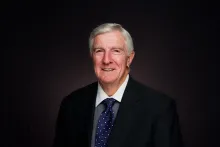
Before his retirement in 2021, Dr. Donald Ward pastored churches in Texas and Louisiana, and taught at Ambassador Bible College in Cincinnati, Ohio. He has also served as chairman of the Council of Elders of the United Church of God. He holds a BS degree; a BA in theology; a MS degree; a doctor’s degree in education from East Texas State University; and has completed 18 hours of graduate theology from SMU.
