

Don Ward
This transcript was generated by AI and may contain errors. It is provided to assist those who may not be able to listen to the message.
We've just observed Pentecost. I would call this the Pentecost season, time of the spring wheat harvest.
It was on June the 17th, today is June the 18th, but according to history, on June the 17th, 31 A.D., the Holy Spirit was sent to the New Covenant Church. This day, June the 18th, very special to me, was on this day, a few years ago, some of you were there, that I was ordained on the day of Pentecost, June the 18th. So, I have today a post-Pentecost sermon. It's really more of a Bible study than it is a sermon. We'll be turning to several scriptures. I'll be turning to those scriptures, and I hope you will turn with me to those scriptures and really be engaged in these scriptures. We are going to study what the Holy Spirit really is and the works of the Holy Spirit. So, what do you really know and understand about the Holy Spirit? So, let's note what the Holy Spirit is. If you would turn to John 4.
John 4. In this chapter, you have the encounter that Jesus Christ had with the Samaritan woman at the well. The Samaritans developed what is called a syncritic kind of religion that was a composition of Judaism, Gnosticism, and some of the other philosophies and religions of the area. The Samaritans had built a rival temple that rivaled the temple in Jerusalem on Mount Gerizim.
Finally, it came down in Christ's discussion with this woman, who and where should you worship? The woman said, well, we worship on this mountain, our fathers did, but you say in Jerusalem is the place to worship. And so in John 4.23, we have Christ's response. But the hour comes, and now is, when the true worshippers shall worship the Father in spirit and in truth, for the Father seeks such to worship Him.
God is spirit. Now, the King James has an A there, but there's no indefinite article in the Greek. God is spirit. That is His essence. Some people talk about composition, but this is the essence of God. That's what He is. I know a lot of people in the church, we say, Holy Spirit's God's power. Holy Spirit's God's power. The Holy Spirit is the essence of God, and through His Spirit, He does works of power.
Our composition is flesh, and through our flesh, we can do works. God is spirit, and through His Spirit, He can do works. If you would, look at Zechariah 4, quickly, verse 10, a chapter and verse that oftentimes is quoted, but misquoted and misapplied. In Zechariah 4.10, which in essence says what I've just said with regard to God does His work through His Spirit. In Zechariah 4. It's not 10, it's 6. Zechariah 4 and verse 6, Then He answered and spoken to me, saying, This is the word of the Lord unto Jerubabel, saying, Not by might, nor by power, but by my Spirit, says the eternal host.
Through God's Spirit, God's Spirit pervades the universe. God is Spirit, and those who worship Him must worship Him in spirit and in truth. Now we go to John 15 and verse 26. Jesus Christ is speaking. You know that on Passover we read most all of chapters 13 through 17 from the Gospel of John. It is from the Gospel of John we learn so much about the nature of God and Christ and the Holy Spirit, especially in John 14, 15, and 16.
Jesus Christ talks a great deal about the work of the Holy Spirit. So in John 15.26, what is the source of the Holy Spirit? And then it also gets into the role, to some degree, which we'll explore more of Jesus Christ. In John 15.26, but when the Comforter is come. Now in John 14.26, if you want to just flip a page over, look at John 14.26, you'll see clearly that it says, But the Comforter, which is the Holy Spirit, whom the Father will send in my name.
And more about that, see the Holy Spirit can be personalized in the name of Jesus Christ. So we sometimes we say, Jesus Christ in you. That is, in essence, the same as saying, the Holy Spirit in you. You could say, God in you, because we'll see that there is one Holy Spirit, one essence. But the Comforter, which is the Holy Spirit, whom the Father will send in my name, it shall teach you all things, bring all things you remember, whatsoever things I have said unto you.
Now, back in John 15.26, but when the Comforter or the Holy Spirit is come, whom I will send unto you from the Father. The Father sends it in his name, and somehow Jesus Christ plays a role in sending the Holy Spirit. And notice further, I'll send it to you from the Father, even the Spirit of truth, which proceeds from the Father. It shall testify of me. We see the lights burning brightly here. Let's try to use a physical analogy to demonstrate this in a more concrete way.
At some place, there is a power station that supplies the electric current to illuminate these lights here. Then there is a carrier or cinder, the wiring that comes into the building. God the Father, the Source, the Holy Spirit proceeds from the Father. It is sent to us in the name of and by Jesus Christ.
Jesus Christ plays this role of sending the Holy Spirit to us and shedding it on us. The Holy Spirit is the active power and presence of God, and it is the essence of God.
Now, let's mention some of the things that the Holy Spirit can do, some of the works of the Holy Spirit. In Matthew 4, verse 1, the Holy Spirit can lead, and hopefully we are led by the Holy Spirit. How does the Holy Spirit lead us? The Holy Spirit leads us by placing a weight on our mind, a knowing within ourselves that a certain thing is right or wrong. The Word of God and the Spirit of God works in concert together to convict us, to lead us.
In Matthew 4, verse 1, then was Jesus led up of the Spirit into the wilderness to be tested and tried of the devil. Further, in Romans 8, verse 14, hopefully all of us are led by the Holy Spirit, and we will come back and talk more about some of these works in greater detail later on. In Romans 8, verse 14, for as many as are led by the Spirit of God, they are the sons of God.
So a prerequisite, according to this, being the Son of God is to be led by the Spirit of God. And once again, how are we led by the Spirit of God? We're led by the Spirit of God in that we read and study the Bible, and the Holy Spirit enables us to understand it, and couple with the Word of God, it gives us understanding, and it creates within us a new conscience, a new understanding of right and wrong.
Now, a parallel scripture that hopefully you have already committed to memory, but let's turn there, is John 6, 63, and you'll see an equating here. It is equating the Spirit of God with the Word of God and with life. Remember John 6, the Bread of Life chapter? Jesus Christ says He is the true bread of life that came down from heaven. If any man eat of this bread, he will never hunger.
And also, Jesus Christ in this chapter instructs them to drink his blood and to eat his flesh. Figure of speech, symbolically speaking, of eating and drinking of the Passover, and also eating and drinking of the Word of God. In John 6, 63, it is the Spirit that makes alive, the Spirit that quickens, the flesh profits nothing, the words that I speak, the words that I speak unto you, they are spirit and they are life. So here Jesus Christ equates His Spirit with His words, the words I speak, they are spirit and they are life. So we eat and drink of the Word of God.
As we eat and drink of the Word of God, that begins to develop within us an understanding of the right way to go to be led by the Spirit. And one of the great works of the Spirit, if you turn now to John 16 and verse 7, is to convict. Now keep this in mind that the Word of God and the Spirit of God work in concert together. That also introduces the great role of the Church. The Holy Spirit does not just go out and convict people in outer Mongolia with regard to the truth.
By the way, the Dalai Lama announced this week, of course, he's in Tibet, he's a great so-called spiritual leader, announced that he was a communist, among other things. But anyhow, in John 16 verse 7, Nevertheless, I tell you the truth, it is expedient for you that I go away. If I go not away, if I go not away, the Comforter, the Holy Spirit, will not come unto you. I don't know if we've ever let that sink in.
If I go not away, the Comforter, the Holy Spirit, will not come unto you. But if I depart, I will send it unto you. And we've already read from John 15.26 where it says, I will send you the Holy Spirit which proceeds from the Father. And when He has come, the Comforter is masculine, so therefore the referent pronoun is masculine, doesn't make it a person, I'll just say it. And when it has come, it will reprove. Now the word reprove is one we should know.
It is the Greek word, elyncho, e-l-e-n-c-h-o. It means to convict. We talk about people being convicted of certain things. We're convicted that if you jump off the table, you're going to fall. Unless you have what you heard in the sermonette, the Father who catches you.
And as you heard in the sermonette, sometimes our earthly father didn't catch us, but our heavenly father says he will always be there. And when it comes, it will reprove the world, convict the world. It means lay a weight on the mind, convict the world of sin and of righteousness and of judgment. How did you come into the knowledge of the truth? You heard somebody probably on the radio or television, or you picked up a magazine or a neighbor or a relative or somebody told you about the truth.
And you decided, well, maybe I'll read that, or I'll read the Bible. And you began to say, this makes sense. And you become convicted in the spiritual sense of the truth. Now we go to Romans 10, verse 14. We'll see this connection I'm talking about of the Holy Spirit and the Word of God. And while we're turning there, Romans 10, 14, I'll rehearse the Great Commission. Matthew 28, 19, 20, Go ye therefore into all the world, disciple all nations, teach them to observe all things whatsoever I have commanded you, and lo, I am with you even until the end of the age. So the Church has a commission to prepare a people, and the motto of the United Church of God, prepare a people and proclaim the gospel. And we have a role. Everybody here has an important role to play. Everybody here has talents and abilities. And we have seen in recent months how people, as the old expression goes, have come out of the woodwork. They have stood in the gap. They have provided service and done things that people just didn't know they could do. That is, others probably knew they could do it, but they just were never called on or whatever. So now we have people giving sermonettes, special music, leading songs, doing things that they've never done before and they're doing a great job. So everybody is needed.
I've heard ministers say before that God doesn't need you. Well, I'm sorry, but wouldn't that be the same thing as me saying, I don't need my children. I don't want my children. I don't need them. Or if you're talking about God would still be God without us. But He's not willing that any should perish, but that all should come to repentance. He wants us. He loves us. He needs us. He gave His Son for us. And He has a role. He has a job for every one of us to do. In Romans 10, 14, How then shall they call on Him, in whom they have not believed, and how shall they believe in Him of whom they have not heard?
And how shall they hear without a preacher? And so, God has ordained a system, and it is the church system, as we call it. And through the church system, I get to use that as a term. I think you know what we're talking about. He has determined that it's through that system to call people into the truth. You know, Paul talks about in Romans 1 that through the foolishness of preaching, it pleased Him to save some.
So we all have an important role to play. The Holy Spirit convicts and concert with the Word of God. Now we go back to John 16. We'll see a little more here about works of the Holy Spirit. John 16, verse 12. John 16, verse 12. I have yet many things to say unto you, but you cannot bear them now. Of course, spiritual maturity comes in steps, and you have to remember this particular point. Even on Passover, when Christ instituted the symbols of the New Covenant Passover, the disciples got into a squabble over who was the greatest.
They did not yet have what I would call the Spirit of the Ghetto. Now, they understood some things, but they didn't understand all. And we read about in Luke 24 how that He opened their eyes of understanding, and He taught them really what His role and mission was and what they were to do. Verse 13, how be it when the Spirit of Truth, Talmuma, has come, it will guide you into all truth, for it shall not speak of itself, but whatsoever it shall hear. What does it hear? It hears the truth. Your word is truth. We just read from Romans 10.14 that how shall they hear without a preacher? Romans 10.17 says, faith comes by hearing and hearing by the Word of God.
How shall they hear without a preacher? And then it says, but whatsoever He shall hear, that shall it speak, and it will show you things to come. And that gets into the part about revelation, things to come, that God reveals more and more about Himself and about the Holy Spirit and Christ and the whole process if we get in there and dig.
Now to 1 Corinthians, Scripture we're all very familiar with, with regard to another work of the Holy Spirit, and that is revelation. The principal ways whereby man gains knowledge, one is through the five senses, that's called sense knowledge.
Another one is what's called empirical knowledge, that is knowledge that is gained through experience, sort of the old trial and error method. And then another one is through human reasoning. And those are the three principal ways, some talk about intuition. I'm not convinced that's a valid method, but anyhow some talk about it. And then there is revelation. And it is through the Spirit and Word of God that God's things, the spiritual things, are revealed. 1 Corinthians 2 and 9, But as it is written, I, if not seen, nor ear heard, neither have entered in the heart of man the things which God has prepared for them that love Him.
But God hath revealed them unto us by His Spirit, for the Spirit searches all things, yea, the deep things of God. For what man knows the things of a man, say the Spirit of man which is in him, even so the things of God knows no man but the Spirit of God. So the Holy Spirit convicts the very mind, the very essence of God, coupled with the Word of God, convicts us of the truth.
And also it calls things to remembrance. It won't call things, that is, the Holy Spirit won't call things to remembrance unless you study and put those things in your mind. Some people say, well, I don't have a good memory. Well, develop your memory.
We can all do it. One of the programs we've started, I think I mentioned this here the other day, we have a memory scripture in the bulletin every week. If you would be turning to Luke 21. Luke 21. A memory scripture in the bulletin every week.
And we're challenged to memorize that scripture. And plus we have the stack of memory cards. And the Holy Spirit, believe me, can be a helper. So much of what I say in a sermon, I don't have written down, but it's like there it is from the memory bank when you're ready for it. And I believe that the Holy Spirit plays a role in that. But you have to get in there and dig in order for those things to be developed. Luke 21 is Luke's account of the Olivet Prophecy. Remember Matthew 24 and 25, Matthew's account of the Olivet Prophecy. And Christ's response here is in answer to the questions that they posed of verse 7, Luke 21.7.
And they ask Him, saying, Master, but when shall these things be? And what sign will there be when these things shall come to pass? He said, Take heed that ye be not deceived, for many shall come in my name, saying, I am Christ, and the time draws near, go not after them. But when you hear of wars and commotions, be not terrified, for these things must first come to pass, but the end is not by and by. And we hear of wars and commotions, and especially this next verse here.
Said unto them, Nations shall rise against nation, kingdom against kingdom, great earthquakes shall be in different places. There has been a tremendous increase in earthquakes, regardless of what they say and the intensity of earthquakes in recent years. Look what happened off the coast of Japan. Famines, there's about seven billion people on the face of the earth today. Some of the statistics say that over half of the world's population goes to bed hungry every night.
That would be three plus billion. Pestilences and fearful sights and great signs shall there be from heaven, but before all these. Now that word before is epi, and it can mean above, or that which takes precedence over. This is where it gets really personal with regard to the end times, the great tribulation and all of that, and whether or not we have the Word of God stored in our heart.
But before all these, they shall lay their hands on you, persecute you, delivering you up to synagogues, and into prisons being brought before kings and rulers for my namesake, and it shall turn to you for a testimony. The word testimony is maturia. M-A-T-U-R-I-A, it means a witness or record or testimony, just like you would give if you were in a legal trial. Settle it therefore in your hearts not to meditate before what you shall answer.
For I will give you a mouth in wisdom which all your adversaries should not be able to gainsay nor resist. So here, once again, the role of the Holy Spirit bringing things to remembrance and moving you, inspiring you to say and present your witness your testimony. And you shall be betrayed both by parents and brethren and kinsfolk and friends, and some of you shall the cause be put to death. And you shall be hated of all men for my namesake. But there shall not a hair of your head perish.
Some look at that and say, well, there's a contradiction here. Not a hair of your head shall perish. In the eternal sense, because even if we die in tribulation, we're going to be resurrected. And your patients possess you your souls. These things that we have talked about here represent some of the works of the Holy Spirit. If there's so much more, we can never say all there is to say about any subject, especially the very essence of God. If you would now, let's go to Acts 2, Acts 2, the account of the Holy Spirit coming on the day of Pentecost.
Acts 2, verse 4, And they were all filled with the Holy Spirit, began to speak with other languages as the Spirit gave them utterance. So the Holy Spirit endows, it gives gifts. And so the apostles were the ones who spoke the other languages, and the miracle of hearing had to do with those who were assembled there from all the countries that are mentioned there in verses 9 and 10 and 11. God expects us to use our gifts and expects us to develop our gifts so that we can edify the body of Christ.
And that's one of the encouraging things. You would turn to 1 Corinthians 12. One of the encouraging things in recent times has been the willingness of various people to step up to the plate and to exercise the talents that God has given them, not for them to remain buried, like the parable of the talents where this guy has given only one, went and buried it, but to increase them and to edify and inspire the body of Christ.
In 1 Corinthians 12, verse 4, the Corinthians were really hung up on spiritual gifts, especially speaking in tongues. It was like, if you can speak in tongues, different languages, then you're really spiritual. The Corinthians were divided on so many issues. You can't believe it, but yet it was a church of God. And Paul gives them the instructions on spiritual gifts, how they're to be used. And then he talks about in chapter 13 what is the most important that surpasses spiritual gifts.
1 Corinthians 12, 4, the diversities of gifts but the same spirit, differences of administration, the same Lord, differences of operations, but it is the same God who works all in all. But the manifestation, in other words, the outward sign, the gift of whatever it is of the Spirit, is given to every man to profit everybody. And so there are various gifts. And somehow I think we have tended to think, well, the person who stands up and speaks, that's the one who is the most spiritual or has the greatest gift or anything like that.
Well, there are a lot of people who labor in the shadows, and they never get the accolades that some others get with regard to spiritual service. But God knows those who are His. And like it says in 1 Corinthians 4, the day is coming when every man is going to get their reward, whether things done in secret, things done in open, whatever it is. See, God is a just God. Man struggles with that. But God is fair. He's no respecter of persons.
But to me, the great lesson for us is to use our talents and our gifts that God has so generously bestowed upon us, no matter what that gift or that talent is. Now, let's continue with the use of the Holy Spirit and what it is, a gift. Let's go back to Acts 2 again. If you had to summarize the day of Pentecost with one verse, Acts 2.38 would be the verse that I would use. The Holy Spirit has a gift, but it is conditioned.
It is conditioned upon repentance. It is more than just believe. When Peter preached his inspired sermon on the day of Pentecost, he came to verse 37. Acts 2.37, when they heard this, they were pricked in their heart. I mean, they were cut deep. They were convicted, as they say, down to their toenails. And said unto Peter, and to the rest of the apostles, men and brethren, what shall we do? Then Peter said unto them, Repent, and be baptized every one of you in the name of Jesus Christ for their mission of sins. Peter gave sort of the short formula here. There, of course, is the exercise of faith and the sacrifice of Christ, and to be baptized.
And you shall receive the gift of the Holy Spirit. So it is conditioned upon repentance. And we have to make the decision, after God places this weight on our mind, we have to make the decision whether or not we are going to obey.
And Acts 5.32 says, He gives His Spirit to those who obey Him. In 1 Thessalonians 5, verse 19, it says, Quench not the Spirit. Don't quench the Spirit. How do you quench the Spirit? You quench the Spirit by not doing the things that you know to do. And if you quench the Spirit long enough over a period of time, the conscience becomes seared. You know, Paul wrote to Timothy in 1 Timothy 3.1, saying that the time will come when some will depart from faith, giving the faith, giving heed to the doctrine of devils, having their conscience seared with a hot iron. So the conscience, the knowing within yourself, can be seared over a period of time if you quench the Spirit.
The Holy Spirit is of God. So we go back to that. The Holy Spirit is of God. The Holy Spirit is divine. We can be partakers of that divine nature. The Holy Spirit is not a person since it is the essence of God. The Holy Spirit is of God. If you are of something, you're not separate and distinct. You're not an individual entity on your own. The Holy Spirit is of God. Let's notice in Matthew 3.16. In Matthew 3.16, Jesus, when He was baptized, went up straight way out of the water, and lo, the heavens were opened unto Him, and He saw the Spirit of God descending like a dove.
So the Spirit of God appeared as a dove and lighting upon Him. It is the Spirit of God. It is the essence of God. Now look at Matthew 12. Matthew 12.28. Jesus talked several times about the Spirit of God, and so did New Testament writers.
I hope you understand the point with regard to the Spirit of God. It is the essence of God. It is not a separate entity. And as we shall see, the Holy Spirit is under the direction of God, just like our flesh is under our direction. That my arm doesn't go out here without my direction, unless I have some kind of abnormality or twitch or whatever. It's under our flesh is under our direction.
The Holy Spirit is under the direction of God, as we shall see. In Matthew 12.28. But if I cast out devils by the Spirit of God, then the Kingdom of God has come unto you. Now let's notice in Genesis 1 that the Holy Spirit is under the direction of God and Christ. In Genesis 1. Remember, let's rehearse one Scripture. Remember John 15.26. When the Comforter is come, whom I will send from the Father, that which proceeds from the Father, Father being the source of the Holy Spirit, but Jesus Christ oftentimes plays a role.
And in the creation and re-creation, Jesus Christ is what we would call the agent of creation. The word spoken was done. But the initiation comes from God the Father. In Genesis 1.2, the earth was without form and void. Tohubohu, darkness was upon the face of the deep. And the Spirit of God moved upon the face of the waters. And God said, Let there be light, and there was light. Now parallel to that would be Psalm 104 verse 30, a little bit more direct in the sense that I am showing here.
Psalm 104 verse 30. You send forth your spirit, you send forth your spirit. They are created, and you renew the face of the earth. So the Holy Spirit is under the direction of God. The Holy Spirit can be personified by the Son. The Son is not personified by the Holy Spirit, but the Spirit cannot be personified by the Holy Spirit. Let me say that again. The Holy Spirit can be personified by the Son. Let's go now to 1 John chapter 5 verse 10.
Remember in John 14.26 it says that I will send the Holy Spirit in the name of my Son. In 1 John 5 verse 10. He that believes on the Son of God has a witness in himself. He that believes not God hath made him a liar, because he believes not the record that God gave of his Son. This is a record that God has given to us eternal life, and this life is in his Son. He that hath the Son hath life, or he that hath the Holy Spirit hath life.
He that hath not the Son of God hath not life. You have to believe on the Son of God to receive the Holy Spirit. We went through that. The Holy Spirit, in conjunction with the word being preached, convicts. Upon conviction, you repent and realize that apart from God and Christ, you are going to die. You say, I want my sins forgiven. You come to understand that it is only through the sacrifice of Christ, faith in his sacrifice, that the sins can be forgiven. You cry out to God and cry for forgiveness, believing that he paid the price for you.
He will forgive your sins and remove them as far as the east is from the west. Then you enter into a covenant of sacrifice that you will crucify the flesh, baptism, symbolizing that, and be raised in newness of life as you come up out of the baptismal waters and receive the Holy Spirit. That Spirit, once again, is the divine essence of God and Christ. The Holy Spirit, there is one Spirit, and some people get confused on that. So let's look at that very clearly now, hopefully it will be very clear, in 1 Corinthians 12.
1 Corinthians 12 How are we all joined together? How are we members one of another? It also gets into how are we literally the spiritual sons of God? In 1 Corinthians 12, 12 For as the body is one and have many members, and all the members of that one body being many are one body, so also is Christ. The great rhetorical question of 1 Corinthians 1, or 1 Corinthians the epistle, is 1 Corinthians 1.13, is Christ divided?
Paul shows from your calling to the resurrection Christ is not divided. For by one Spirit, are we all baptized into one body, whether we be Jew or Gentile, whether we be bond or free, have been all made to drink into one Spirit. Now we go to Ephesians 4. On the last day of Unleavened Bread, 2010, I gave a sermon in Houston, the last day of Unleavened Bread, in the afternoon.
The title of it was, Keeping the Unity of the Faith and the Bond of Peace. All that we had heeded, all that we understood or understand, keeping the unity of the Spirit in the bond of peace.
Ephesians 4.1, I therefore, the prisoner of the Lord, beseech you that we walk worthy of the vocation wherein you are called. It is our life's work. With all lowliness and meekness, with long suffering, forbearing one another in love, endeavoring to keep the unity of the Spirit in the bond of peace, there is one body and one Spirit, even as you are called, in one hope of your calling. The same Spirit that is in God is in Christ is in us. And I'll show you that very clearly from the Scriptures. It is through that one Spirit that we are all bound together. As Christ prayed in John 17, that prayer that he prayed on that Passover evening when he instituted the new symbols of the New Covenant, Passover, I pray, Father, that they may be one as we are one. You and me, you and I, and they, all of us together, one.
Perhaps even more direct, Hebrews 2. In Hebrews 2, we'll see this. The backdrop of Hebrews 2 is Paul is showing, once again, the book of Hebrews, what does it do? It compares and contrasts the elements of the Old Covenant with the elements of the New Covenant. That the calling under the New Covenant is so superior, it's a heavenly calling, versus an earthly. There is spiritual reward, eternal life as opposed to national and personal blessings. There is the spiritual temple, the Church of God, versus the physical temple, the sacrifices of the Old Covenant, versus the sacrifices of the New Covenant. And so all of those elements, both covenants, are compared and contrasted in Hebrews. Now, the first part of Hebrews 2, Paul quotes from Psalm 2 with regard to David. David wrote, not Psalm 2, Psalm 8. David looked up in the heavens and he said, When I consider all the majesty of the heavens and the universe, what is man? You have made him a little lower than the angels, and so on. And Hebrews 2 explains why we were created, why we were born, and using Jesus Christ as our forerunner, created a little lower than the angels, but with the potential of being the very family of God and the very essence of the Father. In Hebrews 2.10, For it became him, for whom are all things, and by whom are all things, in bringing many sons unto glory to make the captain of their salvation perfect through sufferings. For both he that sanctifies and they who are sanctified are all of one, for which cause he is not ashamed to call them brethren.
We are literally spiritual sons and daughters of God, and brothers join heirs with Jesus Christ, as we shall see in just a moment. This is a literal thing in the spiritual sense. It's not just a figure of speech. If you would turn to Romans 8, and as we're turning there to Romans 8, you've heard the analogy many times of the physical begettle, to some degree, paralleling the spiritual begettle, conception, birth, and all of that. In the physical begettle, father and mother come together. The mother provides an ovum, the father sperm, and it's out of their very being, out of their body. It's material, out of their body. And the genes and the chromosomes that within them are stored, certain characteristics and traits of both parents. And so they become, to some degree, a reflection of their parents. The same way God the Father gives us, sends us through Christ, begets us to a new life, a spiritual life. It's literal. It's not just a figure of speech. I've even heard some of our ministers somehow refer to this as not a figure of speech. If it were a figure of speech, how would we be spirit beings in the kingdom of God? How would it be that we're all of one and he's not ashamed to call us brethren? It's a spiritual reality which is a greater than the physical reality. In Romans 8, 14, we read it once, we'll read it again in this context. For as many as are led by the Spirit of God, they are the sons of God, you have not received the Spirit of bondage again to fear, but you have received the Spirit of Hoeyalthhesia. Now, we have had this minister who is no longer with us who tried to make the case that this word adoption is a correct word, which means just adoption places a son. But if you look at any concordance you want to look at, the Greek word is Hoeyalthhesia. H-U-I-O-T-H-E-S-I-A. And W-I-O-S is the Greek word for son. And W-I-O-T-H-E-S-I-A means sonship, the Spirit of sonship. We have received the Spirit of sonship. See, if we're not literally sons, what are we?
And we talk about we have the Spirit of God, we talk about being begotten by the Spirit of God. If that is true, how can we be less than sons?
And how can we all be of one if that's not true? We have received the Spirit of sonship, whereby we cry, Abba, Father. The Spirit itself bears witness with our spirit that we are the children of God. And if children then heirs, heirs of God-notice that-heirs of God, we inherit, we receive from Him, first of all, the beguettled, the earnest of the Spirit, the down payment on eternal life. And you see, unlike in the... our human analogy breaks down with regard to beguettled, conception, and birth, in the sense that the Father begets us and He resurrects us to eternal life. He does both robes. He begets and He brings us forth. He resurrects us to eternal life. We'll read that verse in just a moment. And if children then heirs, heirs of God, enjoin heirs with Christ, if so be that we suffer with Him, that we may be glorified together. Now, back to Romans 8, verse 8.
Brethren, we are literally spiritual sons and daughters of God. We'd have to be, if we were going to be resurrected and be spirit beings in the kingdom of God. It wouldn't be just adoption. In adoption, an adopted person, in the legal sense, has rights and privileges of a natural born child. But they did not come out of... an adopted child did not come out of the loins of their parents. They didn't provide the DNA, the genes and chromosomes. But with God and His begettle, we become partakers of His divine nature. Romans 8, 8. So then that they that are in the flesh cannot please God. But if you are not in the flesh, but in the spirit, if so be that the spirit of God dwell in you, now if any man have not the spirit of Christ, he is none of His.
I didn't read that well. I want to read it again. Verse 8. So then they that are in the flesh cannot please God. But you are not in the flesh, but in the spirit. If so be that the spirit of God dwell in you.
Now if any man have not the spirit of Christ, and here we see the spirit personalized once again by Christ, not the spirit of Christ, He is none of His. But it's not like Christ has one Holy Spirit and the Father has another Holy Spirit. They are of the same essence. And we'll show that very clearly in verse 11. And we should already know it. Perhaps we do already know it. You know, one of the things that has happened in the church through the years, and this goes back for decades, that we have like a talking knowledge of so many things, so many truths. Sort of like it reminds me of the oral tradition of what you read about in Days of Yore, the oral tradition. Now we know that in the family of God today there are two beings, God the Father and Jesus Christ, and that we are begotten sons and daughters. And we know that the Holy Spirit is not a person.
And some would just say, well, it's the active power of God. It is the very essence of God through which He does His works.
And then when someone comes along and challenges us on certain things, but it seems to me there has to be a predisposition to be led away by some of these heresies. So when this nature of God thing came up in 1993, though the seeds were already being sown before then, in 1993, and that terminology was presented out there, it was either the predisposition was already there or we just weren't well enough grounded in the Scriptures to really combat what was said. And most of us just, you know, it's like, well, I know that's not true. That's not what the Bible says. But whereas in the feast days, about that time, from the 1980s through the 1995, we'd have 150,000. Now in the churches of God, it's so much less. And it was like some were just sitting, waiting. Oh, he said, it's all right to play golf on Sunday. I mean, on Saturday, on the salad. Oh, well, I'll go play golf. Oh, it's all right to eat leavened bread on days of my life. Oh, I'll go eat some rolls. What is that? It's like, it's almost like a predisposition that I'm looking for a loose brick. But if we are grounded and founded in the Word of God and led by the Spirit of God, those things will not lead us away. Verse 10, and of Christ being you, the body is dead because of sin, because you have exercised faith in the sacrifice of Christ. You've been raised to newness of life, but the Spirit is life because of righteousness. Now, leaven is a very key verse. But if the Spirit of Him that raised up Jesus from the dead, that's God the Father. But if the Spirit of Him that raised up Jesus from the dead dwell in you, so you see it is God the Father and Jesus Christ through the Holy Spirit, through the Holy Spirit dwells in us, not just one or the other. But if the Spirit of Him that raised up Jesus from the dead, who raised Jesus from the dead? God the Father. You can read that in Ephesians. Nearly all of Paul's epistles start with talking about God the Father raising Jesus from the dead. But if the Spirit of Him that raised up Jesus from the dead dwell in you, He that raised up Christ from the dead shall also make alive your mortal bodies by His Spirit that dwells in you.
So once again, by one Spirit we're all baptized into one body. We're all joined together. We are all members of one another. Look at Romans 12, verses 5 and 6. Romans 12, verses 5 and 6.
Let's read Romans 4 as well. We have many members in one body, and all members have not the same office. So we, being many, are one body in Christ, and everyone members one of another. We're members one of another because we're linked through the Spirit, the Spirit of God and Christ, the divine essence. One other point today, back to Romans 7, about being led by God's Spirit and what we can actually do.
Romans 8.1, which we'll get to in just a moment, is among the top two or three favorites of mine in the Scripture. It's where I'm reminded almost every day, because I fight the same battles every day that I fought from the time I was a little kid.
And you want that old man to die. You don't want to have to fight that battle, but I have to fight it. And we're all going to fight that battle till the day we die, but we can be more than conquerors through Jesus Christ, who loved us and gave himself for us.
In Romans 7, Paul explains the fight that goes on between the man of the flesh and the man of the Spirit. When you are baptized, you go under that watery grave, you draw a little wavy line across your notebook, and you draw a stick man under that wavy line. There you are buried in baptism. Then you put a stick man above the water, and you put him pushing down this stick man below the water. This new man is to keep this old man crucified. This old man is going to struggle and struggle and try to get up. But the new man, the man of the Spirit, the mind of the Spirit says, no way, no way. I'm keeping you down. Paul is explaining in Romans 7 this battle. Now, some have tried to use this as an excuse to say, okay, well, it's just the nature of flesh to sin. So, I'll go ahead and I'll go ahead and sin. We're all quick to say, and we all are sinners.
But is it possible? Is the Bible about overcoming sin, or is it about, well, you sort of give it a halfway effort, and if it doesn't work, whatever. Let's notice this. Paul explains that there's this war going on. And then verse 24, Romans 7, O wretched man that I am, who shall deliver me from the body of this death, I thank God through Jesus Christ our Lord. So then with the mind I myself serve the law of God. But with the flesh, the law of sin. Did Paul mean that he was giving in to the flesh? No. He said there is a law of the flesh that wars against this. But with the mind, he is keeping that old man down, and he's crucifying that man. There should be no chapter break. There is therefore now no condemnation or judgment to them that are in Christ Jesus, who walk not after the flesh. He's not giving in to the flesh, the law of sin in the flesh. There is therefore an out of condemnation to them which are in Christ Jesus, who walk not after the flesh, but after the Spirit. So as I struggle against the old man, I'm discouraged very often. But at the same time, walk according to the Spirit and say, no, I'm not going to do that. Or if I do do it, I cry out to God to forgive me and to help me to overcome it.
For the law of the Spirit of life in Christ Jesus has made me free from the law of sin and death. If you live according to the Spirit, for what the law could not do in that it was weak through the flesh, the law shows us what sin is and highlights it. And the law is spiritual. It is good. It is just. It was ordained for life, but it does not give life. God sending his own Son in the likeness of sinful flesh and for sin, paid the price for it, condemned sin in the flesh. How did Jesus Christ condemn sin in the flesh? Because he showed that you can live in the flesh and obey and keep the law. And so he did perfectly. Of course, we're quick to say, but we're not Christ. He had the Holy Spirit without measure, but we have the Holy Spirit. And to the degree that we hide the Word of God in our hearts and minds, remember the words I speak, their spirit and their life. Why is it that through the years over half of the people, and this goes back to even when Mr. Armstrong was alive, that over half the people that ever came into the Church left because they were not renewing this inward man daily? As it says in 2 Corinthians 4, 16, that the inward man is renewed daily. Just as the physical man needs physical nourishment, the inward man needs spiritual nourishment. It is as simple as that.
And we have been sidetracked and going down so many different blind alleys over the years that it's incredible. And you think about what could have been, and the old saying of the saddest words of man or pen or those that could have been, what could have been. But here we are what is, and we have to deal with what is. And we still have the fight and the battle for eternal life before us. We can and we will win the battle if we're led by the Spirit.
Verse 4, that the righteousness of the law might be fulfilled in us who walk not after the flesh, but after the Spirit. For they that are after the flesh, do you mind the things of the flesh, but they that are after the Spirit, the things of the Spirit. And verse 13, for if you live after the flesh, you shall die. But if you through the Spirit do mortify the deeds of the body, you shall live. So, brethren, the day of Pentecost is to be lived 365 days, 24-7, the rest of our lives. And if we're led by the Spirit, we are the sons of God. We can overcome every obstacle that is out there. There is nothing that can keep us down. There is nothing that can keep us away from the kingdom of God and out of the kingdom of God except ourselves. If we will do the things that God instructs us to do in this book. We're here in a time in human history in which we so desperately need men and women who will stand in the gap and who will do the things that are revealed here. And I think that we have shown in recent months and weeks that we're willing to do that. And I hope that this start, this that we have here, and the zeal that many of you have shown, will continue. That we will hunger and thirst after righteousness and renew the inward man daily to pray and study, to meditate, and to fulfill the two great commandments, which in essence fulfills the worshiping God in spirit and in truth.
To love God with all our heart, mind, and soul, and love our neighbor as ourself. So as we go through the weeks ahead, we're on the journey now to the Feast of Trumpets. Remember, let's renew the inward man daily.
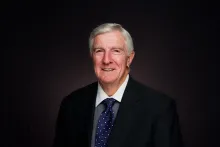
Before his retirement in 2021, Dr. Donald Ward pastored churches in Texas and Louisiana, and taught at Ambassador Bible College in Cincinnati, Ohio. He has also served as chairman of the Council of Elders of the United Church of God. He holds a BS degree; a BA in theology; a MS degree; a doctor’s degree in education from East Texas State University; and has completed 18 hours of graduate theology from SMU.
