
David Dobson
This transcript was generated by AI and may contain errors. It is provided to assist those who may not be able to listen to the message.
We go a month between Bible studies, so you may have forgotten where we are. We are in 1 Peter. So if you'll turn over to 1 Peter. We were galloping right along the last time we got through the first seven verses. So hopefully we can begin to move now. We covered the background also. And we got up through verse 8. If you remember, this was written around somewhere between 63-67 AD by Peter. It was sent to the pilgrims of the dispersion, and he addresses it to those who have been scattered abroad. And he begins to talk about the trials and the tests that we go through. And we find that what God is interested in, as we had come down through verse 7, is to know that our faith is truly genuine. A lot of times we can say we have faith, but how does God know? Well, it's by sometimes putting it to the test to see what we will do, how will we react. Now we come to verse 8 of this chapter, talking about Christ. It says, "...whom having not seen you love, though now you do not see him, yet believing, you rejoice with joy, inexpressible and full of glory, receiving," as verse 9 says, "...the end of your faith, the salvation of your soul." Now, if you'll remember, after Christ's resurrection, Thomas was doubting. The other disciples told Thomas that Christ had been resurrected. Well, I don't believe it, he said, unless I can see him, put my fingers in his side, touch his hands where he was crucified, I won't believe it. And yet, you and I have to have faith that Jesus Christ came, that he lived as a human being, that he died, and trust God even though we have never seen him. As the Bible says, we walk by faith and not by sight. So how do we have that faith?
See, faith is the key for a Christian to obey God, to serve God. Faith is a gift that comes from God. Faith comes by hearing and hearing by the Word of God. Faith comes because God implants his spirit within us that gives us the embryo of faith, but we have to constantly nourish that faith. And it comes from daily prayer, daily Bible study, saying close to God. When we back off from that, then what happens is our faith begins to be weakened. We don't have the strength that we should. Whenever the apostles referred to Jesus Christ, they always referred to him not as a little baby and a manger, not as a dead person in a book, but they referred to Christ as being alive. And you and I believe that Jesus Christ is alive today, that He's our high priest, that He intervenes on our behalf. Now, what is the end of our faith? The word end there means the goal, conclusion, consummation of our faith. The end result of that is our ultimate salvation. As it says here, the salvation of your soul. And the word soul here is used in the sense of the self of the person. It's talking about that you and I all are referred to today as receiving salvation. That means that we have been saved or rescued, like somebody who's about to drown, someone comes along and rescues them. God has rescued us, put us in His church, given us His Spirit. But ultimate salvation, which is in His kingdom, doesn't take place until the future, the time of the resurrection. And so that ultimate salvation is what the end of our faith produces. So faith is vital. Without faith, it's impossible to please God. So we have to have that faith. Now verse 10. Of this salvation, the prophets have inquired and searched carefully, who prophesied of the grace that would come to you. Now the word here search is a unique word. It's a word that in the Septuagint translation, which is a Greek translation of the Hebrew Bible, that was used of Saul searching for David. Remember when David was running? And Saul came after him with his army and diligently and intensively searched for him. So what it is implying here is that the Old Testament prophets were just not mindless instruments who, uh-oh, you know, boing, I get a message and then they write it down and that's all they did. No, as they received messages in the Bible prophesied that salvation was coming, the end was coming, or world events were going to take place, they mused on these things, they thought carefully about them. The prophets in the Old Testament knew of the salvation that we would one day receive. In Acts 2.25, hold your place here, but Acts chapter 2.25, I want you to notice what is written here. It says what David says concerning him.
I foresaw the Lord always before my face, for he is at my right hand that I may not be shaken, therefore my heart rejoiced, and my tongue was glad, moreover my flesh will also rest in love or in hope, excuse me, because you will not leave my soul in Hades or in the grave, nor will you allow your holy one to see corruption. You have made known to me the ways of life. You will make me full of joy in your presence. So here we find David clearly understood what God was planning, and he talked about Christ and what Christ was going to do.
So you will find here that the prophets of old, even though they wrote about salvation, they wrote about grace, they wrote about the Messiah coming, they didn't fully comprehend everything. And verse 11 also says, searching what or what manner of time the Spirit were Christ, who was in them, was indicating when he testified beforehand the suffering of Christ and the glories that would follow after.
Now notice what they did, it's the same type of thing that we're doing. What manner of time are these prophecies going to be fulfilled? God didn't reveal that to them. He didn't say on such and such a day, you know, this is going to happen now. The best indication was in the book of Daniel, as we know, the 70 weeks prophecy. But when were all of these prophecies about the Messiah and His first coming going to be fulfilled?
Well, they searched and they didn't really fully know. Now what do we do? Well, there are prophecies about the second coming of Christ. And we search what manner of time? When are these things going to happen? And we do the same thing, and we're probably no more closer than they were. I mean, they could have an estimation, an estimation, a guesstimation, and they probably did. So you'll find we speculate about the coming, His second coming. They were wondering about His first coming. Now the sufferings of Christ were prophesied. Now I think one of the things that's very important about this is that when the disciples, the apostles, went out and began to preach Christ, and especially to the Jews, how did they convince the Jews that Jesus was the Christ, that He was the promised Messiah?
How would you go about proving it? Well, they went back and they showed from the Old Testament the Scriptures that He was to suffer. You see, the Jews had completely overlooked the Scriptures dealing with His suffering. They focused on the Scriptures of His coming back, regathering them, setting them up as a great kingdom, and so they were focusing on all of that. And yet they overlooked the others. In Acts 17, verse 3, I'll just give you a couple of examples that we're familiar with. Acts 17, verse 3, says, explaining and demonstrating that Christ had to suffer and rise again from the dead, saying that this Jesus whom I preached to you, see, He is the Christ.
He's a Messiah. He's the one you've been looking for. Chapter 26, verse 23, chapter 26 of the book of Acts, verse 23, says that Christ would suffer, that He would be the first to rise from the dead, and would proclaim light to the Jewish people and to the Gentiles. Acts 26, verse 23.
So you'll find that the way they began to break through this hard shell that the Jews had was to be able to show them clearly, here's a Scripture about the Messiah, and clearly it's talking about His suffering. If you could think of a Scripture in the Old Testament that you could turn to immediately and discuss this, where would you go?
You'd go to Isaiah 52, Isaiah 53, wouldn't you? Because that's where it talks about the Messiah and the suffering and the scourging and everything that He was going to go through. Now, in verse 12, it says, to them it was revealed that not to themselves, see it wasn't written for just for them and their time, but to us they were ministering the things which now have been reported to you through those who have preached the gospel to you by the Holy Spirit sent from heaven, things which angels desire to look into.
Now, the servants of God have been given down through the ages a glimpse into things that are to come. And the Bible was written not necessarily just for themselves, but was written for us who were going to come later that God was going to build His New Testament church on. Now, the angels are learning about salvation from us. They look into these things. They see what God is doing with us. And they've got to sit around shaking their heads. There are probably several dozen angels in this building right now. You and I don't see them. And they may be standing by me, sitting by you, shaking their head and saying, I don't get it.
How can that person be in God's kingdom? I know that person. I know what they do. I know their weaknesses, their thoughts. And you tell me they're going to be in the kingdom of God. And then they try to understand grace and what all that implies in God's love and God's mercy, God's forgiveness, and what the Spirit of God is doing. And they see us. And then all at once they see the change begin to take place.
And they marvel at that. Well, that's what the Scripture here is talking about. 1 Corinthians 6 and 3 shows that in the future we will judge angels, our managed angels, we'll be responsible over them. So God is working with us, and one day will give us authority over the angels. And so they've got to sit back and say, I don't know how all this is happening, but you mean that this bag of clay over here is going to rule over me one day? And God says, yeah, they will, but you and I have to grow and overcome.
So in light of all of this, then, we're told, gird up the loins of your mind, be sober, and rest your hope fully upon the grace that is to be brought to you at the revelation of Jesus Christ. Now girding up your loins is a task that was done in preparation when it required speed and agility, a sense of urgency, to be accomplished. Because if you had flowing robes on and you had to go somewhere or work or run, that robe would impede your running. You ladies try to run in a long dress. It just doesn't work very well. But what they would do is that they would grab this thing up, tuck it into their sash or in their waist, and it would almost be like big bloomers then hanging out here. And then they could take off. There's nothing impeding they can move. Well, the same thing is true. What are we to gird up? The loins of our minds.
That means that we need to put out of our minds all that might impede us. That would hinder us from doing the work of God. And what gets into our minds? Well, the lust of the flesh, lust of the eyes, pride of life, vanity, ego, lack of faith, doubt, worry. You know, all of these things that we have to struggle against. So you put these impediments out so that you are not impeded and obeying God. The word sober here is not talking about don't be drunk, not discussing drunkenness, per se, but being mentally and emotionally stable. You and I are to be sober. We are to be serious minded. Sometimes you might say to your children, can't you be sober for a while? You don't mean, well, you're drunk, I want you to sober up. You mean, can't you be serious? For once. Always laughing, joking, everything's a big joke instead of you need to be a little serious. And then it talks here about your rest, your hope fully upon the grace. So again, we find that the gift of God is eternal life. You know, that's what we're looking for at the revelation of Jesus Christ. That's not something we earn. That's God's gift, His grace to us. Verse 14, as obedient children, not conforming yourself to the former lust as in your ignorance.
Now what God is looking for are children of obedience, obedient children. Isn't there a difference if you have children, if you have a child that is obedient and one who's not obedient? The obedient one you know can basically do what you asked him to do, whereas the other one you always got to keep an eye on that child. You got to know where he is, what he's doing, what he's up to, because you never know. Can you really trust him? So it's talking about, obedient child is referring to the spirit of obedience that we should have instead of the spirit of self-will and rebellion that a person might have. So the motive principle of a child should be one of obedience. The motive principle that we should have that should motivate us is one of obedience. Now we stumble. I mean, we're human. We stumble. We fall. We make mistakes. But our whole motive, our whole drive, our whole intention is to strive to obey God. As Philippians 2.12 says, we need to obey God when nobody else is looking. See, that's what God is looking for. He's looking for children that he knows will obey whether somebody is present or not present, that you will live the same type of life, and that we're not to conform to our former lust. It's interesting that sometimes that we let the world squeeze into our lives and help mold our minds. But what we want is God to mold our minds, to mold our thoughts, to mold the direction we go in. The word here, conform, implies trying to conform to something that's constantly changing. And if something is constantly changing, it's difficult to conform to it. Whereas God's law, God's way of life, guess what? It doesn't change. Christ doesn't change. God doesn't change. I change not, God says. So we don't have to worry about that. If we find out what the will of God is, all we've got to do is do it. Whereas in the world, the values, the system, philosophy, the approach, how things are done, are always shifting. And we find that they go from very liberal, loose morals, maybe to strictness. And so things are shifting. And if you conform to the world and let it mold you, then you're never going to have a basis for obedience to God.
Now, it mentions lust here. It's interesting that in the first century, chastity was almost a forgotten thing, just as it seems to be in our country today. You know, when it comes to marriage and sex, one historian speaks of a woman who had reached her tenth husband.
Juvenal spoke of a woman who had eight husbands in five years. And Jerome tells us that in Rome, there was one woman who was married to her 23rd husband, and she herself being his 21st wife.
So can you imagine? So we think it's bad today. You know, movie stars on the 4th, 5th, 6th, 7th, 8th, your wife. It says, both in Greece and Rome, homosexual practices were so common that it came to be looked upon as being natural.
It was a world mastered by desires, put the word lust in there, whose aim was to find newer and wider ways of satisfying their lust. So the Roman Greek world was a world in which everybody was out trying to top what they did before. Well, you know, one thing about entering into perversion and why it's never good to do so, and this is true of pornography or anything, once you start down that path, you're satiated at a certain level, then you've got to do something a little weirder, a little off the bat to get a pleasure out of it. And when that runs out, you've got to heighten it, and you've got to go up here. And to fall back and do what we would consider things that are normal, hey, that doesn't excite anybody, so therefore they don't want to do that.
So what we have to realize is that the world at that time is very much like, if not worse, than the world that we live in today. And it's into this world, then, that the church first rose up, especially among the Gentiles. And you see why the Apostle Paul, in many of his writings, writing to the Gentiles, is always talking about being pure, wholesome, talking about marriage, and things of this nature, simply because of the influence of the society around them on the people. Now, verse 15, But as he who called you as holy, you also be holy, and all your conduct, because it is written, Be holy, for I am holy. The basic idea of holiness in the Bible is that being separated from all that is profane, meaning to be set apart and dedicated to God. When you and I are holy, we are dedicated to God. We are apart from the profane, meaning the lust of the world, and the lust of the eyes, you know, those type of things. We cannot have a proper relationship with God, and be dabbling in the profaneness of this world, the way it's, the way that it is. So God wants us to be holy. You might remember one of the studies I mentioned to you recently in the sermon that I gave on some of the megatrends, concerning what Barna wrote, that there was only something like one-third of the people who were surveyed, and these were religious people who thought you had to be holy. And when asked, they didn't know what holy meant, they just thought, well, you're supposed to be holy. They don't realize to be holy means to be like God, to be set apart by God, and to be dedicated to God in everything that we do.
Now verse 17, if you call on the Father who, without partiality, judges according to each one's works, conduct yourself throughout the time of your stay in fear. So you and I call on God, but what we find here is that God is not a respecter of persons.
When God looks down on us, He doesn't look and say, well, you know, I like that person better than this one because I like their hairstyle. Or they got a better figure. Or they got more money. They drive a nicer car. God doesn't look at that. We human beings tend to make those comparisons, right? He who compares Himself among Himself, the Bible says, is not wise. And we tend to do that if we're not careful. So God doesn't judge us showing partiality. He judges us by our works. He's judging us by what we do, not what we think. We may think good thoughts.
We may think we're obedient, but we've got to be doing. We've got to be doers. Not the hearers, but the doers. Remember, in James, shall be justified. If you want to be justified, you've got to be doing. Now, as it says here, conduct yourself throughout the time of your stay here in fear. The word stay means sojourny. It could very well be translated your sojourning here. And it literally means to have a home alongside of.
And it refers to people living in a foreign land alongside of people who are not their kind.
This would be like the Russian embassy, where maybe the Russians send their ambassador over here. He's living in the United States. He is not an American. He represents another government. And he lives alongside of us. He's living in the environment that we live in, but he's not one of us. Well, this is the way we are as Christians. We are citizens of a different kingdom, the kingdom of God. Our allegiance is to that kingdom. That's why we don't fight in this world. Christ said, if my kingdom were of this world, my servants would fight. But his kingdom is not of this world. Now, there will come a time when his kingdom will be set up on this world. And I assume at that time, if called on, we will fight. And you will do whatever he dictates or tells us to do to put down the rebels and set up his government and his kingdom. But what you find here, we are to pass our stay here, our sojourning, in fear. To have the proper awe and respect of God. And that's what the word fear means. Reverential respect and awe. Knowing that you were not redeemed, verse 18, with corruptible things like silver or gold, from your aimless conduct received by tradition from your fathers, the word redeemed goes back to the institution of slavery in the Roman Empire.
You might remember, any first century congregation in the church would have been composed of three types of members. Slaves, free men, and freed men. There's a difference between free men, those who had never been slaves, and those who had been slaves and therefore had been freed. Now, people became slaves in various ways in the Roman Empire. Through war, through bankruptcy, they sold themselves, they were sold by their parents, or by birth. See, in the Roman Empire, if you were born to a slave, you automatically became the slave of the person who owned your parents. Just like if you have a cow out here, and the cow has a calf, who does the calf belong to? It belongs to you. Same thing was true of a slave. They didn't have any rights. Now, slaves could normally look to freedom over a period of time by buying their freedom. Or if they had somebody who had some money who knew them, they could buy it. Or they could go to war, and if they excelled and did well, maybe they could purchase their freedom in this way. So, there was always a payment of a price for them to get their freedom. So, he's saying here, you were not freed because of being redeemed by gold or silver. Notice that he goes on in verse 19, but with the precious blood of Christ, as of a lamb without blemish and without spot. The word precious means costly, in the sense of value. Something that's precious to you is something that you value. And so, the precious or valued blood of Christ. Now, what you find here is that you and I have been purchased from whom? Well, we've been purchased from Satan. We've been transferred. We're no longer members of the kingdom of Satan, this world, but we become members of the family or the kingdom of God. Begotten now, later to be born at the resurrection. Now, in the Greek, the word Christos, or Christ, stands at the end of the sentence.
And it's an emphatic statement. And it says this, with the precious blood of a lamb without blemish, without spot, even the blood of Christ. So, you and I have been redeemed by Christ's sacrifice. So, there's nothing else that you can do. You can't buy forgiveness. You can't buy this. I don't care how much money you have. You could be J. Paul Getty. You could be head of Microsoft, Bill Gates. You could be a billionaire. You can't buy this. It's only the blood of Christ that allows us to become a part of this special family. Now, verse 1, he says, he indeed was foreordained before the foundation of the world, but was manifest in the last time for you.
Now, this is an interesting Scripture, because you find that Christ was foreordained before the foundation of the world. Actually, one of the best write-ups on this that I found is what West Word Study of the Bible, that's W-U-E-S-T, has to say about this section. Let me just read it to you.
Foreordained in the Greek text means to designate beforehand, to determine beforehand, to a position or a function. In the counsel of God, the Lord Jesus was the Lamb marked out for sacrifice. Foundation is a translation of a word, meaning literally to throw down, since the throwing down of the world. It was used of laying the foundation of a house. You throw down the foundation first, you build that first, and then you add to it. It speaks of the act of the transcendent God throwing out into space the universe by speaking the Word, and then through the Spirit of God. God said, let there be light. In the beginning, God created the heavens and the earth. And God spoke, and there was light, and so on. The word world in the Greek text is cosmos, which speaks of an ordered system, and here of that perfect universe which left the hands of the Creator. So He's implying that this before the foundation of the world is implying that Christ was slain before God created what we would call the physical universe. Before He threw it down there and laid the foundation. The Greeks have a word for rude, unformed mass, a word from which we get our English word, chaos.
In Genesis 1.1, that's interesting, it goes back here, we have a cosmos, a system in which order prevails. In the beginning, God created the heavens and the earth. There's a cosmos, an orderly system. And in chapter 1, verse 2 of Genesis, a chaos, a rude, unformed mass, the latter the result of God's curse because of Lucifer's sin. So He understands here then that the earth became, as we read in Genesis 1.2, the earth was without form and void, or the earth became in chaos and confusion, tohu and bohu, the Greek or the Hebrew words, I should say. Before this universe was created, the Lord Jesus had been foreordained to be the Savior for sinners, and saints had been foreordained to become a recipient of the salvation. Now, He goes on to show what this means, is that God's redemption plan was not an emergency plan, that all at once Satan rebels, or Lucifer rebels, and God says, uh-oh, what am I going to do now? You know, the whole thing has been wrecked. Now I've got to come up with some way of counteracting, and so God comes up, well, you're going to have to die for these people, because, you know, He did this. No, it wasn't that way at all. That God had it planned out. Because even if Adam and Eve had portaken of the Tree of Life, would they have lived perfect lives, never sinning as human beings? I doubt it. I can't imagine that. Maybe they could have. I mean, that's only speculation. But the appearance here, and the way Wes explains it, I think is a very clear explanation of what God did. That He was foreordained, that's when it was foreordained, before the throwing down of the cosmos, but was manifested in the last times for you. So, in other words, Christ was made visible. He appeared on the scene in the last times. And according to God's plan, you know, God's been planning this out for who knows how many millions of years, what we count years.
And over a long period of time, there had already been 4,000 years that man had been on the earth up to this time. So, when Christ appeared, from God's perspective, it was the last days. It was the end time. Okay, now let's go on to verse 21.
1 Peter 1, 21, it says, Who through Him believed in God, who raised Him from the dead and gave Him glory, so that your faith and your hope are in God. So, our ultimate understanding of Christ's role, why He came to the earth, what He did for us, is our salvation and an increased faith and confidence in God. So it says, so your faith and hope are in God. We realize that God is totally in charge of everything. That everything is proceeding along as God designed and planned, and that He is working out His plan of salvation. So He says, Since you have purified your souls and obeying the truth through the Spirit and sincere love of the brethren, love one another fervently with a pure heart. Now, since you, He says, have purified your souls, you and I have a part to play in forgiveness, don't we? What is our part? If we want God to forgive us, what must you do? What must I do? Got to repent. You can't say, just forgive me. I did it again. I mean, how many people go and talk to the priests every Saturday night after they've gotten drunk and flirted with their neighbor's wife for Sunday morning and said, well, you know, Father, forgive me, you know, whatever it is that they go through. And so, you know, they ask for forgiveness, but do they change? Now, you and I purify our souls through obedience, and that means we stop sinning. We start obeying. We start doing what we know we should do. And when we fall short, we know what the standard is. We know what we should be trying to do. And so, we continue to strive to go in the right way. So, you and I can't be lazy Christians. We've got to diligently seek God. And as the Bible says, we have to work out our salvation. Philippians 2, again.
Now, it says here, the truth of the Spirit and sincere love of the brethren, sincere means unfeigned, not hypocritical.
Being a hypocrite is an outward act that doesn't reflect what's going on inside. So, we can act one way. How many times have you felt somebody, not none of us here, but I mean, let's say in the world, somebody puts his arm around you, I appreciate you, I love you, and then they walk away and they stab you in the back. And what they said to your face is not what is going on in the heart. And that's the way, you know, we can't be that way. It has to be sincere. The word love of the brethren comes from the Greek word philia. It includes the idea, we know brotherly love comes from this, but it's the idea of liking, affection, fondness, feeling of warmth, shared values, shared interests. So, you and I have this love for the brethren. We have something in common. We have God's Spirit. We have God's truth. We have God's way of life. And we like one another, or we should like one another. Then it goes on to say fervently, love one another fervently, and the love there is agape, which is godly love. So, both loves are mentioned here in this verse. Godly love is a self-sacrificial love. It's based upon recognition of true values and understanding those values. So, we find here, then, that you and I are to do this fervently. The word fervently means stretching, straining, steadfast.
If you're trying to do something and you're trying to excel, maybe you're trying to lift weights, and last week you lifted 50 pounds. We'll go light. You lifted 50 pounds. This week you want to lift 55. And you get that 55, and you're just about there, and you can't make it, and you strain, and finally it goes up. That's what this is talking about, what the word means. We fervently are we strained. We put forth effort to do this with a pure heart, or from the heart, or heartily. With all of our heart, we do this. And then it says, having been born again in verse 23, not of corruptible seed, but incorruptible through the word of God, which lives and abides forever. So, you and I have been begotten now, and as it says here, not of corruptible seed. Corruptible means perishable. All of our children were born a perishable seed. They will perish.
And if you take the sperm from someone, just throw it out on the ground, it will perish. Also, it's corruptible. It's perishable. But we have been begotten with incorruptible seed. That's God's Spirit. God gives us His Spirit, and just like the sperm cell uniting with the egg, imparts the characteristics of the father, and the egg imparts characteristics of the mother. The unite, and you've got a child that is different. He is not a duplicate of the father or the mother. He has characteristics of both. So, we are. And it is through the word of God, then, that that Spirit is nourished, and we grow and overcome. It says, because, now, why is this so important? Because all flesh is as grass.
Well, you say, well, what is that talking about? Why is that thrown in there? Well, if we were not begotten of incorruptible seed, we're just like the grass. We will fade away. We will die. We will shrivel up. We won't continue to exist. It is only because God gives us His Spirit, His nature, that we can go on and have the hope of life eternal, everlasting. So, because all flesh, that's everybody, is grass. And all the glory of man is the flower of the grass. Just like beautiful flowers out there, one day you come out and the frost hit, they're gone. You know, they're crumpled up, and they look like they've been struck by something. They're brown. The grass withers, and its flowers fall away. And so, fleshly life is temporary. Godly life is eternal. And so, that's the type of life that we want. And when God gives us His Spirit, He places His Spirit within us. It comes into our mind. The Spirit in man is begotten with the Spirit from God, and there is a new creation that takes place. And then we find, but the Word of the Lord endures forever. Now, this is the Word by which the gospel was preached to you. So, God's Word, you know, this Word here imparts to us spiritual truths, understanding, the spiritual concepts. You can read the words on the page.
Printed words don't mean anything. It's the principle of what that means. If it says, God is love, you can read the words, but God is love as a concept, and it is the way God is. And so, we learn from the Word of God. So, that Word endures forever, you know, those principles. God never changes. His mercy, His grace, His forgiveness, His love, and all of this. So, the gospel in no way contradicts the Word of God given to man. And Peter goes on to remind us that God's Word is true, and it's forever. Those principles are. Well, I had hoped to get through chapter 2 today, but unless you grant me another hour, we're not going to make chapter 2. So, I think what we will have to do is come back again. And next time, we will pick up with chapter 2 and continue on through 1 Peter.
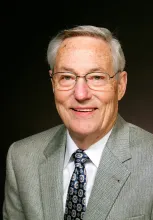
At the time of his retirement in 2016, Roy Holladay was serving the Operation Manager for Ministerial and Member Services of the United Church of God. Mr. and Mrs. Holladay have served in Pittsburgh, Akron, Toledo, Wheeling, Charleston, Uniontown, San Antonio, Austin, Corpus Christi, Uvalde, the Rio Grand Valley, Richmond, Norfolk, Arlington, Hinsdale, Chicago North, St. Petersburg, New Port Richey, Fort Myers, Miami, West Palm Beach, Big Sandy, Texarkana, Chattanooga and Rome congregations.
Roy Holladay was instrumental in the founding of the United Church of God, serving on the transitional board and later on the Council of Elders for nine years (acting as chairman for four-plus years). Mr. Holladay was the United Church of God president for three years (May 2002-July 2005). Over the years he was an instructor at Ambassador Bible College and was a festival coordinator for nine years.
