

Don Ward
We continue our study of the General Epistles.
This transcript was generated by AI and may contain errors. It is provided to assist those who may not be able to listen to the message.
And good evening again, people, and I'm pleased to be with you again this evening.
As our usual custom is, I want to reveal what we learned from our study of the background of Peter last time. You know, if I had to rank the most influential man in the Bible, of course, Jesus Christ living in the flesh was the most influential than Moses and David and probably Paul and Peter and John. Such ones are definitely in the spiritual hall of fame as far as I'm concerned. So let's review some of the life of Peter that we talked about. Peter was born in Bithynia. Bithynia is at the north side of the Sea of Galilee. The Sea of Galilee runs almost due north and south, and to the south it enters into, flows into the Dead Sea. And I'm sorry, the Sea of Galilee flows into the Jordan River, which then flows into the Dead Sea. On the other side, not all that far from where Peter was born in Bithynia is Cappadocia. Cappadocia is mentioned quite often in the Gospels, and Peter spent a lot of time in Cappadocia. He was on, Cappadocia was on the west side of the Sea of Galilee. Not the west side, but the west, the northern tip of where Peter was, where the Sea of Galilee begins to the north. Peter was married. He had a wife. He traveled extensively into Babylon, and to some degree in Asia Minor, and of course in Jerusalem. He was married. He was called Peter, the the Apostle of Hope. Peter was called the Apostle of Hope. Remember the general epistles, or to some degree outline, James wrote about faith. Peter wrote about hope. John wrote about love, and Jude wrote about remaining faithful to the very end.
So Peter was the Apostle of Hope. He encouraged believers to endure trials and to understand the purpose of trials. We mentioned a lot of ways last time that people could be tried. A trial doesn't necessarily always mean that you have done wrong.
Because you're sick doesn't always mean that you have committed sin. God purges every branch so that it might bear more fruit. Peter encourages believers to keep the big picture in mind. He talks about the salvation that they've been delivered to. And the people that Peter wrote to, and we'll bring it out some later this evening, they were new to the Gospel. They were, to a large degree, a lot of Gentiles mixed into the audience that Peter was addressing throughout Asia Minor.
Peter was crucified upside down, as Jesus said, that when he was old he would be carried about by those, and he would go places he didn't want to go. But it was said Peter wanted to be crucified upside down. He said he was not worthy to be crucified in the same manner that his Savior, Lord and Savior Jesus, was crucified. Peter was in the fishing business with his brother, his brother Andrew, and also apparently John was in the fishing business with him, the Apostle whom Jesus loved. I mentioned last time that in Galatians 1, 17 through 20, that after Paul was converted, he traveled into the Arabian desert and was taught by Jesus Christ. Then Paul, about 15 years later after he had traveled to the Arabian desert being taught by Christ, went up to Jerusalem and sought out Peter. Peter was the spokesman and the leading apostle, and he was headquartered to a large degree in Jerusalem, but he also traveled to Babylon and to Asia Minor.
Jesus generally took Peter, James, and John with him on special occasions, like on the time that the Transfiguration when Jesus Christ was transfigured before their eyes, and they asked, shall we build a booth for Moses? A lot of questions about knowing that in the millennium, the Feast of Tabernacles is going to be kept.
Jesus gave the keys of the kingdom to him to give to the church. Now, Peter never was the Pope in Rome, as the Catholics claim. There's no biblical evidence to place Peter in Rome at any time. And the Catholic apologetics apologists who try to place Peter and say that Babylon was a symbolic of Rome, and say that Peter wrote first epistle, his epistles from Rome. In essence, they're saying that Babylon is the great whore, or that Rome is the great whore of Revelation 17. But there's no evidence in the Bible that Peter was ever in Rome.
So Peter, as it says in the last verse or so, he gave greetings from Babylon and from Silvanus. Now, Silvanus had another name, and it was Silas. I don't think we mentioned that last time. Silvanus had also the name of Silas, and Silas traveled very often with the Apostle Paul, and so did Mark, even though Mark had gone home and Paul wouldn't let him go on one of the missionary trips that he took. Later on, he did make peace with Mark, and Mark, he even beckoned in First Timothy, Second Timothy it is, he beckoned for Timothy to come to him, or he was useful to him to Paul in the Gospel.
So Peter was not the first Pope, and Scripture never places him in Rome. First Peter was written from Babylon, not Rome, and he used an amanuisis, and that was Silas also called Silvanus. The Gospel of Mark is thought to be a summary of some of Peter's summaries, of sermons. And Catholic apologists state that Babylon was another name for Rome, as I have mentioned. If Babylon symbolizes Rome, then the harlot woman in Revelation 17 is Rome. The general epistles are outlined in a general sense. By 1 Corinthians 13, 13, faith, hope, and charity.
I have hope because I have faith, I have faith because of the word of God who has promised. And in faith, I have hope that God who cannot lie has promised. And then we are to exhibit love. Faith, hope, and love, and the greatest of these is love.
So Peter writes to strangers across, that are scattered across Asia Minor. They are strangers in the sense that their citizenship is in heaven, not on this earth. And they are called strangers and pilgrims on the earth. And so Peter's epistle is addressed to those who are new in the faith, principally, but also gives great comfort to those who've been in the faith for a long time. Peter's first epistle, and really second Peter, too, is written in impeccable Greek.
It is very eloquent. The words and the wordings are beyond reproach, and it's often used as a model in lizard pure. The epistle itself is written between 62 and 64 AD, just before Peter died. It is, according to legend and historical records, Peter died, was crucified in 65 AD.
Peter makes it clear that believers, in 1 Peter 1.30, that believers are begotten by the Father, and Peter encourages believers to grow in grace and knowledge. Those are just some of the things, and you can add other things to it. I encourage you to review the notes. The average person hears something on Monday, and by Tuesday he has forgotten 80% of it unless he reviews it. So I think review is one of the great tools that we can use to review things over and over. So we have come now to 1 Peter chapter 1 verse 10. So we'll pick it up there. 1 Peter chapter 1 and verse 10.
Of which salvation the prophets have inquired and searched diligently, who prophesied of the grace that should come unto you. So the prophets knew that the message, the messages concerning the Messiah was not for them, but for those who would be called after the day of Pentecost and to the present day.
And so the Messiah came on the scene as its most historians believe that Jesus Christ was born in 4 BC and crucified in 31 AD at about the age of 33. So he prophesied of the grace. Now let's talk about grace. Grace in the Greek is the word Charis and its literal meaning is divine favor. God through his grace, divine favor, his love for humankind, is provided the means of salvation. Now a lot of writers, and I think even some people perhaps who are church members, view grace as some kind of power like the Holy Spirit.
Now the Holy Spirit is the enabler, the opener. It is the power tool. If you want to use that terminology, it is the power that enables us to understand spiritual things. Grace provides us with the methodology. Through God's grace, the Word of God was provided and the Word of God was preserved. Through grace, we are able to have the recipe for salvation. But grace doesn't make you be saved. Grace provides the means for you to be saved.
So after we are convicted of our sins, then we are urged to be baptized, which symbolizes death to the old man, to be raised to in newness of life, and to keep the old man under the water, and no longer walk after the flesh, but to walk after the Spirit. God's grace has provided the means whereby we can do all of these things. We have to be active participants in the process. Grace does not make you do it. In fact, the Holy Spirit does not make you, the Holy Spirit convicts you and lays a weight upon your mind and heart that you should do something, but it does not make you. Continuing now in verse 11.
Searching, this is speaking of the prophet, searching what or what manner of time the Spirit of Christ, which was in them, did signify, when it testified beforehand, the sufferings of Christ. Now, a detailed sufferings of Christ is given in Psalm 22 and also in Isaiah 53. I'm not going to turn there and read the sufferings of Christ, but you can read about the sufferings of Christ in Psalm 22 and Isaiah 53. Those are the main places. There are many other places as well. So the prophets also prophesied of the sufferings that he was to endure, unto whom it was revealed that not unto themselves, but unto us, the believers, those who are called out now in the church age, they'd administer the things which are now reported unto you by them that have been preached, that have been preached, the gospel unto you.
So the apostles were preaching the gospel unto the people and Paul was admonished to raise up churches and ordain elders and for them to preach the word, be in season, out of season, rebuke, exhort, and long suffering, and doctrine. And so it is that the church has been raised up, go you into all the world and disciple all nations, teach them to observe all things, whatsoever I have commanded you. So the ministers have gone forth and they have declared the word of God. Faith comes by hearing. This is Romans 10.17. Faith comes by hearing and hearing by the word of God. They did minister the things which are now reported unto you by them that have preached the gospel unto you with the Holy Spirit. See, the Holy Spirit is a convicting agent. There are two convicting agents. That is, the word of God. Paul says in Romans 10, I believe it's 13, how shall they hear without a preacher and how shall he preach unless he be sent? So God raised up the church and the ministry to minister and to spread the gospel to the uttermost parts of the world. So the Holy Spirit sent down from heaven which things the angels desire to look into. You know, I wonder how the angels look into this. The purpose of angels is given in the last two verses of Hebrews 1 are not they ministering servants sent to the heirs of salvation. So the ministers are on duty. And people talk about their angel or the angels. And I believe that angels have intervened in my life at times and spared me from terrible mistakes, spared me from being injured or killed even at various times when you thought that there was no escape. You escape somehow, sometime in traffic, sometimes in different ways. So the angels desire to look into the great plan of salvation. Sometimes I think about Satan and why he sinned. We will turn now to Ezekiel 28. Ezekiel 28. And we will see the sin of Satan, the initial sin. You know, sometimes I speculate, well, why did Satan sin? And I thought, well, maybe it's because God showed him the great plan of salvation for humans, that he was going to create human beings. And these human beings would be begotten and then upon resurrection, change into spirit beings. And they would be literal sons and daughters of God on the God plane. And he was jealous of that and wanted that for himself. And then the Bible talks about, if you're at Ezekiel 28, we'll start in verse 14. We could start earlier, but we'll start 14. You are the anointed carer that covers. At one time, he's at God's very asthron. Remember the mercy, the Ark of the Covenant, the mercy seat, were covered by two caribs with their wings stretched out. You are the anointed carer that covers. And I've sent you at, I've sent you upon the holy mountain of God. You walk up and down in the midst of the stones of fire.
You were perfect in the day that you were created. See, God did not create a devil. The devil became the devil when the iniquity was found in him. The iniquity is lawlessness, disobedience, breaking the law of God. By the multitude of your merchandise, they have filled the midst of you with violence. And you have sinned. Therefore, sin is the transgression of the law. First John 3.4, I will cast you as profane. Profane means totally against God, totally secular, totally of this world, totally of another age, another system, as profane out of the mountain of God, so out of the government of God, the mountain can represent government, and I will destroy you, O covering carob, from the midst of the stones of fire. Your heart was lifted up because of your beauty. So I focused in on this verse thinking, well, Satan's sin, because he was all struck by his own beauty. And looking at perhaps other spirit beings that God had created, he was so much more beautiful than them, that somehow he was able to deceive a third of the angels. He deceived Adam and Eve. He deceived Eve, not Adam. Adam was not really deceived. He ate because his wife ate of the tree. She was deceived by Satan the devil and ate of the tree of the knowledge of good and evil and gave it to Adam and he did eat. And he did eat, but he was not deceived.
Your heart was lifted up because of your beauty. You have corrupted your wisdom by reason of your brightness. I will cast you to the ground. I will lay you before kings that they may behold you. So, when I look at that verse, it says, the angels desire to look into the plan of salvation, that time in which the Messiah would come on the scene and through the grace of the God, provide the means of way for them to be convicted of their sins, repent, be baptized, receive the laying out of hands, be given the Holy Spirit, be able to do works of power themselves. So, I wonder at times, were the angels just plain old deceived by Satan or did Satan say, well, you know what he's going to do? He's going to create beings that will eventually be under God plain after they go through a process that leads to deliverance from the flesh to being spirit beings on a God plain. The scripture says here, because of your beauty, your heart was lifted up and because of your wisdom, by reason of your wisdom and brightness, you have committed terrible sin. So, I wonder, were the angels deceived? Obviously, they were deceived to some degree by Satan the devil, as it says in Revelation chapter 12 that a third of them was deceived by Satan and he led a third of them away from the truth from the truth and away from their calling and they became demons in Satan's adversaries in trying to destroy the plan of God. Now, Satan has an organization. There are princes set up as read about in Daniel chapter 10. When we had the Bible study, the Bible studies on Daniel, we came to chapter 10. We discovered that Satan has an organization. There's a prince of Persia and there are prince, there's a prince of Greece and so on. There are chief demons that are over large areas, over nations and demons then are under them and serve them. So, the fallen spirit world is a world it is to be reckoned with and a world that is continually warring against the spirit of God. So, we continue here. I'll read verse 11 again. Searching what or what manner of time the spirit of Christ which was in them did signify. Now, it doesn't say that they had the spirit of Begetl. It said that it was the spirit of Christ which was in them. Now, one thing about the spirit, or we can say several things about the spirit and never exhaust all that is said, if you turn to Ephesians chapter 1, this is a very important understanding with regard to the spirit.
I don't know what I said, but I want Ephesians chapter 4 and verse 1. Ephesians chapter 4 and verse 1.
Therefore, the prisoner of the Lord beseech you that you are worthy of the vocation wherein your call. Call even life and succawing in the Christian life as a vocation. It's what you've been called to instead of your regular job as you think of. Now, you have to have the regular job to put food on the table, but your vocation that supersedes all vocations is the vocation that you've been called to in serving God. What with you are called? A vocation with where in your call. With all loneliness and meekness for long suffering, for bearing one another in love, endeavoring to keep the unity of the spirit in the bond of peace. I know before the split in the church of God, the latest, I don't know if it's, I guess, the latest split from the church of God, where the organization now called the Church of God, the worldwide association, Kabbalah, an acronym for it. I started.
I knew that they were going to split, so I gave a sermon in Houston, Texas, to both churches in Houston. This was the anchor verse. And ever in endeavoring to keep the unity of the spirit in the bond of peace, there is one body and one spirit. One body, there's one body of Christ and one spirit. Didn't say there's one organization.
United does not claim that there is, that if you're not in United, you cannot have the Holy Spirit. We do not claim that.
There are probably other people in other organizations that have the spirit of God. They're in one body and one spirit. See, the same spirit that's in God, the Father, is in Christ, is in us. And when it says in 1 Peter chapter 1 that the prophets had the spirit of Christ in them, it is the same spirit that is in us. But it doesn't say that they were forgotten by the Spirit. They were definitely lived by the Spirit. The prophecies of the Bible, if you turn now to 2 Peter, you turn to 2 Peter and chapter 2. I think I went to chapter 1. In 2 Peter chapter 1, we will see toward the end of the chapter verse 21, 2 Peter 1.20, knowing this verse, that no prophecy of the Scripture is of any private interpretation, for the prophecy came not in old time, or the Word of God, came not in old time by the will of man, but holy men of God spoke as they were moved by the Holy Spirit. So they were definitely inspired by, moved by the Holy Spirit. Now we go back to 1 Peter chapter 1 and where we were. In 1 Peter chapter 1 verse 11, we'll read again.
Searching what or what manner of time the Spirit of Christ, which was in them, and there is one Spirit, the same Spirit as in God, as in Christ, as in us. The Bible says that I read it from Ephesians, endeavoring to keep the unity in the bond of peace. The unity of the Spirit in the bond of peace, and I read from verse 4, in Ephesians 4, for there is one Spirit.
Unto whom it was revealed, that not to themselves, but unto us they administer the things which are now reported unto you by them that have preached the gospel. We talked about that. Unto you with the Holy Spirit sent down from heaven, which things the angels desire to look into. By suddenly asking you, what are the two convicting agents, you will respond the Holy Spirit and the Word of God. And so we're admonished in 2 Timothy chapter 4, to preach the Word. Well, in 1 Peter chapter 1 verse 13, Wherefore, gird up the loins of your mind. Now, in the Orient, the dress, basically for men, was a long flowing robe that almost reached the ground. And if you really wanted to get into the fight, into the fray, as they say, you would pick up the hem of your garment and tie it around your waist, and you would gird up the loins on your hips. Or for a gird up the loins So here it is used as an analogy or a metaphor to show that we're to gird up our very being, our very mind, be sober and hope. Notice that word, hope. Sober, which means to be watchful, not to be deceived, to be on guard.
I'm reading now from Strong's concordance, which is a definition of sober as to abstain from wine, keep sober, be discreet, be sober, watch. So in this context, it means to be diligent and to watch and hope to the end. And once again, we see our friend here, Tevios, which means the result or outcome, the result or income for the grace. And we see grace again. Peter very often writes about and mentions grace. It's in 1 Peter. Well, in 1 Peter says a lot about growing in grace. 2 Peter also talks about growing in grace and closes with to grow in grace and knowledge of our Lord and Savior, Jesus Christ. So we are to grow in grace. Grace is divine favor. The more we obey, the closer we draw to God, the more favor, the more grace we're going to receive. So, and hope to the end or the result or outcome for the grace that is to be brought unto you at the revelation of Jesus Christ. So when Christ comes again, that's talking about the Second Coming. When Jesus Christ reveals Himself at the Second Coming. Noah says that the heavens are going to split and every eye shall see Him. I don't know exactly how that's going to take place on around Earth. The Revelation chapter 1 says that every eye shall see Him as obedient children, not fashioning yourselves according to the former lust in your ignorance. So you see here that these people were new to the Gospel and they were not to live as they had lived in the past in their ignorance in which they obeyed idols and served those that were not gods at all.
And we are admonished to do the same. If you would, turn to 1 Corinthians chapter 10. 1 Corinthians chapter 10. And we will see there in just a moment. In 1 Corinthians chapter 10, we will see down later in the chapter deciding on which verse we will start on. 1 Corinthians 10 verse 18, Behold Israel, after the flesh, are not they which eat the sacrifices partakers of the altar.
If you eat of a sacrifice on the altar, you are partakers of everything that that altar represents. 2 Corinthians chapter 10 verse 18, What say I then? In view of that, what lesson am I going to teach you based on that verse? What say I then? That the idol is anything or that which is offered to the idol? Is anything? No. It's not the idol or idols, but I say that the things which the Gentiles sacrifice, they sacrifice to devils and not to God. And I would not that you would have fellowship with devils. See, in their former lusts, they sacrifice unto devils, and their lusts were fulfilled, and they had fellowship with devils. Verse 21, You cannot drink the cup of the Lord and the cup of devils. You cannot be partakers of the Lord's at the Lord's table and of the table of devils. Do we provoke the Lord to jealousy? Are we stronger than He? Now, there's, I want to speak just briefly, this is sort of off the subject, about jealousy, because a lot of people don't understand. There's a verse in the Old Testament that says, God is a jealous God. That doesn't mean that His nature is jealous. That means that He is jealous for your attention, your affection. See, one of the Ten Commandments is, you shall not have any other gods before Me. So, you cannot have any other God before God. God is the God. He is the one and only God. Jesus Christ is the Son of God and is on the God plane. But after the resurrection, a family order after the resurrection of Christ, a family order was introduced. And we are brothers and sisters of Christ. He is not ashamed to call them brethren. That's what it called. That is what is stated in the book of Hebrews. So, we're not to have anything to do with the former lust, as Peter admonishes the people that he was writing to at that time. So, we continue now back in 1 Peter chapter 1 and about verse 13, I think. I have to turn back. No. Verse 12.
Under them it was revealed. This is 1 Peter 1.12 reading again. Under whom it was real, that not unto themselves, but unto us they did minister the things which are now reported unto you by them that have preached the gospel unto you with the Holy Spirit, sent down from heaven, which things the angels desire to look into. Now, that's the third time I've read that verse. You should have it ingrained in your mind.
Wherefore, gird up the loins of your mind, be sober and hope to the end for the grace of God, for the grace that is to be taught unto you at the revelation of Jesus Christ. When Christ comes again, every eye is going to see Him, as it says in Revelation chapter 1. So, girding up the loins, they would pick up the hymns of their garments and tie it around their waist, and they would be ready to run or be ready for warfare or whatever. And in like manner, we are to be ready to fight the spiritual battle in gird up the loins of our mind. See, it is in the mind where the battles are fought, where the battles are won in the mind. As obedient children, verse 14, not fashioning ourselves according to the former lust in your ignorance. We mentioned already that they were newborns, but He which is called you is holy, so be you holy in all manner of conduct. Because it is written, be you holy for I am holy. Be you holy for I am holy.
Several times in the Old Testament, God says that He is holy, as it is written in the Old Testament, that God is holy. Be you holy as I am holy. In Leviticus 11.14, we read that God is holy and aware to be holy as He is holy. Now, a lot of people have a lot of difficulty with this word holy, and they claim I'm not a holy Joe. Well, you need to be a holy Joe and a holy flow.
Whether you're male or female, you need to be holy. Read that 15 again. But as He which called you is holy, be you holy in all manner of conversation or conduct.
Because it is written, be you holy for I am holy. Leviticus 11.44 says, I the Lord your God, you for therefore sanctify yourselves, and you shall be holy, for I am holy.
That's not the only place in the Old Testament, then, but that's one of the principal places where God says that He is holy and to be holy and we're to be holy because He is holy.
Now, verse 17. And if you call on the Father who is without respect of persons, the Apostle Paul talks about God is not a respecter of persons. It doesn't matter your socioeconomic status. It doesn't matter your ethnic origin. None of the things that people, judge people by, matter with God, but they're standing in the spiritual sense. And if you call on the Father who, without respect of persons, judges according to every man's work, by their fruit, by their work, you shall know them. The works of the Spirit are these, and they're listed in Galatians chapter 5. We're not going to turn there. Read them at this present time. Man's work past the time of your sojourny here in fear. There's a kind of fear. Fear can put you to flight. But the fear that he's talking about here, what Peter's talking about, you fear God in a healthy way. That is to understand that he has the power of life and death all the time, every minute, every second of your life. You pass your sojourny in your lifetime here in fear, for as you know, it is much that you are not redeemed with corruptible things. I mean, this is a serious matter that we've been called to. I don't think, well, I know that we don't realize the people that have fallen away, so many of them don't realize the gravity of their calling to the truth. To be convicted of sin and to be baptized and receive the laying on of hands and to receive the very essence of God into your being. I don't think we understand at times the gravity of that. For as much, verse 18, if for as much as you know that you are never not redeemed with corruptible things, silver and gold from your vain conduct received by tradition from your fathers. Now, we don't want to worship idols or sacrifice to idols, but our calling is most precious. It is a gift. It is of grace. It is, that is another aspect of grace that God through his grace, divine favor for some reason, is called you and me.
Now, speaking of Christ, who barely was foreordained.
He was foreordained before the foundation of the world, before the universe was created God and Christ worked out the plan of salvation. The word foreordained in the Greek is progenosko.
Nozis is a word, is a great word for knowledge. Before knowledge, before knowledge of this world was attained by anyone who barely was foreordained before the foundation of the world. Foreordained, progenosko, but was manifest in these last times for you. Now, the companion scripture with this foreknowing and how old is the plan of salvation? Go to 2 Peter chapter 1. Not separate Peter. 2 Timothy chapter 1. I don't know why I get ahead of myself. I'm trying to think ahead.
My, it doesn't fall in at the present moment, but the scripture I'm thinking about, I'll quote it before time began, chronos. Before, there are three Greek words that are translated as a world in the New Testament, chronos. Is it nine? Second Timothy 1 verse nine?
Verse nine, and what is it? Second Peter first. I mean Second Timothy, Second Timothy 1 verse nine. Yeah. Who has saved us and called us with a holy calling that according to our works, not according to our works, but by his own purpose and grace divine favor, which was given us in Christ Jesus before the cosmos, the world began. I'm sorry, before the chronos, the world began.
You have cosmos and chronos, chronos before time. Chronos, we think of chronological order. So before time began, God worked out the plan of salvation.
So here we have 1 Peter 1, 21 again. Who by him do believe in God that raised him up from the dead. One of the chief markers of the validity of the gospel is the fact that Christ was raised from the dead. As it says in 1 Corinthians chapter 15 that he was seen by 5,000 or so people after his resurrection from the dead. I said 5,000, I think it says 500, 500, who saw him after he was resurrected. Who do believe in God who raised him from the dead and gave him glory, that your faith and hope, once again, the apostle hope might be in God. Our hope, without God, we have no hope. Faith, hope, charity. Who by him do believe in God that raised him from the dead and gave him glory, that your faith and hope might be in God. So you see here the ultimate object of our faith is God. We have faith in Christ and the sacrifice of Christ. But this says that your faith and hope might be in God. Why? Because he raised Jesus Christ from the dead. There was no one else on the scene who could have done that. The necromancers or any of those who claim to have contact with the dead cannot raise him from the dead, but God the Father raised him from the dead.
Now verse 22, seeing you have purified your life essence, your being, you know, obeying the truth through the Spirit unto unfeigned love of the brethren. See, the Spirit and the Word of God convicts you of the truth, obeying the truth through the Spirit. The Spirit tugs at your mind and says, you ought to read this, you ought to study this, you ought to obey this. Under unfeigned love of the brethren, unfeigned means you don't expect anything in return. You don't expect a thing. Unfain love of the brethren. You do him favors. God does us favors all the time that we don't deserve. His grace is poured out upon us, his divine favor. Unfain love of the brethren. See that you love one another with a pure heart favorably. Fervently. Fervently means red-hot. Being born again. I must talk about this word here. I want to spell this Greek word. It's A-N-A, Anna, Gnao. Anna means to be, to beget, or by extension, to bear, to beget again or to bear again. In this case, as long as we're in the flesh, we're begotten. Being begotten again should be the translation. So A-N-A-G-E-N-N-A-O, Anna, Gnao. Being born again, not of corruptible seed, not perishable seed, but incorruptible by the word which lives and abides forever. It won't rust. It won't fade. It won't wither. It won't do anything. It lasts forever.
For all flesh is as grass, and all glory of man as the flower of grass. The grass withers and the flower thereof fades away. Just think about the eloquence of this verse. All flesh is as grass. I mean, it's like reading poetry. All flesh is as grass, and all the glory of man as the flower of grass. The grass withers and the flower thereof falls away. But the word of the Lord endures forever, and this is the word of God which by the gospel is preached unto you. And so you have the word of God at your disposal, and all kind of helps at your disposal, so you're without excuse. So that concludes chapter one. We'll begin chapter two next time. Chapter two is loaded with theological material and practical material and material that we all need to master. So read, of course, you should read all of verse and second Peter, and also read this, especially study, this chapter that's coming up, chapter two. Okay, do we have any questions or comments from you? Dr. Ward, in we were reading earlier Ephesians 4, it says in Ephesians 4, 7 that we are given grace according to the measure of the gift of Christ. And we're told if we lack wisdom to ask for it, and we'll be given more, is it also that we can ask for more grace because it's a gift of Christ according to Ephesians 4, 7? I would think so, but we grow in grace by doing the things. We'll come to the part here in chapter two of how you grow in grace. You grow in grace in the way that Christ grew in grace. When he was accused, he didn't get accused back. He obeyed the law. He obeyed that which he was supposed to obey. So we grow in grace and divine favor when we submit, serve, and render ourselves to him. And when we ask in our prayers, we also pray when we ask for God to answer our prayers. We also are in a state of repentance. God won't answer our prayers if we are not in a state of repentance. So that before we admit our sins and repent of our sins, as in what Daniel did in chapter 9 of Daniel and what it says to do in 1 John chapter 1, if we confess our sins, he's faithful and just to forgive us of our sins. I assume that, and I am careful with assumptions, that you can grow in grace by asking God for grace, but he won't give you grace if you're not doing the other part.
Okay, thank you.
Anybody else have any question or comment?
Hey, Dr. Ward, I do have a biblical comment in just a second, but I also wanted just to give a shout out to Linda Marquez, because she's on here almost every time as well, and she lives in Washington State. She's in the south central part of the state, in the Tri-Cities area, and one of Paul's congregations down there, and so she's a faithful listener most every time as well. Yeah, I see her name every time on the screen. Yeah, yeah, but you know it is interesting too, because as we go through these verses, certain passages kind of jump out at me as to, well, this is probably Peter's mindset as he lived his life, and he's writing this letter, like we read verse 24. The flesh is grass, and the glory of man is a flower of the grass, the grass withers, and the flower falls away, knowing the the temporariness of life, and he probably felt that knowing how his life would end one day, and knowing like in verse 13 as well, was another one that jumped out at me as to his mindset. It's like, okay, I'm going to gird up the loins of your mind, but be sober and rest our hope fully upon what is to come at the revelation of Jesus Christ. And we know Peter was the apostle of hope, and he definitely had that and lived that, and I'm sure it was on his mind constantly. Yes, that's a good sermon topic that's gird up your minds. Gird up your minds, gird up the loins of your mind and the analogy there with the oriental skirts and so on. I spoke on that once upon a time back in the old days.
Anybody else have a question or comment? Thank you very much, Jim. Okay, we'll see you next time. We'll take up with 1 Peter chapter 2.
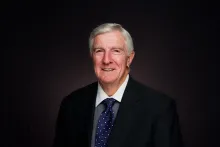
Before his retirement in 2021, Dr. Donald Ward pastored churches in Texas and Louisiana, and taught at Ambassador Bible College in Cincinnati, Ohio. He has also served as chairman of the Council of Elders of the United Church of God. He holds a BS degree; a BA in theology; a MS degree; a doctor’s degree in education from East Texas State University; and has completed 18 hours of graduate theology from SMU.
