

Don Ward
This transcript was generated by AI and may contain errors. It is provided to assist those who may not be able to listen to the message.
1 Peter 2. For those who have not been here before, we've been going through the General Apostles. We've covered the Book of James. We've covered the background of 1 Peter, and we've covered and finished Chapter 1. Now we're in Chapter 2, and we'll see how far we should go or can go. We will only be limited by time. Beginning in verse 1, Peter says, Therefore, laying aside all malice, all deceit, hypocrisy, envy, and evil speaking, as newborn babes desire the pure milk of the word that you may grow thereby, if indeed you have tasted that the Lord is gracious.
The word laying aside comes from a word that means take your clothes off. It's putting off your garments that you have on. Also, it would imply washing garments that are dirty. So we're told, just like you pull your clothes off at night when you go to bed, so you should lay aside certain things. And he describes malice here.
Malice is trying to do harm or hurt to your neighbor. I believe that Peter is more concerned here with the attitude behind the action, and not just the action. Malice is an attitude that produces deceitfulness, hypocrisy, envy, and slander. Everything you find mentioned here flows out of an attitude of malice that a person would have. Deceit simply is that, craftiness and guile. It is taken from a word that means to catch with bait. What do you do when you go fishing? Do you put a sign on your hook?
Hook? Stay away if you're a fish. Or don't you use a little guile? You cover the hook up with a worm. You stick a bug on it. You have a lure, or whatever it might be. You use a little trickery to try to lure the fish. That's what Satan does with deceit. In our relationship with one another, we're not to be deceitful. We're not to be hypocrites, either. Hypocrisy here is somebody who would be professing Christianity for his own profit, his own good, instead of for helping others.
Now, as newborn babies desire the pure milk of the word that you may grow thereby, the word pure is a technical term, and it describes wheat that is entirely free of chaff or dust or dirt. What you find, the pure milk of the word is describing the fact that God's word is not a mixture of good and evil. There's no dirt in it, in the sense of wrong. God's word is totally pure, totally righteous, and it shows us the way that we should be going, how we should be living.
It is totally unadulterated, milk, spiritual milk. Now, here, when it talks about the milk of the word, it's not talking about the milk of the word in the sense. We go back to the book of Hebrews, chapter 5, where it says we should no longer be on the milk of the word, but on the meat of the word. This is talking about unadulterated word of God being given to us, and that we are to be nourished. The example is that we are to desire it just like a baby desires milk. Now, we've had five boys, and when they were all young, they all nursed.
And when they got hungry, guess what? They would cry, they would scream, they were hungry. And so, when a child is hungry, it desires to eat. And that's what this is the analogy that is given here. Our thirst for God's word should be just like a little baby and his desire to eat the milk of the word. Why? That we might grow, thereby.
This is how we're going to grow. A healthy infant is a hungry infant. A spiritually healthy Christian is a hungry Christian, one who hungers for the word of God. So, you and I are to hunger for God's word and his way of life. Now verse 4, coming to him as a living stone, rejected indeed by men, but chosen by God and precious. You also, as living stones, are being built up, a spiritual house, a holy priesthood, to offer up spiritual sacrifices acceptable to God through Jesus Christ.
We'll stop there, then we'll continue on. So, we come to God to be continually instructed and guided as a living stone. Now, you and I have difficulty imagining this because any stone that you've ever seen is what? It's dead. I mean, it's a stone. And it's made out of rock, made out of clay, and it's there.
But Jesus Christ is in a process of building a building. The church is called a temple, and you and I become stones in that. Jesus Christ himself is a living stone because, guess what? He's alive, and he's at the right hand of the Father. And so, he is the chief cornerstone that the rest of us key off of. And I'll show you what that means as we go through this.
But he is chosen by God and precious. Now, God is a chosen, or Christ is a chosen one. We also are chosen, as verse 9 says, you are a chosen generation. So, you and I have been handpicked by God, just like Christ was set aside from before the foundation of the world to come as our Savior, to die for the sins of mankind. And so, we are. Living stone here also implies the very character that Jesus Christ has.
You and I, as living stones, are being built, as verse 5 says here, a spiritual house and a holy priesthood. And you and I are to offer up spiritual sacrifices acceptable to God through Jesus Christ.
What are the spiritual sacrifices that we offer up?
Well, the Bible is very clear. You go back in the book of Hebrews. It talks about service to one another. That's a sacrifice. Prayer for one another. That's a sacrifice. Giving. That's a sacrifice. All of these things are spiritual. Now, in the Old Testament, they offered up bulls and goats. And God accepted that because it was a type of what Jesus Christ was going to do in the future.
But He expects us today to be living sacrifices. Romans 12, I beseech you therefore, brethren, by the mercies of God, that you present your bodies as a living sacrifice unto God.
You and I are sacrifices. We've sacrificed the old way. We put it aside. And we've accepted a new way of life. And just like the priest would offer up sacrifices, so we then continually offer up sacrifices. Now, you'll notice it says a spiritual house and a holy priesthood. There's an interesting comment here. Clearly, I'd like to quote here, clearly this means that Christianity is a community.
It's a community. The individual Christian finds his true place only when he is built into that edifice. Solitary Christianity is ruled out as an impossibility.
Solitary Christianity. I'm just going to be out here by myself, on my own.
C.E.B. Cranfield writes, the freelance Christian who would be a Christian, but is far too superior to belong to the visible church up on earth, and one of its forms is simply a contradiction in terms. So long as the brick lies by itself, it is useless. It becomes of use only when it's incorporated into the building. Individualistic Christianity is an absurdity.
Christianity is community within the fellowship of the church. So, if we are stones, those stones have to be put into something. They're put into a building, and we're a part of that. Now, there are those who think that they should be solitary Christians, that's his term, who don't believe they need to attend any church, go anywhere, be involved in anything, and they're just going to sit there and be in God's kingdom. But we've got to serve. You know, how do you serve one another? How do you give to one another? How do you help preach the gospel by just sort of being out there by yourself?
Now, this is not saying that everybody is equal, and I'm not saying that. There is an idea that is promulgated today. I've spoken to this in the past, and it's not my purpose to address it here.
What is called the priesthood of all believers? The priesthood of all believers is believing that everybody is equal, that there are no ministers, there are no offices in the church, that everybody is a minister, that nobody has the authority to tell anybody else what to do, that everybody should be teachers, and on and on and on they go. Now, you find that that is not what the Bible teaches, and very clearly there are offices within the church. God sets us in the church as it pleases Him. The Bible refers to apostles and prophets and teachers and pastors. So, to say that everyone is a priest with equal ability and responsibility, and therefore we don't need a ministry, is simply not true. Even in the temple in ancient Israel, the priests had different responsibilities.
Some took care of the sacrifices, some managed the finances, some taught, some rendered judgment, and so God places, the Bible says, each one of us, 1 Corinthians 12, in the body as it pleases Him.
Now there the analogy is body. Here the analogy is temple. So, God places each stone in the temple as it pleases Him. And so we all make a valuable contribution, but in the way that God intends for us to do so. Now verse 6, therefore it is also contained in the Scriptures, Behold, I lay in Zion a chief cornerstone, elect and precious. He who believes on Him will by no means be put to shame. Now what is chief cornerstone?
The chief cornerstone was the first stone laid upon the foundation. It was placed precisely, and all other stones were placed to conform to that stone. All measurements in the building were based upon the placement and the position of the chief cornerstone. So you have the chief cornerstone placed, and then everything could be built in all directions off of this because now you know where to build. It would be built on it and would be built out from it.
What you find is that a lot of times the chief cornerstone was a huge stone.
Now, how does this apply to us? Well, Jesus Christ is chief cornerstone.
You and I are built on Him. He's the rock, as the Bible says. And if we build on the rock, we will stand. But also, He is the model who went before. And you and I are to model our lives after Him. He sets the example. He is the standard from which all of us build. All of us develop. All of us grow. So He is that chief cornerstone. And if you believe in Him, you will not be put to shame, as it says. Verse 7, Therefore to you who believe, He is precious, but to those who are disobedient, the stone which the builders rejected has become the chief cornerstone.
So, notice there are two things mentioned here. Those who believe and those who are disobedient.
Now, you and I are here today because we believe.
Now, we believe in God, His plan, His purpose. And so, to us, Christ is precious.
He's our Savior. He's our High Priest. He's the one we pray to, or look to. We pray to the Father through Him by His authority and His name. And yet, He is rejected so often in the world. Now, even among the so-called, quote-unquote, Christian community, Christ is rejected.
They have a false Christ that they worship. They have a false idea of what Christ is like. The true Christ, they don't really believe in. And during Christ's Day, obviously, the ones who should have been the builders, the religious leaders in Christ's Day, the Sadducees, Pharisees, the Sanhedrin, all of these individuals, they rejected Christ. They turned their backs on Him. And yet, you and I are the ones that He has called and that He is working through.
Now, in verse 28, you find, for those who disallow Him, who are the disobedient, who do not accept Him as the chief cornerstone, or the standard of which we build, the stone has become a stone of stumbling. So, people stumble over it in a rock of offense.
Offense, meaning they trip over it or fall over Him again.
They stumble and, being disobedient to the Word to which they were also appointed.
The stone does not change. Jesus Christ said He's the same yesterday, today, and forever.
He hasn't changed. So, why is it that some believe that He's precious, He's wonderful, source of security, they look to Him, and those others who are disobedient don't? Well, as far as the Jews were concerned, it's because He didn't come the way they thought He was. They had a certain concept, a certain idea of what He was going to be like.
They read the Old Testament Scriptures, and they thought the Christ was going to come back, kings and Lord of Lords at that time. They didn't realize that He was going to come first, be born of a woman, be a human being, die for His sins, and then rise up, and at His second coming, He would come back to set up His kingdom. So, consequently, they did not accept Him He did not fit their mold, their concept, their idea. And too often you find that people stumble.
How often do we when we say, well, Christ would never do that. Christ would never believe that. Christ would never keep these customs. Christ would, so and so, well, that's not the idea that so many have about Christ. They believe that Christ would keep Christmas, that Christ would keep Easter, that Christ would whatever. You can put whatever doctrine in there that you want to.
And yet, we find that the Bible says the exact opposite. So, we have to realize that Satan has done a number on society. He has conveyed and given everybody a concept of what God the Father is like, what Jesus Christ is like. They have certain ideas. And yet, one of the things that God does when He calls us and opens our mind is to begin to reveal to us the truth, the right way, correct understanding. And God's Spirit reveals to us what the Father is really like and what Christ is really like. So, in verse 9, we find that you, that's all of us here, you are a chosen generation, a royal priesthood, a holy nation, His own special people, that you may proclaim the praise of Him who called you out of darkness into His marvelous light. So, the terms generation, priesthood, nation, people, these are all terms that were applied to ancient Israel in the past. If you remember, go back to Exodus 19, Deuteronomy 7, you'll find these terms being used to describe Israel. Now, this doesn't mean that we replace Israel. There still is a physical nation of Israel today, or nations of Israel, but you find the Church of God today is the Israel of God. We become spiritual Jews today and the spiritual Israel of God. The word generation, a chosen generation, is either generation or race and implies that all members of that race or generation have a common father and are therefore related. Now, in ancient Israel, who was their common father?
They always looked to Abraham, right? Abraham, Isaac, Jacob, the fathers, as they are referred to, who's our father, God the Father, not just one human being. We could be German, we could be African, we could be Asian, we could be any type, physically, of human beings, but we have a common father. And most of us would have never known one another if it hadn't been for our father bringing us together, would we? We're here today. You would have never known me I mean, when would I have ever run into somebody like Steve over here?
Or Alan Dance, or we could go around the room, you know. We look at each other and we're here because there's a common bond. We've been given the same DNA, the same spirit, the same mind from God, and God has chosen us. So we are a chosen generation, and we have a connection to the Father. We are a royal priesthood. So notice it says, royal priesthood. The two are combined, royal implying king. So it's a king priesthood, kingly royalty type of priesthood.
Tie in Revelation 5.10, because that certainly is true in the future.
The word nature, or nation here, we're a holy nation, is from the Greek word meaning a multitude of people with the same nature. You and I are to have the same nature, God's nature, God's character dwelling within us. We are a special people. King James Version said, a peculiar people.
Now, a lot of people used to read that and say, yep, that's us. We're peculiar. Well, it's not talking about peculiar in the sense of being odd, but it means a special people, a people of acquisition, a people who are God's own possession, a people who are one.
What it's talking about is that we as Christians are ordinary people who have acquired value because we're owned by God. We're owned by God. If J, let's say, some rich, some billionaire, somewhere, if he owns something and they went to auction it off, and you were auctioning off a piece of furniture that you had, which one do you think would be more valuable in the eyes of people buying them? Something that's owned by, used to be owned by Andrew Jackson, Benjamin Franklin, or by Roy Holiday. Who's Roy Holiday? Now, they're going to buy something that was owned by somebody who has some notoriety. Well, we are Christians. As Exodus 19 verse 5 says, Exodus 19.5, Israel was God's peculiar treasure. Deuteronomy 7.6 says they were God's special people. So we find here that we are a chosen generation, that we are to be a special people. This word here, again, means the root and the great means to make something and then surround it with a circle, thus indicating ownership. You put it in your house, you buy it, you put it in your house, and you say, I own it.
I'm going to stick it here. It's mine. And you leave it out in the road. Don't stick it in the front yard. God has called us, chosen us, and He has placed us in His temple. And we are living stones there. We are this generation that God is working with. Okay, we'll finish up here with verse 10, and then we're going to have to quit. Verse 10, we find who once were not a people.
We weren't a people at one time. I mean, who were we? We were all walks of life, all backgrounds, all nationalities. But now we have become a people. What people? Well, the people of God, the chosen of God, a holy nation. Special people, royal priesthood. So we were once not a people, but we are now the people of God, who have not obtained mercy, but now have obtained mercy.
You and I were insignificant, and we have been called into significance. This, when it says, have not obtained mercy, go back to the book of Hosea, chapter 1 and 2. Israel, you might remember, they used the term concerning the children of Hosea and Gomer, called Lo-O-I-Mai, or Amai, and Lo-Ruthama. Lo meaning not.
And then at one point, God says, you are my people, and the word Lo is removed.
So at one time, we were nothing. And today, we're only something because the great God in heaven has handpicked each one of us and brought us into His church, and we are His people.
So, brethren, there should not be a day passes that you and I should not go before God in prayer and thank Him that He has chosen us. Not because of who we are, how great we are, our intellect, our money, our significance, who we are. We were insignificant, but God has chosen us, and He has had mercy on us. We've obtained mercy. Now, God will do the same for all mankind eventually, but we have been called ahead of time. And all of this that's being described here refers to us. I think this is a section that you need to study quite often because it describes what God is doing with us to make us His people.
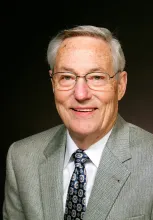
At the time of his retirement in 2016, Roy Holladay was serving the Operation Manager for Ministerial and Member Services of the United Church of God. Mr. and Mrs. Holladay have served in Pittsburgh, Akron, Toledo, Wheeling, Charleston, Uniontown, San Antonio, Austin, Corpus Christi, Uvalde, the Rio Grand Valley, Richmond, Norfolk, Arlington, Hinsdale, Chicago North, St. Petersburg, New Port Richey, Fort Myers, Miami, West Palm Beach, Big Sandy, Texarkana, Chattanooga and Rome congregations.
Roy Holladay was instrumental in the founding of the United Church of God, serving on the transitional board and later on the Council of Elders for nine years (acting as chairman for four-plus years). Mr. Holladay was the United Church of God president for three years (May 2002-July 2005). Over the years he was an instructor at Ambassador Bible College and was a festival coordinator for nine years.
