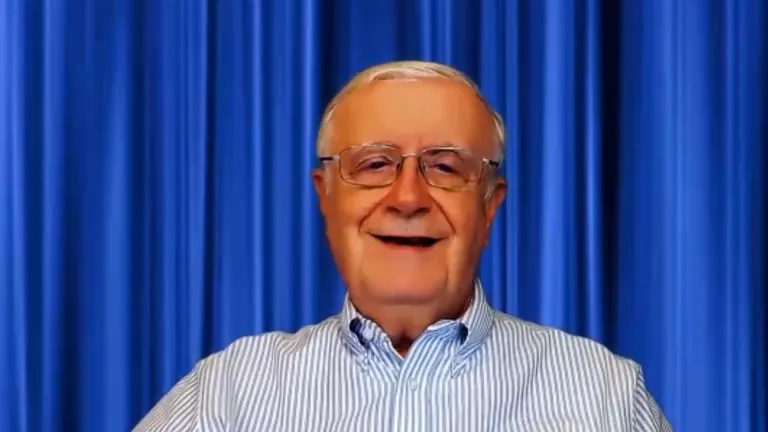
Jorge De Campos
Introduction to the pastoral epistles. Paul's possible journeys after he left prison in Rome until he was later imprisoned and martyred. Information about Timothy. Paul's brief salutation.
This transcript was generated by AI and may contain errors. It is provided to assist those who may not be able to listen to the message.
Good evening, brethren. Tonight we're going to start with the background to the pastoral epistles, and then we're going to go and start with 1 Timothy. The pastoral epistles are 1 and 2 Timothy and Titus. It's very clear that in all of them the author is Paul. He himself says Paul, an apostle, as we read in 1 Timothy chapter 1 verse 1, but all of them, he identifies himself as the writer. So there's not many questions or doubts about who is the writer, but you know, people always doubt. People always doubt. So the questions are saying, oh well, are these epistles genuine from Paul? In other words, was it really Paul that wrote them? So we are a few reasons why people doubt Paul's authorship, and we're going to address them one by one as we go along. The first one is they doubt that it was Paul that wrote it because of the ecclesiastical structure.
By that they mean they reckon that the structure of the church of deacons and elders, as described in in the pastoral epistles, was too advanced for Paul's day. But we can see that church offices developed early in the church. We know about Act 6 when the deacons were appointed. And also, if we look at Philippians and in the epistle to the Philippians in chapter 1, verse 1, you can see already that it says that Paul and Timothy, bondservants of Jesus Christ, all the saints in Christ Jesus, were in Philippi with the bishops and deacons. You know, it was with the elders and deacons. So that reason for doubting Paul's authorship because they say that the ecclesiastical structure is too advanced for Paul's day, that is really not a valid objection.
The second objection people have about Paul's authorship in these pastoral epistles is that Paul's emphasis in Timothy is about orthodoxy. In other words, his emphasis is faithfulness to the established doctrine instead of just accepting Jesus Christ.
But we can see that in the pastoral epistles, Paul is giving instructions to already established churches, not to new converts. And we can also see that for Jewish audiences, there is a need for them to understand who and what Jesus was. And for Gentile audiences, in addition to that, there was a need about the right way of life. So Paul's emphasis in the faithfulness to establish doctrine is not something against his authorship, but it is because indeed the churches had been established. And so he was re-emphasizing the need to stick to the faith once delivered to the saints.
The third reason why some people say that Paul was not the author, that it was not genuine, is because they say that Paul appears to be fighting Gnosticism, and they say that Gnosticism only came later in the middle of the second century. Well, as you and I know, as I've covered in many of the other epistles before, Gnosticism was well existent long before Christ. It probably began in three or four centuries before Christ. Granted, Gnosticism became systematized in the second century, but already existed long before Christ. So that claim, that because Paul seems to be fighting Gnostic ideas, and therefore Paul was not the author because there was no Gnosticism at that time. That is a complete false claim. The fourth claim that people have, that Paul was not the author, is that there are linguistic differences in the pastoral epistles to the other epistles to the different churches. And this is pretty obvious because when you and I talk personally to somebody, like a personal letter, it is very different than the way you talk or the way you write in a formal letter. And so when he was writing a personal letter to Timothy and Titus, his language was naturally different than a formal letter to a church. And so therefore the subject matter in these pastoral epistles is different, and therefore it necessitates a different usage of words. The third reason why, and this is the last one, why people claim that Paul was not the general writer of the pastoral epistles, is because they say events in the pastoral epistles don't fit anywhere in the book of Acts.
And this is because they think that Paul's life ended when he went into prison first time in Rome, first time he was in prison in Rome. But Paul's life did not end at the end of book of Acts. It continues, as we'll see a little later. Now, what about when were the pastoral epistles written? First Timothy was probably written around about the year 65 A.D., which means about 34 years after Christ's death, 65 A.D. Maybe some put it in as early as 62 A.D.
Titus was probably written about 66-67 A.D., maybe one or two years later. And second Timothy was probably written 67-68 A.D., probably late summer or early autumn 67 A.D.
And it's possible that second Timothy was the last book written by Paul, or the book of Hebrews was the last book written by Paul around that sort of time frame. All right, let's now move on to historical background. What happened to Paul after the book of Acts? In other words, the book of Acts ends around about 6162 A.D. So we're talking about another three or four years later.
So what happened during that gap of three to four years? We can clearly see there was a period of very intense and vigorous and rapid developing of the church and its life. This was before the destruction of Jerusalem, the destruction of the temple, which was in 70 A.D. So we have evidence that Paul was released from prison in Rome and continued his ministry. We see that while he was in prison, Paul wrote, as we discussed in previous studies, Ephesians, Philippians, Colossians, and Philharmon. Now, let's just look at Philippians chapter 1 verse 25. There we read Paul writing and says, and being confident of this, I know that I shall remain and continue with all for all your progress and joy and that and then he continuously says, and that you're rejoicing for me may be more abundant in Christ Jesus by my coming to you again by my coming to you again. That is in verse 26. So we can see that Paul was confident that he would remain alive and he would be with them. Then we read also in chapter 2 verse 24, also of Philippians, he says, but I trust in the Lord that I myself shall also come shortly. And so we see expected to visit Philippi soon. And then in Philippon, Philippon verse verse 22, Philippon verse 22, he says, but in the meantime also prepare a guest room for me, for I trust that through your prayers I shall be granted to you. So he was in prison and as he wrote the letters of Philippon and Philippians, he was expecting to visit Philippi soon. And so he was expecting to get out of jail. So we also know that before he was arrested, he wrote of his desire and intent to visit Spain after visiting Rome. So let's look at Rome 15. Rome 15 verse 24.
Romans, I beg your pardon, 15 verse 24.
15 verse 24.
It says, whenever I journey to Spain, I shall come to you, for I hope to see you on my journey. So he was expressing a desire to go to Spain. And you look at in verse 28, Therefore when I have performed this and have sealed to them this fruit, I shall go by way of you to Spain. So he had a desire to visit Spain and this was before he was arrested. Also a writer called Clement of Rome that wrote in AD 90, he quoted that Paul went to the terminus of the west before his martyrdom. Now the terminus of the west, in other words, is the most western part of Europe, which would be in that area at that time, the Iberian Peninsula, and at that time, it was basically Spain. Later on in the year 1100, after Christ, then part of Spain broke away and became Portugal. But at that time, that Iberian Peninsula was just Spain. And so he, we see that he intended, or he was planning to leave jail, and he intended to travel to Spain. Then when we read these pastoral epistles, we see of visits that he did to different areas. So the first one we want to look at is Titus chapter 1 verse 5. Titus chapter 1 verse 5, it says, For this reason I left you in Crete. In other words, he left Titus in Crete, that you should sit in order the things that are lacking and appoint elders in every city as I commanded you. So he left Titus in Crete, but he had never been to Crete in his previous journeys before he was in prison in Rome. Also, let's look at a few other scriptures in the pastoral epistles, particularly 2 Timothy. And so we're going to see 2 Timothy chapter 4, 2 Timothy chapter 4 verse 13.
It reads, Bring the cloak that are left with coppers, a throwers when you come, and a book, especially the parchments. And so he's talking about a coat that he left in throwers. And he's telling Timothy to do that. But we know that when Paul was in throwers and Miletus, some six years before he was in prison in Rome, Timothy was with him. And so why would he say, why would he write to Timothy to bring the coat to the left in throwers if if Timothy was with him when he when he went to throwers before he went to jail in Rome? So this is a subsequent visit after he left prison in Rome, that then he wrote to Timothy and sang to Timothy when he wrote 2 Timothy. And by the way, 2 Timothy was written when he was in prison for a second time in Rome. And then he's writing to Timothy to bring the coat he left in throwers. Also in verse 20, that is 2 Timothy chapter 4 verse 20, and he tells Timothy, do your utmost to come before winter. So he's writing to Timothy to do his utmost to come before winter. That's in verse 21, but sorry, in verse 20 he says, Erastus stayed in Corinth, but Trophimus, I left in my liters, seek. And so he's talking about Trophimus, that Paul left in my liters, seek. But again, as I mentioned, when Paul was in throwers and my liters six years before, Timothy was with him, and Trophimus did not remain in my liters then, because he went with Paul to Jerusalem. Turn with me to Acts chapter 20. Acts chapter 20, that is towards the end of his third missionary trip, as he was going to Jerusalem. And then when he was in prison, in Acts 20 verse 4, we see Acts 20 verse 4, he says, and so Peter of Berea accompanied him to Asia, also Aristarchus, and seconders of the Thessalonians, and Gaius of Derby, and Timothy, and Tychicus, and Trophimus of Asia. So these were with him. They went ahead and waited for us at Trophimus, so they did not stay in my liters. You see, these went with him, and then we can see a little later in verse 15. And he says, and we sailed from there, and the next day came opposite Chios. The following day we arrived at Samos and stayed at Trogium, and the next day we came to my liters. So he went to Trophus, he went to my liters, and so for Paul had decided to sail past Ephesus, so he would not have to spend time in Asia, for he was hiring to be in Jerusalem, if possible, on the day of Pentecost. And we know the story that he called the Ephesian elders there, and then from there he went to Jerusalem, where he became imprisoned. We now read in Acts 21 verse 29, Acts 21 verse 29, and it says, for they had previously seen Trophimus the Ephesian within, that is, with Paul in the city, when they suppose that Paul had brought into the temple, brought the Gentiles into the temple. So Trophimus was not left in my liters sick, he came with Paul to Jerusalem. So during that visit, that was not the case. It was a subsequent visit after Paul had been in jail in Rome. Then he traveled, he did various travels, after he left prison in Rome, his first imprisonment, and then he ended up back in Rome in prison. And so what is a possible or a suggested outline of Paul's travels between the end of Acts and his death when he was in prison for a second time in Rome. This is a suggestion or a possible. It is that he journeyed from Rome to Asia Minor, as he intended. Right? Then he visits Philippi and Colossae, and may have visited Crete.
Later he journeyed to Spain, possibly passing through Dalmatia and Gaul. We see mentions of that in 2 Timothy chapter 4. In 2 Timothy chapter 4, he talks about going through those areas or mentions those areas. Second Timothy chapter 4 verse 10, he says, For demons forsaken me, having loved this present world, and as the part of the Thessalonika, Cretians went for Galatians. So that's the area of Gaul and Titus for Dalmatians. So he had sent those people in different responsibilities to those areas, possibly when he traveled through them. He left them there, and then he then journeyed to Spain. Then we see on his trip eastward that that he left Timothy in charge in Ephesus and visited Macedonia. We see that in 1 Timothy chapter 1 verse 3, he says, As I heard you and I went into Macedonia, remaining Ephesus, that you may charge some that they teach no other doctrine. So he mentions that he had left Timothy in Ephesus while he went to visit Macedonia. It also appears that the dispute between Hymnanius and Alexander perhaps took place somewhere at this time. We read in 1 Timothy chapter 1 verse 20. In 1 Timothy chapter 1 verse 20, we see, Of all our Hymnanius and Alexander, whom I delivered to Satan, that I may learn not to blaspheme. So that was possibly when that dispute happened and he delivered them to Satan. Then we also see that, and we know, as we read just now when Paul went through Miletus and then called the Ephesian elders to come to him at the end of his third journey. That is Acts 20. In Acts 20, we have that Paul went to Miletus and asked for the Ephesian elders to come there to him and he gave them some instructions. In Acts 20, we know that starts basically from verse 17 that from Miletus he sent to Ephesians called for the elders of the church and then they came and he gave them some instructions. We read that in verses 24 and 25 and then he's saying, you know, But none of these things move me, nor do I count my life dear to myself, so that I may finish my race with joy and the ministry which I receive from the Lord Jesus to testify the gospel of grace to God. And indeed now I know that among you all, I know that you all among whom I have gone preaching the gospel of the kingdom of God will see my face no more. So he thought that he was going to go to Jerusalem.
Some people were starting to say, hey, you're going to be taken to jail. And so he was questioning whether he was going to see them again. But it appears that God gave him, well not appears, God definitely gave him liberty from when he was in Rome, the first time that he was in Rome, he was freed. And then we can see in 1st Timothy chapter 3 verse 14, 1st Timothy chapter 3 verse 14, that it says, By these things I write to you, though I hope to come to you shortly. And so he is saying to Timothy, which is in Ephesus, I hope now to come and see you shortly in Ephesus.
So we see that a suggested possible set of trips that Paul took after the end of the book of Acts.
We know that he wrote 1st Timothy from Macedonia. We also see that he visited Crete.
He left Titus in charge there, and then he returned to Asia. That again we can see from 1st Timothy chapter 3 verse 14, 1st that he wanted to be in Ephesus. And then in 1st Timothy 4 verse 13, 1st Timothy 4 verse 13, he says, Till I come give attention to reading, and to exhortation, and to doctrine. So he planned to come to Ephesus and to be there with Timothy.
He then probably then at that time somewhere then he wrote Titus. And we can see while he was imprisoned for the second time in Rome, that is in 2nd Timothy chapter 1 verse 18.
2nd Timothy chapter 1 verse 18, he's saying, The Lord grant to him that he may find mercy from the Lord in that day. And you know very well how many ways he ministered to me at Ephesus. So he's talking about how Onesiphorus ministered to him in Ephesus. And also in 2nd Timothy chapter 4 verse yeah we know it's sorry I should have mentioned we know it's Onesiphorus by reading in in verse 16, 2nd Timothy chapter 1 verse 16. So and then again in 2nd Timothy chapter 4 verse 14, chapter 4 verse 14 says Alexander the coppersmith did me didn't mean much harm. By the Lord repay him according to his works. And so we can see that there was people there in that area that caused a lot of harm to Paul. So right, let's move on. Then we can see that he passed through my letters. We see that in chapter 4 verse 20. He said, Irastus stayed in Corinth, but Trophimus I left in my letters sick. That is when then he left Trophimus in my letters sick.
And then from there he went to Troas. We can see in chapter 4 verse 13 he says that when he mentions about the cloak that he left a Troas with coppers. So he said, please turn with you when you come to see me in Rome because he was in jail.
So come and see me to encourage me. Then bring you that cloak that I left at coppers or with coppers at Troas. And especially the Parchments. So and then he also was in Corinth as I mentioned to you when he says Irastus stayed in Corinth in chapter 4 verse 20. So we can see that Paul did quite a bit of traveling after he left Rome, after his first imprisonment. And so when he went on this last trip coming in from my letters to Troas to Corinth, he ended up being arrested and he probably never reached a as he intended. If we read in in Titus chapter 3 verse 12, Titus chapter 3 verse 12, when I send Artemis to you or Tychicus, be diligent to come to me at Nycopolyus for I have decided to spend the winter there. It's possible that he never reached Nycopolyus because then he was imprisoned for the second time in Rome where then he wrote 2 Timothy during that summer or autumn. So that's when he did that and that's why he asked in 2 Timothy chapter 4 verse 21 as we read a little earlier. 2 Timothy chapter 4 verse 21, do you utmost to come before winter because now he was in jail in at the end of that year, probably a D67. So that's when he wrote 2 Timothy when he was in Rome, in jail and maybe also the last book that he wrote either was 2 Timothy or the book of Hebrews.
He was then executed late 67 or early 68 in Rome by Nero. So that was basically what happened in his trips. Then we know that Nero committed suicide in June 68, June 68, and the temple was destroyed in 70 AD. So that just gives you a little idea of those timings. Now a little bit more about Timothy. In Acts 16 verse 1 to 3, we see the first mention of Timothy. He was converted during Paul's first journey through Lystra. That's in Acts 14 verse 6. So that was his first trip there, and he was probably converted there. And then later on, Timothy was...
we can see that Timothy was familiar with Paul's trials. We see that in 2 Timothy chapter 3 verse 10 and 11. So let's just look at 2 Timothy chapter 3 verse 10-11. But you have carefully followed my doctor, doctor, manner of life, purpose, faith, long suffering, love, perseverance, persecutions, afflictions, which have happened to me at Antioch, at Iconum, and at Lystra. What persecutions I endured, and out of them all the Lord delivered me. So Timothy was a witness of these. So Timothy was well aware of or was familiar with Paul's trials in Lystra. Now in 2 Timothy chapter 1 verse 5, we see that Timothy's mother Eunice and grandmother Lois were Jewish. 2 Timothy chapter 1 verse 5 are called to remember us that the genuine faith that is in you which dwelt first in your grandmother Lois and your mother Eunice, and I am persuaded is in you also. And so although his father was Greek, we read that from Acts 16 verse 1, and his father was probably dead at an early point in Timothy's life.
In 2 Timothy chapter 3 verse 15, we see that from childhood you have known the Holy Scriptures, which means that his grandmother and mother gave him a solid foundation of what then was what we call today the Hebrew Scriptures. Therefore, because of that upbringing between him from his grandmother and mother, he probably became very compassionate and tender-hearted, more attuned to relationships, more sensitive to people's needs, and a good communicator.
And Paul was, to Timothy, like a surrogate dad, a father, providing a role model and mental because he traveled a lot with Paul. Now, there are two things that happened to Timothy before he joined Paul in his journeys. Number one, Timothy was circumcised. Now, it was not necessary, and it's not necessarily circumcision for salvation, but it was necessary for him to be accepted by the Jews because we know Paul quite often went to the Jews first and then to the Gentiles. One example is in Acts 1346. But on the other side, that was not necessary for titers because both of his parents were Gentiles. In Galatians chapter 2 verse 3 and 4, he says, yet not even titers who was with me being a Greek was compelled to be circumcised.
You see, so is a Greek. He was not compelled to be circumcised.
Well, this occurred because a false brethren secretly brought in who came in by stealth to spy our liberty, which we have in Christ, Jesus, that it might bring us into bondage. But titers was not circumcised. But Timothy was because Timothy's mother and grandmother were Jewish, and for him to be able to be accepted to Jews as partly Jew, it was important for Timothy to be circumcised. The other thing is that Timothy was ordained before he went on his trips with Paul. He was ordained as an elder, and possibly Paul, and a body of elders in Lystra.
And it's interesting that when he was ordained, it is possible that he had some special ordination because he talks about some prophecies about that. So let's just look at 1st Timothy chapter 1 verse 18. 1st Timothy chapter 1 verse 18. It says, this discharge I commit to you, son Timothy, according to the prophecies previously made concerning you, that by then you may wage the good warfare. And also in chapter 4, 1st Timothy chapter 4 verse 14, it says, do not neglect the gift that is in you, which was given to you by prophecy with the laying on of hands of the eldership. So this was his ordination as an elder. It was not his baptism, it was his ordination as an elder. And it says the gift that he received, a special gift, in addition to the gift of the Holy Spirit when one is baptized. But he received some special additional spiritual gift that was given to him by prophecy. So he was ordained by the body of elders in Lystra, and there was some special prophecy that they knew about that ordination. From there, after he was ordained, he then was a constant companion of Paul, or virtually a constant companion of Paul. We see that during the rest of Paul's second missionary journey and third missionary journey. And he was with Paul when Paul was in Rome, and during his first imprisonment in Rome. And he was often sent by Paul as a special mission or a special emissary from Paul to various churches. And so we have Yapol was the apostle, and Timothy was, let's call the young minister, that Paul was training.
Timothy was sent to Corinth, for instance, to help with the problems in that congregation.
And we can see Timothy's gentle approach appealed to some, while others despised him.
If we look at in Corinth, chapter 16, 1 Corinthians chapter 16, verse 10 and 11. 1 Corinthians chapter 16 verse 10 and 11. You see, and if Timothy comes, see that he may be with you without fear, for he does the work of the Lord as I also do. Therefore let no one despise Timothy, despise him, but send him on his journey in peace, that he may come to me, for I'm waiting for him with the brethren and be a part of it. So we can see that some tended to despise him because of his gentle approach to the brethren, as I mentioned part because of his upbringing. Now this was not the reaction that the brethren had to Titus. If we look in 2 Corinthians chapter 7, 2 Corinthians chapter 7 verse 13 through 15. Therefore we have been comforted by your comfort, and we rejoice, exceedingly more for the joy of Titus, because his spirit has been refreshed by you all, for if in anything I have boasted to him about you, I'm not ashamed, but as we spoke all things to you in truth, even so our boasting to Titus was found true. And his affections are greater for you as he remembers the obedience of you all, how with fear and trembling you received him. So Titus was more of a type of personality that commanded certain fear whilst Timothy's approach was a gentler approach, and some despised him because of his personality.
Timothy was also very special to Paul. We see that in 1 Timothy chapter 1, 1 Timothy chapter 1 verse 2, 1 Timothy chapter 1 verse 2, when he says to Timothy, a true son in the faith, and also in 2 Timothy chapter 1 verse 2 also, 2 Timothy chapter 1 verse 2, to Timothy, a beloved son. So he's a very special minister to Paul, and you know what, Timothy was always spoken positively by Paul. I'll just quote a few examples and you can jot him down and review them a little later, namely 1 Corinthians chapter 4, 14 to 17, 1 Thessalonians chapter 3, 1 to 2, and verse 6, and Philippians chapter 2, 19 through 22. I'll read them again. 1 Timothy chapter 4, 14 to 17, 1 Thessalonians 3, 1 and 2, and 6, and Philippians 2, 19 through 22.
So he was always spoken positively by Paul. And when 1 Timothy was written, Timothy was Paul's representative in Asia Minor, in their old region of Asia Minor. Let's call it, where today is basically Turkey. And Ephesus, there was like the home office, the headquarters church in that region. And so, in a sense, Timothy was like a regional director or a regional pastor for that area. During Paul's second imprisonment, as Paul saw his martyrdom approaching, he then asked Timothy to come to him from Ephesus to be with him in this difficult time.
And we read that in 2 Timothy chapter 4 verses 9 through 13 and 21, a little earlier. We also made mention of Paul's request to Timothy in 2 Timothy 4 verse 13 to bring the parchments, which indicates Paul's desire to edit and organize his writings prior to his death, which is obviously something he was able to do. And in Hebrews chapter 13 verse 23, Hebrews chapter 13 verse 23, Hebrews 13 23, we see, know that our brother Timothy has been set free with whom I shall see you if he comes shortly.
So, indicates that Timothy was imprisoned and released, possibly taken prisoner when he went to Paul's aid. So, exactly what happened to Timothy after Paul's death, no one knows. But it just shows I wanted to give you a bit of a background of Timothy, of that time period, of Paul's journeys, and during that time period. Now, let's get a little bit more focused on the pastoral epistles. The outline of the pastoral epistles is basically to defend sound doctrine and maintain sound discipline.
So, the emphasis is on the defense of doctrine, not on the elaboration of doctrine, not on the development doctrine. They had already been instructed in doctrine, but now, yeah, we had some more practical, more specific instructions of how to handle problems. Now, the heresy that was affecting the churches that were under Timothy and Titus's responsibility was basically relating to Gnosticism. One of them was speculative intellectualism and pride. In other words, for instance, they do not believe that Jesus Christ had a physical body, so they had this concept of Dousetism, which meant that it only seemed that Christ was there.
In other words, that concept was that Christ entered into Jesus as baptism in the form of a dove, and as Christ was crucified, or Jesus was crucified as they would say, or that belief would say, then Christ departed from Jesus. So, that's that those sort of ideas, that intellectualism, that pride, that striving about words and fables and genealogies, all intellectualism from Gnosticism.
The other part of the heresy that was affecting them was related to asceticism, which is don't touch, don't eat certain things about certain foods, certain things about marriage, teaching against marriage, and against physical pleasure, or any physical things that could be deemed as good. They would criticize as part of these ascetic beliefs, and part of ascetics, they were extremists.
There's the extreme of being ascetic, and there was the extreme of being immoral like the world, and that was also affecting the Church. The areas of practical administration, or Church administration, that the pastoral epistles address include guidelines for public worship, include duties and behavior of Christian women. That will be a section that will address when we go into chapter two. The Church offices, what matters the most, as what Paul was emphasizing, what matters the most is not the system, but the genuine Christian character, and the constant and conscious behavior.
In other words, it's the character, is how you treat others, how you act. That is the crux of the way of life. Then another area of practical Church administration that Paul emphasized to Timothy, and it's mentioned in a number of places, faithful saints. Faithful saints appears time and time again, which is essential principles expounding and applying practical problems. Then another practical Church administration was the importance of personal holiness and conduct.
And also part of Church administration that Paul addressed is the treatment of offenders, of widows, of good and badly elders, of slaves, of the reach of the poor, and the duties of those individuals. And so, according to Berkeley's Bible commentary, there are five overall themes in the pastoral episodes.
The care and organization of the Church. First, second, how to behave within the household of God, within the Church. Third, how the Church should be administered. Fourth, what kind of people the elders and pastors should be. And, fourth, how the threats which endanger the purity of the faith and life of a Christian should be dealt with. So, Paul is therefore instructing younger ministers, namely Timothy and Titus, on how to discharge these responsibilities, these duties as ministers and elders, taking care of various situations. And so, we're going to now start at first Timothy chapter one. We'll talk briefly what Paul was written and also during our study we'll cover the application of those principles for today. And so, as I complete the section of today, I'm only going to cover verse one and verse two, which is the brief introduction or salutation of Paul. And in verse one, first Timothy chapter one verse one, Paul, an apostle of Jesus Christ, by the commandment of God our Savior and the Lord Jesus Christ our hope. So now we have Paul saying, I'm an apostle. In other words, one saint, one personally chosen agent of Jesus Christ.
This carries authority. Why does he say that he was an apostle? Because this letter would be read to others. It's not because Timothy and Titus did not know he was an apostle, but it's because this letter would be read to others. And so they, that's Timothy and Titus, would be strengthened by these instructions from Paul, from this letter from Paul, because he said, I am an apostle of Jesus Christ. I have the authority to give these instructions to Timothy and Titus. Therefore, when Timothy and Titus would be challenged by false teachers, they could be backed up by Paul's comments that he's going to mention in these two episodes, or on the three episodes, first and second Timothy and Titus. And then he says, by the commandment of God. The Greek commandment is, is epitage, which means not appointed by other apostles. He was not appointed by the other apostles, nor was he self-appointed, nor was he elected by, by, you know, a lot or something like that. But God hand-picked him by a commandment, by an instruction of God the Father. And then he says, our Savior, God the Father is our Savior. We read 1 Timothy chapter 2 verse 3 and 4, for instance, when he says, for this, for this is good and acceptable in the sight of God, our Savior, who desires all men to be saved, and all men to come to the knowledge of the truth. God the Father is our Savior. Well, isn't Jesus Christ our Savior? Yes, he is. Jesus Christ is the one that died for us. He's the one that He did the acting of saving. But God the Father sent His Son and gave His Son so that we could be saved. John 3 16. Very famous scripture. John 3 16. Let's just turn to it. So it's emphasized exactly as it's written. For God, that's the Father, soul of the wall, that He gave His only begotten Son.
He gave His Son. So God the Father is our Savior. Why? Because He gave His Son and His Son came and gave His life for us. And that's why then He says, Jesus Christ our hope. And the Lord Jesus Christ our hope. In other words, Christ's life, death, and resurrection give us the hope. As we read in John 14. John 14 verse 6. John 14 verse 6. It says, Jesus said to him, I am the way, the truth, and the life. No one comes to the Father except through me. He is the way. He is the life. He is the truth. He is our hope. And also in verse 19. So of John 14. John 14 19. It says, a little while longer and the world will see me no more. But you will see me because I live and you will live also.
Christ is our hope. He is the way. And then in verse 2, it shows Paul saying, who is addressed to? It's to Timothy, a true son in the faith. Grace, mercy, and peace from God our Father and Jesus Christ our Lord. And so a true son. Now we know that he was not a physical son of Paul, but he's talking spiritually speaking here. He baptized him with apparently others obviously in Lustre. And he came with Paul and Paul instructed and taught him as he would do to a son. So to him he was spiritually speaking a true son. Now the word true shows a real affection. Real affection. He was not genetically or biologically his son, but he was a true son because he had deep affection towards him. It's like a parent of an adopted child. That child is a true son of that parent. Why? Because of the real affection they have for those adopted children. Then he says, grace, mercy, and peace. Now grace is God's favor. God's favor done due to God's generosity. And God is not expecting any reward. He's his grace because of generosity. He's not expecting a reward. Yes, he expects us now because of that to obey him to do what's pleasing in his sight, but he does not expect a reward. And then we have peace, which is normally used in all the other gospels, but in the pastoral gospels, in the pastoral gospels, Timothy, first and second, and Titus, he adds the word mercy. So normally Paul writes grace and peace, but in the pastoral gospels, first and second, Timothy and Titus, he adds mercy.
In the Septuagint, which is the Greek version of the Old Testament, that word, elos, which is mercy in Greek, is used to translate from the Hebrew, which is loving kindness, geset, or steadfast love. And so only, again, in the pastoral gospels is the word mercy added to the phrase grace and peace. Why? Because ministers, we are painfully aware of our need for God's mercy, and we need mercy. So that's why, to ministers, he says not only grace and peace, but grace, mercy, and peace to you from God, our Father, and Jesus Christ, our Lord. Peace, again, important to emphasize the other point of peace. Peace is that which has been bonded together after having been broken or separated. This is important. So when there is damage to relationships, relationships that are broken, peace is that reconciliation, that bringing together, that bonding together after having occurred some separation. And so it's learning to live at peace with God, yes, because our relationship with God had been broken, and it's been reconciled through what Christ has done. We're justified by Christ's faith. Peace is what we need with our neighbors and our families, and when there are problems, and when aren't they problems? They are always problems. And so we've got to work for peace. In other words, we've got to bring bonds together after being separated. But also peace is that inner peace of mind that we need. And then it says, From God our Father and Jesus Christ our Lord, because they, God our Father and Jesus Christ our Lord, are the source of grace, mercy, and peace. And so Paul calls for that blessing to Timothy and to all others that share this letter. In the next study, then, we'll be looking at the various divisions of the book of Timothy, and we're going to start digging in quite deeply into the following verses.

Jorge and his wife Kathy serve the Dallas (TX) and Lawton (OK) congregations. Jorge was born in Portuguese East Africa, now Mozambique, and also lived and served the Church in South Africa. He is also responsible for God’s Work in the Portuguese language, and has been visiting Portugal, Brazil and Angola at least once a year. Kathy was born in Pennsylvania and also served for a number of years in South Africa. They are the proud parents of five children, with 12 grandchildren and live in Allen, north of Dallas (TX).