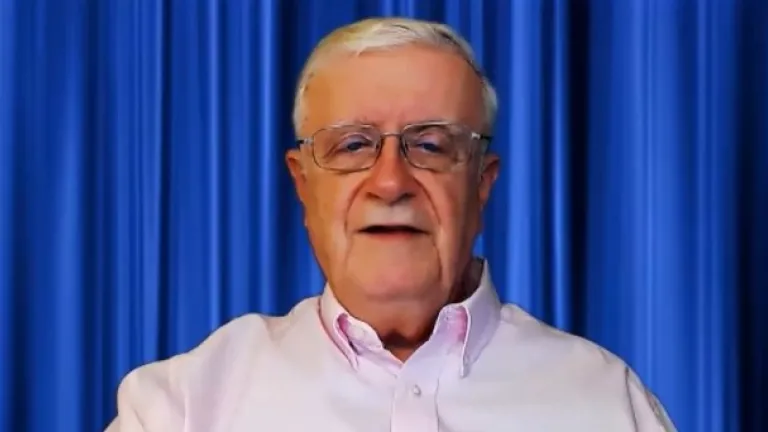
Jorge de Campos
Paul's instructions to Timothy in relation to false teachers.
Well, good evening, brethren. Paul, in this letter to Timothy, is instructing Timothy on how to discharge Timothy's duties as a minister. In other words, he's instructing Timothy, he's teaching him how to take care of various situations.
While Paul is writing, Timothy is in Ephesus. And as we went through last week, Paul introduced the letter very briefly, and he emphasized his apostleship. You know, it was as Christ's representative by God's instruction, by God's command. And we went through that, explaining that he was not self-appointed or elected, but God the Father actually hand-picked him. Then in verse 2, he addressed Timothy as a very close affinity, as a true son. And then, after that brief introduction, Paul immediately entered into the mind-body.
And this letter to Timothy could be stated that it has three mind sections. The first section is chapter 1, which we could call it his instructions. So you could say them kind of negative instructions or corrective instructions, or ways to handle false teachers. Then from chapter 2, all the way to basically the end, to verse 10 of chapter 6, there are a number of positive instructions to the Church. So different instructions which we'll go through at the later stage. And then the last 10 or 11 verses, starting from verse 11 to 21, inclusive, it's his Paul's personal instructions to Timothy. So it's those three major sections. The biggest section is the middle one, which is positive instructions to the Church.
This chapter that we're going to cover today, chapter 1, is more related to false teachers. But it is to note that the problem of false teachers, even though is the focus of chapter 1, it is continuously in the background and mentioned in other chapters of this letter, the Cepistle. For instance, you can see that in chapter 4, verse 1 through 5, that he's talking about these false teachers. And it says that some will depart from the faith, giving heed to false doctrines.
And then also we see in chapter 5, verse 20 through 25, and we see those who are sinning, rebuke in the presence of all. And then he shows that about that and emphasizes that section of correction against false teachers. We also see in chapter 6, from verse 3 till about verse 10, a section about addressing also false teachers. And then in the concluding comments, in chapters 6, verse 20 through 21, saying, you know, guard what has been trusted to you against what is falsely called knowledge and it was against these Gnostic teachers.
So even though chapter 1 is really focused on false teachers, that concept of that problem and is mentioned various times throughout this letter. So as we go through into this first section, it's important to remind ourselves that what was the reason that Timothy was left in Ephesus. And that's the very first section because Timothy was left in Ephesus to stop or combat or fight false teachers.
And the problem was not necessarily against Moses' law, was against maybe some state, but was against more about people that were trying to bring justification through law and also Gnostic additions to God's law. In other words, traditions that Christ criticized and that some of those false teachers were pushing onto those in the early church.
So after the introduction, then we go on to verse 3 and then let's just briefly read verse 3. As I urged you when I went into Macedonia, remain in Ephesus that you may charge some that they teach no other doctrine.
Now, yeah, we see that one of the main jobs of the ministry in a local congregation is to teach no other doctrine. In other words, teach sound doctrine. In other words, to maintain purity of doctrine and of teaching. Now, we do in the church, in your night, we do have an open door policy. People may attend freely and peacefully. But if someone comes and they start teaching false doctrine, in other words, they maybe start distributing their own ideas or their own papers with different ideas. That is not attending peacefully. So if they bring literature from other organizations or recordings from other ministers that are not in our fellowship from other organizations, that is not attending peacefully because we could have their false or wrong ideas being brought in.
And so in that case, as a minister, we need to tell them in a very careful way about our attendance policy that they obviously are welcome to attend with us in peace. But you must not bring that literature in YAH or those tapes or those recordings or that sort of information because that is not attending in peace.
And so the gentleness in how we say as a minister is important. We're going to be gentle, but we got to be firm. And we got to tell them that you can't go around and try to convince people of your ideas, of your doctrine, because that's not correct. And if you pursue and continue that, trying to convince people of your ideas, of your doctrine, then you are not welcome.
Now, this is going to be done in a very kind and loving way, of course. And so if you're willing to, and this is what we as ministers need to say, if you're willing to meet under these proper conditions of not bringing this false literature and say or different literature, let's just say that way to be gentler. If you are willing to meet without bringing those other ideas and thoughts, which are not the doctrine, as we understand, if you don't bring that, if you are willing to meet under these conditions, you're welcome.
But the people have to make up their mind if they wanted to comply to that or not, because if they persist with that continuous approach, unfortunately, we have to say, look, you can't attend with that. And if that continues to persist, then we may have to get even stronger. So it is a difficult situation that we have to be sensitive, but we can't allow other doctrines to infiltrate into God's church. Then it says, in verse 3, that it says, you may charge some. And the word charge is the Greek word parangelo, which means you may transmit a message, you may declare, you may command, you may give orders, you may give instructions to forbid some to do something.
So you may give that instruction to or that command to tell them to do something, in other words, that they teach no other doctrine. And so there is an authority in the church, in the ministry, and the intent is to preserve unity in the church.
So, and so, yeah, we see that we should only use that authority when we have to, and obviously to the degree that we have to. Then also, yes, the word teach no other doctrine. It's actually, it's one word except the word no. So the word teach other doctrine, and then there's the negative no. Do not teach other doctrine or teach no other doctrine, but that teach no other doctrine is just one word in Greek 2085, etero di das calleo, which means teach other or different doctrine, which basically deviates from the truth. Very similar to what we see in 1st Timothy chapter 6 verse 3.
1st Timothy chapter 6 verse 3, where it says, if anyone teaches otherwise and does not consent to the wholesome words, even the words of the Lord Jesus Christ, and to the doctrine which accords with godliness. And so, yes, a doctrine that is deviating from the truth, there was another of a different kind, different than what we teach.
So what do we have here in the church in United? We have a process, a way that if people feel that something is incorrect, we have what we call a way to go about it, or a process. And first, you should discuss it with the pastor, maybe have a Bible study, private Bible study with him. And then you should put it into a paper that specifically says what you believe and what the church says, and why you say it should be different and prove it publicly.
And the wisdom about that is it should be just one single point to address, not have various points and address five, six, seven things, because then it becomes too complicated. Just address one specific point that would then be submitted to the pastor and then the pastor is the regional pastor, and then he goes to MMS and MMS then gets through to the Doctrine and Committee. Doctrine and Committee may then take it to the Doctrine and Advisory Committee or the Prophecy Advisory Committee, depending what it is.
And then it gets to the Castle of Elder, which then will rule over it, then the decision will go back to the individual. But if it is something that needs to be taken to the General Conference of Elders, then it will be taken to the General Conference of Elders. And if it is of a doctrinal nature, then it would require three quarters of the ministry to agree to it.
So as you can see, we have a, let's call it a check and balance process to make sure that just not any idea filters in. And this we brought in, as we all aware, because of the difficulties that happened in 1995, where false doctrines came in, and therefore we implemented from then this process to create more of a check and balance. You know, it was a defense against false doctrines to come in. And therefore, for me as a pastor, or any any member that giving a sermon or a sermon net, is wrong of me or any person that is teaching from the podium, to teach something which is contrary to the doctrine of the church, simply because I, the pastor or that person, believes it.
Because that produces disunity, division creates splits. But as I mentioned, if you have of a person as concerned, there is a process to address it, which I discussed. Now, when Paul was before he went to his first time that he was imprisoned in Rome, at the end of his third missionary trip, when he came down past Miletus, and then he called the elders of the church of Ephesus, of the Ephesian elders, we see that section in Acts 20.
So let's just go back to Acts 20. In Acts 20, and we see specifically in verse 29, Acts 20, verse 29, and he said, For I know this, that after my departure savage wolves will come in among you, not spitting the flock. And so you warned them about false teachers. And this was about A.D. 57. Now, years later, about A.D. 65, some nine years later about, he's now writing to Timothy, and he left Timothy in Ephesus, because what he had predicted in Acts 20, 29, it actually now was happening.
And so he sent Timothy, or he left Timothy there, to deal with it, to address and to work with it. And so Paul was instructing Timothy, a young elder. Well, we know that he had been in the ministry for various years, but compared to Paul, he was a younger elder. And so he's instructing Timothy to make sure that the doctrine that he's taught in Ephesus is sound doctrine.
In other words, he says that people teach no other doctrine, because there was a deviation that people were not respecting the truth. Now, we read just maybe one or two pages behind in your Bible, which is in 2 Thessalonians 2, verses 9-12.
And it says, the coming of the lawless one is according to the working of Satan with all power, signs, and lying wonders, and with all unrighteous deception among those who perish, because they did not receive the love of the truth. You see, we have to love the truth. And then he goes on, and for this reason, in verse 11, God will send them strong delusion that they should believe the lie, 12, that they all may be condemned, who did not believe the truth, but had pleasure in unrighteousness. And so, we must love the truth and not unrighteousness. And so, continuing now reading in 1 Timothy, but now we're going to move to verse 4.
It says, at the end of verse 3, some that they teach no other doctrine, nor give heed to fables and endless genealogies, which cause disputes rather than godly edification, which is in faith. And so, don't allow or don't give in to fables, to myths, to rumors, to fantasies of man, to ideas of man, all right, and endless genealogies. In fact, in 1 Timothy 4 verse 7, it talks about old wives' fables. I think I got the wrong scripture here. But anyway, I think that's in 4 verse 7, 1st 4 verse 7, but reject profane and old wives' fables.
And so, things are not necessarily based on fact. And so, be careful of these fables, these ideas that are not based on fact or ideas and endless genealogies. Now, endless genealogies, it's an interesting expression because, yeah, we can look at it as pure genealogies, but Irenaeus referred to this as Gnostic teaching. And that is related to those eons or those bands of light from light being God all the way to coming to physical. And there's all these different bands of light from light to less light.
You know, there's different levels of spirit beings, these different so-called eons or bands of genealogies or bands of light. Similar in concept, like maybe a fraternal order of the Mason Lodge and others. In other words, these ideas which came from Gnosticism or Gnostic ideas only caused disputes. That's what it says, which caused disputes rather than godly edification, which is in faith. We look at, for instance, in 2 Timothy chapter 4 verse 3. 2 Timothy chapter 4 verse 3. That's 2 Timothy. It says, For the time will come when they will not endure sound doctrine. But according to their own desires, because they have itching years, they'll hip up for themselves teachers.
And they will turn their years away from the truth and be turned aside to fables. They'll be turned aside to fables. And so arguments and discussions that go on and on and on and on. These are, as it says, endless genealogies, endless arguments, useless speculation. And sometimes we get things about a world that, you know, can Elijah, they go to heaven or not? Or immortal warms or people say, well, now you can't pass the cost, Pentecost on a different way and this and that.
It's just you have these little things that these wedges that cause division and they don't build up. They don't identify and they endless because they keep coming back. They keep coming back every 10 or 15 years. There we go again, back to the same story. And younger people says, oh, we've got the scene now, you know, and somebody like that has been around for a while says, oh, there we go again. We had that 10 or 15 years ago. There we go again. So, and therefore we as ministers have to be very careful that we don't get involved in these disputes. Because once you get dragged into this, it's like sand that kind of just pulls you into it.
And then instead of having time to build the congregation, to help the brethren, to address the different responsibilities, that diverts one's attention instead of doing God's work. And instead of building trust in the church, it diverts one's attention to these arguments and disputes. And so we must learn as leaders in the church to gracefully avoid these. Right now, verse 5. Now, the purpose of the commandment is love from a pure heart, from a good conscience, and from sincere faith. Now, the first thing is the purpose. The word purpose is the Greek word 5052, telos, in other words, the result, the outcome. And so it says the result of the commandment.
Now, the actual wordia for commandment or charge is parangelia. Which is not the word normally used for God's law. God's law is usually referred with a different word. And so God's law is usually referred to a word called entole, which typically refers to the Ten Commandments. So, and therefore he is saying the charge he gave to Timothy in verse 3 and 4.
And so he says now the purpose of this commandment, of this charge, all right, the purpose of it, it says, yeah, is love. Now, yeah, we see a duality because the actual statement is about the instruction that Paul is giving about Timothy being careful and not to follow false doctrine and to make sure that the people, the man, the leaders in the church teach no other doctrine.
So that is the instruction against Gnostic ideas, against different ideas that people may have. And the end result of this instruction so that one does not teach these ideas in church is love. But the duality is that in the end, the purpose of God's commandment, God's law, is love. And therefore, we see the duality. So the outcome or the goal of Paul's instruction about a charge that people teach no other doctrine, the intent, the goal is love, is building unity, edifying the church to build them up in love.
In other words, in God's love, agape, which has become like God is, but God's commandments are also that way. So you could look at it that way as well. But then it continues from a pure heart. In other words, you do it sincerely guiltless from a good conscious. That means good in character and sincere, not hypocritical. And then let's just read it again from a pure heart, from a good conscious and from sincere faith. In other words, an absolute non-epicritical faith. In other words, absolute trust from the heart. Trust God, faith towards God. Now, people can faint. In other words, can faint faith.
And that's why in 1 John 3 verse 18 through 21 talks about that we need to love indeed and in truth. It must be genuine love, deep without any hypocrisy. And then it continues. Verse 6, from which some having strayed have turned aside to idle talk. And so some have strayed. That strayed is like missing the mark. They've strayed. And then turned aside is like the actual Greek word implies like twisted out of joint, like an ankle is twisted out of joint. In other words, going off the course.
You know, as we read in 2 Corinthians 11 verse 3, we got to be careful of Satan to deviate us from the simplicity of Christ. And so therefore he's saying we got to make sure that the instruction that we've received and we understand about us teaching sound doctrine is done with the purpose of love, sincere. Paul is absolutely sincere about that and we need to be sincere about that. And but some have gone away, have have gone off course.
And therefore, they've turned to idle talk in words to empty, fruitless, useless talk. And therefore, the exhortation is to all of us. It's applicable to every single one of us. Continue now in verse 7. Desiring and those that have gone astray, they desire to be teachers of the law, understanding neither what they say nor the things which they affirm.
And so these they desire to be teachers that claim respect of the law. But they don't understand what they say and affirm. It was they affirm with great confidence as if it is the truth. And this word here, which is teachers of the law, is used in two other verses. It's used in Luke 5 17 about Pharisees and doctors of the law. And in Acts 5 verse 34, talking about Gamaliel, a doctor of the law.
And so in these two verses, Luke 5 and Acts 5, it's referring to people in official Jewish positions that had a responsibility to interpret the law to Jewish people. But here we have false teachers in verse 7, desiring to be teachers of the law.
These people were standing up in church, were setting themselves up with confidence as if what they sang was true, and therefore they were deceiving people. So they were the type of people that were coming in. At that time would have been what we would call today Judaizers or Gnostics. And in 2 Corinthians 11 verse 13 talks about them as false apostles. And so they strove their desire to appear as witnesses of righteousness, so they desire to be in charge.
But as it says, yeah, desiring to be teachers, but understanding neither what they say nor the things they affirm. That they come across with great confidence, but they don't even understand it. And there goes on here in verse 8. But we know that the law is good if one uses it lawfully. In this verse, it uses the law. It uses the article, the law. So God's law is good. It's fair. It's right. It's honorable. And it must be used properly, lawfully, with the proper spiritual intent of the law.
How do we use the law unlawfully? Well, by adding burdens, like they were doing at that time with the different traditions or different do's and don'ts to the law. And therefore, the Sabbath became a burden. So they were using the law unlawfully. So man, with his own extra little legalistic type ideas, tends to add their own little interpretations on how to apply the law.
And so the key that we get from this is that the law must be interpreted and applied the way it was intended. And the purpose behind the law is love towards God and love towards man, not our own little ideas. Now, as we move to verse 9, it says, knowing that... Now, the word that actually has been added in verse 9, knowing that law. So the article there is actually not in the Greek. So in this case, the principle is that law is made for the righteous person. Any law. Obviously, God's law is what the overall intent of this message is all about. But he's bringing a principle, a general principle, that law, any law, right, is made for the person that is breaking the law. Because the person that breaks the law, it says, well, the law says, no, don't do that. Do the other. Any law does that. So God's law is... Now, specifically talking about God's law, that's what I want to emphasize now, is that God's law shows repentance, and how to love God and their neighbor. And so, typically, that is applicable to what the Bible calls it here, lawless and insubordinate. It says here, knowing this, that law is not made for a righteous person, but for lawless and insubordinate. It was law is made for... to correct people that don't believe that there is any legal obligation, or to correct people that refuse to be subject to the law, or in other words, to authority. So putting this into the context of God's law and our age today, it says that we could read this, that God's law, God's principles, teach us that it's teaching the people that are lawless, in other words, those that say there is no legal obligation of God's law. In other words, God's law is there to tell those people that say the law is not the way that is not the case. The law is there, and we need to obey it. And then it says, and the insubordinate.
Are those that refuse to be subject to authority?
In today's concept, we could call people that don't want to be subject to authority. In other words, they've got more of an independent spirit.
Maybe they're undisciplined, or whatever it is from that point of view.
And so the law is for people that are undisciplined, people that say, well, the law is not the way, they don't feel legal obligation to the law, in other words, to the lawlessness. So that's what the law is about.
Now, I want to move on to the second half of verse 9 and verse 10. Because as we read the second half of verse 9 and verse 10, it appears that it's just mentioned a number of points randomly. Because it says, yeah, for the ungodly and for sinners and for unholy and profane, for murderers of fathers and mothers, for menslayers, for fornicators, for sodomites, for kidnappers, for liars, for purgers, and if there's any other thing that is contrary to sound doctrine. Now, John Stott, which is a writer in a book entitled The Message of First Timothy Entitus on page 49, he makes an interesting connection of these 10 points and saying that this is basically itemizing the 10 commandments. He equates the ungodly to the commandment that says, thou shalt have no other gods. And then he says, and for sinners, he equates that to idolatry.
And then he says, and for unholy, he equates that to those that use God's name in vain. Profane equates that to those that break the Sabbath, pursuing their own pursuits on the Sabbath. For murderers of fathers and murderers of mothers, he equates that to the law about honoring your parents.
For man-slayers, he equates that to the Lord that says thou shalt not murder. For fornicators and sodomites, you know, it was Porneo, or Porneoias, and sodomites, male homosexuals, it's related in a sense to the 7th commandment of thou shalt not commit adultery. Then for kidnappers, the actual word is slave dealers or people that exploit man and woman, he equates that to thou shalt not steal. And then for liars and perjurers, he equates that to thou shalt not be false witness.
And then at the end, the last one, he says, and if there is any other thing that is contrary to sound doctrine, he equates that soundia is a word, a Greek word, which relates to health, the actual word that is used here, in this case, spiritual health or healthgiving, spiritual healthgiving. So that is contrary to sound doctrine, in other words, any sinful activity, like coveting or lasting. So it is an interesting view that this writer, John Stott, puts it in this section, which at the reading, at first, it appears just kind of in a random sequence, but he puts that kind of a breakdown or a specific look at the Ten Commandments, which I thought it's a very interesting observation from this writer. Then in verse 11, he says, according to the glorious gospel of the blessed God, which has committed, which was committed to my trust. So this wonderful gospel was committed to Paul's trust. So Paul is clearly emphasizing that God's law is the standard for life and is part of God's glorious gospel. And this is the trust from God that was committed to Paul, and in generally speaking ways today, is committed to every minister in the church, every minister of Jesus Christ. We as ministers have a duty, in other words, an entrusted duty from God to handle our responsibilities in a proper way. And we can't just go around and preach our own ideas. We can't preach our own philosophies or books. And in other words, we must, quote unquote, hide behind God's word. That's what we stick to. We, quote unquote, we hold on to God's word. We hide God's word. We hide behind it. In other words, we use it as the basis of what we preach. If we miss that, we then go into doctrinal error. That's the problem. We've got to be careful. We must not go into such doctrinal error. Right, now verse 12. And I thank Christ Jesus, our Lord, who has enabled me, because He counted me faithful, putting me into the ministry. So the ministry here, we can see, is a calling.
Just like being a member of the church, is a calling. God also calls some in the church to other responsibilities. Could be deacons, could be ministers, etc. All those are callings and responsibilities of service in God's church. And God puts us into the ministry. In a sense, ministry is not like a job that says, well, I want to be a carpenter, I want to be a plumber, and I'm going to work for that. And I want to do that job. No, that's not what ministry is about. It's not that sort of approach. The ministry is a calling from God. Sure, we can desire it because He said it's good for a man to desire it, but it is a calling. And then continuing in verse 13, although I was formerly a blasphemer, a persecutor, and an insolent man, but I obtained mercy because I did it ignorantly in unbelief.
He was a, he says, a blasphemer. You know, he spoke against God and His church. He was a persecutor. He looked at Acts 8, 1-3, also Acts 9, 1-2, and Acts 26, 9-11. He was persecuting the church. And then he says, and an insolent man in my margin, next to the word insolent, in my Bible, says, violently arrogant, violently arrogant. And Paul did it in errors. He had not been called yet. He didn't understand it, but the point is he did do it.
And so he says, and the grace of God, verse 14, was exceedingly abundant with faith and love, which are in Christ Jesus. So the grace of God was abundant. Here was God was willing to forgive.
Giving, forgiving is an act of giving, giving forgiveness. And we must be willing to give forgiveness. So it's an act of giving. Verse 15. This is a faithful saying.
Now, there are five places in the pastoral epistles where this term is used. But it basically means it's like saying it's a fundamental principle. It's a fundamental principle.
And the fundamental principle is, which is worthy of all acceptance, is that Jesus came into the world to save sinners.
That is the faithful principle. Christ came into the world to save us. And Paul admits, shows his humility. He realizes what he did because, as he said, he was blaspheme, a persecutor, and a violently arrogant man. He realizes what he did. And therefore he says, I'm a chief sinner. But God has forgiven me.
Verse 16. However, it was, moreover, or in addition, for this reason, I obtained mercy. I obtained mercy that in me first, Jesus might show all long suffering as a pattern to those who are going to believe on him for a lasting life.
And so this is a pattern that God has, an example of God has. God shows mercy to Paul, as he said, a blasphemer.
And he says, a persecutor, a violently arrogant man. And God showed mercy to him.
And that is a pattern that he says for those who are going to believe on him for everlasting life.
And so this basically says that we can receive the same mercy. Paul is a chief sinner, so we can also be forgiven.
And then he says, for everlasting life, we will have that everlasting life at a resurrection.
However, today, you and I have a seed of that everlasting life, which is God's only Spirit. We have that seed.
Now, continue in verse 17. Now to the King, eternal, immortal, invisible, to God who allowed his wise, be honored and glory forever and ever. Amen.
Now, the King, eternal, the word immortality, a better translation, in fact, this word is a fartos, is translated mostly as incorruptible or un-decaying, something that does not decay.
And so a more accurate translation in this section of this word, which is the Greek word 862, is incorruptible.
There's also a variation of that word, which is 861, which is a farsia, which is incorruption. So there's incorruptible and incorruption. That is the word that is used here. It's interesting to note that in 1 Corinthians 15, verse 53 through 54, he uses this word incorruptible, a fartos or incorruption, a farsia, but also uses the word in Greek for immortality, which is the word atanasia.
And so let's look at 1 Corinthians 15, verse 53 and 54, because it uses both words. So let's just look at that 1 Corinthians 15, verse 53 and 54.
It says, for this corruptible must put on incorruption, and this mortal must put on immortality. You see both words. Corruptible must put incorruptible, which is a fartos.
And then it says, and this mortal must put on immortality, which is atanasia, must put on immortality, Greek 110.
So when this corruptible has put on incorruption, now is a farsia, that is the variant of incorruptible, now it's incorruption. So when this corruptible is put on incorruption, and this mortal has put on immortality.
You see, so both words, corruption and immortality, are used together. Here in 1 Corinthians 15, 53 and 54. And by saying it says that when you and I are going to be resurrected at Christ's coming, we will put on immortality. Now this word immortality, it's interesting, this word atanasia is only used three times in the Bible, in the New Testament. Two of the times is Yah in 1 Corinthians 15, 53 and 54.
And the third time, the only other time that is used is in 1 Timothy 6 verse 16, where it says God alone as inherent immortality. So let's look at 1 Corinthians 6 verse 16, where it reads, Who alone as immortality? And so, there are only three places where the word immortality, atanasia, is used in the New Testament. In 1 Corinthians 15, 53, 54 and 1 Timothy 16. So basically what we see is that God and God beings in the kingdom of God will become immortal. When you and I are resurrected, we'll become immortal. We'll become of that with that capability of being immortal. And Jesus Christ was willing to let go of being in the form of God, and He then was resurrected. He therefore then gained immortality, and we will gain immortality as well, which at a resurrection. So this word immortality, atanasia, also implies a quality of life to be enjoyed. So it's not just immortality, but it is a quality of life that only the God family enjoys, and we will then be members of the family, and we will enjoy that. So let's go back to 1 Timothy chapter 1 verse 17. Now to the king, eternal. Maybe a better translation therefore would be incorruptible, invisible. To God who alone is wise, be honor and glory forever and ever. God alone is wise.
His wisdom is beyond our human comprehension. And then continue. Discharge, I commit to you. So now he gets back to what he mentioned in verse 3 at the beginning. I'm giving you discharge. I'm giving you this instruction not to allow false ministers and false doctrine, but stick to, as it said, to sound the doctrine. Don't allow other doctrines to come in. And he says, discharge, I commit to you, son Timothy, according to the prophecies previously made concerning you, that by them you may wage the good warfare. You may wage the good warfare. In other words, use the ministry as God expects, and we as ministers, we are in the same warfare against false teaching, false teachers in this world. And we're going to stand up for the true doctrine. Verse 19, having faith and a good conscience, which some have rejected concerning the faith once suffered, should break. So this is critical because it's critical for us not to go against our conscience and faith. We must not allow to go against our conscience. True, our conscience needs to be educated. But the point is, when we do something wrong, our conscience pricks us. And when our conscience pricks us, we don't want our conscience to be seared.
As we read in 1 Timothy chapter 4 verse 2, it says, having the unconscious seared with a hot iron. We don't want to go against our conscience. It's extremely important for us to prize our conscience and not to go against our conscience. And so that's why it says, having faith and a good conscience, you know, one that is not seared, a healthy conscience, which some have rejected concerning the faith, and therefore they have suffered, should break. They left the faith. And then it says in verse 20, of whom are I maneurs and alexandered, whom I delivered to Satan, whom I, let's call it, disfellowshipped. And he said, whom I delivered to Satan, that they may learn not to blaspheme. And so the intent is for that they may learn a lesson, that they may repent. And so there are times, yeah, in this case, it shows that Paul used his authority in the church. And there may be times that we have to deal or use this authority. But we've got to be very careful how we say it. Otherwise, we could have a lawsuit in our hands.
And so when we say it, we're going to be careful how we do it. And we want to really make sure that we have no ill will against them, because that's what Paul and I say, that they may learn not to blaspheme, that they may repent. And so this is this first section of Timothy, which in a sense is negative against false teachers. And in our next study, we'll then start with chapter 2, which is positive, positive instructions and doctrines to the church.

Jorge and his wife Kathy serve the Dallas (TX) and Lawton (OK) congregations. Jorge was born in Portuguese East Africa, now Mozambique, and also lived and served the Church in South Africa. He is also responsible for God’s Work in the Portuguese language, and has been visiting Portugal, Brazil and Angola at least once a year. Kathy was born in Pennsylvania and also served for a number of years in South Africa. They are the proud parents of five children, with 12 grandchildren and live in Allen, north of Dallas (TX).