Jorge de Campos
Paul describes characteristics of deacons and deaconesses. Christ is the head of the House of God, of the Church of the Living God, of the pillar and ground of the Truth. We got to strive for godliness. Jesus came in the flesh, proved tht He was who He was as God backed Him up with His power, God's Holy, He was witneeed by angels, preached, believed and received up in glory.
This transcript was generated by AI and may contain errors. It is provided to assist those who may not be able to listen to the message.
Paul encourages the ministry at the beginning of Timothy to teach only the truth and no other doctrine but the truth, and also encourages a godly life. So in the third chapter, Paul deals with qualities needed to select man to serve in the ministry, whether it will be as elders or as deacons. In the last study, we discussed elders qualifications which ultimately are attributes that we all need to be developing because we all are growing to serve as leaders, if not leaders in the church in this life, but leaders in the resurrection for sure as kings and lords under Christ. So they are characteristics we all need to pay attention to and develop. So under the section of characteristics or qualities for elders, he highlighted basically four sections which we went through in the last study which were related to personal conduct, family conduct, conduct in the church, and conduct with the world. But he there at the end, as far as qualities of conduct with the world, he highlighted one section that I just want to go through again which is that he says in verse 7, an elder must have a good testimony amongst those who are outside. In other words, he must have a good report, a good name amongst those that are outside, not just in the church because quite often people deal with other people outside at work etc. And so that is one of the things that he's highlighting here. It's part of our life. We gotta become people that are godly or show godliness or have good works to become like Christ. And so we did refer last time to Proverbs chapter 3, verse 3 and 4. Proverbs chapter 3, verse 3 and 4. Let not mercy and truth forsake you. And so in our Christian life, we gotta exhibit mercy and truth. Those are actually two very important points.
We gotta be truthful in whatever we do, but as we, for instance, at times have to tell people, look, this is the truth and but we gotta do it in a merciful way. And so let not mercy and truth forsake you. Bind them around your neck. In other words, we must have it around our head, around our neck, and write them on the tablet of your heart. In other words, must be part of our heart, our intent.
And so, and that way, we will then find favor and high esteem in the sight of god and man. And so we will receive favor and let's say it a good name in the sight of god and man.
So that's what god wants of us. He wants us to to be people that are truthful, but on the other side, we are merciful. This is very similar to what is stated in Proverbs 22 verse 1. In Proverbs 22 verse 1 says, a good name is to be chosen rather than great riches, loving favor rather than silver and gold.
And so having a good reputation, having a good name, somebody being truthful, but also merciful, in other words, we gotta be a man or people of character, a people that stick to our words, but in a merciful way. And that goes a lot further than all riches. And then continuing, yeah, in verse 7 of 1 Timothy 3, lest he fall into reproach and the snare of the devil. In other words, otherwise that individual will be discredited and will fall into a trap of Satan and ultimately he will be destroyed. And then in verse 8, it says likewise, this word likewise, it's in a sense a divider starting in the sense a new section, but it also says the characteristics of deacons are likewise similar to the ones of elders. So deacons were established, as we know, in Acts chapter 6 verses 1 through 6. And then it says deacons must be reverent, in other words, grave, men of respect of dignified conduct, not double-tongued, speaking one thing to one person, and then must not be speaking another thing to another person.
That would go in like being gossippers and tailbearers. So what do we say to one person? We say to the other, obviously. We're going to say it with kindness, with mercy. Then it says not given to too much wine. In other words, it's not addicted. He does not overly or occupy himself with a lot of wine. That is not what that person does. Not greedy of money. That means he's not setting the heart on getting more and more of acquisition and or dishonest gain. And so we can see that many of these qualities described here to a deacon are very similar to the qualities that were described to an elder or as it mentions in verse 1 of chapter 3 to a bishop. The Greek word is epis kopos, which means an overseer. And so very similar characteristics. One that is not mentioned, generally speaking, that is not mentioned to deacons is being able to speak. A big part of it. Being able to teach. Being able to teach. And so being able to teach is one of the characteristics here that is not mentioned. It does not mean that a deacon should not be able to teach, but the position does not necessarily require that.
Because a deacon mostly serves in a physical manner in related to the church and an elder, he serves in spiritual matters. But then also note in verse 9, because this is very important from a spiritual point of view, which is holding the mystery of the faith with a pure conscience.
Now, we have mentioned before that in that time, there was a tendency of Gnosticism, which implied secret knowledge. And, but yeah, this is not what he's talking about, because he's talking about an understanding that is revealed by God to those whom he calls. So it's a knowledge or understanding that God gives us when we have God's Holy Spirit. In other words, God reveals to us his truths, his basic plan, how he's going to do things, which the world does not understand. In other words, his secrets. And this is spiritual knowledge.
And for that spiritual knowledge, we need God's Holy Spirit.
Scriptures that go with that offer us in Colossians 1 verse 26. Colossians 1 verse 26.
Colossians 1 verse 26. And we read here, the mystery which has been hidden from ages and from generations, but now has been revealed to his saints. And so God has revealed the mysteries to God's people. And so it's the understandings of God's spiritual things that he's revealed to us. Him we preach, warning every man and teaching every man in all wisdom that we may present every man perfect in Christ Jesus. So that is the mystery that we are teaching, a mystery which is being preached among the Gentiles. And so that is what Deacons need to understand as well. So yes, this mystery has been hidden. Look at another example in Ephesians chapter 3. Ephesians chapter 3 verse 9. Ephesians chapter 3 verse 9, it says, and to make all see what is the fellowship of the mystery, which from the beginning of the ages has been hidden in God, who created all things through Christ Jesus, through Jesus Christ.
And so God has revealed the mysteries to God's people and through Christ. And it says in verse 10, to the intent that now the manifold wisdom of God might be made known by the church to the principalities and powers in heavenly places. So it's made known now by the church to angelic beings. So the church has a role of, through living this way, revealing to the angels this mystery and this wisdom of God. Also in 1 Corinthians chapter 2, starting in verse 7, we can see that it's only if we have God's Holy Spirit that we can understand God's ways and God's spiritual knowledge, God's wisdom, God's understanding, only with the help of God's Holy Spirit. We read that starting in verse 7 of 1 Corinthians chapter 2. But we speak the wisdom of God in a mystery. The hidden wisdom which God ordained before the ages for our glory, which none of the rulers of this age knew, for had they known they would have not crucified the Lord Jesus, the Lord of glory. But as it's written, high as not seen, nor ear heard, nor have entered into the heart of man the things which God has prepared for those who love him. So these are mysteries that God is revealing as the church grows and as we will become spirit beings. Through us, mysteries will be revealed. But God has revealed these mysteries up to a point now to us through his Spirit. For the Spirit searches all things, yes, the deep things of God. We understand God's plan and God's great purpose for us because we have God's Holy Spirit. Other people don't get it. And the real clincher or a real important and a very important verse to understand here is that for what man knows the things of a man except the Spirit of the man, which is in him, you and I can only comprehend things of human beings because we have a spirit of man which is in us. Likewise, or even so, no one knows the things of God except the Spirit of God. We need God's Holy Spirit to understand God's spiritual knowledge. Then going back to 1st Timothy chapter 3 and we see also YAH in verse 9.
Holding the mystery of the faith with a pure conscience. And so we need to to be sprinkled by the blood of Jesus Christ so that our conscience is clear. We read that in Hebrews chapter 10. Hebrews chapter 10 verse 22. Hebrews chapter 10 verse 22. He says, by a new and living way we are consecrated and we have a high priest. And in verse 22, let us draw near with a pure heart in full faith, having our hearts sprinkled from an evil conscience and our bodies washed with pure water. And so we are sprinkled, our bodies are sprinkled by the blood of Jesus Christ. And so our conscience is now without offense towards God and towards man. Why? Because we have a conduct which is becoming of this way, of God's way of life, of the truth.
And therefore, we are people that through our conduct we demonstrate, or in other words, we speak peace and forgiveness. And so really, Paul is here saying that deacons and again this is also applicable to elders, they are to be demonstrating their faith which needs to be free from stains, from shame, from any adulteration of the flesh. In other words, faith mixed with proper godly ethics. And so a deacon would understand God's plan, God's purpose for mankind, and they must live the way, they must practice the way, there must be an example living just like we all in really that's what we need to be, that's what we all need to be striving to be. Verse 10 now, verse 10 says, but let these also first be tested and then let them serve as deacons being found blameless.
So these men need to be given time, plenty of time to demonstrate by their fruits and as they serve as deacons, which could very well imply that they must serve before they actually become deacons because they're serving as deacons, implying that they might not yet be deacons. And so that is a good indicator that we should only ordain a person a deacon that has been serving in one way or another like a deacon would serve. So this again is a principle for everybody, not just for deacons, but not just for the pastor either because we need to see fruits.
So elders also, when it mentions, for instance, in a little earlier one year, that elders must not be a novice. And that means that likewise we must have experience. That's what it says in verse 6, not a novice. And likewise, a deacon must be experienced, must first be tested. And so he's found blameless. In other words, irreproachable. In other words, nobody can call him to account. So that is what a person to become a deacon or a deacon needs to be exemplified. Again, this is applicable to elders, applicable to everybody. We all need to be growing in these qualities.
Then again, he uses this divider like it used in verse 8. Likewise, deacons, because it's separated from elders to deacons. Now in verse 11, likewise, so in a sense it is a new category. But it also saying similar principles are also applicable. And it says, yeah, their wives must be reverent.
Now some people say, well, is this talking about deaconesses or is it talking about the wives of deacons? The first point is that the Greek text does not have the word there. If you look carefully at your text, the word there is in italics. And so likewise, wives must be reverent. In Greek, the same word is used for a woman or wife. And so the Greek text very well could be translated as woman. Likewise, so so if Paul was talking about the wives of deacons, then why would he have left out the word there? Because then the word there would be required to imply it was the wives of deacons. Also, why should there be a special qualification for deacons' wives when there's no special qualification for elders' wives? So it's not talking about deacons' wives or or any woman, but it's talking about deaconesses. And therefore, he's talking about deaconesses that were there in Ephesus. And we know there were deaconesses in Ephesus. If we look at Romans 16, verse 1 and 2, Romans 16, verse 1 and 2, when it's talking about Ephesus, and it says here in Romans 16, verse 1 and 2, it says, I command to you, Pho-be our sister, who is a servant. The word there for servant is diakonos, a Greek 1249, which is a deacon of the church in St. Crea.
So that you may receive her, you may receive her as the deaconess in the Lord, in a manner worthy of the saints, to assist her in whatever business she has need of you, for indeed she has been a helper of many and of myself also. And so she's coming there, she left her duties to fulfill, and assist the deaconess on the or with fulfilling those duties. And therefore, yeah, it's talking about the deaconesses in verse 11. Must be reverent, not slanderous, temperate, faithful in all things. And then in verse 12, let deacons be the husbands of one wife.
So it's talking now about deacons, like the elders need to be the husbands of one wife. In other words, a one woman man, you know, was not having more than one wife, of course. So we talked about that in the previous study. So let deacons be the husbands of one wife, ruling their children at their own house as well. The word ruling is presiding over, leading, or caring for, and children and houses is in an orderly, rightly way in which it can't be blamed. Deacons are doing that well. Verse 13, For those who have served well as deacons, obtained for themselves a good standing and a great boldness in the faith which is in Christ Jesus. So those who have served well as deacons, obtained for themselves a good esteem, a good respect from their fellow Christians, and also great boldness. In other words, their faithful service increases their Christian confidence. So as they are faithful, they become more confident in their Christianity.
So a deacon that serves well the church will be highly respected in the church, in the local congregation. In fact, Christ said himself he came to serve. And we read that in Luke 22 verse 27, Christ came to serve. So that's what this way of life is, is a way of service. And then now in verse 14 and verse 15, we see these things are right to you, though I hope to come to you shortly, but if I'm delayed, I write to you that you may know. And so what do we have here? Paul is now describing to Timothy some of his responsibilities until Paul would get there.
And this is a blessing to us because think about it. You and I are being taught by Paul.
By Paul himself because he wrote us down. And so it is important for us to be taught so we may become kings and the Christ the King of kings and lords and the Christ the Lord of lords. So it applies to us all. So it is really a blessing that the situation arose that he gave these instructions. That's why he gave these instructions to elders and deacons. And from it we learn very specific things for us to grow in our godly Christian way of life.
So we're all being taught by Paul. What a blessing. And so he now gives like a concluding summary of these two chapters of what we need to be doing as men in the church in chapter two and also as women in the church as elders and as deacons. He now gives a like an overall summary which is basically describing what we as the church are. And so he says, I write to you that you may know how you ought to conduct, how we ought to behave and act in the church. In other words, conduct yourself in the house of God which is the church of the living God, the pillar and ground of the truth. And so Paul, he describes the church. In other words, the spiritual body of Christ, that's what we are, describes the church in three different ways. The house of God, the church of the living God, and the pillar and ground of the truth.
So let's look at those very briefly. The house of God, the word house, it is a word that was used in verse 4. In verse 4 says, one who rules is on house.
This word is the same one as now used in verse 15. It's a Greek word, oikos, you know, it was a home, a dwelling or a temple, right? So it's a house. Verse 5, verse 5 says, if a man does not know how to rule his own house. And then in verse 12, it says, let Dickens be the husbands of one wife, ruling their children and their own houses well. It's the same word that is now he is saying that how to conduct ourselves in the house of God. And so Jesus Christ is the head of God's house.
And we are all built up together into this house, as we can see in 1 Peter chapter 2 verse 4 and 5. 1 Peter chapter 2 verse 4 and 5, it says, coming to him as a living stone, rejected in need by man, but chosen by God and precious, you also as living stones are being built up a spiritual house, a holy priesthood, to offer up spiritual sacrifices acceptable to God through Jesus Christ. So we all are like individual living stones, being built up as being part of the church, being part of the body of Christ, of this spiritual house.
Also, this example of the house of God is also used still in 1 Peter in chapter 4 verse 17, where it says, for the time has come for judgment to begin at the house of God.
In certain words, judgment begins in the church of God. In us, as Christians in the church, judgment is now upon us. So the process of judgment is not just in the world tomorrow or at the Second Resurrection, for as is now. Now is a time of judgment, of this process, of being judged. The word house is also used, and they are in other places, but I'm just highlighting three in this moment. It is also used in Hebrews chapter 3 verse 3 to 6. Hebrews chapter 3 verse 3 to 6.
For this one has been counted worthy of more glory than Moses. You know, it's Christ, he's got far greater glory than Moses. Inasmuch as he who built the house has more honor than the house.
And so Christ is the one that's building the house, right? For every house is built by someone, but he who built all things is God. And we know God built all things through Christ.
So verse 4, and Moses indeed was faithful in all his house as a servant for a testimony of those things which would be spoken afterwards, but Christ as a son over his own house. So he built a house, as we see in verse 3, he built a house, and he says Christ as a son over his own house, whose house we are if we hold fast the confidence and rejoicing of the hope firm to the end.
And so Christ built a house, Christ is over his own house, whose house we are. We are these building stones, building blocks in the South, if, as it says, if, in verse 6 of Hebrews chapter 3, if we remain fast with confidence and rejoicing of the hope till the end. So as I was mentioned, Paul here describes the church in three different ways. This first one is the house of God.
Then the second way, let's go back to 1st Timothy chapter 3 verse 15, and he says, in the middle of the verse, says, which is the church of the living God. So this is the second way he is describing the church of God. The church, the first is the house of God, and the second is the church of the living God. You know, we know God is living. He's not an idol of stone or anything like that. God is the living God. In Leviticus 26 verse 3, Leviticus 26 verse 3, says, if you walk in my statutes and keep my commandments and perform them. And so God is living, and we need to walk in God's statutes. And then in verse 11 and 12 he says, and I'll set my tabernacle among you, and my soul shall not abor you, and I will walk among you, and be your God, and you shall be my people. He's a living God, and he's going to walk with us if we walk the correct way. Also in Joshua chapter 3, Joshua chapter 3 verse 10, in Joshua chapter 3 verse 10, we read, and Joshua said, by this you shall know that the living God is among you, and that he will, without fail, drive out. And then he describes these nations. But God is the living God, and so this is the church. And what does it mean we are the church? Well, in 2 Corinthians 6 verse 16, 2 Corinthians 6 verse 16, 2 Corinthians 6 verse 16, it says, and what agreement has the temple of God with idols? For you are the temple of the living God.
As God has said, I'll dwell with them, and I'll walk among them. I'll be their God, and they shall be my people. In other words, it's a living God. God is living, and he will walk with us, and we, we as individual living stones form or make up the temple, this abiding home of God, the church of God or the house of God. And so we as the group of brethren in God's church, that God has chosen to dwell in, and he will dwell in us if we become or remain holy. If we become unholy, you leave us. So that again is a warning there, but God is a living God, and Paul is describing the church in three different ways. And the third way that we read here in 1 Timothy 3 verse 15 at the end, it says, the pillar and ground of the truth. So people say, well, how can we, you and I, be the pillar and ground of the truth? Well, it's because where the truth is taught, and and we under Christ, being under the leadership of Christ, we are growing with God's Holy Spirit in this truth. Look at John 14 verse 6. John 14 verse 6. It says that Christ is the way, the truth, and the life. Let's just get to it and read it. John 14 verse 6. It says, and Jesus said to him, I am the way, the truth, and the life. And so Christ is the truth, and we are part of his body, right? Colossians chapter 1 verse 18. Colossians chapter 1 verse 18. And he is the head of the body, the church, who is the beginning, the firstborn from the dead, that in all things he may have the preeminence. Christ is the head, and we are part of that body. We are those living stones. And also in verse 24 of the same chapter, Colossians 1 verse 24. And now I rejoice in my suffering for you, and fill up in my flesh what is lacking in the afflictions of Christ for the sake of his body, which is the church. So we are Christ's body. Christ is the head, he's the truth, we are his body, and Christ holds the body together. As we read in Colossians chapter 2 verse 9. Colossians chapter 2 verse 9. For in him dwells all the fullness of the Godhead. So in Christ, all the divinity of God is in Christ. All the perfect divinity of God, the fullness of the Godhead, is in Christ, but in a bodily form. And you are complete in him, who is the head of all principality and power. So we are part of that body. Christ holds it together, he is the truth, and therefore we stay in that body, we strain that truth, we are the pillar and ground of the truth.
Further, look at how Jesus Christ leads the church into all truth. We read that in John chapter 8.
John chapter 8 verse 31. Then Jesus said to those Jews who believed him, if you abide in my word, you are my disciples.
Indeed. And then in verse 32, and you shall know the truth, and the truth shall make you free, because we stay in Christ's word, we stay in the truth. We're not deviating from the truth.
Also, chapter 16, John chapter 16 verse 12. John chapter 16 verse 12, he says, I still have many things to say to you, but you cannot bear them now. However, when he, in other words, God's only Spirit, the Spirit of truth, has come, he will guide you into all truth. For God's Spirit will not speak of its own ability or authority, but whatever God's Spirit hears, he will say to you, and he will tell you things to come. So God's Spirit glorifies God. God's Spirit, it's God's mind in us, and God, through his mind, through the power of his Spirit, leads us into all truth, because Christ is the head of the body, and so is leading us into all truth. And therefore, we, as we are led by God's only Spirit, we will know the truth, and will grow in the truth. Look at 2 John, the second epistle of John, verse 1 and 2.
It says, to the elect lady and her children, whom I love in truth, and not only I, but all those who have known the truth, because of the truth which abides in us, we and will be with us forever. We are the pillar and ground of the truth. And also in John 3 John, the third epistle of John, verse 2 and 3 and 4. Beloved, I pray that you may prosper in all things and be in health, just as your soul prospers. For I rejoiced greatly when brethren came and testified of the truth that is in you, just as you walk in the truth. I have no greater joy than you year, or beg upon land to you, than my children walk in truth. And so we are the pillar and ground of the truth. We are living the truth, and the truth is manifested on planet earth by the church of God. Look at Ephesians chapter 2. Ephesians chapter 2 verse 19 through 22.
Now therefore, you are no longer strangers and foreigners, but fellow citizens with the saints and members of the household of God, having been built on the foundation of the apostles and prophets, Christ himself being the chief cornerstone. And Christ is the truth, in whom the whole building being fit together grows into a holy temple, in whom you also are being built together for a dwelling place of God in the spirit. So the truth is manifested on earth by the church of God, which is the pillar and ground of the truth, which is the house of God, which is the church of the living God. And so, Paul here in 1st Timothy chapter 3 verse 15 basically summarized the things, the principles that he taught in 1st Timothy chapter 2 and chapter 3 for man, for woman, for elders, for deacons and deaconesses, saying, I'm teaching you this, and so that you may know how you ought to conduct to really be the house of God, be the church of the living God, and the pillar and ground of truth for you to live this way. And then it says, and without controversy, great is the mystery of godliness. In other words, Paul is saying this is a mystery, the mystery of godliness. Now, the Greek word for godliness is iausabaiu, and basically he's saying godliness is the purpose, is the outcome, is the end result. In other words, it's a bridge for us to to become godly, to become like God, and as we become like God, what do we do? Good works. We become like God, a God of good works. And so there's a book called a biblical theology of the New Testament by a gentleman called Roy B. Zach, and he defines godliness as a bridge between faith and good works. It's that stepping stone from belief and trust and actually living and doing it, and that action, that bridge that makes it from trust and faith to actually good works is godliness. And so that is important because that is the end result, the purpose of what God wants us to be. To be like him, to become like God, to imitate God, and in other words, godliness is the work, the road, the way to become like God.
Now, salvation, of course, is not based on good works, but good works is the purpose or goal of salvation. You see, we are not saved to be in God's kingdom to then sit there and do nothing. We are there to then serve for eternity, as we read, for instance, in Titus chapter 3 verse 8. Titus chapter 3 verse 8, he says, this is a faithful saying, and these things are wanted to affirm constantly that those who have believed in God should be careful to maintain good works. These things are good and profitable to men. We must live godliness. That is like the bridge. That's the way that's living and practicing, so that in the end result, outcome, is we have good works. And so, unfortunately, many people look at godliness in an incorrect way. Let's look at two examples. The first one I have is in 1 Timothy chapter 6 verse 5. 1 Timothy chapter 6 verse 5. It says, talking about people that their doctrine is not according to godliness, in other words, their teaching is not according to godliness in verse 3. And then it says, these people have useless wranglings of men, of corrupt minds, and destitudes of the truth, who suppose that godliness is a means of gain. And it might not just be financial gain, maybe gain of power, or being somebody that is in authority, or whatever. It says, that's not godliness. And it says, from such people, withdraw yourself. Turn away from such people. Then in 2 Timothy chapter 3 verse 5, Paul also says about these people that we need to turn away from. And in 2 Timothy chapter 3 verse 5 says, talking about in the lost days, we'll have people with all these things wrong. And then it says, having a form of godliness, but denying its power. From such people, turn away. You know, you find people that are very religious, very religious, whatever it may be. And they don't use the power of god, because the power of god, which is god's only spirit, is the power that is going to help us to change from the old man to the new man, is going to help us to be transformed. That is the power of true godliness. And they deny that power. Or they have a form of godliness, you know, like an appearance, an appearance, or heirs that they put on. But are they really using god's only spirit and working in becoming better people, in being careful how they say things, in making sure that that they are building towards unity in the church, rather than division, or whatever it may be.
This is, we've got to be careful, because people have a form of godliness, but they deny its power. They're not using god's only spirit to change and become better people.
And so, really what it means is people don't understand what repentance is all about. You know, in Hebrews chapter 6 verse 1, Hebrews chapter 6 verse 1, where it's talking about the basic teachings of Christ. And these are the basic elementary principles of Christ, the basic teachings of Christ. What are they? It says, the first one, it says, repentance from dead works. And of faith towards God. Repentance from dead works is people don't understand that true godliness involves repentance from dead works, therefore having faith in God, and that faith using this bridge of godliness, and using God's aliz power, God's aliz spirit, which is God's power, to actually produce good fruits, good works. So, getting back to 1st Timothy chapter 3 verse 16, without controversy, great is the mystery of godliness, because people don't get it, don't understand. True godliness to these people is a mystery. And in 2nd Peter chapter 1, verse 5, starting in verse 5, it says, for this reason, it says, give all diligence, give all effort, make it all effort, add to your faith, understanding what virtue is, being virtuous. To virtue, understand what you really need to do to be, to do. Then have self-control, and God's aliz spirit is a spirit that gives us self-control. And self-control, perseverance, that means, stick to it till the end, perseverance. And then to perseverance, godliness. It was that bridge from faith and as to knowing the virtue and the knowledge and having self-control using also the spirit, we bridge that through godliness towards good works, which is basically is brotherly kindness and godly love, agape love.
And if we don't have this, if we don't have this, if we lack these things, says in verse 9, we are blind. Spiritually speaking, we are blind.
We really need to use godliness, use godliness. And there's another important scripture, which is also in 2 Peter chapter 3. Very important scripture. 2 Peter chapter 3 verse 10 and 11. And he says, But the day of the Lord will come as a thief in the night, in which heavens will pass away with great noise, and the elements will melt to fervent heat, above the earth, and the waters are in it will be burned up. And you know, quite often you have people, let's say, we got to teach more prophecy. And yeah, occasionally, I do like, and it is one of the strong points for me, prophecy. But, you know, it is more important to live God's way.
It's more important to change our conduct, to be godly. That's why I say, therefore, yes, in verse 10, all these things are going to happen. You can have all knowledge, all prophecy, all this. But if you don't have godly love, in other words, therefore, since all these things will be dissolved, what manner of persons ought you to be in holy conduct and godliness? We got to be godly. And so then, Timothy ends up with six statements, which basically show, six statements about Christ, which basically show that Christ is the head of the church.
And this is the mystery of godliness, or what is done. And for us, that we need to understand what is done and how is the head of the house of God, is the head of the church of the living God, is the pillar and round of truth. And then he says, God, it's talking about Christ, God was manifested in the flesh. Now, I'm just going to cite a few scriptures, and I encourage you to just take note because I'm not going to turn to all of them. But he says, God was manifested in the flesh. You can read that from John 1 14, when he says, Christ came in the flesh, then justified in the spirit.
In other words, God's Holy Spirit proved that Christ was indeed who he was through God's Holy Spirit, through God's miracles that came in through God's Holy Spirit. God backed Christ up through the miracles that he did through his Holy Spirit. A number of scriptures like John 1 verse 33, the latter part, Matthew 12 verse 28 shows the works for why God's Holy Spirit, John 14 10 and 11, Romans 8 verse 11 show that God justified, proved that Christ was Christ through the miracles and the work that he did with God's Holy Spirit.
Then the third thing that says, yeah, about Christ is, it was seen by angels. You know, angels saw what Christ did. Angels announced that he was coming. Angels saw the various how he was tempted by Satan and how he overcame. Angels saw how and served him when he was under great trial. And a number of scriptures that you can refer to it is Mark 1 verse 13, Luke 22 41 to 43, Matthew 28 2 through 4, Acts 1 10 through 11.
And indeed, God's very plan was known to angels through the church. 1 Peter chapter 1 verse 2. And so they observed, was seen by angels, and they observed and learned and saw who Christ was and what he did, what God did through Christ, and they learned and they observed that. Then the next thing it says, preached among the Gentiles. Well, we know that Paul preached to the Gentiles. The gospel was preached to the whole world.
Matthew 24 14. We are to teach the gospel to the whole world and baptized those as they repent. Matthew 28 18 through 20. And we know that Paul taught and we see that in many other scriptures as well. He was believed in the world. Oh yes, we know that he was believed. I don't have to turn to a lot of scriptures on that, but he was believed in the world and the world, yeah, yeah, well, it's Christ.
They believe in Christ. An example is 1st John 5 verse 1. We need to believe in Christ to really be the children of God. That's part of the plan. We got to believe and believe means do obey. It's not just believe. Believe is do. And lastly, the 6 point is received up in glory. Christ was received in glory and he sits at the right hand of God. Many scriptures refer to that. Hebrews chapter 1 verse 3, Mark 14 verse 62, Ephesians 1, 20 through 22, and many others. Christ went up to glory. So we can see a sequence of events of what Christ's life was, proving that he was who he was.
He's the head of the church. He is the head of the house of God. He is the head of this house which we are part of, which is the pillar of truth. And so Paul summarizes what he covered and by giving the sequence of events of us, in a sense, to become godly, to become, to have the qualifications of elders and deacons, and for men to pray everywhere and women to be modest.
All these things he says, yeah, this is all part of godliness. And so he then concludes this chapter and next week we will then move on to the following chapter.
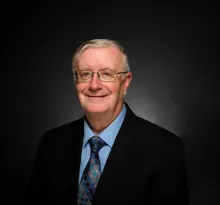
Jorge and his wife Kathy serve the Dallas (TX) and Lawton (OK) congregations. Jorge was born in Portuguese East Africa, now Mozambique, and also lived and served the Church in South Africa. He is also responsible for God’s Work in the Portuguese language, and has been visiting Portugal, Brazil and Angola at least once a year. Kathy was born in Pennsylvania and also served for a number of years in South Africa. They are the proud parents of five children, with 12 grandchildren and live in Allen, north of Dallas (TX).