

Robin S Webber
This transcript was generated by AI and may contain errors. It is provided to assist those who may not be able to listen to the message.
So, let us begin. Two nights ago, we renewed our personal, and I do want to underline individual covenant with God by partaking of the symbols of the bread and the wine that symbolize the ultimate gift of the Lamb of God sacrificed on our behalf, and that same sacrifice accepted by God, His Father, our Father above. Both the Father and His Son were equally committed that this sacrifice would occur. They were in together from the foundation of the world that this very special Lamb, this very special gift might be offered to you, to me, and to all those that are made after God's image and likeness. We do today, as we did last night at the night to be much observed, we do rejoice in the divine commitment of this sacrifice. It is indeed the gift that keeps on giving. The batteries on this one just don't wear out. To allow us to have—and here's what I want to share with you today. If you're taking any notes, this will be the first two words I'd like you to jot down—to have intimate relationship. When the Bible speaks of knowing God, this is a very intimate phrase that comes out of the Greek. It's intimate. It's togetherness. I'm going to show you how intimate it is right now. Would you please join me in John 17? And let's pick up the thought I know we had this read the other evening at the New Testament Passover. But this is a message to you and me today. Have you ever gone to the mailbox and you get a note and it's written to you, and it's not junk mail. It's to you, and it's personal, and somebody has taken the time to write you. Well, Jesus took the time on that night of nights long ago to send us a personal note all the way down here in 2024. And we're just going to kind of go to the very end of it and notice what he says in verse 20. I do not pray for these alone. Those were those that were in that upper room that evening, but also for those who will believe in me through their word. Well, who's that? That's you.
That's me. We read the words of Matthew. We read the words of John spoken here, and this has been passed down to them. And what is that? It says this, that they may be one as you, Father, are in me, and I in you, and that they also may be one in us, that the world may believe that you sent me. There's something about we that are called as disciples and children of the Father, that our example is a witness, is a witness that God the Father actually sent Jesus Christ. I don't know if you ever thought about it to that depth. We, by how we live in the unity of the Father, with the unity of the Son, with the unity of their spirit that they place in us, is a witness that there is a God and that He did send His Son, and it does have an impact on people. It's not just one more religion. It is the way of life that is given by the Father above, that the world may believe that you sent me, and the glory which you gave me I've given them, that they may be one just as we are one. I in them, you in me, that they may be perfect in one, and that again, notice what it says that the world might know that you have sent me and have loved them as you loved me. We think of the many miracles that God has wrought over the ages. We think of the miracles that Jesus did, one that came amongst us, Messiah, doing many signs and many wonders, that people, the crowds, if not individuals, might come to know God through Him and to recognize Messiah had come. We are a part of that wonder. We are part of those signs today. We are a part of that witness by lives that have been brought out of this world and have been transformed, are different than when we were born. We've all been born, if not, we'll talk to you later, okay?
We've all been born, but we've been given a second birth, that birth that comes from above, that makes all of the difference. So this is what the Days of Unleavened Bread are all about.
The Days of Unleavened Bread stress and portray our personal commitment to God by living in a newness of life. And I'm going to choose my words very carefully. Our commitment. God was committed and the Father, they were in together on this. God, the Father, allowed His Son to be sacrificed on that altar of Golgotha. He did not hold back this time as had happened in the Old Testament with Abram and Isaac. He allowed it to go forth. His Son was sacrificed for you and for me. That we might have a newness of life. What did I mean by a newness of life? Let me define that. That Jesus Christ might dwell in us.
Join me, if you would, in Galatians 2 and verse 20. Allow this maybe to be our banner thought during this, the Days of Unleavened Bread. In Galatians 2 and 20, and you are familiar with it, it says, Paul speaking, I have been crucified with Christ. There's a brotherhood. There's a partnership.
There's kind of a spiritual gene going on here. He says, I have been crucified with Christ, and it is no longer I who live, but Christ lives in me.
It's not a timeshare. It's not one of these houses that you buck for the feast.
B-B-D-O or whatever they're called. I don't know what they're called. You know what they're called because you keep on calling them. No, no. Christ wants to stay in us, and the life which I now live in the flesh, I live by faith in the Son of God, who loved me and he gave himself for me.
What does that life mean, we that remain encapsulated in flesh at this time? Join me if you would in Hebrews 10. We're going to go through a few scriptures to set up the specific purpose statement. Hebrews 10 and verse 20. Notice what the author of Hebrew and how the author of Hebrew defines this. It says, let's pick up the thought here in verse 19. Therefore, brethren, having boldness to enter the holiest by the blood of Jesus. Here it is, by a new and a living way, which he consecrated. He set apart for us through the veil that is his flesh.
And seeing we have a high priest over the house of God, let us draw near with the true heart in full assurance of faith, having our our hearts sprinkled from an evil conscience, and our bodies washed with notice pure water. The author of Hebrews calls this life a new and a living way. Thus our focus now. The New Testament Passover, partaking of the wine and the bread, which are symbols of the new covenant that we enter, we have once again reconciled that to be under that, to do that. But now to understand it's a new life that is enabled by a sacred death.
You know, when somebody really does something for you that is like incredible, you don't forget it. It's impact zone. That thought, that moment will never leave you. It's a Kodak snapshot moment. This new and this living way, living, that means continuing, is made possible by a sacred death. The big question is simply this, and I asked you today, and don't raise your hands on this one, though, to simply ask you, how new and how alive is God's new in you going to be as we move through the days of Unleavened Bread and into the rest of the year? How new and how alive? Today, we often talk about, there's this phrase about thinking outside of the box, and we say, yeah, wow, that's a great concept. You know, we do this in personnel management. We have seminars and helping people to think outside of the box. But the difference between that phrase, which does have its virtue to it, but the days of Unleavened Bread take us to an even more powerful reality, and that is simply this. At times, we simply need to get rid of the box. Not just think outside of the box. There are boxes that we exist in in our lives that we just simply need to get rid of. Can we talk? And that is simply the point of this. God has brought His presence into our life not to do a rehab job, not to do a fixer upper.
He wants the sight. He wants the ground. He wants the person. He wants the one that's made in His image and likeness, and He wants to build anew, different, not from around here, not from around here. Oftentimes, the term new that is used in the New Testament doesn't mean like new and improved. We've all heard of new and improved. You know how that works. The new and improved is usually the old product. It's smaller now, put in a different box, and it costs more, and that makes it new and improved. We're not talking about new and improved. We are talking about a miracle.
We are talking about something different than when He came into contact with God through His call.
We are talking about surrendering every thought, every motive, every word, every action, and every outcome, being the deed of all that piled up as a sacrifice, day by day, as a living sacrifice, dying daily, as Paul says, to allow Christ to allow the Father to build something new in us.
And so that's where we're going to go. So I have some questions here, because what is it about human nature that we settle for where we've been rather than where God wants to take us? Can we talk about this a little bit? I remember Harold Jackson years ago, a great gentleman, a wonderful pastor back in the 60s and 70s, he said, you know, Mr. Jackson, in his nimitable wisdom, would say, you know, there must be something about human nature that we really like, or we would have gotten rid of a long time ago. Maybe I'm the only one that's hooked on that phrase, because I keep on bumping into it. There's something there that we need to come to. And the one thing that just as your fellow friend and pilgrim and disciple and all of this is simply this, is that I want to, I'm just talking to myself, I need to be different.
Not just for different's sake, but because of God intervening in my life. And I can't just be sending up SOS signals to God. You know what SOS signals are? Same old stuff.
Same old stuff. You don't have to answer this, please, but how many of us are still dealing with same old stuff that we bring down into the cupboard of our life every day, kind of handle it, kind of look at it, and then we put it back up. You know, we kind of want it just there, just, you know, because we're used to it. We become secure in our insecurity. The days of 11 bread are to obliterate that by the power of God, by the example of Jesus Christ, and by our commitment, as they were committed to sacrifice, we in turn are to be committed to render ourselves, surrender ourselves, and open up the doors of our heart, and allow the word of God to come into us.
And to look at that. So what we're going to do for the remainder of this message is we're going to talk about our good friends the Corinthians. We're going to bring out the Corinthians, because, again, if you ever wonder about the validity of the days of 11 bread and the New Testament Passover being a part of the New Testament church and for us today, the book of Corinthians is all about that. It all takes place around the aspect of the New Testament Passover. And so we're going to talk about them, because it can happen to us, but none of us are immune to what I'm going to be talking about. It happened to the Corinthians. After having been granted God's saving grace, they set up shop the old way. Paul had come, they had responded, and they gathered. And after having all of that, what happens to the Corinth? Some didn't like the preacher. Others openly flaunted their sins before others. Showing up in church that way was no big deal. Misuse of abilities.
Suing one another. There was doctrinal division. And we look at them, and we think about them, and we go, I don't want to be like those folks. And sometimes what we do is we freeze frame folks.
I know none of us are guilty of that. We always kind of take a snapshot, and we don't let them change. We don't look for the growth that God is doing in them. And when we do that, we cease an opportunity to be marveled by God's grace and how people that he intervenes with how it can change. And we want to do that with the Corinthians. God gave them a wake-up call. Join me if you would in 1 Corinthians 5. 1 Corinthians 5.
We are familiar with this, but we're going to look at it for a second.
1 Corinthians 5 and picking up the thought if we could in verse 4.
Well, let's look for you.
Notice that. New. New.
That's what God wants. Not new and improved.
There's a term in the Greek of what manner of love the Father has granted us. It's out of 1 John 3 and verse 1. What manner of love? The phrase there—and I like to just kind of wrap this around your mind and heart a little bit today and take it home with you. The phrase, when understood, is like, that's not from around here. The love of God is not from around here.
It's totally unique. It's of God. It comes from the uncreated and moves from the realm into the created and is gifted to us to be able to understand and then be able to pass it on.
But there's one thing that we have to do. We have to give ourselves away. And during this Days of 11 bread, make a commitment that we're not going back like some of the Israelites wanted to to Egypt, but we're going to go forward. The good news about the Corinthians is they did get off the hamster wheel of recycled, repackaged, annually updated sin. Now I'm going to just go through that wordplay again. Stay with me for a second because I know nobody out here is doing that at all. Let me read that again. What the Corinthians came to is they came to understand that repentance isn't just saying sorry, but sorry enough never to do it again.
Sorry enough to never do it again. And to look at that, not repackaged, not putting in the refrigerator and bringing it out. Just a thought. We're just talking. Okay? Is that all right?
How many of us are repackaging sin during the year? We kind of put it in the freezer for a while, and then we kind of miss it. Want to take a bite of it? We bring it out. We gnaw on it till we're full. Get a stomach ache. Oh, I ate too much. And you put it back in the freezer and bring it out. Then have this annual commitment that I will never do this again. I don't want to be that. I want to be God's child. And yet we recognize that we do not wrestle against flesh and blood. Yes, we wrestle against self, but there's also a Satan. And there's that unseen realm that wants to have us fall. This, the Days of Unleavened Brad, this feast, 2024, brethren, we need to make a difference. We need to do it now. Some of us are getting older.
Not Skip. He's a recycled teenager. How long? When? How? For who?
Getting rid of sin is not humanly convenient or humanly easy. That's why we need to draw upon the power of God's Spirit. I want to show you something. Join me if you would, then in 2 Corinthians 7. We're going to go through this, hopefully rather quickly. 2 Corinthians 7, because I've got 30 points to share with you. No. 7. But that still means I'm going to have to go rather quick. See, I was just to wake you up. See, in the wonderful, you know, when the new Jerusalem comes, there'll be no time. So, be no clocks. It'll all be good. So, we look at, let's look at 2 Corinthians 7. And what I want to do, here's what we're going to go, you might want to write this down. I'm going to give you seven keys to sustaining a new and a living way. Seven keys.
And we find them in 2 Corinthians 7.
And picking it up in verse 5.
And there's a point I want to build onto here. Let's go up a little bit. This is Paul writing, For indeed, when we came in verse 5 to Macedonia, our bodies had no rest, but we were troubled on every side. Outside were conflicts. Inside were fears. But nevertheless, God, who comforts the downcast, and they were downcast. They were tired. They'd been putting out a lot of spiritual energy. They were being persecuted. They were sometimes on the run going through Achaia. And there were conflicts and there were fears. Nevertheless, verse 6, God, who comforts the downcast, comforted us by the coming of Titus. Well, what did Titus do? Here we find out. And not only by his coming, but also by the comfort, the consolation with which was comforted in you. When he told us of your earnest desire, your mourning, your zeal for me, so that I rejoiced even more. Now Paul gets personally, he says, For even if I made you sorry with my letter, that 1 Corinthians zinger, as we call it, even if I made you sorry, I do not regret it, though I did regret it, for I perceived the same epistle made you sorry, though only for a while. But now I rejoice, not that you were made sorry, but that your sorrow led to repentance. For you were made sorry in a godly manner, that you might suffer loss from us in nothing. For godly sorrow produces repentance.
It leads to salvation, and not to be regretted, but the sorrow of the world produces death.
Here's Paul, the evangelist, Paul the apostle, moving throughout the world of antiquity, runs into a lot of human nature, not only by the pagan world, but also by some of the disciples, so-called disciples of Christ. And then finally, he had to put his foot down. He sent that zinger to them in 1 Corinthians, and you kind of step back and you go, and you wait. How are they going to take this? Is there going to be any change?
And then he gets news from an intermediary source, and there has been a miracle.
It changed hearts, changed lives. There is cooperation by the instruction that was given.
There is utilization of the Spirit, and that congregation and those individuals are perking now. Have we sometimes lost the wonderment of a changed life, surrendered, and completely different? Like Dr. Jekyll and Mr. Hyde, that's a bad combination, but that's when it just came up, that changed. It's not even like the same person, and they're changed. A miracle has occurred. We need to, in the Church of God, look for the miracle of conversion.
Not just going through rituals, but that people that literally have put on and been implanted with the righteousness of God. The biggest thing that I suggest that we need to continue to grow on in the Church of God is to move beyond ritual, move beyond showing up, but putting on and having the righteousness of God implanted in us. Not just for us. It's not just for personal salvation, but that God might be glorified, the God that gave His Son, and that it might be a witness that God sent His Son, that there is a—you look around this world today, right? All you get out there coming our way is bad news. This is good news. This is great news. God is working with people to prepare us to serve and to help Him as this program goes on and on and on when Jesus Christ comes back to this world. So how do we get there? And what do we do to look at this? So here are seven keys, and we're going to start with number one. Let's go right into it. Are you ready? It says, first of all, first key, for observe this very thing. So this is an observation. It's almost as if Paul is looking on the outside and now analyzing how this change came about, for observing this very thing that you sorrowed in a godly manner. And then here's number one. It says, number one, what diligence, what diligence it produced in you, what diligence it produced in you.
This attribute conveys a heightened state of alert. When somebody is diligent, just like the night to be much observed as a vigil, you're supposed to stay awake, you're supposed to stay alert. This attribute conveys a heightened state of alert. The King James Version translates this thought into what carefulness it wrought in you. Being diligent, in this sense, conveys that we are imbued with a high moral purpose, which makes no attempt to treat any matter as simply a small account as it comes into play with our calling. Everything counts. When we have turned our life over to God the Father and Jesus Christ, everything counts. We are a slave of righteousness. We are a bondservant. We are no longer our own person. They are the master. We are the servant. We do the Father's bidding. We do His Son's bidding. We have been called to a high moral purpose.
And when you're called to a high moral purpose, you are going to take care with that.
Some of you ladies, you know, you have your good set of china, maybe from your grandmother or great grandmother or mother, and you have that china and you bring it out every so often. And then, you know, then you're taking it to the dining room table, right? No. Yours probably doesn't shake like mine on the platter. You know, I'm going when I have something of Susan's, it's like it's the San Francisco earthquake. What happened? I'm going because, you know, I know it's very precious and it's very special. So I'm trying to be very, very going like this. And, you know, I have a bad knee or bad legs, so I think that's going to... And I'm going, everything is a matter of care.
Having the calling of God is something that's beautiful, and we need to take care of it.
We need to watch our step. We need to be treated with all preciousness.
The Corinthians in the past had not been careful. They had not been diligent about their actions. They thought they had just been called to be better Greeks.
Better Greeks. Rather than something that is completely out of this world.
The Corinthians, I want you to think about it. I'm just talking to you because you're the ones in front of me, and those that are listening, those will be listening later on. In Christianity today, we have what we call cafeteria Christians. They're casual Christians. They want to do this. They want to do that. They want to do this. They want to do that. They're casual Christians. They are cafeteria Christians.
In the body of Christ, we have not been called to be cafeteria Christians. We have been called to be wholehearted bondservants of God the Father. They make the choices. We render ourselves to them.
We need to understand that. On this first Holy Day of the Year, let's come to understand God is not casual. God isn't casual. He's not laid back. He's not a so-cow guy. He's not casual. He's calling many sons to glory. There's nothing so so about him. There's no com-si-com-sa.
He's on target. Being careful in our Christian lives means that we are going to stop and look and listen before we walk into someone else's life or allow something to come into our lives because we have a moral imperative that should not be tarnished by our personal disregard.
I grieve so much as I look at the headlines today.
I'm not surprised, but when it comes, things that we've been talking about for decades that would come to America, the riots, the lawlessness, remember that word long ago, lawlessness, there is no law. People are at will doing their own thing. And because sentence against an evil work is not carried out, the sons of men continue to do wicked out of the Ecclesiastes.
We find people in our life that have lost their moral compass. Universities are being shut down.
Young Jews and young Jewesses in America today are having the nightmares of their grandparents and great-grandparents in Europe. Get the Jew! Get the Jew! Oh, if only the Jews would settle down!
Just behave! Even though they were massacred on October 7 on the eighth day of the festival, if the Jews will settle down, everything will be okay. They just kind of overplayed this.
This is the world we live in. When you put God out of the picture and you don't know about the God of creation, everything else begins to go down, down, down, down. And then we get filled with it in the media. We get filled with it in Hollywood. Brethren, we need to be diligent. We need to, more than ever, know where we are walking and who we are talking with and know where we're going. We need to be diligent and to let people know exactly where we stand. We stand in Christ. Christ alone. That's what we need to do. Period. The second point I want to bring out is the second he is holding to our new reputation, which I'm actually going to go into, where it says up here, first one was diligence and it produced in you what is clearing of yourselves. And the RSV, in this term of clearing of yourself, throws in the thought of there's an eagerness. There's a concern to clear oneself, denoting an attitude of desire. What is being suggested here is an act of seeking to now be something totally different than before. The connotation in the Greek suggests that a defense has been mounted to tightly grip that new reputation of the new man and not let it down by going back to the old man. In other words, to allow others to know exactly where we stand in Christ. There's no more beautiful verse than this than going to Philippians 3. Join me if you would please, Philippians 3. This is Paul speaking. You'll be familiar with this.
He speaks of his life before Christ met him on the road to Damascus, of what he was. Oh, he had a fine worldly pedigree as far as a Jew of that day and age or a Benjamite of that day and age, and he did this and he did that. But then notice verse 7, but what things were gained to me, these I have counted lost for Christ. Yet indeed I also count on all things lost for the excellence of the knowledge of Christ Jesus, my Lord, for whom I have suffered the loss of everything, and count them as rubbish that notice that I might gain Christ and being found in him, found it like a ship being founded at sea in him, not having my own righteousness, which is from the law, doesn't do away from the law. The law just simply doesn't save you. It was Jesus that kept the law perfectly and thus it's his righteousness that's upon us. But that which is true faith in Christ, the righteousness which is from God by faith, for that I might know him and the power of his resurrection, the fellowship, the intimacy of his sufferings that I go through with him now being conformed to his death. And if by any means I may obtain to the resurrection from the dead, he was diligent. It was clear.
This is where he was going. That I might perfect it, but I press on that I might lay hold of that for which Jesus Christ has also laid hold of me. This is what we call, I've kind of been thinking about this and I've spoken about this before, this is what I call the double hold. Jesus Christ grabbed a hold of us. Sometimes in redlands I'll walk right into the congregation, grab somebody, gently, just to show what it's like. It's the power point. Jesus Christ has grabbed a hold of us. Now, I'm looking at your faces right now and I hope you sincerely believe that God the Father sent Jesus Christ to grab a hold of us. It's the Father's call, but Christ is his agent. Now it is our turn by being diligent, by having this clearing, knowing who goes before us, that then we grab a hold of the life that we are offered that is new. Not new and improved, not old and deteriorating, not the same old box, not just thinking out of the box, not just being a better Greek, not just being a better American, but being a citizen of heaven now. That's what the days of 11 red are about and not looking back to Egypt. Let's go to point number three. The third key is to become absolutely, notice what it says here. I'm going to go down here. Oh, back in Philippians. Let's go back to 2 Corinthians 7. 2 Corinthians 7. Pardon me. Here we go.
Okay.
Diligence, clearing of yourself, and what indignation. The third key is to become absolutely indignant towards sin. That's kind of an interesting con to become indignant.
Have you ever gotten your huffy puffy up?
Have you been like, you know, growing up by the San Gabriel mountains, we're always taught about how to handle mountain lions. Not that I've met one, but we're taught how to do that. That when you see something, because the mountain lion wants to scare the wee willies out of you.
Hope I can say that, wee willies. It's not a euphemism for anything. Okay, the wee willies. But what you do, what you do with a mountain lion, you have a mountain lion, because normally you have to look behind you, because what a mountain lion wants to, I'm probably telling you too, a mountain lion wants to attack you from behind. It wants to go for your chucular, for your neck, like they do like a deer.
So you never, no David, I just did it. There we go. Go away, mountain lion. So what you want to do are we picking that up? All right, Tammy, what you want to do is with a mountain lion, you want to go, you never run from a mountain lion. You don't run away. You don't save him for another day, because you might not be around. And you go up like this. Are you with me? You go up like this, as high as you can, and you scream at that pussycat.
You just try to create the terror of God towards him. You do not budge. You stand up. You stand tall. That pussycat ain't going to get you on Mount Wilson today. You put everything into it. That's being indignant that you're having a nice morning hike up Mount Wilson and that cat got in the way. You get your dander up. You get your he-haw up. You say, no more. Christ has set this path for me. I'm walking with him, and I'm going to get indignant about that, which might pull me down.
The reason the Corinthians were able to maintain a state of diligence and hold on to their new reputation in Christ is cemented in point three, that they got fired up mad. They got fired up mad. Whatever's holding you back in your walk with Christ in this journey towards the kingdom, you just kind of put up with it, kind of put it to bed at night, and put a blanket on it, and keep it for another day when it's convenient, and nobody's around. Or do you get fired up mad at sin? And maybe what is pulling us away for our witness for Jesus Christ. They were angry enough at sin that they didn't want it around any longer in their lives.
Anger, which is interesting if I can make a comment, anger is an alarm emotion. Did you know that? Anger, God produced righteous anger in us because it's an alarm. Sometimes we share anger not quite righteously, too. But nonetheless, that's telling us perhaps that there's something wrong in the relationship, our relationship with God, our relationship with our spouse, and so we get angry. And what you do, it's an alarm emotion. Now, it's to wake us up that something is wrong that we need to fix.
It's like your alarm clock that goes off at 5 30 in the morning. You just say, I just love that sound. Just let it roll, baby. Just let it roll. This is ding-a-ling heaven. And or do you shut it off? You shut it off. The alarm has served its purpose.
It's woken you up. Now you do something about it. This is the indignation that Paul is expressing here. Let's simply, during this Days of Unleavened Bread, understand a very important point. If we don't put sin out of our life and put it away like that little cracker that you worked on for maybe an hour, if you worked out on the little cracker for an hour coming up to the Days of Unleavened Bread, I suggest you go to work on the big cracker, which is you, and go to work for God. Because if we don't put sin away, it will put us away.
That's the equation we have to understand. Sin should have no, no friends. It should have no, no allies. It simply has the sting of death and never forget it. But we think that we can play with it. We think that we can kind of carry it with us. No, no, no, no, no. It's like, you know, the famous story of the scorpion in the beaver. You know this is a strange story when a scorpion is talking to a beaver, but you know the scorpion comes up to the beaver on the shore and says, Mr.
Beaver, could you please take me across the stream here, because I don't know how to swim, and if I, I might drown. And the beaver says, oh no, no, Mr. Scorpion, we can't do that, because if you come there, you're going to sting me. And the beaver says, no, I'm not going to sting you. Why would I sting you? Because if I sting you, we're both going to drown. Okay, sure. So he pops on the beaver's back, and they're going across the stream.
And it's going really nice. Nice summer day outside. You know how beavers kind of go through a stream, and all of a sudden that old scorpion goes bam, just like that on the back of the, back of the, of the, of the, of the beaver. Poor beaver's already in pain. You know he's going down. He says, Mr. Scorpion, why did you do that? What, what, what, why did you do that? You, you said that you weren't in the scorpion. Just said, just second nature.
Not standing in Christ, not having an imperative of God's grace and His mercy upon us, not knowing that as we are in the framework and in the clearance of the image of Jesus Christ, we can be like that beaver. And we can be stung.
God has already told us there's a way which seems right to a man, but the end thereof is death.
The people of Corinth didn't hate sin at first, but after Paul's coldening, they got fired up mad. I like that phrase. Get fired up mad. But don't do it alone. You hand that over, that energy over to Jesus Christ and God the Father's Spirit in us to deal with that construction, that constructive mode of dealing with that. Listen, friends.
This is Robin. I'm going through this just like you. Every time I speak and I get excited, those words bounce right back into me because I'm talking to myself. This is where I'm at. And just like the Apostle Paul, I am doing it. I'm striving, but I have not yet obtained. Perhaps God will give me a few more days in this lifetime. I want to. I want to be holy as God is holy because that's the song of the ages. I am holy, therefore you be holy. And I've got some ways to go.
When we get fired up mad and we give that energy then to God to create His peace in our life, we will change. We will overcome. And God will say, this is my child in whom I will please. Point number four. The fourth key is that we must be motivated by the fear of God. Look at that one. What fear? What does that mean when we talk about the fear of God? The Corinthians here are noted to have developed a rightful fear of God after Paul's letter. Let's fully appreciate what it is not being mentioned here. What is not being mentioned is an unhealthy, depleting, dreadful fear that is full of horrors. But rather, if we can put these two words together, it's a positive fear, really bordering more on respect that we live and we breathe before the great God who holds us like the dust in His hands. It is by this framework we come to view all of our actions that we rise and fall before Him. If we are gospel believers, then we are going to believe in the fear of God because remember the everlasting angel in Revelation 14, 6 through 7 says, what's he say? A part of the big four is to fear God, give God glory, worship God, and know that judgment is at hand. So what does it mean to fear God? Fear, in this sense, if I can just cut to the quick here for time, we might call it an awesome appreciation that keeps us on guard. An awesome appreciation to honor our Father, to honor our Father, our Heavenly Father, just like the fifth commandment brings out. And recognizing again that the God is a jealous God. He does not like to share His glory. The last time I read the Psalms, He says, I will not share my glory with another. There are only two that are uncreated outside of time and space that have come through time and space. Not that they have to.
God is self-inherit. He could just be, okay? He could just be. He doesn't go looking for things. He doesn't look for love. He is love. He doesn't look for patience. He is patient. He doesn't look for power. He is power. And yet He wanted to share. He wanted to create.
He wanted to imbibe and have people love Him as much as He's loved us because of His Son.
We need to have that awesome appreciation. And to recognize, just jot down Philippians 2, 12 through 13, where it says that we are to work out our salvation with fear and trembling.
What does that mean? Here's the PowerPoint because I don't do PowerPoint. Does that mean to work out our salvation with fear and trembling? Does that mean, no, we're just like this all the time, you know, hi, God, trying to be good? No, that's not what that's about. What it simply means is that means to, in the Greek, the definition is best, it work out means to bring to completion that we love God as He loves us. The last thing is husbands that we would want to do is to disappoint our lovely wives and vice versa. Oh, and we will. But that's our thought, that we realize that why settle for our human best when God desires to grant His best and to recognize that this verse is saying this, it's a proper perspective of our own powerlessness, thus directing us towards God. Thus it is not fear which makes us run from God, but run towards God. That's the best one I can give you. The fear that is spoken about in Scripture is not to run away from God, but because of His love and our love for Him, we run. Some of us remember as children how we would run to our Father, how we would run to our mother. Even sometimes when we did something, perhaps even a little naughty, especially boys. Not that girls don't have their way, but you run to your father's hug, you run to your mother's side, and no matter what you've done, you love them. We that are older, that have children and grandchildren, sometimes we can...
okay, but if they come our way, we will always embrace them. I spoke about that the other day, about the Father and the Son. When you're a parent, you will never... you can pray for your child, you might be disappointed with your child, your adult child, but you will never forsake them.
You will be there for them. They can always come home, just like David sang today in that hymn.
Let's go to number five. The next key, as we look down here, is it talks about a vehement desire. We're going to go about 10 more minutes, a vehement desire. The question here is, a vehement desire to go which way? Towards the Kingdom or back to Egypt?
That's a tremendous part of what these days are all about. Israel left so quickly that the bread didn't even have time to rise, and it took them seven days to get out of Egypt. And thus we have the days of Unleavened Bread. Are we ready? Is our desire there to go wherever God wants us to go? That when God provides us a means of escape, he rallies around us, gives us the ability to take off and to glorify him, to leave the old man behind, to leave the old woman behind, and to do something for them. How are we ready? You know, the lesson of the Passover, the lesson of going into the night to be much observed, just three things when you go back to Exodus 12, which Skip went to. They were ready. Number one, God told them to do what? Have your belt around you. Be girded up. You have your belt. Number two, you have your shoes on. They had to eat their shoes on during the Passover meal. God was telling them something. And number three, they had to have their staff in their hand. Are you ready to do that with God the Father and Jesus Christ as we go through these days of Unleavened Bread? Father, here I am. I am your humble servant. I am your child. I need your help. I do not see myself for who I am, because I have that mirror in front of me. It's like a snow white mirror on the wall.
Allow God to smash that mirror and to allow you to see you as he sees you. And he still wants and desires to have you as his child.
We don't always see ourselves for what we are and who we are.
So the question is this. Are we ready? Do we have that desire to depart? Do we have this intense longing to be free of our past as much as Israel was?
The good news in all of this, because of this vehement desire that Paul heard about, is it created a great joy.
I've often used the phrase, and you that hear my message might want to jot this down, a brahm who is the ultimate pilgrim other than Jesus Christ. How often did God's Word come to him and say, what? It's time to go. Time to pick up the tent. Time to pull the stakes.
During these days in Love and Bread, be ready, if you will take this message to heart, which is given hopefully in love, you'll be ready for God's message during this feast to show you the rest of the way in this pilgrimage before us. And when you see that way, do this.
Get up. Get out. Get going. Pull the stake, whatever you have done, out of the ground. Give it to God the Father through the sacrifice of Jesus Christ, and leave that sight. Move on and give glory to God.
Number six. The sixth is that he was amazed at what kind of zeal they had. What kind of zeal they had? Zeal is where desire begins to become action and thought transforms itself into reality. Simply put, zeal is spiritual sweat. It's spiritual sweat. It is action. When Jesus cleared the people in the temple compound of what they were doing, it says that the zeal of the Lord consumes me. He was fired up mad. Oh, my God!
How about our zeal? How about our zeal? Number seven. The seventh key is a vindication, the seventh key is a vindication can truly be ours. Vindication. Imagine being fully brought back into alignment with only those matters that are worthy of our life's devotions, and it's a wonderful state of being. What is the ultimate vindication as we go through this life, as we take our dips, we take our falls, just like the Apostle Paul, this I do, not yet having attained, and yet I strive, I get up, and keep on pressing towards that upward call of Jesus Christ.
The ultimate vindication is going to be this. It's found in Matthew 25, 21.
Don't you long to hear the words of the Father, Well done, thou good and faithful servant.
Enter into the joy of the Lord. I've been with you for 20 years, most of Southern California members for almost 50 years speaking to them. My encouragement in giving this message, and I could go on for hours, and I don't want a pressure conversion, but it is simply this. During these days of Unleavened Bread, it is time to draw near to those matters which are worthy of Jesus Christ's sacrifice, worthy of the love of our Father, worthy of our lives, this laboratory of the Spirit in us to produce to God, and to let people know that there is a God through your witness of a transformed life. Of a transformed life.
I know one individual that comes to my mind right now. We had talks. He brought out some things that were plaguing him, and he said he really wanted to change.
I've dealt with a lot of people, a lot of women, a lot of men over the years, and on this one I just have to say, wow! And how he is now being used in the body of Christ.
He came to the same point that we're talking about here. He couldn't go any further.
He came to a brother, me, we talked about it. He gave it to God, and now he is all the way in as God's servant. Wow! Can I tell you something as we go through the Days of Unleavened Bread? The miracle, the miracle is still happening. Let's have it happen in us during this, the Days of Unleavened Bread.
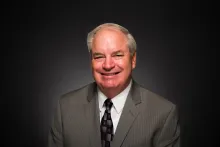
Robin Webber was born in Chicago, Illinois, in 1951, but has lived most of his life in California. He has been a part of the Church of God community since 1963. He attended Ambassador College in Pasadena from 1969-1973. He majored in theology and history.
Mr. Webber's interest remains in the study of history, socio-economics and literature. Over the years, he has offered his services to museums as a docent to share his enthusiasm and passions regarding these areas of expertise.
When time permits, he loves to go mountain biking on nearby ranch land and meet his wife as she hikes toward him.
