
Robin S Webber
This transcript was generated by AI and may contain errors. It is provided to assist those who may not be able to listen to the message.
I'd like to give you the title of my message before I go any further so you'll know where I'm leading you. And then you can ask yourself, maybe come up to me afterwards, whether or not I have fulfilled the title that I want to share with you this afternoon. This afternoon I'd like to bring forth a message to you, my dear friends and fellow Christians, that is entitled, spiritually sustaining the raised life.
Spiritually sustaining the raised life. I realize that, you know, audience is big, that we have some people that have been experiencing the feast of unleavened bread for the very first time, and what a joy! And a lot of questions and a lot of thoughts and a lot of information and wonderful information is shared, just as was this morning with Mr. Marini and Mr. Garnett. And oftentimes first impressions are lasting impressions. And so what a joy to be able to speak to some of you that are here observing the feast of unleavened bread for the very first time, and or those that have grown up in the church and you've been out there on the seats but you haven't really been tuned in.
What is the feast of unleavened bread about? And why have we been observing the feast of unleavened bread for these seven days? I think there's a theme, you know, we're always looking for that theme. And I think it kind of runs through what Mr. Marini brought us and then Mr. Garnett brought us, and what I'd like to share with you today. What is our takeaway? What is the takeaway as we now move into the remainder of the year, the days that lie ahead?
We've been observing the Passover, the New Testament Passover. We've been observing the days of unleavened bread for six days, now this one seven. Okay, is that the goal post? Is that the end of the story? And or is this simply a springboard for a New Covenant Christian to be able to spiritually sustain the raised life? Today I'm going to be talking about the subject of rising and raising probably a little bit differently than at times we are accustomed to. It's very biblical, trust me, we'll go to the Scriptures. But sometimes we look at everything being deleveled or the air taken out, as we talked about some this morning, and things kind of going down like a balloon that's got a hole in it to the leaven.
But there's a lot about raising and there's a lot about rising that this festival symbolizes. And I'd like to share that with you this afternoon. Because at the end of the day, the takeaway for the Festival on Love and Bread is for us to garner spiritual results that you and I as New Covenant Christians might rise to the full measure of Jesus Christ living in us.
And not only during these festival days, but every day, in every way, in our life. I'd like to share some thoughts with you as we consider where we've been over the last week and where we are right now. When you and I, wherever we might have been, whether we were down at the 9th Street Church in Garden Grove or we were here, I was here this year.
Actually, Susan and I have had the pleasure of being with four different congregations in the course of the days of the Love and Bread, and what a joy! But wherever we were, when we came together and we observed the New Testament Passover, what we were memorializing there was the death of Jesus Christ, the Son of God. We were there, and as Jesus himself said, as oft as you do this, remember me, remember my death.
And that we did. But the news that comes forth during that Feast of Unleavened Bread in 31 A.D. is that Jesus did not remain dead. The stone was rolled away. He was resurrected. He is alive. The New Testament Passover is about commemorating and memorializing his death. The Days of Unleavened Bread is about the new life of Jesus Christ living in us as we abide in him. It's about the new man. It's about the new lump that Mr. Garnett turned to this morning. It's about newness and not oldness. Join me, if you would, for a moment. Let's link these two thoughts together, death and life, because they seem so contrary. They seem to be polar opposites.
But the New Testament Passover and the Days of Unleavened Bread bring this together. And this is to come together in our lives, tied tightly, so that we can indeed be that new man. We can be under the new covenant.
We can be that new lump, and we can have the life of Christ living in us. Join me, if you would, in Colossians. Colossians, which is a parallel epistle in so many ways to the book of Ephesians. They could have gone there, but we'll stay with Colossians in this regard. Colossians 2. Let's take a look here at some very, very powerful concepts that come out of this. Colossians 2. Let's pick up the thought in verse 6. Actually, yeah, verse 6.
Speaking to each and every one of us individually. As you therefore have received Christ Jesus, the Lord, we've received something. And at the New Testament Passover, we received that the Son of God was sent to this earth to be our atonement, to be that covering of our sins that we might even have the ability to come before God and to experience and have pleasure in His presence, and for Him to have the pleasure of our company, that when we say in Jesus' name that we can come before His throne and know that we are experiencing Him and He's experiencing us, and there is no wall that Jesus Christ in that sense is that way back. He is that door back to that which God desired had eaten. And the carobim are now taken down, as it were. And Jesus Christ is the door and we can enter any time there is that need as we come in His name and know that no less than God our Father is listening to us. As therefore having received Jesus Christ the Lord so walk in Him with that confidence, rooted and built up in Him and established in the faith, as you have been taught, abounding in it with thanksgiving. Abounding. Not looking over our shoulder. Not wondering necessarily what's going to happen the next day or the next moment, no matter what's occurring in our life. But to recognize that we are God's child. We are in His care. He is already in the future. He knows what is best for us and is just waiting for us to meet Him and to have that confidence and to have that assurance. No matter what we're going through right now and to be rooted in that faith. Grounded as it were.
How then do we approach that? Verse 11. Let's drop down in the chapter.
Speaking of Christ. In Him you were also circumcised with the circumcision made without hands by putting off the body of the sins of the flesh by the circumcision of Christ. Paul was telling his audience then, and he tells us now, that what has laid a hold of us are not human hands. And to the audience at that time, he was speaking to people that had been involved with circumcision for 1500 years. This was nothing new to them. And he was saying, you know, that little old circumciser that used to show up, that little man, used to come with a...
Did you get that? That's my PowerPoint.
That's not what's whittling on you.
That's not the approach that I'm going to use. Because you notice what it says here in Colossians 2. It says that you are being molded, you are being shaped, you are being configured with a manner that is without hands. This is not rendered by a Levite. This is not rendered by the old, old, old band that's done it all for all the years in the village. This is something different. And by putting off the body of the sins of the flesh, he's talking about something different now. By the circumcision, by the handling, by the molding, by the shaping, by the care, by the concern of none other than Jesus Christ.
Verse 12. We are buried with him in baptism.
We are buried with him.
We did not go down by ourselves. Let's think about this. Are you with me? In the sense, when you understand the spiritual implications here, I know that when we were baptized, wherever we were baptized, we thought that it's just me and the minister. But the thought here is that literally we were buried in baptism with him. We were not alone. That's the point I'm trying to get across to you. We were not alone. We were buried in him. And as it says here, in which you were also raised with him through faith in the working of God, who raised him from the dead. And thus we understand that baptism, the very ceremony, the very portal of which we enter this calling, this way of life, is not just simply a burial. It's not just a type of death, but it's also jointly a type of resurrection. But again, not alone. Not by yourself. It's not a solo. We notice right here, again, let's take a look and allow these words to drink into us. That it says that he has made us alive together with him, having forgiven you all the trespasses.
Thus, the New Testament Passover is about memorializing the death, which is precious and wonderful. But the days of unleavened bread, in that sense, are now being raised up. Raised up in Christ with something new developing in us. I realize that oftentimes we think of the word leaven during these days and we go like that. And rightfully so, because God calls them the days of unleavened bread. But join me, if you would, for a moment in Matthew 13.33. In Matthew 13, let's understand something. Out goes the old and in comes the new.
Another parable, he spoke to them. The kingdom of heaven is like leaven, which a woman took and hid in the three measures of meal until it was all leavened. Thus, we understand there are lessons that we learn about unleavened bread during the days of unleavened bread. But to recognize that the Christian experience, this element of the kingdom of God is growing in us and maturing and filling us and filling us and filling us until we come to that full measure of Jesus Christ. Now join me again, let's go a little bit deeper, 2 Corinthians 5, and then we'll launch from there. 2 Corinthians 5.
Because everything about the days of unleavened bread, I said, why do Christians under the New Covenant observe the days of unleavened bread? The days of unleavened bread are about new. 2 Corinthians 5, verse 17. Let's notice. Therefore, if anyone is in Christ, he is a new creation. Old things have passed away. Behold, all things have become new. Now, what's very important about this set of scriptures and the word new, I'd like to delve a little bit deeper with you. The word new here is derived from the word canos, with a K. Canos. And this new is speaking about something which is utterly brand new. It's different. It's something that we're not accustomed to. It's something that we have never experienced. It's not simply new and improved. You ever gone to the store? Going down the aisles? Come to a shelf? You're looking for some kind of detergent or toothpaste? Make sure you don't get the detergent and the toothpaste mixed up in the bathroom. You could be calling Mr. Garnet for anointing late at night. But anyway, you look at it and you're looking around and you're looking around and you say, well, you know, it's always been here. Where is that? And then you notice, oh, there it is. You notice the name of the brand. But you know something you've noticed? It's a different box. And you notice also that the box is smaller, but the prices have gone up. Have you noticed that?
But why? Because it says right in the front, new and improved. But, brethren, I'm here today as God's servant to tell you this. God has not simply called you to be new and improved, working off of the same title. When God says new, He's not talking about new and improved. He's not talking about just reworking the old man and or ladies, the old woman over again. He's talking about something completely different. When He speaks of the body of Christ, the body of Christ, this unbelievable, beautiful creation that He is in the process of creating right now. Yes, it's of dust. It started in dust, but it is a spiritual organism empowered by the seed of God the Father, the Holy Spirit, that allows us to be new, to walk and to live and to love and to share and to experience. It is not working off of the old man. It is appreciating and understanding that God says, Behold, I create all things new. And yet what happens sometimes, and even well-meaning people coming up to the New Testament Passover during the Days of Unleavened Bread, what happens is we tend to work off of the old man. We go back to the old site. We go back to the old box, and we begin working on ourselves in the same way. That's why I brought up some of my props. You've got to remember I'm an old high school teacher. I brought up some props. Because this is what we do sometimes. We go back to the kit. That kit's always there. We go back to it, just like the other things that we try to fix up. We try to fix ourselves up with things that are familiar. The old things. Like glue. Humpty Dumpty. Had a big fall. Then we start trying to patch up Humpty Dumpty. We get out our glue. I won't get personal. Do the glue. Glue didn't work. We're going out in public today. We're going to the Days of Unleavened Bread. There are going to be 300 people there. I've got to get myself together. We start trying to staple ourselves together in some manner that's going to work. For a moment, we can hold it together. Have you ever tried to hold something together? Maybe I'm the only one where something's ripped. Something's done that. We try to hold ourselves together for a while. Our wives will always have a bobby pin. If they don't, don't go in public. We do all of this. Then we try to do a stapler. See what else I've got in my kit. Sometimes we bring out the Scotch tape. Scotch tape is really good stuff. You get it and you try to work with it. Sometimes you try to put it over your mouth for a moment. That's a good place for Scotch tape. Have you ever noticed that the thoughtless or rarely wordless? I know that from experience. I've done it. Sometimes you just kind of want to put the Scotch tape and you work on that for a while. What else do I have here?
Then we get a little dry on things. Oh, I know what you do. I've gone right here. Then what we do is we get out our band-aids. This is going to be messy.
Here we're having an issue, but we think we're going to just patch it up with a little band-aid method. I'm going to put that band-aid right here so you can all see it. Okay. Oh, I've got another band-aid.
They're saying, what is Mr. Weber doing? Doesn't he realize we have to be out of here by 6 o'clock tonight?
This is just not coming well.
You ever try to get one of these puppies out in your bathroom, much less 265 people watching you?
Still not fixed.
There we go. Like that.
Now I've got my Scotch tape. I've got my stapler. I've got my glue. And if I start bleeding, then I've got my band-aids. Now, the reason why we've gone through this exercise, brethren, is because when you do this, you've got to recognize that you're operating. Like the old song, Remember Looking for Love in All the Wrong Places, you're operating in all the wrong places. You're still trying to patch up the old man. And you know, when you're operating in all the wrong places and not have recognized God's gift to you, and the inner working of His Spirit in you, that He's called you not to just simply be new and improved, but to be unique, to be His gift, to be His joy, to be His child. And then we settle for fixing ourselves up like Humpty Dumpty and walk out. Because you know those band-aids are going to come off sooner or later. You know the staples are going to come out sooner or later. You know the Scotch tape is going to melt around your mouth because you've got so much hot air. Or is that me?
And we do this. Now, I've taken a few minutes here because I want to drive the lesson home to you. It takes a little while to do this object lesson, but it's why some of us are not growing in Christ to the degree that we need to, to this point. Because we're only trying to fix up and be new and improved rather than working off of the new creation that God has given us. And that's what He wants us to do during these days of Unleavened Bread. And that's why I've called this message, Spiritually Sustaining the Raised Life. So to get rid of all of these gizmos, which I'm going to do here for a moment, I want to give you three keys, three keys to help you spiritually sustain the raised life, that life that is spoken about in Ephesians and Colossians, that though we were buried with Him, yet we are raised in life with Him. I want to share something with you that I am firmly convicted of. I know that Jesus Christ lives inside of me. That is my faith. That is my confidence. That is my testimony. For as He died and as He raised, it says that no less than His Spirit is inside of me. He said He would come back. And thus that Holy Spirit, His Spirit, the Spirit of the Father, dwells inside of me. I am no longer my own person. It is no longer I but Jesus Christ that dwells in me. And while in this human tent, and we're all in that camp together of human tents, I will falter and I will stumble as we leave the days of Unleavened Bread. But it is my sincere desire that I can be raised and that I can rise and that full measure of Jesus Christ can live inside of me. Thus I give you the first point. The first point is simply this. The raised life in Christ recognizes there is a difference between a change of heart and a change of scenery. The raised life in Christ recognizes there is a change and there is a difference between a change of heart and a change of scenery. Have you ever been a little bit like me or maybe you've heard somebody say this and I'm sure that perhaps your grandma or grandpa or your parents, they taught you this or you heard it, the grass seems greener on the other side. Oh, if only. If only I'd been born on the other side of the tracks. Oh, if I'd only been born on the other side of the pasture. Oh, if I'd only been born on the other side of the city or of the town. The grass always seems greener on the other side. That is, folks. That is, folks. Until you jump the fence. And for some reason, when you land on what is green, that too turns desert. That turns brown.
Why is that? Because the desert, the brown, that which is not moving, is inside of us. It's not about the environment. It's about us. And Jesus Christ gave his life, in one of his greatest testimonies, you are the light of the world. And I'm going to send you into the world. It's not the environment that you go into, but the environment that's inside of us that holds tact. Because we realize that Jesus died for us. That Jesus was resurrected for us. And that his Father looks down from heaven above and says, This is my Son, in whom I am well pleased. And he was so well pleased that, over this time period, I believe Mr. Sharp spoke to you this past Sabbath in LA about the wave sheep. And that Jesus was in that tomb for three days and three nights. And then he was resurrected in the evening. And then that next morning appeared. He had not yet ascended. He said, Don't touch me. He had not yet ascended. And yet then he was ascending. And what a moment for the Father and for the Son. This is my Son, in whom I am well pleased. This is the fullness that I want to plant into a new covenant Christian, as they will come to believe. But that's what we need to understand, brethren. A change of scenery and a change of heart are two different things. We learned that lesson as we go to the book of Acts. Join me, if you would, in the book of Acts, Acts 7, Stephen's testimony before his judges. And he spoke about his forefathers and their forefathers. And he spoke to this very point. He said in Acts 7, picking up the thought in verse 38, This is he who was in the congregation, in the wilderness with the angel, who spoke to him on Mount Sinai, and with our fathers, the one who received the living oracles to give to us. And though our fathers would not obey, but rejected, and in their hearts, they turned back to Egypt. The slave was taken out of Egypt, but Egypt was not taken out of the slave. Even as they crossed that Red Sea that we heard about this morning, they carried with them their Scotch tape. They carried with them their glue. They carried with them their staples. They carried with them their band-aids. To get by for the moment, the change was not the change that was desired.
Now, why is this so important for you? And why is this so important for me? Because if we only keep on moving through a changed scenery rather than a change of heart, we're going to wind up like ancient Israel. You know, it's a very fascinating story with ancient Israel that they... it took them 40 years to get to the land of promise. Forty years. I know some of you thought me peeling those three band-aids seemed like 40 years.
But that's the point. They didn't realize that God had granted them a new existence. That those that were once slaves were no longer slaves, but that they were going to be in covenant with God. But they didn't give God their heart. They only wanted the travelogue. All they wanted was the change of scenery. And what should have taken with that bulk of people, and I believe Lincoln said 2.5 million people, I didn't realize you were there, Lincoln. You counted all of them. I knew you were old, but... wow! I'm impressed now. It probably would have taken them one month. One month. It took them 40 years.
Why, perhaps, are we as Christians not experiencing the growth that God wants us to be understanding during these days of love and bread? Maybe because we're walking off of the old man, rather than recognizing that God has granted us the miracle and given us the course of dealing with the new man. They did everything that they could back there, and they tried to band-aid it, they tried to patch it up, they tried to do it their way. But they wanted something that they were comfortable with. Sometimes, when we have ouchies and sores, sometimes called boo-boos, we go for that which is familiar. We go for the band-aids, we go for the scotch tape, we go for the staples, we go for this, for that. We try to put it all together. Putting the old man and the new man together does not work. In ancient Israel, you'll try to do that just shortly after these days. When Moses was up on the mountain, Moses was up on the mountain, and they said, where is Moses gone?
And they went to Aaron and his brethren said, we've got problems. We've got issues. He's up there, we're down here. Why did he leave us out here? He said, make us something that we're familiar with. Make us something that we can see. Make us something that we can hold. Make us something that will make us feel good. Aaron made them a golden calf. If you go to the book of Exodus, Exodus 32 and verse 5, you can jot that down. You can look at it later. They called that event a feast to the eternal.
A feast to the eternal. They took that which God had called them out of, as it were, out of Egypt, out of that which was old, out of that which was in their past, and they tried to put it together with the God, the I Am, the deliverer, the God that brought them out of Egypt and brought them down to the shape of a calf.
A New Covenant Christian will recognize that there's a difference between a change of scenery and a change of heart. I'd like to share something here with you for a moment, and I hope that it will hopefully spiritually revolutionize your life. And the reason I want to share this with you, my friends, is because we all tend to do this. We as human beings, because we are in time and space and we're very physical, if not just pinch yourself and you'll recognize your physical. We tend to work from the outside in rather than the inside out. And then we wonder why sometimes we aren't going anywhere through life and we're on that proverbial hamster wheel. And boy, can that baby spin. And have you ever seen a hamster that looks lazy? I've never seen a lazy hamster. You put them on that wheel. And you get tired of watching him, but you look back and you can't believe. He's just spinning away. I think that's the answer to the energy problems that we have in this country. Just get hamsters. But you know what? The big question is, at the end of the day they're not going anywhere. A lot of time, a lot of energy, but they're not going anywhere. And that's what happens when you and I do not recognize God's gift that He's called us to be new men, new women in Christ. He's given us a gift. He's given us the example of His Son. He's given us His Spirit that is real, that is dynamic, that is energetic, that moves and motivates and fills us. That does not leave us alone. It doesn't leave us with the band-aids. It doesn't leave us with the staples. But what we have to do before we do anything, we have to throw those staples out. We have to throw those band-aids out. And we've got to have confidence and faith and give our life to God the Father through Jesus Christ. And say, Father, I realize that you did not make a mistake with me when you called me out of Stanton. When you called me out of Gwyneth Park. When you called me out of Huntington Beach. When you called me out of Bell. And for even those that were called out of Kudahe. How many of you know where Kudahe is? Kuda who? Kudahe. Up along the Long Beach Freeway. Gotta remember, I used to be an insurance inspector. And we hear that in Eagle Rock or Pasadena or Sierra Madre, wherever God called us, He did not make a mistake. He said, I'm going to take this dust. I'm going to take this which is unlovable. And I'm going to love it.
I'm going to love it. And that which did not have a life, I have it. I'm going to give it life. But we've got to recognize that we've got to work from the inside out. Have that change of heart. I want to share a very profound statement.
It comes out of Kudahe's book on seven habits of highly effective people. By an individual that some of you will know, remember, to some of our younger group that's out here today, like our granddaughters? This is something that you study in history. It's an individual named Anwar Sadat.
Anwar Sadat was a man, absolutely. And he was a dictator, and he was a man of his times. But he had an understanding of what comprises greatness. Covey comments on this. Sadat stood between a path that had created a huge wall of suspicion, fear, and hate, and misunderstanding between Arabs and Israelis. And a future in which increased conflict and isolation seemed inevitable. Efforts at negotiation between the Arab world and the Israeli world had been met with objections on every scale, even to formalities and procedural points to an insignificant comma or period in the text of the proposed agreement.
While others attempted to resolve the tense situation by hacking at the leaves, getting out the band-aids, getting the Scotch tape, putting a little glue on there. While others did that, Sadat drew upon his earlier centering experience in a lonely prison cell and went to work on the route. And in doing so, he changed the course of history for millions of people. He records in his autobiography, it was then that I drew almost unconsciously on the inner strength I had developed in cell 54 of Cairo Central Prison.
Now that was during World War II. Many of the Egyptians at that time sided with the Germans because of the British overseership of Egypt. And thus the enemy of my enemy becomes my friend. And so he was thrown into Cairo Central Prison, cell 54. And he says it's there that he unconsciously gained this inner strength. He called it a talent, called it a capacity for a change. I found that I faced a highly complex situation and that I couldn't hope to change it until I armed myself with the necessary psychological and intellectual capacity.
My contemplation of life and human nature in that secluded place had taught me that he who cannot change the very fabric of his thought will never be able to change reality and never therefore make any progress. I remember that day just as it were yesterday. I know many of us were watching television, many of us were listening to the radio as we went to and fro.
We could not believe it that the Egyptian leader was addressing the Israeli Knesset in Jerusalem. What a shocking moment. What a historical moment. But he learned a lesson probably going back to the time of Alexander the Great when Alexander the Great was in the process of conquering Persia, he came to the city of Gordium. And in that city of Gordium was this large, tangled knot. And legend said, and the fables said, that he that could untie the knot, he that could untie the knot, would be the ruler and the master of Asia.
Well, many a person had gone by, people like me at times, and they would kind of get out their nail file, they'd try to pull it, they'd kind of look at it like a Pythagorean kind of thought, how does this geometrically work out? Alexander the Great looked at the knot, looked at the audience, looked at the knot, went over, took a sword, and cut through the knot. And the rest is history. A little bit like Sadat. The shortest distance between two dots is a straight line. Covey goes on to say, change, and real change, comes from the inside out.
It doesn't come from hacking at the leaves of attitude or behavior, with quick-fix personality, ethic techniques, band-aids here, staples here, glue there. It comes from striking at the root, the fabric of our thought, the fundamental, essential paradigms which gives definition to our character and creates the lens through which we see the world. Brethren, I have a prayer for each and every one of you because I, as your pastor, and I've been a pastor to many of you, and I'm just a fellow Christian like you, I pray for the body of Christ, as do all the ministry and all of us do for one another, that we can, in this sense, recognize the miracle that God has granted to the body of Christ, that spiritual organism of which only He knows, of which He gave His Son, and to help the body of Christ to really recognize, to stop working off of the old man, the old ways, to dispense with the band-aids, the scissors, the glue, and that we can develop that faith of Christ, that faith of Christ.
Not only faith in Christ, there's two things. There's faith in Christ, and there is the faith of Christ. That same faith which allowed Him to go to Golgotha, that same faith that allowed Him to divorce Himself from divinity, when He said He did not think that it was robbery to be equal with God, but gave Himself away. And that we have to give ourself away because we're kind of used to nurturing over here the old man, like an old shoe.
What would I do if I did away with the old man? I'm kind of comfortable with him like old shoes. You know, we go and we look at the mirror. Mirror, mirror on the wall. There's the old man, warts, and all. But when you do that, you get transfixed on where God picked you up rather than where He wants to take you as we live the life of Christ. The life of Christ which was based on faith in His Father and as Lincoln brought out this morning in a humility and a service and as John touched on and gave Himself away.
Being a New Covenant Christian and being that new man and having been buried in Christ and raised in Christ means we must give ourself away and die before we can live and be useful in God's hands. I pray that prayer for you, that God will allow you to get down to the root and rather than working from the outside in, work from the inside out and have that faith, have that confidence, have that joy that Christ lives, that the tomb is empty, that it occurred during the days of Unleavened Bread and because He lives, you live, I live, a new life, a new living, a new raising together before God the Father.
When you understand that principle, that spiritually sustaining the raised life is not just simply about a change of scenery but a change of heart. You know what you can do? You can get rid of one band-aid. Allow me to take you to the second step. The second step is simply this. The second step is simply this. The raised life in Christ accepts God's correction, accepts God's correction rather than rejects His correction.
Oh, I know what you're saying out there. Oh, no. We're going down that correction line again. I've heard so many, many sermons on correction. I've been corrected. We're going to talk about it a little bit, okay? Let's talk about that for a moment. That the raised life in Christ accepts God's correction rather than rejects His correction. How is this made possible? There's the key. Ezekiel. Join me if you would, Ezekiel 36. And let's pick up the thought if we could in verse 26. Speaking of the covenant.
I will give you a new heart and put a new spirit within you. I will take the heart of stone out of your flesh and give you a heart of flesh. Verse 27. I will put my spirit within you and cause you to walk my statutes and you will keep my judgments and do them. And then you shall dwell on the land that I gave to your fathers. You shall be my people and I will be your God. Notice verse 29. And I will deliver you from all your uncleanness, all that which is, shall we say, by type is leavened.
And I will call for grain and multiply it and bring no famine upon you. And I will multiply the fruit of your trees and the increase of your fields so that you never need to begin to bear the reproach of famine among the nations. Now, there are physical principles here about the nation of Israel in the future, and I believe there are principles that also aptly apply to the spiritual Israel of God.
That is, the church, the saints, the elect, the body of Christ. And we notice that He's going to give us a new spirit. It's that same spirit that Jesus promised. We talked about that on the night of the New Testament Passover when we went through chapters like chapter 14 where it says that, I am not going to leave you orphaned.
I will not leave you orphaned. And I will come and I will teach and I will send you another comforter. I want to share something, if you want a little homework assignment or what we might call a heartwork assignment. My wife has really gotten my mind into this recently. Just two little words, two power words that can change your life. It's not what you are doing, but it is what God is doing. Because so often when we work off the old man, what are we doing? What can I do? What aren't I doing? And so what happens, the old man basically operates off of, I can't.
The New Covenant man, the New Covenant woman who worships the God who offers the New Covenant, understands that God says, I will. You want your life changed? You want your life really changed? Or are we just going through the exercise? Another seven days chomping on some matzos when the substance truly is Christ. And Christ was sent by His Father. If you want to see your life change, you are what you eat and you are what you focus on in the Scriptures. And you make a Bible study of the number of times that God says, and your life will change. Because what you eat and what you imbibe of is what you become. You notice the number of times that God says, I will. I will. It changes your mind. It fills that new heart. It fills that new spirit that God is the desires of seeing actively agitating and working in us. And that rather than defeat, to know the victory. Some of us are only halfway through the story, and we haven't heard the full story. There's a beautiful story. I told it in Ruddland the other day. Want to hear a story for a moment? Get back to Scripture. Here's a beautiful story. It's the story of the Napoleonic Wars. It's the story of the Battle of Waterloo. The Battle of Waterloo occurred on June 18th. 1815. One other great event happened on June 18th. My birthday. No, just teasing. So anyway. On June 18th. 1815. Europe stood still. The Beast was back. He had escaped Elba. And his armies had gathered around the little colonel once again. And what happened is, by the way, they didn't have internet then, and they didn't have Twitter, and they didn't have Facebook. So nobody knew what was happening in Belgium. So they tried to move it along very quickly. Quickly, quickly. Because people had to know their whole life was going to change otherwise. The world was never going to be different after that battle. And so they went ship by ship. They were doing the wigwag on the flags like they do in the Navy. And what happened was, they were wigwagging out to the coast of England to Westchester Cathedral. High towers so that they could get the message there, and then it could travel to England up the island. Well, what happened is they were wigwagging. And what it said as it went out with a W, then with an E, then with an L, and waiting for it, finally got out. And it said, Wellington defeated.
And then the clouds rolled in. The fog banks came in. But that's the news that they received. The tower received that. The news, you know how news travels good or bad, sped up to London. The country was devastated. All was lost. But then, as Paul Harvey used to say, there's the rest of the story. Because the fog lifted. The fog lifted. And those flagmen were still doing their wigwag of the flag signals. And they looked, and they looked from the coast, and they were trying to discern what it said. And then it said, Wellington defeated. One more word. Napoleon. And all joy broke loose.
What had been seemingly devastated. Joy abounded in Britannica. And everybody rejoiced and the bells rang. Their country had been victorious along with their allied Prussian alliance. That's kind of what happens in Christianity when we recognize that a cloud came over Golgotha. Came over Jerusalem. And something painful, in a sense, even though it needed to happen, happened. Our Savior died. The worst thing that He had ever done was to be perfect. Think about that for a moment. He was perfect, and He was taken from the land of the living. And there was a beauty in Him that makes each and every one of us in this room seem so ugly.
And yet He died. And it seemed like there was a cloud over Jerusalem. But we know three days and three nights later, during the Feast of Unleavened Bread, during this festival, which enables us then to be that new creation, which allows us to be that new man, which allows us to even have Mr. Garnett speak about a new lump today, it all centers on that cloud lifting and Jesus Christ coming out of that tomb, and living today for you and me.
And because of what He did, and because of the love of His Father, we will, at times, stand corrected. As we move away from these days, join me if you would in Psalm 25, verse 4. Psalm 25, verse 4. Let's pick up a thought here. Can this be our prayer, not only during the time coming up to the New Testament Passover, during the Feast of Unleavened Bread, but be our ongoing prayer? Show me your ways, O Lord.
Teach me your paths. Lead me in your truth and teach me, for you are the God of my salvation. On you I wait all the day. Can that be our prayer? Show me your ways, O Lord. If we pray that prayer, expect that God will answer. Number one, and number two, you have to prepare for how He will answer you. Whenever you pray, be prepared to get up and to meet your prayers.
Let's take it a step deeper, Psalm 19, verse 2. Psalm 19, verse 2. It says, who can understand His errors and cleanse me from my secret faults? I share something with you, brethren. If you want to operate under the guise and under the reality of the new man, and move away from the band-aids and the staples, you pray that prayer.
You say, God, show me what I don't see about myself. There are just things I don't see. I think all of you are probably just wonderful drivers because you live here in California. And it takes wonderful drivers to live in California. And I'm sure all of you obey all of the traffic regulations. You look stunned out there for a moment. But even as we are all attempting to do our best, you know what happens sometimes? You look to the left, you look to the right, you look to the left. But you didn't see it coming.
There was somebody. And where were they? They were in your blind spot. You just didn't see them. You were doing everything that you could, everything that you knew, everything that you had learned five times going to driving school. Just teasing. You put all of that application on that pavement, and there is still a blind spot. Brethren, I have blind spots. I'm a human being. Ask my wife. We all have blind spots to where we have not been able to have that loving of the kingdom completely fill us with the stature of Jesus Christ. Ask God to help you to see yourself, not as you see yourself, but as He sees you, as others see you.
I want to share a thought with you. Join me if you would here for just a second. Hebrews 12 and verse 11. Hebrews 12 and verse 11. Notice what it says. Now, no chastening seems to be joyful for the present. But it's painful. Nevertheless, afterward it yields the peaceable fruit of righteousness. Notice this is important to those who have been trained by it.
Understand this year that some of the things that are going to occur in your life are not just by coincidence and or by circumstance. One of the great lessons, if you'll stay with me for a moment, one of the great lessons of these days going back to Egypt was God was luring the boom on Egypt plague after plague after plague. And then finally the wise men came to Pharaoh and said, Pharaoh, this is not just coincidence. This is not just circumstantial. This is the finger of God. Ramesses, what don't you get about this?
God Himself! God Himself, the finger of God, is working this work. Don't be like Ramesses. Understand that when you pray that prayer of faith and that you ask God to mold and shape and spiritually circumcise you, be prepared. Be prepared for the incident, be prepared for not the circumstance but the involvement of God in your life and never underestimate who God will use to bring that point across. Balaam had a donkey. Sometimes myself is pastor. After nearly 35 years, some of the greatest instruction I get is from little kids that come up to me after church. And they say, Mr. Wepa? Oh, okay, here it goes. What did I say? Never underestimate the finger of God and who He's using.
And they give me something to think about. They mold me. They shape me. They teach me. My wife teaches me. God created that tool out there. I've lived with her for 40 years. And I'm being lovingly whittled away.
Never underestimate how God will use this and correct us. You say, but you don't understand, Mr. Wepa. I come out of a dysfunctional background. I just... You don't understand what I have been through. And I don't know if I can receive the correction of the Father. Oh, yes, you can. You can if you believe in the Father and you believe in God's love. You say, yeah, but how do I know that God loved me? How do I know that God loves me? And God will always come back with one thing. I'll tell you how I love you, partner. It's because I gave my son for you. The love is always personified in the life, the death, the resurrection, and the ascension of Jesus Christ. When you understand that, you can take away one more Band-Aid. The last Band-Aid is going to go off real quickly here. Let me give you the third point. The raised life in Christ understands the difference between trials wrapped in pain and trials wrapped in purpose. As was so well brought out today, so I can move quickly, is that Christianity is not a time-out. Christianity is not a time-out from humanity. It's actually a graduate school. And then there's a greater graduate school, and it goes on and on. And understand that things are going to happen in our life. They just simply are. When you understand this, that the head of the church was persecuted and died, but it was for a purpose. As it says in Hebrews 12, verse 2, Jesus Christ endured that cross. Does that mean that everything is happy-happy in this world? No, not at all. Not at all. I've often said that joy is a smile on our heart when everything else is coming down around us. Because we understand what God did. We understand what Jesus Christ did. He divorced himself from divinity. He came to this earth in this human tent. He that was uncreated was subjected and cruelly tortured and killed by the creation. We recognize that. So even the head of the church suffered, but there was joy. One of the things that I remember very early on, when I first started keeping the Days of Unleavened Bread nearly 50 years ago, where ministers would get up, they would remind me that nothing is an end in itself, but a means to an end that we are just passing through. I think one of the greatest challenges for members of the Church of God community that I know over the years is establishing goalposts that God has not established. We think we've made it here. We think we've made it here. We think we made it because it's this prophetic event or this prophetic event. Brethren, we do not come to the goalpost until we are with God in eternity as His immortal children. Everything else up until that time is molding and shaping and understanding that as Christ died, we die with Him. As Christ was raised, we are raised with Him, which then takes us to the last scripture that I'd like to share with you today, 2 Corinthians 4. When we understand that, we can take off this last Band-Aid, throw this away, and recognize that rather than what we're going through right now, just leaving it wrapped in pain and in the moment is working a purpose inside of us, which is beautifully brought up by the Apostle Paul here in 2 Corinthians 4.
And let's pick up the thought if we could.
In verse 16, Therefore we do not lose heart.
We don't lose heart because even though our outward man is perishing, yet the inward man is being renewed day by day, day by day, that inner man, that New Covenant existence that is in us, that new lump that was spoken about this morning. Yet the inward man is being renewed day by day for our light affliction, which is but for a moment. Light? Are you kidding me? You know what news I got last Wednesday? Some of you on Thursday are light affliction, which is but for a moment is working for us a far more exceeding and eternal weight of glory. And while we do not look at the things which are seen, but at the things which are not seen, for the things which are seen are temporary, but the things which are not seen are eternal.
Brethren, my heartfelt thought for each and every one of you, until we meet again, is for you to understand that God has given us the vehicle of the new man in Christ. We are under a better covenant. We look forward to that better resurrection. I encourage you to move off of using band-aids and scissors and glue and staples and utilize the life of Jesus Christ living inside of us who understands. You see, when He came from heaven above to earth below, there was a change of scenery, but not a change of heart. He gave His life as a servant. And He understood that. And we need to understand that. Brethren, as the body of Christ, let's move forward into the remainder of this year with a joy that is steady, with a faith that is hope-filled. During these days of unleavened bread, that a tomb was empty, that our life might be filled. That is the joy. That is the message. That is the good news that Ms. Morini and Mr. Garnett and I have brought to you today. It is the gospel of Jesus Christ and the kingdom of God. It's the best news. Do I dare use bad English? It's the goodest news that I might be able to share with you this afternoon.
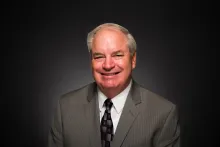
Robin Webber was born in Chicago, Illinois, in 1951, but has lived most of his life in California. He has been a part of the Church of God community since 1963. He attended Ambassador College in Pasadena from 1969-1973. He majored in theology and history.
Mr. Webber's interest remains in the study of history, socio-economics and literature. Over the years, he has offered his services to museums as a docent to share his enthusiasm and passions regarding these areas of expertise.
When time permits, he loves to go mountain biking on nearby ranch land and meet his wife as she hikes toward him.
