

Jim Tuck
This transcript was generated by AI and may contain errors. It is provided to assist those who may not be able to listen to the message.
Well, for a while I was tempted to talk about the end of the world today. I'm glad that it was mentioned in the sermonette. I decided against talking about the end of the world today because it's been over 60 years since Herbert Armstrong copyrighted a very short booklet, but it was a booklet that had a profound impact on many people's lives, including my life.
The name of the booklet was The Seven Laws of Success. The original book that Mr. Armstrong wrote was written to instruct the reader on how to achieve a successful life. It was only 56 pages long, it was very short, and some of the laws were only covered in a couple of paragraphs. The purpose of the booklet, because Mr. Armstrong had an advertising background and he knew how to attract people to the truth of God, the purpose of it was to hook a person's interest in a popular subject who was not particularly religious.
At that time in the late 50s and 60s, a lot of self-help books were being published. So what Mr. Armstrong did is he created a book, The Seven Laws of Success, which everyone can be attracted toward, and he waited until the seventh or final law to introduce the concept of honoring God.
And it was a very successful booklet. It was his intention to hook people who were not particularly religious but were still interested in having happy and successful lives and then introducing them to other literature of a spiritual nature they could ask for.
And it was an extremely valuable booklet. Again, its subtle style was intended to lead the non-religious reader to request other booklets on more spiritual subjects. Well I received this booklet in my life in the 1960s.
I was about 15 years old and it fired an ambition in me to do all that I could possibly do with my life. And I know it's had the same effect on many others whom I've talked with over a number of years. This booklet is no longer in print and another generation has grown up who needs to hear the important principles of the seven laws of success.
So that's what I'd like to talk about today, only with a little bit of a twist. The original booklet basically talked about the seven laws of success. I would like to talk about it from not just a physical dimension but a spiritual dimension. So let's discuss the seven laws of success revisited. Some people I have known do not know or even practice a single law of success. And the result, if we don't practice the laws of success, is living a life that is aimless, a life that is without direction, a life that causes frustration. But God intended our lives to be filled with joy.
He intended our lives to be fulfilling. He intended us to have periods of great joy and a deep sense of personal fulfillment. Jesus said himself that I've come that they might have life and that they might have it more abundantly. And he said that in John 10. And he didn't mean this exclusively for some day. He didn't mean that we could have joy just in the kingdom of God or in the world tomorrow. He meant that we could have an abundant life right now. So let's begin to look at the seven laws of success revisited starting with law number one, which is fix the right goals.
This is the purpose. A goal is a purpose in which your endeavor is directed. It's an objective. It's something that you want to achieve. Let's go to Exodus chapter 3 and verse 7 and take a look at an example of fixing the right goal. Again, Exodus chapter 3 and verse 7. What kind of goals do you have, I'd like to ask. Do you have summer goals?
It's a beautiful summer outside. Do you have goals of things that you would like to achieve this summer? Maybe you have a goal of retiring. Maybe you have a goal of setting money aside for your grandchildren to get an education.
You might have small goals. You might have large goals. But how are we on attaining our goals? Exodus chapter 3 and verse 7. It says, And the Lord said, I have surely seen the oppression of my people who are in Egypt and have heard their cry because of their taskmasters, for I know their sorrows. So I've come down to deliver them out of the hand of the Egyptians and to bring them up from that land to a good and large land to a land flowing with milk and honey, to the place of the Canaanites and the Hittites and the Amorites and the Parezzites and the Hivites and the Jebusites.
Verse 9. Now therefore, behold, the cry of the children of Israel has come to me, and I have also seen the oppression with which the Egyptians oppress them. Come now, therefore, and I will send you to Pharaoh, that you may bring my people, the children of Israel, out of Egypt. So we see here that God gave Moses a right goal. He gave him a goal that would be his lifelong mission, a goal that was awesome, a goal that inspired him, that excited him.
And that's what our goals need to be in our lives. His goal was to take a slave people out of Egypt to walk across the desert and establish them in a new land to incorporate a new culture, a new civilization. Well, brethren, in a similar way, God has called you and I into a good and large land. That land we know of is the kingdom of God. And we were called into that land. And the goal in our lifetime, the priority, our major goal, should be to do whatever we can to be a part of that large and good land.
You know, an unwritten or an unplanned goal is only a dream. If we don't have a goal and write it down, if we don't plan what we want to do with our futures, then we're only dreaming. We really don't have goals. People without goals are people without direction. They're people without a destination. It's like having a map, but you don't know where you're supposed to end up at. It's like being on a road or a journey, and you're just driving and driving and driving, but you have no destination in mind or where you want to go.
A right goal means that it arouses ambition and excitement in us. And I think that's very important. Luke 12 and verse 22. And we'll see what the major goal should be in our life. The right goals that we have should be so strongly desired that they excite determination, that we want to give them vigorous effort.
Every day and every year, these major goals that we have in life are to be achieved by completing smaller goals or stepping stones along the way. I'd like to take a second to commend my son-in-law who gave the sermonette today, because he followed this principle. He wanted to get a college degree. And many, many, many years ago, he started out by taking one class at a time. And I wasn't sure he could do it. I thought he would be 87 years old before he graduated from college, because he's been working on this for so many years.
But he understood that if you have a big goal and you just look at that goal, you're going to be so overwhelmed, you're not even going to try to achieve it. It's just going to seem so enormous and so big that you're going to give up even trying. He understood an important point. That is, if you take a large goal and you break it down into small, achievable little steps, that eventually you can achieve that large goal. You know how you eat an elephant?
You eat an elephant one bite at a time. That's how you eat an elephant. Elephants. Before people create Facebook pages, elephants are unclean. I'm not suggesting that you eat an elephant. But the point is that if you take a huge goal, it's going to seem overwhelming, something you can't possibly do. It's going to frighten you off. It's going to discourage you. You're going to quit. But if you take that large goal and you break it down into small, sizable little bite-sized chunks, you can achieve virtually anything you want to achieve in life. Luke 12, verse 22.
And that's okay. As long as our priority is right. And we'll get to that in a minute. How much more value are you than the birds? Verse 25.
And yet I say to you, even Solomon in all his glory was not arrayed like one of these. If then God so clothed the grass, which today is, and in the field, and tomorrow is thrown into the oven, how much more will he clothe you? O you of little faith. And then verse 29. And do not seek what you should eat or what you should drink, nor have an anxious mind, for all these things the nations of the world seek after, and your Father knows that you need these things.
But seek the kingdom of God, and all these things will be added to you. Do not fear little flock, for it is your Father's good pleasure to give you the kingdom. So our priority, our lifetime spiritual goal, should be to remain faithful disciples and learners of Jesus Christ.
That's a big goal! That can seem like impossible. Obviously, we can't qualify for it. Only Christ makes us righteous in God's eyes. It's through Christ in his shed blood that we even have the potential of being there.
The Holy Spirit is a gift. Salvation is a gift. Forgiveness is a gift. But that's a pretty big goal. So how do we do that? Well, each and every day we take one day at a time. We don't think about five years from now. We don't think about one year from now.
Brethren, there's no guarantee we'll be alive one year from now. But tomorrow morning we wake up and we get our prayer in and we get some study. And we make it that small bite-sized chunk that I'm going to be an ambassador for Jesus Christ today. I'm going to do everything that I can today to live the kingdom of God in my life. And then tomorrow I'm going to do it all over again. But I'm not going to worry about next week or five years from now or ten years from now because I don't even know if I'm going to be around at that time.
Brethren, the kingdom of God should be the priority that we have in our life. By doing this, we prepare to serve alongside Jesus Christ in the kingdom of God. To share eternity with God should be a lifetime motivation for us. You know what God gave us is annual holy days. It's an intention to remind us to focus on the right spiritual goals. From forgiveness to receiving His Spirit, to the establishment of the kingdom of God, to resurrections.
All of God's plan is outlined in His holy days. So our priority in life should not be acquiring material possessions but spiritual riches. Jesus promised if our priority is right, it's not that we'll do without good clothes, or fine foods, or shelter, or the things that are important to us. He says that all these things will be added to you. That's a promise.
That's a statement. If we get our priority straight and if we get our priority right, we should not neglect our careers, or our families, or our education to seek the kingdom of God. The priority of the kingdom of God simply puts these important goals in the right perspective. They are behind the goal of the kingdom of God, or they support the goal of the kingdom of God. So, brethren, it's important to fix the right goal, starting with our spiritual lives, which is the kingdom of God.
And then making sure that our physical goals are not in conflict with that. That is very, very important. And what is a right, quotation mark, right goal? Well, it's a goal that doesn't hurt anyone. A right goal is one that's moral and one that doesn't hurt other people.
So, again, that was law number one. Now let's take a look at law number two, which is right education. Right education is the knowledge or skill obtained by developing a learning process. You know, that God intended us to learn throughout our lifetimes. We tend to think that our learning ends when we get that sheepskin, either high school or college, and we get that degree or that diploma, and we think that our formal learning has ended.
But no, it's only begun. Let me tell you, the school of hard knocks, and I've certainly been knocked around enough in my lifetime, the school of hard knocks is a far better teacher than anything you learned in high school or that you could potentially learn in college.
Let's go to Daniel chapter one, beginning in verse three. Daniel chapter one, verse three. Again, we're discussing right education, and here is an example of even a pagan king who understood the importance of education, and it benefited some children of Israel, so that they were able to serve their nation because of this education that he gave them. Daniel chapter one, beginning in verse three. It says, then the king instructed Ashfenez, the master of his eunuchs, to bring some of the children of Israel, that's one group, and some of the king's descendants, that's another group along with them, and some of the nobles, young men in whom there was no blemish, but good-looking, gifted in all wisdom, possessing knowledge and quick to understand who had the ability to serve in the king's palace, and whom they might teach the language and literature of the Chaldeans.
So the king said, I want some of my relatives, I want the nobles, and I want these children of Israel to receive a good education in order to serve the kingdom. And it's because that Daniel received the kind of education that he did that he was able to be a prophet and serve God's people and his writings within the Old Testament. This king wisely wanted his future counselors to be educated and prepared for leadership in his kingdom. Even though he was a pagan, he realized the importance of education, of literacy, of being able to understand cultures and history, and being able to put all of those things together to come to conclusions and understanding and wisdom.
Brethren, every day we're all receiving an ongoing education in one form or the other. Have you ever thought of that? We're either learning something new or reinforcing positive values, or on the other hand, we are dwelling on the negative and we're reinforcing negative beliefs and actions. But one way or the other, you and I are learning every day. It usually takes an investment in time and knowledge to attain our personal goals.
And that includes the education to achieve that goal. Sometimes you may, for example, set a goal that you need education on. Let's say that you have a goal financially, to retire, or to set your grandchildren up with some type of way to help them to get through college. Well, in order to do that, you need to know a little bit about finances. You need to know what the best investments are. You need to know about what kind of investments can have the best payback for your particular investment.
That's education. That's where education comes into play. And virtually everything in life where we set a goal, we usually need to educate ourselves on the facts in order to be able to achieve that goal. Brother, we need to be an educated people. We need to study deeply and prepare in advance for what we hope to achieve in this lifetime and in the kingdom of God.
And I can tell you that in our society today, and I tell young people this all the time, most careers require specialized training beyond high school and in some cases even beyond college. But we have to remember one thing when I talk about education. We have to remember that all mankind, including ourselves, have been given access to the tree of the knowledge of good and evil. That means we can get a right education and we can get a wrong education. And it's up to us to use God's spirit to discern the difference between a right education and a wrong education.
God's spirit wants to give us biblical knowledge and wisdom so that we can separate the chaff from the wheat. Right education includes not just book knowledge, that's theory, but learning of true values and the values of integrity and honesty, love and commitment. These are difficult things to do because our society is always trying to erode the importance of character and to lower the bar regarding godly values. I mean, look at this last week. We have a particular governor of a state who was a governor for years, and we found out that he fathered a child outside of his marriage.
Not only that, he had the woman continue to work for he and his wife and be around his wife and his children for a period of time after this occurred. Our society continually lowers the bar, whether it's celebrities, politicians, religious leaders. We have forgotten as a society that character matters, that character is important. Let's go to 2 Timothy chapter 3 and verse 14 and look at a spiritual application of having a right education.
2 Timothy chapter 3 and verse 14. Paul wrote Timothy, remarking on the education that Timothy had received that helped him so much. 2 Timothy chapter 3 and verse 14.
That's why an education is so important, brethren. We want to be a complete people. We want to be wise. We want to have discernment. We want to be able to make proper judgment, to make good, wholesome, right decisions, and not the wrong decisions. The man of God may be complete, thoroughly equipped for every good work. Now, for all of us, the right spiritual education includes prayer and Bible study, meditation, and you know it also includes fellowship. When I come here in the Sabbath, I bounce ideas off of people. People bounce ideas off of me. It makes me wiser by talking to my brethren, who also possess God's Holy Spirit, the fellowship with them. They have experiences that I don't have.
There are also people in God's congregations that have experience and talent in hundreds of areas that I lack, in hundreds of areas that you lack. But you'll never find out if you don't talk to them. You'll never find out what their life experience is if you don't spend time with them. If you don't find out what they've lived, what they have learned, what they have experienced, what they have to offer, this church congregation, brethren. So it's very important for us to fellowship with one another.
Right education also includes practicing and living what we've learned. When we receive God's Holy Spirit, we begin a lifetime of education to prepare us to serve as a childhood God for all eternity. Even the mistakes that we make can teach us something. If our attitude and heart is right, the mistakes that we go through can teach us so that in the future we can help others who have similar problems. When we take a very serious problem and we overcome it, that experience gives us the ability in the future.
As God calls people, as other people have similar problems to what we have, that we can help them. Because we've been there, we've done that, we overcame that, and we know how they're feeling. We know what the temptations are. We know what the fears and frustrations are. And because we experienced it, we can help them in a greater way than anyone else can.
So right education is so important. And again, the right, as far as right education, the right is the ability to discern between the tree of life and the tree of knowledge. Between spiritual things and carnal things. And being able to separate the carnal, separate the hurtful things, and to be able to cling onto and live by the good things of God.
The third law that I would like to discuss is good health. Health is soundness, especially of body or mind. It's freedom of disease or abnormality. And you know what? Until we lose our health, it's hard for us to understand what other people are going through. When you lose your health, it's one of those things in life where you really appreciate finally what you had all along when it's taken from you. I will never forget the terror that I experienced at 49 years old, to walk into a doctor's office and be told that I had leukemia. Now, when he said the word leukemia, I thought, death sentence.
You're cashing in your chips. You're checking out. It's over. You're done. Finished. Dead. And those were some of the more positive thoughts that I had. But only when you go through a serious health issue like that do you say to yourself, My, you know, I had it so good before and I didn't appreciate what I had. But when you go through a health crisis, it truly gives you a whole different perspective on the suffering of other people.
John wrote in 3 John 1, 2. You don't need to turn there because we'll go to another scripture in a minute. He said, My dear friend, no, let's turn it. Let's go to 3 John chapter 1 and verse 2. 3 John chapter 1 and verse 2. Because God is concerned not just with our spiritual health, which of course is very important, but our physical health as well. 3 John chapter 1 and verse 2.
John says, My dear friend, I know that your soul is doing fine. I know that spiritually, I know that emotionally you're doing okay. And I pray that you're doing well in every way and that your health is good. So why did he say that? Because, you know, when we're feeling poorly, when we're feeling bad, it's hard to achieve the goals that we want to achieve. We can have the greatest goals in the world.
We can have the right education to achieve those goals. But when you're just feeling blah day after day, it's really hard to do the things you want to do. That's why health is so very important. Good health means doing the best we can with what we've been given. God has given us a marvelous human machine called the human body. And as it says in the book of Psalms, 139th chapter, we are fearfully and wonderfully made. And God gives us the responsibility to care for this body that we have any way that we can. We need to get proper sleep. We need to get the right nutrition. We need to have physical activity that goes beyond just jumping to conclusions.
We need to have physical activity. These things are important to keep us active and to keep us mentally receptive to grow. Because without good health, again, we are hindered from accomplishing the things that we desire. I'm going to be honest with you, we cannot change our genetics. We all are predisposed for certain illnesses with genetics. I found out later on just how many members of my, male members of my family have had cancers of one type or another. That's genetic. I can't change my genetics, and neither can you.
But I can take care of what I have. And I think that's the key that I would like to emphasize here. We can't change our genetics. We can't change health problems due to an accident. If somebody rams the back of your car and smashes your neck or your back or you fall off a ladder or whatever, we can't change that. All we can do from that point on is do the best we can with what we've been given. And that's what God holds us responsible for. But you know, when God gives us the gift of His Spirit, this physical human machine that we have takes on a whole new added dimension.
It also becomes a temple. It becomes the temple of God because that's where the Holy Spirit resides. James, Chapter 5 and verse 14. One of the applications that we understand because of the faith is that when our health is failing, when we are struggling with things, that we have a recourse to go to Almighty God. And that is so very important. It's something that most people don't even understand. James, Chapter 5 and verse 14.
And that's why when we're struggling with a serious health issue, we should make our prayers and our needs known to others. Because God has a lot of fervent, effective, righteous people in this congregation. And where I may lack faith, even for my own disease or my own illness, your faith, your strength, may help me. Praying for me may change my life. And we'll see Scripture relating to that in just a little bit. But faith is one of the fruits of the Holy Spirit, and it reflects a positive attitude towards life.
You know, science has proven that our thoughts and our attitudes can make us sick. If I dwell in negative things, I can physically make myself sick. If all I do is wallow in pity all day, is allow myself to be discouraged and look at my life through things that are lacking.
If that's all that I do, then I physically can make myself sick. And spiritually, we can make ourselves sick as well with a spiritual disease. So, brethren, a balanced spiritual attitude is essential for our growth to remain in good health, both physically and spiritually. If we're negative or self-absorbed, we hinder the Holy Spirit's ability to guide us and lead us towards greater growth and ultimately towards perfection.
Here's the key. If we begin to fill our minds with negativity, and it's all around us in the world, media hype, violence, sex, then we begin to acquire spiritual diseases. And those spiritual diseases include coveting, materialism, anger, criticism, cynicism, bitterness. These are attitudes that are toxic to us and toxic to everyone, unfortunately, who even comes in contact with us. So we have the ability to go to the throne of grace when we have a physical disease or even an emotional disease, or when we're in pain, spiritually, we're able to go to God and ask for his direct and divine intervention. Now let's take a look at law number four, which is drive.
Drive is defined to push, to propel, and to press something forcefully. I'm going to give you an example of a man who knew how to use drive to get things done. And this was tricky on his part because he was driving nonetheless than God Almighty himself. Let's go to Genesis chapter 18 and verse 22, and we'll see where Abraham was a man of drive. He understood this law. He saw something that he thought was unfair, and he pushed, and he prodded, and he propelled an idea that he had with God Almighty himself.
We're going to go to Genesis chapter 18 and verse 22, and he knew that he was treading on delicate waters here. It says, then the men turned away from there. This is when he was told that God was going to destroy Sodom Gomorrah and went toward Sodom. But Abraham still stood before the Lord, and Abraham came near and said, Would you destroy the righteous with the wicked? Suppose there were 50 righteous within the city. Would you also destroy the place and not spare it for the 50 righteous that were in it? Far be it from you to do such a thing as this, to slay the righteous with the wicked, so that the righteous should be as the wicked.
Far be it from you. Shall not the judge of the earth do right? So he's kind of in an attackful way. He's challenging God. He's saying, God, this just doesn't seem fair to me. Why would you destroy the righteous with the wicked? You have this big city. If there are 50 people worth saving in this city, you're the judge of the world. Why would you destroy those righteous people within that city? Verse 26, And the Lord said, If I find in Sodom 50 righteous within the city, then I will spare all the place for their sakes.
Now this is where his drive kicks in. His ability to press onward forcibly, to prod, to push the envelope. To go a little farther than maybe he even ought to. Verse 27, And Abraham answered and said, Indeed now, I, who am but dust and ashes, have taken it upon myself to speak to the Lord. Suppose there were five less than the 50 righteous. Would you destroy all of the city for a lack of five? So he said, If I find there forty-five, I will not destroy it.
Now most of us would have stopped right there. Victory! Yeah! Got him down from fifty to forty-five. That's cool. I win! Not Abraham. And he spoke to him yet again and said, Suppose there should be forty found there. So he said, I will not do it for the sake of forty. Then he said, Let not the Lord be angry and I will speak. Now I want you to notice this. He's not going to go down by fives anymore. Now he's going to go down by tens. This was a man who knew how to push, to propel, to go onward forcefully.
Suppose thirty should be found there. So he said, I will not do it if I find thirty there. And he said, Indeed, now I have taken it upon myself to speak to the Lord. Suppose twenty should be found there.
So he said, I will not destroy it for the sake of twenty. Then he said, Let not the Lord be angry and I will speak. But once more, suppose ten should be found there. And he said, I will not destroy it for the sake of ten. So the Lord went his way as soon as he had finished speaking with Abraham.
And Abraham returned to his place. So we see here that Abraham had dried. He kept pushing. He kept pressing God to get something done that he thought was very important. He persuaded God to spare the righteous in Sodom, even if there were only ten to spare the entire city. Now, unfortunately, there weren't even ten. But if there had been ten, then they would have been saved. You know that you were born with all the necessary characteristics of drive. Oh no, Mr.
Thomas. I don't have it within me. It's impossible. I don't have any drive. Well, have you ever thought about this? Have you ever thought that you're here in the world today? Because one sperm out of two million, the one sperm that made you, one sperm out of two million had more drive to reach your mother's egg than the other two million sperm.
You realize that your life, your drawing breath, you being here is the result of drive. One out of two million had more drive than all the others to get to that egg first. You see, you're an example of beating the odds. You are a miracle.
You are one in two million. Now, we convince ourselves, or our society, or our culture, or upbringing, or maybe our parents told us we don't have drive. We've convinced ourselves that we don't have the drive that it takes to do the things that we want to do, because we have believed what people have told us about ourselves. But I want you to consider the fact that you are one in two million.
Your very life is the result of a tremendous amount of drive that made it even possible for you to be here. Let's go to Philippians 3 and take a look at a Christian application of drive. Without drive, if we've convinced ourselves we just don't have what it takes, then we only put forth a half-hearted effort to accomplish things, and we accomplish very little. And unfortunately, one of the bad things about our culture today is it has a minimum mentality.
It says, our culture today, just do the least that's required to get by. But here's what Paul wrote, Philippians 3 and 12. He says, not that I have already attained or am already perfected. Paul, certainly like all of us, had personal flaws and weaknesses that he struggled with. He said, but I press on that I may lay hold of that, for which Jesus Christ has also laid hold of me. Brethren, I do not count myself to have apprehended.
He says, I'm not there yet. I still have a lot to work on. I have a lot of things, personal things that I'm working on to overcome and change in my life. He says, but one thing I do for getting those things which are behind. In other words, he says, I'm not going to live in the past. I can't change the past. It's history, wallowing about it, regretting it, getting anxious over it, reliving it over and over again, has no benefit because it's the past.
Forgiving those things that are behind and reaching forward to those things which are ahead. You see, because you and I can change the future. By what we do today, we are affecting the future. We can't change anything that's occurred. We cannot change our past. We can't change a church's past. We can't change our national government's past. But the way that we act today, the decisions that we make now, will impact what happens in the future.
So he says again, for getting those things that are behind and reaching forward to those things which are ahead, I press toward the goal for the prize of the upward call of God in Christ Jesus. The Greek word translated press here is Dioko, and it means to pursue something, to press forward. So to those of us who are of the faith, drive is not just important, but it's essential for spiritual survival.
Satan's constantly creating roadblocks and trials to discourage us. We literally have to wrestle with Satan every day. And if we're not wrestling with Satan, then he has us pinned to the mat. That's why we're not wrestling anymore. It's because we're pinned. And hopefully the referees are saying, one, two, three, ding, ding.
But it's a wrestling match that we have with our own flesh, with our own carnality, and with the prince of the power of the air. But with God's Spirit as a powerful tool, we can push and prod ourselves to overcome our own human nature because it's that Holy Spirit that links us with a whole different dimension. Have you ever thought of that? What is that bridge that links the physical world that we live in with God?
It's His Holy Spirit. What did He put within a woman to have Christ conceived and born? He put His Holy Spirit. What does He give us after we've been baptized, when we come out of that water, when we had hands laid on us? We're given the Holy Spirit. It's that Holy Spirit that is a link between our world and the heavens. That's the conduit between God and this world, is the power of the Holy Spirit.
It's so important, brethren, it's so important, it's a powerful tool, and we need to use that tool in the ways that God wants us to, to get to the next level in our lives, to draw closer to God, to overcome the sins that we perhaps are struggling with after many years. Let's now take a look at law number five, which is resourcefulness.
Resourcefulness is to act effectively or imaginatively, especially in difficult situations. What you might say in our modern terms is you step outside of the box. You look for a solution that maybe you didn't think of before that maybe wasn't there. Let's go to Esther chapter four and verse thirteen. Esther chapter four and verse thirteen. Here was a talented young woman, even at peril to her own life, stepped outside of the box and demonstrated resourcefulness. Now Mordecai, to give you a little bit of background, the Prime Minister Haman hated the Jews in ancient Persia, and he had a law established that at a certain time all the Persians could kill as many Jews as they wanted and nothing could stop them.
He wanted a Holocaust. He wanted all the Jews wiped out. And of course we know Esther, who was a Jewish, who was Jewish in background, became the queen. I will pick it up in verse thirteen. Then Mordecai sent back word to Esther, just because you live in the king's palace. Don't think that out of all the Jewish people you alone will escape. If you keep quiet at this time, someone else will help and save the Jewish people, but you and your father's family will all die.
And then he says something that must have touched her. And who knows? You may have been chosen queen for such a time as this. Then Esther sent. This answer to Mordecai, go until all the Jewish people ensues it together. For my sake, give up eating. Do not eat or drink for three days, night and day. And I and my servant girls will also give up eating.
Then I will go to the king, even though it is against the law. And if I die, I die. So Mordecai went away and did everything Esther had told him. And according to the tradition, unless the king summoned you, you could not just go up to the king and speak and make a request. The punishment of doing that was death.
Now the king, out of his mercy, if you walked up, could grant you pardon for violating that law. But what did she do? She stepped outside of the box. She was resourceful. Even at the threat of her own life, she loved her people so much that she didn't want her people, the Jews, to be destroyed in ancient Persia. This was about 475 B.C. This was a situation that called for resourcefulness.
And brethren, we too in our lives need the ability to discover various options when we come up with problems that we're struggling with. It's an important ingredient in our lives. And again, we can draw upon God's Spirit to help us become more resourceful, to solve obstacles that come in our way, that give us the ability to logically and rapidly get through the roadblocks that life throws at us. Let's go to Mark chapter 2 and verse 1 and see a Christian example of this, a group of individuals who were very resourceful.
Why? Because they loved their brother. One thing that I'd like to emphasize here is I've noticed in life that some people don't do anything at a critical moment. They do nothing. They just try to wait it out. And you know what happens when you don't do anything at a critical moment? Time decides for you what you are unwilling to decide for yourself.
You put your life in time and chance when you don't make a decision yourself. It reminds me of the old story of two guys going down the Niagara River. And they're a few miles from the Niagara Falls. And they got into an argument about how close they were to the Niagara Falls. And they got into a heated argument, and it even became a fistfight.
Well, the next thing you know, splash over the Niagara Falls. You see, time decides for us in life what we are unwilling to decide for ourselves. And we may not like that answer. We may not like what time decides for us. We need resourcefulness to be masters of our own destiny. Mark 2, verse 1. Speaking of an incredible miracle here with Jesus, it says, And again, he, speaking of Christ, entered Capernaum after some days. And it was heard that he was in the house immediately.
Jesus is in his house. Many gathered together so that there was no longer room to receive them, and even near the door. So the house is packed with people. The door is packed. You can't get in. You can't get out. It says, And he preached the word to them. Verse 3. It says, Then they came to him, bringing a paralytic, who was carried by four men.
And when they could not come near of him, because of the crowd, they uncovered the roof where he was. So when they had broken through, they lit down the bed in which the paralytic was lying. Now these were guys that were resourceful, weren't they? They loved their friend, who's a paralytic. They know Jesus Christ healed him, and they can't get in the room. They can't get the attention of Jesus Christ. So what do they do? They go on top of, I assume, the roof.
They lift up tiles, whatever the roof material was made of. And they drop their friend down in front of Jesus Christ, so he can notice it. And I want you to notice in verse 5 what it says. When Jesus saw their faith. He doesn't say when he saw the faith of the man who was paralyzed.
He says when he saw their faith, his friends. And that's again why we pray for one another. Why, when we have an illness or a serious issue, that we pray for one another? Because we want Jesus to see our friend's faith. Perhaps that's why he'll intervene, even if we lack faith of ourselves. But again, when Jesus saw their faith, he said to the paralytic, Son, your sins are forgiven you. So here's an example of four men who used resourcefulness to have their friend healed by Jesus Christ.
And again, I want you to notice it was because of their faith that he was healed. During times of trial, God offers us guidance through his Holy Spirit. It's a spirit of resourcefulness. God's spirit can bring things to our mind that normally will not come of our own will, of our own wisdom, of our own understanding. We need to tap into this great resource known as God's Holy Spirit. Let's now go to the sixth law, which is perseverance.
The sixth law, perseverance. This is steady persistence. Staying with a course of action, a belief or a purpose, being steadfast. That's what perseverance is. Let's go to Luke chapter 18 and verse 2.
Luke chapter 18 and verse 2.
Luke wrote, In a certain town there was a judge who did not respect God or care about people. In that same town there was a widow who kept coming to this judge, saying, Give me my rights against my enemy. For a while the judge refused to help her, but afterwards he thought to himself, Even though I don't respect God or care about people, I will see that she gets her rights.
Otherwise she will continue to bother me until I am worn out. And again, remember verse 3, The widow kept coming over and over again to the judge. I want my rights. I'd like my rights. Please, I'd like this. I'd like this. Verse 6, And the Lord said, Listen to what the unfair judge said, God will always give what is right to his people who cry to him night and day. You know, that's perseverance when you pray night and day. You have an issue, something you're struggling with. You pray about it in the daytime. You pray about it in the nighttime. You persevere, beseeching God to intervene on your behalf. He says, And he will not be slow to answer them.
I tell you, God will help his people quickly, And when the Son of Man comes, Will he find those on earth who believe in him? You know, the widow's persistence paid off. She never gave up on her desire for justice. Eventually, she got the judge's attention, And he took action because of her steady insistence. I finally figured out after 30-plus years of marriage That this is the trick my wife's been using on me for years.
She is just persistent. She perseveres when she wants me to do something, Especially if I don't want to do it. She is persistent. She follows this law of success, perseverance. Perseverance is something that she demonstrates in her life, Especially to get me to do something. Brother, our world is just full of quitters, People who abandon a goal because they grow tired of it, Or they start something and they never finish it.
I've had friends that start things and never finish it. And whether it's a hobby or a game or whatever they start, They never finish a single thing. Where some see roadblocks and dead ends, Others see opportunities, And they see challenges. Millions of opportunities have been lost Because someone didn't give it one more try. How many things could have been achieved If someone gave it one more try?
In July of 2008, Dr. Randy Pausch died of pancreatic cancer at the age of 47. Anyone ever hear of Dr. Pausch? A few of you have. He became an instant celebrity When he had a 76-minute last lecture on PBS, I think it was, that's where I saw it, Entitled, Really Achieving Your Childhood Dreams. And he became an internet sensation because it was on YouTube. And he talked about what his childhood dreams taught him about life. Before he died, he also co-wrote a book called The Last Lecture, Which became a bestseller. But he said something, I remember seeing it on PBS, That just struck me so much that I had recorded it, And I went back and I wrote down these words, Because he talked about how life puts up brick walls.
How you want to achieve something, you want to do something, And life has a way of putting up brick walls. Here's what Dr. Pausch said, Their brick walls are there for a reason. The brick walls are not there to keep us out. The brick walls are there to give us a chance to show how badly we want something. The brick walls are there to stop the people who don't want it badly enough.
And that's what the barriers in life are. They are there to stop people who don't want it badly enough. Brethren, because if we have the perseverance, If we have the resourcefulness, If we have all of these laws that we've been talking about, Then we will be able to break through those brick walls. Let's go to 1 Peter 5 and 6. 1 Peter 5 and 6. Again, in context of perseverance, 1 Peter 5 and 6. Peter wrote, Therefore humble yourselves under the mighty hand of God, That he may exalt you in due time, Casting all your care upon him, for he cares for you.
Be sober. Be vigilant. Because your adversary, the devil, walks about as a roaring lion, Seeking whom he may devour. Resist him, dead fast in the faith, Knowing that the same sufferings are experienced by your brotherhood in the world. But may the God of all grace, Who called us to his eternal glory by Christ Jesus, After you have suffered for a while, Perfect, establish, strengthen, and settle you. I want to focus on verse 9.
Resist him, that roaring lion, Steadfast in the faith. The word steadfast is translated from the Greek word stearos, Which means to be solid, to be stable, to be strong, to be sure. And, brethren, that's the kind of perseverance that we need each day. Because, as I mentioned a while ago, if we're not wrestling with Satan, It's because he's pinned us to the mat. We're not even squirming anymore. It is a struggle. But the way to overcome Satan is guaranteed through the power of God's Holy Spirit.
The tremendous power that God gives us, because it comes from God himself. Brethren, it says in scriptures, To those who endure to the end, are those who receive salvation. I've known many in my lifetime who put their hand to the plow, But eventually they looked back, deserting their calling. And we should not allow ourselves to grow weary of our calling and our discipleship, Because we've been called to do this for a lifetime. Now, we've come to discuss the seventh law, the final law of success. Actually, it's the most important law. It should be first to a Christian. It's actually the most important law.
Mr. Armstrong made it seven, because he knew that most people who were success-oriented, If they got his booklet and opened it up, and the first one was about God, The booklet would go, and they wouldn't read any further. So he saved it for last. But you see, brethren, for us, it's first. It's contact and guidance with God. This is having a meaningful relationship with our spiritual Father. It's having a daily connection with another dimension to God's Holy Spirit, That provides us contact, guidance, reassurance, love, and all the things that we need from God. For a disciple of Jesus Christ, this is the first law of success, And all of the other six support and maximize this law in our lives.
Because it's all about having a personal relationship with God. That's why we've been called. Ecclesiastes chapter 11 and verse 9.
If you'll go there with me, please. Ecclesiastes chapter 11 and verse 9.
Remember what it was like to be young? I mean, like, in your mid to late teens, you thought that you were one of the immortals. You had strength and energy. You would do risky behavior. You would do risky things because you thought that there's no way I can die. I can hit this gas pedal and make this baby just burn rubber. Because nothing will happen to me. Right? That's the way we tend to be when we're young.
We think we're an immortal. Well, we're reminded of the reality of life here in Ecclesiastes chapter 11 and verse 9. It's written, Being happy, young man, while you are young, and let your heart give you joy in the days of your youth, follow the ways of your heart and whatever your eyes see. But know that for all these things, God will bring you to judgment. So then, banish anxiety from your heart and cast off the troubles of your body, for youth and vigor are meaningless. Remember your Creator in the days of your youth, before the days of trouble come in the years approach, and you will say, I have no pleasure in them.
So he says, enjoy your youth. Youth is a wonderful time of human life, but realize, even when you're young, that there are consequences to the things that we do, and consequences to the things that we say, and they may come back to haunt us. If they violate God's values, they definitely will come back to haunt us. Have you ever considered that mankind has a deep need for religious expression? It's as old as the first man who looked up into the stars and wondered, why are those stars so beautiful?
Why are they so majestic? I wonder how they got here. I wonder how they were created. You know that every great civilization and society has had a religion of some type. We have an inboard need to recognize something superior to ourselves. Every great civilization, in ancient times, the only one that I know of, was the failed 70-year experiment of the Soviet Union.
And to be in existence for 70 years in human history, that doesn't even qualify you for a sentence in a history book. That is such a short period of time. But every civilization, everywhere on the Earth, even the most primitive peoples, from China to the Americas, and of course we're familiar with Europe and the Middle East, religious belief, religious expression is universal among peoples. Why? It's because physical success and material possessions don't give meaning to our existence. It really doesn't give any meaning and value.
You look at a pharaoh. Here was a pharaoh who had everything. Wives, plural, power over Egypt, and all the material things that any human being could have. But what were pharaohs focused on, oftentimes for 20 or 30 years, building this pyramid, building this thing that supposedly would transport them into the afterlife, they were already thinking about, there's got to be more to life than this. There's got to be an after life.
There's going to be something more than this life that I'm experiencing. When we're young, we tend to think we have the whole world before us. We tend to act, again, as if we're immortal. But brethren, we need to understand that no matter how much we achieve in this life physically, even if they build a monument to us, that monument will only last as long as human civilization does. Then whatever you said, whatever you wrote, whatever you did, will be totally forgotten.
So it's not about the physical world. It's not about physical things. It's really about spiritual things. Luke 11 and verse 9. Luke 11 and verse 9. Now I could spend the rest of the day discussing examples of famous businessmen and athletes and entertainers and politicians and preachers who at one point in their life seemed to have it all. They were at the top of their game, but when the veneer fell off, their lives were desperate and they were broken and they were empty.
But here's what's really important and why this seventh law is so essential, because it gives meaning to life and to the other six laws. Luke 11 and verse 9. So I say to you, this is Jesus speaking, ask, and it will be given to you. Seek, and you will find, and it will be opened to you, for everyone who asks receives. And you who seeks finds, and him who knocks, it will be opened.
If a son asks for bread from any father among you, will he give him a stone? Or if he asks for a fish, will he give him a serpent instead of a fish? Or if he asks for an egg, will he offer him a scorpion? If you, then, being evil, know how to give good gifts to your children, how much more will your heavenly Father give the Holy Spirit to those who ask him?
Very powerful Scripture. In what really is the first law of success, having contact and guidance and a relationship with God, and what is the conduit that makes that possible, that bridges the divine with the physical carnal world? It's that Holy Spirit that we've been given. We're the most blessed people on earth who have ever lived.
For thousands of years, God has only called a few number of people at any given time to reveal His purpose for them, to reveal who He is, to reveal His laws, which give us happiness, to reveal His personal goal of establishing a spiritual family. We have the knowledge that most people on earth seek, but they can never seem to find the answers to.
Our contact and our guidance with God is remarkable. Are we using it as we should? Are we taking advantage of it every day? Are we using that conduit and talking to our Father? Are we talking to Him through prayers? Are we allowing Him to talk back to us through His word? Are we meditating on the things that we learn so that we can acquire wisdom and the right education? Are we doing these things to draw closer to God, drawing upon His awesome power, the same power that it is command created in fashion, the world and the universe that we live in? Are we tapping into that power? I hope that indeed we are. Understanding the seventh law changes how we apply the other six laws. Law number one. Law number one, when we understand that the right physical goals should enhance and complement our goal of sinking the kingdom of God, life becomes a lot easier. Our goals become more meaningful. Our lives become more productive. Law number two. Understanding the true values of God's law will provide the proper perspective for right education. We will be given spiritual discernment to know good from evil, to reject the evil, and accept the good, to separate the wheat from the chaff, and to understand what things are right and wholesome and what things build us in contrast to things and ideas and thoughts that destroy us. The third law. We will discover what God says about the laws of good health. And we won't take our health for granted. As the Apostle Paul stated, our physical bodies are a temple and should be respected and honored. We also understand that God offers to intervene in times when we're struggling with disease or physical stress. We can ask for an anointing. We can ask for that oil. And again, what does that oil represent? The tremendous power of God's Holy Spirit. Law number four will be motivated and driven by God's word when we realize all the promises and opportunities that God is giving to us, not just in this short lifetime, but through all eternity. Law number five. God will grant us wisdom through His Spirit, and we will receive a resource to overcome problems and difficulties we struggle with. That resource, of course, is God's Holy Spirit. Law number six. We will learn why Jesus taught so many parables about Christian endurance, why He told powerful stories about seed being sown, about talents being developed, and about never looking backward. We will understand the endurance that it takes to please God and to be able to grow into His family. We will understand the need to persevere in our calling, to the bitter end, if necessary, whatever God requires of us. Because perseverance is a quality that most people simply lack. And if it's missing in our life, it potentially can be deadly. It potentially can be spiritually fatal. So, brethren, in closing, I encourage you to revisit the seven laws of success. To apply these valuable principles in your everyday life. To apply them in prayer and Bible study, fasting, meditation. Use these principles to establish good physical goals to help you to grow and develop your skills and your abilities. Apply them in your career, your relationships, and all of your personal goals. They truly work. And they can all change our lives for the better.
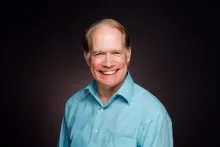
Greg Thomas is the former Pastor of the Cleveland, Ohio congregation. He retired as pastor in January 2025 and still attends there. Ordained in 1981, he has served in the ministry for 44-years. As a certified leadership consultant, Greg is the founder and president of weLEAD, Inc. Chartered in 2001, weLEAD is a 501(3)(c) non-profit organization and a major respected resource for free leadership development information reaching a worldwide audience. Greg also founded Leadership Excellence, Ltd in 2009 offering leadership training and coaching. He has an undergraduate degree from Ambassador College, and a master’s degree in leadership from Bellevue University. Greg has served on various Boards during his career. He is the author of two leadership development books, and is a certified life coach, and business coach.
Greg and his wife, B.J., live in Litchfield, Ohio. They first met in church as teenagers and were married in 1974. They enjoy spending time with family— especially their eight grandchildren.
