

Don Ward
This transcript was generated by AI and may contain errors. It is provided to assist those who may not be able to listen to the message.
We shall title the sermon today, Abomination of Desolation. As the U.S. debates the President of the United States on health care reform, the world marches inexorably toward the climatic events that will mark the end of this age. One might say that we're in the law before the storm. There are so many distractions along the way that most of the world will be caught off guard, and the Day of the Lord will come on them as a thief in the night. Remember the parable of the Ten Virgins. While the bridegroom tarried, they all slumbered and slipped. Let's notice what the Apostle Paul's admonition to the Church is in 1 Thessalonians 5 and verse 10. We have so many distractions in our world today. In our media, instead of talking about the real issues of the world and what's going on in the international scene, they focus on celebrities. They focus on any kind of argument that they can find, any way that they can get opposing and contrasting views, and people get caught up in it. They're still talking about whether or not this doctor here in Houston willingly administered something to Michael Jackson that might have caused his death.
And it just goes on and on and on. In 1 Thessalonians 5 and verse 1, But at the times and the seasons, brethren, you have no need that are right unto you. For yourselves know perfectly that the day of the Lord, now the Greek word here for day of the Lord, this phrase here, day of the Lord, Hekurakehimera, is the same Greek phrase that she used in Revelation 1.10 where John says, I was in the Spirit on the Lord's day. It's interesting that the translators reversed it.
And so a lot of the Protestant world tries to get their proof that the Sabbath day was changed to Sunday by what John writes there in Revelation 1.10. But the the Greek is the same. Hekurakehimera. I was in the Spirit on the day of the Lord, and that's the correct. When God is about to intervene in world affairs, that the day of the Lord comes as a thief in the night, for when they shall say peace and safety, then sudden destruction comes upon them as surveil upon a woman with child, and they shall not escape. So apparently some kind of pseudo-peace is becoming the world. You read Revelation, I mean Daniel 8. You'll find that this one who understands dark sentences that comes in and corrupts the people by his flattery, that this one is of that nature. That is, one of the things it says in Daniel 8 is that he corrupts them through peace. So when it says peace and safety, then sudden destruction comes upon them as surveil upon a woman with child, and they shall not escape. But you, brethren, are not in darkness that that day should overtake you as a thief. And I wonder how many of us are really watching intently and really know what is going on in the world scene. Are we just turned to fables? Are we just sitting there passively, thinking as if we already know it, and what we're doing, we just sort of have our arms crossed and waiting for the church, the organization, to preach the gospel to the world, and some think, well, all we need is for that to happen, and Christ will come. Will we preach down the kingdom, or will it come some other way? Does God and Christ, are they themselves on a mission? Do they know what they're doing? We need to know what we're doing. We are all the children of light and the children of the day. We're not of the night, nor the darkness. Therefore, let us not sleep as do others, but let us watch and be sober, for they that sleep in the night and they that be drunken are drunken in the night. But let us who are of the day be sober, put in on the breastplate of faith and love, and for an helmet the hope of salvation. What is this helmet, the hope of salvation?
Well, the helmet, the hope of salvation, is that big picture of what it's all about.
What permeates your mind, your being, that big picture burning brightly in your mind, that the kingdom of God is going to come to this earth. The resurrection is going to take place. We are going to rule and reign with God and Christ forever and ever.
For God has not appointed us a wrath, but to obtain salvation by our Lord Jesus, who died for us, that whether we wake or sleep, it doesn't matter if we have died or whether or not we are still alive when Christ comes again, we should live together with Him. From time to time, I think about my parents who've gone on before me, my daddy and my mother, and say, boy, I sure would like to see them. I would like to see them again. And one of the things that motivates me has to do with those who have gone on before, relatives and friends that I hold so dear, that I want to be with them in the kingdom of God. And you focus on that kingdom of God. And his model prayer says, Our Father, who art in heaven, thy kingdom come, thy will be done on earth as it is in heaven. So are we vigilant, on guard, watching, so that that day does not come upon us unawares.
So as you watch world events, what event is the most notable and easiest to discern of all the prophecies that Christ gave us concerning the end of this present evil age? Now, this is somewhat subjective and could be debatable. But for me, perhaps the most pivotal, notable and relevant prophecies in the Bible, or one of the most notable relevant prophecies in the whole Bible, centers around the words Christ spoke in Matthew 24, verse 15. Let's go there. Matthew 24 and verse 15. Remember the backdrop of Matthew 24, called the Olivet Prophecy, that the disciples came to Him privately and asked Him the questions about the end of the age. So Jesus begins to give them signs for the end of the age. And we come to verse 15, When you therefore shall see, when you shall see the abomination of desolation spoken of by Daniel the prophet.
So that gives validity to Daniel's words. In the book of Daniel, the Jews debated for a long time before they placed the book of Daniel in the canon because it contained such specific messianic prophecies. Finally, at the Council of Gomnea, somewhere in the late 90s A.D., it was admitted to the official Jewish canon of the Old Testament. So when you see that spoken of by Daniel the prophet, let him stand in the holy place. Whoso reads, let him understand. So now let's note what Daniel wrote.
We'll go back to Daniel 11 and verse 31. First of all, Daniel 11 and verse 31.
Daniel, to a large degree, focuses on Gentile kingdoms, but there's also a lot of in-time prophecy dealing with the Messiah and messianic things. And in Daniel 11 and verse 31.
An arm shall stand on his part, talking about this one who's going to rise up, referred to as the willful king later on. And they shall pollute the sanctuary of strength. They shall take away the daily sacrifice. This is one of the main reasons why we believe that a temple or at least an altar will be built probably on the Temple Mount and sacrifice is renewed.
Now, how Pedda is going to deal with that, I do not know. This organization for the prevention of cruelty to animals, what Hollywood is going to do. If Liz Taylor is still alive, what will happen to her? I was on a talk show in New Zealand back a few years ago being interviewed, and I mentioned this about the Jews restoring sacrifices. And the guy who was doing the interview said, it's like, well, no wonder that people like me don't pay much attention to you religious folk, because you say such statements as that. You know, the world's not going to let Jews begin to kill animals and sacrifice them and be aired on international television and all of that. I said, well, we'll wait and see. That's what the Bible indicates. It seems like to me is what it says. They shall take away the daily sacrifice and they shall place the abomination that makes desolate. Christ said, when you therefore shall see the abomination of desolation spoken of by Daniel the prophet stand in the holy place, let him who reads understand. Now in chapter 12, in chapter 12 and verse 11, and from the time that the daily sacrifice shall be taken away in the abomination that makes desolate set up, there shall be 1290 days. Blessed he is he that waits and comes to 1335 days. So after that abomination of desolation is set up, a definite countdown begins. So where will the abomination of desolation be placed? And how are we going to respond? And will we be ready? Notice verse 10 here. Many shall be purified and made white and tried. But the wicked shall do wickedly and none of the wicked shall understand. So if you have any hope of understanding end time events, obviously you have to repent and turn from your sins. None of the wicked, none of the lawless, could be another translation. None of the wicked shall understand, but the wise shall understand. So where will the abomination of desolation be placed? Christ states that it will be placed in the holy place. Now Daniel states that the sanctuary will be polluted and the daily sacrifice will be taken away. He addresses polluting of the sanctuary and taking away the sacrifice in Daniel 8, 9, 11, and 12. So where is the holy place? Where is the sanctuary? What is the daily sacrifice? Three principal scenarios have been articulated in an attempt to answer these questions, and we'll briefly examine these three scenarios that have been postulated. First of all, we should define the word holy. The Hebrew word for holy is qodesh, q-u-o, this is English spelling of course, q-u-o-d-e-s-h, qodesh, and the Greek equivalent is hageos, h-a-g-i-o-s. Both words refer to setting apart and separateness because God's active presence is in or upon holy things or persons. Once again, what makes something holy? God's active presence is upon it or in it, and it makes it holy.
In Exodus 3 and verse 7, Moses was instructed to take off his shoes for the place whereon he stood was holy ground. Take off your shoes, Moses. Why was it? Because God had placed his presence right there. Let's notice that Exodus 3 and verse 7.
Exodus 3 verse 7, this is Moses of course is now in the wilderness where he had been for 40 years attending the flocks of his father-in-law Jethro and the burning bush incident.
Let's start in verse 2. Exodus 3.2, the angel of the Lord, and the understanding of this word angel, which I have covered before, but I want to review quickly. In the Old Testament, the Hebrew word for angel is malek, M-A-L-A-K. Malek can be translated angel or messenger. Malek can refer to a spirit being or to a human being. In this case, it's a spirit being and it actually is God himself, the one who became Christ. And the malek of the eternal appeared unto him in a flame, a flame of fire. In the midst of a bush, he looked and behold, the bush burned with fire, and the bush was not consumed. Moses said that he would turn aside to see. He turned aside to see. God called out his name, Moses, Moses, and he said, Here am I.
Of course, that is a proper response. The ellipsis there is, Here am I, your servant. What would you have me do?
And he said, Draw near here, and put off your shoes from off your feet, for the place whereon you stand is holy ground. I know I said earlier it was Exodus 3.7, but it's Exodus 3.5. I've got a mistake in my notes here. Exodus 3.5. So God's presence was manifested there. God's presence was manifested in the tabernacle after it was raised up in the wilderness. It was so bright that Moses' face shined like the sun when he came out of the tabernacle. Exodus 40. The presence of God, his glory, filled Solomon's temple when it was dedicated. You can read of that in 2 Chronicles 5. In 1 Corinthians 3.16, let's turn there. So we see that God's presence makes something holy. Pull off your shoes, ground upon where you stand is holy. Why? Because God's presence was there. God's presence filled the tabernacle that Moses reared up in the wilderness. God's presence filled Solomon's temple when it was dedicated, as in 1 Chronicles chapter 5 or 2 Chronicles chapter 5. In 1 Corinthians 3.16, Know you not that you are the temple of God, and the Spirit of God dwells in you. Therefore, the saints are called holy. The holy saints, God's active presence is within them.
We notice in Stephen's inspired sermon in Acts 7.48 that Stephen said, the Most High dwells not in buildings made by hands. That's not the only place that is found in the New Testament, but that's one place. So based on the fact that the physical temple has been destroyed and that God does not dwell in temples made by hands, some have reasoned. Now we begin to get into the nitty-gritty. Some have reasoned that the holy place that Christ referred to in Matthew 24.15 is the Church of God. Now we heard this quite often in 95.
Actually, it started earlier than that in the 90s as various people began to leave, as the Harrises began to be introduced into the church from Pasadena and the pastor-general's office. But the spiritual temple is composed of spirit-led Christians who are scattered around the world.
It is not a place. When you therefore shall see the abomination that makes desolate, stand in the holy place. Let him who reads understand. And that begins a definite countdown as we read from Daniel 12.11-12. It is true that Christ is coming back to his spiritual temple, the church, but that does not do away with all holy places. So where is the holy place? Once again, that Christ refers to in Matthew 24.15. The Bible calls things what they were at a time.
Or at the time a prophecy is written. Moreover, it can refer to what existed in the historical sense.
Let's go to Isaiah 52 and verse 1. We have quite a contrast here between Isaiah 52 verse 1 and Revelation 11 and verse 8 as we shall point out. In Isaiah 52 and verse 1, this is beginning of millennium, millennial theme having to do with resurrection.
Awake, awake, put on your strength those Zion. Remember Hebrews 12.22 that Zion symbolizes the church. You've come to the city of the living God, the heavenly Jerusalem, innumerable covenant of angels, the church of the firstborn, and so on. Awake on your strength those Zion, put on your beautiful garments, O Jerusalem, the holy city. For henceforth there shall no more come unto you, uncircumcised, and be unclean. Shake yourself from the dust, arise and sit down, O Jerusalem. Loose yourself from the bands of your neck, O captive daughter of Zion. Jerusalem became the holy city because God's temple was there. He placed His active presence within it. Now, at the present time, if we go to Revelation 11 and verse 8, and some people might be shocked by this. You won't see John Hagee quoting this tomorrow morning on any of the television stations, but Revelation 11 and verse 8. So, Jerusalem has become, spiritually, Sodom and Gomorrah. But, when Christ comes again, it will once again be the holy city. And like Isaiah 2 verses 1 through 4, you'll go up to Jerusalem and you'll keep the feast and the law shall go forth from Jerusalem and His word from Zion and all of the beautiful words that are there. In Revelation 11 and 8, and their dead bodies, speaking the two witnesses, shall be in the street of the great city, which spiritually is called Sodom and Egypt, where also our Lord was crucified. So, leaving no doubt as to the city that is being referred to here. At the time that Daniel recorded his visions, the holy place was the temple, the Temple Mount in the city of Jerusalem, because God had placed His active presence there and in Solomon's Temple in the Holy of Holies. Now, in that restitution temple, there was no visible evidence of God placing His presence in the temple, though it does say in Haggai chapter 2 that God's Spirit was among them. So, the prophecies that were given to Him, that is Daniel concerning the abomination of desolation, the pollution of the sanctuary, the taking away of the daily sacrifice, to me undoubtedly refers to the temple site.
Christ stated that the abomination of desolation would be placed in a definite place. The Greek word for place in Matthew 24.15 is topos. Strong defines topos as any portion or space marked off as it were from the surrounding area. So, it definitely has a perimeter around it, or we might call it a fence. And, of course, if you go to the temple mouth, there's a wall around it even today. And the Jews can come to the western wall, the Wailing Wall, the Wall of Tears, as they call it, and offer their prayers. More about that later.
So, Christ says it will be in a definite place. Now, some people believe that the abomination of desolation, as we've already mentioned, would be placed in the church. So, let's go to 2nd Thessalonians, and this is where they base that on. 2nd Thessalonians chapter 2. 2nd Thessalonians chapter 2 verse 1. Now, we beseech you, brethren, by the coming of our Lord Jesus Christ, by our gathering together unto Him, that ye be not soon shaken in mind, or be troubled neither by spirit nor by word nor by letter, as from us. There were people in Thessalonica in that area who were writing letters to the brethren who were saying that, you know, the time is at hand, the Lord is about to come or has come, and even feigning as if those letters were coming from Paul.
More and more on the internet, they are able to feign messages. I know I heard Russell Limbaugh talking about, well, there are a lot of people out there saying that I'm saying such and such and various blogs and websites and speaking as if it were coming directly from me. And he says, well, with regard to Twitter, he says, I don't Twitter. So if you are on Twitter and you see Limbaugh's Twitter, he said it ain't my Twitter. So you'll see more and more of that.
So don't. It says, nor by letter, as from us, as that the day of the Lord is at hand.
Now, in 1 Thessalonians, Paul talked as if it was. We've already read chapter 5 of the first 10 verses. Let no man deceive you by any means, for that day shall not come, except there come a falling away first. Now, that word falling away is apostasia. A-P-O-S-T-A-S-I-A, I think, apostasia. A-P-O-S-T-S-I, apostasia, which can mean false teaching. And basically, that's what it means, is false teaching. It doesn't necessarily mean that a lot of people are leaving the church, but because of the false teaching, they are deceived. In this case, what is the main false teaching in 2 Thessalonians 2? Who opposes and exalts himself above all that is called God, or that is worshipped, so that he as God sits in the temple of God, showing himself that he is God. The main false teaching at that time will be, there will be a pseudo-Messiah, false prophet and beast, who will claim to be God, and everyone whose names are not written in the Lamb's Book of Life will be deceived by it. And the great false teaching and lie will be that Christ has come. And everyone whose names are not written in the Lamb's Book of Life, Revelation 13, 8, will be deceived. You notice, verse 10, "...and with all deceivableness of unrighteousness in them that perish, because they receive not the love of the truth that they might be saved, for this cause God shall send them strong delusion that they should believe a lie." What's that big lie? He's sitting there saying that he's God, and everyone whose names are not written in the Lamb's Book of Life believes it. False prophet calling fire down from heaven, performing signs, miracles, by those signs and miracles, deceives the world.
Brethren, what we are involved in and what we profess to be involved in is serious business. It's life and death.
Verse 12, let's read 11. I don't know if I read it or not. "...For this cause God shall send them strong delusion." It says God shall send them strong delusion.
Because they took on sort of a Laodicean, we might say, attitude. They slumbered and slept. Their lamps were going out. They just sort of crossed their arms and said, you know, well, I'm just waiting for the Lord to return. When everybody in the organization gets their act together, when we do what we ought to do, and you know, but in the meantime, I'll show up on the Sabbath.
When are we going to become active in the spreading of the Gospel and the public proclamation? More than just pay and pray. It may come that day in which God so arranges, I guess one word you could use, so that situation and circumstances come about that we won't have a choice. Of course, you know, it says in Luke 21 that they were going to call you up before kings and governors, and it shall turn to you as a testimony. Think not what you shall say, but the Spirit will give you utterance if you have hidden the word of God in your heart.
God shall send them strong delusion that they should believe the lie.
There is no indefinite article in Greek, so therefore it is the lie, the lie that this one who's sitting there in the temple says he is God. That they all might be damned, judged, condemned, who believe not the truth, but had pleasure in unrighteousness. But Christ says the abomination of desolation will be placed in a definite place.
That it can be seen. And that negates any notion of the abomination of desolation being a false teaching in the Church. It is much more than that. It is global. It is seen by the world and the nations, especially during the time of the two witnesses.
Furthermore, a false teaching in the Church does not pollute a place or sanctuary or take away the daily sacrifice. Now, you could argue that it might take away the daily sacrifice of true Christians, because true Christians are supposed to offer up spiritual sacrifices. Let's go once again. I think we were here last week, 1 Peter 2.5.
1 Peter 2.5, with regard to spiritual sacrifices. This says it clearly. 1 Peter 2, verse 5.
We also, as living stones, are built up a spiritual house and holy priesthood to offer up spiritual sacrifices. Last week we talked about communication and the fruit of our lips being a sacrifice unto God, a sacrifice of communication that He was well pleased in, to offer up spiritual sacrifices acceptable to God by Jesus Christ.
Can any person, any system, any action on the part of any person prevent a person from offering up spiritual sacrifices?
Shadrach, Meshach, and Abednego, they were threatened with a fiery furnace, eventually thrown into the fiery furnace.
I'm sure in the fiery furnace they called out to God. Take, for example, Daniel. You know, the decree went out, Daniel chapter 6, that no one would pray to any God except to the Persian gods. And Daniel, as was his custom, went to his usual place, faced Jerusalem, and offered his prayer morning, noon, and night. See, they can place you in the darkest dungeon. They can place you on the rack and stretch you out until your limbs begin to, and joints come out of place.
But they cannot prevent you from crying out and offering spiritual sacrifice unto God. Man cannot take away from a true Christian his ability to offer up spiritual sacrifices. You just can't do it. You can always praise God. You can always thank God. You can always cry out to God.
So I conclude that the abomination of desolation we place in a definite holy place, a place that can be seen. Moreover, the place is a sanctuary where daily sacrifices were offered. Will the Jews, once again, offer animal sacrifices in the so-called postmodern age, an age in which activists are demonstrating against the killing of animals to make fur coats, the killing of the owls in certain forests, and protesting against cutting down the trees so it does away with the habitat of certain animals? It would be an interesting thing to see. But let's look at Isaiah 29, which seems to strongly indicate sacrifices at the end of the age.
Isaiah 29, verse 1, Ariel, remember a recent prime minister of Israel, is Ariel Shorom. Ariel is another name for Jerusalem.
It means either a lion of God or the altar heareth of God.
Of course, the main altar of God has been in Jerusalem. In just a context, we'll see. Woe to Ariel to Ariel, the city where David dwelt. And we know he was in Jerusalem. He bought the Jerusalem or that area from the Jebusites. The city where David dwelt, add you year to year, let them kill sacrifices. And of course, you could look at this in the historical sense and say, yes, anciently they did. Yet I will distress Ariel Jerusalem, and there shall be heaviness and sorrow, and it shall be unto me as Ariel. And you could say, well, the temple was destroyed by the Babylonians, 587, 586 B.C. The Restoration Temple was destroyed by the Romans, 6970 A.D.
But notice verse 3, I will camp against you round about, will lay siege against you with a mount. You could say, well, that was Nebuchadnezzar or the Romans. And I will raise forts against you. But notice verse 6, You shall be visited of the Lord of hosts with thunder and with earthquake.
See, God is the one who directly intervenes here. Nebuchadnezzar didn't intervene with thunder, with earthquake, and neither did the Romans. And great Noah is with storm, tempest, and the flame of devouring fire. And the multitude of all the nations that fight against Jerusalem, as described in Zechariah chapter 12 verses 1 through 4, all of those nations, or this great company of nations, described in Revelation 16, during the battle of the great day of God Almighty, that comes against the Prince of Peace, they're going to be destroyed. And the multitude of all the nations that fight against Ariel, even all that fight against her in her munition, and to distress her, shall be as a dream of a night vision. Verse 11, And with their lips do they honor Me, but have removed their heart far from Me, and their fear toward Me is taught by the precept of men. Of course, there are a lot of people today who are protesting certain things that go on in Jerusalem. There was a big protest last weekend with regard to certain activities that took place on the Sabbath day in Tel Aviv. I mean, the rabbis were out there in their full beard and other Orthodox Jews with their full black hats and black suits and all that on, and walking stick and beating the back of some of the people that were breaking the Sabbath. But it's not according to knowledge.
When God does intervene, you see verses 18 through 24. I'm not going to read all of it. And in that day shall the deaf hear the words of the book, and the eyes of the blind shall see out of obscurity and out of darkness. Now, of course, that began with Jesus Christ, as in Luke 6 where He stood up and read from Isaiah 61, and says, I have come to remove the blindness and to unstop the ears and so on. But today this is only for those who are being called. The meek also shall increase their joy in the Lord, and the poor among the men shall rejoice in the Holy One of Israel.
And closing verse 24, They also that erred in spirit shall come to understanding, and they that murmured shall learn the true teaching. So this seems to very much indicate that sacrifices would be renewed. Now, some say, well, OK, you have this idea that, OK, that the church would be the place of the abomination of desolation. Some say an altar at the Western Wall, since the area of the Temple Mount where Solomon's Temple and Restoration Temple were built, are now under the control of the Arabs. So some people say, well, maybe they'll build an altar at the Wailing Wall, since this is as close as they can get to the Temple Mount.
Now, the irony of this is in the 1967 war, Israel conquered the West Bank and took over East Jerusalem. And paradoxically, they turned around and gave control to the Temple Mount to the Arabs. And it's basically under what they call the Islamic Waf. It's a group of people that are dedicated to preserving Islamic tradition and holy places and shrines and so on. And it became the domain of the King of Jordan, Hussein, and is to this day.
Basically, the royal family of Jordan is responsible for keeping up the holy sites, the Dome of the Rock and the Al-Aqsa Mosque on the Temple Mount. So building an altar at the Wailing Wall probably wouldn't work for the following reasons. Now, it's true that before the priesthood was established and before the tabernacle and the wilderness raised up, before Solomon's Temple was built, the patriarchs built altars in various locations and offered sacrifices. I don't know if you've ever focused on that. But after the age of the patriarchs and when the Levitical priesthood was established, no one could offer sacrifices except the Levitical priesthood and in the specified location.
Let's notice quickly, see, time is fleeting in Genesis 12. Genesis 12, Abraham comes into the Promised Land, and one of the first things that he does is read verse 7. The Eternal appeared unto Abram and said, Under your seed will I give this land. And there buildeth he an altar unto the Lord, who appeared unto them. He removed from there unto a mountain on the east of Bethel. Bethel literally means house of bread and pitched his tent, having Bethel on the west and Hai on the east.
And there he built an altar unto the Lord and called upon the name of the Lord. Now you go quickly to Genesis 22 in that chapter where God told Abraham to take Isaac and go offer him. As the scenario unfolds, you know, Isaac asked on the way, well, where's the offering? Abraham said, well, God will provide. In verse 13, Exodus 22, 13, Abraham lifted up his eyes and looked, and behold, behind him a ram caught in a thicket by his horns.
Abraham went and took the ram, offered up him for a burnt offering in the stead of his son. Isaac and Jacob also built altars and offered offerings. So the patriarchs did build altars and offer offerings. At the time of the Restoration Temple, when Zerubbabel and Joshua led a contingent of Jews back there, they built an altar. If you go quickly to Ezra 2. Ezra 2. Ezra Nehemiah. Esther Ezra Nehemiah. I've got that reversed.
Anyhow, 2 Chronicles in Ezra. In 2 Chronicles, well, we're not going to read that genealogy. Let's go to chapter 3. The people gathered themselves together in Jerusalem. And notice verse 8. This is Ezra 3. 8. The second year they're coming into the house of God in Jerusalem on the second month. The remnant of the people, the Levites, and so on, set work to build the house of God.
Verse 10. They laid the foundation. And then later they offered offerings on this altar that they had built. So there is a precedent, you could say, there, for offering on an altar. The patriarchs did it. They did it before the Restoration Temple was built. But Orthodox Jews believe that the ground is so holy on the Temple Mount that some of them won't even fly over it. And most of them won't even set a foot on it. They believe that the Temple Mount area has to be purified by the ashes of a red heifer. Now, the story of the red heifer, I don't have time to tell all of it, but the one night a Pentecostal preacher in Canton, Mississippi, was reading from Numbers where it talked about the purification of the Temple and so on by the ashes of red heifer.
That's in Numbers 19, verses 1-10. And the guy's name is Clyde Ludd. He's a Pentecostal preacher and a rancher. So he got in touch with this Hamm Richman who heads the Temple Institute in Jerusalem and said, I'm the man who can grow red heifers for you. And so they struck up a friendship.
Hamm Richman came to the United States and he and Clyde Ludd went over, especially the southern U.S., raising money for the cause. Now supposedly an acceptable red heifer and acceptable red heifers are being now raised in a lot, E-I-L-A-T, a lot in Israel, for the purpose of purifying the Temple Mount. Now a lot in Richman hold vastly different views on the significance of the red heifer. Blot believes the Jews must build a temple before Christ returns, and the red heifer will play an important role in helping the Jews restore temple worship.
So one of the things today that, and you'll hear more and more about this in the U.S., is that more and more of the politician liberals are saying all of those Christian loonies who have this apocalyptic view at the end of the age that the Jews have to build a temple and they have to do this. They have to do that. And so they are wanting that to happen, and they're one of the causes for some of these politicians acting irrationally. And we need to let the people with reason and diplomacy take over, as in the case of Mr.
Obama or any others along those lines that you might want to name. And so more and more Christians will be blamed, those who really understand. And you can go to the web internet, and you just put in various key words, and you'll get thousands of hits on most any of these topics.
Now Richmond, on the other hand, who heads the Temple Institute, believes strictly in the Old Testament, and that the Temple movement is preparing the Jewish people to move into the Messianic age and for the coming of the first Messiah. And the Sanhedrin has recently been restored. I think it was in 1907, and Richmond, I believe, is a member of the Sanhedrin. But before all of this takes place, sensitive negotiations regarding the Temple Mount are required. And there are two basic views. You might have three views with regard to how this is going to take place. Will the Jews be able to gain control of the Temple Mount through negotiations with Islam?
Islam views the Temple Mount as the third holiest place in Islam behind Mecca and Medina. Supposedly, Mohammed ascended to heaven at the Al-Aqsa Mosque, which literally means the farthest point. They read somewhere in the Quran about the phrase farthest point, so they decided to build a mosque there so they could claim the Temple Mount. This happened during the 600 and 700 AD. From about 600 AD, way up into about 1400 AD, the Muslim world controlled much of Europe and parts of most of Asia Minor and other parts of the world, extending all the way to Indonesia, to India, and down into Africa.
So, can you negotiate a peaceful settlement where the Jews could build a temple on the Temple Mount? I don't know. Now, in last week's news, if you remember, it talked about... I had an article in there that was recently in a publication that talked about some of the Arabs are getting together with some of the Jewish leaders, both political and religious, and saying, well, maybe we could share it, and you could build a temple just north of the Dome of the Rock.
And that's where some believe the Holy of Holies was located anyhow. But in order for this to take place, you'd have to have an unbelievable change of heart and some of the greatest negotiations that have ever taken place.
But regardless of the technicalities as to whether the Jews must gain control of the entire Temple Mount or only a portion of it, dramatic changes have to take place before that can happen. So, it's either through political negotiations, or it is through war, through force. In Revelation 11, verse 1, we see a bit about the history of that area at the end of the age. In Revelation 11, verse 1, in 1 Peter 4, 17, that we are, judgment is now upon the house of God, and the righteous scarcely be saved, where shall the ungodly appear?
Well, hopefully they had appeared at least in the second resurrection. Rise and measure the temple of God and the altar, and them that worship therein. Even this sort of indicates the restoration of some kind of worship there, but once again, it's probably dual in the sense of the church and the physical area. But our emphasis now is on the physical area because of what Christ said. When you therefore shall see the abomination of desolation stand in the holy place, let him who reads understand. So rise and measure the temple of God, and we are being measured and judged daily, and the altar, and them that worship therein.
But the court which is without the temple leave out and measure it not, for it is given unto the nations, the ethnos, or Gentiles, and the holy city. See, here it calls it the holy city because historically it was, but spiritually today it's Revelation 11, 8. And the holy city shall they tread down three and a half years. And in the face of that, so we see this division, the boundaries of the city of Jerusalem are defined in resolution 181 by the UN, which set up the permission for an Israeli state and an Arab state in 1947.
I want to read here from that. I would encourage you, internet, just put in resolution, UN resolution 181. That's all you have to do, UN resolution 181.
The city of Jerusalem, the boundaries of the city of Jerusalem are as defined in the recommendations on the city of Jerusalem, and you have to go to another section, they define those boundaries. The city of Jerusalem shall be established as a corpus separatum, a separate body, under a special international regime, and shall be administered by the United Nations. That was what the initial resolution called for. The Arabs rejected this resolution, and they attacked Israel, the Jews, in May of 1948. You have the famous 1948 war, the Jews won, and they became a member of the UN. To this day, you still have this Palestinian question, and they're talking about this two-state solution, even today, with the possibility of dividing Jerusalem, East Jerusalem for the Arabs, and that's where the Temple Mount is, and the West Jerusalem for the Jews. The Bible says that it will be divided.
The trusteeship council shall be designated to discharge the responsibility of administering authority on the behalf of the UN.
So, these verses that we've just read can have spiritual implications, but the church is not the Gentiles. It says the Gentiles shall tread down the city for three and a half years. So, the church doesn't tread down Jerusalem for three and a half years. So, this prophecy points to a future dividing of the city.
Notice Zechariah 14, verse 2. She had some light on this. Zechariah 14, verse 2. Now, this is the famous, In that day his foot shall stand on the Mount of Olives, and the Mount shall cleave in two. But in Zechariah 14, verse 1, Behold, the day of the Lord comes, and they shall spoil, and the spoil shall be divided in the midst of you.
For I will gather all nations against Jerusalem to battle, and the city shall be taken. The houses rifled, the women ravished. Half of the city shall go forth into captivity, and the residue of the people, or the remnant, shall not be cut off from the city. That's interesting. I don't think anybody knows for sure the identity of this residue or the remnant.
Then shall the Lord go forth and fight against those nations as when he fought in the day of battle.
So it's interesting to note here that the remnant, the residue of the city goes into captivity, and half of it goes into captivity, but the remnant shall not be cut off from the city. Now the term remnant generally always refers to God's people. Now, of course, you have the two witnesses. So both of these prophecies indicate that Jerusalem is going to be divided into two sectors before the coming of Christ.
If any agreements were to be reached, it would probably require a third party to enforce the agreement. In recent times, that neutral enforcement agency has been the United States under the umbrella of the UN. So in one sense, you could say it'd be under the UN, but the United States has been the enforcer.
Of course, Daniel 11, verses 41-42 says that the beast power will plant his headquarters in the holy city. So you have that part of it as well.
So some have suggested that the Temple Mount will be taken by war. Even if the Temple Mount were taken by war, the international community or whomever the conquerors are would still have to enforce any kind of peace agreement. The book of Daniel clearly states that the person who is responsible for taking away the daily sacrifice comes to power in the name of peace. Let's go to Daniel 8. Daniel 8.
Daniel 8 gives a vision of the two realms, the Medo-Persian Empire and the goat being Alexander the Great and the Grecian Empire.
We'll call it the Greco-Roman Empire, but the Empire of Alexander the Great.
That they are colliding.
It talks about the sacrifice being taken away, the sanctuary polluted.
Let's notice verse 20, Daniel 8.20. The ram which you saw having two horns are the kings of Media and Persia.
The rough goat is the king of Grisha, Alexander the Great. The great horn that is between his eyes is the first king, Alexander the Great. Now that being broken, Alexander the Great met an untimely death somewhere around the age of 31, 32, 33. Pushed all the way as far as Afghanistan, from Greece to Afghanistan.
Kandahar in Afghanistan is named for Alexander. Kandahar Alexander.
After his death, four stand up in his place, so Alexander didn't have anyone to inherit. So the kingdom was divided, or his territory divided, between his four generals.
Ptolemy got Palestine in Egypt, and he's called the king of the south.
Cassandra got Macedonia in Greece. Lachamatius got Bithynium Thrace in Asia Minor.
And Seleutius got Syria, Armenia, and territory east. Seleutius got what is present-day Syria, Iraq, Iran, Afghanistan, Pakistan, all the way to the east. That's Seleucid, known as the king of the north. And, of course, Daniel 11 describes king of the north pushing against the king of the south, and so on.
Verse 23, In the latter time of their kingdom, when the transgressors are come to the full, a king of fierce countenance and understanding, dark sentences, shall stand up.
His power shall be mighty, but not by his own power, and he shall destroy wonderfully. And that word, destroy, better translation is corrupt. Some translations might have corrupt there.
He shall corrupt wonderfully. He doesn't literally destroy in a sense of killing them. And shall prosper and practice, and shall corrupt the mighty and the holy people.
And through his policy also, he shall cause craft to prosper, the occult, the magic in his hand. And he shall magnify himself in his heart, and by peace shall corrupt many.
He shall stand up against the prince of princes, as in Revelation 17-14.
But he shall be broken without hand, not by a military force, but by God himself.
And the vision of the evening and the morning which were told is true. Wherefore, shut you up the vision, for it shall be for many days.
And I, Daniel, fainted and was sick certain days afterward, and I rose up and did the king's business.
And I was astonished at the vision, but none understood it.
So we see that this one comes in peacefully and grabs the kingdom by flatteries.
And as we mentioned, he stands up against the prince of princes, which parallels Revelation 17-13 and 14.
Let's go there. Revelation 17 and verse 13.
Revelation 17 verse 13.
These have one mind and shall give their power and strength unto the beast, that's the ten kings.
These shall make war with the lamb, and the lamb shall overcome them.
For he is Lord of lords and King of kings, and they that are with him are called and chosen and faithful.
Now back to Revelation 13 and verse 8.
So where are we today? World affairs are filled with events that are relevant and critical to the fulfillment of placing the abomination of desolation.
The terrorist activities of Islamic fundamentalists are generally directed toward the United States because they appear to be what they call the ever-increasing encroachment on the Islamic mosque located on the Temple Mount. In other words, they view the US as helping Israel gain control of the Temple Mount and achieving her objectives.
So obviously, a showdown is coming of some sort.
And who knows exactly how long it would be? The question for us, will that day come upon us unawares?
Will our lamps be going out? Or will we be wakeful and watchful and ready for that day?
Eventually, all the nations of the world are going to be gathered against Jerusalem, as we have read from Zechariah 14, also Zechariah 12, verses 1-4, talks about the same thing.
So where are we going to stand? Will we be deceived? Will we believe the great lie of the pseudo-Messiah who sits in the Temple of God saying that he is God?
Or will we really know and understand, having loved the truth, having hidden the Word of God in our hearts, having given a faithful and true testimony when we recall before kings and governors?
Revelation 13, verse 8, So, brethren, we can be prepared for that which lies ahead. But let's not just fold our arms and sit passively by and say, let somebody else do it.
Let's get actively involved in whatever we can do to take this Gospel message of the Good News of the coming Kingdom of God to this world.
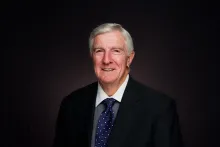
Before his retirement in 2021, Dr. Donald Ward pastored churches in Texas and Louisiana, and taught at Ambassador Bible College in Cincinnati, Ohio. He has also served as chairman of the Council of Elders of the United Church of God. He holds a BS degree; a BA in theology; a MS degree; a doctor’s degree in education from East Texas State University; and has completed 18 hours of graduate theology from SMU.
