
Don Ward
This transcript was generated by AI and may contain errors. It is provided to assist those who may not be able to listen to the message.
Abomination of Desolation, the final countdown. As the U.S. is entertaining itself to light, to death, instead of life, we're choosing death instead of life. The world marches inexorably toward the climatic events that will mark the end of this present evil age. We have to really scrap and scramble to get any real news today because it's mainly about missing persons, kidnaps, horrendous crimes, the lifestyle of the rich and famous of Hollywood, of the various sports figures, the ballgames, and all that goes with the media that makes up what we call American culture today.
Entertaining ourselves to death. Remember the parable of the ten virgins as the bridegroom tarried? They all slumbered and slept. Let's note the Apostle Paul's admonition to the Church with regard to the last days in 1 Thessalonians 5. I think that we are in for some great surprises in the years that lie ahead with regard to the events that will unfold before us. Things are not as cut and dry as some may think they are. We'll be able to discern some of that from what we read in the Bible today and what I would ask you, are you going to believe the legends, the fables, or are you going to believe the Bible?
Paul writes in another place, an admonition to Timothy, 2 Timothy 4, where he talks about, preach the word, be instant in season, out of season, rebuke, exhort, with all long suffering and doctrine, for the time will come in which they will not endure sound doctrine, but will heap to themselves teachers having itch in years and will be turned to fables. Let's not turn to fables, let's turn to the Word of God. Let's believe the Word of God. Paul writes here in 1 Thessalonians 5 verse 1, But as of the times and the seasons, brethren, you have no need that are right unto you, for yourselves know perfectly that the day of the Lord comes as a thief in the night.
For when they shall say peace and safety, I would venture to say that the number one word that has been on the lips of world leaders and politicians throughout the 20th century, now to the 21st century, has been the word peace, hearkening back all the way to World War I and the formation of the League of Nations after World War I in Wilson's famous 14 points, and the United States did not embrace, did not adopt Wilson's 14 points.
And then after World War II, the United States led the way in the formation of the United Nations with the Rockefellers donating the land for which the headquarters of the UN would be built there in New York City, Rockefeller Plaza. And from that time forward, the UN is supposed to maintain peace throughout the world. And we hear about peace talks today. Peace, peace, peace. When they shall say peace and safety, then sudden destruction comes upon them as surveil upon a woman with child, and they shall not escape. But you, brethren, are not in darkness, that that day should overtake you as a thief.
We are all the children of light and the children of the day. We are not of the night, nor of darkness, therefore let us not sleep as do others. But let us watch and be sober, wakeful, watchful, for they that sleep sleep in the night, and they that be drunken or drunken in the night. But let us who are of the day be sober, putting on the breastplate of faith and love, and for an helmet the hope of salvation, the helmet that which permeates the mind, the heart, the being, and that is the big picture of the kingdom of God burning brightly in our minds and hearts.
For God had not appointed us to wrath, but to obtain salvation by our Lord Jesus Christ, who died for our sins, that whether we wake or sleep, whether we are alive or dead, when Jesus Christ returns, we should live together with Him. Today we will show how so many on the face of the earth will be deceived by peace and prosperity. If you look at the world today, you don't think about peace and prosperity. You think it's just going to be a downward spiral, and there will be a downward spiral, and then there will be a leveling off, and there will be seemingly some kind of pseudo peace that is going to come.
So what about each one of us? Do we have on the helmet of salvation? Is the big picture burning brightly in our minds and hearts? And is our lamp filled with oil? Are we vigilant? Are we on guard and watching so that that day does not come upon us unawares? Remember the admonition of the Apostle Peter in 1 Peter 5.8. 1 Peter 5.8, the Apostle Peter writes, Be sober, be vigilant, because your adversary, the devil, as a roaring lion, walks about seeking whom he made of our.
He's on the job 24-7, and he never gives up. He's on an insatiable quest to be worshipped, be the object of worship. So as you watch world events, and one of my great goals is to try to help you form a realistic view of the world, a realistic worldview. As we present news items each week and make a few comments and hoping that you will read those, and also that you will, as the Apostle Paul said about the Bereans, they were more noble than those in Thessalonica, in that they searched the Scriptures daily, whether these things be true.
Perhaps the most notable and pivotal and relevant prophecies in the entire Bible centers around the words that Christ spoke in Matthew 24 or 15. Let's turn, please, to Matthew 24 or 15. Matthew 24 or 15, of course, is within the Olivet Prophecy. The backdrop for the Olivet Prophecy in the first three or four verses of Matthew 24 has to do with the disciples coming to him and asking the Master, what shall be the sign of your coming and the end of this age?
Now, this time frame here was when Jesus was going in and out from Bethany to the temple, the few days before he was crucified.
In verse 15, one of the signs that he gives, in verse 15, when you therefore shall see the abomination of desolation spoken of by Daniel the prophet, so Jesus Christ himself gives validity, veracity, to the prophecies of Daniel.
There's controversy, and there has been controversy among Jewish scholars and so on. Daniel was one of the last books to be codified and put into the canon because it contains such direct prophecies concerning Messiah. So when you therefore shall see the abomination of desolation spoken of by Daniel the prophet, stand in the Holy Place.
That's an important phrase there, in the Holy Place. Whosoever reads, let him understand.
Then, verses 16 through 20, it talks about you better be ready, and it talks about fleeing and so on. A lot of people have tried to apply this strictly to 6970 AD when the Romans came against Jerusalem and destroyed the restoration or the Second Temple. That temple, of course, unlike in times past when the First Temple was destroyed, Solomon's Temple, there was a new temple rebuilt on the Temple Mount. But now we have gone for almost 2,000 years with no temple being on the Temple Mount. On the Temple Mount today, it's a plot of land, approximately 20 acres, a little over 20 acres. If you draw an oval on your paper, and at the top you draw a big circle, put mosque of Omar, the Dome of the Rock, and toward the other end, put a smaller circle, that would be the Al-Aqsa Mosque on the south end. Both are Islamic mosques that occupy that territory today. We'll talk more about that later. That larger mosque is on the north end of it. Some think the Holy of Holies was located on that north side. As you face north, if you're standing there in front of the Dome of the Rock, and you look over to your right, to the east, you will see the Mount of Olives. And on the Mount of Olives, there will be sprinkled these little white spots. And these little white spots are tombs. And Jews, one of the goals of many Jews is to be buried on the Mount of Olives so they can get a head start on the resurrection because it says, in that day his foot shall stand on the Mount of Olives in Zechariah 14. But that's sort of a different story we may read from Zechariah 14 later.
So these verses of admonition here, verses 16 through 20, of actions to take. And of course, some did take some action during the time that the Roman armies occupied, surrounded Jerusalem, and eventually destroyed the temple. And finally, the last hole up was in Masada. And perhaps you have been there, read the story about that.
In verse 21, people talk about, when is the Great Tribulation going to begin? Has it begun? No, it has not begun. And who knows exactly when it will begin? But I know one thing, it will begin after the abomination of desolation is placed in the Holy Place. For then, when? Then, after the placing the abomination of desolation, verse 15, for then shall be great tribulation, such as was not since the beginning of the world to this time known or ever shall be. Now, that time has not yet taken place. You can view what happened in 69-79 AD, perhaps as a type of what is going to come, because there was great tribulation, and it did wind up in which people were actually eating their own children. Think that can't happen? Well, it did happen. And except those days should be shortened, there should no flesh be saved alive, but for the elect's sake those days shall be shortened. Then it goes on with other signs. So let's note what Daniel writes, because Christ says, when you therefore shall see the abomination of desolation spoken of by Daniel the prophet. So let's go to Daniel 11.31, first of all. There are two places in Daniel where the abomination is spoken of.
First of all, in Daniel 11. Daniel 11 gives a long history from the time of Alexander the Great up until the time of Antigua's epiphanies and the Seleucid rulers, and the time of the Maccabees, in which the Maccabees eventually overthrew the Seleucids. But in Daniel 11 and verse 31, An arm shall stand on his part, and they shall pollute the sanctuary of strength, and they shall take away the daily sacrifice, and they shall place the abomination that makes desolate. Antigua's epiphanies in 167 B.C., a Seleucid ruler, he was one of the kings of the north. He offered swine's blood on the altar there in the temple, and he polluted the sanctuary.
And for a short period of time, the sacrifice was taken away. Then the Maccabees came on the scene and eventually were able to, in one of the most moving stories in all of human history, were able eventually to drive the Seleucids out of the Holy Land there, and they restored, to some degree, true worship. And then on the heels of that, in the 60s B.C., came the Romans. And, of course, the Romans dominated and eventually destroyed the restoration temple in 70 A.D. Now, we go across there to chapter 12, verse 9, and he said, Go your way, Daniel, for the words are closed up and sealed till the time of the end. Daniel 12.10. Many shall be purified and made white and tried. So there will be a lot of trials of whether or not you are in the faith, and God is going to know and know that he knows that you place no greater affection for anything than you do Him, Jesus Christ, each member of the body of Christ and the truth. But the wicked shall do wickedly, and none of the wicked shall understand, but the wise shall understand. Of course, we want to make sure that we are among the wise, and from the time that the daily sacrifice shall be taken away, and the abomination that makes desolate set up, there shall be a thousand two hundred ninety days. Blessed is He that waits and comes to the thirteen hundred and thirty-five days. So after the abomination of desolation is set up, the final countdown. But go your way to the end, be, for you shall rest, in other words, you're going to die, and be in the grave, and then stand in your lot at the end of the days. Of course, Daniel wasn't resurrected in 70 AD or in the other year, for that matter. So we see clearly that once the abomination of desolation is set up, a definite countdown is set in motion. This countdown highlights the pivotal nature of this prophecy. Where will the abomination of desolation be placed? Christ states, once again, in Matthew 24, 15, in the Holy Place. When you therefore shall see the abomination of desolation spoken of by Daniel in the Holy Place. Daniel states that the sanctuary will be polluted, the daily sacrifice will be taken away. And he addresses the polluting of the sanctuary and taking away the daily sacrifices in Daniel 8, Daniel 9, Daniel 11, and Daniel 12. And we'll see parts of that along the way. First of all, let's answer the question, where is the Holy Place? Where is the sanctuary? And what is the daily sacrifice? Three principal scenarios have been postulated in an attempt to answer these questions. One would be through diplomatic where is the Holy Place? I'm sorry, three scenarios with regard to the Holy Place. Some would say, well, it's only on the Temple Mount. Some say, well, it's at the Wailing Wall just outside the Temple Mount. Some say, well, it can be just in the environs of Jerusalem.
But first of all, we should define the word holy. The Hebrew word for holy is kodesh. Q-O-D-E-S-H, kodesh. The Hebrew word for holy. The Greek word for holy and the equivalent of kodesh is hagiose, H-A-G-I-O-S. They both essentially mean the same thing, kodesh and hagiose.
Both words refer to setting apart and separateness because God's active presence is in or upon holy things. So if a thing is holy, it is separated and holy, it has God's active presence within it. As, for example, in Exodus 3, verse 7, the last part of the verse says Moses was instructed to take off his shoes because the voice out of the burning bush said, the ground on which you stand is holy ground. God's active presence is within holy things. The saints are holy because God's active presence are in the saints, as you heard in the opening prayer. God's presence was manifested in the tabernacle after it was raised up in the wilderness. God's presence was manifested in Solomon's temple on the day it was dedicated. However, God's presence was not manifested in the Restoration temple.
But yet it is said of the Restoration temple that the glory of this latter house shall exceed the glory of the former house, showing that that Restoration temple was symbolic and pointed toward the Church of God in which now God dwells in buildings not made by hands. In Exodus 40 verse 35, the tabernacle in the wilderness is raised up. Exodus 40 verse 35, and you'll see here the glory of God is the equivalent of the presence of God.
In Exodus 40 verse 35, Moses was not able to enter into the tent of the congregation because the cloud abode thereon, and the glory of the Lord, the very presence of God, filled the tabernacle.
And when the cloud was taken up from over the tabernacle, the children of Israel went forward or onward in all their journeys. But if the cloud were not taken up, then they journeyed not till the day that it was taken up. For the cloud of the Lord was upon the tabernacle by day and fire upon it by night, and the sight of all the house of Israel throughout all their journeys. And it talks about in 1 Corinthians 10 how they followed that rock, and that rock was Jesus Christ, and that manifestation of him was through the pillar of the cloud and the fire by night. Now, in 2 Chronicles 5, we'll see when Solomon's temple was dedicated during the Feast of Tabernacles. You'll see in verse 3, 2 Chronicles 5, 3, whereupon all the men of Israel assembled themselves unto the king in the feast, which is in the seventh month. And, of course, you have trumpets, atonement, and tabernacles in the eighth day. Verse 13, it came to pass as the trumpeteers and singers were as one to make one sound to be heard in praising and thanking the Eternal. And when they had lifted up their voice with the trumpets and cymbals and instruments of music and praised the Lord, saying, He is good for his mercy endures forever, that then the house was filled with a cloud, even the house of the Lord, so that the priests could not stand to minister by reason of the cloud, for the glory of the Eternal presence of God had filled the house.
As I said, when the Restoration Temple was dedicated, and an account of that is in Ezra, if you go forward a few pages to Ezra chapter 6, when the Restoration Temple was dedicated. And, of course, this is plainly given in the Jewish history books as well, that the glory of God, which is called the Shekana, or Shekinah Glory, did not fill the Holy of Holies. That Restoration Temple lacked, of course, the continuing fire, a continuing prophet on the scene, the sacred fire, the Urim and the Thummim, and the Ark of the Covenant. And all of those things now are fulfilled spiritually through God's Spirit, in one way or another, through the Church of God, the Temple of God today.
In Ezra 6.15, and the house was finished on the third day in the month of Adar, which is the sixth year of the reign of Darius. And then the children and the priests, and all of them, gathered themselves to dedicate this house of God with joy, verse 16.
Then it talks about all the things that they offered, but you will find no evidence of the glory of God filling the house. Yet, if you go now to Haggai chapter 2, you'll find that the glory of this house, this restoration temple, is prophesied to exceed the glory of the former house or Solomon's temple. Haggai chapter 2. Haggai is hidden out in here between Zephaniah and Zechariah. In Haggai chapter 2, in verse 3, "...who is left among you that saw this house in her first glory?" That's Solomon's temple. And how do you see it now? Is it not in your eyes in comparison of it as nothing? It was a pitiful little structure in comparison to Solomon's temple.
When Herod the Great came to the throne in circa 40 AD BC, somewhere along in there, he greatly expanded the temple. And it was called Herod's temple. And he built, it became a far more impressive structure during his reign. And he greatly built on to the temple and placed his palace above the temple on the north side of the temple mount. Then you look at verse 7, And the desire of all nations, when it really gets down to it, will be the Prince of Peace and Jesus Christ. And I will fill this house with glory, says the Lord of Hosts. But when that house was dedicated, as we've seen, did not fill it. The silver's mind, the gold is mine, says the Lord of Hosts. The glory of this latter house shall be greater than of the former, says the Lord of Hosts. And in this place will I give peace, says the Lord of Hosts. And of course, the world has never really had peace in the Jewish nation. And Israel has never really had peace through the ages. But through the Prince of Peace, and eventually through the Israel of God and the Kingdom of God, the world will have peace.
In Stephen's inspired sermon, he stated that the Most High dwells not in buildings made by hands. That's Acts 7, 48. The Most High dwells not in buildings made by hands. And what are we talking about? We're trying to identify where this holy place is. Based on the fact that the physical temple has been destroyed, and that God does not dwell in temples made by hands, and some have reasoned that the holy place that Christ referred to in Matthew 24, 15 is the Church of God. That has been postulated. But the spiritual temple is composed of Spirit-led Christians who are scattered around the world. It is not a place. The Church is not a place. The Church is a spiritual organism. It is true that Christ is coming back to His spiritual temple, the Church, but that does not do away with all holy places. So, where is the holy place that Christ refers to in Matthew 24, 15?
The Bible calls things what they were at the time the prophecy was written. More, it can refer to what existed in the historical sense. For example, let's go to Isaiah 52, verse 1. Isaiah 52, verse 1.
Awake, awake! Put on your strength, O Zion! Put on your beautiful garments! O Jerusalem, the holy city! For henceforth there shall no more come unto you the uncircumcised and the unclean. Actually, this is speaking of the time of the resurrection. See, Zion is symbolic of the Church, Hebrews 1222, for you have come to the city of the living God, to Zion, the city of the living God, and all of that as you read in Hebrews 1222. But you see, Jerusalem in several places is called the holy city in many places throughout the Bible. Now, if you go to Revelation 11, you'll note here that at the end of the age when the beast power has planted his headquarters in Jerusalem, that Jerusalem is called spiritually Sodom in Egypt. In Revelation 11, verse 8, after the two witnesses are killed in verse 7, "...and their dead bodies shall be in the street of the great city, which spiritually is called Sodom in Egypt, where also our Lord was crucified." At the time that Daniel recorded his visions, the holy place was the temple. The temple mount in the city of Jerusalem because God had placed his active presence in the temple. Therefore, the prophecies that were given to him concerning the abomination of desolation, the pollution of the sanctuary, and the taking away of the daily sacrifice, I believe, refer, and I believe the Bible supports it, to the temple site.
Christ stated that the abomination of desolation would be placed in a definite place. The Greek word for place in the holy place, the Greek word for place, is topos, T-O-P-O-S.
What does topos mean? Strongs defines topos as any portion or space marked off, as it were from a surrounding area or surrounding space. Definitely, the temple mount is marked off, and it was where the holy temple located. Some people believe that the abomination of desolation is placed in the churches we've already noted since Christ does not dwell in buildings made by hands. Let's go there to 2 Thessalonians 2. 2 Thessalonians 2.
Verse 1. We'll address this for just a moment. In 2 Thessalonians 2. Verse 1.
Now we beseech you, brethren, by the coming of our Lord Jesus Christ, and by our gathering together unto him, that ye be not soon shaken in mine, or be troubled neither by spirit nor by word, nor by letter, as from us, as that the day of the Lord is at hand.
And evidently, people were writing letters in the name of Paul saying that the day of the Lord was at hand. Let no man deceive you by any means, for that day shall not come, except there come an apostasia, a falling away, and perhaps a better translation, is a false teaching.
Basically, that false teaching is going to be this son of perdition, the Antichrist, that sits in the temple saying that he is God, that he's going to deceive the whole world, and most of the people, everyone whose names are not written in the Lamb's Book of Life, are going to believe that that is the returning Messiah, who opposes and exalts himself above all that is called God, or that is worshiped, so that he as God sits in the temple of God, showing himself that he is God.
Verse 10, And with all deceivableness of unrighteousness in them that perish, because they receive not the love of the truth, that they might be saved. For this cause God shall send them strong delusion, that they should believe the lie. There's no indefinite article in Greek. The lie is that this one is doing the great signs and wonders and miracles in verses 8, 9, and 10, and 8, and 9, and 7, that this one is God. And now you go to Revelation chapter 13. Let's go quickly. I'm turning with all these with you.
And I know it's much more difficult to turn sitting out there and just standing up here, and I don't know why that is, but anyhow, it just is. In Revelation 13, verse 13, this one who's sitting in this temple saying he is God, verse 6, and he opens his mouth and blasphemes against God to blaspheme his name and his tabernacle, and them that dwell in heaven. And it was given unto him to make war with the saints and to overcome them. You want to overcome everyone. There is a place of safety that is spoken of in the Bible, and some will be a place of safety. And power was given unto him over all kindreds and tongues and nations. And all that dwell upon the earth shall worship him whose names are not written in the book of life of the Lamb slain from the foundation of the world. You can believe legend, fable, or whatever you want to believe. I choose to believe the Bible. If your name is not there, you're going to be deceived, as we've already read from Matthew 24. If it were possible, he would deceive the very elect. We want to make sure that we are the very elect. The fact that Christ states that the abomination of desolation will be placed in a definite place, and that it can be seen when you shall therefore see the abomination of desolation spoken of by Daniel the prophet, let him who reads understand. A false teaching in the church does not pollute a place or a sanctuary or take away the daily sacrifice. Some thought, well, this great false teaching that arose in the church and caused the great division in the 90s, and why we now, it was the beginning of all these splinters that we have, dozens and scores of splinters of people who've gone out in the name of and say we are the church of God.
It is true that Christians are supposed to offer spiritual sacrifices, but can a person or the action of any person, we don't offer spiritual sacrifices in any certain place today.
We talk about going to the feast where God places his name, and so we do.
But we're scattered around the world, and we meet in all kinds of different places. The place that we meet in, these places are not holy, per se, because when we leave out, they're probably going to run the next version of whatever film is on, or whatever else, what other activity they have. But the people who meet there, they have God's active presence in them. So we are supposed to offer spiritual sacrifice. So let's go to 1 Peter 2, verse 5. 1 Peter 2, verse 5.
This probably should be a two-part sermon, but a lot of you will never sit in set-set. You will never set foot in here again. We'll do as much as we can. In 1 Peter 2, verse 5. You also, as living stones, are built up in spiritual house and holy priesthood to offer up spiritual sacrifices acceptable to God by Jesus Christ.
Now, false teaching in the Church doesn't prevent you from offering up spiritual sacrifices. One of our greatest spiritual sacrifices is prayer.
Let's go to Hebrews, chapter 13.
Hebrews, chapter 13, verse 15. Hebrews 13, verse 15.
In Hebrews 13, 15.
By him, therefore, let us offer the sacrifice of praise to God continually, thanksgiving and praise unto God.
That is, the fruit of our lips, giving thanks to his name, but to do good and to communicate, forget not, for with such sacrifices God is well pleased. Giving an offering can be counted as a sacrifice.
The fruit of our lips, giving praise and prayer and crying out to God. Chadrak, Meshach, and Abednego were thrown in the fiery furnace. Daniel was placed in the lion's den. But they cried out to God, and they were delivered.
No person or action of any person can prevent one from offering spiritual sacrifices.
Nobody can prevent you from crying out to God and praying with your whole heart and being.
No false teaching or any of that.
We can still offer spiritual sacrifices. Thus, I conclude that the abomination of desolation will be placed in a definite holy place, a place that can be seen, moreover, the place is the sanctuary where the daily sacrifices were offered. Will the Jews actually offer animal sacrifices in the so-called postmodern era? In the year circa 2000, I was in New Zealand, and New Zealand and Australia for Unleavened Bread, and they had arranged for me to be on an afternoon talk show in New Zealand, which was the equivalent of like the Larry King show was here on CNN.
It's not nearly as well watched now with Piers Morgan and whatever his name is, as it was with King.
One of the things that the host asked me, he knew it was no bill. The lead-in was minister from the United States and here to do lectures on prophecy.
Let's focus on Jerusalem.
I talked about the restoration of animal sacrifices. He said, are you telling me that they're going to restore animal sacrifices in Jerusalem? He said, that's one of the reasons why you religious folks are viewed the way you are. It's like you're nuts if you believe that, because you have the Hollywood types.
Not only are they tree huggers, they're hugging little fish as well. You're saying they're going to slit the throats of animals and offer sacrifices in this modern era.
I said, well, I believe that's what the Word of God tells us and elaborated on that. Now, let's go to Isaiah 29 and I believe this will shed quite a bit of light on it. It's important of all the places in the Bible that perhaps would indicate, show this most directly, would be here. Isaiah 29.
Woe to Ariel. Ariel is another name for Jerusalem. There are quite a number of Jewish children who are named Ariel. And, of course, there are some children in the church.
It probably means a lion of God.
Different people have come forth with different possible exact meanings of what the word actually means. Any word, any Hebrew word that ends in el, we know that's one of the names of God. Woe to Ariel. To Ariel. The city where David dwelt. So where did David dwelt? He dwelt in Zion or in Jerusalem.
And, add you year to year, let them kill sacrifices. Well, of course, you could say, well, they kill sacrifices. We know that.
Yet I will distress Ariel, and there shall be heaviness and sorrow, and it shall be unto me as Ariel.
And I will camp against you round about, will they siege against you with a mount, and I will raise forts against you.
Well, that also happened with the Romans.
Where you shall be brought down and shall speak out of the ground, and your speech shall be low out of the dust, and your voice shall be as one that hath a familiar spirit out of the ground.
And your speech shall whisper out of the dust. Moreover, the multitude of your strangers shall be like small dust, and the multitude of the terrible ones shall be as chaff that passes away, yet it shall be an instant suddenly.
You shall be visited of the Lord of hosts with thunder, with earthquake, with great noise, with storm, with tempest, with flame, with devouring fire, and the multitude of all nations that fight against Ariel. See, Zechariah 12, verses 1 through 4, all nations together against Jerusalem fight against her and her munition, and that distress her shall be as a dream in the night.
And it shall be even as when an hungry man dreams, and behold, he eats, but he awakes, and his soul is empty. Or as when a thirsty man dreams, and behold, he drinks, but awakes, behold, he is faint. And his soul hath appetized, so shall the multitude of all nations be that fight against Zion. Verse 10, for the Lord hath poured out upon you the spirit of deep sleep, which has closed your eyes, and the prophets and your rulers and seers hath he covered.
And the vision of all has become unto you as the words of a book, the Deceo, which men deliver to you, that is learned, saying, Wren this, I pray you, I read this, and he said, I cannot, for it is sealed.
And the book is delivered to him that is not learned, saying, Read this, I pray you, and he says, I'm not learned. Wherefore the Lord says, For as much as this people draws near to me with their mouth and with their lips to honor me, but have removed their heart far from me, and their fear toward me is taught by the precept of men. Therefore, behold, I will proceed to do a marvelous work among the people, even as a marvelous work and a wonder, for the wisdom of their men shall perish, and understanding their prudent men shall he hide. Then the rest of the chapters definitely goes into a millennial kind of setting. So back in verse 1, Woe to Ariel, the city where David dwelt, add you year to year, let them do sacrifices. And at the time they're doing sacrifices, this distress comes upon them, and yet they are delivered. As some have talked about, well, maybe an altar at the western wall or the whaling wall, instead of being on the temple mount. Since the area of the temple mount where Solomon's temple and the Restoration Temple were built are now under the control of the era, the some have postulated. Well, maybe they'll build an altar at the whaling wall, since this is as close as the Jews can get to the holy place.
Whaling wall literally means gate of tears. And the Jewish tradition says that since their entry to the holy mountain has been sealed, there has been a tremendous river of tears, a gate of tears over that area. In 1967, in that war, Israel gained control of the entire city of Jerusalem, but for some reason they turned over the control of the temple mount to the Arabs.
And of course, as we mentioned up front, that the Arabs have two mosques that are built there, the Dome of the Rock or the Mosque of Omar and the Al-Aqsa Mosque. Omar built the Dome of the Rock over the site where Abraham offered Isaac, that is according to tradition, I believe it's true. Mount Moriah was the initial name of that mount. He built it in 688 through 691 A.D. In 715, the followers of Muhammad built the Al-Aqsa Mosque, literally meaning the farthest mosque.
See, during this time, the Islamic world, the Muslims pushed westward, taking control of North Africa, and they were all the way to the environs of France. And there arose Charles Martel and others and turned the Muslims back. But they practically conquered the western world in the 600s, 700s A.D. And then after this, of course, the Crusades came in which they tried to free the Holy Land from control of the Muslim world. The fatherless mosque, they couldn't find a place in the Qur'an that even really mentioned Jerusalem and the holiness of that city.
So, there's an expression in the Qur'an that is equivalent to the fatherless mosque, which is Al-Aqsa. Al-Aqsa literally means the fatherless mosque. So, what is the fatherless mosque? I guess they were talking about it at that time from Mecca, Medina. So, let's build a mosque there. And then the legend came out of that, that that is the place where Muhammad ascended to heaven.
It's there at the Al-Aqsa Mosque. So, the Islamic world views the Temple Mount of the Al-Aqsa Mosque as the third holiest site in Islam, behind Mecca, number one in Medina, and then the Al-Aqsa Mosque.
Now, with regard to offering sacrifice, it is true before the priesthood was established, you talk about who's going to offer the sacrifice and where is it going to be offered.
Well, if you're going to follow the scriptures before the tabernacle in the wilderness was raised up that we read about before Solomon's Temple was built, the patriarchs did build altars and they offered up sacrifices. Go to Genesis 12. Genesis 12. We're talking about now who's going to offer up the sacrifice, who's qualified to do it. In Genesis chapter 12, verse 7, The Lord appeared unto Abram and said, Under your seed will I give this land. And there built he an altar unto the Eternal who appeared unto him. Abraham was not a priest.
And he removed from there unto a mountain on the east of Bethel, and pitched a tent having Bethel on the west and Haai on the east. And there he built an altar unto the Eternal and called upon the name of the Eternal.
So you will find the patriarchs did build altars and offer sacrifice. After the ark came to rest and Mount Ariat, Noah offered sacrifice. But after the Aaronic priesthood was established and the tabernacle and the temple were built, from that time on only the priest could offer sacrifice. And the penalty for offering sacrifice, if you were not qualified to do it, as Aaron's sons found out, was death. It is true that Zerubbabel and Joshua built an altar and offered sacrifices before the Restoration Temple was built. But they evidently built it on the Temple Mount. If you go to Ezra once again, chapter 3, Ezra is cataloged to a large degree the return of the Jews from Babylon to the Holy Land and the building of the Restoration Temple. That contingent of Israelites that came at that time were led by Zerubbabel and Joshua. Zerubbabel was the governor. And with him was Joshua, the high priest. Ezra chapter 3. In Ezra chapter 3, and interesting that this starts on the seventh month, and when the seventh month was come, the children of Israel were in the cities. The people gathered themselves together as one man, Jerusalem. So we know it was at the Holy City. They kept the Feast of Tabernacles as it written, and offered daily burnt offerings by the number according to the custom of the duty of everyone every day required. Verse 6, from the first day of the seventh month, began they to burn offerings unto the Eternal. But the foundation of the Temple of the Lord was not yet laid. But evidently they built an altar on the Temple Mount. And then you notice in verse 10, and when the builders laid the foundation of the Temple of the Lord, they set the priests in their apparel, and they preached in their courses, and so on, as David had ordered. So there are two principal factors that legislate against the speculation that an altar would be built and sacrifices offered anywhere other than the Temple Mount. Those who varied from the instructions that were given in the Torah, in Leviticus, and other places were swiftly and severely punished.
Secondly, the priests in the Temple area had to be purified before sacrifices could be offered. And so before sacrifices were offered, a purification ceremonies were necessary. When Hezekiah found the book of the law and he reestablished true worship in Jerusalem, they went through elaborate purification rituals, ceremonies before they literally kept the Passover. And they kept Passover 14 days at that time. So there's virtually no evidence to support the Jews building an altar or offering sacrifices at any site other than the Temple Mount.
However, the sacrifices, according to the precedent set by Zorubel and Joshua, the sacrifices could be offered on an altar, but it seems that it would have to be on the Temple Mount.
According to the Jewish Chronicle of July 31, 1998, many Jews are afraid to even set their foot on the Temple Mount because they believe it is polluted by the presence of the Arabs and the mosques that are there. In fact, some say it is so holy that they won't even fly over the Temple Mount. And there are teachings among some of the rabbis that no man can build a restoration temple.
And so there's another obstacle. But increasingly, some of the Jews are saying, well, even if the mosques are on the Temple Mount, if we could reach some kind of an accord with the Islamic world, maybe we could build an altar north of the mosque of Omar, or that's where they think the Holy of Holies was located. There is an organization, and I would encourage you to go to the Internet and just put in Temple Institute. And the Temple Institute has devoted several decades now and a lot of money and funds in a project of restoring, of building a temple and restoring temple worship like it was under Torah. And one of the things that had to be done was to purify the the Mount. And of course, that comes to the other side. The Orthodox Jews say, no way can we build an altar there as long as those mosques are there. Now, how on earth are you going to get rid of those mosques? That's a big hurdle, let me tell you. Not only with regard to control once again. See, Jerusalem was before the 67 war, it was divided east and west. The east side was Arab, and that's where the holy sides were located in the Temple Mount.
The west side was under Jewish control. And now this argument over the Palestinian state and creation of a Palestinian state, the Israelis say Jerusalem, eternal capital, undivided of the Jews. Arab rule says Jerusalem is our capital, and we want part of Jerusalem.
Of course, as we know and as we shall see, the Bible says that the city will be divided.
So this Temple Institute is devoted to preparing for the institution of temple worship. They have prepared the priestly garments. They have prepared some of the instruments. They're on display there in Jerusalem at the Temple Mount.
Back in the 1990s, a Pentecostal preacher in Canton, Mississippi, was reading Numbers 19, and also he had read about the Jews and their quest. They wanted to develop a red heifer that they could use the ashes from this red heifer to purify the Temple Mount, and it had to be an absolutely pure red heifer. So eventually, this Pentecostal preacher, Clyde Lott, got in touch with Kaim Richmond, who heads the Temple Institute. They struck up a friendship, incredible, a Pentecostal preacher from Mississippi.
And a Jewish rabbi, head of the Temple Institute in Jerusalem. They toured the South and other parts of the nation, raising money for this project. Eventually, one part of that sort of left out, Clyde Lott, was also a cattleman raising red cattle. He said, I'm the guy who can raise his red heifer. And so now it is reported that they are raising red heifers in at least two sites in Jerusalem. Well, in Israel. The two sites are Kofar, Qasadim, and near Elot.
Lott and Richmond hold vastly different views on the significance of the red heifer. Lott believes the Jews must build a temple before Christ returns, and the red heifer will play an important role in helping the Jews to restore temple worship. Richmond, on the other hand, strictly believes in the Old Testament, and the Temple movement is preparing the Jewish people to move into the Messianic age.
So now the big question is, the elephant in the room is a temple mount, and who controls it? If you're going to build an altar or temple on that temple mount with those two Arab mosques there, how are you going to do it? Can it be done through diplomacy? Can it be done through some kind of... well, diplomacy is practically the same thing as peace negotiations.
Can it be done through war? How are you going to preserve it and do it through war? If you were to have a nuclear war in the environs of Jerusalem, the place would be radiated for centuries, would not be inhabited. But we know that the Bible says that Jerusalem is going to be surrounded by armies, and that God is going to deliver it. And Zachariah talks about, men and children shall yet play in the streets of Jerusalem. So you remember in the news articles I sent out last week, and Mr. Bauman covered that in announcements, the reasons why probably there's not going to be a nuclear war in the Middle East in the very near future. You talk about nuclear war and the fallout from it, we even begin to remotely realize what that would bring. So the strategic and sensitive negotiations must take place in order for this question to be resolved.
In Revelation chapter 11, there was given me a reed, likened to a rod, and the angel stood saying, Rise and measure the temple of God and the altar, and them that worship therein. So the people are differentiated from the building itself. Measure the temple, the altar, and then the worship therein. Now, of course, this could be viewed in a dual sense. We know that judgment is now on the house of God, 1 Peter 4.17, that we are being measured and weighed in the balances, and we're standing before the judgment seat of Christ on a daily basis.
But the court which is without the temple leave out and measure it not, the court without the temple leave out and measure it not, for it is given under the Gentiles in the holy city. See, later in this very chapter, Jerusalem is called spiritually Sodom and Egypt, but here it's called in the holy city shall they tread down for three and a half years. So it's given to the nations, but there is a part of it that is not. And I will give power unto my two witnesses, and they shall prophesy twelve hundred and sixty days clothed in sackcloth. These are the two olive trees and the two candlesticks standing before the God of the whole earth. So the two witnesses do their work for twelve hundred and sixty days.
Now we go to Zechariah 14.
As we turn to Zechariah 14, if we briefly recount the destruction of Jerusalem and the restoration temple back 6970 AD, that area of the world eventually after the collapse of the Roman Empire, circa 476 AD, fell under the control of the Muslim world and was really under the Muslim world to a large degree, even though the Crusaders came in and temporarily liberated it. It fell back under Muslim control through the days of the Turkish Empire and was really not liberated until World War I and the Balfour Declaration. And then, after World War II, the United Nations in November of 1947 passed Resolution 181 that called for two nations in that area, a nation for the Jews and a nation for the Palestinians.
The Palestinians rejected that, or the Arab world rejected that resolution. They declared war in May of 1948, and the Israelis with her allies rapidly defeated the Arabs, and Israel in a few short months was recognized as a member state of the United Nations.
So, you had the 48 war, you had the war in the 50s and 67. And so, we come to this present time in the situation that we see now in the argument back in 2 over that part of the world. In Zechariah 14 verse 1, Behold, the day of the Lord comes, and your spoils shall be divided in the midst thereof. For I will gather all nations against Jerusalem. This is the second time, and he repeats this. I'll repeat it also repeated in Zechariah 12. Yeah, there are all nations against Jerusalem in the battle, and the city shall be taken. The houses rifled, the women ravished, half of the city shall go forth into captivity, and the residue of the people shall not be cut off from the city. Then shall the Lord go forth and fight against those nations as when he fought in the day of the battle. But you notice, but the remnant of the people shall not be cut off, where it says, residue or remnant of the people shall not be cut off from the city. The remnant of the people shall not be cut off from the city. It's interesting to note that half of the city goes into captivity, but the remnant shall not be cut off from the city. The term remnant nearly always refers to God's people, a remnant. Both of these prophecies clearly indicate that one in Revelation 11 and here, that Jerusalem is going to be divided into two sectors before the Second Coming of Christ. If any agreements were to be reached, it would probably require third or neutral party to enforce the agreements. In that UN resolution of 181, I'm reading from it right now, the city of Jerusalem shall be established as a corpus separatum. In other words, a separate body under a special international regime and shall be administered by the United Nations. The trustee council shall be designated to discharge the responsibilities of the administering authority on behalf of the United Nations. And you can go, all you have to do is go to the internet, put in resolution 181, and all of this material will come up.
Some have suggested that the Temple Mount, we've already mentioned this, would be taken by war.
Even if it were taken by war, the international community would have to enforce some kind of negotiated peace that might be achieved after such a war is over. Now we go to Daniel chapter 8. Daniel chapter 8. Daniel 8, one of the most interesting. It seems we've sort of neglected this chapter over the years. This chapter was one of the main chapters that caused me to really pay attention to the literature that I started receiving somewhere around 1960, 51 years ago, from the Church of God. Because I also taught history at one time, world history and American history, and had a minor in history. And you could see here from the pages of the Bible, literally history in action, as it were. Chapter 8 of Daniel, the first part, shows a ram with two horns pushing toward the west, toward the south, and toward the north. Then a notable horn comes up and pushes eastward, and that notable horn was Alexander the Great. The Medes and the Persians had conquered the world, basically, and they were pushing westward toward Europe, toward Greece. Alexander the Great comes on the scene. He pushes westward. He conquers everything in his path. Egypt, the Middle East, goes into what is modern-day Iraq, Iran, Afghanistan, Kandahar, named after Alexander, and all the way into India, and probably would have gone into China if he had not died in an untimely death.
And so Daniel has shown this vision of these two animals pushing against each other, and then he prays, and an angel comes and explains it. We pick it up in chapter, I mean in verse 20 of chapter 8. The ram which you saw having two horns are the kings of Media and Persia. The rough goat is the king of Grisha, Alexander the Great. The great and notable horn that is between his eyes is the first king. Now that being broken, whereas four stood up in its place. After Alexander's death, he had no dynasty established, and his kingdom was divided among four generals. Ptolemy, king of the south, and Egypt, Palestine, some parts of Asia Minor. Cassander, Macedonia, and Greece. Lysimatius, Bithynia, Thres, and Mysia. Seleutius, Syria, Armenia, and territory east of the Euphrates. That Seleucid empire stretched all the way across Afghanistan.
That was the king of the north, and it included Iran. It wasn't part of the king of the north. Iran was not a part of the king of the north.
I mean, of the south. Of the south, it was a part of the king of the north.
So now that being broken, whereas four stood up for it, in four kingdoms shall stand up out of the nation under those four generals we listed, but not in his power. He is energized by another power, and that is Satan the devil, as in Revelation 13 verses 1 through 4. In the latter time of their kingdom, when the transgressors are come to the fool, a king of fierce countenance and understanding, dark sentences, shall stand up. The latter time of their kingdom, when the transgressors are come to the fool, a king of fierce countenance and understanding, shall stand up. And his power shall be mighty, but not by his own power. Revelation 13, 1 through 4. He shall destroy wonderfully. That word destroy doesn't mean destroy. In the Hebrew, this word means to corrupt, to pollute.
He shall corrupt or pollute wonderfully. He shall prosper and practice, and shall pollute and corrupt the mighty and the holy people. And through his policy also, he shall cause craft to prosper in his hand. He won't worship the true God, the God of his fathers, as it says in Daniel chapter 11 later on. Hold your place there. Let's look at that. Revelation, I mean Daniel chapter 11, when this willful king stands up. In Daniel 11, 36, and the king shall do according to his will, and he shall exalt himself and magnify himself above every god. It's almost like you're reading 2 Thessalonians 2 verse 4. And shall speak marvelous things against the God of gods, as we read from Revelation 13, 6, and 7.
Against the God of gods shall prosper till the indignation be accomplished, for that is determined shall be done. Neither shall he regard the God of his fathers, nor the desire of women, nor regard any god, for he shall magnify himself above all, sitting in the temple, saying, He is God. Now back to Daniel chapter 8.
His power shall be mighty, but not by his own power. He shall destroy wonderfully, and shall prosper in practice. He shall destroy the mighty and the holy people, corrupt, pollute. And through his policy also he shall cause craft to prosper in his hand, not the God of gods. He's claiming religious power and authority from some other area. Remember that in 2 Thessalonians, great signs, miracles, and wonders does the beast and false prophet system. Remember Revelation 13, great miracles, signs, and wonders. He shall cause craft to prosper. He shall magnify himself in his heart, and by peace.
Paul writes, and as we read early on from 1 Thessalonians 5, 4, for when they shall say peace. And he shall magnify himself in his heart, and by peace shall corrupt and pollute many. He shall also stand up against the prince of princes, which shows that he's on the scene at the end when Jesus Christ comes again and will read it from Revelation 17, 14. But he shall be broken without hand. And the vision of the evening and the morning, which was told, is true. Wherefore, shut up the vision, for it shall be for many days. And I, Daniel, fainted with six certain days, after I rose and did see about the king's business, but I was astonished at the vision, but none understood it. Now Revelation 17, verse 14.
Who is it that stands up against the prince of princes? In Revelation 17, verse 14.
These ten give their power to the beast's power. Verse 14, They shall make war with the Lamb, and the Lamb shall overcome them. For he is Lord of lords and King of kings, and they that are with him are called, and chosen, and faithful. So, brethren, our challenge to us here today is the same admonition that Jesus Christ gave to his apostles, as recorded by Luke in Luke's version of the Olivet prophecy. Watch and pray always that you may be accounted worthy to escape all these things that shall come upon the earth to try the hearts of men. Brethren, even though we are in a seeming peace, who knows whether or not we have just observed the last Thanksgiving that we shall observe in the way that we have observed it in a time of a seeming peace as we have, because dire prophecies lie ahead for 2012. But at the same time, we are to be encouraged to lift up our heads, for the day is drawing nigh, to come closer together in every sense of the word, as I see us doing here. And it is a great source of encouragement to me to see the love, care, and concern that the brethren here are showing from one another in so many different facets. Brethren, let's keep on keeping on and really be ready and prepared for that day.
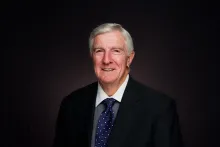
Before his retirement in 2021, Dr. Donald Ward pastored churches in Texas and Louisiana, and taught at Ambassador Bible College in Cincinnati, Ohio. He has also served as chairman of the Council of Elders of the United Church of God. He holds a BS degree; a BA in theology; a MS degree; a doctor’s degree in education from East Texas State University; and has completed 18 hours of graduate theology from SMU.
