

Don Ward
This transcript was generated by AI and may contain errors. It is provided to assist those who may not be able to listen to the message.
When Jesus Christ died, there were a number of unusual events that took place. That surrounded his death and his resurrection. Let's go back to Matthew, chapter 27. Matthew 27 and begin in verse 45. I want you to notice what occurred. I think a lot of times we read over these scriptures and they don't really sink in or we don't stop to meditate on them and think about what might have occurred. In verse 45, it says, Now about the sixth hour, until the ninth hour, there was darkness over all the land.
Now that's 12 noon to three o'clock in the afternoon. The land was dark.
About the ninth hour, Jesus cried out with a loud voice, saying, Eli, Eli, Eli, and I, subbaptini, that is, my God, my God, why have you forsaken me? And then you go on to verse 50. Jesus, when he cried out again with a loud voice, yielded up the spirit. Now the first event that you notice that was unusual is darkness over the land for three hours. That's a long period of time. This was not an eclipse of the sun. As the commentary by Morris, the Gospel according to Matthew, states, this cannot be explained away as an eclipse, for it was Passover time with a full moon. An eclipse was not possible. It's been suggested that darkness was due to a sandstorm. But this is unlikely. Nothing in the passage indicates sand. We should understand the darkness as supernatural, leading up to the time when the Son of Man breathed his last. It was not a local phenomenon peculiar to Jerusalem, and its immediate environments for all three Gospels tell us it was over all the land. This clearly means that it was not just a natural phenomenon, but the result of divine intervention. Now, you think about tomorrow. Let's just say tomorrow at noon, it starts getting dark. And one o'clock is still dark. When you have an eclipse, there's a shadow that comes across, and then it keeps moving. It doesn't last very long at all. Well, it's dark for an hour. Two o'clock, it's still dark. Three o'clock, it's still dark. That had to make an impression upon the people. It had to create a stir upon the people. And they had to wonder what's going on, because this is something that none of them had ever seen before. Now, right along with this, notice in verse 51, And behold, the veil of the temple was torn in two, from top to bottom, and the earth quaked, and the rocks were split. The veil of the temple was torn in two. The veil, the curtain, was approximately 42 feet high, 15 feet wide. Now, when it tore, and this had never occurred before, it was ripped down the middle, apparently, from the top to the bottom. Obviously, God had sent an angel supernaturally and had this curtain tore. Now, think what would have occurred if you were a priest and you were inside the temple and this happened. What would you be thinking? Or, whether there was a priest in the temple or not, somebody, obviously, would have gone in soon afterwards, and here would have been this veil ripped in two. What would the religious leaders of that day have thought and the priests when this occurred? When a priest saw the curtain torn, he could actually look right directly into the Holy of Holies. Remember, this was a curtain that separated the Holy Place from the Holy of Holies. He could have looked right in, and yet he didn't die. There's no record of that happening at that time. Obviously, the curtain was going to have to be sewn, or a new curtain was going to have to be hung in its place. So, here you have darkness for three hours. Christ dies, cries out, the veil is rent, and as verse 51 says, the earthquake, so we have an earthquake taking place at this time, and the rocks are split open. Well, this could refer to all kinds of rocks, but it could also refer to the graves. There were many types of tombs where they were buried, maybe in the side of a mountain or side of a hill and a cave. Those could have been cracked open. And we read in verse 52, and the graves were opened, and many bodies of the saints who had fallen asleep were raised, and came out of the graves after His resurrection, and they went into the holy city and appeared to many. Now, the graves were open, but if the graves were opened at this point, the people in the graves did not come out until after Christ was resurrected. And it says many bodies were raised after His resurrection.
Now, that wasn't one or two, that wasn't three or four. Many means more than two or three. There were a lot of bodies who were resurrected. Now, you can read right over that, but stop and think. Perhaps somebody's beloved parents had just died in the past year, and they had buried them, they had seen them buried, and six months later they come walking back into the city and knock on the door. You go answer the door to see who's there, and there's your mom and dad who had died six months before. What if that person had been known by hundreds of people, been a leader in the city? And so a lot of the family, a lot of the friends, you know, other people in the community knew them. What about a teenager, maybe, who had died of an accident and comes home and walks in and says, hi mom or hi dad, well you'd have a heart attack probably, you know, if you saw them come in. The shock that that would create among the family, among friends, the community.
Now, just stop and think about this on a personal level. My dad and mom had been dead for a long time. What if one of them came walking into my house and you just opened the door and walked in and I saw them? What would go through my mind? What would go through your mind if you've had a parent or someone that you know who has died? What would you think? What would other people think? What if Grace Holiday came and sat in this congregation again and you know that many of you knew her? The same thing happening to others who have died. We've all had someone who's been a dearly loved or admired person who died. Now, why did God do this? What was all of this for? Why did God perform a series of signs and wonders at this particular point? Well, there could be several reasons, but two of the most obvious. They were a witness to the disciples and they were also a witness to the religious leaders of that day. This notice in chapter 27 again, verse 62. On the next day, which followed the day of preparation, the chief priests and Pharisees gathered together to pilot, saying, sir, we remembered while he was still alive, how the deceiver said, after three days I will rise. Therefore, command that the tomb be made secure until the third day, lest his disciples come by night, steal them away, and say to the people, he has risen from the dead, so that the last deception will be worse than the first.
And Pilate said to them, you have a guard, go your way, make it as secure as you know how. So they went, made the tomb secure, sealing the stone and setting the guard. So there wasn't one person sitting out there or two. There was a whole squad of guards around. They secured the tomb. They put a large stone over it, and it would take a lot of people to come along and to move that stone away. Now in chapter 28, we find what did occur. Verse 1. Now after the Sabbath, as the first day of the week began to dawn, Mary Magdalene and the other Mary came to see the tomb. And behold, there was a great earthquake. So here's the second earthquake that takes place. This very possibly could have been the earthquake that opened the graves, or they may have been opened before, or both of them may have opened graves. But behold, there was a great earthquake. For an angel of the Lord descended from heaven and came and rolled back the stone from the door and sat on it.
We can say, okay, you know, we know that an angel moved the stone. But notice, his countenance was like lightning. Ever seen lightning? Well, we all have. What would you think of seeing a being sitting on a rock and he looks like lightning? Lightning in the body and his clothing as white as snow. And the guards shook for fear of him and became like dead men. So the guards saw this happen. This wasn't done in a corner. It's like the Apostle Paul said, these things were not done off in a corner. These were all broadcast and well known. So here are the guards. They're minding their own business. They're watching the tomb. All at once this brilliant being comes down. An angel looks like lightning. He comes along, he moves the stone, he sits on it, and he looks at them. And they become like dead men. And I think most people would too. They'd be frightened to death. What is this? But the angel, you'll notice, the guard shook. But the angel answered and said to the women, Do not be afraid, for I know that you seek Jesus who was crucified. He is not here, he is risen. And he said, Come and see the place where the Lord laid. Go quickly, tell his disciples that he is risen from the dead. Now the women saw the angels too. So the women see the angel, the guards see the angel. Now in verse 11, let's notice. Now when they were going, behold, in other words, the women left to go tell the disciples, they were going, behold, some of the guard came to the city and reported to the chief priest all the things that had happened. So they told them. And when they had assembled with the elders and taken counsel, they gave a large sum of money to the soldiers, saying, Tell them his disciples came at night and stole him away while we slept. And if this comes to the governor's ear, we will appease him and make you secure. So they took the money and did as they were instructed. And the saying is commonly reported among the Jews unto this day. Now stop and think of the duplicity and the deception here. The guards come and they report to the priest, you know, to the higher-ups.
They know what the guards said. The leaders were aware that something supernatural had taken place. Something supernatural had happened, had occurred. And yet they willingly rejected the testimony of the guards, gave them money, and had them go out until alive. Now Jesus later on that day, toward the evening, appeared unto his disciples. You remember on the still the evening of the first day of the week, he showed them the wounds in his hands and his feet. He appeared and disappeared. He walked through walls. He just showed up in the room and disappeared, you know, in the same way. So he performed signs and wonders. Now I want you to notice in John chapter 20, John 20 verse 30, we'll begin to read. John 20 30 says, Truly Jesus did many other signs in the presence of his disciples which are not written in this book. But these are written that you may believe that Jesus is the Christ, in other words, Jesus is the Christ, the Son of God, and that believing you may have life in his name. He did many signs. In fact, overall, I think it's in 1 Corinthians, it states that Jesus Christ was seen by over 500 brethren at once. So he was seen by many hundreds of individuals. They knew that he was alive. Certainly all of these events contributed to the fact that on the day of Pentecost, 3,000 people were converted. I'm sure when the Jews came together on Pentecost and they were talking among themselves, that still some of these events that had taken place back around the Passover and the days of Unleavened Bread were being talked about. Then Peter stands up. He gives this inspiring sermon. All of the apostles spoke. And as we read here in Acts 2, verse 43, says, Then fear came upon every soul, and many wonders and signs were done through the apostles. So not only were they done at that time, but on the day of Pentecost, many signs and wonders were done. And people saw these. Now all of these events, capped off by additional signs and wonders, indicated something. I wonder if you know what?
Indicated that a transition was taking place. That there was going to be a transition. Something different was taking place. Truly something different did occur.
As recorded in the Old Testament, you might remember, when God chose Israel, He gave them the Levitical priesthood. Remember when God established Israel, brought them out of Egypt, a series of miracles being performed, brought them to Mount Sinai, where the covenant was established, and the volcanic eruption going off, clouds, lightnings. The Old Testament church started with a great deal of signs and wonders and powers being displayed. And God Himself speaking directly to the people.
However, as I said, as recorded in the Old Testament, God chose Israel. He gave them the Levitical priesthood. He established first the tabernacle, and then once they were permanently settled, later on, a temple for the people to worship at and to worship God and for sacrifices. Let's go back to Exodus 25, Exodus chapter 25, where instructions are given concerning this in verse 8. Exodus chapter 25 and verse 8. The covenant is made over here in chapter 24, and then the Lord spoke to Moses in chapter 25. And verse 8 says, Let them make me a sanctuary or a sacred place. Why? Why did God want this? Because God said that I may dwell among them. That's why God wanted to dwell among and with His people. According to all I show you, that is, the pattern of the tabernacle and the pattern of all of its furnishings, just so you shall make it. And so God showed him, gave him a vision of the tabernacle in heaven and some of the furnishings. God wanted to dwell among them. Now, in the Old Testament, at this time, only the priests were allowed to enter into the first room of the temple, called the Holy Place. Remember, the temple or the tabernacle was divided in two rooms. The first one was called the Holy Place. The innermost room was called the Holy of Holies. The Holy Place the priests could go into. That Holy Place was symbolic of the church.
Now, only the high priests could go into the Holy of Holies. That was only once a year, and that was on the day of atonement that he would go in to offer up blood for the people. The Israelites did not have direct access to the tabernacle of the temple in the sense of entering into it. It was only through a physical priesthood that they could approach God and their worship. As Hebrews chapter 9 tells us, the way into the Holies was not yet manifested. Let's go back and read that. Hebrews chapter 9. Hebrews 9 will begin in verse 1. Sort of a summary of what I've just said here. It says, Then indeed even the first covenant in ordinances of divine service, in the earthly sanctuary, for a tabernacle was prepared, the first part in which the lampstand, the table, table of showbread, and the showbread, which is called the sanctuary, and behind the second veil, the part of the tabernacle, which is called the holiest of all, which had the golden altar of incense, the Ark of the Covenant, overlaid on all sides with gold, in which were the golden pot that had the manna, Aaron's rod the budded, and the tablets of the covenant. The tables of stone and above it were the caribum of glory, overshadowing the mercy seat. Of these things we cannot speak in detail. Okay, I wish he had spoken in detail, but he gives us enough to let us know. He says, now when these things have been thus prepared, the priest always went into the first part of the tabernacle, performing the service. But into the second part, the high priest went alone once a year, not without blood, which he offered for himself, and for the people's sins, committed in ignorance. And the Holy Spirit, indicating that the way into the holiest of all was not yet made manifest. I want you to notice that were not yet made manifest. While the first tabernacle was still standing, it was symbolic of the present time in which both gifts and sacrifices were offered. And it says, which cannot make him who performed the service perfect in regard to the conscience, concerning only with foods and drinks and various washings and fleshly ordinances, imposed until the time of reformation. So there was going to come a time of change, a time of reformation, a time that there would be a difference. When Jesus Christ came to the earth, you might remember back in John chapter 1 and verse 14, John 1.14, we read that the Word became flesh and dwelt among us, and we beheld his glory. The glory is the only begotten of the Father, full of grace and truth.
Jesus Christ dwelt among the people at that time. The Greek word, schino, means he tabernacled or tinted among us. Same word that is used in the book of Hebrews. He tabernacled or tinted among us. He dwelt among us. God in the flesh dwelt among men.
In the Old Testament, God dwelt in the tabernacle. When Jesus Christ came, he dwelt literally among the people. Remember Matthew chapter 1 that says, he is called Emmanuel, meaning God with us. So God was with them. God dwelt among them. God walked among them. God taught to them. Taught them at this time. But notice when the New Testament church started, something happened. Something new took place. There was a reformation. There was a change that was going to take place. That's recorded back here in Ephesians 2, verse 19. Let's go over to Ephesians 2, and we'll begin to read in verse 19.
It says, Now therefore you are no longer strangers, talking here to the Gentiles and foreigners, but fellow citizens with the saints and members of the household of God. Having been built on the foundation of the apostles and the prophets, Jesus Christ himself being the chief cornerstone, in whom the whole building, being joined together, grows in a holy temple in the Lord. So the church today is compared to the temple. We grow into a holy temple. Why? In whom you also are being built together for a habitation of God in the Spirit.
For a habitation of God in the Spirit. The church is the spiritual temple of God today. God dwells in us. Our High Priest, Jesus Christ, dwells in us. He has made it possible for us to have direct access to the Father. Now, what do I mean by that? Well, Hebrews chapter 10. Hebrews chapter 10. We read beginning in verse 19. Let's notice. Hebrews 10-19.
Therefore, brethren, having boldness, and I want you to notice the word boldness. Having boldness to enter into the holiest by the blood of Jesus. So Christ's sacrifice made it possible for us to come before God boldly. Not with timidity, not with fear, but boldly to enter the holiest by the blood of Jesus by a new and living way.
A new way. A reformation. A living way. Remember in John chapter 14, Jesus Christ said, I am the way, the truth, and the life. Jesus Christ is the way. So by a new and a living way through Christ, which He consecrated for us through the veil, that is His flesh.
So when Jesus Christ was crucified and He died, the veil being ripped in the temple was symbolic of the fact that the separation between man and the Father had been removed. That you and I now could have direct access to the Father, and that we could come boldly before God and pray to Him, and have access to Him. He's made it possible for us to do that, and it is a new and a living way. The Old Testament, they did not have this same opportunity that we do. Jesus Christ made it possible to come to God to be able to approach God. As I said in John 14, 16, we must come through Christ to come to the Father. God calls us, but we come through Christ to go to the Father. Let's notice in Ephesians chapter 3, back up to Ephesians 3, beginning in verse 8. Very interesting scripture here. Ephesians 3, 8, It says to me, who am less than the least of all the saints, this grace was given, that I should preach among the Gentiles the unsearchable riches of Christ.
To make all people see what is the fellowship of the mystery, which from the beginning of the ages has been hidden in God who created all things through Jesus Christ. To the intent that now the manifold wisdom of God may be made known to the church, may be known by the church to the principalities and powers in the heavenly places, the angels desiring to look and to see what God is doing.
According to the eternal purpose, so this is God's purpose, which He accomplished in Christ Jesus, our Lord, through Christ's sacrifice, making it possible, in whom we have boldness. Now, notice that word again. You and I, when we pray to God, we don't come before God timidly. God says to come before Him with boldness, in whom we have boldness and access with confidence through faith in Him. So you and I now have access to God, the type of access that they never had before, that the veil has been rent.
We, the holy place being the type of the church, we now have the ability to go to God on our knees and to pray to Him, to have access with confidence through faith in Him. So we can have total confidence in this. Therefore, I ask that you do not lose heart at my tribulation for you, which is your glory. So even though things may not be going well, we may be having trials and tests and difficulties. We know that God hears we're not to lose heart.
See, Jesus Christ is our High Priest. There are two ways of looking at this, as we'll see. He is our High Priest, and as such, He intervenes on our behalf, just as the High Priest would go before God in the Old Testament.
So Christ goes before God on our behalf today. First Timothy chapter 2 and verse 5. In First Timothy chapter 2 and verse 5, says, There is one God and one mediator between God and man, or men, the man Christ Jesus. So Christ is a mediator between us and God. Hebrews 9 verse 24 tells us, Hebrews chapter 9, 24, For Christ has not entered into the holy places made with hands, talking about the physical tabernacle or temple, which are copies of the true, in other words, they were patterned after the true, but into heaven itself now to appear in the presence of God for us.
Christ appears for us. You can have no better High Priest, no better individual who goes to God Himself and says, Father, this person is having this difficulty. I understand what they're going through. He appears on our behalf before the Father.
He pleads our case before the Father. In chapter 4, we find that He also understands our weaknesses. Beginning in verse 14, Hebrews chapter 4 and verse 14, Saying then that we have a great High Priest who has passed through the heavens, Jesus the Son of God, let us hold fast our confession. For we do not have a High Priest who cannot sympathize with our weaknesses, but was in all points tempted as we are, yet without sin.
But He was tempted. Let us therefore what? Notice again the word. Let us therefore come boldly. And where are we to come boldly? To the throne of grace. Where is the throne of grace? It's in the Holy of Holies. Remember, there was the Ark of the Covenant. On that Ark of the Covenant was the Mercy Seat. That is the throne of grace. That pictures the very throne of God with the two caribom over it.
Come before the throne of grace, where God's grace and mercy is extended to us. That we may obtain mercy and find grace to help in time of need. Are there times that we need God's forgiveness and grace? That we need God's mercy? That we need God's help?
All the time. Well, the Bible says that we can come boldly to that throne of grace. As one commentary mentions, grace and mercy without these two elements, we could not approach God. But because of these awesome attributes, we can approach Him. Jesus the Christ made crystal clear that we can come to Almighty God in prayer because we are family through faith in Jesus Christ. You see, we are the sons and daughters of God. We can approach into our God the Father and have direct access to Him.
Isn't it nice to know and to realize that you and I have a Father who we're not cut off from, that the only way that we can reach or talk to Him is to go through somebody else? Now, Christ is there as our High Priest, and He does intercede on our behalf. But there's not a day that you and I, if you want to get down on your knees and you cry out to God and you pray to God and you say, Father, help me.
I need your help, your strength. And you can come boldly to Him. You can come boldly to the most powerful being in the whole universe and have confidence that He will hear. Let's notice in chapter 7 here, the book of Hebrews, verse 23. Chapter 7, verse 23 says, There were many priests because they were prevented by death from continuing.
Physical priests died, and then they had to be replaced by another one. Aaron came along. He died. He had to be replaced by his son. But he, because he continues forever, he has eternal life, has an unchangeable priesthood. Therefore, he is also able to save to the uttermost those who come to God through him. Remember Christ said, when you pray that we come through Him, we say, in the name of Jesus Christ.
When you say, in the name of Christ, that means by His authority. He gives you the authority to come to God through Him. Since He ever lives to make intercession, there is intercession for them.
So Christ lives to make intercession. For such a high priest was fitting for us, who is holy, harmless, undefiled, separate from sinners, and has become higher than the heavens.
He does not need daily, as those high priests, to offer up sacrifices, first for his own sins, and for the people. For this he did once when he offered up himself. For the law appoints, as high priests, men who have weaknesses, but the word of the oath, which came after the law, appoints the Son, who has been perfected forevermore. So Jesus Christ is our high priest forever. Now you might say, well, what's the point? Chapter 8, verse 1. Now this is the main point, so we will let the writer of Hebrews answer. Of the things we are saying, we have such a high priest who is seated at the right hand of the throne of the majesty in heavens, a minister of the sanctuary of the true tabernacle, which the Lord erected, not man. For every high priest is appointed to offer gifts and sacrifices, therefore it's necessary that this one also have something to offer. So what did he offer? Or if he were on the earth, he would not be a priest, since there are priests who offer the gifts according to the law, who serve the copy in the shadow of the heavenly things, as Moses was divinely instructed when he was about to make the tabernacle. For he said, See, that you make all things according to the pattern shown you on the mountain. But now he has obtained a more excellent ministry inasmuch, as he is the mediator of a better covenant, which was established upon better promises. Christ has entered into heaven with his own sacrifice. Our high priest sits next to the Father in heaven. He pleads our situation.
Have there ever been times in your life that you haven't felt close to God?
You just don't feel close. You feel God's far off aloof. You pray to him. Your prayers don't get past the ceiling. Well, the following story is purported to be true. I found it in the book of illustrations and quotes. Let me just read it to you, because if it is, it illustrates exactly what Jesus Christ does for us. It says, Following the Civil War, a dejected Confederate soldier was sitting outside the grounds of the White House. A young boy approached him and inquired why he was so sad, the soldier related, how he had repeatedly tried to see President Lincoln, to tell him how unjustly deprived of certain lands in the South following the war. So he had certain properties taken from him. On each occasion, as he attempted to enter the White House, the guards crossed their bayonet, guns in front of the door, and turned him away. The boy mentioned to the soldier to follow him. When they approached the guard entrance, the soldiers came to attention, stepped back, opened the door for the boy. He proceeded to the library where the president was resting, introduced the soldier to his father. The boy was Tad Lincoln. The soldier had gained an introduction or an audience with the president through the president's son. You and I come not to the president, but to Almighty God through his son, Jesus Christ, and we have an audience with our father, and he is always willing to listen. Stop and think about it. We're able to talk directly to the most important being in the universe. God the Father, there is no more important being in the universe, and yet you and I at any time can get down and pray. And if by health reasons, no, you can't get down on your knees, you can pray to God wherever you're seated. You can ask God's help and guidance. Let's notice back here in Romans chapter 8. Romans chapter 8, how through the Spirit Christ makes intercession for us. Verse 26, it says, Likewise the Spirit also helps in our weaknesses. For we do not know what we should pray for as we ought, but the Spirit Himself makes intercession for us with groanings which cannot be uttered. Now He who searches the heart knows what the mind of the Spirit is because He makes intercession for the saints according to the will of God. And we know that all things work together, and then He goes on to talk about that. Jesus Christ intercedes on our behalf. And you can read how we cannot be separated from the love of God. But let's back up to verse 15. Verse 15 says, For you did not receive the Spirit of bondage again, to fear, but you received the Spirit of adoption, by whom we cry out, Abba, Father. The word Abba is the English equivalent. The English equivalent, I should say, of Abba would be the term daddy or dear father. It was used by young people and old alike in an intimate way to their fathers. That if you come up to your dad and you give him a hug around the neck and you say, dad, you don't say, well, father, I'd like to hug your neck. No, dad or daddy. And the same thing with God the Father. Let's notice in Ephesians 2.18. Ephesians chapter 2.18.
We read this, For through him we both have access by one Spirit to the Father. So by the Spirit of God, the fact that God's Spirit lives in us through Christ, we have access to the Father. In Matthew 6.6, you might remember when His disciples asked Him, show us how to pray. What did He say?
Our Father, which art in heaven, hallowed be your name. He didn't say, well, you can't pray to the Father. You see, you and I can pray to the Father and we know that we have His complete attention. We have His ear. He will listen to us. We're His children. He cares for us. He sits on the mercy seat. He sits on the throne of grace. He is the most powerful being in the universe. He is Almighty God. He is the most loving, most giving, most serving, most graceful being in the universe. And He's our Father. He loves us. We come to know God the Father personally through our prayers to Him. We have an intimate relationship with the Father. I see so often people today talk about they want to go somewhere or do something because of relationships with one another. But all of our relationships must flow and stem from our relationship to God the Father. That's where it all begins. That's who we have it with. Too often we fall short in keeping that access with God as vibrant and dynamic as it should be. Rather than our prayer lives cannot be whole hung, cannot be sleepy-time type of thing, we get down on our knees. We should think, I'm praying to Almighty God. And we should remind ourselves every time we pray about God, we should praise Him, we should acknowledge Him, we should talk about what He has done, who He is, and that we can come boldly to Him and know that He will hear us. Think of all that God did, and Christ did, to make it possible for us to have direct access to Him. He sent His Son, His Son died. A veil was ripped symbolic of our then having access to the Father. Too often we don't pray like we should. We forget prayer, or we become negligent in our prayer, or we let down. We sometimes allow prayer to become a ritual.
You and I, brethren, need, when we pray to God, we need to realize and remember we're praying to the most powerful being in the universe. We need to know that, and it should be reflected in how we pray, and how often we pray. Now, there is coming a time when we will have greater access to God than we have today. Let's notice Revelation chapter 21. Revelation the 21st chapter, beginning in verse 1. There's going to come a time when God Himself is going to come to this earth.
Verse 1. I saw a new heaven and a new earth, for the first heaven and the first earth were passed away, and there was no more sea. So there's a new heaven and a new earth. And I, John, saw the holy city, New Jerusalem, coming down out of heaven from God, prepared as a bride adorned for her husband. And I heard a loud voice from heaven, saying, Behold, the tabernacle of God is with men, and he will dwell with them. Just as Jesus Christ, who was the forerunner of this, dwelt among men, but men in the flesh. So the Father is going to come and dwell with His family, made spirit beings, the spirit family of God, the kingdom of God. And the tabernacle of God is with men. In other words, we were men who had been made perfect, and He will dwell with them, and they shall be His people. And God Himself will be with them, and be their God. And this is the time when God will wipe away all tears. No more death, no more sorrow, no more crying, pain. All the former things, the first things, have passed away. Notice verse 22.
I saw no temple in it, in the New Jerusalem. For the Lord God Almighty and the Lamb are its temple.
And the city has no need of the sun or the moon to shine in it, for the glory of God illuminates it, and the Lamb is its light. And the nations of those who are saved shall walk in its light, and the kings of the earth shall bring their glory and honor into it.
So, brethren, there is going to come a time where God will dwell with the family of God made perfect. And God has illustrated this from the very beginning. When He chose Israel, He was going to dwell among them, but in the temple. When Christ came, He was the temple Himself, and He dwelt among men. We today as a church are God's temple, and God dwells in us. And there's going to come a time when God, the Father Himself, will come down from the Third Heaven, wherever He is. I guess that is the Third Heaven. He will come and dwell here on this earth, and He will be with us. And the Father and the Son will tabernacle with His family forever. So, brethren, realize what a tremendous blessing it is for us today to be able to come boldly before the throne of grace and find help whenever we need it. That we have a great God who is there. We have a great Father who will answer our prayers.
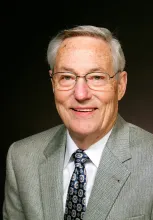
At the time of his retirement in 2016, Roy Holladay was serving the Operation Manager for Ministerial and Member Services of the United Church of God. Mr. and Mrs. Holladay have served in Pittsburgh, Akron, Toledo, Wheeling, Charleston, Uniontown, San Antonio, Austin, Corpus Christi, Uvalde, the Rio Grand Valley, Richmond, Norfolk, Arlington, Hinsdale, Chicago North, St. Petersburg, New Port Richey, Fort Myers, Miami, West Palm Beach, Big Sandy, Texarkana, Chattanooga and Rome congregations.
Roy Holladay was instrumental in the founding of the United Church of God, serving on the transitional board and later on the Council of Elders for nine years (acting as chairman for four-plus years). Mr. Holladay was the United Church of God president for three years (May 2002-July 2005). Over the years he was an instructor at Ambassador Bible College and was a festival coordinator for nine years.
