
Chuck Smith
This transcript was generated by AI and may contain errors. It is provided to assist those who may not be able to listen to the message.
It's often been said that the loudest sermon is not what is preached, but what is practiced. And I want to take that a step further for a moment, and that is a practice that allows us to not merely show what we know and what's in our noggin, but also reveals how we are transformed and shaped by God's revelation of opening our eyes, of opening up our minds, and opening up our hearts, and thus is reflected in what we do before our Father and before our fellow man. Acts 17, and as I mentioned that, your mind might go right to it, oh well, that's where, and we'll be talking about that in a moment, Acts 17 is a declarative life statement of a knowing and transformed heart.
Acts 17, and we're going to get there in a moment. Acts 17, and within it, are several stories. There's the story of the Bereans, and we often think of how admirable the Bereans are, but that as the Bereans were studying the Scriptures, as Paul was teaching them, there were people that came down from another church and stirred up trouble, and Paul actually, well, it's like Dodge, you had to get out of town, and they got him out of town. Sylvanus and Timothy were left, others took him down to Athens, and in Acts 17 is one of the major sermons in the New Testament.
Now, what I want to share with you to bring you into the message here for a second, friends, is simply this. We often think that, okay, this is the great showcase, this is where the Apostle Paul, the Renaissance first century man, the man that can talk to the Greeks, talk to the Romans, talk to the Jews, here he's going to lay it out and give it to the pagans.
And I think that's normally what we think about, that here's Paul, he's giving this great witness to the world. But here's what I want to share with you today to bring you into the message. But he is also talking to us. And that's what we're going to share today. He's also talking to us as to how we ourselves incorporate the gospel and live and exist within the framework of that gospel, of that good news, of that revelation on a daily basis.
So allow me to give you my specific purpose statement for the message today. It's simply called Acts 17, a mirror to our soul. A mirror to our soul, or you can just say, or to our being. And I think you can already see the connection between this message and the first message. Join me if you would. Come, let's go to the scriptures. That's why we're here. We always open up our Bibles in the Church of God community. Let's go to the Book of Acts. The Book of Acts. And remembering that Acts is but one part of a two-part overall book that was later divided into sections between the Gospel of Luke and the Gospel of Acts.
The Gospel of Luke, Luke shows how salvation came through Jesus Christ. And then the Book of Acts shows how salvation was spread by the early Jesus followers and by that spirit that imbued and empowered them to do what they needed to do. So with that thought, we're in Acts 16, and let's pick up the story. I've already mentioned in part that Paul had to get out of town, as it were, in the town of Berea. People brought him down from Berea, and they left him. Let's put it this way. They deposited him in one of the great cities of the ancient world, the world of antiquity. In verse 16, it says, now while Paul waited alone, which is going to be very important as we talk about what we do alone, what we do in the singular.
Now while Paul waited alone for them at Athens, it says that his spirit was provoked. Have you ever been provoked? No, just to say the word provoked, it tells you that something is stirring inside of him. That he was provoked within him when he saw that the city was given over to idols. It's interesting that in a sense of just that it's been said that in that day and in that time that there were more idols in Athens than there were people.
And so the whole city was given over to idols. Now if you want to look at some synonyms, and let's have some fun with this for a moment, we used the word provoked, we could also use he was overwhelmed, which would also, it's also in different translations, he was overwhelmed. And as the new, revised standard version says, he was deeply aroused.
Another version says that he was distressed. So we begin to see that something has happened there, that he was distressed. And he felt like he had to comment on it, he had to speak out that he couldn't be quiet, that he was a witness of what had been given to him. Now notice what it says in verse 17, and therefore he reasoned in the synagogue with the Jews and with the Gentile worshipers. When it says the Jews and the Gentile worshipers, the Gentile worshipers would be called in the Bible, and are, they're called proselytes.
They're called devout persons. These were individuals that were Gentiles but had not gone all the way into Judaism, but were attracted to it. They were on the fringes. They were drawn to the values and the singularity of a god rather than a pantheon of gods. And so they also were a part of, in a sense, an extension of that synagogue community. It also says, and notice what it says, it says, he also was in the marketplace daily with those who happened to be there. And then notice what it says here, and then it says that certain Epicurean and stoic philosophers encountered him, and some said, what does this babbler want to say?
Now I want to share something with you. I know you've never had those words cross your mouth about another individual that you've known or that you've been around or bumped into. Maybe. We often say somebody just goes babbling on, babbling on, babbling on, babbling on, babble, babble, babble. That was not a kind term. They were not giving him an honorary doctorate when they said, what does this babbler have to say? The term babbler, really in the Greek community, meant outside of any literary circle. It was also thought to be like a plagiarist, somebody that kind of picked up a little bit here and picked up a little bit there and picked up a little bit there.
And it wasn't cohesive, but it sounded knowledgeable, but it did not make sense. But they wanted to know what does this babbler say. Another said he seems to be a proclaimer of foreign gods because he preached to them Jesus and the resurrection. Now, Jesus is a Greek word, as you know and I know I do believe, that we would say Joshua or we would say Yeshua in the Hebrew tongue or perhaps in the Aramaic tongue.
But in Greek it would be Jesus. And Paul would be speaking the language that was best known there in the area of Athens. And he was also using this other terminology. Two words kind of stood out as we'll see in Acts 17. He was also using this terminology of Anastasi, Anastasi, which you and I would know in the Latin as resurrection. So you might want to, if you're taking notes, let's take down two words just right now.
Not going to have you write a diary. Just two words. The word Jesus was standing out in the marketplace. The word Jesus was standing out in the synagogue. And it's going to stand out as he gathers together as we're going to be moving towards Mars Hill in just a few minutes. And they wanted to know about it. In fact, we're going to find something interesting that here they were. There's three things I want to share with you as we understand how we can incorporate Acts 17 as being the mirror of our soul.
Let's understand something. Big point. A point that we need to be aware of. And that is simply this. Wherever Paul was, his message and his communication never changed. Whether it was in the synagogue, whether it was in the marketplace with philosophers and people that were coming and going in commerce, and whether, as we're going to find on Mars Hill in the moment, with the city elders, it never changed.
Paul's focus was about Jesus Christ, and it was about the hope of the resurrection. And that was strange. This word, Anastasi, was strange to the Greek community because the Greeks had no sense of resurrection. Totally different theology. Totally different way of looking at the universe. And it struck them that he's speaking about this thought that somebody could die and then be able to stand and to be able to come up. And so it says that, we notice here then where he would talk to them. Now it says here in Acts 18 about the Epicureans and the Stoics.
I want to share. We're not going to go real deep into all philosophy. You can get a book on that. But the Epicureans and the Stoics, they were the two main philosophies of the intelligentsia of the Hellenistic world at that time. The Epicurean philosophy was generally that claim that there was a purpose to life that might be obtained to be very blunt by self-doing. But by what man could slowly scale himself up the ladder towards a certain amount of divine attainment.
They did not deny the existence of the gods, but agreed that the gods were not interested, stay with me, or involved in humanity. Sound like our society today at all? That there are people that might think, well, God's kind of a first cause, but he's out there. He's remote, not really involved in our lives.
So we kind of do our own trail to Nirvana. We lift ourselves up, we go up in scales and scales and scales towards the attainment of the divine. On the other hand, there were the Stoics. The Stoics claimed that the main purpose of life was to ascend above all things. They had a pantheistic view, which means that God is in everyone. God is in everything. Further, this would claim that everyone and everything is God. You try to wrap your mind around that one for a moment. In other words, God is just pervasive, pervasive, and intrinsic in every molecule and every atom of the world, whether it be a slab of marble, whether it be a bird. I don't mean to bring this up, but even human waste were all considered God from this point of view. There was nothing that was not of quote-unquote the divine. They also then believed in the immortality of the soul that ultimately, because God is in everything once we die, were just absorbed back into, are you with me? Into Nirvana, God out there.
So here comes Paul, this dew from Tarsus, which often by itself, as the scripture says, was no mean city. Tarsus was a very great city in that area of Asia Minor, of which the Roman world and the Greek world and the Jewish world would all come together. And God knows who He's going to use when He needs to use that person for His purposes. Now, verse 19, it says, And they took Him and brought Him to the Areopagus, saying, May we know what this new doctrine is of which you speak. It was a new doctrine, it was a new teaching.
And being in Athens, which had philosophers going back to the time of Socrates and Plato and Aristotle, and you can throw in all the other Greek names you might know, a lot of people were bringing out things, but these were strange things to their ears. And what was strange? The concept of this Jew named Jesus was strange to them, and this aspect of the resurrection, they couldn't wrap their mind around it or understand it, and they wanted to hear more. Therefore, we want to know what these things mean.
For all the Athenians, the foreigners who were with them, they spent their time in nothing else but either to tell or to hear some new thing. Now, let's stop for a second. Part of this is philosophy, part of this is history, and a lot of it is going to be personal, but I've got to bring it all down together for you here a second.
Let's realize that Athens, the heyday of Athens, was now over. The heyday of Athens had actually been in what we call the Age of Pericles, about 450 BC. Athens had been pummeled by the Romans as they came east, but it was still considered a cultural and educational and intelligentsial center. Much of Athens was much like Alexandria, which is another Greek city. These were hubs of knowledge, and as much as they had, and as brilliant as a lot of these philosophers were, the bottom line is simply this.
They knew in their heart of hearts that there was something missing, that there was something that they could not grab a hold of. Join me, if you would, in Ecclesiastes, the book of wisdom, back in the Old Testament, in Ecclesiastes 3. Let's take a look at this. I'm going to put a pin on what we're talking about. Ecclesiastes 3, verse 11. In that famous section, there's a time for this and there's a time for that.
Then we go down to verse 11. He, speaking of God, has made everything beautiful in this time. Notice, and he has put eternity into their hearts, except that no one can find out the work that God does from beginning to end. There is a human spark of the Spirit, of that which is of the divine. There's this scratch that continually needs to be itched, or this itch that needs to be scratched. Excuse me, that's my duck coming out. That there's something that just gnaws. They know there's something there, but it has to be revealed.
Paul is going to be doing this now, and he's going to be explaining that. One thing I want to share with you is this. You've heard of Mars Hill, many of you that study the Word, and we know that Paul was taken to Mars Hill. We've seen the Epicureans, we've seen also the thought of the Stokes, but here's something I want to share with you.
We've often thought, well, maybe it was just a bunch of philosophers. Let's have a forum and we'll talk about this. That was not the function of Mars Hill, and otherwise known as the Eropicus. Eropicus is Greek for Mars Hill. There was something else going on here. I want to show you right here. Let's take out our photo here for a second. What you see in front is where they would have met on this mount right here. On this mount right here in the front is where they would have met, where these men are standing.
Look at what they're looking at. Can somebody help me with what's on the other side? Can we use one word? Pardon? I'm looking for a Greek word. What do we call that? Most Greek towns had what is called an Acropolis, and this is what we call the Acropolis, correct? The Acropolis, the most famous Acropolis in the world of antiquity, the one that you would see the Parthenon on, that great temple. Now we're going to come back to that picture, but we're not sure, but other scholars believe that this was more than just a philosophical treatise.
Let's remember that Athens was the city, Athens was the civilization that would be daring enough to put its philosophers on trial, like Socrates. Socrates was put on trial before this same group, and Socrates found to be corrupting the morals and the thoughts of the youth of that city. For any of you that have ever studied Socrates, he's the one that took the Himmlock, right? He was given the opportunity to commit suicide rather than being executed.
So in Greek background, they had no issue, ultimately, if there was something too much out of hand, that the court that met on the Areopagus on Mars Hill. So we've got to gain a sense here that Paul was in a sense in trouble. He was on the edge of something. Now, what we're going to understand through this, let's jot down 1 Peter 3.15. Would you be so kind? It says, always be ready to speak of the hope that lies therein. Can somebody finish that verse with me without repeating it?
Always be ready to speak of the hope that lies therein, comma, I'll help you with meekness and with fear. With meekness and with respect. With meekness, and rather than blowing somebody out, state your case and hopefully draw them towards you. So let's go a little bit further on down the line here. Here's where Paul begins, and I'm going to share some thoughts with you as you talk to people that may not be in the way, but how to approach them. It says, for as I was passing through and considering the, oh no, excuse me, let's go up to verse 22.
Pardon me, we're going to go back, verse 22. And then Paul stood in the middle of the Areopagus and said, men of Athens, I perceive that in all things you are very religious. This is an opening. This is a welcome mat of sharing thoughts, of sharing where Paul is coming from. How often have we used this in speaking of our way of life, of Christianity, as God has us come to understand it?
How often do we state a mutual respect for where other people are coming from, whether we agree with them or not, or do we just dive right in and splash so hard that there's no water left and the guy's been blown out of the pool, too, with the water? Notice what Paul says. I look at you and see that you are a very religious people, because after all, there were more idols and people in this town. He did not personally offend. He would not personally offend.
What would offend is the gospel, not received. What would offend is that they would not put up with it. But Paul himself was not offensive. Is that how we are when we're talking about our way of life? Do we offer friendship? Do we offer commonality? Do we come with a welcome mat of conversation, or do we immediately push people off? This is not what Paul did. This is a great treat. It's one of the great sermons, along with the Sermon on Pentecost and this sermon, and of course the Sermon on the Mount by Jesus, by which we learn how to share the gospel. For as I was passing through and considering the objects of your worship, I even found an altar with this inscription to the unknown God.
And therefore the one whom you worship without knowing, it's him that I'm going to proclaim to you. So here we are in Paul. And again, remember, Paul would be standing up here somewhere, however that was on this hill, with a large audience of the intelligentsia of Athens with him. And he begins this bridge of commonality.
Bottom line is, start where people are when you're discussing the Scriptures with them. You start where they are. Now, what is energy, he says, well, you know, I notice this unknown God. And that's the one I kind of like to talk about. You have to kind of know the background about the unknown God, which is really interesting. There is a Cretan poet named Epimemetus about 600 years before this time. And Athens was going through a pestilence. And so they decided to offer up, you'll enjoy this, about the unknown God.
They decided to offer up sacrifices. So from this site, the Areopagus, Mars Hill, they released a lot of black and white sheep that scattered throughout Athens. And then what they did, wherever the black or the white sheep lay down, they sacrificed that sheep to the nearest idol. And those idols had names. But if a sheep lay down, not near any idols, way out in the pasture or way out in the meadow, they sacrificed that sheep to the unknown God, the God without a name. So the Athenians just wanted to be really careful to cover all of the bases one way or the other because they wanted to get rid of the pestilence.
Where there was no idol, they sacrificed to the unknown God. Now notice verse 24.
Now Paul begins to move. God who made the world and everything in it, since he is Lord of heaven and earth, what Paul is saying is they are one to him, and does not dwell in temples made with hands.
Does not dwell in temple made with hands, nor is he worshiped with men's hands as though he needs anything since he gives to all life, breath, and things. Now I want to share something. Let's go to our photo again. Let's get it out. This is the ultimate virtual PowerPoint. Nicole, did you get one over there too? They give you one? Good. Okay. Kids can draw on that later, okay? But that the story is simply this. Paul is here. Look what's... what a backdrop! There are four major temples on the Acropolis. Now he's brought them along. He has sought commonality. He moves gently into the spot, but he's telling you that which you, your city, the great Athens, takes pride in with the greatest temple, perhaps other than the temple of Artemis at Ephesus in the Hellenistic world.
God doesn't dwell there. Now Athena was the goddess of Athens. No, doesn't exist. The God that I'm going to be describing to you does not, does not exist in temples built with hands. And he is the Lord of heaven, and he is the Lord of earth. And this is something I want to share with you today.
Perhaps point you because of what we're going to be discussing later this afternoon in our other session. So often as human beings, we tend to separate heaven from earth.
We separate also life from death, but they are all one. The Judaic and the Christian mindset is this, is that heaven and earth are one. They are not separated. They are owned by the same God and by the same Christ. Yes, we are on earth right now, but in God's eyes, they are one. When you think of Genesis 1.1, what is the first verse that comes out of the Bible? In the beginning, God created what? The heavens and the earth. The and, and I like you to think about this, maybe in our own life, that the and is a very big powerful word between heaven and earth.
God created heaven and earth. They are one to him. He is not remote, like the Greek philosophers thought. When you go to Jesus' prayer, in the Lord's Prayer, he says, thy will be done on earth as it is in heaven. They are one. When you look at Revelation 21 at the end, so we start at the beginning, Genesis, we look at Matthew, we look at Revelation, and it says that God is going to come back from heaven, and he's coming to this earth. There is one, one realm divided into two spheres.
Here's what I want to share with you today. Whatever we are going through right now, God is not remote. God is not an absentee landlord. He is the one that comes and enters into earth's square. He enters into human history. He enters into your personal life. He alone has the privilege of interrupting human history. He also has the privilege of interrupting your lives.
For his purposes. And one other thing, and he will choose when to interrupt again and again and again.
God is not made, is what is being said. He is the Maker. He has life inherent. He simply is.
He is, and he that made all things cannot be worshiped by anything made by the hands of man.
What Paul is basically saying is simply this. You cannot pour an uncreated being, and that snaps the rubber band in your mind, you cannot pour an uncreated being into a box.
Genesis itself says that God made us what? In his image. And there's a second image. There's a spiritual image that we learn about in Christianity. But what we do, I can only ask you, but we tend to almost every day, because it's just our nature. Like Jim was talking about.
Our nature. We want to make God into our image. We want to make a God that will come our way. We'll make a God that kind of like mother Eve. Well, you know, it's not really that bad to take a bite of this fruit. God will understand, because, well, I'm down here, and he's not here right now.
A cardinal question I'd like you to write down, and maybe ponder this week, please, is how often do we make God over into our image, and to fit our boxes, rather than to allow him to have full space in our life to stretch us and to be made in his image? Yeah, we can have a preoccupation with man-made things that take our devotion, our time, and our energy away from our maker. Now, verse 28, 6, and he has made from one blood every nation of men to dwell on all the face of the earth, and has determined their pre-appointed times and the boundaries of their dwellings.
Now, there's a lot to roll out here for a moment. I beg that you will stay with me as I share this with you. What we find here, what Paul is really speaking of, as he would be speaking of the God of his early beginnings, and then the expansion in Christianity, is this, that God is not remote.
God is not asleep. God is not an absentee landlord. You know, you look at today, and there are many, many wonderful people that we have that we rub shoulders with and rub hearts with every day, and they're wonderful, and they'll give God the creed and say, well, you know, somehow, somehow this all had to start with something. It had, at least we'll give it that there had to be a beginning. There had to be a big blowout, big bang. Somebody had to spin the top, and then walked away, and left us down here alone. Is that the God that you worship?
Just asking, watching your faces. It's fun to watch, look at people's eyes, trying to get in there.
Is that the God that we worship? It's just simply a God that, well, I'm a top, and did God just wind up the universe? Did, did God just start things and walk away and leave us alone?
What kind of a father that Jim was talking about would do that?
To those that are made in his image and after his likeness. And he is made from one blood, every nation of men who dwell on the face of theirs. I want to share something with you, which is so exciting. Do you realize how revolutionary this was in the first century A.D.?
Especially as Paul speaks to this in front of the Greek communities? The Greek community really had issues with the rest of the world. Their issues were simply like this. How many of you have heard of the word barbarian in your life? Coupled with Conan. Admit it, somebody saw the movie 30 years ago. Conan the Barbarian. The big, the big Hulk. That was the Jewish, excuse me, that was the Greek mindset of everybody other than being a Greek. The Greeks were superiors. The Greek were it. Everybody else was an other. And they came up with this term called Barbar, which we now call barbarians in Latin, that these were the others. And Paul states this, that, no, no, no, no, no, that's not at all. He says, don't you know that we are all, in that sense, made of one blood. Now, this was in a time when slavery, about 50 percent of the Italian peninsula were slaves in the Roman Empire, and about 10 percent of the rest of the empire were slaves.
The others. Aristotle, go from Socrates to Plato to Aristotle. Aristotle was the great categorizer of nature, and he categorized different levels. And what he did is he categorized certain human, certain part of the creation as being animate and some inanimate. And what he did, you might want to jot this down in your notes, he said that slaves are animate tools. That's going to be my definition to you. Were animate tools. In other words, they lived, they breathed, they had something circulating in their system, but they were no more than a human shovel. They were no more than a human hoe. They were no more than a human pitchfork or a human lifter.
They were not of us. And here, here in the very epicenter of civilization, as known at that time, that the Romans themselves had copied from the Greeks, he says this, a great Christian declaration that all our brothers, all humanity bleeds red.
God has children of every race and every ethnic group, and there is no individual.
That is an animate tool. Have you ever wondered why the Romans could watch people die in the Colosseum? Because they weren't human. They were animate tools, and they were slaves.
As we move forward, especially with some of the challenges that we have right now in our society, and in our social world, is to recognize the power of Christianity and the power of the Gospel, the power of the good news, that there is one brotherhood of man, that we are not different, that we are all equal before our Heavenly Father and with His Christ. Christ died for everyone. Black, white, brown, yellow, whatever color you want, we are one.
This Christianity is what empowered Wilberforce in their early 1800s to be that great voice against slavery throughout the world and throughout the British Empire. It is why Britain quit the slave trade. Christianity itself is not old. It is not an antique. It is as new as tomorrow, because it's from God. And this is what he's envisioning in the future, that we respect every human being, no matter who they are. And yes, I will say it, before God and with Christ at His right hand, all lives matter. All lives matter. Absolutely. And that's how God would want us to look at everybody that is walking and talking and is made in His image and to have no favoritism, but to treat everybody as a potential member of the kingdom of God.
Verse 27, so that they should seek the Lord in the hope that they might grow up for Him and find Him though He is not far from each and any one of us. For in Him we live and move and have our being, as also some of your own poets. And there goes Paul again quoting poets, some of your own poets that said, for we are His offspring.
His offspring. What is being talked about here?
That God is creating a family. God has children. This terminology of offspring comes up.
What did Jesus the Christ come to do? One of his major missions while on this earth was to reveal the uncreated, the one that the Old Testament calls God, as God the Father, His Father, our Father, that God is creating a family.
Creating a family. Oh yes, there will always only be two uncreated entities in that family.
That's God the Father and that's Jesus Christ. But He's creating a family that is spiritually and ultimately, mortally going to be made towards His image.
And it's a God that can be approached. As He's speaking, as He's speaking, as He's speaking, here we go again, here's my PowerPoint.
As He's speaking, the Acropolis is a mere reflection of Olympus, of gods and goddesses that used people down below as pawns, as pawns, as playthings, as toys. They would come down from below the clouds of Olympus and they would meddle both the men and the women and they would cause havoc. And once they were done, they would scoot up above the cloud of Olympus again, up there in the pantheon of gods with Zeus. But this God is different.
This is a God who has life self-inherent. He has no need. Did you ever think about that?
If we did not exist, are you with me? If we did not exist, He does not need us.
Think that through for a second. He has life, which is really hard to wrap your mind around, He has life self-inherent. God, through eternity, does not get bored.
The reason He created humanity and the reason why we are here today, He has loved children.
He wants every one of us to be a loved child. Don't take that too far when we talk about a loved child in today's world. But He loves us. He's expanding. He desires us. He wants us. And He's creating a family, not because He needs the family, but because He desires to expand.
He wants to give that which He can give to us. We that are first physically made of dust and then to ultimately move to the divine. And a Father that will always be at the front porch, waiting for us to return. The Bible is called many things. It's called a book of law. It can be called a book of judgment. It can be called the book of the Jews. It can be called the book of whatever.
However, I like to think the Bible first and foremost as the book of return.
That our Father is always at the porch. Here we are on Father's Day.
And that as fathers, that no matter what our children have done, even if it's displeased us, and I understand that we have adult children, they were also teenagers. They outgrew it.
For those of you that have teenagers, they will outgrow it. They will come back into humanity. Okay, it's okay. But I can't imagine as a father, and you that are fathers out here, that there isn't anything that you wouldn't do for your child. We will always be there for our children. No matter what has occurred in our life, we have a Father. We are His offspring.
And therefore, since we are the offspring of God, we ought not to think that the divine nature is like gold or silver or stone, and something shaped by art and man's devising. You can't put God in a box.
I have found, personally, over the years, and I've been in this way of life, along with Susie, came in about the same time as tweens, is that I have spent a lifetime, since I was 12, of putting boxes out of my personal household of life.
I look over these last 50 years sometimes, and I sometimes have to repent, or mentally not just repent, but then change and go a different direction of not making God into my image, but continuing to allow Him to whittle and to chisel and to mold and to shape, as He is the one that is the potter and that we are the clay, to really recognize at times how much as human beings we box God in, and we don't allow God to be God. Have you ever had that? Am I the only one up for me? I'm just talking to myself. You're all kind of looking up. That's our pastor? Okay, that's me. That's Robin. But that's the beauty of the road of conversion, that we give ourselves away, and we allow God to be more God and understand how awesome and how loving He is.
Now, it says in verse 3, truly these times of ignorance God overlooked, but now commands all men everywhere to repent. Now, now, now, we're moving to a point of, do we dare say, in correction, Paul's making a point. Truly, these times of ignorance God overlooked of man making God into boxes, but now commands. That's a strong word. Everywhere to repent. That means to change.
With the advent of Jesus coming to this earth, the announcement has come.
The kingdom of God is inaugurated. And the question comes, and I want to share something with you. If you look at Acts 17 in your Bible, maybe you have your Bible still open, there's, you know, it fills about a page, and we could actually read this whole sermon in about a minute and a half if we wanted to. I would suggest that it went much longer than two minutes, knowing Paul, same guy that wrote Romans. So, we're getting a microcosm of what is being said, but he's putting down the gauntlet. He's saying, now, the time of ignorance, now commands all men everywhere to repent. And the big question that he's really asking is the same question that Jesus asked Peter. Who do you say that I am? The great question of Scripture, the great question that will change your life inside out, is when you confront and you answer and you submit to a sovereign and loving God as to who Jesus of Nazareth was. Because Jesus didn't just say that to Peter, he didn't just say it to the man that was cast out of the society and the found a young man and he said, who do you say that I am? That is a question that comes to each and every one of us. Who do you say that I am? Not just what you know, but what you practice.
We'll tell God above and Christ at his right hand and those that are around us that they have come up to something contrasting, something different, light versus darkness, somebody that does not live in a box but worships a God. Who do you say that I am? These images are past. If you go to Paul's writings, you can jot this down in Colossians 1, 18 through 19. Paul says that Jesus is in the image of God. Jesus is in the image of God. Not something in marble, not something in gold, not something in clay, but he has the character, he has the love. If God were a human being and was walking on this earth with all twos, you'd say, I know who that is, it's Jesus.
He was the walking, talking image of God Almighty.
Verse 31, because he has appointed a day on which he will judge the world in righteousness by the man whom he has ordained. God above, God Almighty, this uncreated, this which cannot be boxed in has ordained this man by this man and he has given assurance of this to all by raising him from the dead. What is Paul telling the intelligentsia of antiquity? He's telling that God is supreme arbiter, raised Jesus from the unjust rulings of man. The supreme court of Hebden, not nine judges, but God Almighty, has overturned the rulings of man down below on both the Jewish society and the Roman society representing the gentile world. He turned it upside down after three days, as he said he would, and he raised a man that had been tried illegally, put to death wrongfully, horribly, and reversed it. This is what Christianity is about. We have a God that is going to overturn this entire world by this man, who ultimately is our judge. Who else? I have a question for you. Wouldn't it be interesting to appear before a judge that was wrongfully accused, illegally tried, and illegally killed? And by the way, as that judge that we're going to meet in the future, as we come up before him and he kind of goes like this, you're going to notice something. There's going to be some holes in his hands.
That's our judge. That's who we're going to appear before. He's going to know us. He wants us to be in his father's kingdom. He wanted us to be in his father's kingdom so much that he gave himself voluntarily to come down here and to rescue you and me. What is being spoken about here? There is a day of reckoning. Bottom line, and the Greeks did not like this, and human beings, Susan and I were talking about this, human beings do not like it since Eden. There is a day of reckoning, and how we live our lives has consequences. Adam and Eve did not believe that. Look what happened, and we have been following in their path ever since, as Jim mentioned. Jeremiah 17.9, the carnal mind is enmity against God. Who can know that? Now, enmity, stay with me. This is the PowerPoint. This is the personal PowerPoint. I'm here for a moment. Enmity is not, well, I'm not going to do what God, I'm not going to follow you. No, I'm not going to follow you at all. I am my own person. I have my own truth. You hear that a lot? I have my own truth. I am my own person.
No, enmity against God is not always that. Enmity about God is just like this.
Just walking away quietly, and doing nothing that He tells you to do. We often think of enmity towards God as being loud and ferocious and boom, boom, boom. No, the heart can just quietly do what it does in disobedience to God, and thinking He doesn't understand. Now, verse 32, and when they heard of the resurrection of the dead, some mocked, and while others said, we will hear you again on this matter. And so Paul departed from among them. However, some enjoined him and believed among them Dionysius, the Arab Gite, and a woman named Amaris, and others with them. We're going to begin concluding. Going to go rather quickly, so if you want to take some notes, I'll send you out my notes anyway, but here we go. Something was very important here at the end, and when they heard of the resurrection of the dead, some mocked, while others said, we will hear you again on this matter.
So Paul departed from among them. However, some men joined him and believed Dionysius, and a woman named Amaris. Here's what happens as we begin to conclude.
When Jesus is brought to our attention by a messenger of God, whether it's the revelation of God guiding you by a spirit and reading scripture, or by the words of a minister of Jesus Christ, or the example of one of our members talking to somebody in the mannerism of Paul to the Athenians. You will get three responses, and I'd like you to jot this down for a moment. This can be life-changing. You will have three responses. We see some people said they called him, they mocked him. Number one, they said no, they mocked him. No is an answer. Number two, some said, we will hear him again. Maybe tomorrow. Tomorrow is a double-edged word. It's one of the most, can be a wonderful world. There's always tomorrow. But tomorrow can also be a weapon against you, of putting off what you need to do today when the word of God, whether it be the word of Jesus and or the words of Jesus, come to you. And then there were others that took it to heart.
Now is the moment. Simply put, you've heard me say this before, but it's how I operate as a Christian, as a Jesus follower, is simply this. I know that through the word of God, through the power of God's word, the examples before me, and sometimes the Spirit of God guiding and prompting me, it will come to me when decisions come up. When it's not only what we know, Jim, but what it's what we practice. And practice is a much louder sermon than what we know or what I'm saying up here, what I will be doing on Mondays, Tuesdays, and Wednesdays. Jesus will say, who do you say that I am? Will you say, put them on hold and say no? Maybe I'll do that tomorrow?
Or will you respond? Because you remember the second great question that he asked any follower of his, do you love me? What have we learned from Acts 17? I'm just going to throw some thoughts down here for a moment. One thing we learned is that when we come amongst people, our witness must always be the same. That we are followers of Jesus, and that we do believe in the resurrection of the dead. Our Savior died and was resurrected. He's the first fruit, and we will follow. We will learn how to seek out commonality with people that are religious, and start at that, and to move forward. We will teach them that we believe, and why we exist is because we believe in a sovereign God, but a loving God. A sovereign God, but a loving God. Tomorrow is Father's Day. Father's Day can be a day of great joy, and it can also be a day of missed opportunity.
I've counseled many people over the years that did not have a good relationship with their Father, so it's sometimes hard for them to recognize a heavenly Father because of the example that we've had before us. You and I worship, as we find from Paul, a God who is God of heaven and earth.
Heaven and earth. They are not divided in His sight, or in His plan, or in His purpose. Neither is life or death. Jesus has experienced both, and He owns both worlds, and He has the keys to the grave. That is what Paul preached. You and I believe in mirror of Acts 17, and we all live it by how we express ourselves, a God who interrupts human history and personal lives. A most important point is this. We need Him. We need Him. He does not need us. He loves us. He's pleased when we follow Him as our Father, but technically He does not need us. It's grace. It's His favor. It's His expansion, His extension of developing His family. I think more than ever, as we go through a very shaky time in society, that Paul expresses the brotherhood of man, and that we are one people.
1 Corinthians 1.23, I'll just allude to it, is there where Paul, speaking to the Corinthians, says that to the Jews, that Jesus is a stumbling block. And to the Greeks, foolishness.
Why would a God who is a mortal and eternal come down and die? That did not make sense in this intellectual mind of the Greeks. Here's what I want to share with you. Paul, as he moved into the discussion, put Jesus front and center. We live in a world that wants to all kind of get along. I'm okay, you're okay, that's your path, this is my path, and it's really all passed to this kind of immortal fog or vlog out there. No, no, no, no, no, no. There is only one name under heaven by which men must be saved. That is cardinal to our way of life. That is cardinal to the Scriptures.
And we should never be hesitant in conversation. Be mindful of a conversation we're in, where, you know, we don't want to compare like, you know, like a loon. But when it comes into what you believe, front and center, God the Father has given us Jesus Christ. And we say that name. That's kind of a phrase that's right there, say that name. Well, say that name, because that is the name by which salvation comes.
Christ is not simply one other man, he is God's instrument. He is the Father's centerpiece for salvation, our centerpiece. Let's understand that. We understand that there's judgment. Join me if you would. This will be my last verse, and we'll conclude. Let's go to 1st Peter 4.17.
In 1st Peter 4 and verse 17, let's take note. For the time has come for judgment to begin at the house of God, and if it begins with us first, what will be the end of those who do not obey the gospel of God? Judgment is upon us, not just the world, but it's first upon the household, those that are in the home of God, those that he has revealed himself to. We are being judged as to whether we are all talk and or if we are walk. Jesus himself said, follow me, not only by what you know, but what you are by a transformed heart, and that what Paul so boldly spoke 2,000 years ago to the intelligentsia, perhaps a court on the Areopagus on Marsh Hill, can be a mirror, not only how we share the gospel, but how we live it, one day at a time, one person that comes into our path that knows that you have not mocked God, you have not put God on hold, but that you have accepted him. You're his child. And what a wonderful thought to end up with, as here we are on Father's Day.
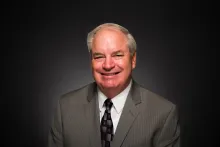
Robin Webber was born in Chicago, Illinois, in 1951, but has lived most of his life in California. He has been a part of the Church of God community since 1963. He attended Ambassador College in Pasadena from 1969-1973. He majored in theology and history.
Mr. Webber's interest remains in the study of history, socio-economics and literature. Over the years, he has offered his services to museums as a docent to share his enthusiasm and passions regarding these areas of expertise.
When time permits, he loves to go mountain biking on nearby ranch land and meet his wife as she hikes toward him.
