
Rick Shabi
Part 11 of the Acts Bible study series presented by Gary Antion and Peter Eddington.
Good evening, everyone, and welcome to the biweekly Bible study, this continuing series on the Book of Acts. We certainly appreciate you tuning in. We appreciate the live audiences here. The building is bulging, even though it's really hot out in summertime, and people have lots of other activities. A number of the brethren have made an effort to be here tonight, and we're really glad to see them here tonight. I also want to say hi to some of them down in Portsmouth. I think Karen Ketterson said she'd be listening in, and some of the brethren up in Montreal. Some of them in Montana and out in Washington State record this, and then they play it and listen to it at a better time for them. So we certainly appreciate their dedication and their interest. I want to remind you one thing, and we're going to ask God's blessing, Mr. Eddington-Will. Please remember to submit any question you have to ucgbiblestudy, all run together, at gmail.com, and we'll do our best to answer them tonight. So Mr. Eddington, would you ask God's blessing for us? Certainly. I greet God and Father. Father, we come before Your throne here this evening as we begin another midweek Bible study. We thank You very much, God, for Your Word that You've given us, the Scriptures. We thank You for preserving those words of life that we can go through from time to time and on a regular basis to understand more of Your plan for us and for all of mankind. So as we begin this Bible study on the book of Acts, chapters 17 and 18 this evening, we pray for Your blessing, Your inspiration, Your guidance, that You will fill us with Your Holy Spirit and lead us in all of Your truth. Please bless Mr. Eddington and myself as we go through Your words that we will honor and glorify You as we do so. Thank You, Father, and we pray in Jesus Christ's name. Amen. Amen. Well, good evening once again. We are going to be going through the book of Acts, but before I do that, there's one person who sent a question in. He said, I've sent this in several times and nobody answered me. And the first time I saw it was when I saw it in my notes here. I didn't see it before. The question was about fasting. And he said, are there different ways of fasting?
And the answer is yes. For years, Herbert Armstrong used to go out to Palm Springs and would fast for like three weeks. But when I found out later, it wasn't fasting without food and water the whole time. It was fasting like on a juice fast or a water fast or a liquid fast. It wasn't fasting without food and water for three and a half weeks. I thought, well, he's fasting in that way. Now, if you do a spiritual fast, you usually do without food and water. The only time, in fact, I was looking it up this evening, the only time fasting is never mentioned in the Old Testament. The principle of fasting is, but not the word fasting. When you fast, you usually do, you shut your mouth. It's closing your mouth to food. It's not taking food or water in. And that's typically what you do fasting. So you do a spiritual fast, you're usually doing it without food and water. And for most of us, when we fast, we usually fast for a day, taking that example from the Day of Atonement, taking that example from a certain date of the month in which the Jews fasted for various and sundry events.
But fasting, you can do what you want when you fast, when it's your own fast. When it's God's fast, that's a different matter. On the Day of Atonement, you have to do it from sunset to sunset. But in some cases, you might stop short. You might have had this great day, an opportunity to do something, and there may be some emergency that came up that necessitates you having strength to be able to deal with it. You may have to break the fast. David was fasting when they came and told him his son was dead. He got up, cleansed himself, and ate.
He didn't say, I've got to finish out this day. So, again, spiritual fasts usually do without food and water, and you usually do it for a day. But there can be times when you fast for half a day, or three-quarters of a day, whatever.
The issue is drawing closer to God. That's the issue. You could fast for two days and never get any extra study or extra prayer in. And what good did that fast do? All it did was a show of willpower that you could resist food and water. That's basically what it was. It had nothing to do with, are you drawing closer to God?
Fasting is a draw closer to God. Jesus Christ was asked, why aren't your disciples fasting? He said, as long as the bridegroom is here, why would they fast? When I'm gone, then they will fast in those days. But He didn't. As long as they were able to be close to Him, and how much closer could they get? They walked with Him, they slept beside Him, they ate with Him.
How much closer could they get than they were to Jesus Christ at the time? So, there are different kinds of fasts. There are some fasts that are done for health reasons, that cleanse the body. There are some fasts that are done as a spiritual fast. Again, basically we would say, without food and without water, and usually a day long.
But there may be occasions when you fast half a day. There may be occasions when you fast three quarters of a day, depending on you. But, day of atonement, you always fast from sunset to sunset. That principle is there for spiritual fasting. So, a person thought we didn't want to answer it. It wasn't that. I just hadn't seen it until recently. So, I apologize if you didn't get your answer if you're still listening in, or maybe you got some added up so you quit listening. But anyway, if you are listening in, I'm sorry that we didn't get answered that before.
Let's go to the book of Acts, chapter 17. And we're going to see two exciting chapters. I'm going to try to plow through chapter 17 for you, and Mr. Eddington's going to do chapter 18. But here's what we're going to see in Acts 17. We're going to see, first of all, verses 1-9, Paul at Thessalonica. We're going to then see, chapter 17, verses 10-14, the Bereans. And then we're going to see it in chapter 17, verses 15-21, Paul at Athens, where he goes to this Greek city that had so many gods in it.
I'll read some things about that for you. And then finally, we're going to see Paul, and he brings this message at Mars Hill, where he appeals to the highest court of the land, and he gives them a talk about the unknown God, because he is brought to their attention to new gods, Jesus and the resurrection. And he used it by saying, you know what? You have an unknown God here, and if he's unknown, how can you worship him?
So let me tell you about the one you call the unknown God. And so he springs off of their many plaques that they had to the unknown God. So that's what we'll be covering in Acts 17. Let's look at it. Acts 17, verse 1. Now, when they had passed through Amphipolis, remember they're coming from Philippi, where Paul had been imprisoned, where Paul had baptized the Philippian jailer, and now he was on his way after they begged him to please leave and not cause them any trouble, because they had incarcerated these men and beaten them, and they were Romans, and they deserved a fair trial.
And they had already beaten them and already whipped them and put them in prison. So Paul said, no, I'm not leaving unless you come and entice me out of here, unless you have the chief men come. And so the sergeant told these things to the magistrates, and the magistrates came, and they begged them please to leave. And it says the brethren were comforted, comforted them, and then they left.
But chapter 17, verse 1. Now, when they had passed through Amphipolis and Apollonia, and then came to Thessalonica. Now, it says it's amazing how in the book of Acts, it breezes over 100 miles in a few words. That's 100 miles from Philippi till you get to Thessalonica, where there was a synagogue of the Jews. Paul always went to the synagogue. It was a gathering place in town. And it was a gathering place of people who believed in keeping the Sabbath. It was a gathering place for people, even Gentile proselytes, who would be there as well, that Paul could preach the truth to.
And Paul was well familiar with synagogues because he had been trained by Gamaliel in all likelihood a rabbi. He was a rabbi too. Verse 2. And Paul is a key verse, verse 2.
Now, this term, as his manner was, New King James, as his custom was, two things. One, his custom was to keep the Sabbath. We know that. Paul was a Sabbath keeper. He was a Sabbath keeper evil, and the Gentiles could meet with him. But he was also interested in going to preach the Gospel to God's chosen people at one time. He went to the Jew first, and then also to the Greek, or the Gentile. To the Jew first, and also to the Greek. So he goes there, as his custom was, to go reach them because he wanted to keep the Sabbath and also go to the synagogue where people would be meeting. Luke 4.16. Luke 4.16. You might want to note that scripture. It talks about what Jesus Christ did. Jesus Christ's manner, Jesus Christ's custom. The Apostle Paul said, follow me as I follow Christ. Luke 4.16. He came to Nazareth where he had been brought up, and as his custom was, he went into the synagogue on the Sabbath day. He stood up to read. So the Apostle Paul is following his Lord and Savior by going into the synagogue on the Sabbath, keeping the Sabbath day. In Acts 18, verse 4, you might note he says, he reasoned in the synagogue, every Sabbath, this is when he came to Corinth, and persuaded Jews and Greeks. So it wasn't just Jews, persuaded Jews and Greeks. And verse 11 says, he continued there a year and six months teaching the Word of God among them. So for one and a half years, he was going into the synagogues every Sabbath to preach. So Paul was keeping the Sabbath day. Notice verse 3 now. Opening and alleging, what did he teach? That Christ must needs have suffered and risen again from the dead, and that this Jesus whom I preach to you is Christ. So he talked about the resurrection, he talked about the death of Jesus Christ, and he confirmed that this Jesus who came was the Messiah, was the Christ, was the Promised One.
And verse 4, and some of them believed and consorted with Paul and Silas, and of the devout Greeks a great multitude. So lots of Gentiles turned to God, and it says, and of the chief women, not a few.
So women can be touched, we'll see later on, again, because there is a certain element there of heart involved in understanding God's way. And women did take to God's way of life, which was a very bold move for women to step out when their husbands might not. Hence Peter in 1 Peter 3, giving instruction to the women about how to be careful, to be a good example, even though they came to church when their husbands didn't, because he cared about them. And here you have, and of the chief women, not a few. So these women were touched with the message about the kingdom of God and Jesus Christ.
But the Jews, which believed not, moved with envy. So here you have these individuals coming to stir up people, coming to cause trouble, because they were moved, which believed not, were moved with envy, took to themselves certain lewd fellows of the baser sort.
I like that comment. These men are pretty vile, and they're real lowly. They're low-downs, and they're low-down liars, and they're low-down lewd individuals, of the baser sort, and gathered a company, getting a mob, and set all the city on an uproar.
All it takes is a few people making some outrageous statements. All it takes is a few people making a few outrageous allegations. A few people who are lying to poison the minds of people. They did. And they assaulted the house of Jason, because they had heard Paul was staying there. So they go en masse to the house of Jason, because they're going to do something, and they're going to try to get Paul. And they sought to bring them out to the people, bring out Paul and Silas, whoever was preaching. And when they found them not, all right, we have to settle for second best, they drew Jason and certain brethren to the rulers of the synagogue, crying, and notice.
What they said about these men is a clear testimony of the zeal and the enthusiasm of that first century church. What did they say? These that have turned the world upside down are come here, too. These people, wherever they go, they're turning the world upside down. Because what they're saying and what they're preaching is causing such a stir, they're turning the world upside down. So he says, these that have turned the world upside down, verse 6 is very good, the extent of their efforts.
It says, whom Jason has received, and these do contrary to the decrees of Caesar, saying that there's another king, one Jesus. Now, they didn't say he was king then. They said he was going to be king. But they, again, misinterpreted the message in order to get their way, in order to cause people to be upset. And they troubled the people and the rulers of the city when they heard these things. Sure, they did.
When they said these things about, there's another king, these people are going to try to overthrow Caesar. Well, you could get a real riot going, and they did. And when they had taken security of Jason, what it means is he paid bail, so they wouldn't put him in prison. So when he'd given them a pledge, whatever, how much money, or maybe the deed to his own, or whatever, when they had taken security of Jason, and of the other, they let them go. So they were able to go free because they put forth bail.
Verse 10, now we see Paul and Silas go to Berea. Look at the care of the brethren. You're going to see this several times in here, how much the brethren cared for their ministry.
And the brethren immediately sent away Paul and Silas by night to Berea. When they heard this riot was taking place at Jason's home, when they heard what was going on, the brethren said, Paul, quick, go out, go this way, go to Berea. Leave town, get out of town fast, they were saying. Brethren cared for the ministry. They had kind of like an underground movement. World War II, they had their Dutch underground, the French underground, and others who would go out and help the downed flyers to protect them and keep them from falling into Nazi hands. And so here you find an underground church taking care of God's people and God's ministry.
So they sent them to Berea, who coming there went into the synagogue of the Jews. So once again, where does he go? He goes to the synagogue. Why? That's where people meet. Why does he go to the synagogue? Because that's where people are coming together to try to learn of God. And verse 11, these were more noble than those in Thessalonica. These people weren't riotists. These individuals were willing to look into it, and these individuals were willing to have an attitude. Verse 11 is another key verse in the whole book of Acts. These were more noble than those in Thessalonica.
Why? In that they received the Word with all readiness of mind. Okay, teach me. Help me. But I'm going to be playing it through my mind. Nobody wants you to sit out there, brethren, and just have like a funnel in your head and let people just dump in information. Anything that's said to you, you ought to play it through. Do I understand this? Is that clear? Did he say that right?
Did I understand him correctly? Is that what the Scriptures say? Not just sit there, Oh, feed me. Tell me. I'll just do it. Nobody wants blind loyalty. You want thinking loyalty. You want sensible loyalty. Not blind loyalty. God's Word makes sense. And if it's taught by people who have the Spirit of God and fear the Word of God and fear God, you also are going to get the Word of God. But play it through your head. Don't just absorb it.
Don't be just like a sponge. Think about it. What does this mean? Hmm, I wonder what that is? Question? Write it down. Sometimes you don't get the answer immediately, then later on you see the answer coming. But understand that make it your own. These people received the Word of God with all readiness of mind and searched the Scriptures daily, whether those things were so. They didn't say, well, I'm going to run my computer and I'll prove it wrong. I'm going to run to the computer and prove how wrong he is.
It was an attitude that said, hey, I want to see if this is so. Not, if this is not so. So there was an attitude already of a willingness to listen, a yieldedness, a teachableness, but it wasn't blind loyalty. They wanted to search the Scriptures. First of all, they would have to find the Scriptures, so they might even have to search for the Scriptures, because they didn't have Bibles in abundance like we have them today, nor did they have computer programs, nor did they even have chapters and verses.
No verses. In the book of Isaiah, it says, go find it. In the book of Psalms, it is written, go find it. To search the Scriptures daily, you had to find them first, then you had to search for them. And to my knowledge, they had no concordances. Try that on for size. Those people were diligent, and as a result of their diligence, as a result of their hungering and thirsting for righteousness, verse 12, therefore many of them believed. Why? Because they had readiness of mind. Why? Because they searched the Scriptures to see whether they were right, not whether they were wrong.
So they had a positive attitude, but they didn't have just a swallowing attitude. They searched the Scriptures daily, realizing they're here a little, and there a little, realizing to the lawn, to the testimony. If a person does not speak according to this word, it's because there is no light in them. Isaiah 8 and verse 20. Many of them believed. And notice, also, of honorable women, which were Greeks, and of men, not a few. So once again, using that term, not a few means a very large number of women. Noble women, honorable women, believed. What a bold step again it was for a woman to believe when her husband didn't.
Verse 13.
But when the Jews of Thessalonica had knowledge that the word of God was preached of Paul and Berea, they tried to squash him in one place, and he pops up in another. Pops and Berea is about 60 miles west of Thessalonica. And so when the Jews of Thessalonica had knowledge that the word of God was preached of Paul at Berea, they came there also and stirred up the people.
So again, they're out for blood. They're out to hurt. They're out to do damage. They're out to stir people. And verse 14, Then immediately the brethren sent away Paul, and to go as it were to the sea, but Silas and Timothy abode there still. So Silas and Timothy stayed there, actually stirred up the people. I believe it's New King James says, poison the people. They came to poison and to agitate. Trouble again. But Silas and Timothy stayed there, but Paul went away. He left. Now Paul goes to Athens, believed to be about 50 AD. Athens was a city that was known for its many gods. Let me read this to you. Where he says, he went to Athens, and receiving a commandment to Silas and Timothy, for to come with him, with all speed, they departed. So he gets to Athens, and he realizes, I don't want to be alone here in this city. There are a lot of idols here. There's a lot of trouble here, potential. I want some help. So he sends word back to Timothy and Silas to come, a commandment. And they come immediately. They leave. They listen. It says, verse 16, Now while Paul waited for them at Athens, his spirit was stirred in him, it was agitated at what he saw, when he saw the city wholly given to idolatry. The barns in his notes says this, it is well translated in the margin, or full of idols. The word is not used elsewhere in the New Testament. The city that was wholly given to idols, or full of idols. It says that was the condition of the city, of the city is abundantly, sorry, that this was the condition of the city, is abundantly testified by profane writers. This comes from Barnes' notes from the computer, my Biblesoft program. He goes on to say, he talks about one of their writers, he says, On every side of the city there are altars, victims, temples, and festivals. One of the writers from back in the 180, back in the days when Paul was there, sorry, and before.
Another one says, Livy says of Athens, It was full of images of gods and men, adorned with every variety of material, and with all the skill of art. Another man, Petronius, says this, It was easier to find a god than a man in Athens. That's how many gods, idols, and statues they had sitting around. So Paul looked there, Paul didn't look there and say, Oh, look at this nice art, oh, look how nice art there is over here, oh, is this nice art?
Paul looked and he said, look what I see here, I see all this artwork. I know Mr. Eddington could feel free to jump in because he toured these areas. But when we come to that Areopagus area, he could talk about that a little bit. Therefore, he disputed in the synagogue with the Jews. See, Jews who had, there was still a synagogue of the Jews there, and with the devout persons, those would have been individuals who had been like proselytes coming in, and in the market daily with them that he met with him.
So he'd see people, what are you doing? And people met with him, what are you doing here? What's going on here? What's this city about? Then certain philosophers of the Epicureans and of the Stoics encountered him, and some said, what will this babbler say? And others, some, he seems to be a center-forth of strange gods, because he preached to them Jesus and the resurrection. So he had preached to them about Jesus and the resurrection, so Jesus was considered one God, and the resurrection, which is Anastasis, was considered another God, because they named other gods shame, they named other gods by other names like that.
So they considered he's bringing two more new gods into the picture, which we have never heard about, and they called him a babbler. It says, interestingly, that the Epicureans, the sect of the philosophers, were so named from Epicurus who lived about 300 years before the Christian era. They denied that the world was created by God. So you'll see Paul say that the world was created by this unknown God. They didn't agree with that.
And also, one of the distinguishing doctrines of the Epicureans was that pleasure was the chief good, and that virtue was to be practiced only as it contributed to pleasure. So if virtue, if moral good got in the way of having pleasure, you would reject the moral good and go with the pleasure.
By pleasure, however, Epicurus did not mean sensual necessarily, but rational pleasure, regulated. So they could do whatever they wanted as long as it would bring pleasure. Confident in the belief that the world was not under the administration of a God of justice, they gave themselves up to the indulgence of every passion, the infidels of their time, and the exact example of frivolous and fashionable multitudes of all times.
And then talk about the Stoics. The Stoics, the word comes from Stoa, it means a porch or a portico. It's where the founder of the sect Zeno held his school and taught on a porch. So they took the name the Porchers, I guess, for doing that. After having taught 48 years, he died at the age of 96. He taught that the universe was created by God, that all things were fixed by fate.
So everything's fated. And they suppose that matter was eternal and that God was either the animating principle or the soul of the world. Now there's a world soul in Buddhism, there's a world soul in Hinduism, there's a world soul in a number of these spin-off groups from Hinduism and Buddhism that they believe in. So here he's talking about this world soul, that all things were part of God. So that gives you an idea of the Stoics and the Epicureans.
So he says these certain philosophers, some of them said, this babbler's sayon, and some said, oh, he seems to be a center for the strange gods because he preached to them Jesus in the resurrection. And they took him and brought him to the Areopagus or Mars Hill. Now the Areopagus was the court, the highest court of the land. And it was a court that was looked to, it was a court that was well-respected. He wasn't on trial. They said, well, he's bringing a couple, he wants to add a couple of new gods to the mix here.
We should take him there and let him see what he has to say. So that's what they were going to do, is take him to see the individuals so that he could talk about the gods. It's interesting, too, the gods, the word there is genies or spirits. Genies or spirits. All this is according to Barnes' notes. But likely he was talking, they wanted to find out who is this Jesus and who is this resurrection they were talking about.
Regarding Mars Hill or the Areopagus, here's what Barnes says about that. On many accounts, this was the most celebrated tribunal in the world.
Its decisions were distinguished for justice and correctness, nor was there any court in Greece in which so much confidence was placed. This was the court that had the supreme judges of Athens assembled to hear. So Paul got to appear before judges and kings and others in his time.
Do you have any comments about the Areopagus? It's an amazing location. So that court was on top of Mars Hill. And as you look off the hill, you see the Acropolis up behind with the huge Parthenon up there. It's a very dramatic setting. If you go there today, there's actually an inscription on the side of the hill in Greek that says to the unknown god that they've put on there.
Everybody knows that's the way this took place. Okay, verse 19, they took him there saying, May we know what this new doctrine, wherever you speak, is? Tell us. And it was kind of an orator's place as well. Verse 20, For you bring certain strange things to our ears. We would like to know, therefore, what these things mean. So we want you to explain to us what this is all about. And verse 21 is interesting. For all the Athenians and strangers which were there spent their time in nothing else but either to tell or to hear some new thing. They were very rich in philosophy and they were very rich in speculation. They fancied themselves that it was at this time, Athens was the head of the literary world. Its arts and its learning were celebrated in all lands. It is known, therefore, that it was the favorite resort of the people of other nations who came there to become acquainted with its institutions and to listen to its sages.
So here Paul is there. He has a chance to appeal to these individuals who are listening and looking for some new thing. He's bringing them something new. He's bringing them Jesus Christ. He's bringing them the hope of the resurrection. He's bringing them the hope of the kingdom of God. Verse 22, Then Paul stood in the midst of Mars Hill and he said, You men of Athens, I perceive that in all things you are too religious. New King James says, superstitious. New King James says, too religious. You are very religious. So you have... Look at all these gods around. You have to be religious. So he plays on that. If you're so religious, you should want to find out about real religion. So for as I passed by and beheld your devotion, I found an altar with this inscription to the unknown God. If that person didn't know whom he worshiped, they would call it the unknown God. If you were tending sheep and the sheep would wander in and sit down beside one of the idols, they would sacrifice that sheep to that idol. But if a sheep would sit down and there was no idol, they would sacrifice it to the unknown God. They wanted to make sure we didn't miss any of the gods, so they had an unknown God. So he says this inscription to the unknown God, whom therefore you ignorantly worship him I declare to you. If you call him unknown, you must not know him. And I want to tell you about him because I know who this God is that you don't know. And so I'm going to share with you what this unknown God is all about. Notice what he says right away. God that made the heaven or the world and all things therein, seeing that he is Lord of heaven and earth, dwells not in temples made with hands. You don't have to build an idol. You don't have to build some type of a special building for him. He dwells in temples not made with hands because he made everything. And remember, that flew in the face of the Epicureans who didn't believe God made anything.
Verse 25, neither is worshipped with men's hands. You don't need to do service to him. It's like using your hands to do some kind of service. Put food out for him, polish him, carry him, repair him. He doesn't have to have that. Neither is he worshipped with men's hands as though he needed anything, seeing he gives to all life and breath and all things. And it's interesting, their comments in here, it says, this denotes, using their hands, this denotes to serve or to wait upon or then to render religious service or homage. It goes on to say, our God says this in Psalms 50, verses 10-12, Every beast of the forest is mine, the cattle upon a thousand hills. I know all the fowls of the mountain, and the wild beasts of the field are mine. If I were hungry, this is a great scripture, Psalms 50 and verse 11, if I were hungry, I would not tell you.
I don't need you to feed me. As the commentary points out, many of the religions have their idols there, and then they come and they put little food out in front of them, because they believe that if they fed the idols, then the idols would be good to them. The God feeds you. You don't feed him. He's the one that created the awesome blessing of how, the miracle of how a dead, seemingly dead seed can produce fruit and vegetation and vegetables. He's the one who made that miracle take place. He said, if I were hungry, I wouldn't tell you, for the world is mine and the fullness thereof. So Psalms 50 verses 10 to 12, we read that. So God says, I don't need anything from you, because he gives to all life and breath and all things. And is made of one blood, all nations. He made everyone from the same individual. It's interesting that he makes this really clear, that he's the one who made it. He's the one who made people. He wants them to realize they owe their lives to each other, and all of us right now on this side of the flood go all the way back to Noah. So we're all related through Noah and his family. And it's interesting, too, that he says, for to dwell on the face of the earth, and has determined the times before appointed, when they're going to be successful, when they're not, and the bounds of their habitation. He's decided where they should dwell. They don't have to go to war to try to get other people's land. He gave them the land they have. Make the best of it. Make the best of it. Verse 27. That they should seek the Lord, and if happily they might feel after him, and find him, though he be not far from every one of us. If he calls them, if he draws them, they can seek after him. And verse 28. For in him we live and move, have our being. If we're going to be followers of this Jesus Christ, this unknown God, if we're going to be followers of him, we can't just do it half-heartedly. We've got to live and move in him, with him, and have our being, as certain also of your poets have said, were also his offspring. Since we owe our existence to God, since we are his children, shouldn't we act like him? Verse 29. For as much then as we are the offspring of God, he quotes one of their writers, and several of their writers refer to that, we ought not to think that the Godhead is like gold or silver or stone, graven by art and man's device. God produced us. God's a living being who gave us life. He's our Father in heaven. Since he did that, he isn't a piece of stone, he isn't a piece of precious metal. He's greater than that.
In verse 30, he comes down to it. He said, And the times of this ignorance, you say you don't know who he is? That's ignorant. Ignorant is not bad. It's not calling somebody an idiot. Somebody who's ignorant just doesn't know. That's what it means. You don't know. And what did they say? They had a, I don't know who this God is. They had an unknown God. So he says, the times of this ignorance, God winked at. God let you go on that.
But now commands all men everywhere to repent. That was the message that Jesus Christ said at the end of the book of Luke. That when they went forth to preach the gospel, they should also have a message of repentance. They need to change. Because he has appointed a day in which he will judge the world.
When is that day coming? At the Trump, last Trump, when Jesus Christ comes back. And the Great White Throne Judgment after that time. Because he has appointed a day in which he will judge the world in righteousness. By that man whom he has ordained. Whereof he has given us assurance to all men in that he has raised him from the dead.
He's going to do it through Jesus Christ, who is a living being on this earth, who now has been resurrected to be in God's right hand. Verse 32, and when they heard of the resurrection of the dead, Paul didn't have much success in Athens. In fact, there's no record that there was ever a church there in Paul's day. And nothing else is said about Paul ever visiting Athens again. This was a city full of idols. This was a city that rejected the Apostle Paul coming and bringing a message. When they heard of the resurrection of the dead, some mocked, others said, we will hear you again of this matter. Remember, he's talking to the Supreme Court judges and leaders of the world. It says here, the doctrine of the resurrection of the dead was believed by none of the Greeks. It seemed incredible, and they regarded it as so absurd as to not admit of an argument.
It has not been uncommon for even professed philosophers to mock at the doctrines of religion and to meet the arguments of Christianity with a sneer, because they can't really refute it. So, verse 33, so Paul departed from among them. Now, howbeit certain men claved to him, stuck with him, and believed.
Among those who stayed was Dionysius, the Aereopagite, so he did reach one of the guys up there, and a woman named Demaris, and others with them. Now, the name is Demaris. We don't know who she was. Maybe she was the wife of one of the men there, Dionysius. Maybe she was his wife. Maybe she was a harlot who turned, because they said very seldom would ordinary women frequent that area by themselves.
So, we don't know. Was this another one of the harlot women who turned to God and repented, because those are the type God was calling people who had lived in abysmal situations to turn and follow Him. So, that ends chapter 17. Mr. Eddington. Thank you, Mr. Eddington, and good evening, everyone, once again. We had an extra question come in there, too, if you want to take a look at that in a little bit. Acts chapter 18 is a very interesting one to me and to my wife, Terri, because we visited Corinth in April of 2008 during Unleavened Bread.
And we also visited Athens, which was covered in chapter 17. And it was a really interesting trip to take over there during Unleavened Bread. But chapter 18 is a continuation of Paul's second journey. I don't know if you'd be making a note of when he started and stopped his three journeys, his three missionary journeys, as they're called.
But his second journey began in Acts chapter 15 verse 36. And it continues through Acts 18 verse 22. So we'll see his second journey come to an end here in a moment. But for your notes, Paul's first journey began in Acts chapter 13 verse 4 and concluded in Acts 14 verse 26. So the first journey is Acts 13.4 through Acts 14.26. So right now, we're in the middle of his second journey. You notice verse 1 of chapter 18.
After these things, Paul departed from Athens and came to Corinth. So after preaching at Athens, the apostle Paul traveled to Corinth. It was the most important city Paul had visited since he left Antioch of Syria. Corinth was a major stop. And with the exception of Ephesus, which is in a later chapter, I think in chapter 19, he stayed at Corinth longer than any other city we know of. And this was in the early 50s AD that this took place, the early 50s. The world in which we live, as we know, can be a cauldron of temptation.
Corinth was no different back then. Corinth was a city of drunks and prostitutes. And the title Corinthium was not a favorable one. So Paul's left Athens, now he's come to Corinth. Let me give you a little bit more background about Corinth as we get into Acts 18. Here's what William Berkeley writes in his book, The Letters to the Corinthians. This is from pages 2 and 3, Letters to the Corinthians.
Berkeley says, This is in Greek. The very word, Corinthia zastai, to live like a Corinthian, had become a part of the Greek language and meant to live with drunken and immoral debauchery. So if you were told that you were Corinthianizing, that wasn't a good thing. Aaliyan, the late Greek writer, tells us that if ever a Corinthian, was shown upon the stage in a Greek play, if you tuned into the Comedy Channel back then, a Corinthian was always shown drunk. The very name Corinth was synonymous with debauchery, and there was one source of evil in the city, which was known all over the civilized world.
Above the Isthmus, towered the hill of the Acropolis, and on it stood the great Corinthian, the goddess of love. And we climbed up there to the top, where the ancient city of Corinth was. Fantastic view of the Aegean Sea and everything out there. And that's where Corinth was, and this temple to Aphrodite was on top. Well, Berkeley says this is the goddess of love. To that temple, there were attached 1,000 priestesses, who were sacred prostitutes, and they were the goddess of love. And in the evenings, they descended from the Acropolis and plied their trade upon the streets of Corinth. Until it became a Greek proverb, and here's the Greek proverb, it is not every man who can afford a journey to Corinth.
In addition to these cruder sins, they flourished far more recondite vices, says Berkeley, which would come in with the traders and sailors from the ends of the earth until Corinth became not only a synonym for wealth and luxury, they had money, but drunkenness and debauchery, but also for filth. So the city was filled with sailors who gladly spent their money there. And the name Corinth became a synonym for immorality. And this temple gave Corinth that reputation, and this is what Paul was speaking of here as he came into Corinth after leaving Athens. But you may understand a little bit more why Corinth was a very important and you may understand a little bit more why Paul said in 1 Corinthians 6, verses 9 and 10, he said, Do you not know that the unrighteous will not inherit the kingdom of God?
This is what he's writing to the Corinthians. Do not be deceived, neither fornicators, nor idolaters, nor adulterers, nor homosexuals, nor cytopites, nor thieves, nor governors, nor drunkards, nor revilers, nor extortioners, will inherit the kingdom of God.
So after he left Corinth, he wrote back to them and said that, to the church. He's warning them. But notice 2 Corinthians 12, verses 20 and 21. I'll just read verse 21 for the sake of time. 2 Corinthians 12-21. He says, Less when I come again, he says, When I come back to Corinth, my God will humble me among you, and I shall mourn. For many who have sinned before, and have not repented of the uncleanness, fornication, and lewdness, which they have practiced. He's telling the church, some of you people have not repented of what was going on in Corinth either.
So Corinth had a pretty bad reputation in the ancient world, and we can see some of that when Paul wrote to them after leaving here. He wrote back to them. So notice chapter 18 now, verse 2 and verse 3. So he came to Corinth, and he found a certain Jew named Aquila, born in Pontus, lately come from Italy, with his wife Priscilla, because that Claudius had commanded all Jews to depart from Rome, and he came unto them. Verse 3, and because he was of the same craft, he bowed with them.
So Paul stayed with Aquila and Priscilla, and wrought. For by their occupation they were tent-makers. I'm reading from the authorized version tonight. I didn't bring my New King James down with me. It was in 49 A.D. that Claudius banished all the Jews from Rome. So this is a short time after that, early 50s now, and Aquila and Priscilla fled Rome and came up to Corinth, and were tent-makers there.
So Aquila and Priscilla probably came to Corinth sometime after 49 A.D. The Paul is described as a tent-maker, but it's not just making little camping tents. It was quite an honorable trade, and a good job to have. William Barkley adds this, a little bit of interesting information, on page 136 of the Acts of the Apostles.
On page 136 in the Revised Edition, Barkley says Tarsus was in Cilicia. Remember, Paul was from Tarsus. In that province, there were herds of a certain goat with a special kind of fleece. And out of that fleece, a cloth called Cilicia was made, which was much used for making tents and curtains and hangings. You know, so rugs and hangings. Doubtless says Barkley. Paul worked at that trade, although the Greek word used means more than a tent-maker. It means a leather-worker, and Paul must have been a skilled craftsman. And so Paul decided to stay with Aquila and Priscilla, who were also tent-makers, they had something in common, and he began his work in Corinth.
Verse 4, and he reasoned in the synagogue every Sabbath and persuaded the Jews and the Greeks. Mr. Antean mentioned this back when he was reading chapter 17. So it's interesting that both Jews and Greeks were learning the truth. And when? On the Sabbath. At the synagogue, at the main meeting place in the town. And so Paul obviously was the Sabbath keeper, and he was teaching that, and he was meeting people that were meeting on the Sabbath. Verse 5, and when Silas and Timotheus were come from Macedonia, came down to see Paul in Corinth, Paul was pressed in the spirit and testified to the Jews that Jesus was Christ.
So Paul found his strength and courage in knowing God, and God made it known to Paul what he wanted preached. Paul was pressed in the spirit. God influenced his thoughts and his mind through the power of the Holy Spirit. And it was the same message that we've been reading about earlier in the book of Acts, and that is, tell the Jews that Jesus, whom you crucified on the cross, was the Christ. Tell the Jews that Jesus was the Christ. And that was his message. A very convicting message for the Jews.
Verse 6, when they opposed themselves and blasphemed, in other words, they didn't take it too kindly, he shook his raiment, said unto them, Your blood be upon your own heads. I am clean, from henceforth I will go unto the Gentiles. Paul said, I've done my duty, I've preached to you the truth of Jesus, that he was the Christ. And so, any punishment is on your own head now, you've been warned, you've been told.
The Jews rejected Paul's message. And so, Paul decided to preach to a more receptive crowd. And he was a more receptive crowd. Pantheonic Greeks who believed in every god. That was more receptive than the Jews who believed in the true god. So, Paul took the dust off his feet and said, I'm moving on, if you guys don't want to hear it. And they blasphemed. And no kind words at that point for Paul. Notice verses 7 and 8. So, Paul departed from there and entered into a certain man's house named Justice. So, we had Jason there, we've got Justice in this chapter.
One that worshiped God, whose house joined hard to the synagogue. So, Justice's home, it was right up next to the synagogue. Verse 8, and Crispus, the chief ruler of the synagogue, believed in the Lord with all his house. And many of the Corinthians hearing believed and were baptized. So, Paul did have success in Corinth. Yes, it was a sinful city, the Vegas of its day.
But there were converts as a result of Paul's visit there. It was a church that had a lot of troubles, as we read about in 1 Corinthians especially. Paul had to write some stern letters to them to correct them, remind them to come out of that Corinthian lifestyle and follow God properly. But there were converts in Corinth and a very well-known church in the ancient times. Verses 9 and 10, then the Lord spoke to Paul in the night by a vision. And he said, Be not afraid, but speak and hold not your peace.
For I am with you, and no man shall set on you to hurt you, for I have many people in this city. So, despite the fact that Corinth was such a sinful city, God told Paul, I have people here. Don't give up. Keep preaching strongly. Lay it out there. God has people in places we don't expect or know about. What city in the world today would you say, oh, God wouldn't call anybody from that place?
He wouldn't? How do you know? God can call people from all kinds of places, including really sinful cities. We don't know who, or where, or when God will call. But He will. And in this case, God made it known to Paul to speak boldly and reach those people, without fear of even being attacked. As had happened in previous cities, where the apostles had been shackled and thrown in prison, beaten, left to die. One point Paul was beaten so badly that they left him, thought he was already dead.
They left him for dead, thought they'd killed him. But he wasn't quite dead. So, God said, don't worry about your safety. You won't even be attacked. Preach boldly. And then, verse 11, he continued there a year and six months, teaching the Word of God among them. So, during these 18 months, Paul wrote his letter to the Thessalonians. It's very, very likely.
This was probably about 50 or 51 A.D. Paul was in Corinth for 18 months, and later he was in Ephesus for three years. But up until now, this was the longest he'd stayed anywhere on these journeys. And so, here in verse 11, we're pretty sure that during these 18 months, Paul wrote his letters to the Thessalonians. And remember, back in chapter 17, he just left them. He was in Thessalonica, then the Brians, he was talking with them, then Athens, then in Corinth. And he decided, I'm going to write back to those Thessalonians, because they were a young church, a new church.
He'd just left there a year ago, maybe a year and a half ago, two years, whatever. But they were a young, new church, and he needed to write to them and encourage them. And the church at Thessalonica was composed of Gentiles. And he wrote two epistles that we have here to read ourselves. And his main purpose was to encourage the new, young church. That's why he wrote to them, wrote these letters to the Thessalonians. He also warned them against sensual sin and iniquity.
He explained again the resurrection of the dead to them over again. And he wanted to clear up speculation that Christ was returning any moment. And he exhorted the lazy ones among them to find some work and get busy. So that was what was in the letters that he wrote to the Thessalonians while he was in Corinth. And of course, you can go back and read those yourself. Verse 12, And when Gallia was the deputy of Achaia, the Jews made insurrection with one accord against Paul, and brought him to the judgment seat.
So here we go again. It seemed like these guys couldn't stay out of trouble every time they preached the truth. It was not a popular message. And if the truth be told even today, the gospel of the kingdom of God that we preach is not a popular message. It's different. It requires work. It requires changing your life. Now, Gallia here in verse 12 appears to have been a very fair, impartial Corinthian deputy. I have some photos I took in 2008 of the place in Corinth, the ruins of the very building where Paul appeared in court in front of Gallia.
There's still a porch there, and the remnants of the building where they believe that's where Gallia held court, and where Paul would have appeared there. William Barkley has this to say about Gallia, and it's very interesting. It will help us to understand the following verses a little bit better when we read them. Barkley says in his Acts of the Apostles, Revised Edition, he says, as usual, the Jews sought to make trouble for Paul.
As usual. It was very likely that it was when Gallia first entered into his proconsulship that the Jews attempted to get him to act against the Christians, trying to influence him before he was settled in.
Gallia was famous for his kindness. Seneca was Gallio's brother. You may recall that Gallio's brother, Seneca, was a tutor to Emperor Nero, and later an advisor to Emperor Nero. So this is Gallio, the brother of Seneca. So I guess they were both in government work. So Seneca, his brother, said of Gallio, Even those who love my brother Gallio, to the utmost of their power, do not love him enough. He was a nice guy. And also, Seneca said, No man was ever as sweet to one as Gallio is to all.
And Barkley continues, The Jews sought to take advantage of Gallio, but he was an impartial Roman. He was well aware that Paul and his friends were not guilty of any crime, and that the Jews were trying to use him for their own purposes, at the sight of his judgment seat where his lictors armed with their official rods, and he ordered them to drive the Jews from his judgment seat. So we're going to read that here now, with that bit of background about Gallio, you see.
He was a fair judge. So, verse 13, saying, here's what the Jews accused Paul of in front of Gallio. This fellow persuades men to worship God contrary to the law. Of course, the Judaic law. Judaism. So they're here, they're telling a Roman, we don't like this guy, because he's preaching against our Judaic law. So why would Gallio care? Anyway, verse 14, and when Paul was now about to open his mouth, you know, give his defense, Gallio said unto the Jews, if we're a matter of wrong or wicked lewdness, oh, you Jews, reason would that I should bear with you.
Now, if this guy had broken an obvious law, then maybe I'd listen. Verse 15, but if it be a question of words and names and of your law, the Judaic law, look you into it, don't bring it to me, for I will be no judge of such matters.
Verse 16, and he drove them from the judgment seat. Notice verse 17, then all the Greeks took Sosthenes, the chief ruler of the synagogue, and beat him before the judgment seat. I guess they got somebody. And Gallio cared for none of those things. And here in verse 17, it says, Gallio cared for none of these things. This has often been taken to mean that he was absolutely impartial and refused to allow himself to be influenced.
Paul could not be found breaking any laws of the land. Gallio knew there was no fault which could be found with Paul and his friends. And so, we didn't want to hear the case. But as you can see, the Jews were just not trying to cause trouble. They were just trying to use Gallio for their benefit. And then verse 18, and Paul, after this, carried there yet a good while, and then took his leave of the brethren and sailed there into Syria, and with him Priscilla and Aquila, new friends came along, having shown his head in St. Crea, for he had a vow. In the context of this verse, verse 18, in the case of Paul was the one who took the vow, not Aquila or Priscilla.
It was a Jewish custom of the time that when a Jew wanted to show gratitude to God, he took a vow. And it usually meant shaving your head for about three months, I think is what it was. And maybe not eating, drinking wine or eating meat and that type of thing. But there were different customs on vows that showed gratefulness to God. And Paul seems to have been very grateful for what occurred in Corinth, because quite a large church developed in that area, in a city that was quite sinful.
So Paul was very thankful to God at scenes and took a vow as he sailed out. St. Crea mentioned here is the main Corinthian seaport. And if you visit there today, which I have been there to St. Crea as well there, the ancient port, you can still see the rock pillars going out into the water. You know, the pier is gone, but you can see the footings from the pier.
And you can imagine the busy main street going up the hill. The hill now is just a field and grass. All the ruins are buried and gone. Very few remnants of the main street left there at St. Crea. I have some really interesting photos, actually, of that port as well from our visit there. Verse 19, and he came to Ephesus.
So we've gone from Athens to Corinth now to Ephesus. And he left them there, Quilla and Priscilla, but he himself entered into the synagogue and reasoned with the Jews. As Mr. Ante said once again, he goes to the main meeting spot in town and basically is saying, let's see what I can do to... Well, not stir up trouble, but preach who Jesus Christ was. And verse 20, when they desired him to tarry longer time with them, he consented not. They actually asked him to stay a little bit longer there in Ephesus.
But he said, I can't. And why? Verse 21, he bathed them farewell, saying, I must by all means keep this feast that comes in Jerusalem, but I'll return again unto you if God wills. And he sailed from Ephesus. This feast that Paul wanted to keep back in Jerusalem was probably the Feast of Tabernacles of 52 AD. And Paul wanted to get back to Jerusalem to keep the big feast. He said to the Ephesians, I'm going to get back if God wills.
I'd like to come back and see you. He wasn't there very long. He preached. He taught the Gospel message. And they begged him to stay a little longer, but he couldn't. But once again, a church sprung up, didn't it, in Ephesus, a viable congregation. And then verse 23, and after that he had spent... Let's see, where was I? Let's go verse 22.
And when he had landed at Caesarea and gone up and saluted the church, he went down to Antioch. Verse 22 there is the end of Paul's second journey. It's the end of his second journey. Verse 23 now is the beginning of his third journey. And the third journey concludes in Acts 21 verse 17. And the third journey actually ended in 57 AD, we believe. Trying to figure out all the dates, but 57 AD is when this third journey would have been completed. And it ends in Acts 21 verse 17. It begins here in verse 23. After he had spent some time there, he departed.
So he starts the third journey. When I roll the country of Galatia and Phrygia, in order, strengthening all the disciples. In verse 24, and a certain Jew named Apollos. So here's the introduction of someone that became somewhat famous at the time for being a powerful preacher. A certain Jew named Apollos, born of Alexandria, an eloquent man, and mighty in the Scriptures, came to Ephesus.
Now Alexandria, Apollos' birthplace, where he's from, had more than one million Jews. And two out of the five counties, or two out of the five wards, in Alexandria were Jewish neighborhoods. And they figure a million Jews in Alexandria. So that's where Apollos was from. But now he's come to Ephesus, and he's visiting with the new church in Ephesus. Remember, Aquila and Priscilla stayed behind. They didn't follow Paul back to Jerusalem. Aquila and Priscilla were still there in Ephesus. And if you read verse 23 now, This man was instructed in the way of the Lord, and being fervent in the Spirit, he spoke and taught diligently the things of the Lord, knowing only the baptism of John.
So Apollos did not understand about the Holy Spirit properly yet. And chapter 19 actually goes into more detail on the early church members who did not yet have hands laid upon them, that had the baptism of John, but that was as far as it had gone, as far as not having hands laid upon them.
Apollos did not yet understand the need for the laying on of hands to receive the Holy Spirit. It was part of the symbolic ceremony. And as is explained of other believers from Ephesus in Acts chapter 19. So there are others in Ephesus in Acts chapter 19 that get told the same thing. But Apollos did know of the need to repent and to be baptized, as John the Baptist taught. Notice verse 26. He began to speak boldly in the synagogue, whom when Aquila and Priscilla had heard, remember Aquila and Priscilla stayed behind, they took him unto them and expounded unto him the way of God more perfectly.
Remember the Apostle Paul had intense training in the truth. He trained Aquila and Priscilla very well, and now Aquila and Priscilla are showing Apollos a deeper understanding of the truth. And that would have included the Holy Spirit and the power of God working in you. Verse 26, I just have a note here about Aquila and Priscilla. Apollos was a powerful preacher, but Aquila and Priscilla taught him the finer and more important points of the truth.
And Apollos, after this, gained quite a respectable following as a preacher, as a minister. People looked to him for leadership in Ephesus. Often looking to him instead of to Christ is what happened, because he was so dynamic. It's okay to respect the ministry, but you have to follow Christ. You remember 1 Corinthians 1, verse 12? Interesting that Paul had to write this back to the Corinthians, which wasn't too far from Ephesus.
1 Corinthians 1, verse 12, Paul says, Now I say this, that each of you says, I am of Paul, or I am of Apollos, or I am of Cappus, or I am of Christ. You know, that got around, the people were starting to follow particular leaders, following men. 1 Corinthians 3, verse 4. For when one says, I am of Paul, and another, I am of Apollos, are you not carnal? So people were starting to follow a man instead of Christ. But Apollos was mighty in the Scriptures. He was a good teacher, a good preacher, and did a lot to help build up the church there.
Notice verses 27 and verse 28. When he was disposed to pass into Achaia, the brethren rode, exhorting the disciples to receive him. When he was come, helped them much, which he had believed through grace. For he mightily convinced the Jews, and that publicly, showing by the Scriptures that Jesus was Christ. And so Apollos was a great teacher. He was able to show the Jews the many, many places in Scripture, which would have been the Old Testament scrolls. Right? You've got to roll out and try and find your verse. Apollos was able to go through those Scriptures and show where Christ, the Messiah, was prophesied. And say, see, this happened.
He showed them publicly, it says, convinced them mightily that Jesus, whom the Jews crucified, was Christ of the Old Testament. Very, very powerful message that Apollos brought to the early church. Stranding, anything you'd like to add to that? Yes, I just wanted to point out a couple of things. Number one, verses 9 and 10, I thought, are really inspiring. You imagine, here's Paul in this city of Corinth, this filthy city. And yet God has many people there, and Jesus Christ appeared to him or spoke to him.
It says, then spoke the Lord to Paul in the night by a vision. He said, don't be afraid. It seems like, you know, God is able to reach down and strengthen us and help us and send us just what we need. Sometimes when we're at a low point in our lives, he's able to reach out to us. It may not always be a word from him. It might be a word from one of his servants.
It might be a word from one of his people. It might be a word from a jackass, you know, as happened. He spoke through a jackass, the guy trying to straighten him up. But the point is, he could speak through anybody to help you.
He could send somebody there just when you needed encouragement, just when you needed somebody to step up and brighten your life. There that person was. And then they're gone. So I thought that's really important. He'll do it again later on, so we'll see. But he talked about, and he said, I'm with you, no man. He knew nobody could hurt him. For the whole time he was in Corinth. I've got lots. He could walk across the street and not get hit by a donkey. He wouldn't have to worry about looking both ways. God was going to protect him.
He wouldn't be foolish, of course. But he knew that God would protect him from any accidents. God was going to keep him safe to do his job. God encouraged him. And then I liked verses 25 and 26. You might circle, at least I do, in my Bible. It says, this man was instructed in the way of the Lord. The way. The way. And then you also notice verse 26, the way of God. And then you notice chapter 24 and verse 14, the way.
And verse 22, the way. And then in chapter 22 and verse 4, the way. Five times, the way. God is not just a philosophy. It's a way of life. God's teachings are not just something that you argue over or that you feel good because you know it. You have this great philosophical knowledge or theoretical knowledge. But God's way is a way of doing something with it. It's a way of living. It's a complete package. It affects us. It affects our lives. It's got to be our vocation. It's got to be what we do. That is our life. So I thought those were some very interesting scriptures. And of course, the Apostle Paul, zeal, you cannot imagine.
I often say, what would Paul have done had he had access to modern travel, airplane travel, train, car, if he had his own car, if he could get on the air and make podcasts. What kind of a zeal would this man have had to reach that many people over the modern media that we have today? And yet God has blessed us with this kind of opportunity to reach out to a world far more in number that we could reach with what availabilities we have than the Apostle Paul had back then.
And yet he was so zealous to go forth. I'll go ahead and take a Bible question. I think you have one. This one, in Revelation, chapters 2 and 3, where it speaks of the era of the seven churches, did the brethren have a, quote, godly choice of which one to attend, and were there attitude problems then? There are always attitude problems. As long as you have people in the church, you'll have attitudes.
It's up to us to control those attitudes. It's up to us to rein them in. That's why it says in 2 Corinthians, chapter 10, verse 5, bring every thought into captivity. And if that thought is brought into captivity, you keep it from turning into something worse. Same way with James, where he talks about what is the lust-sin-death equation, the LSD equation. When you go into lust, when you let your attitude slip, then you begin to think wrong thoughts, wrong attitudes, wrong approaches, whatever.
And that turns into sin, which will then turn into death. You must master yourself. What is one of the fruits of the Holy Spirit? Self-control. What does God's Spirit give us? A spirit of a sound mind. That sound mind enables us to be able to have a right attitude. Attitude is so important.
Not mentioned once in all the Bible, the word attitude. It is in some modern translations, but King James is never mentioned. And yet Herbert Armstrong once said in my freshman Bible class, it was the most important characteristic you could possibly have was a right attitude. A right attitude doesn't mean you have all knowledge. A right attitude doesn't mean you have all ability. But with a right attitude, you are going to be able to soak up and drink in and learn and have an approach to life that will be of benefit to you and to others. A right attitude. So he says, did they have wrong attitudes? Probably a number of them did. But one thing I don't see among the seven churches, I don't see them vying with each other. I see the one succeeding, the other one wanes, becomes less, the other one becomes more. And that one fades out, and this one continues. But I don't see them fighting each other over that. Revelation 2 and 3, sure, the church has had problems. One lost its first love. Another one was persecuted. Another one had a woman in there. Another one had some false teachings in there. But you know what's interesting when you read that? Whatever you think of that church, God doesn't tell them to leave.
If they're taught wrong, if you're enforced to do sin, you don't do it. Ever. But these people, they were people in their congregation that were wrong. They didn't tell them to get up and leave. They said, hang in there, do what's right. I know I felt one time when I thought things were pretty bad in California at one time, I said, why am I going to go? This is God's church. I have a part in it. I have just as much right to be a part of this church.
I've been here for so many years. I'm going to stay here and I'm going to try to do my best to make it better. Not to pull out. I want to make it better. I want to do what I can to make it the best it can be. I want to teach with vigor God's way of life.
Teach truth. Truth will always ring there with those who have the Holy Spirit because it is the Spirit of truth. Mr. Eddington? I have one other thought on this. Can I ask you this? My mic may have... There we go. The mic might be getting a little better. It may be dying. Did the brethren have a godly choice of which one to attend? Well, some of these churches were a long way apart. No, you didn't have a choice. If you didn't like Ephesus, you went to Corinth, or then you went down to Galatia.
No, that didn't really happen like that. Too far apart. The way you lived is where you attended church, and you didn't leave. Like Mr. Eddington said, you made it better even though there were problems. Here's a question that came in from Denver tonight. We have people listening in Denver.
My question is about the timeline for the following. Without this in front of you, you'll have to think carefully here. First of all, he says there's Acts chapter 10, Cornelius, Peter's vision, the Holy Spirit given to the Gentiles. Then he said Galatians chapter 2 verses 11 through 15, where Paul withstood Peter.
Paul and Peter had a disagreement. Then he said there's Acts 15, the Jerusalem Conference on Circumcision. So, Acts 10, Galatians 2, and then Acts 15. He says, did Galatians 2 take place between Acts 10 and Acts 15? So, did Paul withstand Peter after Peter's vision but before the Jerusalem Conference on Circumcision? Or did it take place after Acts 15? So, it was Galatians, what Paul was talking about, happened after Acts 15. Now, my answer in the way I read it would be no.
Galatians 2 takes place between Acts 10 and Acts 15. And if you look at Acts chapter 14 verses 27 and 28, you'll see that they abode there with the disciples for quite a long time. And it's during that time of Acts 14 verse 28 that we believe that Galatians was written. Paul's letter to the Galatians was written before chapter 15 begins, which is the ministerial conference.
Which means if Paul is talking about withstanding Peter in Galatians chapter 2, that must have been before this ministerial conference in Acts chapter 15. But no doubt after Acts chapter 10, yes. So, that's the way I would read it. Yeah, it's not clear, according to Usher's dating, I was looking at Usher's dating in there. He dates Galatians a little bit later than we probably would understanding what the Acts 15 and the significance of that particular chapter. So, that's... I would believe, based on situation, without having done any further research here in front of me, that it would have taken place in between. That you would have had Acts 10, then you would have had Galatians, and then you would have had Acts 15.
That's what I would believe, based on what I see, the actions and attitudes of Peter. And one instructor told me years ago that Galatians was probably written in the fall or October-November. The Jerusalem Conference was in November or December. Same year, and they're very close together. That's one theory of how the timeline goes. 49 AD. So, that's just a couple of years later, then we get Paul and Athens and Corinth and Ephesus. Do we have any more questions coming in, Tom, at all? No? We have a question in the back, though. Okay.
Can you hear me? I had asked a question a couple Bible studies ago. I don't know if I missed the Bible study when it was answered, but it was about the postponements in the fall Holy Days. Whether the Jews did that, and if they did, do we keep the same thing, and if so, why?
I don't remember seeing the question myself. The question is, did the way the Jews had a postponement system for the calendar, do we do the same thing? Do we have the same postponements? There are so many different versions of what the Jews have done over the years. It's been studied extensively, of course, by our ministry as well.
We've got a thousand-page paper on our website, if you want to read it or something. We've got a whole document on the Hebrew calendar that goes into a lot more depth about the postponements. But yes, we do do that. We have a system of postponements, depending on how the Holy Days fall, on which year, on which month.
It's a 12-month year or a 13-month year. But we do have quite an extensive paper on our website about the Hebrew calendar and how we calculate what we do. Nick, I did look up a number of commentaries on why they postponed and when they did. Primarily, what they try to do, because they value the Sabbath, which is in the Ten Commandments, higher than the Holy Days, that if a Holy Day were to prevent the proper keeping of the Sabbath, it would have to be postponed.
Even though it might fall on a date, they didn't want it back-to-back. So in other words, particularly on a Day of Atonement. Because on the Day of Atonement, you can't do any work. So if a Day of Atonement were to fall on a Friday, which it won't. If it were to fall on a Friday, then you could not prepare for the Sabbath. So there are certain reasons why, for instance, if you don't see the Molot of Tishri before lunchtime, then you don't have a half a day to keep.
So they would say, okay, we have to postpone it until the next day. So there are certain reasons why they did postponements. And my only answer is, what's the way it's right? Well, I don't know. Here's what I do know. God gave His laws to the people of Israel.
He told them, on a certain day, on a certain month, you've got to keep it. So we know that they had to have a calendar that they used. We do know that they knew when those days were to be kept. They knew when the 14th day of the first month was. They knew when the 15th day of the first month was, because they kept those.
And whatever system they have used in that, I would take the whole package with it, as opposed to that. Now, we don't keep the same Pentecost as they do. Why? Not because they didn't preserve God's Word. God's Word says, count. But it doesn't say, count once, and it's done. You have to count each time. Because even though it will always come up on a Sunday, it won't always be on the same Sunday type situation.
It will be always on a Sunday, but the date could vary. And so they keep this fixed date on that. There's nothing scriptural that says, do that. So we follow what they have said, not what they have done, in certain instances. Same way on Passover, we keep the Passover on the 14th. They keep what they call Passover meal into the 15th.
But they do understand that the 14th day was the day in which the Lamb would be killed. But they keep what they call Passover, which is really what we observe as the night to be observed. They keep that into the 15th. So I would rather follow a people that God says in Romans 3, verses 1 and 2, What advantage has the Jew? This is much in every way. For to them were committed the oracles of God, the teachings of God.
And if some of those teachings of God had to do with holy days, which occur on certain fixed dates, then I've got to go with that. Because I know that's where they are. Now, am I going to go with some man who says, I have a calendar, I know how to count, I know. How does he know? How does he know? Is he going to fly over to Jerusalem every time to make sure he got the right mola obitishri? And how does he know all the principles to apply? Or am I going to trust what the Bible says I gave to the Jews, the oracles of God, part of which are the holy days, which necessitate a calendar, which necessitate understanding when those days occur.
Yeah, I'll go with the Jews. So that's what we do. But obviously, not everything, because, again, Pentecost, yeah, we count 50 like it says. We do inclusive counting like they said, but we don't end up with a fixed date like they do. So I hope that helps. You can look up postponements on it. It gives a whole list of reasons why they would do it and so on that I don't have in my head.
But I had gone down and gotten it, and I thought I mentioned it last time I was here, but maybe I didn't. Maybe because you weren't here, I didn't. There was also, I believe, an article in United News the year that Atonement would have been on a Friday, but then it wasn't. And so we had a whole article in the United News explaining that. You can also go on to, I think, can they download the article on the calendar? Yes, it should be there. You should be able to download a study paper on the calendar that goes into a lot of the news. If you go to members.ucg.org and then under one of the menu options is study papers and the Hebrew calendar study papers there. But you can just look up on the internet and just say, when do the Jews postpone Holy Days? And it'll give you a bunch of things on postponements. And it's interesting what they do and some of the rationale they use behind it. Okay, it's about ready to conclude. Next time, I think it'll be myself. Mr. Eddington's not able to be here. Mr. Stiver's out of town, so I may cover one chapter as slow as I might go. We'll probably be chapter 19. Nineteen is next. It's a long chapter, so I'll probably cover it. Laying out of hands next time. So anyway, we look forward to seeing you in two weeks and have a great evening. Thank you for tuning in, all of you out in Webcast land. And thank you all for coming tonight.
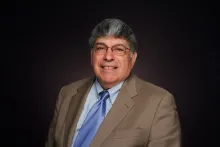
Gary Antion is a long-time minister, having served as a pastor in both the United States and Canada. He is also a certified counselor. Before his retirement in 2015, he was an instructor at Ambassador Bible College, where he had most recently also served as Coordinator.

Peter has retired as Operation Manager of Media and Communications Services.
He studied production engineering at the Swinburne Institute of Technology in Melbourne, Australia, and is a journeyman machinist. He moved to the United States to attend Ambassador College in 1980. He graduated from the Pasadena campus in 1983 with a Bachelor of Arts degree and married his college sweetheart, Terri. Peter was ordained an elder in 1992. He served as assistant pastor in the Los Angeles and San Luis Obispo, California, congregations from 1995 through 1998 and the Cincinnati, Ohio, congregations from 2010 through 2011.

