

Steve Shafer
This transcript was generated by AI and may contain errors. It is provided to assist those who may not be able to listen to the message.
Mr. Schafer.
Well, good afternoon, everyone! Well, it seems like it's been a long time. I do want to say I really appreciate all your prayers, and I know those make a big difference in my recovery, but it's really nice to be able to be up here again and have the opportunity to speak to you. I want to thank Mr. Fels for giving me that opportunity today. It's really nice to be able to be up here before all of you.
Today we're seeing a very encouraging trend in God's Church, especially here in United. Many teens and young adults who are being raised in God's Church today stay in God's Church, be it commitment to God's Church, God's way of life, and that's extremely encouraging. A number of those tend to ABC. We've got a large contingency of young adults who go down to ABC, Pastor Bible College, and then they return to their local congregations to serve in a very positive way.
It makes a positive influence on everyone else. It's just a really great trend that we have. So you teens and young adults, and we've got a lot of them here in Flint. There's a wonderful congregation here in Flint when it comes to teens and young adults, but you are the future leaders of God's Church. So I want to encourage all of you to stay on the course you're on to keep that commitment you're making.
It's wonderful to see it, and I want to encourage you to keep those commitments because you are all extremely valuable assets to God's Church. Being in God's Church and staying in God's Church is all about commitment. As we're now seeing, you can become committed at a very early age. As you grow up in God's Church, you become committed as a teenager and a very young adult.
So today I want to tell you about two such teenagers in the Old Testament who followed God and became committed to God as teens, teenagers. Tremendous examples. I want to also tell you the amazing story of a third teenager named Joe Rants. Probably very few of you have ever heard of Joe Rants. He was never in God's Church, but his story shows unbelievable resolve to make his life successful, beginning at the age of 15.
I want to talk just a little bit about his family. Joe Rants was never in God's Church, but his best friend, Roger Morris, did have a connection to God's Church. Both Joe Rants and Roger Morris were crewmates. They were two members of an eight-man University of Washington rowing crew that won a gold medal in 1936.
Extremely inspiring story. Roger Morris's daughter, Joan Mullen, is a member of the United Church of God in Seattle, Washington. So she's a member. So there's a connection there. In the case of Roger Morris. Roger Morris was the last man, that eight-man crew, that won that gold medal in 1936. Roger Morris was the last man standing, the last man to die of that crew.
He died in 2009 at the age of 97. But the story of this rowing crew that won the gold medal, the Berlin, this took place in Berlin, of all places, too. Think of that, 1936 in Berlin. Adolf Hitler was in the audience, cheering Germany.
Incredible story. It's written up in a book entitled, The Boys in the Boat, which I'll mention a little bit more about a little bit later. It's a very, very inspiring book to read. So the title of my sermon for today is, The Amazing Tale of Three Teens. The Amazing Tale of Three Teens. Joe Rance, I'll talk about Joe Rance first, he was born in Spokane, Washington on March 31, 1914, just before the beginning of World War I.
His mother died when he was only three years old. Not long after that, his father remarried, but his stepmother didn't like him. He was a good kid, but his stepmother didn't like him. And she didn't want him living under the same roof as her biological children. She had children from a previous marriage. She didn't want Joe Rance living with her biological children from a previous marriage.
By the time Joe was 15, it was 1929, and you know what 1929 was? Just on the verge of the stop-market collapse. The stop-market was about to crash, leading to the Great Depression. And Joe's stepmother did not want to share their limited resources with her 15-year-old stepson. By now, the family had moved to the small town of Squim, Squim, Washington. For now, Squim is spelled S-E-Q-U-I-M, but it's Squim. We've been there.
Evelyn and I have been through there. It's located about 65 miles northwest of Seattle, near the base of the Olympic Mountains. Beautiful area. We've driven through there, and there's actually a small United Church of God congregation there, of about 12 or so members. Today, it's a logging town with a population of around 7,000. Back in 1929, when Joe Rance and his family moved there, it was much smaller, more impoverished. It forced Joe's parents to walk out of their only partially finished log home they had there.
They were working on it, the only partially finished, but they decided to leave. They couldn't stay there. It was too impoverished to stay in Squim, so they moved. They said, we're going to have to move to Seattle. What happened next is unbelievable. It's hard to believe. This is written up in the book, Boys in the Boat, from Joe Rance's biography. It's on pages 57 and 58 from the book, Boys in the Boat. In the fall of 1929, the world utterly changed from the storm on Wall Street. Dozens of family had simply walked away from their farms and homes in Squim. Then, late one, rainy afternoon in November, the school bus dropped off Joe on the way home from school, just as darkness was enveloping the partially completed house.
Joe's father was in the process of building. The family car was packed and loaded with all of Thula's children. Thula was Joe's stepmother. Joe looked at his father as he walked up, and he walked up to the house, and every season the car is all packed. It's packed on top. All the other kids are in there.
It's full. And so Joe walked up towards the house and said, well, what's up, Pop? Where are we going? His father told him they were going to Seattle to look for work. His father then told him that Thula would not allow Joe to go with them, that he would have to stay in Squim in their partially completed cabin and fend for himself on his own. He was only 15. How would you like to suddenly have to be independent and fend for your own, taking care of a partially completed house and fend for your wife some way to find food and job and money at age 15, and still try to maybe go to school?
Here's what it says in the book. Joe froze. His eyes looked into his father's face, suddenly blank and expressionless like stone, stunned, trying to take in what he just heard. He asked his father, but can I go? His father replied, no, you can't. That won't work. You will have to learn to be happy on your own. And with that, Joe was left on his own to fend for himself at the very tender age of 15. Even more unbelievable, this had happened before when he was 10 years old, when Joe was only 10, he was exiled from the family home by his stepmother.
She didn't want him living with her dinner biological children. For more than a year, Joe slept in school, and the house always survived. Ten years old, but the school, he had a one-room schoolhouse there, and back in 1924, they didn't lock the schoolhouse at night, left it unlocked. So he'd wait until everybody left, and he went into his one-room schoolhouse, and he slept there. That's where he slept for that one year. It was on his own.
He foraged for food by fishing and hunting and working odd jobs. Again, he was only 10, 11 years old. Eventually, his father insisted he be allowed to return and live with the family, which he did until age 15, I just told you about, when he was abandoned then for good by his father's stepmother when they moved to Seattle, leaving Joe to fend for himself and squim.
Then for the next two years, Joe lived alone in the half-finished cabin in the woods outside of squim, surviving financially by logging timber, by clearing tree stumps, bailing hay, and building fences for farmers. Any job he could get. That's how he survived. At the same time, he continued to attend school and squim. All you young kids make it how important your education is. Here he is, he says, I've got to keep going to school.
If I'm going to be successful, I've got to have an education. So he continued going to school and squim, and he had to walk like two miles each way. He didn't have any transportation. He didn't have a car, couldn't afford that. He walked two miles each way to go to school to make sure he could get his education. Because he knew that in order to be successful, he would have to complete his education.
He had an older married brother who lived in Seattle, who then finally invited Joe to come and live with them, which he did at the age of 17. He then graduated from Roosevelt High School in Seattle, which is still there. He graduated in 1932, where Joe also got involved in Roosevelt's gymnastics program. One day a man by the name of Al Ubrigtson, you've never heard of his name, but he's very famous in Seattle.
He was the coach of the University of Washington rowing team. One day he visited Roosevelt High School and saw Joe and asked him to apply for the University of Washington. He thought, wow, he saw him there. Because Joe was very big, he was very strong, he's 6'3", and very strong build. He said before he could make a great crew member on the rowing team. And they had a very good rowing team. To say the funds necessary to attend the University of Washington, Joe worked for 15 months on two jobs, I should say.
He digged ditches and helped paved highways, and also helped construct the Grand Coulee Dam. In 1934, he entered the University of Washington and became a member of the eight-man University of Washington varsity rowing team. That year, that team went on to win the national championship, a couple of years later. They won the national championship in 1936, and they were selected to go to Berlin, Germany, to compete in the Summer Olympics, which was being hosted by Germany.
They made it to the finals. They were the fastest qualifiers, so as the fastest qualifying crew, they should have gotten the best lane, which is the outside lane. You want to be in the inside lane right next to the bulkhead, because that's where all the waves come in. But guess who was there in the audience? Adolf Hitler. He put Germany in the best lane and flipped the University of Washington in the worst lane. Here's the finish of the 1936 rowing competition.
In rowing competition, each eight-man crew has a coxswain who sits in the stern and calls off the strokes. For most of the race, he will call out about 28 strokes per minute. That's pretty fast, 28 strokes per minute. Toward the end of the race, as they begin the race to the finish line, he ups the pace to use the 34-36. You can't go much above 36, because it's going to get so tired out, you'll never have the strength to finish. But as the crew must have had enough, they have to have enough strength to finish the finish line.
In the 1936 Olympics, as the University of Washington crew approached the last 200 meters, the Washington crew was in third place, slightly behind Italy and Germany. The coxswain and the coach, Al Eberts had already told him, he said, you know, it's going to be tough, you're going to have to give it the worst line, you're going to have to give it your all, you're going to have to give it a lot of pain. You're going to have to make a decision to give it everything, no matter how painful it is.
You're going to win this. So, in the third place, slightly behind the Italian and German crews, the coxswain knew it was an hour never, so he did something no coxswain had ever done before. Never, it's never been done, this pace. He upped the pace to an unbelievable 44 strokes per minute. No team had ever tried to roll that fast. Can you imagine 44 full strokes a minute, all your strength, and you got over 200 meters?
Each man and their crew also knew what was at stake. Even though they were in great pain, they responded, keeping in perfect harmony and perfect unison, because every aura has to be lifted at the exact same second, all eight auras. Her writing two auras, all 16 auras. They got to come out of the water at the split second, go back in the split second. It's got to be all absolute perfect unity and harmony. They then moved into second place. There were only seconds left before the finish line. They were still a nose behind the second place boat. They gave a final mighty stroke as they crossed the finish line. The finish line, they didn't know who won. There was no announcement who the winner was, because the German boat, the Italian boat, and the Washington, U.S. boat, the University of Washington boat, they looked like they crossed the line in absolute dead heat. Nobody could tell. For five minutes of silence, Adolf Hitler sitting there, and all of a sudden the Germans write, Germany, Dutchland, Duchland, Duchland, Duchland, Nuber Allister, chatting, Duchland, Germany. They figured Germany had to win. Finally, after five minutes, they heard the loudspeaker crack.
The loudspeaker came to life to announce the final result. Joe Rams and his teammates had won the Gold Medal by six-tenths of a second, by less than, a little over two meters, by six-tenths of a second. Has a picture here of the boys in the boat, shows a picture of the final result as they're crossing the finish line. You're watching over here by the bulkhead, but they're just inches ahead of the second place boat, which was Italy in the third place boat, Germany.
They had to examine the photographs to find out and announce that. So Joe Rams, abandoned at age 10 and again at age 15, the rare recipient of a Gold Medal. He died on September 10, 2007, at the age of 93.
Here, I want to give you four short lessons we can learn from the tale of Joe Rams. Number one, be diligent and never give up. Joe worked doesn't wait to pursue his education. He never got discouraged or gave up because of his circumstances. We have to do the same. It reminds me of Ecclesiastes 9 and 10. Whatever your hand finds a do, do it with your might, for there is no work or device or knowledge or wisdom in the grave where you are going. In Romans 8, verse 35, Who is going to separate us from the love of Christ? What kind of difficulties are we going to have to go through to give up? Shall tribulation or distress or persecution or famine or nakedness or peril or sword, as it is written, For your sake we are killed all day long, we are count as sheep of the slaughter, yet in all things we are more than conquerors to whom who loved us. For I am persuaded, Paul wrote, that neither death nor life nor angels nor principalities nor power nor things present, nor things to come, nor height nor depth, nor any other created thing, shall be able to separate us from the love of God, which is in Christ Jesus. Joe Rand set that example in a sense. He was nothing separated from trying to be successful in life, no matter what kind of horrible things that happened to him.
The second lesson is we must endure hardship and prevail over adversity.
That's prevail over perversity. Joe Rand said, endured tremendous hardship and adversity, and yet he prevailed. So must we even, as Paul told Timothy. Second Timothy, chapter 2, the first three verses, where Paul wrote to Timothy, You therefore, my son, be strong in the graces in Christ Jesus. And the things that you have heard from me among many witnesses, commit these to faithful men who will be able to teach others also. You therefore must endure hardship. Don't ever get discouraged or give up. Do not keep your commitment because of hardship. We're all going to have to go through hardship, and who knows what kind of hardship we may have to go through before it's over. And we must endure hardship as a good soldier of Jesus Christ. Third lesson, never allow yourself to be driven by anger.
You know, Joe had plenty of things to be angry about, but he refused to allow himself to be driven by anger.
Once, as related to his story, a friend asked him why he didn't get angry. He said, Man, I would have really gotten angry with my parents if they didn't have that to me, and my stepmother left me and abandoned me. Here's how he replied. It takes energy to get angry, and it eats you up inside. I can't waste my energy like that and expect to get ahead.
He says, when they, when my parents left, it took everything I had in me just to survive. I had to stay focused. I had to take care of myself. I couldn't allow myself to get angry and become distracted.
If we want to get ahead like Joe, we must also refuse to allow ourselves to be driven by anger.
Proverbs 16, verse 32, He who is slow to anger is better than the mighty, and he who rules his spirit is better than he who takes the city.
Ephesians 4, verse 26 and 27, The angry Paul wrote, and do not sin. That's okay. You're going to get angry sometimes, but don't harbor anger. Don't sleep on it. Get rid of it right away, because it will eat you up alive. It will destroy you. Be angry and do not sin. Do not let the sun go down your wrath. Get it resolved. Take it to God. Put it in God's hands.
Do you not let the sun go down your wrath or give place to the devil? That's what Satan would like us to do. He'd like us to harbor anger and resentment, because it can destroy us. Fourth lesson, from his example, is honor your father and your mother. It's amazing, but Joe never blamed or dishonored his father or stepmother for what they did. Steady told a friend this. Here's what he said. He says, you don't understand, because, well, how come you're upset at your father and stepmother? Here's his reply. You don't understand. He says, they didn't have any choice. They were just too many mouths to eat. He justified what they did. And Joe kept the fifth commandment. He honored his father and he honored his stepmother, just like it says in Exodus 20, verse 12. Honor your father and your mother that your days may be long when the Lamb, the Lord your God, is giving you. And those days were long. He lived to the ripe old age of 93. Well, with that, then let's move on from the Philrancy to the tale of a second teen.
This is the amazing tale of David, and I'm referring to King David. Now, I'm not going to just focus on his life as a teen. The tale of David begins in 1 Samuel 16, amid very turbulent circumstances. Saul had just been rejected by God, and God was going to select a new king for the nation of Israel to replace Saul. 1 Samuel 16, verse 1. Now, the Lord said to Samuel, How long will you mourn for Saul? Seeing I have rejected him from reigning over Israel. Fill your horn with oil, and go, and I am sending you to Jesse the Bethelmite, for I have provided myself a king among his sons. Verse 4. So Samuel did what the Lord said. He went to Bethlehem. And the elders of the town trembled at his coming, and said, Do you come peaceably? It's noteworthy that David's father here, Jesse, dwelled in Bethlehem.
Bethlehem is a compilation of two Hebrew words, Beth, which means house. It's a Hebrew word for house. And Lhem, which is a Hebrew word for bread. So Bethlehem means house of bread. Why is that noteworthy? Because David, in spite of his youth, was a man after God's own heart, even from a very youthful age. And God was going to choose a man after his own heart to be the next king of Israel. Verse 13, verse 14, and Acts 13, 22. It's also noteworthy because it would be from David's lineage that the Messiah would spring. And the Messiah was promised that I would be born in Bethlehem. Micah 5, verse 2.
Christ who became the bread of life, John 6, 48. Christ who became the bread of life was born in Bethlehem, the house of bread. Interesting. Is there a correlation there? A reason for that. The bread of life was born in the house of bread, where David's family lived, and where David was also born.
How youthful was David as his tale begins here in 1 Samuel 16. 1 Samuel 16, verse 4. Samuel did what the Lord said. He went to Bethlehem. He goes to the town of Trommel, and he said, Do you come peaceably? And he said, Well, peaceably I have come to sacrifice the Lord. Sanctify yourselves, and come with me to the sacrifice. Then he consecrated Jesse and his sons, and invited them to the sacrifice. So it was when they came that he looked at Eliab, and he said, Surely the Lord is anointed before him. This must be the son that is going to be the next king of Israel. But the Lord said to Samuel, Do not look at his appearance, or at his physical stature, because I have refused him. The Lord does not see as man sees. Man looks at the outward appearance. But the Lord looks at the heart. So then he called another son, and he said, Neither has the Lord chosen this one. Then he had another son pass by, and he said, Neither has the Lord chosen this one. Verse 10, Then Jesse made seven of his sons pass before Samuel, and Samuel said to Jesse, The Lord has not chosen any of these. I know they really look great in appearance, but that is not who God has chosen. God does not see as man sees. He looks at the heart. He does not look at the physical appearance or stature. So Samuel said to Jesse, verse 11, Are all the young men here? He said, Well, there remains yet the youngest, and he is out there in the field keeping sheep. He is only a teenager. He could not choose him. But Samuel said to Jesse, Send and bring him, for we will not sit down till he comes here.
So David here was the youngest of Jesse's eight sons. Beth Moore, in her book titled, David, Ninety Days for the Heart Like His, says this on page 5 in regards to 1 Samuel 1611, says David, a young teenager, arrived on the scene with no idea of what awaited him. All likelihood that David here at this point was only a teenager. Probably maybe 15, 16 years old. We don't know.
David's actual age, this point's not given, but he probably was only a young teenager at that time.
But even as a teenager, I want you to understand this.
He had the making of a king.
So all of you teens and young adults who are here today also have within you the making of a future king or queen. Every one of you.
You all have within you the potential to be future leaders of the world. That's why you're here.
And right here in God's Church is the perfect place in which to develop and realize that potential.
What lessons can we learn from the tale of David? What qualities did David possess as a young teenager that caused God to choose him to be the future king? Overall, he dissolved other brothers who look like they had such great qualifications as far as appearance goes. As we read in verse 11, David as a teenager was a shepherd, as he was keeping the sheep, but God noticed how he cared for the sheep. This shows any job you have is important. It doesn't matter what it is. God can notice how are you carrying out that responsibility. Whether you work at a McDonald's doesn't matter.
Psalm 78, verses 70-72 says this about David. He also chose David as servant, and he took him from the sheepfolds, from following the ooze that had young he brought to him. He brought him to shepherd Jacob his people in Israel, his inheritance. So he shepherded them according to the integrity of his heart and guided them by the skillfulness of his hands. It says that of David in Psalm 78.
What was one of the qualities David possessed as a teenager that God noticed? Number one, David displayed integrity and skillfulness in carrying out his responsibilities for carrying the sheep.
All young people in the gosh church today, all teens and young people, can also display integrity and skillfulness in carrying out whatever responsibilities they have given. What was another quality David displayed? 1 Samuel 17, beginning in verse 1. The Philistine gathered their armies together to battle, and they were gathered at Sukkal, which belongs to Judah, and they camped before Sukkal and Aska, if he's damned. Saul and the men of Israel were gathered together in the camps in the valley of Elah and drew up in a battle array against the Philistines. The Philistine stood on a mountain on one side, and Israel was on the other side, the valley between them. A champion went out from the camp of the Philistines named Goliath from Gath, whose height was 6 cubits and a span. That's approximately 9 feet, 9 inches tall, almost 10 feet tall, huge.
Verse 5, he had a bronze helmet on his head. He was armed with a coat of a maul, the weight of which was 5,000 shekels. And he had bronze armor on his legs and bronze javelin between his shoulders. The staff on his spear was like a weaver's beam, and his iron spear had weighed 600 shekels.
And he stood and cried out to the armies of Israel and said to them, Why have you come out to line up for battle? Am I not a Philistine? And you are only just a servant of Saul, you're all just servants? Choose a man from among yourselves and for yourselves and let him come down to me. If he is able to fight with me and kill me, then we will be your servants. But if I prevail against him and kill him, then you shall be our servants and serve us. And the Philistine said, I defy the armies of Israel this day, give me a man that we may fight together. Verse 16.
And the Philistines drew near and presented his Philistine, I should say, Goliath. He drew near and he presented himself 40 days, morning and night. So in the morning he would come and present himself, who is there to fight me? Nobody. After the coming, he would say, who is there to fight me? Nobody.
Then there was a day when David took food supplies. They didn't have him out there. His brothers were out there. Not David, he was too young, only a teenager. What could he do? So they left him home back at the camp. But he would bring food supplies out to his brothers, who were sitting there, for all this time, waiting for somebody to challenge Goliath.
1 Samuel 17, verse 21. For Israel and the Philistines had drawn up in battle array, army against army, and David left his supplies in the hand of a supply keeper. And he ran to the army and came and greeted his brothers to bring them supplies, for his brothers, but he wanted to be his brothers while he was there, after he brought the supplies out there. He had no idea that Goliath was challenging Israel at the time. David knew no about it. Then as they talked with him, there was the champion, the Philistine of the Gath, the Goliath by name, coming up from the armies of Philistines, and he spoke according to the same words. And this time David was there, and this young teenager, David, he heard this Philistine brag. And all the men of Israel, when they saw the man, they fled, and forgetfully afraid. Verse 32, Then David said to Saul, Let no man's heart fall because of him. Your servant, David, I will go and fight with this Philistine. But Saul said to David, Wait a minute, you can't fight against this. You're only a teenager. You are a youth. He's a man of war. But David said to Saul, Verse 34, Your servant used to keep his father's sheep. And when a lion or a bear came and took a lamb out of the flock, I went out after it and struck it and delivered the lamb from its mouth. Wow! Who knew that? Can you imagine that? If you were out guarding sheep as a young teenager in the bear game, would you go wrestle the bear? I don't think so. David did.
I caught it by his beard and I struck and killed it. Your servant has killed both lion and bear. I heard you talked about a lion as well. Your servant has killed both lion and bear, and this uncircumcised Philistine will be like one of them, seeing he has defied the armies of the living God. Notice the faith that David had. Wow! He has defied the living God. How was David able to kill both lion and bear? Verse 37, Moreover, David said, The Lord who delivered me from the paw of the lion and the paw of the bear, He will deliver me from the hand of this Philistine. So Saul said to David, Go, and the Lord be with you. How was he delivered from the lion and the bear? God delivered him. David had faith in God, in God's strength, and he knew God could deliver him from the lion and the bear. He could deliver him from this Philistine.
What was the next quality David displayed? What could David display that we're talking about here? He displayed absolute faith and trust in God. That's what we're talking about here. He had absolute faith and trust in God.
Faith and trust that God could deliver him. He knew he didn't have the strength, but he knew God did. He's a teenager. Can you imagine a teenager having that kind of faith and trust in God? But faith and trust is not sufficient of him by itself. What additional quality did David possess that allowed him to kill both lion and bear? He possessed and displayed tremendous courage.
He's in those qualities David went out to meet Goliath. 1 Samuel 17, verse 38. So Saul clothed David with his armor and put a bronze helmet on him. He got all this stuff in his hand. But David said, wait a minute, this is too heavy. I don't want all this stuff. I don't need all this.
The Philistine came and began drawing near to David, verse 41. The man who bore him, and then he became Goliath. He had another man who bore a shield and went ahead of him. When the Philistine looked about and saw David, he disdained him, for he was only a youth. So Philistine said to David, verse 43, am I a dog that you come to me with sticks? And the Philistine cursed David by his gods. And the Philistine said to David, verse 44, come to me, and I will give your flesh to the birds, the air, and the beasts of the field. Then David said to the Philistine, He says, you come to me. Again, he's a teenager. David is. He said, you come to me with a sword and a spear, and with a javelin, but I come to you in the name of the God of hosts, the God of the armies of Israel, who you have defied. This day the Lord will deliver you into my hand, and I will strike you and take your head from you. And this day I will give the carcasses of the camp of the Philistines to the birds of the air and the wild beasts of the earth, may know there is a God in Israel.
Then all of this assembly shall know the Lord does not save the sword or spear, for the battle is the Lord's, and He will give you into our hands, he told Goliath.
The battle is the Lord's. So that was the final call that David possessed. He knew that ultimately the battle is the Lord's, is God's. The battle is God's. Let God fight the battle. Turn the battle over to God. He can fight and win it just like He did for David. And with Almighty God on our side fighting our battles with us, you know, there's no way we can lose. So that then is the tale of David, and less than we can learn from him. But it leads us to our final one. That leads us to the tale of Daniel.
And the tale of Daniel is one of the most remarkable tales in the Old Testament.
Daniel himself was a remarkable individual, even as a teenager. We're just going to focus on Daniel's life as a teenager. He is listed by God as being one of the most righteous men in the entire Old Testament. He says this in Ezekiel 14. The word of the Lord came again to Ezekiel, saying, Send a man, when a land sins against me by persistent unfaithfulness, I will stretch out my hand against it. And even if these three men, Noah, Daniel, and Job were in it, they would deliver only themselves by their righteousness, says the Lord God. Ezekiel 14, verses 12 to 14. Daniel was a remarkable man, and he lived during remarkable times. He lived through both the rise and fall of the great Babylonian Empire, which lasted for 70 years. In the beginning of his years as dated, and the time his life ends, all is dated, in the case of Daniel. So let's now go to the book of Daniel to see when and how Daniel's years as a teenager and young adult began. Let's go to Daniel, chapter 1. Daniel 1, verse 1. In the third year of the reign of Jehalkam, king of Judah, Nebuchadnezzar, king of Babylon, came to Jerusalem, besieged it. The Lord gave Jehalkam, king of Judah, into his hands, and so on. Then the king instructed Asvanez, the master of his eunuchs, to bring some of the children of Israel, some of the king's descendants, and some of the king's nobles. Verse 3. Young man in whom there was no blemish, but good-looking, gifted in all wisdom, possessing knowledge, and quick to understand, who had ability to serve the king's palace, and whom they might teach the language and literature of the Chaldeans. And among these, whether it was unto Judah, were Daniel, Hananiah, Mishael, and Azariah, better known as Mishak and Abendigo.
Nebuchadnezzar's first siege against Jerusalem, the capital of the southern kingdom of Judah, took place in 605 BC. At which time Daniel was taken captive as a young man. How young was he? Here is what our United Church of God Bible reading program says in regards to Daniel 1, verse 4. Since Nebuchadnezzar's invasion took place in 605 BC, and Daniel was at that point placed in the category of young men to be educated, he would probably have been 15 to 20 years old. In other words, he was probably a teenager. And he was taken captive. He was taken captive in 605 BC as a teenager. How would you have handled that if you had been taken captive by the most powerful nation, the most powerful man in the world as a teenager? His age is substantially by the fact that over 66 years later, Daniel, still on the scene, is in a key position of the Persian Empire, which defeated the Babylonian Empire in 539 BC, Daniel 10, verse 1. The Jewish historian Flavius Voslifa says that Daniel and his three friends were all members of the royal family. They were members of the royal family. You can read that in the Antipodes of the Jews, Book 10, Chapter 10, Section 1. Now, what connection might Daniel have had to a royal family? How would he be connected to a royal family?
And to what royal family might Daniel have been connected to? Babylon became a major royal ruling empire in 612 BC by conquering Nineveh, the capital of Assyria. The last righteous king of Judah was Josiah, the last righteous king, who reigned as a king of Judah from about 640 BC to about 609 BC. You can see 2 Chronicles, chapters 34 and 35, which give details about that. And Josiah reigned as king in Jerusalem, the capital of the southern tribe kingdom of Judah. And Daniel and his three friends lived in Jerusalem. They all lived in Jerusalem. So it's very likely that Josiah may have had a great influence on Daniel as being the righteous king. And that Daniel had connections with Josiah, the king of Judah, with Josiah's royal family. He met him next time. He had a critical royal family. He probably lived in Josiah's royal family. He was the king of Judah. And they were both in Jerusalem, as Josephus claims. Would you give Daniel a unique perspective? Think about it. It gives Daniel a very unique perspective, which would make him the perfect individual for God to use, to prophesy about the four world-ruling kingdoms that would lead up to the return of Christ. He would have had inside knowledge of everything that was happening and being planned. Daniel lived and experienced the fall of the Syrian Empire. He lived throughout the entire 70-year period of the Babylonian Empire. And he lived and experienced the beginning of the Persian Empire. He would have known all those empires. And he was used by God to prophesy the four world-ruling empires. And also, he learned all that in being in a position of being a part of the very highest echelon of the government.
Daniel's prophecies and a period of over 2,500 years take us all the way up to the return of Christ to the establishment of the Kingdom of God, Daniel 7, verses 13 and 14. God, through Daniel, prophesied of the rise and fall of four great world-ruling empires, the Babylon Empire, the Persian Empire, and the Roman Empire. So with that back on our minds, let's just look quickly at some lessons we can learn from the tale of Daniel. Just very quickly here. Well, number one, Daniel refused to compromise his values and he refused to compromise God's way of life. This is as a teenager. Look at his life as a teenager. This has happened as a teenager. Daniel 1, verse 1, In the third year of the ray of Jehokam, king of Judah, Nebuchadnezzar, king of Babylon, came to Jerusalem, besieged it. Verse 8, Again, he's a teenager at this time. He purposed in his heart that he would not defile himself with a portion of the king's delicacies, nor with the wine which he drank. Therefore, he requested of the chief of the eunuchs that he might not defile himself. Verse 16, Now what would have been wrong with drinking wine? God doesn't bear to drink any wine. And there's no... ...probition against that. It would seem that the king's delicacies also might have included meat. That's usually part of the delicacies. There's nothing wrong with clean meat. So why wouldn't have eaten that possibly?
So is this advocating, as some would say, some would advocate that this end says we're better off if we don't eat meat or drink any wine? Not necessarily. There are undoubtedly other reasons why Daniel would not defile himself with the king's wine or with the king's delicacies. And since the exact reasons are not given, all we can do is speculate. And I went online to unite his Bible reading program to say what they said, and here's what they said. It says, "...there may be that the wine and meat had been dedicated to their pagan gods in some form of a pagan ritual, or that the meat had not been properly killed and bled or had the fat removed." And then they said vegetables were never offered as a sacrifice to a foreign god. Thus, they may have been the only safe choice for Daniel at that time. Regardless of what the reasons were, the main lesson for us is don't compromise your values, whatever your values are at that time. Don't compromise God's way of life. And remember, Daniel was only a teenager at this stage, but he wouldn't compromise. He was going before the most powerful people in the world, but he wasn't going to compromise what he knew was right. He wasn't going to compromise God's values or Bible's values.
Regardless of what the circumstances might be. This refusal to compromise was being done before the most powerful man in the world at that time, and before the court of the King Nebuchadnezzar, or at least before the chief of the eunuchs, who were then reported that to King Nebuchadnezzar.
What did God do as a result of Daniel's refusal to compromise? Daniel 1, verse 9. So God brought Daniel into the favor and goodwill of the chief of the eunuchs. Because Daniel wouldn't compromise, God was with him. He gave him favor as a result. So bottom line, refuse to compromise God's way of life. What's another lesson we can learn from the tale of Daniel? When you refuse to compromise, when you do that, do it in a polite and respectful manner. Don't be demanding. Notice how Daniel made his request. Daniel 1, verse 10. And the chief of the eunuchs said to Daniel, I fear my Lord the king who is appointed your food and your drink. I fear that because why should he see your faces looking worse than the young men who are at your age? Then you would endanger my head before the king. So Daniel said to the steward, verse 11, from the chief of the eunuchs, had said over Daniel, Hannah and I and Michelle and Azariah, verse 12. Notice how he made his request. Please test your servants for ten days, and let them give us vegetables to eat and water to drink. Then let our parents be examined before you in the appearance of the young men who eat the portion of the king's delicacies. As you see fit, so deal with your servants.
In other words, he said, please let us try this for ten days to see if it makes a difference.
Daniel made his request in a quite and respectful manner.
How did the steward of the chief of the eunuch respond as a result? Verse 14. So he consented with them in this manner, and he consented with them. He said, yeah, okay. Since you're asking someone politely, go ahead. And he tested them for ten days. What happened then for ten days? At the end of ten days, verse 15, their features appeared better and fatter and flier than all the young men who ate the portion of the king's delicacies. Thus the steward took away their portion of delicacies in the wine that they were to drink and gave them vegetables.
And you might ask the question, well, how could that make a difference in ten days?
Perhaps God enhanced their appearance and well-being.
And their diet probably also may include protein in the form of beans and rice or nuts or something like that as well. At any rate, the lesson here for all of us is when you refuse to compromise, do it in a polite and respectful manner. At least to begin with, as Daniel did. Third lesson we can learn here is a national lesson. As we can learn that lesson by asking this question, Did Nebuchadnezzar, I thought I knew the answer to this question. I thought I didn't know the answer.
But this is the question, did Nebuchadnezzar, the king of Babylon, conquer Jehulke and the king of Judah? Did Nebuchadnezzar, the king of Babylon, conquer Judah? Was Judah conquered by Babylon? Now we would almost all say yes, but the answer is no. No. Nebuchadnezzar did not conquer Judah. That's not what God's word says. What does God's word say? It tells us. Daniel 1, verse 1, in the third year of the reign of Jehulke and king of Judah, Nebuchadnezzar, king of Babylon, came to Jerusalem and besieged it. Verse 2, look carefully at the first part of verse 2, And the Lord gave Jehulke and king of Judah into his hand. So verse 2 emphasizes the fact that Nebuchadnezzar did not really take Judah. Instead, it emphasizes that God gave it into his hand. God's the one that delivered it into the hand of Judah.
It was God's doing. God was bringing judgment on his people because of their sins and because of their refusal to listen to or follow God. Think about that. When the United of America falls, it's going to be for the same reason. It's God's doing.
What then is this third national lesson that we can learn from the tale of Daniel? Third lesson is this. Nebuchadnezzar did not really take Judah. God gave it into his hand. One final fourth lesson. Daniel 2 verse 1.
Now in the second year of Nebuchadnezzar's reign, Nebuchadnezzar had a dream, or excuse me, had dreams, and his spirit was so troubled that his sleep left him. Again, Daniel would still have only been in his late teens at this time. Verse 2.
I got this, I want you to tell me what it means, but I want you to tell me the dream, because if you can tell me what I dream, then I'll know that I can trust your evaluation of what it means.
Yet all those great men they brought forth and couldn't tell Nebuchadnezzar what he dreamed, as he had requested of them. Verse 11, they say this, It's a difficult thing that the king requests, and there is no other who can tell it to the king, except the gods, whose drawing is not with men. No man can tell you what you dreamed. That's impossible.
Finally then, this is made known to Daniel, who does three things. First, he asks the king to give him more time. Daniel 2 verse 16.
So Daniel went in and he asked the king to give him time, and he might tell the king the interpretation.
Then he forms a prayer group, if you will, to petition God. Verse 17, Then Daniel went to his house, and he made the decision, known to his three phrases, I'm not going to pray about this, I want you to pray with me. I want us to have a group prayer, a group prayer up to God, just like we do, don't we? In United, when there is a prayer request, we put it on the web now, and people around the world can have a group prayer for that person. That can make a lot of difference.
So Daniel went to his house and made the decision, known to Hananiah, Michelle, and Azariah, his companions, that they also might seek mercies from the God of Heaven concerning this secret, so that Daniel and his companions might not perish with the rest of the wise men of Babylon.
The result of that group prayer, what happened, verse 19, Then the secret was revealed to Daniel, God let him give him understanding, he told Daniel what Nebuchadnezzar had dreamed. Then the secret was revealed to Daniel in the night vision.
So what did Daniel then do immediately? Once God revealed that to him, what is his immediate response to Daniel?
So Daniel blessed the God of Heaven.
Verse 19, verse 20, And Daniel answered and said, Here is the blessing he gave. Blessed be the name of God forever and ever, for wisdom and might are his. He changes the times and the seasons, he removes kings and raises up kings. He gives wisdom to the wise and knowledge to those who have understanding. He reveals deep and secret things. He knows what is in the darkness and light dwells with him. I thank you and praise you, O God of my fathers, for you have given me wisdom and might, and have made known to me what we have asked of you, for you have made known to us the king's demand.
So what then is the fourth lesson we can learn from the tale of Daniel? When we are facing an urgent situation where we need God's intervention, we can learn from the story of our intervention, from a prayer group, even as we do in United, by making prayer requests for others known and around the world. And then bless and thank God for his answer to our prayers and give the credit to God as Daniel did. And always maintain a humble, thankful attitude as Daniel did also.
So those in our four of undoubtedly many lessons we could learn from the tale of Daniel, and again, those are just lessons we can learn from Daniel as a teenager.
So that then concludes our amazing tale of three teens. Our tale of Joel Rance, who went from being abandoned by his parents at the age of 15, to becoming a gold medal champion in 1936 Olympics in Berlin, Germany, with Adolf Hitler looking on. And our tale of David, who was chosen by God to be the future king of Israel at about age 15, and he went on to become one of their greatest kings in spite of his faults and shortcomings.
And that also ends our tale of Daniel, who from a very early age refused to compromise with God's way of life, compromise God's laws.
So hopefully all of our teens and young adults, as well as all the rest of us, can learn from their examples. Hopefully we can all learn from the examples and from the amazing tale of three teens.
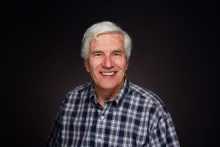
Steve Shafer was born and raised in Seattle. He graduated from Queen Anne High School in 1959 and later graduated from Ambassador College, Big Sandy, Texas in 1967, receiving a degree in Theology. He has been an ordained Elder of the Church of God for 34 years and has pastored congregations in Michigan and Washington State. He and his wife Evelyn have been married for over 48 years and have three children and ten grandchildren.
