

Steve Shafer
This transcript was generated by AI and may contain errors. It is provided to assist those who may not be able to listen to the message.
You know, we do have very mixed emotions today about this whole thing I do, especially I think Evelyn does, too. Because it's not on my last sermon here in Seattle area before returning to Michigan, it's my last sermon as a full-time pastor, which I've been for over 32 years now.
I've got very strong mixed emotions over that. And just leaving here after getting, you know, four and a half years really getting to know everybody really well and feeling part of the family. It's very strong, mixed emotions, thinking and believing. I want to start with a little bit of lyrics from a song. Back in June of 1955, and I was just 14 years old at the time, Four Lads recorded a song that was written by Robert Allen and Al Stillman.
A lot of you will remember it, maybe. But it was, the title of it was Moments to Remember. How many remember that song? One was to remember. A few of you go back that far. A portion of the lyrics go like this.
Though summer turns to winter and the present disappears, the laughter we were glad to share will echo through the years. When other nights and other days may find us gone our separate ways, we will have these moments to remember. In these past four and a half years, they've left us many moments to remember here with all of you. But now we must go our separate ways.
And, you know, as we think of that, we may not see something again until God's kingdom.
I thought a lot about what I might want to give here in my final sermon before leaving. But my hope and my dream is that we will all someday be together in God's kingdom as members of God's eternal family. And I think there's a good chance we will all be there.
Because I know God's mercy is great and that's what I need. I need lots of God's mercy, as we all do. So I'd like to leave us all with some moments to remember. Not for the past four and a half years. I want to leave us some really important what I feel are moments to remember from the Word of God. What moments from history and from the Word of God must we remember to help us ensure that we will all be together in God's kingdom as a part of his family in the future? That's what I want to leave us all with here today in my final sermon as a full-time pastor. My title of my sermon here this afternoon is moments to remember. Moments to remember. And these particular moments to remember teach us very important lessons from God's Word, from God's scripture, that we need to apply in our lives if we're going to follow Christ and if we're going to stay on that road towards the kingdom of God. So I'm going to give five overall ones. There's going to be other moments to remember within those five, but five overall situations that I want to draw from for moments to remember. The first moment to remember involves an early morning breakfast around a campfire. Do you remember where that is? That's very much part of the Word of God, a very important part of the Word of God. An early morning breakfast around a campfire.
Christ has now been resurrected. He's about to make his third appearance to his disciples. Turn to John 21.
John 21, verse 1. It says, After these things, Jesus showed himself again to the disciples at the Sea of Tiberius. And as verse 14 tells us, this is now the third time Jesus showed himself to his disciples after he was raised from the dead. Now this actually takes place at the shores of Sea of Galilee at Tiberius. Tiberius was a city on the western shore of the Sea of Galilee.
After these things, Jesus showed himself again to his disciples at the Sea of Tiberius, and in this way he showed himself. Simon Peter and Thomas called the twin, Nathaniel of Cana and Galilee, the sons of Zebedee, and two others of his disciples were together. And Simon Peter said to him, I have gone fishing. So he said to him, well, we are going with you also. And they went out and immediately got into the boat, and that night they caught nothing. But when the morning had now come, Jesus stood on the shore, yet the disciples did not know it was Jesus. And Jesus said to them, children, have you any food? And they answered him, well, no. He said, cast an head on the other side of the boat, and you will find some. So they cast, and now they were not able to draw in because of the multitude of fish. Therefore that disciple, whom Jesus loved being John, said to Peter, it is the Lord. And when Simon Peter heard that it was the Lord, he put on... much of... let me carefully look at the latter part of this verse here, verse 7. He put on his outer garment, for he had removed it, and he plunged into the sea.
Is there anything strange about that?
See, that might seem very strange on the surface to put on an outer garment and then jump into the water. You think you take off your garment and jump into the water? Why would you put a garment on to jump into the water? Well, I don't know the exact answer to that, but at that time it was not considered proper to greet someone without wearing an outer garment. And that was part of the custom of that day, and Peter obviously knew that. It also shows that Peter's extreme excitement in realizing it was Jesus standing there on the shore. And he decided he wasn't going to go in with the boat. They're pulling a lot of fish. It could take a little bit of time to get in there. He said, I can go faster if I swim in. He was so excited to go and greet Jesus in a proper way that he jumped into the water to swim in, because he had a large catch of fish. Going on in verse 8, But the other disciples came in the little boat, and they were not far from shore, but about 200 cubits, dragging the net of fish. Then as soon as they had come to land, they saw a fire of coals there, and fish laid on it and bred. And Jesus said to them, bring some of the fish which you've caught. And Simon Peter went up and dragged the net to the land, full of large fish. And it tells us the number of fish. That's kind of interesting. 153. I'm not sure what significance there is to that, but apparently they were going to divide it up so they took the time to count the fish. See how many there were? 153. And although there were so many, the net was not broken. And then Jesus said to them, come and eat breakfast. Yet none of the disciples dared ask him, who are you, knowing that it was the Lord. Jesus then came and took the bread and gave it to them. And likewise, the fish. And as we just mentioned to you, this is now the third time, Jesus showed himself to his disciples after he was raised from the dead. Verse 15. So when they'd eaten breakfast, Jesus said to Simon Peter, Simon, son of Jonah, do you love me more than these?
The logical explanation would be, do you love me more than these things? Do you love me more than your fishing career? Do you love me more than material success and material possessions? Or as we could say, as Christ taught us in Matthew 22 verses 37 to 38, do you love the Lord your God with all your heart, with all the soul, and with all your mind? As Christ said, that is the first and the great commandment. So when they'd eaten, verse 15, Jesus said to Simon Peter, Simon, son of Jonah, do you love me more than these? And he said to him, well, yes, Lord, you know that I love you. And he said to him, feed my lambs. Feed my lambs. Then verse 16, well, I want to stop there for a moment because I want all of us to look at that statement there in broader terms as a message and a moment to remember. Feed my lambs. Make that a moment to remember. To all who would be Christ's disciples down through the ages. And the message in this moment to remember is don't neglect and don't forget those who are young and of a tender age as a lamb. Don't forget the younger members of the generation. They're extremely important to Jesus Christ.
Feed, befriend, include, and encourage them also. Don't neglect the younger members, the lambs of the congregation. Going on in verse 16, he said to them again a second time, Simon, Senator Jonah, do you love me? And he said to him, well, yes, Lord, you know that I love you. And then he said, tend my sheep. Get to know all of God's sheep as much as possible. Be all inclusive. Don't just fellowship with certain friends and acquaintances. Nothing wrong with that. That's a natural thing. That's a natural tendency. We'll all do that. That's nothing wrong with that. But also strive to be all inclusive. Strive to get to know every member of the congregation, if you can, as much as possible. Strive to care for and encourage all of Christ's sheep, whoever they might happen to be, whatever the situation might be, whatever class they're in.
Verse 17, he also said to him the third time, Simon, Senator Jonah, do you love me? And Peter was greed because he said to him the third time, do you love me? And he said to him, he said, Lord, you know all things. You know that I love you. And he said to him again, he said, feed my sheep.
Or as he said in Matthew 22, verse 39 to 40, love your neighbor as yourself. Love all of God's sheep.
And be there to encourage and feed and help and strengthen all of God's sheep, whatever the situation might be. We're all going to find times we're going to need encouragement. We need some help towards our goal, the kingdom of God. As he said there in Matthew 22, when it comes to love your neighbor as yourself and loving God with all your heart and soul and mind, on these two commandments, hang all the law and the prophets. Matthew 22, verses 39 and 40. So the first and overall moment to remember is an early morning campfire, where Christ tells all of us as his disciples today to love and care for his lambs and his sheep as much as he does.
And that indeed is a very important moment to remember on our goal towards the kingdom of God.
A second moment to remember, in a broad sense, involves actually three parables that Christ gave. I want to thank a very important parable. And each parable has a moment to remember, but this is three parables that Christ gave on the Mount of Olives. These three parables teach that each sheep must ultimately be responsible for his self or herself and their own personal relationship with God. The three parables are found in Matthew 25. Let's turn to Matthew 25.
Matthew 25, verse 1. The parable to ten virgins. Then the kingdom of heaven should be likened to ten virgins who took out their lambs and went out to meet the bridegroom.
Five were wise and five were foolish. Those who were foolish took their lambs but took no oil. But the wise took all in their vessels with their lambs.
Verse 6. The midnight of cry was heard, Behold, the bridegroom is coming. Go out to meet him. Then all the virgins arose and they trimmed their lamps, and the foolish said to the wise, Give us some of your oil because we don't have enough. Our lamps are going out. But the wise answered, saying, No, lest there should be not enough for us and you, but rather go to those who sell and buy for yourselves. You have to be responsible for your own relationship with God. No one else can be responsible for that for you. It has to be up to you. Each one of us individuals is responsible for our relationship with God.
Verse 10. And while they went to buy, the bridegroom came, and those who were ready went in with him to the wedding, and the door was shut. Afterward, the other ten virgins came, saying, Lord, Lord, open to us. But he answered and said to them, Surely I say to you, I do not know you. Not ever happened to any of us. That indeed would be a moment to remember, wouldn't it? But not a good moment to remember. We don't ever want to have to face that moment to remember. We don't want to have that moment to remember. We want to avoid that one.
Verse 13. Watch therefore for you know neither day nor the hour in which the son of man is coming. The second parable here, of course, is a parable of the talents, beginning in verse 14. For the kingdom of heaven is like a man traveling to a far country, who called his own servants and delivered his gifts to them. To one he gave five talents, another two to another one. To each according to his own ability. We all have different abilities. It doesn't matter if you have a lot of ability or just little ability, but what do you do with what you have? That's one of the parable. Because each of us can do something.
One he gave five, another two, another one. To each according to his own ability. And immediately he went on a journey. Verse 19, and after a long time the Lord of those servants came and settled accounts with them. So he who had received the five talents came and brought five others. And said, Lord, you delivered to me five talents. Here I've gained five more. I've taken what you've given me and I've increased it. I've used it effectively. So the Lord said to him, well done, you good and faithful servant. You are faithful over just a few things. I'm going to make you over many things. Enter the joy of your Lord. That'll be a wonderful moment to remember. Christ says that to any of us. Dropping down to verse 9, let's see.
Verse 24, then he received the one talent came and said, Lord, I knew you were a hard man.
Reaping where you have not sown and gathering where you have not scattered seed. I was afraid.
You know, we can all be afraid at times, certain things. I was scared to death at one time. When I was first asked to give a sermon, I was scared to death. I actually stand back on the stage and my knees would be shaking. I was afraid. It'd take years to overcome fear. Years. You find out, you know, why you can't, you don't have to worry about being perfect because you're not going to be perfect and you're never going to be perfect. Nobody else is going to be perfect. So you have to worry about it.
Then he received the one talent said, Lord, you were a hard man. Reaping where you have not sown and gathering where you have not gathered. I was afraid and went out and hit your talent on the ground. Look to have back what is yours. Verse 26, but the Lord answered and said, you lazy servant, you knew whether I reap or I have not sown and gather where I have not sown and gathered seed. You ought to have deposited the money with the bankers and my company. At least I would have received my own plus interest. Therefore, take the talent from him and give it to him who has ten talents. For to everyone who has more will be given and he will have abundantly. But from him who does not have, even that which he has will be taken away. And cast that unprofitable sermon into outer darkness. Again, that's a moment to remember we don't want to avoid. We don't want to have that moment to remember. It'd be a very brief moment to remember that.
It's not how much we have that counts.
It's what we do with what we have. Can we do something with it? Can we do something to invest in God with God as a giveness? We all can do something to invest in helping others, encouraging others. We can pray. A lot of things we can do. So the thing is, do we live by fear or do we live by faith? It will make a difference because it will determine what our future moment we will have to remember. Will it be a great moment or will it be a very disappointing moment? The last parable here in this group of parables is a parable of the sheep and goats beginning in verse 31. The Son of Man comes in His glory, and although the Holy Angel is with Him, then He will sit on the throne of His glory, and all the nations will be gathered before Him, and He will separate them. One from another as a shepherd divides His sheep from the goats. And He will set the sheep on His right hand and the goats on the left. Then the King will say to those on the right hand, Come, you blessed of my Father, inherit the kingdom prepared for you from the foundation of the world. Wow! That will be a great moment to remember. That's one we all want to strive for.
Christ then tells them why they will inherit the kingdom, and they respond by asking, verse 37, Then the righteous will answer, saying to them, Lord, when do we see you hungry?
And feed you? When do we see you thirsty and give you a drink? When do we see you a stranger and take you in? When do we see you naked and clothed you? When do we see you sick or imprisoned and come to you?
And the King will answer and say to them, As sure they say to you, it is much as you did it to one of these, the least of my brethren, my sheep, my lambs. You did it to me. That is a great moment to remember. And if the situation comes, he only takes one talent to do that. That's all it takes. It doesn't take five talents or ten talents.
Verse 41, Then he will say to those on the left hand, Depart from me you into everlasting fire, prepare for the devil and his angels.
That would be a horrible moment to remember.
But it would only be remembered just for a moment. Verse 44, And then they will say to him, Well, Lord, when did we see you, hungry or thirsty, or a stranger, or naked, or sick or in prison, and did not minister to you? He will answer them, saying, As sure they say to you, It is much as you did not do it to one of these, the least of my brethren, my sheep, my lambs. You did not do it to me. So, remember the parable of ten versions, the parable of talents, and the parable of sheep and goats. They all have moments to remember. Great moments or devastating moments. Now, a third overall series of moments to remember comes from the Song of Songs.
Go back to find the Song of Solomon. It's located just after Ecclesiastes. It's a little hard to find it. It's a very short verse. You don't go to it very often.
Psalms, Proverbs, Ecclesiastes, and the Song of Solomon. The Hebrew title is the Song of Songs.
Or the Song of Songs, which is Solomon's, as it says in verse 1 of chapter 1.
You know, think about King Solomon. King Solomon must have been very musical, like his father David. As most of us know, when Solomon became the king, he offered a great sacrifice to God. Huge sacrifice he offered to God. God was very impressed by Solomon's sacrifice. So God then told Solomon he would grant him a wish. Wow! He wished for whatever he wanted. What does Solomon wish for? He wished for wisdom. He said, I wish for wisdom so I'd be able to judge this wonderful people of yours properly and righteously. He asked for wisdom. In 1 Kings 4 verses 29 and 30, he tells us, And God gave Solomon wisdom and exceedingly great understanding. Thus Solomon's wisdom excelled at the wisdom of all the men of the east and all the wisdom of Egypt. And then 1 Kings 4 verse 32 adds this, He, Solomon, spoke three thousand proverbs, and his songs were one thousand and five. Psalm 1,005 songs. I'm not sure if Renee is quite up to that many or not yet. 1,005. And out of those 1,005 songs, this song of songs, that's his greatest song of all those 1,005 songs. It was a song that was included in God's Word. 2. The two main characters in the song of songs are a shew my maiden and her beloved, who is a shepherd. When the song of songs is viewed from the perspective of what is called the shepherd hypothesis, it becomes an allegorical song of the relationship between Christ, the shepherd, and his church, as portrayed by the shew my maiden in the song of songs. 3. The three lessons to remember from the song of songs And the first lesson involves a troubling dream experienced by the shew of my maiden. It's interesting here. It tells you who the characters are through the song, who's saying what? The beloved, the shew of my maiden. The song of songs, chapter 5, verse 2, this says, the shew of my to speak. This is the dream the shew of my maiden is having. Shew of my maiden, again, is allegorical of God's church of all of us.
And she has this dream. She says in verse 2, I sleep and my heart is awake. It's the voice of my beloved, the beloved being Christ.
He knocks, saying, open for me my sister, my love, my dove, my perfect one, for my head is covered with dew, my locks were the drops of the night.
The shew of my maiden is dreaming.
But the dream is so real that her heart is awake. And she dreams that her beloved, the Christ, is standing at the door, asking her to let him into his life. I want you into my life. I'm knocking. I want you to respond. I want you to let me in.
And again, I just want to tie. I don't spend too much time here, but that ties in directly to Revelation 3.20. In Christ's message to the Church of Laodiceans, where Christ tells his church, Behold, I stand at the door and knock, just as the beloved is doing here. I stand at the door and knock. If anyone hears my voice and opens the door, I will come and dine with him and he with me. Revelation 3.20. Again, song of Psalm 5.2. I sleep and my heart is awake, the voice of my beloved. He knocks, saying, Open for me, my sister, my love, my dove, my perfect one. My head is covered with the dew, my locks with the drop of the night.
How does she respond in this troubling dream?
Does she let him in? Or does she make excuses? Verse 3. Oh, I've taken off my robe. How can I put it on again?
I've already washed my feet. How can I get them dirty again?
She makes excuses and puts off opening the door. Do you ever do that? Do you ever make excuses while I'm too busy?
Two of our relationship with God first? I've done that.
Finally, she decides to respond, but is it now too late? Verse 4. My beloved put his hand by the latch of the door and my heart yearned for him. I arose to open for my beloved and my hand, dripped with my fur and anxiety, my fingers with liquid myrrh on the handles of the lock.
She now goes to open with great anxiety, because she knows she has been putting off her relationship with her beloved for too long. Would he still be there? Would it now be a time of darkness? Verse 6. I opened for my beloved, but my beloved had turned away and he was gone. Wow, would that be a moment to remember?
My heart leaped. My heart leaped up when he spoke, and I saw him, but I could not find him.
I called him, but he gave no answer.
The washmen who went about the city found me, and they struck me, and they wounded me. The keepers of the walls took away my veil away from me. He took my veil away from me, took away my veil of protection, it's entering into a period of darkness, now a time of tribulation, and that veil of protection has been taken away.
Where as Revelation 12, 17 tells us, and the dragon was enraged with the woman, and he went to make war with the rest of her offspring, who keep the commandments of God and have the testimony of Jesus Christ, but maybe they put off that relationship to some way for too long, and now they're in a time of tribulation.
Those who will have that moment to remember will then say this, as recorded in verse 8, in Psalm 5, I charge you, O daughters of Jerusalem, if you find my beloved. I tell him I'm lovesick, tell him how much I love him, I tell him how much I want him in my life, tell him how much I want to put him first.
If you find my beloved, tell him I am lovesick.
That will be a moment to remember.
A second lesson in the Song of Songs is a real brief one, but it's a very important one, and that gives us a lesson of humility. How beautiful humility is to God. Just one verse.
Song of Songs, chapter 7, verse 1, the first half of verse 1, and this is the beloved speaking. This represents Christ speaking to his church. It says, How beautiful are your feet and sandals, O Prince's daughter. Humility is a beautiful thing to God. Or as Micah 6, 8, puts it, He has shown you, O man, what is good, and what does the Lord require of you, but to do justly and to love mercy and to walk humbly with your God. How beautiful are your feet and sandals, O Prince's daughter. Third lesson in the Song of Songs involves love stronger than death and strengthening others. Let's go to the last chapter of the Song of Songs, chapter 8.
Song of Songs 8, verse 6, and this is a shulamite to her beloved here. She says, Set me as a seal upon your heart, as a seal upon your arm, for love is as strong as death and jealousy as cool as the grave. As flames are flames of fire, a most vehement flame.
Verse 7, Many waters cannot quench true love, nor can the floods drown it. If a man would give for love all the wealth of this house, it would be utterly despised. To have the love of God and attain God's love for us and attain that is worth more than anything in the world. Nothing must ever come between us and our love for God and for Jesus Christ or quench our love for God and Jesus Christ. Not even all the wealth of the world would be only despised to have the love of God and love of Jesus Christ.
What about those who are not yet spiritually mature enough to be at that point in the relationship with God?
Song of Songs 8, verse 8, We have a little sister and she's not really developed yet.
What you would do for her in the day when she has spoken for her. And then it says in verse 9, it gives you two options here. If she is a wall, we will build upon her a battlement of silver.
If she is maturing to where she's refusing to compromise God's ways, and to where she is resisting the ways of the world and all the temptations around her, we're going to work to help her to make her even stronger. Because we've been through that, we've been through that test, we're going to help her even be stronger yet. To where nothing will ever come between her and her relationship with God.
If she is a wall, we will build upon her a battlement of silver. What if she's a door? What if she still is tempted to compromise and allow maybe wrong influences to influence her? It says there, if she is a door, we will enclose her with boards of cedar. We will help strengthen her. We will help strengthen her resolve so that she's going to resist any temptation to go contrary to God.
So, no matter what influence she is, we're going to help strengthen her relationship and help her make her stronger. Those are the three lessons from the Song of Songs. Don't make excuses and don't put off your relationship with God. Walk humbly and let your love be stronger than death. So you can then show up and strengthen others and help them have that same strength, spiritually speaking.
Make all those lessons, moments to remember. A fourth overall moment to remember involves the selection of a king. Let's go back to 1 Samuel 16 and the selection of King David. 1 Samuel 16, verse 1, The Lord said to Samuel, How long will you mourn for Saul? Seeing I rejected him from bending over Israel. Fill your home with the Lord. I am sending you to Jesse the Bethanite, for I have provided myself the King among his sons. Samuel said, How can I go? If Saul hears it, he will kill me.
But the Lord said, Take a heifer with you and say, I have come to sacrifice to the Eternal. Then invite Jesse to the sacrifice, who is the father of David. And I will show you what you shall do. You shall know it for me, the one I shall name to you.
So Samuel did what the Lord said and went to Bethlehem. And he yelled at the town, trampled to his coming, and said, Did you come peaceably? And he said, Peaceably I have come to sacrifice to the Eternal. Sanctify yourselves and come with me to the sacrifice. Then he consecrated Jesse and his sons and invited them to the sacrifice. And so it was when they came. They first looked at Eliab, the oldest of his sons. And he looked at him and said, Surely the Lord's anointed us before him. But the Lord said to Samuel, and again this is a moment to remember here, verse 7, Do not look at his appearance.
Don't look at his physical stature, because I've refused him. The Lord does not see as a man sees. For man looks at the outward appearance, but God looks at the heart. He wants to know what's on the inside. I'll never forget 1995, when the split came with Rowide. Boy, was I wrong. I judged by outward appearance. The people I thought were weak were strong. The people I thought were strong were weak, and they caved in. I thought, Boy, what a lesson that is.
Don't judge by outward appearance. For God looks at the heart. He looks at what's on the inside. He looks at the inward strength that we have, not outward appearance. So follow that away and keep it as a moment to remember. Don't judge by outward appearance. Going on in verse 10, Then Jesse made seven of his sons pass before Samuel, and Samuel said to Jesse, The Lord has not chosen these. He said, Are all the young men here?
He said, Well, there's the youngest one. He's out there tending sheep. But he's just a teenager. He's just a kid. Samuel said, Bring him in. Bring him in here. So he sent verse 12, and they brought him in, and he was right in right eyes, and good looking. The Lord said, Arise and anoint him. This is the one. Then Samuel took the horn of all and anointed him in the midst of his brothers. Now, Christ added to that moment to remember. Let's go to Matthew, chapter 7, where he said, Judge not that you be not judged.
Verse 1, For with what judgment you judge? This is a real important moment to remember. With what judgment you judge, you're going to be judged. And with the measure that you use to judge others, that's what God is going to use to measure back to you. That's why, when it comes to judging anything, I want to exercise all the mercy I can possibly exercise. Because I know that's what I need. I need all the mercy that I can get from God and I can muster.
So that's definitely a moment to remember. Going on in verse 3, And why do you look at the speck in your brother's eye? Consider the plank in your... We all have major things in our own lives that it's hard for us to see. Others might see them, but we don't always see them. But it's easy for us to see little things that are wrong with other people. That's the tendency of human nature. Or how can you say to your brother, Let me remove the speck from your eye, and look there's a plank in your own eye. First, remove the plank from your own eye, and then you'll see clearly to move the speck from your brother's eye. So when it comes to the selection of kings, these are all moments to remember. This then leads me to one final, very important overall moment to remember. I spent some time on this one, so I might go a little bit over time. I'm gonna be retiring anyway, so they can't do too much to me.
But this moment to remember involves history as well as the word of God. This moment to remember involves the boys in the boat. How many of you know about the boys in the boat? A few of you do. If you don't remember anything else that I've said over the past four and a half years, remember the boys in the boat. Who provided the greatest epic moment to remember in the history of the Pacific Northwest.
Now, the Seattle Metropolitan's were the first American team to ever win the Stanley Cup. That was the best of nine series against the Montreal Canadiens back in 1917, but that was not the most epic moment to remember in the history of the Pacific Northwest. As we know, the Seattle SuperSonics won the NBA title in 1979 over the Washington Bullets, but that was not the most epic moment to remember either. And you've all followed the Washington Huskies. They've made many trips to the Rose Bowl. Even tied with Miami for the National Championship in 1991, the teams after the Bowl games had a 12-old record. But that's not the most epic moment to remember either. Neither was the Seahawks Super Bowl win of 19... I mean 2014. The most epic moment to remember came in 1936. It was the only time a Seattle team won a world championship, not a national championship, a world championship. They were number one in the world.
And they did it in an astounding way at a monumental time in history as Adolf Hitler was rising to power in Germany, in Berlin. The coach of this team was Al Ubergson. The team was the 1936 University of Washington eight-man varsity rowing crew. The builder of the boat was a man by the name of George Pocock. The epic moment to remember was the gold medal race for the World Racing World Roaring Championship, I should say, in 1936 with the gold medal, which took place that year in Berlin, Germany, with Adolf Hitler in the stands watching.
I mean Hitler went out of his way to make a stage for the world. Took out all the anti-Jewish signs that were there along the streets, cleaned it up. When they went down there, they did not see one anti-Semitic sign at all. As soon as the games were over, they all went back up. They started arresting Jews, but they made a big pretense for the game so the world wouldn't see what was really happening. There was a book that was written on that. It's called The Boys in the Boat. This is July 13, 2014, Seattle Times. Had an article on it last year. There's a picture of The Boys in the Boat right there. I brought a picture of 1930-16, the rowing crew. At the bottom here, they show the photo finished, which I'll get to in a little bit. But I can only give you some brief background and highlights to the amazing story of The Boys in the Boat. To read the full story, you can purchase the book titled The Boys in the Boat, which was written by Daniel James Brown. I highly recommend it. That's what their book came out a year ago. They had an article in Times about the book. One of the members of that amazing eight-man crew was a man by the name of Roger Morris. Roger Morris was Joan Mullen's father. He was, as they say in the book, he was the last man standing. He was the last of those 1936 crew members to die. He died on July 22, 2009. I wish I'd gotten here a year earlier, and I did. I got a chance to meet him.
He wrote in the bow position, so he was the first man to cross the finish line when their boat won the 1936 gold medal. Now, before I tell you the story and the main lessons from the story, I first want to look at how this relates to a moment to remember in God's Word. And this is a really interesting moment to remember from God's Word because it's a one thing. I want you to think about this. It's a one thing. It's a one miracle that Christ could not perform. It's a one miracle he could not perform. What was that? What was the one miracle that Christ couldn't perform? Let's go to John, verse 17. This is Christ's final prayer before he was betrayed. He's up there in the Mount of Olives. He's praying to his father, and he knows his time has come. This is even the Passover. In his final prayer, there was recorded for us in John 17. We read it every Passover. John 17, verse 20, he said, I do not pray for these alone, but also for those who will believe in me through their word. And what does he pray? He said, I pray that they can all become one as you, Father, are in me, and I in you, that they may be one in us, that the world may believe that you sent me, and that the glory which you gave me I've given them, that they may be one just as we are one, that they can have the same unity with one another that we have. I in them, and you in me, that they may be perfect in one. See, what kind of a miracle would it take for God's church to have that kind of unity? Is it possible to work together in perfect harmony as Christ has with his Father? Has that kind of harmony ever been demonstrated, even for just a short period, brief period? Actually, yes, it has by the boys in the boat. It took that kind of harmony. You have to have eight men working as one, perfect as one, in order to win that gold medal, even with the odd stacked against them, I'll tell you in a moment. That was the only way by which they were able to edge out Germany and Italy to win the 1936 gold medal for rowing in Berlin with Adolf Hitler watching in the stands.
And Adolf Hitler actually stacking the odds against the American boat to make sure it didn't win. Now let's go back to the boys in the boat and two lessons we can learn from them. I want... a lot of you have trials and difficulties. Some people come from God's church from very difficult and bad circumstances, bad background, and difficult family circumstances. One of the boys in the boat was a man by the name of Joe Rance, R-A-N-T-Z. His mother died when he was four years old. He endured tremendous hardship between the age of four and the age of ten, almost unimaginable hardship. But his father eventually, he went off to Canada for a while, then he came back and eventually his father remarried. But Joe's new stepmother greatly disliked him. She didn't like Joe at all. He's a young kid. He's 13, 14 years old.
The family eventually moved to Squim, where they were living when the 1929 stock market crash occurred. 1929, the stock market crash just occurred and they're living in the little town of Squim. Joe was 15 years old at the time. And Joe's father was trying to build a house for his family because he'd remarried. After he remarried, he had three children by his new wife. He was trying to build a house, but it was mostly unfinished by November of 1929. One day in November, Joe comes home from school, like he always does, comes home from school to see his entire family is in their car. And there's stuff packed on top. The car lot belongs in all the mother and father and his stepmother and heard the three sons they had he had by his second wife. They're all in the car and they're all packed and he comes home, he walks up to his desk, and he says, well, what's up? Where are we going?
He said, they're going to Seattle to try to find work. The Great Depression hit all the way to Squim. There were no jobs in Squim. He was going to Seattle to try to find a job to survive the Great Depression. Or he was beginning to reach even all the way to Squim, I should say. What do they, you know, what his father said? Because stepmother hated Joe. And he said, well, we're going to Seattle, but Joe, you can't go. We can't afford another mouth to feed. You're going to have to stay here by yourself. Can you imagine that? A father abandons his 15-year-old son, leaving him in an unfinished house in Squim, as the Great Depression is setting in to fend for himself, and they leave and leave him there. 15 years old. He had to fend for himself.
Can we imagine that? What that would be like. Leaving a 15-year-old boy alone to fend for himself as the Great Depression was setting in. Joe not only survived, he graduated from high school. He'd do any job he could, cut wood, whatever he could get for a few bucks, or a dollar, or 50 cents, whatever. He survived. He not only survived, he graduated from high school and saved enough to enroll in the University of Washington, all on his own. I want to pause here to give you a moment to remember. At the University of Washington, Joe met his fiance, who he later would marry. When Joe told his story of how he was abandoned at age 15 by his father and stepmother, Joyce, his fiance, asked him why he didn't have anger. Well, aren't you angry? Don't you have a lot of anger about that? I mean, things happen to us. People have anger. They have unresolved anger. It stays with the rest of their life. She said, well, why didn't they have a great deal of anger over how he was treated? Because he never displayed any anger toward his father or stepmother or anybody. I want to read you Joe's response. They give the response in the book, The Boys in the Vote, page 134, why Joe didn't get angry. He said, it takes energy to get angry. It eats you up inside. I can't waste my energy like that and expect to get ahead. When they let it take everything I had in me just to survive, now I have to stay focused. He had to stay focused on the future, forgetting what was behind, forgetting what had happened to the past that he couldn't change anyway. Or as Christ put it in Luke 9, 62, no one having put his hand to the plow and looking back as fit for the kingdom of God. Don't worry about what happened to you in the past or how unfair things were. Look only to the future. Never look back. George Polcock, the builder of their crewboat, also said this as we record on page 53. He said, it's hard to make the boat go as fast as you want to. The enemy, of course, is the resistance of the water. But that very water is what supports you. And that very enemy is also your friend. So is life, he said. The very problems you must overcome also support you and make you stronger in overcoming them. By overcoming them, they make you stronger. They support you. Both of those quotes are good moments to remember from the boys in the boat.
From the very beginning, this particular eight-man crew exhibited unusual speed in rowing. What made the difference? The answer is given here in page 241 of the book, The Boys in the Boat. There was a straightforward reason for what was happening. Every one of them had come from humble origins or been humbled by the ravages of hard times in which they had grown up, growing up in the Great Depression. They had all learned that nothing could be taken for granted in life. The challenges they had faced together had taught them humility, the need to subsume their individual egos for the sake of the boat as a whole. Humility was a common gateway through which they were now able to come together and begin to do what they could not do before. It took humility. On page 178 it adds this, the greatest paradox of the sport of rowing has to do with the psychological makeup of the people who pull the oars. They must have the ability to endure hardship and to prevail over adversity. They must have many opportunities, excuse me, the sport, the sport of rowing, offers so many opportunities for suffering and so few opportunities for glory. Very little glory in the sport of rowing, but it's a great deal of suffering, great deal of pain you have to go through to win a race. At the same time, this is the key, no other sport demands and rewards the complete abandonment of the self the way that rowing does. Great crews have no stars. The team effort is all that counts. They have to row together as one, eight oars going into the water, precise the same time, each person pulling at exactly the same rate, each oar coming out of the water at the same time, going back this absolutely perfect unity for the entire four mile race without missing a beat and with following the cocks and to make sure that their rate is the same, they have to step up the rate.
Crews, great crews have no stars. Team effort is all that counts. Isn't that the way it should be in God's church? Wow, wouldn't that be wonderful if that was the way it was in God's church? No stars? Just a great crew all working together in harmony, all in the same boat pulling together, absolutely turning together in harmony. That's a great moment to remember from the boys in the boat.
To win a world championship not only takes a team effort, it also takes what is called swing, as defined on page 161 in the boys in the boat. He says there's a thing that sometimes happens in rowing that is hard to achieve and hard to define. It's called swing. It only happens when all eight oarsmen are rowing in such perfect unison that no single action by anyone is out of sync with those of all the others. I just kind of described very loosely. Only then will the boat continue to run unchecked fluidly and gracefully between the poles of the oars. Only then will it feel as if the boat is a part of each of them, moving as if on its own. Again, isn't that the way it should be in God's church? All of us rowing together in unison with no one being out of sync with anyone else? George Boecock, the boat builder, adds this on page 297. He said, good thoughts have much to do with good rowing. He says, what's in your mind going on your mind has much to do with your rowing? It's not just the strength of your muscles. It isn't enough for the muscles of a crew to work in unison. Their hearts and minds must also be as one. That's the way it has to be in God's church. Our hearts and minds have to be one. George Boecock also said this to Joe Rance, as we record on page 235. He said, Joe, he wanted to tell Joe something because he knew Joe had grown up with a hard time, very dysfunctional, bad, difficult family situation. He said, Joe, if you don't like some fellow in the boat, you have to learn to like him. It has to matter to you whether he wins a race, not just whether you do. Wow! Isn't that also the way it should be with all of us? There may be some people that are different, but you must like them. I'd say more than that. You must learn to love them as Jesus Christ does. It has to matter to each of us that all of us make it, not just the we make it, or the ones we associate with make it. It has to be important that every single member makes it. He then concluded with a mark that Joe would never forget. He said, Joe, when you really start trusting those other boys, you will feel a power of work within you that is far beyond anything you've ever imagined. You've all got to learn to trust one another. And if you do that, he said, you'll experience something you've never even imagined before. Sometimes you'll feel as if you have rolled right off the planet and you're rolling into the stars. If you all learn to trust one another and all pull together in absolute unison. They especially had to trust Bobby Mock, who's a coxswain. He's the one that would tell them what stroke to make, tell them whether to rev up the stroke and make more strokes or whatever, or to pull hard or whatever. He's the one they had to, he's the one whose lead they had to follow. They especially had to trust him and they, he would call the stroke rate and tell them when to put everything they had left into their final strokes and try to win the race.
Very interesting. They bring out something in the book that's very interesting. Bobby Mock's father had kept a secret from the family. Didn't want to ever tell the family, because in 1930s there was a lot of anti-Semitism even here in the United States of America. I could tell you some stories about that, but I won't take the time, but there was anti-Semitism even here. Especially with both the St. Louis who tried to drop off Jews here and they refused and they had to go back to Europe. How many of them died? In fact, there were, one time there were 20,000 children, 1939, I think it was 39, there were, there were one, there was 20,000, there was a, then came before Congress to step up the immigration allowance to allow 20,000 German children, Jewish German children, to come to America. And the Congress refused to take up the measure and even before Congress and those 20,000 children, they died in the Holocaust.
But Bobby Mock found out from his father, just before he left to go to Germany for this race, for the gold medal in Berlin, his father told him that he was Jewish. He never knew he was Jewish. He broke down in tears, not tears of joy, tears of incredibility, I guess, just because he knew how much anti-Semitism there still was in America and there would be in Germany. He found out as he was going to Germany he was a Jew. It's a very moving story in the book.
But the Washington crew stunned the nation with the dramatic, come from behind, win on June 22nd, 1936 in Pokipse, New York, on the Hudson River to win the National Roaring Regatta title. Then they had a runoff from that to see who then the top crew would then go to Berlin to compete for the gold medal. It was the Washington Huskies. Washington crew did. They went to Berlin. And that win and that gold medal, it actually put Seattle on the map. Many who had never heard of the University of Washington rowing crew were now all ears as the University of Washington went to Berlin to compete against the 14 greatest crews in the world, including Italy and Germany. Six of those 14 crews would make it to the finals to row for the gold medal on August 14th, 1936. Those six crews included Germany, Italy, Switzerland, Hungary, Great Britain, and the United States, as represented by the University of Washington by the boys in the boat. There were six lanes, with lane one being the best lane, lane two being the second best lane, lane six being the worst lane. We'd have to get more of the seas and rougher water, etc., etc., for much of the course because it's a long course. Four miles might have been, meters might have been a little over four miles, I'm not sure, but it was at least four miles. And those six lanes were supposed to be assigned, that as the crews were supposed to be assigned their lanes, by order of their qualifying times. The University of Washington had the fastest qualifying time. They should have been gotten the best lane. When now, Auberson got there for the race, what did he find out? What lane was he assigned? He was assigned the worst lane. They put him in lane six. They had Germany in lane one and Italy in lane two. How did that happen? Hitler manipulated it. Hitler wanted to make sure Germany or Italy won. One thing he didn't want, he didn't want the Americans to win. They were assigned lane six, which is about a two-bolt handicap to start with.
Hitler manipulated it. Hitler in lane six. On race day on August 14, 1936, millions of people all across America listened to the race on their radios. They were tuned in. As I say, this put Seattle on the map as far as the Eastern Seaboard is concerned. Here's what happened. It's the three lead boats. Italy, Germany, and United States stormed toward the finish lines, all neck and neck.
This is on pages 349 to 351 in the book, The Boys in the Boat. Mark, the coxswain, glanced left and saw the German Italian boat surging again. He knew the boys were already giving it everything they had, and they had for four miles. He immediately gave them a signal they needed to do what was impossible to go even higher in the stroke count. It was neck and neck now. The three boats stormed toward the finish line, the lead going back and forth. The UW crew took the stroke count higher and higher until the boys hit 44 strokes a minute.
The UW took the stroke out higher until they hit 44. They had never rolled this high before, never even considered it possible. The Germans were right beside them in the crowd chanting, Duchland, Duchland, Duchland. The boys took one last mighty stroke and hurled the boat across the line. In the span of a single second, the German Italian-American boats all crossed the line together, and from the angle of those in the crowd, from Hitler and Goebbels and the others, it looked like Germany had won. On the balcony Hitler raised a clenched fist, shoulder high. Goebbels leapt up and down. Herman Goren slapped his knee with a maniacal grin on his face. The Germans thought they'd won. In the American boat, Don Hume, the lead stroke salesman, bowed his head as if in prayer. Nobody knew for sure who had won. It was literally a photo finish. The photos show who actually had won. With that final mighty stroke, the University of Washington crew caught the ball of their boat across the finish line. Six tenths of a second ahead of the Italian boat and one second ahead of Germany. Paper here, a year ago, it shows the photo finish right here. I know you can't see it, but Washington is here. Their bowels right there. These boats, the German-Italian boats, are just just right behind it. It just crosses to six tenths of a second ahead. American crew with that last mighty stroke, with all the pain ever they had, they propelled across the finish line to win.
That was a great epic moment to remember. George Polkock stated this on page 353. He said, what is the spiritual value of rowing? He said, the losing of the self entirely to the cooperative effort of the crew as a whole. That's what we have to do. We have to lose ourselves for the cooperative value of the church as a whole. And that is how the boys in the boat won the 1936 gold medal for rowing at the 1936 Summer Olympic Games in Berlin, Germany. And that is what we must do also as the people of God in order to become one, as Christ and his Father are one. In conclusion, then, these are some of the valuable moments to remember. The moment that involved an early morning breakfast around a campfire where Christ said, feed my lambs and tend my sheep and feed my sheep. Also, the moment that involved the three parables in the Mount of Olives. And the moment that involved lessons from the Song of Songs. And the moment that involved the selection of a king, how God looks not at the outward appearance but at the heart. And the moment that involved the boys in the boat. Those then are four biblical moments to remember, along with an epic historical moment to remember that directly relates to the biblical meaning, a biblical moment to remember, that is how to become one. As God the Father and Jesus Christ are one, how we can all be in the boat together, rowing together. What it takes in order for us to be one as Christ and his Father are one. So, as I now conclude this my final sermon before retiring and going back to Michigan, keep in mind the Psalm recorded by the four lads way back in 1955, their song titled, Moments to Remember. And recall the lyrics which state, though summer turns to winter and the present disappears. The laughter we were glad to share will echo through the years. When other nights and other days may find us gone our separate ways, we will have these moments to remember. By this time, I do mean in a very personal way for both Evelyn and myself. Evelyn and I want to thank all of you from the bottom of our hearts for the past four and a half years and for giving us many wonderful and very valuable moments to remember.
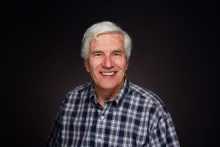
Steve Shafer was born and raised in Seattle. He graduated from Queen Anne High School in 1959 and later graduated from Ambassador College, Big Sandy, Texas in 1967, receiving a degree in Theology. He has been an ordained Elder of the Church of God for 34 years and has pastored congregations in Michigan and Washington State. He and his wife Evelyn have been married for over 48 years and have three children and ten grandchildren.
