
Robin S Webber
This transcript was generated by AI and may contain errors. It is provided to assist those who may not be able to listen to the message.
Thank you very much, Aya. Thank you very much, Sharon. Really appreciate that.
Today, more than ever, we are locked into what is called the Culture Wars.
Those culture wars swirl all around us.
As Christians, in the midst of those culture wars, we cannot help but be immune to their effects. Perhaps even when we think we're doing okay, or we're surviving, or we have our head above water.
Christians in this culture war are indeed at ground zero. And it does have its effects on us, personally, as adults, and upon our children, upon our grandchildren. I think it might be very simple to say that there is a plague in the land. And it can best be described by a four-letter word. And I'd like to share it with you. You don't have to put your fingers in your ears. I think you'll be able to handle this. But it's true. These culture wars are basically predicated upon one four-letter word. It's called self. Self. And it's all-consuming. And we see it like a plague that it's expanding and infecting more and more people. The Apostle Paul, in one of his few written prophecies, spoke and defined the days that we live in, if you'll join me over in 1 Timothy 3. 1 Timothy 3. And let's take a look here in the words of Paul. We often think of Paul as being an evangelist. We think of him more about Christian living and explaining the way of God. But he was also a prophet. And we find over in 1 Timothy 3 and verse 1, speaking of this, But know this, that in the last days perilous times will come. For men will be lovers of themselves, lovers of money, boasters, proud, blasphemers, disobedient to parents, unthankful, unholy, unloving, unforgiving, slanderers, without self-control, brutal, despisers of good, traitors, headstrong. Nobody gonna tell me what to do. Haunting and lovers of pleasure rather than lovers of God and having a form of godliness, such as carrying coins that say, in God we trust, but denying its power.
The Apostle Paul says, from such people, turn away.
We look at what is occurring in America today, and we can look down the line, and we can become somewhat frustrated. We say, well, things aren't like they used to be. Well, actually, that's new as 3,000 years ago. Join me, if you would, in the book of Wisdom called Ecclesiastes. Solomon had something to say about this, and Ecclesiastes do. He was very concerned for future generations and looking at what was coming up. And he says over here in Ecclesiastes 2 in verse 18, he says, therefore I hated life, because the work that was done was under the sun was distressing to me for all his vanity and grasping for the wind. And then I hated all my labor in which I had toiled under the sun, because I must leave it to the man who will come after me. Solomon, around 930 BC, was saying, what is the world coming to? And who knows whether he will be wise or a fool? And yet he will roll over all my labor in which I toiled and in which I have shown myself wise under the sun. And this also is nothing. So what do we do, brethren? Members of the United Church of God Los Angeles and visitors that are here today hearing the word of God. What is our responsibility as we see this storm of cultural wars where Christians and people of faith are at ground zero, where the world doesn't seem to be where it used to be, can we change the entire world? Can we go out and with the waving of a wand push everything back? I don't think so.
And sometimes we look at what is all out there. We become frustrated. We become insular and just say, I can't do anything. I'm paralyzed. It's all over. No, we can't change the entire world right now fully, but what we can do is be responsible for the sphere of influence of our personal world and those that we touch. Our family, our children, our grandchildren, those that we love, those that are within our sphere of influence. I can't be responsible for matters over in Iraq, over in the eastern Ukraine, down in the Coptic communities in the upper Nile river basin. What's happening in Europe? I can pray about it. I can say, Thy kingdom, come, boy, Jesus Christ needs to come back to this earth just as soon as possible. And how long, O Lord, how long? And I can pray to God about that. I can even send relief sometimes, as I'm able to, along with Susie. But at the end of the day, we're responsible for ourselves, and we're responsible for our sphere of influence, which is our family, our children, our grandchildren, our great-grandchildren, and our own spiritual family right here in Los Angeles. So rather than being forlorn like Solomon, let's look at what God says. Join me if you would. Let's turn to Psalm 127. In Psalm 127, God reminds us of our responsibilities. In Psalm 127, and let's pick up the thought if we could together as a congregation, beginning in verse 1.
Unless the Lord builds the house, they labor in vain who build it. Unless the Lord guards the city, the watchman stays awake in vain. It is in vain for you to rise up early to sit up late to eat the bread of sorrows, for so he gives his beloved sleep. Verse 3. Beloved, looks to you, not beloved, behold, children are a heritage from the Lord.
They're not the end result of evolution. They are not the result of creepy little slimy things in Christasius' ponds.
They are a heritage from the Lord. They are God's gift. They are God's bounty. And the fruit of the womb is a reward. Like arrows in the hands of a warrior, so are the children of one's youth. Happy is the man who has his quiver full of them. They shall not be ashamed, but shall speak with their enemies in the gate.
God is telling us something here, friends, that a purpose is being worked out here below. A purpose is being worked out here below, and God grants us, you and me, as parents and grandparents, and as family within the church to touch the lives of our youth and move them forward to create two things. It's very simple. Two things. Glad it's not three things or four things. You might forget it, but just two things. Here's the responsibility of every parent and what we give our children.
Just two things. Number one, we give them roots. We give them foundations, and we plant those roots deep, because you and I know that the storms of life are going to come. So we plant them. We nurture them. We guide them. We help them to get down into that soil of life. Roots that will keep them holding firm as the storms and the winds of life come.
Number two, we give our children a win. We give our children wings. We give our children wings knowing as much as we love them that someday they're going to fly from the nest. They're going to fly from the nest. They're not always going to be with us, and as much as we want them to be with us, we know that they have to go, just as you and I left from our parents' nest. So we give them roots, and we give them wings.
It's not complicated. I cannot teach my children geometry or trigonometry because I'm not good in math. But that's never what God assigned me to do for my children and my grandchildren, our grandchildren, and those that will come afterwards. He told Susie and me as Christians, and you as Christians, that we are to give the next generation roots, sunk down, values that are eternal in nature, values that will stand the test of time, values that will move beyond the twitch of feelings and thinking I've got to do something now rather than thinking in the future, and wings to be able to fly.
Today's message is simply entitled this, my friends, anchored in values. And that's what I would like to present to you, anchored in values. I have a question for you, may I? And that is simply this, who is teaching your child and who is teaching your grandchildren? The reason why I state this, if you are not teaching them, if you're not involved in their life, that vacuum will be filled.
That vacuum will be filled, and they will be taught by somebody else. And we can choose to spend time with our children now on our terms. Or later, when they're grown up, we will be spending time with them on their choices. Because you will spend time with your children. You can make a choice now that you will spend time with them when they're young and mold them and groom them and train them or nurture them.
Or because of their later choices, as we see so often now in America, children are coming back home because of situations that have happened out there. Situations in which they made wrong choices. Situations that they made because it was not anchored on values, but because of feelings. Let's understand something. As grown up, as teachers, as parents, as grandparents, we have a three-fold commission. Three-fold commission towards our young people.
I'd like to give it out to you then when to build upon it. Number one, we are to set standards. We are to set standards. There is such a thing as standards in this day and age where of which everybody says, well, I'm okay and you're okay. You all right? I'm cool. I'm mellow. You doing okay? Hope you don't mind how I am. Sounds like we're in California. Our responsibility is to set standards. Number two, we are to shape and to mold values without excuse. We are to shape and to mold values.
And number three, we are to teach our young persons how to stick to principles. Having reasonable expectations is beneficial and motivating. And so often what happens is we dealing with young people, we put off the matters that are important in life because we want to give our children a break from this world that is around us that's so complicated, that is so moving these days. We say, oh well, they'll grow up soon enough.
It's very interesting when you look at the scriptures, you look at the Bible. Jesus Christ was in the temple at age 12 and there was a reason. The Jewish community did not look at entering puberty as a sign of having a vacation from humanity called teenage.
They looked upon it as the first stage of adulthood. They looked upon it as the beginning of a level of understanding maturity and taking responsibility. It was not to be a time out. Of to do your thing, to be my own man, to be my own person. But it was a responsibility and you see that in the example of Jesus Christ. So I have a question that I want to ask of all of you.
When you think about Jesus Christ, what is God saying about the job that you are doing with those that are in your charge and within your sphere of influence? And when I say this, brethren, I'm up here also preaching to myself as all preachers always do because like the Apostle Paul says, I have not yet obtained but I do press ahead. Join me if you would in Genesis 18 verse 19. Let's take a look at this in Genesis 18 and verse 19. This is a comment that God made about his friend whose name was Abraham in Genesis 18 and verse 19. For I have known him, speaking of Abraham, in order that he may command his children and his household after him, that they keep the way of the Lord, to do righteousness and justice, that the Lord may bring to Abraham what he has spoken to him. There's something that God knew about Abraham. It was simply this, that he would set standards, that he would shape and mold the values of Isaac and Ishmael, and that he would stick to principle. What I'd like to do for the remainder of this message is simply this. I would like to give you some basic values, basic values that will allow you to anchor your young person in the throw of the culture wars that are being waged all around us. You say, but wait a minute, Mr. Weber. You know what? I don't have children and I don't have grandchildren. Well, think about it this way, because I want this message to bring everybody in. We are all the children of God.
We're all children under the Lord, and we are going through this. And so some of the values that I'm talking about are values that we need to understand, we need to embrace, and we need to internalize and allow our light to shine. And each and every one of us, by God's grace and by his help, and we'll fall down, there is no perfect parent. It's like a gentleman, he actually wrote it back in the 17th century, he said, you know, I used to have six points about child rearing and no children. Now I have six children and no points about child rearing. Once you get into the game, it gets a little interesting. But you have to have a basic GPS of where you want to go. And more so, brethren, because you know, I've been on this thought of out of concern that there are so many voices today, more voices than ever that are seeking your child's attention.
And if there is a vacuum, it will be filled, and you make therefore a choice what it will be filled with. Your voice, your love, your concern, or somebody else's love and concern that does not have your child's best interest. They want to seduce them, they want to take their money, they want to take their all, and they're just a number.
Children deserve the best of what we as the generation above them can give. Here's what I like to share with you. Point number one, we're going to try to go quickly here. Point number one, roots and wings. Here we go. Implant and nurture a life goal. Implant and nurture a life goal. Not just any goal. A lot of people have goals, and goals are good, but you've got to make sure that you have the right goal. You know, a lot of people spend all of their life climbing what they consider the ladder of success, only to find that when they get to the top of the ladder, it's leaning on the wrong building. And then they look down for help, and what they've noticed is there's nobody there to help them, because they kicked everybody off that ladder as they try to get up into what they considered success. Did they make it to the top? Yes, they did.
Was there a goal that was obtained? Yes, it was, but it was a wrong goal and a wrong place.
And was not fulfilling at the end. Matthew 6 and verse 33, brethren, I believe continues to be the goal of every Christian heart that beats, and one that is a true north principle for us and for our young people. In Matthew 6 and verse 33, it simply states this from the Sermon on the Mount, but seek first the kingdom of God and His righteousness. The kingdom of God is not just simply a destination, but when it says to seek the kingdom of God and His righteousness, it is also a way of traveling towards that good kingdom that our Father bestows upon us. And then it says, then all of these things shall be added. The stuff will come along in its own right. Those lesser goals, those lesser items that, sure, there's a lot of good, there's a lot of goals that are out there, there's a lot of good things, and God wants us to enjoy life and to be blessed in this life. But none of those blessings are going to remain. The stuff of life is fickle unless you have that goal planted in your heart that you are going to plant in the heart of your young person without any excuse, without any reservation, and that they know that you are the real deal and the genuine Christian, that you long for that kingdom. And you are allowing that kingdom of God to live in your heart and that people see that it is a part of you and that you are a citizen of that kingdom today without any excuse, without any reservation. And when people ask you, well, what are you about? You can just simply say, I am a Christian. You don't have to go down deep with them, but you extol and you praise the source of your values and what you are anchored in. That is very important.
Longfellow, poet of Americana literature, once said that if you would hit the target, then you must aim your bow high. Because he said, for every arrow that flies, feels the pull of the earth. And therefore, we must be sure that in our young person, as much as they can embrace at whatever stage of life that they're in, starting young, that God wants them to be a part of his kingdom. That as much as they might enjoy this world around it with their techno gizmos and their little red wagons and songs that they like at their stage in their age, what God has to offer is so much grander, so much better, and that he is bringing a kingdom that is going to be wonderful for everybody. You know, one thing is that the kingdom can be likened to the zone that many of you young people go to camp at. When they keep on talking about camp, when they talk about the zone, because at camp, the whole goal of camp is that everybody rises to their full measure. Everybody has an identity. Everybody has a contribution, and you don't put down people. You love people. You learn to like people, even some of those that you didn't like on the first day at camp, and those that you didn't think might like you. But you don't speak ill. You build. You lift. And then things just begin to multiply and multiply because the foundation of love is there. And that's just a microcosm of what the kingdom of God is going to be like. Brethren, more than ever, we need to instill that into our children, and that allows them to know that one day they're going to have a part in that kingdom. And it's wondrous. You know, you think of all the things that are happening today that come out of the Silicon Valley, and you know, just when you have a computer that you think is going to be around at least six months anymore, something else comes out, and something else that you didn't know, and something else that you never thought could happen. And that's what the kingdom is going to be like. It is going to be so expansive. You say, the kingdom doesn't sound fun. The kingdom sounds wonderful. And to recognize that there's going to be such energy and such creativity. There's going to be full employment, fair employment, equal employment. Everybody's going to get their hands in the mud of beginning to raise civilization up again, but not based upon the Tower of Babel, but based upon the Tree of Life. Brethren, establish without hesitation or reservation a right goal in your children's mind. And you begin at the earliest age to point them to the kingdom of God, and to recognize that it does not come cheaply, but that it is by his righteousness. Point number two. Another root and another wing. Teach your young person to respect your family name. Teach your young person to respect your family name. Proverbs 22 and verse 1. Join me if you would there, please. Proverbs 22 and verse 1. Love the scripture, and we should. A good name is to be chosen rather than great riches. Loving favor rather than silver and gold. It says that a good name is to be chosen. You know, we grow up in society. We hear about the Kennedys. We hear about the Rockefellers. We hear about the Melons of Pennsylvania. We hear of the Carnokies.
We hear of the great family names. We hear of the names of Europe like the Rothschilds. We hear these names. But you know, there are names of people that you have never heard of that grew up, shall we say, as common as mud.
From every racial group and every ethnic group. Names that were on little mailboxes that were not on Grand Avenues like Park Avenue, but were in back alleys. But there was a name on that postbox. And that person's name was honorable. And they might not have had much, but what they did with what they had, they did a lot. They didn't cheat. They didn't steal. They didn't talk about the officers of the law in a habitat manner or a contrary manner. But they spoke about them as an officer. They said, yes, sir. They did not speak ill of those that are an authority.
They lived within their means. They did not go into debt, even though they did not have much to spend. Whoever you are, wherever you are, whether you live in Central LA or whether you live up here in the hills of Los Feliz, each and every one of us have a responsibility to bring honor to our name. And that is one of the very first things that you have to do as a parent, is to teach your child the honor of a good name. Now let's understand something as I say that. Oh boy, the old family name thing. A family name should not be a cross to bear. Allow me to make it plain and simple. But it is a privilege to uphold. And I do say that it will keep your, you anchored in life. I know a lot of you look at me up here now, and I'm a grandfather.
I'm in my sixties. I didn't tell you what side of sixty. I was a boy at one time. I was all boy at one time. You think of a rambunctious lad with get up and go.
You just met him. And boys will be boys. May dare say in this age of equal equality, and girls will be girls. And there's a lot of things that look good. There are a lot of things looked fine, and there are a lot of things that looked interesting to cross over that threshold.
But there's one thing I never forgot that my folks instilled in me. And that is a good name. And my responsibility, even as a young lad, was not to just simply think of myself, but to think of my family name. Now, all family names that come down to us three or four hundred years, please understand something, may we? Family names are family names, and just when you think you have this pure genealogy, well, just look at Jesus Christ. Kind of humbles all of us. You know, you look at Jesus Christ genealogy, there were a lot of interesting people.
And that genealogy even prostitutes. And some real characters along the way, whether they be king or prophet. And all of us, just when we think we have this really neat line, is to recognize, if you go too far into the family tree, you're going to find some really interesting birds.
But our job and our responsibility as it comes to us is to responsibly add luster and honor to that name. Now, what does God say in Exodus 20, where He says, in principle, do not take my name in vain? Now, that's speaking of the Almighty. But there's a principle that we can extrapolate from that, that of the importance of a name. Don't take that name that has been visited upon you as simply nothing. A name is everything. Proverbs 22, 1, brings that out.
Point number three. Teach your young person to grasp the importance of obedience. Starting at a very early age, starting as soon as they can begin to put the wires together and to understand. When you look at the Bible, you recognize that Genesis 2 and Genesis 3 is all about either obeying or disobeying and living with the consequences. Teach your child the importance of obedience. You know, it's often been said, and we could philosophize on this for a long time, that experience is the best teacher. I beg to disagree. Experience is the most memorable teacher. Just put your hand on the old stove and we've all been through that, haven't we? Obedience is the best teacher. Obedience is the best teacher. Can you imagine a world where everybody obeys the rules?
Well, we might not be there, but it starts with us and incorporating that in our young person. We say, well, how do you teach them to obey? Allow me to go down a brief list with you, please. From the time that there are three or four, begin this thought. Teach them to obey, coming and answering when spoken to. Coming and answering when spoken to. This is not rocket science, but it starts at that age. Either you see that surrender of the will that will be compliant and yielding and grow and be rooted and have wings, or you'll find something else. Remember what I said. You will either spend time with your child when they are young and or you will spend time with your child when they are old. So you have to kind of figure where you're going to allot your time. Number two, listening with an attitude of wanting to obey. Giving them a desire, instilling them in an attitude to obey, when spoken to obey. Number three, when the assignment is given to them, going and doing it quickly and quietly. Going and doing it quickly and quietly. How novel!
You say that might be it. Well, you have to kind of start. It might be a little difficult at first, but teach them to do things quickly and quietly. Wouldn't that be nice in some of your office places that you work today? I'm sure you run into fellow co-workers that when they're given something to do, don't necessarily do it quickly or quietly. In the wonderful world tomorrow, people are going to learn to do things. They're going to learn to have a heart that wants to obey and to say, yes, sir. Yes, ma'am. And then to do things quickly and quietly. Number four, doing it in the way and the order requested. Doing it in the way and in the order that it was requested.
Have you ever found out that people just kind of want to do things differently, rather than just what they're told to do? Just when you think you've made it simple, they've got to add their own personality or variety to it. You know, I remember when the girls were over at a private school here across the Arroyo and they were all given uniforms to wear. And you would think that uniforms are uniforms, right? Some of you parents were in the same boat. You think that, you know, there's only so many pants, so many shirts, so many dresses, so many this. And you just recognize just how it all moves around. And just when everybody is supposed to be uniform, you see, you know, a push over here and a push over there and this up and that down and all around there. There's something about human nature that just does not want to simply yield. Not talking about not having personality. I think you understand that. But when you give your child a job, they should do it in the way and in the order requested. And last and most important, number five, finish the job. Finish the job. Complete what you have given them to do.
Number four, keep the lines of communication open. Keep the lines of communication open.
Jesus made that very apparent in the book of Matthew, Matthew 7-7, when he said to, with our Heavenly Father above, to ask and to seek and to knock.
And we need to be very careful as human parents to realize that if our line is always busy or we place our family on the call waiting line, what's that telling them?
Just remember again, if you are not spending time with your child, somebody else is. And ears and hearts will not go hungry. Did you hear me? Ears and hearts will not go hungry. They will be filled.
No, there's a great indictment against King David. King David, who basically never spent time with his children, speaks of one that he never had the time just to basically tell him, no, there's a better way. He just never spent time. So remember what I said, if you don't spend time with your children when they're young, you have to spend time with them when they're old. And basically, did you ever notice that David spent a lot of time running away from his children?
Who were trying to kill him? Who were trying to take over his kingdom?
Now please understand, I think all parallels break down, don't they? But if you don't spend time with your young person now, and they try to tune you in, and your receiver is always busy, and you're never there for them, you never show interest, they will find that interest somewhere else. Because life has not lived in the vacuum.
You know, one thing I'd like to share with you, join me in John 11.41. There's a principle here. I'm kind of running quickly here because I'd like to conclude. In John 11 and verse 41, it's the story of Jesus, and he's about to resurrect Lazarus. And I could just put this out to all of you mothers and fathers and grandparents out there. I think this is really important to kind of consider for a moment. He's about to raise Lazarus. And then he looks to heaven, because he recognized that he's not alone. He is rooted in heaven, and because he's rooted in heaven, he has the wings to fly to do what's that which he is about to do. And it's just a very simple line, and I thought when I read this line, how often was I not available? Or maybe I didn't hear our daughters as much as I ought to. Father, I thank you, and that you have heard me. And then verse 42 is just incredible. And I know that you always hear me.
Father, I thank you that you hear me. And then there's just this confidence, there's this connection of heart to heart, and this thanksgiving, and this knowing. And I know that you always are there, and that you'll always hear me.
I hope some of you husbands and wives will go home this afternoon, and have a talk about how available you are for your young people, as these cultural wars come upon us, and that you will be there for them, and that you will always hear them. Point number five.
Teach your young person from an early age to strive for excellence in all things. To strive for excellence in all things.
It's very interesting. I'm going to show you something here. Join me in Ecclesiastes 9. And you'll know this one, but you may not have heard of the other one, even though it's in the scripture. Ecclesiastes, again, a book of wisdom of how to live. Ecclesiastes 9, it says this, Whatever your hand finds to do, do with your might.
Whatever your hand finds to do, do with your might. I remember my mother, Thomasina Weber, teaching a five-year-old lad up in Sacramento, Robin.
She taught me a poem. Whatever you do, do with your might. Things done by halves are never done right.
And I'm still remembering that decades later. But that's not enough. Let's go to 10-10. Because it's not enough to put your shoulder to the wheel.
God not only asked you to use your muscle, but He asked you to use your noodle. That means your brain up here.
If the axe is dull and one does not sharpen the edge, then He must use more strength. But wisdom brings success.
We're not only to work hard, but efficiently.
This verse, please ask these 10-10-10's that we need to not only build muscle, not only stay on the job, but also to sharpen our wits. When God created the world, and this is a very simple lesson that you can sit down with your young person, or even your teenager, as Susan and I can with our teenager here.
When God created the world, He didn't... Have you ever noticed Genesis 1 and 2? He didn't say, and on the first day, God finished and He said, it's okay. On the second day, He didn't finish His work and say, well, you know what? It'll kind of do.
On the third day, He didn't say, well, I tried.
Every measurement that God gave from the first day to the sixth day, and it actually builds, is He would finish and He said, it is good. It is good. And then on the sixth day, He said, it is very good. And then on that seventh day, which is a day of creation, He placed His presence into a day, and He blessed it, and He hallowed it.
If there's one principle that we can teach our children about doing excellent things, join me if you would in Ephesians 5. In Ephesians 5, on this thread of instilling and teaching excellence from a young age early to develop values that will anchor your young person in life.
Because sometimes you won't get the job that you want. I'm only taking this out of principle, but notice what it says in Ephesians 6. And this is actually Paul speaking to those that were bond servants or slaves that were in the church. And I'm using this as a principle. I'm taking it out of the reality of slavery and using the principle. Bond servants be obedient to those who are your masters according to the flesh with fear and trembling in sincerity of heart as to Christ. Not with eye service as men pleasers, but as bond servants of Christ doing the will of God from the heart. Now again, this was talking about slavery in the world of antiquity. But we can also talk about doing a job that is placed before us. Whatever the job is, I want you young people to hear me. You might be flipping burgers at McDonald's, or you might be sweeping some trash out down in an alley, or you might be cleaning the great right throne as a custodian in a commercial building. It is not the size of the job, but the size of the heart that is doing that job that God is going to notice. I can think of all the jobs I've had in my years, counting inventory of plumbing parts in the old maintenance department by the hour, way in the back where nobody even knew that I existed other than the rat that was in the building. I think of the hours that I spent kneeling before the great white throne. I'm not talking about the one up in heaven, but cleaning the commodes of Ambassador College. I think of the times when I volunteered, when people didn't know I was volunteering. They thought I was full-time, but I volunteered. You see, everything that we do in life is a training for the next step, right? Everything is a continuum towards the future. Never diminish the job. Never diminish when you look at a man who does this or does that or a woman that does this or that. Never diminish them. You know, we humanly, we like to lift up certain people, movie stars or chairman of the boards or CEOs or some banker or some sporting star. Every day, there are dads and moms that go to work, and they toil and they sweat, and they are so tired. And they have very little to show for it as far as money, but they don't want to go into debt. They don't want to go on welfare needlessly, and they're honoring their family name, and they're teaching their young person. If you young people will look at what your parents are doing, and knowing that all work is honorable, to do the job, to do the best job that you can. And you know what I learned that when I was young in an ambassador college and cleaning those thrones, I wasn't cleaning it so some person could come in and make that restroom messy again. I remembered this principle. I was doing it as unto the Lord. When you have that thought in mind, whether you work in a college, whether you work in a big manufacturing company, whether you work in the banking industry, whether you're a computer tech, whether you're flipping burgers at McDonald's, and what we need to teach is parents and grandparents through that next generation to give them, to anchor them in values that will give them roots and wings, that whatever is before them, they are to do their best to finish the job, and to do the best job possible as unto the Lord. Let's go to point number six. I'm going to go real quickly here. Learn, teach them to love people. Teach them to love people.
Remember what Paul said that there's going to be this generation as the end times come that's going to be very unloving. And people only today kind of really worry about their rights and what's in it for them. Teach your young persons to love people. That is so very, very important. And especially as we tie that with that first principle of a right goal of seeking first the kingdom of God and His righteousness. Because the identifying sign of a Christian is not how many scriptures you know.
It's not how many nuances of understanding that you have. It's not simply being baptized, quote, unquote, the right biblical way. Jesus said, by this will all men know if you are my disciples, if you love one another. And the love that is spoken about there is agape, which is the outflowing and outgoing concern away from self. And to teach our young persons that love ultimately is not simply a feeling, but it's an action. It's what you do.
Isn't that hard sometimes?
Isn't that hard?
You can begin teaching your children this now. Because if you're not, I'm going to tell you something, friends, in these cultural wars that are around us. Somebody's going to teach your child something else. You're going to teach them how to feel good about yourself, get into your inner being, that everything that has gone before has been basically to push you back. Not to allow you to have your full expression.
I have a whole point, but that would take about 15 minutes. So you know what I'm going to do right now?
We'll take it and we'll put it over here. We're going to do a whole sermon on it. But that leads me to a point that is not a point. And the reason it's not a point, and we'll conclude with this, is simply this. Because it is the greatest gift or value we can pass on to our children. Say, what can I do? This point underlines all the other six points that I have shared with you today. And it's the most important point that you can give your child the ability to be anchored in values. That's simply this. Is to share your love for God.
Is to share your love for God.
This is the critical juncture of parental enabling by which we tie the two key elements of roots and wings together. Roots to anchor a child, and wings to allow them to fly. How can those be roots that are going to give a child a foundation? You speak about a love of God. To not only know about it, not only to express it, but to believe it.
Because life comes along, and life in this lifetime is not always fair.
And we are not always going to understand the hand of God, or we're not going to understand this, we're not going to understand that. We're going to sit on a bench by Job. And God's going to tell us, you know, you're not necessarily going to understand everything in this lifetime, Job and Robin. But there's one thing that you can understand through my servant, the Apostle Paul. That nothing, nothing, can separate us from the love of Jesus Christ. Not this, not that, not this, not that. That all things work together for those that love and keep God's commandments. Yeats once said, Yeats being the Irish poet, he said that education is not the filling of a pail, but it's the lighting of a fire. You want to light a fire in your young person's heart and mind? You share your love of God with them. That they will see your humanity, hey, well, probably at times here, your humanity in a car. We're coming from a bedroom or in a kitchen. That's because we're humans. But what they do need to hear when you clean up that human mess is that you love God and you understand that God loves you. Does your child know emphatically that you are committed to God? That you have an insatiable desire to know Him, love Him, continue to seek Him out, and strive to obey Him? And that you are just burning with desire for a date that is yet above. That they know that with every fiber of your being that you believe that Jesus Christ is coming back to this earth as Lord of Lord and King of Kings. And they hear Mom and they hear Dad or they hear, like for our grandchild here, they hear Grandma and Grandpa talking about that on the car. They hear about it on the 210 freeway. They hear about it on the 15 freeway. They hear about it on Sabbath morning. They hear about it on Saturday night as you go from church. That just consumes you, this relationship that you have with God.
And that relationship must be spoken. Silence will not be enough. But even in that, as you speak it, you do it. Because children are observant. Monkeys see, monkey do. And children, they can be accepting and they can be bendable and they can be yielding. But one thing that they want to see is what you tell them to do. They must see you doing as well. Otherwise, no, especially teenagers, they have this fairness balance and they know a hypocrite when they see one. They know somebody that talks the talk but does not walk the walk. Now, brethren, I want to share something with you. I want to share this message with you today.
Because this is not beyond any one of us. It is something for all of us. It is something for us as a church family. This is our sphere of influence. These are not complicated principles. Only life can make them complicated based upon where you put your energy and where you put your effort and where you put your prayers. What does it say in Proverbs 16 and verse 3? Very simple. I'll share it with you as you conclude. It says, commit your works to God. And it says that He will establish your thoughts. I think I said in the very beginning that in Psalm 127 that it said that God gave us children as a heritage. That's the work that is before us. There's no more precious work. Commit your works to God. You are God's work on two legs and with a heart. Commit your work as a parent, as a grandparent. In this day of cultural wars where the storms are swirling all around us, recognize your God-given responsibility. Rejoice in it. You say, I might not be good at this. I was just a kid when I had a kid. Okay, we understand that. Rejoice in it. It is the Lord's day and you are the Lord's person. And that child that you have, those children that you have, they deserve your very best. Let's give it to them. And as a congregation, let's ask you let's anchor our young people in values.
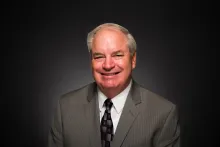
Robin Webber was born in Chicago, Illinois, in 1951, but has lived most of his life in California. He has been a part of the Church of God community since 1963. He attended Ambassador College in Pasadena from 1969-1973. He majored in theology and history.
Mr. Webber's interest remains in the study of history, socio-economics and literature. Over the years, he has offered his services to museums as a docent to share his enthusiasm and passions regarding these areas of expertise.
When time permits, he loves to go mountain biking on nearby ranch land and meet his wife as she hikes toward him.
