

Jim Tuck
This transcript was generated by AI and may contain errors. It is provided to assist those who may not be able to listen to the message.
Happy Sabbath, everyone! Good to see everyone. Appreciate that very much, Tina. And appreciated the first message as well. And I apologize to the Northwest Church that we haven't been up here in so long. I think it's been before Pentecost, as a matter of fact. And, you know, as you know, my wife and I went over to Hawaii and spent time with our brethren there. You know, some expect us to come back with tans. But oftentimes we don't even really get to go and sit on the beach. You get to see the beach. You see a lot of waves. But the most important thing is when we're there is to see the brethren and to spend time with them. And we had a wonderful Sabbath with them and a fantastic Pentecost with them as well. I'll say hi to them. I think they're hooked up on the webcast now. You know, I was thinking last night about the disasters that have occurred in this country, one that really was emblazoned on my mind because I kept the newspaper of it back in 2005 when Katrina took place down in Florida and also in New Orleans. And I remember the front page of the newspaper had a picture of cars coming up the freeway. The freeways were just loaded with people trying to exit Katrina, get out of there. And, of course, during that disaster that took place there, around 1,800 and something people died. And, of course, many, many people that were displaced from their homes. And what brought it to mind to me last night, in fact, was that we are in this nation, a time of turbulent weather now in the Midwest and the Southeast. And as all of you know, I grew up in Oklahoma and Arkansas. And I'm very familiar with tornadoes and bad weather. You know, I remember my very first tornado and what it was like back in those days because I was just a little tiny boy. I remember my cousin was trying to put my shoes on because everybody was getting into the cellar to escape the tornado that was coming. But, you know, you get used to that kind of weather. You get used to the idea. And at least we did. I remember it not only in Arkansas when we lived there, but in Oklahoma. I remember it in Missouri. But, you know, every year, I don't know if you knew this, but every year we have tornado season that happens. But, you know, what is surprising to me is that when I listen to the news people, it's like we never ever had a tornado before.
That we never had bad weather before. You know, yes, we have always had bad weather. Now, Katrina, people could have escaped. Katrina, they knew the weather was coming. They knew what was going to happen. They could have escaped, but they did not. They did not move to get out of there. You know, if you're living in Oklahoma, Arkansas, those areas, when it's tornado weather, believe me, you know when the weather is getting bad. I mean, you see it coming, and you take cover. You do something to protect yourselves. But it made me wonder, you know, why does God allow these disasters to occur?
And how do they affect us? And what do they mean as far as prophecy is concerned? You know, let's notice over here in Luke 12. I mentioned these things to you because of what Jesus says Himself. Over here in Luke 12, verse 54, notice here in verse 54 where Jesus was talking, and it says, And then He also said to the multitudes, He said, Whenever you see a cloud rising out of the West, immediately you say, A shower is coming, and so it is. I'm sure there were times when Jesus was talking to people, and, you know, He maybe noticed a big cloud, and immediately people would come up and say, Well, that means there's a shower that's coming. And so He was talking to people about these things, like we do. You know, we talk about things that occur in the United States or other parts of the world. And when He says, When we see the South wind blowing, you say there will be hot weather. And there it is. It happens. It occurs. Now, this next statement by Jesus is curious to me because He says, hypocrites. The word hypocrites almost seems like it's out of place here, but it isn't really out of place.
Let's notice what He says. He says, You can discern the face of the sky into the earth, but how is it you do not discern the time?
You see, what He was saying, what Jesus was saying, Look, you're smart enough to look in the sky and know what the weather is going to be.
Are you telling me you are not smart enough to see the times that we're living in right now in what you ought to be doing? And what you ought to be doing?
And, brethren, could Jesus Christ say that to you and me as well?
You know, we can see the sky and look what the weather is going to do. Can we not see by what we see around us in the world today, the times that we are living in?
No, back in the 1800s, there was a word that was coined for the spirit of the times, the age, and what the age was like. I'm sure all of you, you know, if we were in jeopardy, you know, you would say, well, what is it? Is zeitgeist. What is zeitgeist? The word zeitgeist, by the way, has to do with that. The spirit of the age. What are the trends of the times that we are looking at? Now, it's like the free love movement back in the 60s. That was the zeitgeist of the time. No hate. Ash, Berea, and the immorality, the moral depravity. And believe me, brethren, today, the moral depravity is worse now. And we appreciate again the sermonette message about entertainment in the world today. It's far worse. You know, in the LGBT, I used to have that down pat, and then they've added some other stuff to the other end.
Of it, it'll get longer and longer and longer. I wonder if it'll get back to you and me.
You know, what people consider normal people. Of course, they wouldn't love, they would not like that word normal, would they, for saying that. You know, if you watch the Democratic debates, you know, you realize the times that we live in are worse, far worse. The things that they talk about, the things that they discuss, you know, in public, it seems, are almost surreal to me. I mean, I'm amazed that we are in the place we are in this country. And you know, by what I'm saying, I'm not saying, well, you know, the Republicans are any better, because I don't think that there's a dime's difference. I think, as Will Rogers says, there's not a dime's difference between a Democrat and a Republican. But, brethren, can we not discern the times, the lawless times that Mr. Knutson was talking about, which affects the entertainment that is out there that gets worse and worse? Let's notice over in 1 Chronicles 12, verse 32, you know, there was a time, of course, after that Saul had been defeated. And what was the reason that God rejected Saul?
What was the reason, brethren? Well, it wasn't it because of the fact that Saul basically disobeyed God. That's the bottom line, that God rejected Saul. And, of course, they were all coming together and eventually all rallied behind David, King David. And there were certain mighty men that came behind and under David. But here in 1 Chronicles 12, verse 32, there's one curious statement that is made over here in verse 32, of the sons of Issachar who had understanding of the times. They had understanding of the times. But notice how it impacted them, how it affected them, to know what Israel ought to do. In other words, how do things, you know, that are going on in the world, that are swirling around in the world today, affect us? How do they relate to prophecy, and how do they relate to us individually? Should they not lead us to know what we ought to do, what we ought to be doing? It's like Mr. Knudsen talking about the entertainment that is out there, that people are drinking in, and apparently they are gobbling it up because they keep producing, and it gets worse and worse. One trying to do, I'll outdo the other in terms of moral depravity.
But they knew, the sons of Issachar knew how Israel could propel toward the destiny that God intended for them, and that is to be an instant nation, an example nation to the world. Interestingly, the word Issachar means reward or benefit or compensation. And, brethren, when we know the times that we're living in, and we know how we ought to be as a people, we are a reward to other people. We impact people. We are a benefit to other people because how we are as people will lead others to be the kind of people that they ought to be, to be examples to others, and even as we're to be a light of God's kingdom. So, brethren, are you, are we aware of the times that we're living in right now? I'm talking about right now.
You know, do we know the times that we're living in?
And do we know what we ought to be doing? How we ought to be living? I gave a Bible study, you know, at our senior, midweek Bible study on, you know, basically how to lay up treasures in heaven, you know, where moth and rust is not corrupt. And we know that when Jesus comes back that the Bible says in Revelation, his reward will be with him so that God will be able to reward us when he does return. You know, when we see disasters, and I think we're going to see more and more as we near the end of the age, because frankly, I think it is not just what man is doing. I think that the impact upon the earth is affected by what the sun is doing.
A lot of things that people are not aware of is that nearly every planet in this solar system right now is heating up. In fact, Mars is heating up. Other planets are doing exactly the same thing. So I think the sun has a lot to do with it. We're going to see climactic changes, and very big ones that are coming in the future, and some of those things are already occurring. But what should we be doing about the things that are coming, that are happening when disasters strike? Now, we know that God does. He does periodically intervene, and He uses certain methods to do it. But consider these questions. Let me ask you this, just so we understand, again, how God works and how He does not work. Was Noah's flood a message from God? What about Sodom and Gomorrah? Was that a message from God?
I think that most of it was, of course, that's almost a rhetorical question.
So if we believe that Noah's flood was a message from God, if we believe that Sodom was a message from God, what about when Mount Vesuvius exploded and destroyed Pompeii and some of the surrounding cities at that time in Italy? Was that a message from God, that God was speaking to Italy at that time and the nations around about?
I'm just asking you to think about these things, brethren. Was 9-11 in this country a message from God? How about, again, Katrina? Was that a message from God? The things that are happening?
You know, 9-11, 3,000 people died, I think I mentioned earlier, that about 1,800 people died in Katrina. You know, and of course, there have been Galveston and other things that have happened even since that time. Let's go over to Luke chapter 13. Luke chapter 13. Jesus cited two tragic events. Over here in Luke chapter 13, notice here, in verse 1, and it says, "...and there were present at that season some who told him about the Galileans." So up in the area of Galilee, in fact, remember, Jesus was of Galilee himself. He's very familiar with that area. But it says, "...whose blood Pilate had mingled with their sacrifices." That apparently had sent Pilate had sent soldiers up there with spears and short swords and just hacked these people to death. And Jesus answered and said to them, do you suppose that these Galileans were worse sinners than all the other Galileans because they suffered such things?
So how about us? What do we think about it when somebody suffers?
You know, in our world that we live in today, we hear about things all the time. What does it say? I tell you no. I tell you no. No, they weren't greater sinners than others.
But notice what he said, but unless you repent, you are all going to likewise perish, or you will likewise perish.
And then he said, "...are those eighteen on whom the tower of Siloam fell." So apparently there was a tower that got old and maybe a brick became loose, and this thing collapsed unexpectedly and killed apparently some people at that time. He says, do you think that they were worse sinners than all other men who dwelt in Jerusalem? Then again, he said, I tell you no. But unless you repent, you will all likewise perish. So his emphasis was, you know, not judging whether something was of God or not. And in these two incidents, one was an act, you might say, it was an act of violence on the part of Pilate and the soldiers that were involved here. The other was maybe just an accident, just a freak accident that occurred where people were nearby and the ones were there were killed by the the crush of stone and whatever mortar that came down from that tower. People, you know, biding their time and maybe even in the case of the Galileans being in the wrong place at the wrong time. In other words, brethren, happenstance can occur and a person's life could be cut short or very much changed very, very quickly in this.
Now, what are the lessons that we can gain from what Jesus said? Well, the world can change rapidly and dramatically. You know, we get used to the way we live. We enjoy the way we live, don't we? Or else we live a different way, I would think. And we don't like to have changes that occur.
But our lives, brethren, can either end or be dramatically changed in a very quick period of time and all by accident, all by accident. You can be in the wrong place at the wrong time and you suffer as a result of it. That's why we need to be praying for God's protection every day of our life. And with a room where you get the people that are in this room right here, I can imagine the angels are pretty busy protecting us and keeping them safe. But what should happen, brethren, when we see happenstance, when we see tragedy and disaster, is we should be moved, brethren, to know what we ought to be doing and that we should repent and redouble our efforts to change while we have time, to make a change. To make a change. You know, very shortly, the women are going to have their women's day, the Sabbath enrichment for the ladies. The theme is going to be redeem the time.
The days are evil, as it says in the book of Ephesians, and we need to be redeeming the time.
You know, just like the ladies are going to be covering and talking about, and I know Mr. Stryber was asking that if you've already deemed the times, do you have to redeem them? And he stumped us with that. You know, and I don't mean to throw out something that gets you thinking about something else, but if you have deemed the times, and I think that's what we're supposed to do, maybe we don't have to redeem them, right? If we're doing what we're supposed to do, we don't have to redeem them, we just keep deeming them. We keep applying ourselves.
But brethren, calamities are going to occur, and it could come due to sin, or not due to sin. But the lesson is that we need to learn through tragedy, brethren, is it that it can strike at any time, or without warning, and our lives can be changed, but we need to be moved again now, without that prod, to know what we ought to be doing. And that is changing, and overcoming, and growing is a great theme. In fact, through the book of Revelation, is it, brethren, about overcoming and changing? You know, everyone, I know in California, is waiting for the big one over there. You got that San Andreas fault line that is, you know, going up through California. And interestingly, when you go up and you get up in Northern California, and San Jose, and Oakland, and some of these places, you know what? They have built houses right on top of those fault lines. And there are millions of people up through there.
Now, someday it's going to, you know, break apart. What do you think is going to happen?
There's going to be many people are going to die. Some people, by the way, not just in California, but back in Arkansas, and Missouri, and Oklahoma, they're worried about the new Madrid fault line, where there are millions of people right along that fault line that are going up there. Some people are worried about the super volcano at Yellowstone, which, in fact, could turn the entire United States. It could destroy so much of the United States if that were to explode.
And it could happen. Now, brethren, am I standing up here and talking about these things to just scare you? No. Jesus said, in fact, see that you be not troubled. He talked about how some of these things are going to be the beginning of sorrows that are going to take place in the world. If we're doing what we're supposed to do, we don't have to be worried about what's coming, what's going to occur. But, you know, brethren, we live in a very affluent time, and the world views us as being rather wealthy. Now, you may not feel so wealthy, so rich, but, you know, it is a time when people go to and fro, and I think that within the church we go to and fro a lot, don't we? We travel. We, we, you know, are able to do things. Probably we never thought we would ever get a chance to do, to travel to another country. But we live, brethren, in a world where people are fixated on materialism. And people don't think about how they live until a disaster strikes. Then it all of a sudden occurs to them that maybe they ought to give some thought to how they're living. It's like after 9-11, I was pastoring over on the east side back in those times. And over there, I can't remember what it was like up here, you know, during that particular time. But you know what? The services, the, the, the attendance of services ballooned on the east side during that time because people were scared out of their tree. They, and, and some people actually came to me and said, is this it? And they attended for a little while. And then slowly they kind of, kind of began to trickle back out and they were gone. They, within two, three weeks, those people that came out that caused the attendance of balloon out. I say that because the question was asked. We were talking about this last, I believe, last Sabbath. Over in the east side, we had a little discussion, Q&A, Mr. Monte Canuzzi and I were sitting up there and, and talking about the message, the sermon that was given. And somebody asked, what do you think the church can do to begin to connect with more people out there?
And my answer, one part of my answer was basically, and I think we are doing a very good job of preaching the gospel. I mean, we've got a tremendous magazine beyond today. I don't think anybody can beat what we're doing with the Beyond Today magazine. We've got a tremendous television program and it's getting better. It's getting better. We are striving, brethren, to do all we can do. We've got a tremendous program for our youth. We're going to, you know, having the youth programs. And we, I don't think there's anybody that does camp better than we do. You know, in the church, so we're doing all we can do. We could probably do more. We have, we, and we are striving to do that and trying to improve. But, you know, one thing would change everything. And I don't wish it. I don't hope it. I don't desire it. And the least bit. The thing that would change everything is if a major disaster occurred in this nation, in this country.
That would catch everybody's attention and that might do more, you know, in terms of preaching the gospel, you know, than anything. That people's ears will begin to be open.
It reminds me back in World War II, it was said that when the soldiers were, you know, going over to war, they were, you know, had been trained and they were heading from the States, you know, going overseas and they were going to be thrust into battle. That the chaplains could pray and talk to the soldiers about God, about what they were doing.
But when those soldiers, those same soldiers came back, the chaplains were unable to talk to them about, you know, that. Here they were, young men. They had made it through the war. God had been with them, at least, you know, and delivered them that way. But when they came back from the war, they were ready to start lividing it up. And, of course, all of us know, back in the, after the World War II, you got the baby boomers and by the 60s, you've got the hippie movement and the free love and all of that. And so that's exactly what they do. But when it is after strikes, then people are willing to talk. It's like when 911 occurred, people were willing to talk about God and what is going to happen.
But we live in this, again, a world where we are surrounded by materialism. And frankly, there's a lot of people that would like to go to the lake and go skiing or fishing, a whole lot more than come and sit in church, right? That's the way it is right now. Or they want to go to a ball game on Saturday or Sunday, even. Or they want to do other things. They don't want to concentrate on God, but if there was a major disaster, then people would be willing to listen.
We're gorged on affluence, and we've become apathetic as a people, as a nation. And frankly, we've become dependent. Used to be people in this nation were more independent in terms of learning to take care of themselves. We want, in this country, the government to take care of us. And I'm talking about the general population. More people want that, desire that, and to have sort of a cradle to grave kind of government.
But, brethren, what happens when people become so dependent upon the government? The government occurs. What happens is that people get enslaved again, eventually, because they become servants of the government. And they go into bondage again. You know, nations go from bondage to affluence to dependence, you know, and from dependence they go into slavery and then bondage again. That is basically what happens to nation. Has it happened to every nation? And I wonder sometimes if we as a nation are not heading in that direction. You know, we're doing exactly what other nations have done, what Rome did.
That Rome that rose and that Rome that fell is our end as a nation, near. Let's go over here to Luke chapter 21. Luke chapter 21. I hope you were able to follow what I was saying to you there, that we not again become the way the world is, be impacted and become the way this world is. In Luke chapter 21 and verse 7, let's notice this.
Down in verse 7, you know, here the disciples give you sort of a little background here. They were in Jerusalem, they were enamored by the beautiful buildings, the temple and the money, the ornate nature of the buildings, the opulence of it. And Jesus said, he said, I tell you the time is going to come when there's not going to be one stone upon another here. And then, you know, Jesus began to talk to his disciples. Actually, the disciples asked him, well, he said, teacher, but when will these things be? Now, when is this going to occur? When all is going to come down?
And what sign? It says, will there be when these things are about to take place? And he said, take heed that you do not be deceived, that you're not deceived, for many will come in my name, saying, I am he.
And he said, the time has drawn near, therefore do not go after them. No, don't follow after them. And of course, there have been many people who have claimed to be in Christ, and people have gone out and followed them anyway. But when you hear, he said, of wars and commotions, do not be terrified, for these things must come to pass first. But the end will not come immediately. And so Jesus was caution about, you know, overreacting here. And we need to be, again, very, very careful to not overreact ourselves.
Jesus said, see that you be not troubled by the things that are happening. These things have to come to pass. And then he said to them, nation will rise against nation. And boy, do we see that in the world today. Kingdom against kingdom, or conglomerate of nations against one another. And there will be great earthquakes in various places, and famines and pestilences, and there will be fearful signs and great signs from heaven. It's going to be a very terrifying time that Jesus Christ was talking about.
And, you know, the disciples wanted to know what to look for, and Jesus was telling them. And Christ gave them things to watch. And, brother, we need to keep our eyes wide open to what is going on in this world. You know, the trends that we see in the world and where they're going. Down in verse 20, let's notice this, though. Down in verse 20, and when you see Jerusalem surrounded by armies, he said, then know that its desolation is near.
You know, again, look at what's going on over in the Middle East right now. You've got these nations that used to be insignificant now that have backing, and that if they gathered together against Jerusalem, it would be gone.
I'm not sure the United States would have the power to keep that from happening, even if we wanted to. So, again, look at the trends, brethren, that we see in the world. Down in verse 25, and there will be signs, it says, in the sun. So, again, the sun is going to have an impact on end-time events that Jesus was warning about. In the moon and in the stars, and on the earth, distress of nations, it says, with perplexity. The sea and the waves roaring. Now, interesting how it puts that. In the NIV, that particular scripture says this, there shall be signs in the sun, moon and stars, on the earth. Nations will be in anguish, in perplexity, confused. People are going to be confused at this time, more than ever. Let me ask you, brethren, when you look at the world today, and what's going on in the world, are you confused?
Confused about what people are doing, what people are saying?
You know, we know, we understand that these things are going to happen, brethren. I'll tell you, there's a lot of people in this country who are afraid right now, very much afraid, because they don't know what we know about what's going to happen in the future.
But it says, going on in the NIV, I was reading to you, it says, in anguish and perplexity at the roaring and tossing of the sea. So, affecting the oceans. You know, they talk about if Antarctica were to melt, and, you know, that basically most of Florida would be gone.
They talk about, they discuss, in some forums, they discuss possibilities of the sea rising feet. And it would impact, again, this nation. It would become very, very small, very quickly.
Talk about, you know, tsunami waves are a thousand feet high.
There's all kinds of things, again, that are discussed. But it will be a time when people are going to have great fear, and they're going to be perplexed, wondering at the events that they're seeing. But notice in verse 25, or verse 26, men's hearts failing them from fear and the expectation of those things which are coming on the earth. For the powers of the heaven will be shaken. You know, things that we never thought could be possible, brethren, are going to occur, are going to happen.
And it says, And then they will see the Son of man. So this is prior to the return of Christ, right prior to the return of Christ, coming in a cloud and with power and great glory. And we're in verse 28. Now when these things begin to happen, look up and lift up your heads because your redemption draws near. Now, he wasn't talking to the disciples in what they would see, brethren. He was talking to you and me about what we might be seeing in the future. But when you see these things, your redemption is near.
When we see these things, when we know that they're coming, brethren, if we know, and it's in the book, either we believe it or we don't, what the book says, are we like, you know, the sons of Issachar who knew what Israel ought to do? Well, brethren, what should we be doing as God's people?
What should we be doing as God's people?
Now, it's interesting that the, where it talks about, there, about the roaring of the sea, the word, the Greek word for roaring is echo in the Greek, or the word from which we get to echo. In other words, it's going to be this reverberating sound that it makes. You know, in Maricopa, sometimes I go down to pick up things at the culture department store we have at Walmart, which is, in fact, located across the street from the railroad track. And sometimes the train comes roaring through there, and one will come pretty fast through the area. And I'll tell you, we can feel the ground rumbling and shaking, you know. But this is what the sea is going to do. It's going to be this rumbling and shaking. You know, people who have been through a tornado always say, you know, when people say, well, what did it sound like? Well, it sounded like a locomotive. It sounded like a locomotive that was coming through.
And that's what Jesus is talking about. People will be afraid to go home when disasters strike. It will be a tough time, a very, very tough time. You know, the prophecies, there are many prophecies in Zechariah and Revelation that predict great earthquakes and events that affect the oceans, that affect the rivers. I'm not going to go through those. And those we talk about oftentimes at the Feast of Trumpets. It talks about how every mountain and every island is going to be shaken out of its place, in fact, in the book of Revelation, chapter 6.
And Jesus Christ warned people of His day about it. You know, something I'm talking about now, I know is not very popular in the religions of this world. About this time, people would be playing band music and singing songs that make everybody feel good.
You know, they'd be, maybe, I don't know, some of the churches have dancers, I guess, up tambourines and all kinds of stuff going on Sunday church services. But these are the things that Jesus Christ talked about that were coming in the future. And, you know, God instructed Isaiah, and He recorded it for us. He said, cry aloud. He said, cry aloud and spare not and show my people Israel or Jacob their sins.
And we have a job, brethren, to do that. And, brethren, we need to, again, not be part of this world, the society that's out there, but be different than this world and be lights to this world and society that we're living in out here that we're not a part of, brethren. But we should be an example of, again, the future kingdom that is coming. Of people that are laying up treasures again in heaven in preparation for the fact that Jesus is coming. Let's still listen in Matthew 21 and verse 31 down here. He says, so you also, when you see these things happening, He says, know that the kingdom of God is near. The kingdom's near.
Assurely, I say to you, this generation will by no means pass away till all these things take place. And He said, heaven and earth will pass away, but my words will by no means pass away. But He goes on to say, but take heed, He says to yourselves. Watch yourselves. Verse 34 here, lest your hearts be weeded down with carousing. You know, you get caught up in the world's partying that goes on. Drunkenness and the cares of this life. Even just, you know, the day-to-day things that people do. And that day come on you unexpectedly. Because what we were talking about is disasters don't, they don't come when you thought they were going to come. They happen and they happen very quickly to people. For it will come as a snare, it says, on all those who dwell on the face of the whole earth. Watch therefore and pray always that you may be accounted worthy to escape all these things that will come to pass and to stand before the Son of Man. Brother, are you praying about this on a daily basis? Always. That you'd be accounted worthy to escape the things that are going to come to pass and to stand before Jesus Christ. And are you keeping on top of yourself spiritually speaking? How about your prayer life?
The study of God's Word. You know, how we live our lives. You know, whether or not, again, we're observing the Sabbath properly. Keeping the holy days. Doing all the things that we're supposed to be doing. Brother, that God has revealed to us, you know, those of us that have been called to understand these things, brethren, that we've been able to see them. We've been able to understand. So Jesus, after He had talked about all the in-time events, the biggest thing we've got to watch is ourselves. We are to pray every day that, you know, no temptation takes us. You know, that we don't allow ourselves to be, in fact, affected by the evil one. And anybody that's been in the church for any length of time knows that where it talks about, the evil one, it can apply to three things. It can apply to this world and the influence it is out there. How it affects us and it affects us. And it can apply to the devil or his demons that can impact us as well. Or it can apply to ourselves. You know, we're the greatest enemy of ourselves.
It's not what other people do, it's what we do to ourselves. Are we keeping, again, on top of ourselves, spiritually speaking? We need to deem the time, redeem the time, as God's people. And remember these things.
Oh, observe those things that are happening. God is talking to us, brethren. Don't get so caught up in the physical pursuits of life that you fail to examine yourself spiritually and be alert to the times that you're living in. If you are alert, you will know what to do. Our job as God's church is to preach the gospel and to warn this world before the troubles start coming. We are a watchman to this nation and to this world. And we are striving to tell this country to watch and to be aware of what is coming that is out there. It's really, again, hard to get people's attention. They need to be alert to their spiritual condition, turn to God, and be overcomers. In the model prayer, we are to pray, your kingdom come every day. We pray for God's kingdom to come. See, that's our focus. We're focusing on the kingdom, and we're living our lives because the kingdom is coming.
We're trying to redeem the time so that we're making good use of our time in preparation for that. You know, the responsibility of the church is to preach the gospel and to prepare people.
I hope that, again, our job is being just that. God is doing that with all of us. You know, we live in a time that is much like Babylon, where people are sort of taking their ease because of the physical accoutrements that are around and there. It's like in ancient Babylon.
Belshazzar had all of the leaders of the Babylonian Empire together, and they were drinking wine from goblets that they had taken. They were holy instruments that were from the temple of Jerusalem. And old Belshazzar saw a hand come up and began to write. And you may remember the story in the book of Daniel, chapter 5, how when he saw this hand begin to write, it actually says in the scripture that one's knee smote another.
About like what happened when I gave my first speech at the Spokesman Club.
But he was afraid, and he sought out somebody who could interpret what was written, the many, many tinkle and farset that was there. And interestingly, you read the story in chapter 5 about how the queen said, well, you know, there was this man who was around during the time of Nebuchadnezzar, and he in him was the Spirit of God, the Spirit of the Holy God. And he interpreted for your father, your grandfather in this case, Nebuchadnezzar.
And Nebuchadnezzar, you know, had used Daniel. You remember in the case of Daniel, when he interpreted for Nebuchadnezzar, Daniel was elevated in the Babylonian Empire to a very high position. Well, they go and they get Daniel. Let's go over here to Daniel chapter 5. Daniel chapter 5.
They go and they get Daniel, and Daniel gives the interpretation.
In this speech that Daniel gives you to Belshazzar, and all the leaders at that particular time, brethren, could be the same speech that he could give in the United Nations today.
The very same speech. But in chapter 5 here, down in verse 29, what is actually not verse 29 is on further up there, but it's in verse 17, beginning, it says, And then Daniel answered. So here Daniel comes forward, and he's giving, he was giving an answer to Belshazzar about what the handwriting means. And then Daniel answered, And said before the king, Let your gifts be for themselves, and give your rewards to another. Yet I will read the writing to the king, and make known to him the interpretation. O king, the most high God, gave Nebuchadnezzar, your father, kingdom, and majesty, glory, and honor. And because of the majesty he gave him, all people, nations, and languages trembled and feared before him. Whomever he wished, he executed, whomever he wished, he kept alive, whomever he wished, he set up, and whomever he wished, he put down. But when his heart was lifted up, and his spirit was hard in pride, he was deposed from his kingly throne, and they took his glory from him. Then he was driven from the sons of men, and his heart was made like beasts, and he dwelt, it says, with the wild donkeys. And they fed him with grass, like oxen, and his body, it says, was wet with the dew of heaven, till he knew that the most high in the kingdom of men appoints whomever he chooses. But you, his son Belshazzar, have not humbled your heart, although you knew all that. You knew all that, you see. What God does, that God rules in the kingdom of men.
And the many, many, Tinkle and Farson basically said, Belshazzar, the kingdom is departed from you. And what happened that very night, that very night, Cyrus, remember, you know, the mead came in, according to what it says in Isaiah 45, he came in that night, and Belshazzar was put to death. Amazingly, right prior to that, they elevated to third in the kingdom, Daniel.
So he transcended the Babylonian empire into the Medo-Persian empire.
So again, brethren, is this going to be said about us? Is God going to say to us, even though you knew these things, you were aware of all of these things, and you saw what was going to happen, is God going to say to us, brethren, unless you didn't heed, you didn't do anything about it. Or, brethren, are we wise, like the sons of Issachar, who know what ought to be done, what we ought to be doing as God's people?
You know, there's a lot of people in this world that are scoffers. I like there were a lot of scoffers during the time of Noah. And interestingly, Peter talks about the scoffers. He says, who were willfully ignorant? They were willfully ignorant. Well, brethren, somebody who's willfully ignorant refuses to see even what they've seen, what they've understood. But, brethren, are we listening? Are we alert, brethren? Some are going to be alert, and some are going to be alert, and some will not be alert. There's the five wise virgins and the five unwise. And the dividing line, brethren, is whether someone is alert is, are they prepared spiritually speaking? Are they prepared? Are you praying? Are you studying? Are you doing things that should be done and preparing spiritually? We will see troubles, brethren, come in the world, and it's really important. So important, brethren, I apply this not just to you, but me. I apply it in preaching here, teaching. I hope the young people are listening, that you have choices to make. Anyone who has not made a choice has a choice to make.
Will you prepare for what is coming in the future?
If we discern the times, we know what we ought to do spiritually, and I trust that you know the times, and I trust that you know what to do.
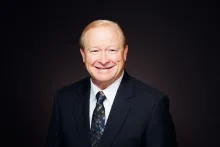
Jim has been in the ministry over 40 years serving fifteen congregations. He and his wife, Joan, started their service to God's church in Pennsylvania in 1974. Both are graduates of Ambassador University. Over the years they served other churches in Alabama, Idaho, Oregon, Arizona, California, and currently serve the Phoenix congregations in Arizona, as well as the Hawaii Islands. He has had the opportunity to speak in a number of congregations in international areas of the world. They have traveled to Zambia and Malawi to conduct leadership seminars In addition, they enjoy working with the youth of the church and have served in youth camps for many years.
